| “[...] when the meaning of arbitrary symbols is equated with their referents (objects, events, concepts) and has for the learner whatever meaning the referents possess” (Ausubel, 2003, p. 1). It “involves the attribution of meanings to [...] words” (Moreira, 2018, p. 165). |
When a child relates the word cat exclusively to their own pet, they have constructed Representational Meaningful Learning (Moreira, 2008). |
Representational Meaningful Learning involves a process of Abstraction. Japiassú and Marcondes (2001, p. 7) understand Abstraction as “an element of representation” and emphasize that it may assume two perspectives: separating elements that should not be taken into account or isolating them in order to focus attention on them. Thus, we can say that the development of Abstraction may contribute to facilitating Representational Meaningful Learning, since in this type of learning, Abstraction is fundamental, as it requires identifying essential elements of new information and constructing a mental representation of its essence, as well as relating it to prior knowledge. |
|
Conceptual Meaningful Learning
|
|
Concept
|
Example
|
Convergences with CT-related skills
|
| Based on the idea that concepts are “objects, events, situations or properties that have common specific attributes and are designated by the same sign or symbol” (Ausubel, 2003, p. 2). |
When the word cat comes to mean, for a child, not only their own pet but a group of animals with common characteristics and distinctions in relation to other classes, Conceptual Meaningful Learning has been constructed (Moreira, 2008). |
Conceptual Meaningful Learning involves the formation of concepts which, according to Japiassú and Marcondes (2001, p. 39), “designates an abstract and general idea under which we can group various elements.” Based on these premises, it is possible to relate the construction of Conceptual Meaningful Learning to the skill of Pattern Recognition, associated with CT, since it involves identifying similarities or regularities (Brackmann, 2017), as well as to Abstraction, which is fundamental to the construction of a concept that is itself a representation (Japiassú; Marcondes, 2001, p. 7). |
|
Propositional Meaningful Learning
|
|
Concept
|
Example
|
Convergences with CT-related skills
|
| It involves understanding a “composite idea that is verbally expressed in a sentence with meanings of words,” in “syntactic functions and in the relationships between words” (Ausubel, 2003, p. 3), as well as learning the meanings of propositions constructed from concepts, going beyond their individual meanings (Moreira, 2018). |
It requires understanding the meaning of propositions such as “the cat is a domestic animal,” or a mammal (Moreira, 2008). Language is fundamental in the reasoning process (Ausubel, 2003). Through it, concepts and propositions are learned and refined as development progresses (Ausubel; Novak; Hanesian, 1980). |
Since Propositional Meaningful Learning is based on concepts, it can be related to the skills of Pattern Recognition and Abstraction. Furthermore, considering the strong relationship between all these types of learning and language, we observe the strong influence of Abstraction on the occurrence of any type of Meaningful Learning, given that Abstraction has a close connection with language (Abbagnano, 1998, p. 14). |

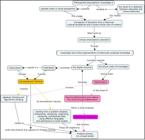
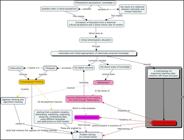
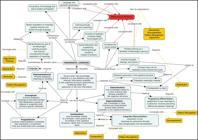
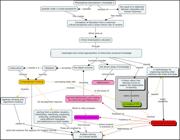
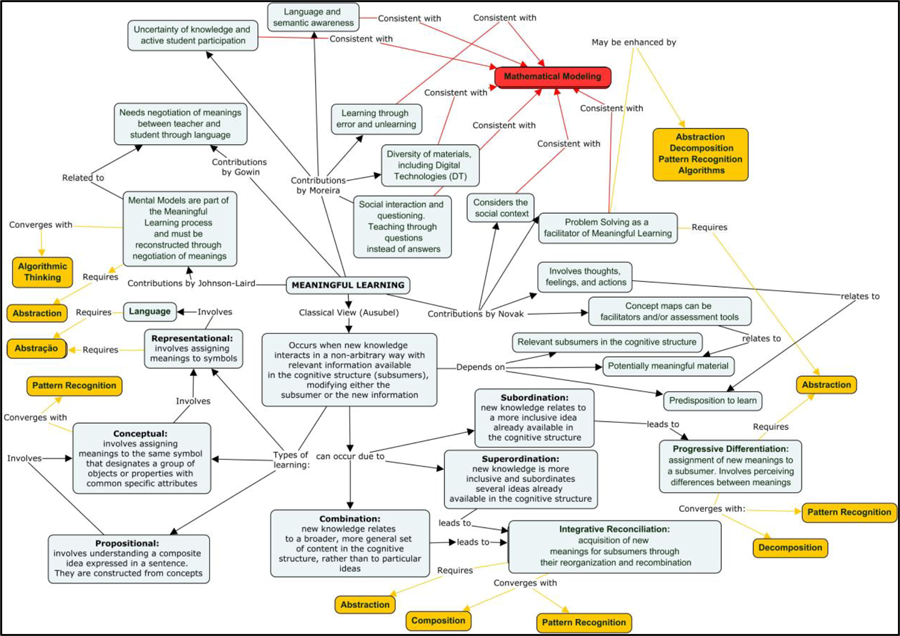
 Articulations among Computational Thinking, Mathematical Modeling, and Meaningful Learning
 Thumbnail
 Thumbnail
 Thumbnail
 Thumbnail
 Source:
  Source:
  Source:
  Source: