
 Luhmann and Butler: observing the construction of gender in organizations
Abstract
This theoretical-analytical article contributes to the research agenda on gender in organizations through a multiparadigmatic theoretical review. Drawing on concepts from Niklas Luhmann’s theory of self-referential systems, in dialogue with Judith Butler’s theory of gender performativity, the article aims to initiate conceptual dialogues to identify possible areas of convergence between these authors. Such an effort may support the development of theoretical elaborations in organizational studies that consider organizations as systems and gender as a form of communication capable of regulating and producing intelligible and unintelligible gender categories within organizational contexts.
Keywords:
organizations; self-referential systems; gender; performativity
Resumo
Este artigo teórico-analítico contribui para a agenda de pesquisa que enfoca o gênero nas organizações com base em uma revisão teórica multiparadigmática. Adotando conceitos da Teoria de Sistemas Autorreferenciais de Niklas Luhmann, com o aporte da Teoria da Performatividade de Gênero de Judith Butler, o artigo busca iniciar diálogos conceituais para identificar possíveis zonas de confluência entre os autores. Isso pode subsidiar o início de uma elaboração na teoria organizacional que considere organizações como sistemas e gênero como um tipo de comunicação que pode regular e produzir os gêneros inteligíveis e ininteligíveis nas organizações.
Palavras-chave:
organizações; sistemas sociais; gênero; performatividade
Resumen
Este artículo teórico-analítico contribuye a la agenda de investigación que se enfoca en el género dentro de las organizaciones, a través de una revisión teórica multiparadigmática. Adoptando conceptos de la teoría de sistemas autorreferenciales de Niklas Luhmann, junto con los aportes de la teoría de la performatividad de género de Judith Butler, el documento busca iniciar diálogos conceptuales para identificar posibles zonas de confluencia entre los autores. Esto puede contribuir al inicio de una elaboración, en la teoría organizacional, que considere las organizaciones como sistemas y el género como un tipo de comunicación que puede regular y producir los géneros inteligibles e ininteligibles en las organizaciones.
Palabras clave:
organizaciones; sistemas sociales; género; performatividad
INTRODUCTION
Gender marking and the sexual division of labor permeate many aspects of social life and have been the focus of ongoing critique in feminist theory since the seventeenth century. Feminist scholarship has thus influenced the development of organizational studies (Cerchiaro et al., 2009), providing a critical alternative to epistemological traditions rooted in assumptions of neutrality and universal rationality (Harding, 1993; Rago, 2019). In the Brazilian context, feminist theorizing and post-analytic traditions have made only limited progress into organizational scholarship. Addressing this gap is crucial to challenging the dominance of functionalist approaches within this epistemic field (Caldas, 2005; Morgan, 2007; Vidal, 2017a, 2019, 2022). This article is part of a research agenda that investigates gender in organizations through disruptive traditions with functionalist traits (Irigaray & Stocker, 2024).
Against this backdrop, the article develops a theoretically oriented review guided by the multi-paradigmatic framework proposed by Lewis and Grimes (2007). It brings into dialogue Niklas Luhmann’s (1997) systems-theoretical contributions to organizational analysis and Judith Butler’s feminist theorization, particularly the work on gender performativity, influenced by post-structuralist thought (Butler, 2019, 2022a, 2023a, 2023b, 2024). By engaging with multiple, often polarized paradigms, the review synthesizes key texts by both authors to develop new theoretical approaches for understanding the complexity and paradoxes organizations encounter in pursuing gender equity.
Luhmann’s (1927-1998) systems-theoretical perspective is informed by the essays “Individual, Individuality, Individualism” (originally Individuum, Individualität, Individualismus, 1980/2022) and “Women, Men, and George Spencer Brown” (Frauen, Männer und George Spencer Brown, 1988/2015), as well as by his treatment of systems, communication, interpenetration, and the individuality of the psychic system in chapters 1, 4, 6, and 7 of Social Systems (Soziale Systeme: Grundriß einer allgemeinen Theorie, 1984/2016). It further incorporates his conceptualization of organizations as social systems, including his analyses of membership and persons, as developed in chapters 2, 3, and 9 of Organization and Decision (Organisation und Entscheidung, 1997). Butler’s feminist analysis, in turn, engages with the essay “Performative Acts and Gender Constitution” (1988/2019), the full text of Gender Trouble (1990/2023a), the opening chapter of Bodies That Matter (1993/2023b), chapter 2 (“Gender Regulations”) of Undoing Gender (2004/2022a), and the recent work Who’s Afraid of Gender? (2024).
The article is organized into three sections. The first outlines the core concepts of Luhmann’s theory of self-referential social systems, and the second examines Butler’s account of gender performativity. Building on these foundations, the third advances a hypothesis of conceptual articulation, proposing a multi-paradigmatic approach to support future research on the construction of gender as an organizational phenomenon.
NIKLAS LUHMANN’S SYSTEMS THEORY
Within his general theory of social systems, the German sociologist Niklas Luhmann (1927-1998) advances a paradigmatic shift in systems thinking by proposing a functional-structural approach that reverses the emphasis found in Talcott Parsons and departs from sociology’s anthropocentric tradition (Luhmann, 2016). Luhmann’s theoretical framework draws on diverse intellectual traditions, including phenomenology, Gestalt theory, constructivism, and semiotics, which enable the development of highly abstract and original concepts such as social systems, functional differentiation, autopoiesis, complexity, and autopoietic communication (Luhmann, 2016; Vidal, 2017b). Given the scope of this article, the discussion is limited to the concepts of systems, complexity, and communication.
Theoretical premises of social systems: Mapping the trajectory
Luhmann (2016) distinguishes among machines (cybernetic systems), living systems (organisms), psychic systems, and social systems (which include organizations). Systems are defined as elements that interact and form relationships, setting them apart from their environment. Social systems are characterized by self-reference and autopoiesis. Self-reference indicates the system’s recursive operations, based on its ability to reproduce its own processes and thus maintain some independence from its environment. Autopoiesis means the system can reproduce its own components and structures as a unified whole, establishing a specific mode of operation within the system that manages its relationship with the environment by defining what is relevant and what needs a response.
A central concern of the general theory of social systems is the challenge of complexity, especially as it relates to increasing social differentiation and the need for systems theory to reduce it. For Luhmann (2016), complexity is not defined by difficulty but by a set of elements that can connect only in limited ways, which requires a selection process he describes as selective pressure or contingency. Complexity thus emerges from recursive interactions among elements, which open multiple possibilities for both internal communication (within the system) and external communication (with the environment).
For this article, it’s important to highlight that communication is the fundamental operation of social systems (Luhmann, 1997, 2016). Through communication, systems select and process information, which disrupts their autopoietic functions and influences what is incorporated into their internal structures, effectively decreasing complexity. Rejecting the idea of communication as solely linguistic—meaning the transmission model with sender, message, and receiver—Luhmann (2016) describes autopoietic communication as the combination of three selections: 1) information selection, 2) selection of the form of expression (such as oral or written), and 3) the other party’s choice based on their understanding of the information.
According to Luhmann (2016), communication may occur even when the understanding produced does not coincide with the information initially selected - encompassing understanding, non-understanding, and misunderstanding. What matters is that some selection and understanding take place, which may subsequently be accepted or rejected within the system. Communication operates through generalized symbolic communication media, which vary across social systems yet remain structurally comparable (Vidal, 2017b). Among these, binary codes are particularly significant. They are forms of communication exclusive to each functional system and oscillate between a positive and negative value (such as legal/illegal or efficient/inefficient). These codes enable systemic differentiation while contributing to reduce complexity.
Coding thus enhances the (improbable) success of communication by facilitating the selection of information across systems. This functional role, however, does not imply neutrality. On the contrary, codes are intrinsically selective and therefore implicated in processes of inclusion and exclusion. As Luhmann (1995) acknowledges, codes are shaped by arbitrary and power-laden distinctions that delimit what can be communicated. Thus, the definition of codes should not be exempt from criticism, since, like any other form of selection, they paradoxically include and exclude, casting light and shadow on given information based on a context inherent to the field of perception and on the memory available to one of the communicants. In this way, they may facilitate mutual understanding, the creation of shared meanings, and the stabilization of expectations, while also generating fractures, misunderstandings, and conflicts around what they neglect or exclude.
It is worth noting that communication as the processing of selections can be understood through Husserlian phenomenology and Derrida’s critique, since both rely on an incomplete understanding of communicative reality. From the distinction between sign and expression, one may conceive of the autopoiesis of consciousness and meaning as an intentional relation to something, whereas Derrida’s concept of différance is articulated through the distinction between information and participation, in terms of the temporal displacement between unity and difference (Luhmann, 2016).
Finally, a brief clarification is required regarding Luhmann’s break with the humanist concept of society. Often characterized by hasty readers as denying the individual’s role in society, the author actually views society as an open system constituted by communications. He distinguishes it from the individual at the operational level to allow for independent observation of both. Therefore, it is no longer accurate to say that society “is” because the individuals who compose it “are.” In short, human subjectivity remains separated, at the expense of what Luhmann (2015, 2022) calls “social exclusion.”
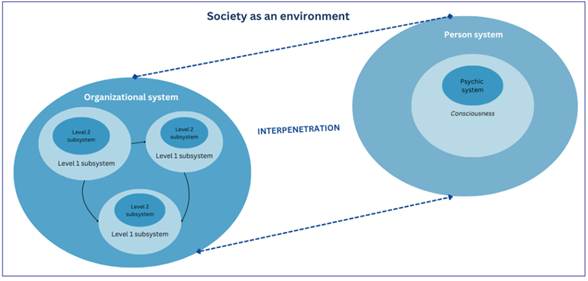
Society can thus be viewed as the totality of system/environment relationships without a fixed boundary, offering the environment where a person reproduces themselves as autopoietic, self-referential systems. Through psychic systems (functioning based on consciousness), a person engages in communication that allows interpenetration - connecting elements that imply the self-creation of structures - with other systems (Luhmann, 2016, 2022). Luhmann defines the person as “a psychic system observed by other psychic or social systems” (Luhmann, 2016, p. 132). Although social systems are formed by communication rather than human beings, communication itself presumes consciousness; therefore, persons appear in communication as effects of psychic systems whose environment is consciousness.
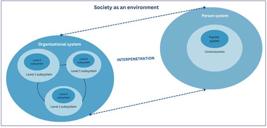
Within this framework, the person is defined as an autopoietic, self-referential system, represented by the psychic system, which operates in consciousness. Individuality is constituted through autopoiesis and may be expressed through communication in the form of interests, opinions, and perspectives. Luhmann rejects the generalization of the person on the basis of nature, as well as expectations tied to divisible social roles. Thus, human subjectivity is constituted on the basis of difference in relation to others, rather than a “collective identity,” and is established through contingent selections arising from self-reference and self-determination.
Understanding human beings as contingent self-constructions not only values individuality but also increases the complexity of social systems by expanding the range of elements and relations they must accommodate. This, in turn, requires systems to adapt in order to operate through interpenetration with a plurality of identities. The result is a dynamic of inclusion that simultaneously produces exclusion and marginalization as counter-concepts (Luhmann, 2022). According to Luhmann, the need for (super)specialization of functional systems in coevolution with contingent identities is inevitable; functional differentiation must continually emerge to accommodate the intensification of individuality and to enable processes of inclusion within the system. Such an approach, Luhmann (2022) argues, would obviate the need to adopt a totalizing notion of individuals as members of a given group in order to promote equal opportunities.
Luhmann’s perspective on the triad: Organizations, gender, and difference
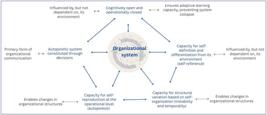
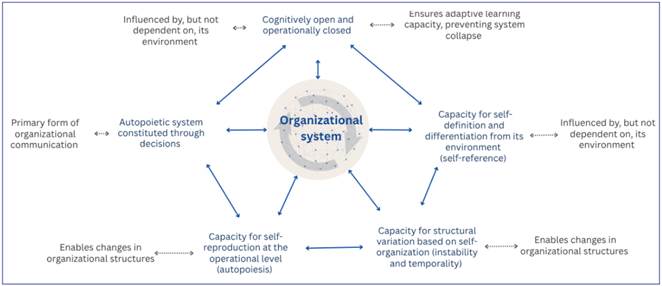
Expanding the General Theory of Social Systems into the realm of organizational studies, Luhmann (1997) constructs a conceptualization of organizations and their core elements (such as structure, decisions, knowledge/memory, personnel, expectations, and careers), defining them as systems that (re)produce themselves through their own operations (autopoiesis) and are formed through decisions. Additionally, they must be examined in terms of a specific temporality, so that observing the system in the present results from a past (which forms its memory) that remains contingent in relation to the future.
Viewing organizations as systems helps strengthen organizational theories by analyzing their complexity reduction (due to selection and contingency) and self-organization via decision-making. This clarifies their core functions and the foundation of their coding structures. In an organizational setting, understanding decision-making in relation to complexity, selectivity, and contingency allows for a more accurate analysis of how organizations operate (Figure 2).
The theoretical depth and the pursuit of an innovative definition of organizations and their core elements lend coherence to Luhmann’s work. However, these elements do not fully capture the complexity of organizational phenomena; its theoretical limits are highlighted in non-orthodox (re)readings of his legacy. Among these, the need to critically engage with the organizational system through the lens of a problem intrinsic to systemic differentiation stands out: gender (Vidal, 2017b, 2023).
Although Luhmann did not develop a systematic theory of gender, he addresses the issue in the essay Frauen, Männer und George Spencer Brown (2015) (“Women, Men and George Spencer Brown”). There, he critiques the guiding distinction of male/female as employed in feminist movements and scholarship, pointing to the need to reconsider the high degree of self-reference attributed to the subject “woman,” which tends to neglect other subjects in society and thereby normalizes gender binarism. In dialogue with debates already current at the time, he argues that this code is inadequate for capturing distinctions among persons, as it presupposes the naturalness of the male/female dualism and explicitly excludes other possibilities, such as transgender and intersex persons (Luhmann, 2015).
For Luhmann, this issue cannot be resolved through binary coding based on opposing values; instead, it requires more complex, polyvalent forms of coding. In an effort to “deparadoxify” the system, he suggests adopting Parsons’s distinction between universality and specificity. This would allow subjects to be conceptualized through both general and particular criteria without introducing the “excluded third” as a separate code; rather, it would be incorporated into the system’s operational logic.
Nevertheless, Luhmann references the work of the German scholar Eva Meyer, who, drawing on semiotics, defines the “feminine as a procedure,” a form of “becoming,” and elaborates the triad “meaning, subject, and gender” as effects of the symbolic movement of difference (Schuller, 2013, p. 8). Breaking away from ontological conceptions of reality, Meyer views the feminine as a process rooted in meaning created through language. Like Butler, she also engages with psychoanalysis and Julia Kristeva, a key figure in feminist semiotics. The difference between Butler and Meyer is, among other elements, that the latter employs constructivist concepts also found in Luhmann’s work, such as self-referentiality and autopoiesis.
In exploring alternative epistemological approaches to the issue, Luhmann (2015) opens a path for new ways to conceptualize gender differences, including through interdisciplinary theoretical developments. Specifically, he highlights the potential for dialogue with feminist scholarship, especially via unconventional theoretical combinations, as discussed in this article.
FEMINIST THEORIZING AND JUDITH BUTLER’S CONCEPT OF GENDER PERFORMATIVITY
While first- and second-wave feminism focused on the recognition of equal civil rights between men and women, as well as on struggles over sexual and reproductive freedom, feminist scholarship in the second half of the twentieth century became increasingly marked by a critique of the universalization of its subject and by the recognition of the impossibility of subsuming multiple identities under a single category. Key contributions in this regard include the work of Donna Haraway, Joan Scott, and Teresa de Lauretis.
Equally significant were the interventions of Black and lesbian feminisms, which advanced a necessary critique of the whiteness and heteronormativity of mainstream feminist projects. Influential contributions in this vein include those of Angela Davis, Audre Lorde, Monique Wittig, and Gayle Rubin. The notion of a plural feminism thereby gained prominence, and in the following century, decolonial perspectives further expanded feminist debates through the work of Lélia Gonzalez, Gayatri Spivak, María Lugones, and Oyèrónkẹ́ Oyěwùmí. Taken together, these developments foreground difference and expose the limits of universalizing and stabilizing conceptions of feminism’s central subject: “woman.”
Without attempting an exhaustive review of feminist theory, this overview situates the work of Judith Butler, whose theoretical project is grounded in the rejection and destabilization of the universal category of “woman” as the subject of feminism. Butler is a U.S.-based philosopher who identifies as non-binary and as a feminist, with an extensive body of work; this article focuses on those texts that address gender (2019, 2022a, 2023a, 2023b, 2024).
Butler explicitly resists attempts to situate their work within a single paradigm or epistemological framework (Butler, 2018). Instead, the author’s theoretical production demands close, careful reading, given its engagement with thinkers from diverse intellectual traditions mobilized to construct and rework the arguments proposed.
It is precisely this feature that renders Butler’s work both complex and analytically demanding. The author’s thought is developed through an unconventional, multidisciplinary approach that draws on philosophy, psychoanalysis, and feminist theory (Rodrigues, 2021). Although Butler rejects fixed labels, analyses of their work on gender performativity should acknowledge the influence of post-structuralism, particularly the author’s engagement with Derridean deconstruction.
By challenging the metanarratives that support the sex/gender binary (man/woman; masculine/feminine) and the universalization of “woman” as a subject, Butler (2018, 2023a) provides a sustained critique of feminist approaches based on the assumption of a stable, naturalized, and ahistorical identity. For Butler, destabilizing gender is both the starting point and the ultimate goal. Instead of trying to define a fixed feminist subject, the author shows its impossibility, whether by deconstructing binary theoretical frameworks or by conceptualizing gender as the result of performative acts that can parody what they seem to express. For this article, two key concepts are highlighted: gender performativity and gender regulation.
Performing gender: Bodies, regulation, and intelligibility
Butler’s inquiry can be framed by the following question: if stable identities do not exist—meaning no universal men and women based on biology—then how can such categories be defined? The author’s response involves a radical reworking of the binary framework through the merging of three approaches: 1) the feminist perspective and a critique of compulsory heterosexuality, 2) the Foucauldian theory on power and how subjects are formed, and 3) the Derridean critique of linguistic stability and structure.
The theory of gender performativity is grounded in two central claims: a) neither sex nor gender rests on an ontological foundation; and b) compulsory heterosexuality is culturally produced rather than naturally given. For Butler (2023a), both sex and gender are constituted through cultural frameworks, and even the “sexed body” is shaped by pre-discursive assumptions. There is, therefore, no causal or foundational relation between sex and gender.
Because gender and identity are unstable, they cannot serve as a foundation for feminism. Butler thus proposes a methodological and normative shift that takes into account the variability of the feminist subject, thereby enabling a critical interrogation of the reifications produced within feminism itself. This entails a crucial inversion: rather than asking who the subject of feminism is, Butler asks to what extent regulatory practices of gender formation produce the very coherence and identity attributed to the subject (Butler, 2023a, p. 43).
Accordingly, Butler’s methodological approach does not seek to determine who the subject is or how they define themselves, but rather to understand how practices external to the subject operate as normative ideals in the formation of identity. It is at this point that Butler introduces the notion of gender intelligibility as socially constructed and maintained. Directly related to culture and to socially instituted regulations, intelligibility is a concept used to indicate whether a given person is recognized within a socially established standard of (in)coherence, based on the articulation of sex, gender, and sexuality.
This analytical move is rooted in French post-structuralism, particularly in Foucault’s critique of the “truth of sex,” and serves to demonstrate that definitions of sex are not purely biological but are produced through relations of power that are naturalized through norms.
Refuting the gender binary in Claude Lévi-Strauss’s anthropological structuralism and the generalization of the heterosexual regime in psychoanalysis, Judith Butler argues that gender is not a direct and logical consequence of biological classification, but rather a “style” that is socially defined within a context and historicity that condition it. How, then, is it constituted? Through the “stylized repetition of acts,” that is, “bodily gestures, movements, and styles” (Butler, 2023a, p. 242), which perform gender within a socially and temporally situated field of intelligibility, rather than as a fixed, permanent identity grounded in natural norms.
Unlike theatrical or phenomenological conceptions of performativity, which presuppose a subject prior to action, Butler’s account—grounded in the philosophy of language and influenced by J. L. Austin’s speech act theory—defines performativity as a “discursive practice that enacts or produces that which it names” (Butler, 2023b, p. 35). Butler’s theorization, therefore, conceives of a direct relationship between language and the body, such that the latter produces, through stylized bodily acts, a given meaning apprehended by language: “Language sustains the body not by bringing it into being or feeding it in a literal way; rather, it is by being interpellated within the terms of language that a certain social existence of the body first becomes possible” (Butler, 2021, p. 17).
According to Rodrigues (2019), if J. L. Austin, as read by Jacques Derrida, entails two propositions—namely, that every speech act is perlocutionary, in the sense that it produces effects, and that every speech act depends on repetition to reveal the regulatory force of reiterated discourse—then Butler, reading Austin through Derrida, expands the notion of performativity by incorporating repetition as a condition of its force, linking each performative act to what precedes and succeeds it within a chain of reiteration.
Within this framework, Butler introduces the concept of gender performativity, based on performative acts that, when aligned with socially established norms and reiteration, create the perception of what is considered natural and consistent with a given idea of “man” or “woman.” It is through the ritualized repetition of gestures, movements, and bodily styles that the appearance of a “real” or naturalized woman is formed in line with prevailing norms.
Thus, drawing on Michel Foucault, the body is not simply inert matter, and gender, as a cultural construct, must, like sex, be understood in relation to the regulatory norms through which sexual difference is materialized (Butler, 2023b). In this sense, the gendered subject emerges as their body, gestures, and movements, within a socially, culturally, and historically situated context, inscribe a recognizable configuration within a matrix of gender norms (sex-gender-desire), which shapes the legitimizing practices of identity and classifies genders as intelligible/coherent or unintelligible/incoherent (Butler, 2023a).
In this context, intelligibility should be seen as a result of recognition rooted in dominant social norms (Butler, 2022a). Therefore, performing an incoherent, divergent, or deviant configuration involves opposing established social regulations, which not only govern pre-existing genders but also shape them, aligning with the productive view of discourse and power presented by Foucault (Butler, 2022a, 2022b).
If gender is performed through norms, Butler (2022a) encourages us to examine which norms support gender understanding within a specific social and historical context. This helps identify ways to challenge what is seen as unintelligible and advances a key goal of feminism: critiquing all-encompassing cultural systems that exclude certain individuals. In this sense, we suggest extending this analysis to organizations.
Gender policies and norms: Limits and strategies for gendered life
Within organizational contexts, a central question arises: if “woman” is a contested category, how should organizational norms and policies be designed to promote gender equity? This tension is inherent to the performative account of gender: legal recognition, distributive justice, and anti-discrimination efforts require identifiable subjects, yet such identification inevitably produces exclusions (Butler, 2022a).
Rejecting the universalization of subjects and destabilizing identity categories to reveal the exclusions paradoxically created by their normative nature does not eliminate the strategic need to engage with normalized categories as sources of insight into the norms and policies enacted within organizations. In this context, Judith Butler (2019, p. 227) calls for a “critical genealogy of gender” to understand how gender is mobilized, by redescribing existing gender identities, identifying those that serve as essential, and simultaneously highlighting other ways of living gender, thus providing a perspective more aligned with social reality (Butler, 2019). Therefore, academic research committed to the de-ontologization of the gendered subject cannot start from predefined notions of subjects but must instead focus on understanding how subjects are formed and influenced by the regulatory frameworks that govern them (Butler, 2022a).
Nevertheless, from a strategic perspective, this engagement might involve using terms that are often essentialized, such as “woman” and the feminine. Therefore, it is important to avoid treating these terms in a totalizing way, while staying aware of the multiple and indeterminate possibilities they include. As Butler (2019, p. 228) argues, “it is politically important to represent women, but this must be done in such a way that the representation does not distort or reify the very collectivity that the theory seeks to emancipate.” More recently, Butler (2024) has clarified that the critique of binary frameworks is not aimed at eliminating “men” and “women,” but rather at questioning this organization, revealing its exclusionary effects, and creating space for alternative forms of identity that are not bound by hierarchy.
To stay true to Butler’s work, then, is to acknowledge the critical role of deconstructing binary gender and rejecting a pre-social, ahistorical “woman,” while keeping the category “women” open as a continually evolving field receptive to ongoing reinterpretation. This approach ensures that it remains a productive space for embracing differences, thus breaking away from the normative - and consequently exclusionary - logics of the past (Butler, 2018).
Finally, Butler (2024) highlights the importance of defining the category “women” alongside other social markers such as race, class, disability, age, sexual orientation, and nation, to ensure this subject is understood in non-essentialist ways and in ways that reflect the differences that influence not only how individuals perceive themselves but also how they are socially recognized (Rodrigues, 2021). This reflects a broad use of intersectionality, a theoretical framework developed within Black feminism to explain intragroup differences, famously illustrated by Kimberlé Crenshaw (1994) as a map where intersections intensify and interrelate forms of oppression.
OPENING CONCEPTUAL PATHWAYS FOR A CRITICAL ANALYSIS OF GENDER CONSTRUCTION IN ORGANIZATIONS
If all scientific inquiry must be based on a previously defined theoretical framework, then theories can be compared to properly signposted roads, and paradigms to maps that help us find where we are, where we have been, and where we might go (Burrell & Morgan, 2019). Metaphors aside, a paradigm can be understood as a body of scientific knowledge structured by metatheoretical assumptions that lead to a specific way of understanding the social world (Burrell & Morgan, 2019; Morgan, 2007).
A central challenge in organizational studies is integrating multiple paradigms without compromising theoretical consistency. Since the field has historically been dominated by functionalist-positivist approaches, it can only achieve genuine critical and interpretive insights by incorporating theoretical perspectives from different paradigmatic traditions. Such combinations greatly enhance the analysis of organizational complexity, ambiguity, and paradox (Lewis & Grimes, 2007). Regarding gender and organizations, this challenge is especially relevant: while gender studies are often linked to the radical humanist paradigm, organizational research still relies heavily on functionalist assumptions (Burrell & Morgan, 2019).
Thus, this study proposes a multi-paradigmatic review. Starting from a phenomenon of interest (the production and reproduction of gender), it aims to interconnect theories rooted in various paradigmatic traditions (i.e., “transition zones”) to enable a critical analysis of organizational phenomena (Lewis & Grimes, 2007), following a previously defined methodological approach (Table 1).
This multi-paradigmatic approach draws on Luhmann’s social systems theory and Butler’s theory of gender performativity to support a systemic analysis of organizations through a performative perspective on gender. The main theoretical premises and key concepts of each author are summarized (Table 2) to identify points of convergence as well as the theoretical limitations of their discussion.
Although rooted in different paradigmatic traditions, both approaches are connected through their critique of structuralism. Luhmann’s functional-structuralism emphasizes function rather than structure, building upon a critique of Parsons, while Butler is heavily influenced by Derridean deconstruction (Rodrigues, 2019). Both reject the fixedness and stability assumed in structuralist analysis and instead advocate for a critical rethinking of knowledge production, challenging ontological assumptions and the idea of a pre-discursive reality. It is therefore no surprise that both are critical of Saussurean linguistics and Lévi-Straussian anthropology.
Their shared rejection of essentialism and reductionism forms the basis for engaging with phenomenology and semiotics, as well as a shared commitment to understanding “reality” not as the perception of a pre-existing nature, but as something shaped through human experience mediated by language.
From this perspective, it becomes clear why both reject the man/woman binary as an analytical foundation for understanding society and gender. As a legacy of structuralism, binary classification is insufficient to capture the diversity of lived experiences and serves as a mechanism of exclusion, marginalizing those whose embodied lives do not conform to such categories, including transgender and intersex individuals (Butler, 2023a; Luhmann, 2015). This restrictive structuring is just as inadequate for explaining modern family arrangements, like single-parent and same-sex families (Butler, 2023a, 2024; Luhmann, 2015). Therefore, both authors question the use of “woman” as a central category in identity-based feminist politics.
It is also important to emphasize that, in both approaches, alterity in the relationship between the “self” and the “other” remains shaped by socially constructed expectations. Judith Butler’s claim that the “self” performs the phantasmatic gender it considers itself to “be” may be complemented by what Niklas Luhmann (2016, pp. 255-256) describes as “stable personal characteristics” arising from normative and cognitive expectations that function within communication. Therefore, if the subject acts based on a belief in belonging to a specific gender, recognition as a gendered individual depends on how well this performativity matches the expectations embedded in communication that guide understanding (or non-understanding).
Furthermore, in both frameworks, the body is not just inert matter, but plays an important role in social recognition. For Luhmann (2016), communication can occur even without language, with body presence acting as a key factor that, when integrated into symbolically generalized communication media, can either strengthen or hinder the development of expectations within the interaction between social and psychic systems. In Butler (2022a, 2023b), on the other hand, the body facilitates gender performativity, which happens through the stylized repetition of bodily acts in relation to prevailing social norms.
In both cases, the importance of the body is closely linked to language and the socio-cultural context in which it is embedded. This connection is clear in the normative and cognitive expectations that support communication in Luhmann’s autopoietic systems, as well as in the interaction between psychic and social systems. In Butler’s framework, this can be understood through the intelligibility created by the matrix of gender norms. Instead of trying to exhaustively define types of gender, even if that were possible, Butler focuses on understanding how this gendered matrix is constituted and operates within social relations, with particular attention to what it excludes.
Thus, both theoretical frameworks suggest that distinctions produced through language enable the selection of subjects and, consequently, authorize or constrain what may be constituted as sexual and gender identity within a given social context - understood, in Judith Butler’s terms, as a social field, and, in Niklas Luhmann’s terms, as a social system.
Bringing Luhmann’s and Butler’s theories into dialogue allows, with caution, to outline a zone of convergence between them. Although based on different paradigms, both share a rejection of structuralism, the pre-social subject, the normalization of the subject, and gender binarism, while emphasizing language as a key aspect of social analysis and highlighting its influence on social interaction. At the same time, it is also necessary to recognize important differences that serve as analytical limits in this theoretical framework, especially concerning constructivism, individualism, and power.
While Luhmann adopts a constructivist systems-theoretical view (Vidal, 2015), Butler (2023b) criticizes constructivism because it assumes a pre-existing substrate—matter or a surface—available for interpretation. Butler highlights the exclusions created by gender constructivism and its dependence on a pre-discursive idea of sex. In this sense, deconstruction aims to reveal what is excluded and erased by the boundaries that define the subject. Therefore, Butler describes gender as “a post-structuralist revision of discursive performativity, as it operates in the materialization of sex” (Butler, 2023b, p. 33, emphasis in original).
A further point concerns individualism and the autonomy of the subject in the constitution of social identity. For Luhmann (2022), the human being is contingent because no norm can fully capture it; this is because the individual constitutes a personal autopoietic system, which provides a degree of autonomy and allows for the ongoing growth of complexity. Butler (2021, 2022a, 2022b, 2023a), on the other hand, challenges this idea of autonomy, arguing that it is ultimately an illusion since social life relies on recognition mediated by dominant social norms.
These limitations, however, do not preclude their combined use in investigating how gender is communicated within organizations. Drawing on the second-order observation characteristic of the general theory of social systems, it becomes possible to examine how the gender matrix is constructed and operationalized within organizations, as well as which inclusions and exclusions are produced, thereby identifying excluded third parties. This does not entail adopting gender constructivism as a starting point or premise. Rather, the aim is to identify, within Butler’s framework, the matrix of intelligibility through which gender is (re)produced in organizations. This approach is likewise aligned with a further shared theoretical rejection: that of the pre-social subject—that is, a subject presumed to exist prior to the social order, as atemporal and dissociated from cultural, social, and normative contexts.
Conversely, Niklas Luhmann’s view of individuality should be approached with caution, as a superficial reading might wrongly portray him as a utopian liberal theorist, which is not accurate. The removal of the human from the center of society highlights the need to recognize that any claim to universalize the subject is flawed. For Luhmann, no approach based on ontological or pre-discursive assumptions can fully grasp human individuality.
Therefore, a person is not defined by what social norms prescribe; nor does any social norm “represent” a given subject. In Luhmann’s view (2022), the human being is best understood as a contingent self-construction, whose growing individuation is inevitable and requires continual attention to the distinction between the self and its systemic operations in relation to social systems. The contingency involved in perceiving the subject and in forming identity is a crucial element for any comprehensive and non-exclusionary analysis of gender. Regarding the main focus of this article, individuals cannot be universally categorized as men or women because gender binarism does not inherently define them. Instead, it functions as a conventional binary code that helps select information within autopoietic communication processes.
Starting from this contingent conception of the person and aiming to understand how it functions within an organizational system situated in time, space, and culture, communication becomes a key analytical element. Furthermore, in both theoretical frameworks, norms are essential for understanding how gender operates, as they generate and sustain functional differentiation within the system through the power they hold (Luhmann, 1995; Vidal, 2023). Viewing organizations as autopoietic, self-referential, and operationally closed systems that reduce complexity through their own differentiations and choices allows us to explore, based on communication, how the gender matrix is formed and to identify which genders are recognizable within a given organization, thus revealing the dynamics of inclusion and exclusion that are central to both authors.
Despite their theoretical and conceptual differences, a common thread emerges: in both frameworks, power is expressed through language—whether as norms or communication. Power is thus present in both perspectives, and when these are integrated within organizational studies, they facilitate analysis of how organizations participate in constructing gender. Through their communication and decisions, organizations can define gender, restrict the range of possible selections, and thereby structure the matrix of intelligibility that regulates the system.
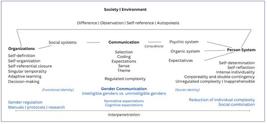
In this context, Judith Butler and Niklas Luhmann provide a theoretical framework characterized by areas of convergence: both reject essentialist ideas, criticize the pre-social subject, and challenge fixed, timeless structures as well as Cartesian dualisms that overlook social complexity. Simultaneously, both acknowledge the importance of contingency, whether in regulatory practices and communication processes or in attempts to ground the individual in foundationalist terms as a reflection of historically situated sociocultural norms. By bringing their core concepts into dialogue, it becomes possible to build a multi-paradigmatic framework and to identify points of theoretical connection for systemic organizational studies informed by a post-structuralist feminist perspective (Table 3).
A further point of divergence between the authors concerns their respective conceptualizations of power. Butler (2022a, 2022b) approaches power through the regulatory and productive lens inherited from Michel Foucault, emphasizing that power not only regulates what already exists but also participates in its very production and formation. According to the author, “the subject is the linguistic occasion for the individual to achieve and reproduce intelligibility, the linguistic condition of its existence and agency” (Butler, 2022b, p. 19). Luhmann (1995), by contrast, defines power as a specific form of communication that coordinates and connects actions, communications, and decisions, while limiting the range of possible choices to improve understanding.
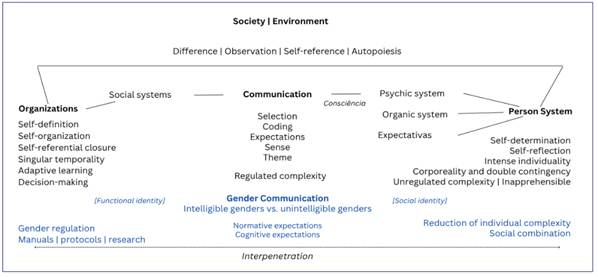
As shown in Table 3, three theoretical concepts are proposed to support organizational studies focused on gender: gender communication, gender regulations, and the binary code based on gender intelligibility.
Gender communication can be described as a process of selecting information based on ideas about gender, connecting various communications that, within a specific organization (as a social and spatial setting) and during a specific temporal frame, enable the construction of a code of gender intelligibility (intelligible and unintelligible genders) and stabilize expectations. This, in turn, improves communication understanding, which can happen at three levels: understanding, non-understanding, and misunderstanding. Such communications must be examined within the socio-cultural and temporal context of the organizational system.
Gendered communication may manifest through legal instruments (laws, ordinances, resolutions, etc.) or other technical documents (protocols, manuals, organizational reports, etc.). When formalized as regulations, they help stabilize the organizational system by setting broad normative expectations about gender, thereby reducing the complexity of identities but also, paradoxically, constraining the expression of individual subjectivity.
This specific form of communication is called gender regulations, a proposal based on Niklas Luhmann’s concept of socially established norms, combined with Judith Butler’s idea of gender regulation (Butler, 2022a). While, in Luhmannian terms, regulations represent normative expectations, for Butler they also serve a productive purpose, shaping both the recognition and the formation of the gendered subject.
By integrating the theoretical framework outlined in this article (Figure 3) with methodologies that favor qualitative analysis, it becomes possible to see how organizations repeatedly produce and reproduce understandings of gender and, as a result, the boundaries of the gender equity policies they aim to implement. In this way, Butler’s critical genealogy of gender can be put into practice within organizational analysis.
FINAL CONSIDERATIONS
New theoretical directions demand a rethinking of how academic research is conducted. Challenging the dominant functionalism in organizational studies is not easy, but it can be addressed through multi-paradigmatic inquiry, which involves engaging theories from various paradigms and contributes to a broader epistemological framework for analyzing the issue (Lewis & Grimes, 2007). This is the main goal of this article: to promote theoretical dialogue and to suggest multi-paradigmatic perspectives that allow for the critical inclusion of the gender dimension in systems-based organizational studies.
To this end, combining Judith Butler and Niklas Luhmann is not only achievable but also promising. While Butler encourages us to resist reductionist views of gendered life and to challenge taken-for-granted assumptions about gender and sex, Luhmann offers a theoretical framework that helps us see how these ideas function within organizations and how they become embedded in organizational systems. On one hand, sex and gender resist reductionism and ontological grounding; on the other hand, gendered communications let us observe how these distinctions are constructed and how they influence the processes of inclusion and exclusion.
Communications expressed through norms and decisions are therefore especially important, and a qualitative approach based on discourse analysis provides an effective way to examine various materials from organizational documents. This approach allows for the identification and analysis of gender regulation practices within organizations, supporting an essential research agenda from a non-exclusionary perspective (Irigaray & Stocker, 2024).
ACKNOWLEDGEMENTS
The authors thank the members of the Research Group on Governance, Organizati ons, Public Policies, and Accounti ng in the Amazon (GOPPCA) for the theoreti cal discussions, the interdisciplinary knowledge exchange, and the constructi ve criti cism provided during the development of this theoreti cal proposal.
References
- Burrell, G., & Morgan, G. (2019). Sociological paradigms and organisational analysis: elements of the sociology of corporate life Routledge.
- Butler, J. (2018). Fundações contingentes: feminismo e a questão do “pós-modernismo”. In S. Benhabib, J. Butler, D. Cornell & N. Fraser (Eds.), Debates feministas: um intercâmbio filosófico (pp. 61-92). Unesp.
- Butler, J. (2019). Atos performáticos e formação dos gêneros: um ensaio sobre fenomenologia e teoria feminista. In H. B. de Hollanda (Org.), Pensamento feminista: conceitos fundamentais (pp. 213-230). Bazar do Tempo.
- Butler, J. (2021). Os sentidos do sujeito Autêntica.
- Butler, J. (2022a). Desfazendo gênero Unesp.
- Butler, J. (2022b). A vida psíquica do poder: teorias da sujeição Autêntica.
- Butler, J. (2023a). Problemas de gênero: feminismo e subversão da identidade (14a ed.). Civilização Brasileira.
- Butler, J. (2023b). Corpos que importam: os limites discursivos do “sexo” (2a ed.). Crocodilo.
- Butler, J. (2024). Quem tem medo do gênero? Boitempo.
-
Caldas, M. P. (2005). Paradigmas em estudos organizacionais: uma introdução à série. Revista de Administração de Empresas, 45(1), 53-57. https://doi.org/10.1590/S0034-75902005000100008
» https://doi.org/10.1590/S0034-75902005000100008 -
Cerchiaro, I., Ayrosa, E. A. T., & Zouain, D. M. (2009). A aplicação de abordagens feministas na pesquisa em administração. Cadernos EBAPE.BR, 7(4), 649-664. https://periodicos.fgv.br/cadernosebape/article/view/5135
» https://periodicos.fgv.br/cadernosebape/article/view/5135 - Crenshaw, K. W. (1994). Mapping the margins: intersectionality, identity politics, and violence against women of color. In M. A. Fineman & R. Mykitiuk (Eds.), The public nature of private violence (pp. 93-118). Routledge.
-
Harding, S. (1993). A instabilidade das categorias analíticas na teoria feminista. Estudos Feministas, 1(1), 8-32. https://periodicos.ufsc.br/index.php/ref/article/view/15984
» https://periodicos.ufsc.br/index.php/ref/article/view/15984 -
Irigaray, H. A. R., & Stocker, F. (2024). Gênero e relações de trabalho: por uma nova agenda de pesquisa. Cadernos EBAPE.BR, 22(2), e91028. https://periodicos.fgv.br/cadernosebape/article/view/91028
» https://periodicos.fgv.br/cadernosebape/article/view/91028 - Lewis, M., & Grimes, A. (2007). Metatriangulação: construção teórica com base em paradigmas múltiplos. In M. P. Caldas & C. O. Bertero (Coords.), Teoria das organizações (pp. 34-65). Atlas.
- Luhmann, N. (1995). Poder Anthropos.
- Luhmann, N. (1997). Organización y decisión. Autopiesis, acción y entendimiento comunicativo Anthropos.
- Luhmann, N. (2015). Mujeres, hombres y George Spencer Brown Universidad Nacional Autónoma de México.
- Luhmann, N. (2016). Sistemas sociais: esboço de uma teoria geral Vozes.
- Luhmann, N. (2022). Indivíduo, individualidade, individualismo. In Teoria dos sistemas na prática: Vol. I, estrutura social e semântica Vozes. (Obra original publicada Gesellschaftsstruktur und Semantik).
- Morgan, G. (2007). Paradigmas, metáforas e resolução de quebra-cabeças na teoria das organizações. In M. P. Caldas & C. O. Bertero (Coord.), Teoria das organizações (pp. 12-33). Atlas.
- Rago, M. (2019). Epistemologia feminista, gênero e história. In H. B. de Hollanda (Org.), Pensamento feminista brasileiro: formação e contexto (pp. 371-387). Bazar do Tempo.
- Rodrigues, C. (2019). Três tempos da performatividade em Butler. In M. Cattoni & I. Viana (Orgs.), Políticas da performatividade: conferências Conhecimento.
- Rodrigues, C. (2021). O luto entre clínica e política: Judith Butler para além do gênero Autêntica.
- Schuller, M. (2013). Korrespondieren als chance: Vorwort zur Neuauflage. In E. Meyer (Ed.), Zählen und Erzählen: Für eine Semiotik des Weiblichen (pp.7-9). Stroemfeld.
-
Vidal, J. P. (2017a). A teoria neosistêmica de Niklas Luhmann e a noção de autopoiese reflexiva nos estudos organizacionais. Cadernos EBAPE.BR, 15(2), 273-291. https://periodicos.fgv.br/cadernosebape/article/view/57480
» https://periodicos.fgv.br/cadernosebape/article/view/57480 - Vidal, J. P. (2015). Sistemas y ser humano: pensamento autorreferencial em la Amazonia Icaria.
- Vidal, J. P. (2017b). Por meio da teoria: enfoques neosistêmicos e pós-estruturalistas Paka-Tatu.
-
Vidal, J. P. (2019). Teorías neosistémicas y administración pública: posibilidades observacionales y regulativas. Revista del CLAD Reforma y Democracia, (75), 77-110. https://doi.org/10.69733/clad.ryd.n75.a191
» https://doi.org/10.69733/clad.ryd.n75.a191 -
Vidal, J. P. (2022). Saindo do nevoeiro: contribuições neosistêmicas e pós-estruturalistas para as teorias organizacionais. Teoria e Cultura, 17(2), 57-69. https://doi.org/10.34019/2318-101X.2022.v17.39454
» https://doi.org/10.34019/2318-101X.2022.v17.39454 - Vidal, J. P. (2023). Aprofundando o iluminismo sociológico: conceitos para comunicações ecológicas Lumen Juris.
-
10
[Translated version] Note: All quotes in English translated by the authors.
-
DATA AVAILABILITY
All data supporting the results of this study are included within the article.
-
ARTIFICIAL INTELLIGENCE USAGE
No artificial intelligence tools were used.
-
PARECERISTAS
Fernanda Mitsue Soares Onuma, Universidade Federal de Alfenas, Varginha, MG, Brazil. ORCID: https://orcid.org/0000-0002-7392-2191
-
PARECERISTAS
Carmen Pires Migueles, Fundação Getulio Vargas, Rio de Janeiro, RJ, Brazil. ORCID: https://orcid.org/0000-0002-3003-3714
-
PARECERISTAS
One reviewer did not authorize the disclosure of their identity.
-
PEER REVIEW REPORT
The peer review report is available at https://periodicos.fgv.br/rap/article/view/94420
Edited by
All data supporting the results of this study are included within the article.

 Source: Elaborated by the authors
 Source: Elaborated by the authors.
 Source: Elaborated by the authors.