
 Community water fluoridation and intelligence quotient: systematic review and meta-analysis of observational studies
Abstract
The aim is to assess the current level of evidence of the association between community water fluoridation and intelligence. The method used for the study was a systematic review and meta-analysis of observational studies, to evaluate evidence of an association between exposure to community water fluoridation and intelligence using intelligence quotient (IQ) tests. Indexed databases PubMed/Medline, Embase, Scopus, Web of Science and reference lists of included articles were used. A meta-analysis with random effects models was performed and beta coefficients and pooled standardized mean differences (SMDs) and 95% confidence intervals of IQ scores were estimated in relation to water fluoridation. Of the 941 studies identified by the database search, three studies were included in the meta-analysis that used adjusted beta linear regression coefficients. There is no meta-analysis for adults because there is only one study for them. In the joint analysis, there was no association between exposure to fluoride in the water supply and IQ, for a linear regression coefficient (called β) of 1.01. Heterogeneity between studies was low. This meta-analysis underlines the safety of community water fluoridation concerning IQ’s intelligence assessment.
Key words:
Fluorides; Meta-Analysis; Systematic Review; Drinking Water; Intelligence Tests
Resumo
O objetivo é avaliar o nível atual de evidência da associação entre fluoretação da água comunitária e inteligência. O método utilizado para o estudo foi uma revisão sistemática e meta-análise de estudos observacionais, para avaliar evidências de associação entre exposição à fluoretação da água comunitária e inteligência por testes de quociente de inteligência (QI). Foram utilizadas bases de dados indexadas PubMed/Medline, Embase, Scopus, Web of Science e listas de referências dos artigos incluídos. Uma meta-análise com modelos de efeitos aleatórios foi realizada, coeficientes beta e diferenças médias padronizadas (SMDs) foram agrupadas e intervalos de confiança de 95% dos escores de QI foram estimados em relação à fluoretação da água. Dos 941 estudos identificados pela busca nas bases de dados, três estudos foram incluídos na meta-análise que utilizou coeficientes de regressão linear beta ajustados. Não há meta-análise para adultos, porque há apenas um estudo para eles. Na análise conjunta, não houve associação entre a exposição ao flúor na água de abastecimento e o QI, para um coeficiente de regressão linear (denominado β) de 1,01. A heterogeneidade entre os estudos foi baixa. Esta meta-análise confirma a segurança da fluoretação da água comunitária no que diz respeito à avaliação de inteligência.
Palavras-chave:
Fluoretos; Metanálise; Revisão Sistemática; Água Potável; Testes de Inteligência
Resumen
El objetivo es evaluar el nivel actual de evidencia sobre la asociación entre la fluoración del agua potable y la inteligencia. El método empleado fue una revisión sistemática y un metaanálisis de estudios observacionales para evaluar la evidencia de dicha asociación entre la exposición a la fluoración del agua potable y la inteligencia, medida mediante pruebas de cociente intelectual (CI). Se utilizaron las bases de datos indexadas PubMed/Medline, Embase, Scopus y Web of Science, así como las listas de referencias de los artículos incluidos. Se realizó un metaanálisis con modelos de efectos aleatorios y se estimaron los coeficientes beta agrupados, las diferencias de medias estandarizadas (DME) y los intervalos de confianza del 95% de las puntuaciones de CI en relación con la fluoración del agua. De los 941 estudios identificados en la búsqueda en bases de datos, se incluyeron tres estudios en el metaanálisis, que utilizó coeficientes beta de regresión lineal ajustados. No se realizó un metaanálisis para adultos, ya que solo se encontró un estudio para este grupo. En el análisis combinado, no se observó asociación entre la exposición al fluoruro en el agua potable y el CI, con un coeficiente de regresión lineal (β) de 1,01. La heterogeneidad entre los estudios fue baja. Este metaanálisis confirma la seguridad de la fluoración del agua potable en relación con la evaluación de la inteligencia.
Palabras clave:
Fluoruros; Metaanálisis; Revisión Sistemática; Agua Potable; Pruebas de Inteligencia
Introduction
Health authorities and managers have historically recognized the importance of fluoridation in caries control in children and adults based on the scientific evidence that has been accumulated and the results of this public policy, even after the increased use of fluoridated dentifrice1,2. Fluoride in water supplies is an important public health measure, decreasing demineralization and activating remineralization of mineralized dental tissues3. Since water fluoridation implementation to prevent caries in the 1950s, the only proven adverse effect was mild dental fluorosis caused by fluoride ingestion during the period of tooth enamel mineralization in children up to 8 years old4.
Some studies have posed the possibility that fluoride exposure in the early years of life could lead to changes in the central nervous system, contributing to cognitive deficits5. Fetal exposure has also been investigated due to the ability of fluoride to cross the placenta and penetrate the fetal blood-brain barrier, becoming deposited in brain tissues6. But most studies have been done in areas with naturally occurring fluoride in the water, at concentrations far above the limits required to control caries, with ecological design, without adjustment for confounding variables, or in areas with water containing other neurotoxicants such as arsenic and iodine7. The epidemiological evidence is heterogeneous, and therefore it does not make sense to extrapolate the findings to show that community water fluoridation negatively influences IQ8-10. The current evidence does not allow stating that community water fluoridation is associated with intelligence quotient (IQ) impairment, indicating the need for new epidemiological studies that can provide more evidence regarding this purported association11.
Other longitudinal studies on the subject have recently been performed in areas with community water fluoridation (fluoridation in the range of 0.7-1.0 mg/L), taking into account possible confounding factors and improving study design6,12. Thus, systematic review and meta-analysis synthesizing evidence from multiple, more recent studies can provide more robust evidence on this subject. The current limits of evidence and the need to critically evaluate it underscore the importance of conducting a systematic review on the topic13. In their systematic review, Veneri et al. 2023 found lower IQ scores for fluoride concentrations in water ranging from 0.13 to 5.55 mg/L14, meaning that people exposed to fluoride far above the recommended levels for caries prevention were analyzed. In the study, it is proposed to overcome this limitation by conducting a systematic review including only studies with fluoride concentrations in water supplies in the range recommended to prevent caries (0.4 to 1.5 mg/l F). The rationale for selection was based on the established value of up to 1.5 mg/l of fluoride in water described in the “Guideline for drinking water quality” of the World Health Organization (WHO)15 and in the Canadian Agency for Drugs and Technologies in Health (CADTH)10. In addition, there is a systematic review with by the National Health and Medical Research Council (2017) of Australia that also used the same range9, that is, the inclusion of studies that were within a range that is considered safe was considered.
This systematic review with meta-analysis aimed to evaluate the combined effect of observational studies measuring the association between exposure to community water fluoridation and intelligence in populations with no age restrictions. Intelligence was assessed using IQ tests, considering only studies with fluoride concentrations within the range recommended for caries prevention (between 0.4 mg/l and 1.5 mg/l fluoride). The hypothesis is that exposure to community water fluoridation at levels recommended for the prevention of dental caries is not associated with worse performance on IQ tests.
Methods
Protocol and registration
This systematic review followed COSMOS-E guidelines16 on systematic reviews and meta-analyses of observational studies of etiology. The detailed protocol of this review was registered with the International Prospective Register of Systematic Reviews (PROSPERO - www.crd.york.ac.uk/PROSPERO) under number CRD42021253748.
Context
This research was carried out to answer the question: 1) Is exposure to community water fluoridation associated with intelligence as assessed by IQ tests in populations with no age restrictions?
Outcome and exposure measurement
The intelligence levels were measured by scores on intelligence quotient tests. Exposure to community water fluoridation was measured based on historical records, self-reported or ecologically by means or range of exposure to community water fluoridation by location (area where the person lived) or not, such as fluoridated area versus non-fluoridated area. The community water fluoridation variable was categorized into fluoride levels ‘non-fluoridated’ and ‘fluoridated groups’. One study assessed fluoride concentration as a continuous variable, such as a reduction in IQ scores by an increase of 1mg/l of fluoride, was not included in this review.
Search strategy
The databases searched were MEDLINE via PubMed, EMBASE via OVID, Scopus, and Web of Science. The PECO strategy was used for the search, as follows: Population, consisting of children and adults; Exposure, consisting of exposure to water supply fluoridation in levels recommended for caries prevention; Control/comparison, consisting of not being exposed to community water fluoridation; and Outcome, consisting of intelligence, as measured by IQ tests. In these sources, all articles with the combination of terms related to water fluoridation and intelligence were searched. No filters or restrictions regarding age, gender, ethnicity, language, year of publication or country were used. Regular alerts were set up to update the searches until the final report was published. No new articles appeared after the search period that met the inclusion criteria. The search strategy used controlled vocabulary, such as MeSH (Medical Subject Headings) from the National Library of Medicine, and free terms for each database searched. The search strings were generated by combining keywords and synonyms using Boolean operators OR and AND, following the syntax rules of each library database. Other relevant studies in the reference lists of the included studies were searched. A search was carried out in the LILACS database, but no additional articles were found. The first 100 results of a Google Scholar search were searched and no additional articles were found either. The search period for the articles ran from 1 to June 30, 2024. The search strategies used in each database are listed in Appendix 1.
Eligibility criteria
Studies that assessed intelligence quantitatively using IQ tests in populations receiving artificially fluoridated water or whose water supply had natural fluoride levels compatible with those recommended for dental caries prevention (fluoride levels between 0.4 mg/l and 1.5 mg/l) were included10,15,17. For the control group, populations not exposed to water fluoridation or with low fluoride levels in the water supply (≤ 0.4mg/l) were included.
Observational studies were considered eligible, including cohort, case-control, cross-sectional. No community experimental studies and randomized clinical trials were identified in the search. Studies were excluded based on these criteria: 1) study design (ecological studies, qualitative studies, systematic reviews and meta-analyses, case series, animal studies, in vitro studies); 2) population (studies that did not make comparisons between fluoride-exposed and non-exposed populations); or 3) publication type (letter to the editor, literature reviews, scoping reviews, and conference and congress abstracts). The goal was to review existing studies that grouped participants by exposure or non-exposure to community water fluoridation in order to produce a perspective on water fluoridation as a public health measure, regardless of access to other sources of fluoride. Studies that evaluated only urinary fluoride concentrations were also excluded because the aim of this review was to examine fluoride present (or not) in community water supplies. Studies using urinary fluoride were not included because they imply measuring exposure to other sources (e.g., toothpaste, tea, coffee, bone turnonver).
Study Selection
The Endnote software, version X8.0.1, was used to organize the articles identified in all databases. Duplicate articles were identified and removed before the screening of titles and abstracts was done. After that, they were exported to the Rayyan app. Two independent reviewers screened in duplicate the titles and abstracts identified during the electronic and manual searches for eligibility. For all studies selected by reading the title and abstract, and also for studies that were potentially eligible but did not provide sufficient information in the title and abstract, the full text was read and assessed by the two reviewers according to the eligibility criteria. In case of disagreement regarding eligibility, this was settled by consensus with the participation of a third reviewer that acted as a reference.
Data extraction
A data extraction form made in Microsoft Excel 2016 (Microsoft Corporation, Washington, USA) was used to collect, tabulate and code relevant data from the included articles. Information extracted included: study identification (authors, country of origin, year of publication), study design, sample size, age range, area (urban or rural), assessment of fluoride exposure (level or duration of fluoride exposure), the test used to diagnose the outcome, confounding factors considered (sex, age, diet, exposure to other sources of fluoride, socioeconomic status), the statistical method used, estimated effect measure, outcome evaluation, reported outcomes, and quality of studies. Effect measures were estimated in the quality of mean differences in IQ scores comparing those exposed and unexposed to fluoridated water. For the studies that considered effect measures in terms of percentiles of fluoride exposure, the percentile with < 0.4 mg/l fluoride was considered unexposed, and the percentiles in the range of 0.4 to 1.5 mg/l were considered exposed. In the age-stratified results, the effect measures for each stratum were reflected in the meta-analysis. For studies with estimates adjusted for different arrangements of confounding variables, the effect measure adjusted for the largest number of variables was extracted and used in the analyses.
Bias risk assessment
The individual methodological quality of the studies included in this review was assessed by two independent reviewers based on the Joanna Briggs Institute (JBI) critical appraisal checklist18. The JBI is tool that has been developed to critically assess the risk of bias of quantitative analytical studies. As the JBI has tools that were developed specifically for observational studies, we understood that using it was adequate for the purpose of evaluating the quality of the studies included in this review.
The checklist contains eight questions for cross-sectional studies and eleven questions for cohort studies, with four possible answers: ‘yes’, ‘no’, ‘unclear’, or ‘not applicable’. The number of positive responses is summed, and in this systematic review, a percentage < 50% to indicate low quality, 50 to 70% to indicate intermediate quality, and > 75% to indicate high quality was taken into account19. Disagreements were resolved by reaching a consensus, with the participation of a third reviewer as a referee.
Statistical analysis
Stata 14.0 software (StataCorp, College Station, Texas, USA) and Cochrane Review Manager (RevMan) were used for the meta-analysis. Heterogeneity between studies was assessed using Q-statistic and I² measures, considering a significance level of 0.1020. Data from individual studies were pooled using a random effects model21, and the adjusted estimates of the studies were combined to perform the meta-analysis. A sensitivity analysis was performed, including the only article with adult participants. Forest plots were used to display the results.
The relationship between exposure to community water fluoridation and IQ scores was assessed based on the effect estimate (beta coefficient) and respective 95%CIs published in each study. A meta-analysis of pooled standardized mean differences (SMDs) of crude measures was also performed to aggregate a larger number of studies, as most did not have an adjustment for confounding variables. The meta-analysis included studies with IQ scores and an unexposed/low fluoride group (reference group), and a group exposed to fluoride at the recommended range to prevent caries. In a meta-regression analysis, the coefficients associated with variables such as age, sex, parental education, family income and others were estimated and weighted according to the study standard error and respective 95% confidence intervals. The outcome was measured from the mean IQ test scores. Considering that each intelligence test used is designed to measure general intelligence, data from all eligible studies were used to estimate the effects of exposure to community water fluoridation on intelligence.
Results
Study description
Three studies were included in the beta regression coefficient meta-analysis, and seven were included in the pooled standardized mean differences (SMDs) meta-analysis. The results of the screening and selection of the included articles are illustrated in the flow diagram (Figure 1).
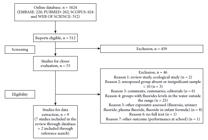
Studies included in the systematic review
Supplementary Table 3 summarizes the traits of the participants and included studies. Nine observational studies that met the inclusion criteria were identified, three of them cohort studies 6,22,23 and six cross-sectional studies5,12,24-27. They were conducted in China12,24-27, India5, New Zealand22, Canada23, and Spain6. The articles were published between 1991 and 2022. The sample size ranged from 53 to 2682 participants. All assessed community water fluoridation, four studies assessed naturally fluoridated areas5,24,26,27. Three studies had the Beta Coefficient as their measure of association6,12,22. Two studies had the Odds Ratio as their measure of association5,12. All studies included both men and women. Six studies adjusted for covariates5,6,12,22,23. The follow-ups in the cohort studies were 38 years22, 3 to 4 years23, and three6 . The mean IQ scores, respective standard deviations and the samples sizes of the primary studies included in the review are presented in Supplementary Table 1.
Studies not included in the beta regression coefficient meta-analysis
Six studies had insufficient data for inclusion in the meta-regression. The reasons are listed in Supplementary Table 2.
Quality assessment
Chart 1 shows the results of the quality assessments of the included cohort and cross-sectional studies. Four studies had high quality, three studies had moderate quality, and two had low quality. The included cohort studies reported between 7 and 10 checklist items (from 72.7% to 100%), with one moderate quality study6 and two high quality studies22,23. The cross-sectional studies reported between three and eight checklist items (37,5% to 100%), where two studies showed low-quality24,25, two studies moderate-quality26,27 and two studies high-quality5,12. In part, the methodological weakness of the studies is due to the lack of or incomplete control of confounding variables. Some cohort studies also did not indicate follow-up time and losses to follow-up.
The studies with better quality were published after 2015, with better designs, more complete statistical analyses, and larger samples. They also had greater control for confounding variables, including socioeconomic status, education, sex, and age, and were limited to populations that lived in the same area for longer periods. They used the technique of stratified multi-stage random sampling more frequently. They also used linear and multilevel random effects regression models. The most recent studies were done in countries with water fluoride exposure levels compatible with the established threshold for caries prevention, which differs from the older studies, in China, mainly in endemic fluoride areas.
Meta-analysis
Supplementary Figure 4 shows a forest plot of four cross-sectional studies for children’s water fluoride exposure and intelligence. Pooled standardized mean differences (SMDs) showed no evidence an between exposure to community water fluoridation and IQ (pooled SMDs = -0.25; 95%CI = -0.64 to 0.14), and heterogeneity was high (P = 0.0004, I² = 83%). Supplementary Figure 5 shows a forest plot of three cohort studies for community water fluoridation and intelligence in children. The pooled standardized mean difference (SMDs) three cohort studies also showed no evidence of an association between exposure to community water fluoridation and intelligence (pooled SMDs = -0.05; 95%CI = -0.18 to 0.07), and heterogeneity was low (P = 0.52, I² = 0%).
A meta-analysis was also performed only with the studies that had estimates adjusted for confounding variables. Figure 2 shows a summary of the three studies included in the meta-analysis using the adjusted betas coefficients for the association between exposure to community water fluoridation and intelligence in children. The adjusted beta coefficients from each study were pooled using random effects modeling, although heterogeneity was low (P = 0.66, I² = 0%) due to the small number of studies that contributed results to the analysis. The results also showed no association between exposure to community water fluoridation and IQ (pooled β = 1.01; 95%CI = -0.80 to 2.82) (Figure 2).
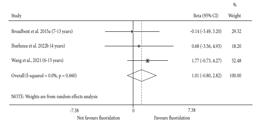
Forest plot of fluoride exposure in drinking water and IQ in children. The studies were clustered with a random effects model. The open rhombus represents the pooled Beta and the horizontal lines represent the 95% confidence intervals.
A single article included studied an adult population, so it was only used in the sensitivity analysis. The sensitivity analysis indicated a substantial change in the pooled estimate when results in the population from the Broadbent et al., 2015 study were included. In that case, a positive association was observed between exposure to fluoride in drinking water and IQ, where fluoridation was associated with higher IQ test scores with water fluoridation in adults (pooled β = 1.55; 95%CI = 0.00 to 3.10) (Supplementary Figure 1).
Subgroup analysis was performed according to age range and IQ test. Supplementary Figure 2 indicates that the effect of fluoridation did not differ between age ranges, and no significant association was observed in the studies with subjects aged ≥ 6 years (pooled β = 1.09; 95%CI: -0.92 to 3.09) and in the studies with participants < 6 years of age (pooled β= 0.68; 95%CI: -0.80 to 2.82). Supplementary Figure 3 also showed that no statistically significant association was observed between exposure to community water fluoridation and IQ scores for the three types of IQ tests used in the studies.
Discussion
The pooled results of this systematic review and meta-analysis of observational studies evidenced that exposure to community water fluoridation at levels used for caries prevention (range between 0.4mg/L and 1.5 mg/L fluoride) was not associated with IQ test scores in children. It is possible to state that the synthesis of evidence reveals that there is no relation between water fluoridation and IQ. This means that water fluoridation can be regarded as a safety measure, considering the existing evidence pertaining to intelligence.
The observed results among populations exposed or not exposed to water fluoridation were different from those found in other systematic reviews7,14. In their systematic review and meta-analysis, Choi et al. 2012 revealed worse IQ in children living in areas with naturally high fluoride levels in the water (from 2 to 7.6 mg/L) when compared to children in areas with fluoride levels of 0.5 to 1.0 mg/L. This is especially relevant, given that the systematic review by Choi et al included ecological studies carried out in fluoride endemic areas, where fluoride concentrations are much higher than those recommended for preventing dental caries. Consequently, these findings are not applicable in the context of the safety of water fluoridation for caries prevention. Furthermore, the standardized mean differences (SMD) was calculated only based on the crude values and not on the adjusted ones. In the meta-analysis by Veneri et al.14 regarding exposure to fluoride in drinking water, ranging from 0.13 to 5.55 mg/L, the authors reported lower IQ scores in the group exposed to high fluoride levels when compared to the group with low exposure. Therefore, the differences in this study’s findings compared to previous systematic reviews could be explained by having included only studies with added fluoride in water at levels recommended to prevent caries (between 0.4 and 1.5 mg/L fluoride), taking into account exposure to fluoride in water at the individual level or through participants’ residential history, with controls for potential confounding factors in the pooled analysis.
The choice of IQ as an outcome measure was because it is an objective measure used by the largest number of studies that evaluated cognitive function, trying to achieve more robust results. Other studies, which assessed attention deficit, executive, behavioral, and emotional functions, were not subjects of this review due to the small number of studies found.
The studies included in the present meta-analysis with linear regression coefficient betas were adjusted for confounding factors. The SMD was calculated based on the crude values and not the adjusted ones, because only crude values were available in the original articles. Adjustment for confounding in the individual studies decreases the risk of bias in the combined analysis results. Adjustments for confounding variables such as age, sex, parental education, and family income were accounted for in the models of the included studies5,6,12,22,23. In some included studies, other factors such as body mass index (BMI)12, low birth weight12,22, breastfeeding6,22, smoking6 were also considered in the model adjustments. By not including studies that reported crude associations, it was possible to reduce the likelihood of confounding bias in the pooled estimates. The possibility of unmeasured or unknown confounding cannot be ruled out, as unmeasured or unknown confounding factors may not have been included in the regression models. In the case of poorly measured or incorrectly defined confounding factors, there may be residual confounding. For example, Broadbent et al. 2015 concluded that breastfed children had higher IQs than those who were not breastfed (bottle-fed), regardless of either group’s exposure to fluoridated water. Thus, breastfeeding is an important confounding factor that was not included in all the studies in this review.
This review presented a different result from the systematic review which synthesized the findings of studies evaluating naturally occurring fluoride in water in endemic fluorosis regions or with fluoride levels far above those recommended for community water fluoridation as a public health intervention for caries prevention. It would thus be plausible to assume that fluoride concentrations within the recommended range for caries prevention do not relate with IQ14,28 therefore providing further evidence to support the safety of artificial water fluoridation for dental caries prevention.
The different categorizations of the fluoride-exposed or non-exposed groups included in the statistical analysis across studies and the narrower fluoride exposure range (0.4 to 1.5 mg/L fluoride) made it difficult to include more studies in this meta-analysis. This careful analysis, which excluded studies with incorrectly defined or unclear exposed and unexposed groups, ensured more consistency in results, which is this study’s main strength. Another strength was to have taken into account individual exposure to fluoride, studies done in several countries, and the direction of the association was consistent for no association. On the other hand, intelligence was assessed using different intelligence tests, which is a limitation and a source of methodological heterogeneity among the studies. The details of the IQ tests and whether the authors standardized the score or not were not provided. Also, some of the studies included used non-probabilistic samples, which is a major source of selection bias. Not all authors demonstrated the comparability of exposed and unexposed groups. Fluoride measures for the exposed and unexposed groups were defined based on averages or ranges of exposure for each group. Thus, fluoride exposure among children in each group may have varied. Each group in each study used a measure of fluoride or an average for the exposed and unexposed groups, and there may be variation in fluoride exposure among children in the same group. The water fluoride exposure measure is often based on historical records. All of these issues constitute important sources of bias, and the results need to be interpreted taking them into account. One important confounder in community water fluoridation studies is the geographical movement of the participants in or out of the study area over a lifetime (residential history). Only one of the included studies investigated residential address data up to the age of 522. A second study informed that participants were long-term residents of the place where data collection was carried out5. There may also be a limitation as to the data used in the meta-analysis; although they have been adjusted for confounding variables, not all will have been included in the individual studies.
Conclusion
In conclusion, this systematic review and meta-analysis indicates that exposure to community water fluoridation at levels used for caries prevention (range between 0.4 and 1.5 mg/L fluoride) was not associated with intelligence as assessed by IQ. Given that the issue is of public interest, this meta-analysis reinforces that the community water fluoridation constitutes a safe public health measure concerning to IQ-rated intelligence.
References
- 1 Iheozor-Ejiofor Z, Worthington HV, Walsh T, O'Malley L, Clarkson JE, Macey R, Alam R, Tugwell P, Welch V, Glenny AM. Water fluoridation for the prevention of dental caries. Cochrane Database Syst Rev 2015; 6:CD010856.
- 2 Centers for Disease Control and Prevention. Recommendations for using fluoride to prevent and control dental caries in the United States. MMWR Recomm Rep 2001; 50(RR-14):1-42.
- 3 O'Mullane DM, Baez RJ, Jones S, Lennon MA, Petersen PE, Rugg-Gunn AJ, Whelton H, Whitford GM. Fluoride and Oral Health. Community Dent Health 2016; 33(2):69-99.
- 4 Cury JA, Ricomini-Filho AP, Berti FLP, Tabchoury CP. Systemic effects (risks) of water fluoridation. Braz Dent J 2019; 30(5):421-428.
- 5 Sebastian ST, Sunitha S. A cross-sectional study to assess the intelligence quotient (IQ) of school going children aged 10-12 years in villages of Mysore district, India with different fluoride levels. J Indian Soc Pedod Prev Dent 2015; 33(4):307-311.
- 6 Ibarluzea J, Gallastegi M, Santa-Marina L, Jiménez Zabala A, Arranz E, Molinuevo A, Lopez-Espinosa MJ, Ballester F, Villanueva CM, Riano I, Sunyer J, Tardon A, Lertxundi A. Prenatal exposure to fluoride and neuropsychological development in early childhood: 1-to 4 years old children. Environ Res 2022; 207:112181.
- 7 Choi AL, Sun G, Zhang Y, Grandjean P. Developmental fluoride neurotoxicity: a systematic review and meta-analysis. Environ Health Perspect 2012; 120(10):1362-1368.
-
8 Jack B, Ayson M, Lewis S, Irving A, Agresta B, Ko H, Stoklosa A. 2016. Health effects of water fluoridation: evidence evaluation report [Internet]. 2016 [cited 2023 jun 1]. Available at: https://www.nhmrc.gov.au/sites/default/files/documents/reports/fluoridation-evidence.pdf
» https://www.nhmrc.gov.au/sites/default/files/documents/reports/fluoridation-evidence.pdf -
9 National Health and Medical Research Council. Information paper - Water fluoridation: dental and other human health outcomes [Internet]. 2017 [cited 2023 jun 1]. Available at: https://www.nhmrc.gov.au/about-us/publications/water-fluoridation-dental-and-other-human-health-outcomes
» https://www.nhmrc.gov.au/about-us/publications/water-fluoridation-dental-and-other-human-health-outcomes - 10 Community Water Fluoridation Exposure: A Review of Neurological and Cognitive Effects - A 2020 Update. Ottawa (ON): Canadian Agency for Drugs and Technologies in Health; 2020 Nov 4. PMID: 33600099.
- 11 Miranda GHN, Alvarenga MOP, Ferreira MKM, Puty B, Bittencourt LO, Fagundes NCF, Pessan JP, Buzalaf MAR, Lima RR. A systematic review and meta-analysis of the association between fluoride exposure and neurological disorders. Sci Rep 2021; 11(1):22659.
- 12 Wang S, Zhao Q, Li G, Wang M, Liu H, Yu X, Chen J, Li P, Dong L, Zhou G, et al. The cholinergic system, intelligence, and dental fluorosis in school-aged children with low-to-moderate fluoride exposure. Ecotoxicol Environ Saf 2021; 228:112959.
- 13 Mueller M, D'Addario M, Egger M, Cevallos M, Dekkers O, Mugglin C, Scott P. Methods to systematically review and meta-analyse observational studies: a systematic scoping review of recommendations. BMC Med Res Methodol 2018; 18(1):44.
- 14 Veneri F, Vinceti M, Generali L, Giannone ME, Mazzoleni E, Birnbaum LS, Consolo U, Filippini T. Fluoride exposure and cognitive neurodevelopment: Systematic review and dose-response meta-analysis. Environ Res 2023; 221:115239.
- 15 World Health Organization (WHO). Guidelines for drinking-water quality. 4th ed. incorporating the first and second addenda. Geneva: WHO; 2022.
- 16 Dekkers OM, Vandenbroucke JP, Cevallos M, Renehan AG, Altman DG, Egger M. COSMOS-E: Guidance on conducting systematic reviews and meta-analyses of observational studies of etiology. PLoS Med 2019; 16(2):e1002742.
- 17 Petersen PE, Bourgeois D, Ogawa H, Estupinan-Day S, Ndiaye C. The global burden of oral diseases and risks to oral health. Bull World Health Organ 2015; 83(9):661-669.
- 18 Aromataris E, Munn Z . Joanna Briggs Institute Reviewer's Manual. Adelaide: JBI; 2017.
- 19 Moola S, Munn Z, Tufanaru C, Aromataris E, Sears K, Sfetcu R, Currie M, Lisy K, Qureshi R, Mattis P, MU P. Chapter 7: Systematic reviews of etiology and risk. In: Aromataris E, Munn Z, editors. JBI Manual for Evidence Synthesis. Adelaide: JBI; 2020.
- 20 Lo K, Stephenson M, Lockwood C. Analysis of heterogeneity in a systematic review using meta-regression technique. Int J Evid Based Health 2019; 17(2):131-142.
- 21 Tufanaru C, Munn Z, Stephenson M, Aromataris E. Fixed or random effects meta-analysis? Common methodological issues in systematic reviews of effectiveness. Int J Evid Based Health 2015; 13(3):196-207.
- 22 Broadbent JM, Thomson WM, Ramrakha S, Moffitt TE, Zeng J, Foster Page LA, Poulton R. Community Water. Fluoridation and Intelligence: prospective Study in New Zealand. Am J Public Health 2015; 105(1):72-76.
- 23 Green R, Lanphear B, Hornung R, Flora D, Martinez-Mier EA, Neufeld R, Ayotte P, Muckle G, Till C. Association Between Maternal Fluoride Exposure During Pregnancy and IQ Scores in Offspring in Canada. JAMA Pediatr 2019; 173(10):940-948.
- 24 Lin FF, Aihati, Zhao HX, Lin J, Jiang JY, Maimaiti, Aiken. The relationship of a low-iodine and high-fluoride. environment to subclinical cretinism ln Xinjiang. Endem Dis Bull 1991; 6(2):62-67.
- 25 Xu Y, Lu C, Zhang X. The effect of fluorine on the level of intelligence in children. Endem Dis Bull 1994; 9(2):83-84.
- 26 Hong F, Cao Y, Yang D, Wang H. Research on the effects of fluoride on child intellectual development under different environmental conditions. Fluoride 2008; 41(2):156-160.
- 27 Qin L, Huo S, Chen R, Chang Y, Zhao M. Using the Raven's standard progressive matrices to determine the effects of the level of fluoride in drinking water on the intellectual ability of school-age children. Fluoride 2008; 41(2):115-119.
- 28 Duan Q, Jiao J, Chen X, Wang X. Association between water fluoride and the level of children's intelligence: a dose-response meta-analysis. Public Health 2018; 154:87-97.
-
Data availability statement
The data sources adopted in the research are indicated in the article’s body. Supplementary material available at: https://doi.org/10.48331/SCIELODATA.VHRSGC.
The data sources adopted in the research are indicated in the article’s body. Supplementary material available at: https://doi.org/10.48331/SCIELODATA.VHRSGC.

 Fonte: Autores.
 Source: Authors.