 Determinants of HIV-1 virologic suppression in HIV-associated tuberculosis in Brazil
Abstract
BACKGROUND Tuberculosis/human immunodeficiency virus (TB/HIV) coinfection is associated with advanced HIV disease and variable responses to antiretroviral therapy (ART).
OBJECTIVES We examined whether baseline HIV severity markers, ART regimes, or human genetic variants influenced HIV-1 virologic suppression in HIV-associated TB.
METHODS We included TB/HIV participants from Regional Prospective Observational Research in Tuberculosis (RePORT)-Brazil study, who received standard TB therapy and antiretroviral treatment. The primary endpoint was HIV-1 virologic suppression (≤ 1,000 copies/mL); Baseline characteristics, viral load (VL), CD4 cell count, timing of ART initiation, and ART regimens were included. We genotyped UGT1A1 (rs887829; integrase strand transfer inhibitor-related) and CYP2B6 [rs3745274, rs28399499, rs4803419; efavirenz (EFZ)-related]; all have defined normal, intermediate, and slow genotypes. Genotyping was performed by MassARRAY iPLEX Gold; Kaplan-Meier curves compared time-to-suppression with log-rank tests; Cox proportional hazards models estimated hazard ratios.
FINDINGS Among 194 participants, 68% (n = 132) achieved virologic suppression (≤ 1,000 copies/mL). Median time-to-suppression: 84 days [95% confidence interval (CI): 42-125]. Participants with higher baseline viral load (BVL) (≥ 5 log10 copies/mL) had delayed suppression compared with those with lower VL (< 5 log10; log-rank χ² = 75.9; p < 0.001). Individuals with CD4 ≤ 200 cells/µL suppressed more slowly than those with CD4 > 200 cells/µL (log-rank χ² = 29.6; p < 0.001). Participants starting ART before TB treatment achieved suppression faster than ART-naïve individuals (32 vs. 147 days; log-rank χ² = 48.5; p < 0.001). Higher BVL was associated with reduced hazard of suppression [adjusted hazard ratio (aHR) = 0.67; 95% CI: 0.61-0.75], while higher baseline CD4 count increased the hazard of suppression (per 100 cells/µL: aHR = 1.11; 95% CI: 1.01-1.21). ART-naïve status was associated with lower hazard of suppression in univariate analysis (Hazard Ratio = 0.51; 95% CI: 0.36-0.72) but not after adjustment. ART regimen class and pharmacogenetic metabolizer profiles were not significantly associated with virologic suppression.
MAIN CONCLUSIONS BVL and CD4 count were the strongest determinants of virologic suppression in TB/HIV patients. Suppression rates were low, and neither ART regimen nor pharmacogenetic profiles significantly influenced the likelihood of suppression.
Key words:
TB/HIV; genetic polymorphisms; HIV-1 treatment
Human immunodeficiency virus (HIV) infection is a risk factor for the development of tuberculosis (TB)1,2,3 and treatment of both disease is of high priority for TB/HIV co-infection management.4,5 However, TB and HIV regimens have drug-drug interactions and are also associated with toxicity,6 which can impact the outcome of TB/HIV treatment in two ways: subtherapeutic concentrations can result in treatment failure and drug resistance, and supratherapeutic concentrations may be associated with treatment toxicity.7,8,9 Moreover, the serum levels of some TB and HIV drugs can be influenced by single nucleotide polymorphisms (SNPs) of genes involved in the metabolism of these drugs.10,11 Of the 25 antiretroviral therapy (ART) drugs approved by the Food and Drug Administration (FDA), nine (36%) are known to have SNPs associated with plasma exposure and/or side effects.12,13,14,15,16,17,18,19,20 The proposed mechanisms of TB and HIV drug interactions are mainly related to substrate activity, particularly inhibition or induction of the hepatic system of cytochrome P450. Considering non-nucleoside reverse transcriptase inhibitors and integrase strand transfer inhibitors, the inducers of the enzymatic system (e.g., normal metabolizers) decrease serum drug concentrations, while inhibitors (e.g., slow metabolizers) increase the concentration.7
Rifampicin, the backbone of first-line TB regimens, is a potent inducer of hepatic enzymes and drug transporters, leading to reduced plasma concentrations of several antiretrovirals and raising the risk of impaired virological suppression.21,22 Despite these concerns, a systematic review and meta-analysis found that HIV-infected patients initiating ART while on TB treatment achieved virological suppression rates comparable to those not on TB therapy.23 Conversely, some observational studies have reported higher odds of virological failure among HIV/TB-coinfected individuals,24 highlighting the need to better understand factors that may modify HIV treatment response during concomitant TB/HIV therapy.
The dynamics between anti-TB drugs, ART, SNPs, and HIV-associated TB treatment outcomes are complex and not yet fully understood. This study described the SNPs of the Brazilian population and evaluated the relationship between SNPs known to be associated with ART metabolism and HIV virologic suppression among TB/HIV participants in a large, prospective, cohort study in Brazil. Additionally, we assessed the impact of other key determinants of HIV-1 virologic suppression, including baseline viral load (BVL), CD4 count, and timing of ART initiation.
SUBJECTS AND METHODS
Study design and population - The Regional Prospective Observational Research in Tuberculosis (RePORT)-Brazil study enrolled participants with newly diagnosed, culture-confirmed, pulmonary TB at five sites across three regions in Brazil, between June 2015 and June 2019, and followed participants for two years after TB treatment initiation. Sites were in Rio de Janeiro (Instituto Nacional de Infectologia Evandro Chagas, Clínica de Saúde Rinaldo Delmare, Secretaria de Saúde de Duque de Caxias), Salvador (Instituto Brasileiro para Investigação da Tuberculose), and Manaus (Fundação Medicina Tropical Dr Heitor Vieira Dourado). The RePORT-Brazil population is broadly representative of TB cases in Brazil, as described previously.25 For this study, we included RePORT-Brazil participants with TB/HIV who initiated standard TB therapy and received ART during TB treatment.
Variables and definitions - The standard TB regimen followed Brazilian National TB Program guidelines, and was defined as a two-month intensive phase of isoniazid, rifampicin or rifabutin, pyrazinamide, and ethambutol, followed by a four-month (or more) continuation phase of isoniazid and rifampicin or rifabutin.26 TB treatment outcomes followed the World Health Organization (WHO) definition and were defined as favorable, a combination of cure and treatment completion, and as unfavorable, which comprised death, treatment failure, loss to follow up, and transferred.27
Clinical, demographic, and socio-economic data were collected longitudinally at baseline, month 2, and end of TB treatment visits, and during the two-year follow-up period; for the latter, participants were contacted by telephone to assess signs and symptoms of TB recurrence. Adherence in RePORT-Brazil included different modalities of directly observed therapy (DOT), such as in-person observation, phone calls, text messages, and video calls.
All participants underwent HIV testing at baseline unless they were already known to be a person with HIV/AIDS (PWH). We collected data on ART, ART timing initiation in relation to TB treatment, CD4 cell count, and HIV-1 RNA viral load (VL). We classified ART regimens according to the main antiretroviral class that composed the 3-drug regimen:28 non-nucleoside reverse transcriptase inhibitors (NNRTIs), protease inhibitors (PIs), and integrase strand transfer inhibitors (INSTIs). We considered only ART used during TB treatment and our focus was on NNRTI [efavirenz (EFZ)] and INSTI (dolutegravir, raltegravir), as these regimens were recommended ART in Brazil for TB/HIV coinfection during the study period.28 The dose of EFZ was 600 mg, administered once daily; raltegravir was administered at 400 mg twice daily; and dolutegravir was given at 50 mg twice daily, with the double dose due to a drug interaction with rifampicin. CD4 was categorized as: ≤ 200 cells/µL vs > 200 cells/µL. We considered VL as a continuous (copies/mL and Log10) and as a categorical variable and, for the primary analysis, we defined virologic suppression as ≤ 1,000 HIV-1 RNA viral copies/mL.29 For the secondary analysis, we considered virologic suppression as ≤ 50 HIV-1 RNA viral copies/mL.
RePORT-Brazil genotyped 60 selected polymorphisms in 29 genes relevant to TB or HIV drug metabolism, and for this study, we selected CYP2B6 and UGT1A1, which are associated with the metabolism of EFZ and dolutegravir/raltegravir, respectively. Genotyping was done using MassARRAY® iPLEX Gold (Agena Bioscience™, California, USA) and Taqman (ThermoFisher Scientific, Massachusetts, USA).
Statistical analysis - Participant characteristics were described according to virologic suppression, summarizing continuous variables with median and interquartile range (IQR) and categorical variables with frequency and percentages.
Composite CYP2B6 metabolizer genotype was defined based on combinations of three polymorphisms as follows: normal (1: 15582CC-516GG-983TT or 2: 15582CT-516GG-983TT); intermediate (3: 15582TT-516GG-983TT; 4: 15582CC-516GT-983TT; 5: 15582CC-516GG-983CT; 6: 15582CT-516GT-983TT; or 7: 15582CT-516GG-983CT); and slow (8: 15582CC-516TT-983TT; 9: 15582CC-516GT-983CT; 10: 15582CC-516GG-983CC).30 And the UGT1A1 metabolizer genotype was defined as normal (887829CC), intermediate (887829CT), or slow (887829TT).31 The normal genotypes for CYP2B6 and UGT1A1 are the inducers of the enzymatic system, and thus, metabolize ARV faster.12,19
The endpoint was virologic suppression during TB treatment. Categorical variables were analyzed using the chi-square test, and continuous variables were assessed using the Mann-Whitney U test. Time-to-suppression was defined as the number of days from TB treatment initiation for ART-experienced participants or from ART initiation for ART-naïve participants until the end of TB treatment. Kaplan-Meier curves were constructed to analyze time-to-virologic suppression, overall and stratified by ART initiation time (before TB treatment vs ART naïve), BVL (< 5 log10 vs ≥ 5 log10), CD4 cell count (above vs below 200 cells/µL), and SNP categories (normal, intermediate, and slow). Kaplan-Meier curves were compared using the log-rank test. Univariable and multivariable Cox proportional hazards analyses were conducted to evaluate factors associated with the hazard of virologic suppression — multivariate analysis was adjusted for age, sex, site, ART initiation, baseline CD4 cell count, and BVL; and in the sub analysis, according to the UGT1A1 and CYP2B6 genotypes. All statistical analyses were performed using SPSS version 25.0 and RStudio v2026.01.0+392, with a significance level of 0.05.
Ethics - The RePORT-Brazil study was approved by the institutional review board of the Instituto Nacional de Infectologia Evandro Chagas (CAAE: 25102412.3.1001.5262), by the institutional review boards of the other study sites, and Vanderbilt University Medical Center. Written informed consent was obtained from all participants, and all clinical investigations were conducted according to the principles expressed in the Declaration of Helsinki.
RESULTS
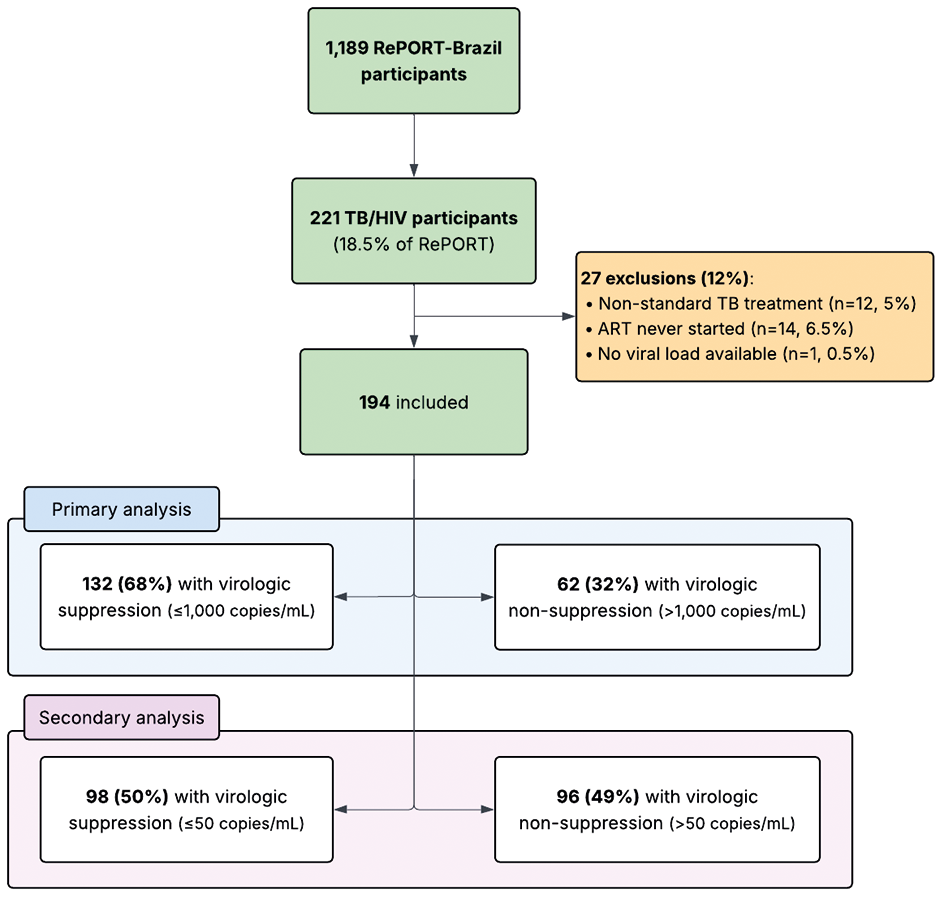
Among 1,189 participants with TB in RePORT-Brazil, 221 (18.5%) were PWH, and 194 (88%) were included in the analysis (Fig. 1). Virologic suppression rates were low overall, with 132 participants (68%) achieving the primary endpoint (≤ 1,000 copies/mL). Compared to those who did not achieve suppression, participants with suppressed VL had higher median weight (55 kg vs 53 kg, p = 0.04), and lower log10 VL in baseline (3.8 vs 5.1, p < 0.001). They also had higher median CD4 cell counts at baseline (144 vs 84, p = 0.01) and at month 2 (145 vs 82, p = 0.02), higher rates of favorable TB treatment outcome (82% vs. 35%, p < 0.001) and lower rates of mortality (4% vs. 26%) and loss to follow-up (11% vs. 37%). Participant from Manaus site had higher proportions of non-suppressed VL compared to Rio de Janeiro and Salvador sites (p = 0.03). Overall, INSTI-based regimens were the most used ART [53% among participants with virologic suppression (n = 70) and 48% among non-suppressed (n = 30)]. NNRTI-based regimens were used in 37% of participants with virologic suppression (n = 49) and 45% of those without suppression (n = 28). Regarding pharmacogenetic profiles, UGT1A1 normal metabolizer genotype and CYP2B6 intermediate metabolizer genotype were the most prevalent in the study population, irrespectively of virologic suppression (Table I). Secondary analysis for the endpoint of ≤ 50 copies/mL revealed similar results and associations [Supplementary data (Table I)].
Study population characteristics (N = 194), stratified by human immunodeficiency virus (HIV)-1 virologic suppression (≤ 1000 copies/mL vs. >1000 copies/mL)
study diagram. RePORT: Regional Prospective Observational Research on Tuberculosis; TB: tuberculosis; ART: antiretroviral therapy.
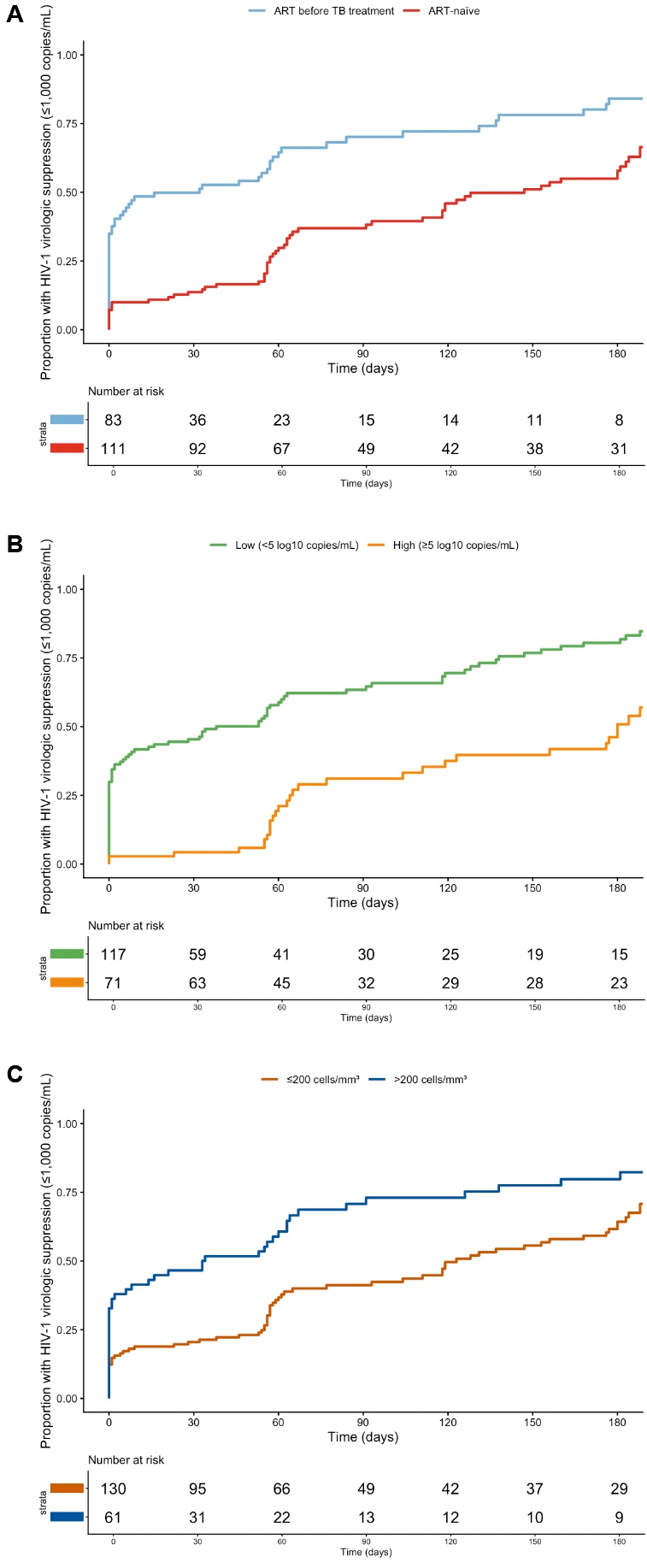
The median time-to-virologic suppression, irrespective of ART regimen, was 84 days (IQR: 42–125) for the primary endpoint (≤ 1,000 copies/mL) and 194 days (IQR 174-213) for the secondary endpoint (≤ 50 copies/mL). In primary analysis, participants who initiated ART before TB treatment achieved virologic suppression significantly faster compared to ART-naïve individuals (median days: 6 vs 64 days, log-rank χ² = 48.5, p < 0.001). Similarly, participants with lower BVL (< 5 log10) and higher CD4 counts (> 200 cells/µL) had shorter median time-to-suppression compared to those with higher VL (≥ 5 log10) and lower CD4 counts (≤ 200 cells/µL), log-rank χ² = 12.6 and 5.02, respectively, with p < 0.001 and p = 0.02, respectively (Fig. 2). Secondary analysis showed comparable trends [Supplementary data (Fig. 1)].
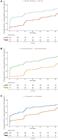
Kaplan-Meier curves of time-to-virologic suppression (≤ 1,000 copies/mL) according to (A) antiretroviral therapy (ART) initiation, (B) baseline viral load (BVL), and (C) baseline CD4 cell count, among all participants (N = 194). Numbers at risk are shown below the graph. (A) Virologic suppression occurred earlier in participants who initiated ART before tuberculosis (TB) treatment [median: six days; 95% confidence interval (CI): 0-53] compared to ART-naïve participants (median: 64 days; 95% CI: 60-118), log-rank χ² = 15.1, p < 0.001. (B) Suppression was also quicker in participants with low BVL (< 5 log10; median: 30 days; 95% CI: 5-56) compared to those with high BVL (≥ 5 log10 [~100,000 copies]; median: 67 days; 95% CI: 60-176), log-rank χ² = 12.6, p < 0.001. (C) Participants with baseline CD4 counts > 200 cells/µL achieved suppression faster (median: 33 days; 95% CI: 1-60) than those with ≤ 200 cells/µL (median: 60 days; 95% CI: 56-67), log-rank χ² = 5.02, p = 0.02.
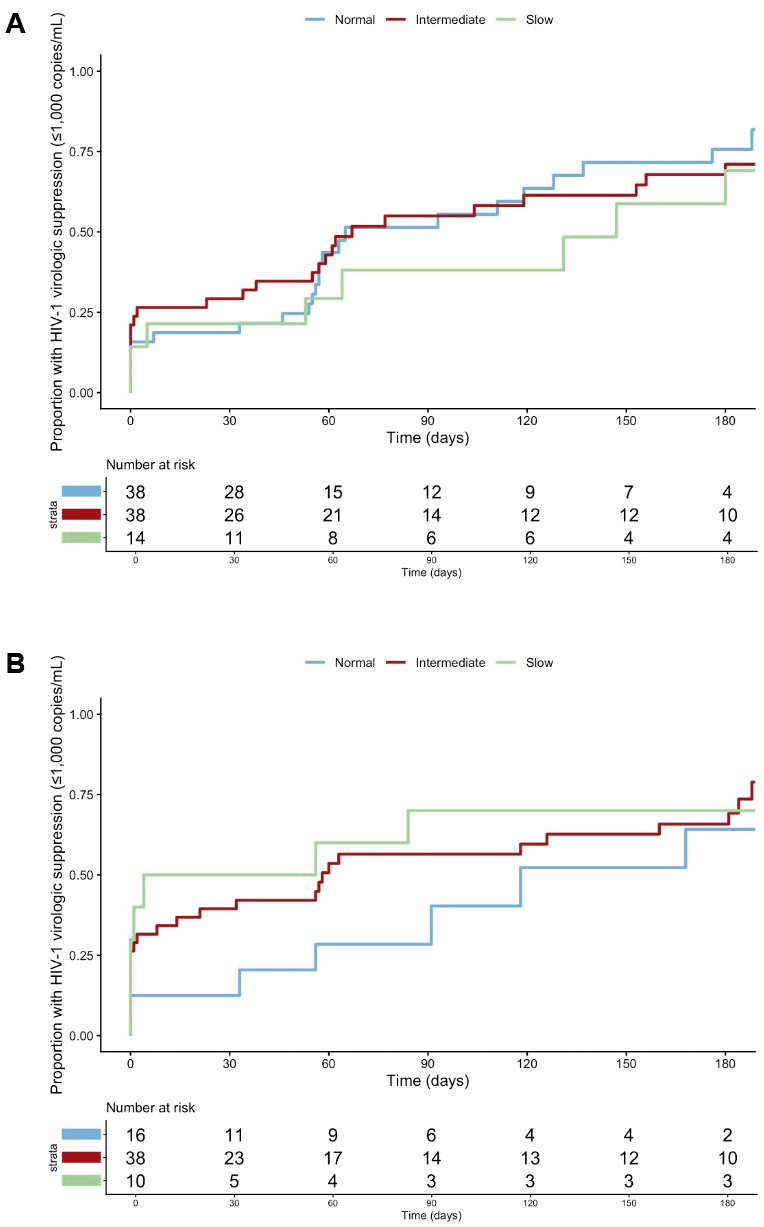
Among participants receiving an INSTI-based regimen (N = 100), the median time-to-virologic suppression was 57 days (IQR: 54-93) for participants with UGT1A1 normal genotypes, 62 days (IQR: 38-153) for those with intermediate genotypes, and 75 days (IQR: 53-196) for those with slow genotypes (log-rank χ² = 2.53, p = 0.283) (Fig. 3A). Similarly, among participants receiving an EFZ-based regimen (N = 76), the median time-to-virologic suppression was 60 days (IQR: 27-177) for participants with CYP2B6 normal genotypes, 57 days (IQR: 14-160) for those with intermediate genotypes, and 30 days (IQR: 0-89) for those with slow genotypes (log-rank χ² = 1.5, p = 0.48) (Fig. 3B). For the secondary endpoint (≤ 50 copies/mL), we observed longer time-to-virologic suppression for all genotypes, but with no statistical difference among them [Supplementary data (Fig. 2)].
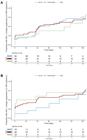
Kaplan-Meier curves of time-to-virologic suppression (≤ 1,000 copies/mL) according to (A) UGT1A1 genotypes among participants on integrase strand transfer inhibitors (INSTI)-based regimens and (B) CYP2B6 genotypes among participants on efavirenz (EFZ)-based regimens. Numbers at risk are shown below each graph. (A) For INSTI-based regimens (N = 90), median time to virologic suppression was 57 days [95% confidence interval (CI): 54-93] for normal UGT1A1 genotypes, 62 days (95% CI: 38-153) for intermediate genotypes, and 75 days (95% CI: 53-196) for slow genotypes, with no statistically significant differences (log-rank test χ² = 2.53, p = 0.283). (B) For EFZ-based regimens (N = 64), median time to virologic suppression was 60 days (95% CI: 27-177) for normal CYP2B6 genotypes, 57 days (95% CI: 14-160) for intermediate genotypes, and 30 days (95% CI: 0-89) for slow genotypes, with no statistically significant differences (log-rank test: χ² = 1.5, p = 0.48). Note: among participants on INSTI-based regimens (N = 100), UGT1A1 genotyping was performed for 90% (N = 90). Similarly, CYP2B6 genotyping was performed for 84% (N = 64) of participants on EFZ-based regimens (N = 76).
In univariable Cox regression, a lower hazard of suppression was associated with higher BVL [hazard ratio (HR): 0.65, 95% confidence interval (CI): 0.59-0.71, p < 0.001] and ART-naïve status (HR: 0.49, CI: 0.34-0.69, p < 0.001). A higher hazard of suppression was associated with increased baseline CD4 count (per 100 cell/µL, HR: 1.22, 95% CI: 1.12-1.31, p < 0.001), as well as being from Rio de Janeiro site, compared to Manaus site (HR: 1.49, 95% CI: 1.02-2.17). Age, sex, and race were not statistically significant predictors at the 5% level. In multivariable analysis, baseline CD4 count [per 100 cell/µL increase, adjusted hazard ratio (aHR): 1.10, 95% CI: 1.02-1.20, p = 0.02] and BVL (aHR: 0.76, 95% CI: 0.69-0.83, p < 0.001) remained statistically significant at the 5% level, while timing of ART initiation, age, sex, and site were not statistically significant (Table II). Similar findings were observed for the secondary endpoint (≤ 50 copies/mL) [Supplementary data (Table II)].
Univariate and multivariate Cox regression analysis of predictors of human immunodeficiency virus (HIV)-1 virologic suppression (≤ 1000 copies/mL) among all study participants (N = 194)
Subgroup analyses were conducted for participants receiving INSTI- or EFZ-based ART regimens (Table III). In multivariate analysis, among INSTI-based regimen users, baseline CD4 count (per 100 cell/µL increase, aHR: 1.17, 95% CI: 1.03-1.34, p = 0.01) and BVL (aHR: 0.78, 95% CI: 0.70-0.88, p < 0.001) were significantly associated with virologic suppression. UGT1A1 genotypes were not associated with virologic suppression in either univariate or multivariate analyses, as intermediate metabolizers (p = 0.43) and slow metabolizers (p = 0.39) showed no significant differences compared to normal metabolizers. Age, sex, and site were also not significant predictors, either in uni- or multivariate analysis. For EFZ-based regimen users, BVL (aHR: 0.58, 95% CI: 0.47-0.72, p < 0.001) remained a significant predictor of suppression, while baseline CD4 count was significant only in univariate analysis (HR: 1.24, 95% CI: 1.09-1.40, p < 0.001). CYP2B6 genotype was not significantly associated with virologic suppression in either univariate or multivariate analyses, with intermediate metabolizers (p = 0.68) and slow metabolizers (p = 0.51) showing no differences compared to normal metabolizers. Age, sex, and site were also not significant predictors in the EFZ group. The secondary endpoint analysis demonstrated similar results, except for CYP2B6 genotypes — in the multivariate analysis, CYP2B6 intermediate metabolizers were significantly associated with a higher likelihood of virologic suppression compared to normal metabolizers (aHR: 0.59, 95% CI: 0.36-0.95, p = 0.03) [Supplementary data (Table III)].
Univariate and multivariate Cox regression analysis of predictors of human immunodeficiency virus (HIV)-1 virologic suppression (≤ 1000 copies/mL) among participants with integrase strand transfer inhibitors (INSTI)- and efavirenz (EFZ)-based antiretroviral therapy (ART) regimens
DISCUSSION
In this prospective cohort of participants with HIV-associated TB, the virologic suppression was suboptimal, with approximately two-thirds reaching the primary endpoint (≤ 1,000 copies/mL), and fewer than half reaching the secondary endpoint (≤ 50 copies/mL). The HIV disease severity markers, such as BVL and CD4 cell count, were the main determinants of virologic suppression in this setting.
Participants who entered TB care with lower VL and higher CD4 counts had substantially faster and more frequent virologic suppression, associations which persisted in multivariable models and across sensitivity analyses. This pattern aligns with established HIV treatment, with additional relevance in TB/HIV patients, who often present with advanced immunosuppression and face barriers to rapid virologic control, such as pill burden, inflammation, and drug-drug interactions.21,23,3233,34,35,36,37
Although participants from the Rio de Janeiro site showed higher hazard of virologic suppression compared with Manaus in univariate analyses, this association did not persist after multivariable adjustment, indicating that site-related differences were explained by underlying clinical and epidemiological characteristics rather than a site-specific effect. Manaus site is a tertiary HIV referral center recruiting participants directly from routine clinical care, often during hospitalization, which likely results in the inclusion of individuals with more advanced disease and greater clinical complexity. In addition, the epidemiology of HIV and TB in the Brazilian Amazon, where Manaus is located, is characterized by higher mortality rates and increased TB and HIV incidences, which may further contribute to the more vulnerable clinical profile observed at this site.38,39
INSTI-based regimens were more commonly used than EFZ-based regimens. This may be explained by a trend in recommendation for primary ART regimen for treatment-naïve TB/HIV patients in Brazil in 2017. Moreover, rates of resistance to EFZ in the world and in Brazil is high — ranging from 3.4% to 5.5% and could exceed 10%.40 This precludes using EFZ-based regimens as a first-line ART without baseline HIV-1 genotyping.41,42 For that reason, since 2017, for TB/HIV patients meeting the criteria of severe disease — i.e., CD4 cell count < 100 cells/µL, disseminated TB, other concomitant opportunistic infection, and hospitalized patients —, the recommended ART regimen was to include raltegravir; and EFZ-based treatment was recommended for TB/HIV without severe disease. However, since 2019, the first-line ART regimen recommended for TB/HIV participants has been a double dose dolutegravir-based ART regimen, expecting to increase effectiveness as dolutegravir is a safe and well tolerated drug, with a higher genetic barrier to resistance.43 Raltegravir is no longer recommended as an option for TB/HIV patients.8,44 EFZ-based regimens are also well-tolerated, but neuropsychiatric adverse reactions, and primary and acquired resistance, can limit its use.45
Despite these differences in regimen availability and guideline evolution, ART regimen class did not meaningfully influence virologic outcomes in our study. Participants who were already on ART before TB treatment suppressed markedly faster than ART-naïve participants, demonstrating that initiating ART during TB treatment can be challenging.46,47,48,49 Different from the literature,50,51 participants receiving INSTI-based regimens had virologic suppression rates and times comparable to those on NNRTI-based therapy. This is notable because INSTIs, especially dolutegravir, are known to achieve rapid viral decay.20,46,47,50 Moreover, participants included in this study were previously enrolled in RePORT-Brazil study, which has different DOT modalities.
The pharmacogenetic profiles — UGT1A1 metabolizer status for INSTI users and CYP2B6 metabolizer status for EFZ users — were not associated with virologic suppression in primary analyses. Although these genetic variants influence antiretroviral drug exposure,18,19,20,30 they did not impact the outcomes in this population.
Our study had limitations. We were unable to handle the VL as a continuous variable to the lack of consistent measurement across participants at the same time points during follow-up, as this was an observational, clinical practice-based study. The sample size for genotype-specific subgroup analyses was modest, potentially underpowering detection of associations. In addition, we did not assess ART toxicity or ART drug levels, which can contribute to virologic suppression. Conversely, we highlight that we had a prospective cohort study that is representative of the Brazilian population,25 with important data on human genetic variants and ART, as well as treatment outcomes, and UGT1A1 and CYP2B6 metabolizer profiles.
In this observational cohort of patients treated for TB/HIV, baseline HIV disease severity markers — BVL and CD4 count — were the main determinants of virologic suppression during TB treatment. The overall proportion of participants achieving virologic suppression was low, and neither ART regimens nor their associated pharmacogenetic variants were significantly associated with the likelihood of suppression.
SUPPLEMENTARY MATERIALS
Supplementary data
ACKNOWLEDGEMENTS
To the study participants, the teams of clinical and laboratory platforms of all RePORT Brazil consortium sites.
-
Financial support: This work was funded by the Departamento de Ciência e Tecnologia (DECIT) - Secretaria de Ciência e Tecnologia (SCTIE) - Ministério da Saúde (MS), Brazil (25029.000507/2013-07 to VCR), the National Institutes of Health/National Institute of Allergy and Infectious Diseases (NIH/NIAID): (U01 AI069923; R01 A1120790; F31 AI152614). Its contents are solely the responsibility of the authors and do not necessarily represent the official views of the National Center for Advancing Translational Sciences or the National Institutes of Health. And this study was also financed in part by the CAPES (Finance Code 001, CAPES-PrInt 88887.694717/2022-00 to FR).
-
How to cite:
Ridolfi F, Amorim G, Haas DW, Arriaga M, Staats C, Cordeiro-Santos M, et al. Determinants of HIV-1 virologic suppression in HIV-associated tuberculosis in Brazil. Mem Inst Oswaldo Cruz. 2026; 121: e250090.
DATA AVAILABILITY
The datasets used and analyzed during the current study are available from the corresponding author on reasonable request.
REFERENCES
-
1 Pai M, Behr MA, Dowdy D, Dheda K, Divangahi M, Boehme CC, et al. Tuberculosis. Nat Rev Dis Primers. 2016; 2: 16076. doi:10.1038/nrdp.2016.76.
» https://doi.org/10.1038/nrdp.2016.76 -
2 WHO - World Health Organization. Global tuberculosis report 2024. Geneva: World Health Organization; 2024. Available from: https://www.who.int/teams/global-programme-on-tuberculosis-and-lung-health/tb-reports/global-tuberculosis-report-2024
» https://www.who.int/teams/global-programme-on-tuberculosis-and-lung-health/tb-reports/global-tuberculosis-report-2024 -
3 Schmit KM, Shah N, Kammerer S, Morris SB, Marks SM. Tuberculosis transmission or mortality among persons living with HIV, USA, 2011–2016. J Racial Ethn Health Disparities. 2020; 7(5): 865-73. doi:10.1007/s40615-020-00709-7.
» https://doi.org/10.1007/s40615-020-00709-7 - 4 WHO - World Health Organization. Treatment of tuberculosis: Guidelines. 4th ed. Geneva: World Health Organization; 2010.
-
5 MS - Ministério da Saúde. Manual de recomendações para o controle da tuberculose no Brasil. 2ª ed. Brasília: Ministério da Saúde/Secretaria de Vigilância em Saúde/Departamento de Vigilância das Doenças Transmissíveis. 2019. Available from: https://www.saude.sp.gov.br/resources/cve-centro-de-vigilancia-epidemiologica/areas-de-vigilancia/tuberculose/manuais-tecnicos/tb19_manual-2edrecomendacoes.pdf
» https://www.saude.sp.gov.br/resources/cve-centro-de-vigilancia-epidemiologica/areas-de-vigilancia/tuberculose/manuais-tecnicos/tb19_manual-2edrecomendacoes.pdf -
6 Gengiah TN, Gray AL, Naidoo K, Karim QA. Initiating antiretrovirals during tuberculosis treatment: a drug safety review. Expert Opin Drug Saf. 2011; 10(4): 559-74. doi:10.1517/14740338.2011.546783.
» https://doi.org/10.1517/14740338.2011.546783 -
7 Piscitelli SC, Gallicano KD. Interactions among drugs for HIV and opportunistic infections. N Engl J Med. 2001; 344(13): 984-96. doi:10.1056/NEJM200103293441307.
» https://doi.org/10.1056/NEJM200103293441307 -
8 Dooley KE, Sayre P, Borland J, Purdy E, Chen S, Song I, et al. Safety, tolerability, and pharmacokinetics of the HIV integrase inhibitor dolutegravir given twice daily with rifampin or once daily with rifabutin: results of a phase 1 study among healthy subjects. J Acquir Immune Defic Syndr. 2013; 62(1): 21-7. doi:10.1097/QAI.0b013e318276cda9.
» https://doi.org/10.1097/QAI.0b013e318276cda9 -
9 De Castro N, Marcy O, Chazallon C, Messou E, Eholié S, N'takpe JB, et al. Standard dose raltegravir or efavirenz-based antiretroviral treatment for patients co-infected with HIV and tuberculosis (ANRS 12300 Reflate TB 2): an open-label, non-inferiority, randomized, phase 3 trial. Lancet Infect Dis. 2021; 21(6): 813-22. doi:10.1016/S1473-3099(20)30869-0.
» https://doi.org/10.1016/S1473-3099(20)30869-0 -
10 Swaminathan S, Ramachandran G. Role of pharmacogenomics in the treatment of tuberculosis: a review. Pharmacogenomics Pers Med. 2012; 5: 89-96. doi:10.2147/PGPM.S15454.
» https://doi.org/10.2147/PGPM.S15454 -
11 Azuma J, Ohno M, Kubota R, Yokota S, Nagai T, Tsuyuguchi K, et al. NAT2 genotype guided regimen reduces isoniazid-induced liver injury and early treatment failure in the 6-month four-drug standard treatment of tuberculosis: a randomized controlled trial for pharmacogenetics-based therapy. Eur J Clin Pharmacol. 2013; 69(5): 1091-101. doi:10.1007/s00228-012-1429-9.
» https://doi.org/10.1007/s00228-012-1429-9 -
12 Rotger M, Colombo S, Furrer H, Bleiber G, Buclin T, Lee BL, et al. Influence of CYP2B6 polymorphism on plasma and intracellular concentrations and toxicity of efavirenz and nevirapine in HIV-infected patients. Pharmacogenet Genomics. 2005; 15(1): 1-5. doi:10.1097/01213011-200501000-00001.
» https://doi.org/10.1097/01213011-200501000-00001 - 13 Haas DW, Ribaudo HJ, Kim RB, Tierney C, Wilkinson GR, Gulick RM, et al. Pharmacogenetics of efavirenz and central nervous system side effects: an Adult AIDS Clinical Trials Group study. AIDS. 2004; 18(18): 2391-400.
-
14 Lubomirov R, di Iulio J, Fayet A, Colombo S, Martinez R, Marzolini C, et al. ADME pharmacogenetics: investigation of the pharmacokinetics of the antiretroviral agent lopinavir coformulated with ritonavir. Pharmacogenet Genomics. 2010; 20(4): 217-30. doi:10.1097/FPC.0b013e328336eee4.
» https://doi.org/10.1097/FPC.0b013e328336eee4 -
15 Kohlrausch FB, Estrela RC, Barroso PF, Suarez-Kurtz G. The impact of SLCO1B1 polymorphisms on the plasma concentration of lopinavir and ritonavir in HIV-infected men. Br J Clin Pharmacol. 2010; 69(1): 95-8. doi:10.1111/j.1365-2125.2009.03551.x.
» https://doi.org/10.1111/j.1365-2125.2009.03551.x -
16 Kwara A, Lartey M, Sagoe KWC, Kenu E, Court MH. CYP2B6, CYP2A6 and UGT2B7 genetic polymorphisms are predictors of efavirenz mid-dose concentration in HIV-infected patients. AIDS. 2009; 23(16): 2101-6. doi:10.1097/QAD.0b013e3283319908.
» https://doi.org/10.1097/QAD.0b013e3283319908 -
17 Court MH, Almutairi FE, Greenblatt DJ, Hazarika S, Sheng H, Klein K, et al. Isoniazid mediates the CYP2B6*6 genotype-dependent interaction between efavirenz and antituberculosis drug therapy through mechanism-based inactivation of CYP2A6. Antimicrob Agents Chemother. 2014; 58(7): 4145-52. doi:10.1128/AAC.02532-14.
» https://doi.org/10.1128/AAC.02532-14 -
18 Bertrand J, Verstuyft C, Chou M, Borand L, Chea P, Nay KH, et al. Dependence of efavirenz- and rifampicin-isoniazid-based antituberculosis treatment drug-drug interaction on CYP2B6 and NAT2 genetic polymorphisms: ANRS 12154 study in Cambodia. J Infect Dis. 2014; 209(3): 399-408. doi:10.1093/infdis/jit466.
» https://doi.org/10.1093/infdis/jit466 -
19 Chen S, St Jean P, Borland J, Song I, Yeo AJ, Piscitelli S, et al. Evaluation of the effect of UGT1A1 polymorphisms on dolutegravir pharmacokinetics. Pharmacogenomics. 2014; 15(1): 9-16. doi:10.2217/pgs.13.190.
» https://doi.org/10.2217/pgs.13.190 -
20 Luetkemeyer AF, Rosenkranz SL, Lu D, Grinsztejn B, Sanchez J, Ssemmanda M, et al. Combined effect of CYP2B6 and NAT2 genotype on plasma efavirenz exposure during rifampin-based antituberculosis therapy in the STRIDE study. Clin Infect Dis. 2015; 60(12): 1860-3. doi:10.1093/cid/civ155.
» https://doi.org/10.1093/cid/civ155 -
21 Navasardyan I, Miwalian R, Petrosyan A, Yeganyan S, Venketaraman V. HIV-TB coinfection: current therapeutic approaches and drug interactions. Viruses. 2024; 16(3): 321. doi:10.3390/v16030321.
» https://doi.org/10.3390/v16030321 -
22 Sinxadi PZ, Khoo SH, Boffito M. Pharmacokinetic interactions of modern antiretroviral therapy. AIDS. 2021; 35(Suppl. 2): S145-51. doi:10.1097/QAD.0000000000002950.
» https://doi.org/10.1097/QAD.0000000000002950 -
23 Soeters HM, Napravnik S, Patel MR, Eron JJ, Van Rie A. The effect of tuberculosis treatment on virologic and CD4+ cell count response to combination antiretroviral therapy: a systematic review. AIDS. 2014; 28(2): 245-55. doi:10.1097/01.aids.0000434936.57880.cd.
» https://doi.org/10.1097/01.aids.0000434936.57880.cd -
24 Getaneh T, Negesse A, Dessie G, Desta M. The impact of tuberculosis co-infection on virological failure among adults living with HIV in Ethiopia: a systematic review and meta-analysis. J Clin Tuberc Mycobact Dis. 2022; 27: 100310. doi:10.1016/j.jctube.2022.100310.
» https://doi.org/10.1016/j.jctube.2022.100310 -
25 Arriaga M, Amorim G, Queiroz A, Rodrigues M, Pereira M, Nogueira B, et al. Novel stepwise approach to assess representativeness of a large multicenter observational cohort of tuberculosis patients: the example of RePORT Brazil. Int J Infect Dis. 2020; 100: 140-46. doi:10.1016/j.ijid.2020.11.140.
» https://doi.org/10.1016/j.ijid.2020.11.140 - 26 WHO - World Health Organization. Guidelines for treatment of drug-susceptible tuberculosis and patient care: 2017 update. Geneva: World Health Organization; 2017.
-
27 Linh NN, Viney K, Gegia M, Falzon D, Glaziou P, Floyd K, et al. World Health Organization treatment outcome definitions for tuberculosis: 2021 update. Eur Respir J. 2021; 58(2): 2100804. doi:10.1183/13993003.00804-2021.
» https://doi.org/10.1183/13993003.00804-2021 -
28 MS/SVS – Ministério da Saúde/Secretaria de Vigilância em Saúde/Departamento de Vigilância, Prevenção e Controle das Infecções Sexualmente Transmissíveis, do HIV/Aids e das Hepatites Virais. Protocolo clínico e diretrizes terapêuticas para manejo da infecção pelo HIV em adultos. Brasília: Ministério da Saúde; 2018. Available from: https://www.gov.br/aids/pt-br/central-de-conteudo/pcdts/2013/hiv-aids/pcdt_manejo_adulto_12_2018_web.pdf/view
» https://www.gov.br/aids/pt-br/central-de-conteudo/pcdts/2013/hiv-aids/pcdt_manejo_adulto_12_2018_web.pdf/view -
29 WHO - World Health Organization. Consolidated guidelines on the use of antiretroviral drugs for treating and preventing HIV infection: recommendations for a public health approach. 2nd ed. Geneva: World Health Organization; 2016. Available from: https://www.who.int/publications/i/item/9789241549684
» https://www.who.int/publications/i/item/9789241549684 -
30 Holzinger ER, Grady B, Ritchie MD, Ribaudo HJ, Acosta EP, Morse GD, et al. Genome-wide association study of plasma efavirenz pharmacokinetics in AIDS Clinical Trials Group protocols implicates several CYP2B6 variants. Pharmacogenet Genomics. 2012; 22(12): 858-67. doi:10.1097/FPC.0b013e32835a450b.
» https://doi.org/10.1097/FPC.0b013e32835a450b -
31 Cindi Z, Kawuma AN, Maartens G, Bradford Y, Venter F, Sokhela S, et al. Pharmacogenetics of dolutegravir plasma exposure among Southern Africans with human immunodeficiency virus. J Infect Dis. 2022; 226(9): 1616-25. doi:10.1093/infdis/jiac174.
» https://doi.org/10.1093/infdis/jiac174 -
32 Widiyanti M, Adiningsih S, Kridaningsih TN, Fitrianingtyas R. Viral load and CD4+ markers as determinants of tuberculosis coinfection among people living with HIV/AIDS in Papua Indonesia. Asia Pac J Public Health. 2023; 35(8): 510-5. doi:10.1177/10105395231199570.
» https://doi.org/10.1177/10105395231199570 -
33 Karim SSA, Naidoo K, Grobler A, Padayatchi N, Baxter C, Gray A, et al. Timing of initiation of antiretroviral drugs during tuberculosis therapy. N Engl J Med. 2010; 362(8): 697-706. doi:10.1056/NEJMoa0905848.
» https://doi.org/10.1056/NEJMoa0905848 -
34 Steele MA, Burk RF, DesPrez RM. Toxic hepatitis with isoniazid and rifampin: a meta-analysis. Chest. 1991; 99(2): 465-71. doi:10.1378/chest.99.2.465.
» https://doi.org/10.1378/chest.99.2.465 -
35 Shoko C, Chikobvu D. A superiority of viral load over CD4 cell count when predicting mortality in HIV patients on therapy. BMC Infect Dis. 2019; 19(1): 169. doi:10.1186/s12879-019-3781-1.
» https://doi.org/10.1186/s12879-019-3781-1 -
36 Fenner L, Atkinson A, Boulle A, Fox MP, Prozesky H, Zürcher K, et al. HIV viral load as an independent risk factor for tuberculosis in South Africa: collaborative analysis of cohort studies. J Int AIDS Soc. 2017; 20(1): 21327. doi:10.7448/IAS.20.1.
» https://doi.org/10.7448/IAS.20.1 -
37 Nemes MIB, Sato APS, Reis-Santos B, Alves AM, Nascimento FP, Agins B. Time from treatment initiation to HIV viral suppression in public care facilities in Brazil: a nationwide linked databases cohort. PLoS One. 2024; 19(11): e0305311. doi:10.1371/journal.pone.0305311.
» https://doi.org/10.1371/journal.pone.0305311 -
38 MS - Ministério da Saúde. Boletim epidemiológico. HIV e AIDS 2025. Brasília: Ministério da Saúde; 2025. Available from: https://www.gov.br/aids/pt-br/central-de-conteudo/boletins-epidemiologicos/2025/boletim_hiv_aids_2025.pdf/view
» https://www.gov.br/aids/pt-br/central-de-conteudo/boletins-epidemiologicos/2025/boletim_hiv_aids_2025.pdf/view -
39 MS - Ministério da Saúde. Boletim epidemiológico. Tuberculose 2025. Brasília: Ministério da Saúde; 2025. Available from: https://www.gov.br/aids/pt-br/central-de-conteudo/boletins-epidemiologicos/2025/boletim-epidemiologico-tuberculose-2025/view
» https://www.gov.br/aids/pt-br/central-de-conteudo/boletins-epidemiologicos/2025/boletim-epidemiologico-tuberculose-2025/view -
40 Gupta RK, Gregson J, Parkin N, Haile-Selassie H, Tanuri A, Forero LA, et al. HIV-1 drug resistance before initiation or re-initiation of first-line antiretroviral therapy in low-income and middle-income countries: a systematic review and meta-regression analysis. Lancet Infect Dis. 2018; 18(3): 346-55. doi:10.1016/S1473-3099(17)30702-8.
» https://doi.org/10.1016/S1473-3099(17)30702-8 -
41 Ferreira ACG, Coelho LE, Grinsztejn E, Jesus CS, Guimarães ML, Veloso VG, et al. Transmitted drug resistance in patients with acute/recent HIV infection in Brazil. Braz J Infect Dis. 2017; 21(4): 396-401. doi:10.1016/j.bjid.2017.03.013.
» https://doi.org/10.1016/j.bjid.2017.03.013 -
42 Arruda MB, Boullosa LT, Cardoso CC, da Costa CM, Alves CR, de Lima ST, et al. Brazilian network for HIV drug resistance surveillance (HIV-BresNet): a survey of treatment-naive individuals. J Int AIDS Soc. 2018; 21(3): e25032. doi:10.1002/jia2.25032.
» https://doi.org/10.1002/jia2.25032 -
43 MS - Ministério da Saúde. Relatório de Recomendação. Protocolos e Diretrizes. Nº 853. Protocolo clínico e diretrizes terapêuticas para manejo da infecção pelo HIV em adultos. Módulo 1: Tratamento. Brasília: Ministério da Saúde; 2023. Available from: https://www.gov.br/saude/pt-br/centrais-de-conteudo/publicacoes/svsa/aids/protocolo-clinico-e-diretrizes-terapeuticas-para-manejo-da-infeccao-pelo-hiv-em-adultos-modulo-1-tratamento/view
» https://www.gov.br/saude/pt-br/centrais-de-conteudo/publicacoes/svsa/aids/protocolo-clinico-e-diretrizes-terapeuticas-para-manejo-da-infeccao-pelo-hiv-em-adultos-modulo-1-tratamento/view -
44 Grinsztejn B, De Castro N, Arnold V, Veloso VG, Morgado M, Pilotto JH, et al. Raltegravir for the treatment of patients co-infected with HIV and tuberculosis (ANRS 12180 Reflate TB): a multicentre, phase 2, non-comparative, open-label, randomized trial. Lancet Infect Dis. 2014; 14(6): 459-67. doi:10.1016/S1473-3099(14)70711-X.
» https://doi.org/10.1016/S1473-3099(14)70711-X -
45 Shubber Z, Calmy A, Andrieux-Meyer I, Vitoria M, Renaud-Théry F, Shaffer N, et al. Adverse events associated with nevirapine- and efavirenz-based first-line antiretroviral therapy: a systematic review and meta-analysis. AIDS. 2013; 27(9): 1403-12. doi:10.1097/QAD.0b013e32835f1db0.
» https://doi.org/10.1097/QAD.0b013e32835f1db0 -
46 Rutherford GW, Horvath H. Dolutegravir plus two nucleoside reverse transcriptase inhibitors versus efavirenz plus two nucleoside reverse transcriptase inhibitors as initial antiretroviral therapy for people with HIV: a systematic review. PLoS One. 2016; 11(10): e0162775. doi:10.1371/journal.pone.0162775.
» https://doi.org/10.1371/journal.pone.0162775 -
47 Dooley KE, Kaplan R, Mwelase N, Grinsztejn B, Ticona E, Lacerda M, et al. Dolutegravir-based antiretroviral therapy for patients coinfected with tuberculosis and human immunodeficiency virus: a multicenter, noncomparative, open-label, randomized trial. Clin Infect Dis. 2020; 70(4): 549-56. doi:10.1093/cid/ciz256.
» https://doi.org/10.1093/cid/ciz256 -
48 NAMSAL ANRS 12313 Study Group, Kouanfack C, Mpoudi-Etame M, Omgba Bassega P, Eymard-Duvernay S, Leroy S, et al. Dolutegravir-based or low-dose efavirenz-based regimen for the treatment of HIV-1. N Engl J Med. 2019; 381(9): 816-26. doi:10.1056/NEJMoa1904340.
» https://doi.org/10.1056/NEJMoa1904340 -
49 Blanc FX, Sok T, Laureillard D, Borand L, Rekacewicz C, Nerrienet E, et al. Earlier versus later start of antiretroviral therapy in HIV-infected adults with tuberculosis. N Engl J Med. 2011; 365(16): 1471-81. doi:10.1056/NEJMoa1013911.
» https://doi.org/10.1056/NEJMoa1013911 -
50 Mahale PR, Patel BS, Kasmani N. Treatment outcomes of dolutegravir- versus efavirenz-based highly active antiretroviral therapy regimens among treatment-naive people living with HIV. Cureus. 2023; 15(6): e40139. doi:10.7759/cureus.40139.
» https://doi.org/10.7759/cureus.40139 -
51 Silva GJ, Mendicino CCP, Pádua CAM, Tupinambás U. Suppression of HIV in the first 12 months of antiretroviral therapy: a comparative analysis of dolutegravir- and efavirenz-based regimens. Einstein (São Paulo). 2023; 21: eAO0156. doi:10.31744/einstein_journal/2023AO0156.
» https://doi.org/10.31744/einstein_journal/2023AO0156
Edited by
-
Handling editor:
Marcelo Ribeiro-Alves | https://orcid.org/0000-0002-8663-3364
FIRST REVIEW ROUND - REVIEWERS COMMENTS
About the reviewerREVIEWER #1
Major comment
The paper evaluates the relationship between metabolizing genotypes and HIV virological suppression among TB/HIV patients from a Brazilian cohort. The theme is relevant to the field and contributes to identifying factors that could influence the HIV virological suppression.
Title:
1. The Title suggests the evidence of associations between pharmacogenomics and HIV-1 virological suppression. Since the results do not confirm that, the title should be revised to prevent misinterpretation of the findings (see comment #12).
Introduction:
2. I suggest including some detailed information about the influence of TB drugs on HIV treatments and their outcomes, like the influence on virological suppression, in the Introduction and Discussion sections.
Methods and Results:
3. The socio-economic data gathered during the study should be detailed in the Methods and shown in the Results section (Line 106).
4. The clinical data (CD4 cell count and HIV-1 RNA viral load) were collected at baseline, month 2, and at the end of TB treatment visits, as outlined in the Materials and Methods section (Lines 106-107). However, the results of these measurements are not presented in the manuscript. Additionally, it is unclear during which study visit the viral load (presented as a categorical variable) was evaluated.
5. According to the text, the influence of the baseline HIV viral load and the CD4 cell count on the HIV viral load was not considered in the data analysis. Discussing their impact and explaining why they were not evaluated in the study would enhance the manuscript. If this information is unavailable, it should be clearly stated in the Methods and Results section and addressed in the limitations.
6. The authors should clarify how the limits for viral load suppression categories were defined (Lines 124-127).
7. The unit of measurement for viral load needs to be standardized.
8. If the data were available, the authors could assess changes in the viral load during the follow-up period, as an alternative to categorizing the viral load data. If this approach is not feasible, I recommend a brief explanation in the text to clarify the rationale for choosing the categorization approach.
9. The percentage of participants with the UGT1A1 normal metabolizer genotype differs from that in Table 1 (Line 172).
10. The follow statement must be clarified: "Among them, the ones that received efavirenz-based ART were more likely to be CYP2B6 normal metabolizers (n=8, 44%);" as among the participants that do not achieve viral suppression, the ones on efavirenz-based ART were more likely to be CYP2B6 normal or intermediate metabolizers (Lines 179-180).
11. In Figure 3A and B, the median time-to-suppression for the different CYP2B6 and UGT1A1 genotypes did not correspond with the text (Lines 185-190).
Discussion:
1. In the discussion section, the authors should include additional references related to HIV treatment outcomes, specifically considering data from the Brazilian population (i.e., https://doi.org/10.1371/journal.pone.0305311; https://doi.org/10.31744/einstein_journal/2023AO0156). This approach would provide more context to the Discussion (Lines 203–204).
2. The second paragraph of the Discussion could be summarized and connected more clearly to the results (Lines 211–226).
3. The authors should avoid using expressions like "higher proportion" when there is no statistically significant difference (Line 227).
4. The authors should consider adding comments regarding the lack of difference in time-to-suppression of viral load between efavirenz and INSTI-based regimens, as this finding was anticipated. Additionally, discussing other factors that can influence HIV viral suppression – such as baseline viral load, clinical stage, socio-economic factors, and treatment adherence – would enhance the Discussion. Since some of this data was available, the authors could clarify why these factors were not included in the statistical analysis and acknowledge this as a limitation.
5. Since the authors evaluated the time to viral load suppression for different CYP2B6 and UGT1A1 genotypes, considering two distinct viral load cut points, they could explore these findings in the discussion section.
6. The authors should acknowledge that factors beyond metabolizing genotypes may influence viral suppression. The study did not assess plasma levels of the antiretrovirals or track the viral load throughout the research period. Additionally, no statistically significant differences were found between metabolizing genotypes and achieving viral load suppression. Therefore, the authors should be more conservative in assuming their findings suggest an association between normal metabolizer genotypes and the likelihood of achieving virological suppression.
7. The text could be improved by being more specific about the statement that "virological suppression was low" (Lines 240-241).
8. The text and references need to be reviewed.
REVIEWER #2
The study titled "Pharmacogenomic associations with HIV-1 virologic suppression in patients with tuberculosis and HIV" by Ridolfi et al. presents results from a two-year follow-up of 194 people living with HIV and coinfected with tuberculosis. The authors evaluated the impact of pharmacogenetic markers in the CYP2B6 and UGT1A1 genes on virological suppression. I have listed three major comments that should be addressed before the manuscript is considered for publication.
1) The primary outcome investigated was virological suppression, defined as viral loads < 1000 copies/mL. However, the standard definition of viral suppression (undetectable viral load) was used only in a secondary analysis and presented in the supplementary material. This choice should be justified.
2) Multivariate analyses should be conducted to adjust for potential confounders such as sex, age, duration of ART, and genetic ancestry. The effect of pharmacogenetic markers is highly influenced by genetic ancestry, as largely described for CYP2B6 genotypes, including studies of people living with HIV in Brazil. Given that participants were recruited from different Brazilian regions with varying degrees of African and Native American ancestries, the study presents an important opportunity to explore ancestry-specific effects. If genetic ancestry estimates are not available, self-reported ethnicity should be included as a covariate, and the limitations of this approach should be discussed. Additionally, adjustment for the duration of ART before enrollment is essential.
3) The proportion of participants who achieved virological suppression, defined as VL < 1000 copies/mL, was unexpectedly low, even for those on dolutegravir-based regimens. The authors should discuss these findings, as they may reflect suboptimal adherence to ART.
Minor comments
4) In the abstract, please revise the sentence describing the follow-up period. It currently suggests that data analysis was conducted two weeks after ART initiation, whereas the results cover the full two-year follow-up period.
5) Figure 1 indicates that individuals who never initiated ART were excluded from the study. Please clarify whether only those who remained ART-naïve throughout the entire follow-up were removed, or if individuals who were ART-naïve at baseline were also excluded. If the latter, the statistical analysis section should be revised to reflect this. Additionally, the flow diagram does not indicate the period considered for analysis. The abstract mentions a two-week interval, while the methods describe a two-year follow-up. The results support the two-year period.
6) Figures: please revise the legend of the y-axis, which is not in %.
AUTHORS' RESPONSE TO THE REVIEWERS
Response to Reviewers RE: Manuscript ID MIOC-2025-0090 – "Pharmacogenomic associations with HIV-1 virologic suppression in patients with tuberculosis and HIV" Memórias do Instituto Oswaldo Cruz.
We sincerely thank the reviewers for their thorough evaluation and constructive feedback regarding our manuscript. Based on the reviewers' insightful comments, we have revisited our dataset, included additional variables, and made substantial revisions to the analysis. These changes resulted in new and significant findings, which required substantial rewriting of the Results and Discussion sections. We have provided the tables and figures in a separate file for reviewer's convenience. We believe these updates have greatly enhanced the rigor and scientific contribution of our manuscript. Below, we provide detailed responses to each of the reviewers' comments. Please do not hesitate to contact us if we can provide any additional information.
Sincerely, Felipe Ridolfi, M.D., PhD.
1 Reviewer Comments
Reviewer: 1
Title: 1. The Title suggests the evidence of associations between pharmacogenomics and HIV-1 virological suppression. Since the results do not confirm that, the title should be revised to prevent misinterpretation of the findings (see comment #12).
• We have revised and changed the title to "Determinants of HIV-1 virologic suppression in HIV-associated tuberculosis in Brazil"
Introduction: 2. I suggest including some detailed information about the influence of TB drugs on HIV treatments and their outcomes, like the influence on virological suppression, in the Introduction and Discussion sections.
• A paragraph on this topic has been added to the Introduction, paragraph 2, and in the Discussion section, paragraph 2.
Methods and Results: 3. The socio-economic data gathered during the study should be detailed in the Methods and shown in the Results section (Line 106).
• We have updated the relevant sections; Methods, paragraph 3-4, and Results, paragraph 1 and Table 1.
4. The clinical data (CD4 cell count and HIV-1 RNA viral load) were collected at baseline, month 2, and at the end of TB treatment visits, as outlined in the Materials and Methods section (Lines 106-107). However, the results of these measurements are not presented in the manuscript. Additionally, it is unclear during which study visit the viral load (presented as a categorical variable) was evaluated.
• We have included additional clinical data for CD4 cell count and HIV-1 RNA viral load. Additionally, we have clarified that the CD4 cell count and viral load included in the Cox regression analysis were those from baseline. Method, paragraphs 4 and 7. Results, all paragraphs.
5. According to the text, the influence of the baseline HIV viral load and the CD4 cell count on the HIV viral load was not considered in the data analysis. Discussing their impact and explaining why they were not evaluated in the study would enhance the manuscript. If this information is unavailable, it should be clearly stated in the Methods and Results section and addressed in the limitations.
• We have updated the analysis and included the baseline HIV viral load and CD4 cell count in the uni- and multivariate Cox regression analyses – both were retained as significantly associated with the hazard of virologic suppression. Method, paragraphs 4 and 7. Results, all paragraphs. Discussion, paragraphs 1-6.
6. The authors should clarify how the limits for viral load suppression categories were defined (Lines 124-127).
• We chose the definition of virologic suppression as viral load ≤1,000 copies/mL for the primary analysis to align with the WHO guideline, which uses this threshold to define virologic suppression. This approach allowed us to capture more events of virologic suppression, providing sufficient statistical power to identify factors associated with the endpoint of interest. The standard definition of undetectable viral load (≤50 copies/mL) was included in the secondary analysis, and presented in the supplementary material for completeness. We have clarified this rationale in the revised manuscript and included the relevant WHO reference to support this decision. Methods, paragraph 4.
7. The unit of measurement for viral load needs to be standardized.
• We have standardized it (copies/mL), throughout the manuscript.
8. If the data were available, the authors could assess changes in the viral load during the follow up period, as an alternative to categorizing the viral load data. If this approach is not feasible, I recommend a brief explanation in the text to clarify the rationale for choosing the categorization approach.
• The interpretation of longitudinal viral load patterns in our cohort was limited by the high variability in the timing and number of viral load measurements across participants, a result of routine clinical practice. Because of these factors, the dataset does not meet the assumptions required for reliable modeling of repeated continuous viral load values, and any formal longitudinal analysis would risk producing biased or uninterpretable estimates. For this reason, time-to-virologic suppression was selected as the most robust and clinically meaningful metric, as it accommodates irregular testing schedules and allows for valid comparison across participants with differing follow-up patterns. We have highlighted it in the limitations, Discussion, paragraph 6.
9. The percentage of participants with the UGT1A1 normal metabolizer genotype differs from that in Table 1 (Line 172).
• The numbers differ because all participants were genotyped for both UGT1A1 and CYP2B6, but the metabolizer profiles are only relevant for participants who used the corresponding antiretroviral drugs. UGT1A1 metabolizer status applies only to those receiving INSTI-based regimens, while CYP2B6 metabolizer status applies only to efavirenz users. Therefore, although the entire cohort was genotyped, the genotype specific analyses were restricted to the drug-appropriate subgroups. The numbers are different between Table 1, Table 3 (legend), and Figure 3 (legend).
10. The follow statement must be clarified: "Among them, the ones that received efavirenz-based ART were more likely to be CYP2B6 normal metabolizers (n=8, 44%);" as among the participants that do not achieve viral suppression, the ones on efavirenz-based ART were more likely to be CYP2B6 normal or intermediate metabolizers (Lines 179-180).
• The text has been revised accordingly.
11. In Figure 3A and B, the median time-to-suppression for the different CYP2B6 and UGT1A1 genotypes did not correspond with the text (Lines 185-190).
• We reviewed the data, corrected the information, and updated the figures.
Discussion: 1. In the discussion section, the authors should include additional references related to HIV treatment outcomes, specifically considering data from the Brazilian population. This approach would provide more context to the Discussion (Lines 203–204).
• We have included the reference in Discussion Paragraph 2 and 3, respectively.
2. The second paragraph of the Discussion could be summarized and connected more clearly to the results (Lines 211–226).
• We have made the requested changes. Discussion, paragraph 1-2.
3. The authors should avoid using expressions like "higher proportion" when there is no statistically significant difference (Line 227).
• We have changed the language accordingly.
4. The authors should consider adding comments regarding the lack of difference in time-to-suppression of viral load between efavirenz and INSTI-based regimens, as this finding was anticipated. Additionally, discussing other factors that can influence HIV viral suppression – such as baseline viral load, clinical stage, socio-economic factors, and treatment adherence – would enhance the Discussion. Since some of this data was available, the authors could clarify why these factors were not included in the statistical analysis and acknowledge this as a limitation.
• We have made the requested changes. Discussion, paragraph 1-5.
5. Since the authors evaluated the time to viral load suppression for different CYP2B6 and UGT1A1 genotypes, considering two distinct viral load cut points, they could explore these findings in the discussion section.
• We have made the requested changes. Discussion, paragraph 4-5.
6. The authors should acknowledge that factors beyond metabolizing genotypes may influence viral suppression. The study did not assess plasma levels of the antiretrovirals or track the viral load throughout the research period. Additionally, no statistically significant differences were found between metabolizing genotypes and achieving viral load suppression. Therefore, the authors should be more conservative in assuming their findings suggest an association between normal metabolizer genotypes and the likelihood of achieving virological suppression.
• We have changed the language accordingly. Results, paragraphs 3 and 5. Discussion, paragraphs 5 and 6. As well as conclusions and the Abstract.
7. The text could be improved by being more specific about the statement that "virological suppression was low" (Lines 240-241).
• We have addressed this concern. Discussion, paragraphs 1 and 2.
8. The text and references need to be reviewed.
• We have thoroughly reviewed the text and updated the references.
Reviewer: 2
1. The primary outcome investigated was virological suppression, defined as viral loads < 1000 copies/mL. However, the standard definition of viral suppression (undetectable viral load) was used only in a secondary analysis and presented in the supplementary material. This choice should be justified.
• We chose the definition of virologic suppression as viral load ≤1,000 copies/mL for the primary analysis to align with the WHO guideline, which uses this threshold to define virologic suppression. This approach allowed us to capture more events of virologic suppression, providing sufficient statistical power to identify factors associated with the endpoint of interest. The standard definition of undetectable viral load (≤50 copies/mL) was included in the secondary analysis, and presented in the supplementary material for completeness. We have clarified this rationale in the revised manuscript and included the relevant WHO reference to support this decision. Methods, paragraph 4.
2) Multivariate analyses should be conducted to adjust for potential confounders such as sex, age, duration of ART, and genetic ancestry. The effect of pharmacogenetic markers is highly influenced by genetic ancestry, as largely described for CYP2B6 genotypes, including studies of people living with HIV in Brazil. Given that participants were recruited from different Brazilian regions with varying degrees of African and Native American ancestries, the study presents an important opportunity to explore ancestry-specific effects. If genetic ancestry estimates are not available, self-reported ethnicity should be included as a covariate, and the limitations of this approach should be discussed. Additionally, adjustment for the duration of ART before enrollment is essential.
• We conducted both univariate and multivariate Cox regression analyses to evaluate factors associated with virologic suppression for both the primary endpoint (≤1,000 copies/mL) and the secondary endpoint (≤50 copies/mL). Self-reported race was included in the analyses; however, it was not found to be a significant factor in the univariate or for both endpoints – and because of this finding, it was not included in the multivariate analysis. Additionally, while genetic ancestry was not directly included in this study, our group recently had a related paper accepted for publication in Human Genetics (pre-print available), which evaluated the association between genetic ancestry and treatment outcomes in the RePORT Brazil cohort. That study explored the relationship between genetic ancestry, TB-related adverse drug reactions, and interactions with HIV, providing context for ancestry-specific effects. We have also adjusted for the duration of ART before TB treatment initiation in the multivariate analysis to account for its potential confounding effect. These details have been clarified in the revised manuscript, along with a discussion of the limitations regarding ancestry data. Methods, paragraph 8. Results, paragraph 5. Discussion section thoroughly.
3) The proportion of participants who achieved virological suppression, defined as VL < 1000 copies/mL, was unexpectedly low, even for those on dolutegravir-based regimens. The authors should discuss these findings, as they may reflect suboptimal adherence to ART.
• We have addressed this concern in Discussion, paragraph 5. We also added adherence information in Methods, paragraph 3.
Minor comments 4) In the abstract, please revise the sentence describing the follow-up period. It currently suggests that data analysis was conducted two weeks after ART initiation, whereas the results cover the full two-year follow-up period.
• We have revised and re-written the whole Abstract.
5) Figure 1 indicates that individuals who never initiated ART were excluded from the study. Please clarify whether only those who remained ART-naïve throughout the entire follow-up were removed, or if individuals who were ART-naïve at baseline were also excluded. If the latter, the statistical analysis section should be revised to reflect this. Additionally, the flow diagram does not indicate the period considered for analysis. The abstract mentions a two-week interval, while the methods describe a two-year follow-up. The results support the two-year period.
• Participants who never initiated or used any ART regimen at any point during the study were excluded, as our analysis specifically aimed to evaluate the impact of genetic polymorphisms on ART metabolism and virologic suppression. Individuals who were ART-naïve only at baseline but initiated ART during follow-up were included in the study. This has also been clarified in both the Abstract and Methods, paragraph 4.
6) Figures: please revise the legend of the y-axis, which is not in %.
• We have revised and corrected the figures. References 1. 2. World Health Organization. Consolidated guidelines on the use of antiretroviral drugs for treating and preventing HIV infection: recommendations for a public health approach – 2nd ed [Internet]. Geneva; 2016. 480 p. Available from: https://www.who.int/publications/i/item/9789241549684 Piekos JA, Amorim G, Ridolfi F, Cordeiro-Santos M, Kritski AL, Figueiredo MC, et al. Genetic ancestry proportion influences risk of adverse events from tuberculosis treatment in Brazil. medRxiv. 2024 Aug 30;2024.08.29.24312595.
- peer review recommendation: accept
HANDLING EDITOR’S COMMENTS
About the reviewerDear Dr. Ridolfi and Colleagues,
Thank you for your diligent work in revising the manuscript titled "Determinants of HIV-1 virologic suppression in HIV-associated tuberculosis in Brazil." We appreciate the substantial efforts you have undertaken to address the initial round of reviews. The revisions, including the title change, the addition of clinical data (baseline CD4 and viral load) to the analyses, the standardization of viral load units, and the expansion of the Introduction and Discussion with context regarding the Brazilian population and drug interactions, have significantly improved the clarity and depth of the manuscript.
The revised manuscript has been re-evaluated by our reviewers. While they agree that the previous concerns have largely been met, a few critical issues remain that must be addressed to finalize the manuscript. We ask that you attend to the following points:
1. Correction of Supplemental Figure 1 (Reviewer 1)
The reviewers noted a technical error in the supplementary materials. Supplemental Figure 1 currently appears to be identical to Figure 1, including the figure title, despite the legend referring to the secondary analysis. Please correct this file to accurately reflect the data for the secondary endpoint (≤50 copies/mL) and ensure the legend is consistent with the visual content.
2. Adjustment for Study Site Heterogeneity (Reviewer 2)
A major methodological and interpretative issue requires correction. As presented in Table 1, there is a stark disparity in virologic suppression rates between the study sites (e.g., approximately 83% suppression in Rio de Janeiro vs. ~39% in Manaus). This substantial site-level variation is a potential confounder that is not accounted for in the main Cox regression models presented in Tables 2 and 3.
Required Action in Methods: Please modify the Statistical Analysis section to state that "Study Site" was included as a covariate in the multivariate Cox proportional hazards models. This adjustment is essential to ensure that the reported hazard ratios for other variables (e.g., genotype, baseline CD4) are not confounded by regional differences in healthcare access, implementation of Directly Observed Therapy (DOT), or socio-economic factors.
Required Action in Results: Please update the results text and Tables 2 and 3 (and corresponding Supplemental Tables) to present the hazard ratios and confidence intervals associated with "Study Site" after adjustment.
Required Action in Discussion: The Discussion section currently overlooks this regional disparity. Please add a paragraph to discuss the observed difference in suppression rates between Rio de Janeiro and Manaus. We encourage you to explore potential reasons for this inequity (e.g., healthcare infrastructure, adherence support, patient demographics) and discuss the implications of these findings for TB/HIV treatment policies in Brazil.
We believe that addressing these specific points will ensure the statistical robustness of your conclusions and maximize the public health impact of your study. We look forward to receiving your revised manuscript.
AUTHORS' RESPONSE TO THE REVIEWERS
Response to Reviewers RE: Manuscript ID MIOC-2025-0090.R1 – "Determinants of HIV-1 virologic suppression in HIV-associated tuberculosis in Brazil" Memórias do Instituto Oswaldo Cruz. We thank the reviewers for their thorough evaluation and constructive feedback regarding our manuscript.
Based on the reviewers' comments, we have performed additional statistical analysis to account for site heterogeneity (including site in the uni- and multivariate analysis), revised the manuscript thoroughly, and updated the tables and figures. These changes have improved statistical robustness, and we believe have maximized the impact of our study. We have provided tracked-changes and clean versions of the manuscript, and updated tables and figures in a separate file for reviewer's convenience. Below, we provide detailed responses to each of the reviewers' comments.
Please do not hesitate to contact us if we can provide any additional information.
Sincerely, Felipe Ridolfi, M.D., PhD.
Reviewer Comments & Suggestions
1. Correction of Supplemental Figure 1. The reviewers noted a technical error in the supplementary materials. Supplemental Figure 1 currently appears to be identical to Figure 1, including the figure title, despite the legend referring to the secondary analysis. Please correct this file to accurately reflect the data for the secondary endpoint (≤50 copies/mL) and ensure the legend is consistent with the visual content.
Re: We have corrected the figure and its title accordingly.
2. Adjustment for Study Site Heterogeneity & Adjustment in Methods. A major methodological and interpretative issue requires correction. As presented in Table 1, there is a stark disparity in virologic suppression rates between the study sites (e.g., approximately 83% suppression in Rio de Janeiro vs. ~39% in Manaus). This substantial site-level variation is a potential confounder that is not accounted for in the main Cox regression models presented in Tables 2 and 3. Please modify the Statistical Analysis section to state that "Study Site" was included as a covariate in the multivariate Cox proportional hazards models. This adjustment is essential to ensure that the reported hazard ratios for other variables (e.g., genotype, baseline CD4) are not confounded by regional differences in healthcare access, implementation of Directly Observed Therapy (DOT), or socio-economic factors.
Re: we have included site in the univariate analysis and as a covariate in the multivariate analysis. For the primary endpoint (viral load ≤1,000 copies/mL) and setting Manaus as the reference category, participants from Rio de Janeiro site had higher hazards of virologic suppression (HR: 1.49, 95% CI: 1.02–2.17). This association, however, was not maintained in the multivariate analysis, suggesting that site did not exert an independent effect on virologic suppression. We have updated the Methods section, lines 185-189; Results section, lines 206-208, lines 242-244; added a paragraph with references in the Discussion section, lines 283-290; and updated the tables accordingly.
3. Required Action in Results. Please update the results text and Tables 2 and 3 (and corresponding Supplemental Tables) to present the hazard ratios and confidence intervals associated with "Study Site" after adjustment.
Re: we have updated the Tables and corresponding Supplemental files according to the updated Cox multivariate regression models, which now include site as a covariate.
4. Required Action in Discussion. The Discussion section currently overlooks this regional disparity. Please add a paragraph to discuss the observed difference in suppression rates between Rio de Janeiro and Manaus. We encourage you to explore potential reasons for this inequity (e.g., healthcare infrastructure, adherence support, patient demographics) and discuss the implications of these findings for TB/HIV treatment policies in Brazil.
Re: a paragraph exploring the difference in virologic suppression according to sites was added in the Discussion section, lines 283-290, with references.
- peer review recommendation: accept
HANDLING EDITOR’S COMMENTS
About the reviewerEditorial Decision Letter
Manuscript ID: MIOC-2025-0090.R2
Title: Determinants of HIV-1 virologic suppression in HIV-associated tuberculosis in Brazil
Dear Dr. Ridolfi and colleagues,
I have reviewed the revised version of your manuscript (R2) alongside the response to the reviewers.
Evaluation of Revisions:
The authors have satisfactorily addressed the major concerns raised in the previous round of review. Specifically:
1. Adjustment for Site Heterogeneity: The authors have correctly included "study site" as a covariate in the multivariate Cox regression models, as requested by Reviewer 2. The Results section now clearly reports the univariate hazard ratios for the Rio de Janeiro site and correctly notes the lack of independent effect in the multivariate model.
2. Discussion of Regional Disparity: The new paragraph in the Discussion section (lines 285-295) effectively addresses the regional differences between Rio de Janeiro and Manaus. The explanation regarding the clinical complexity and referral patterns in Manaus provides necessary context for the observed disparities in suppression rates.
3. Correction of Supplemental Figure 1: The authors have confirmed the correction of the figure duplication in the response letter.
The scientific content of the manuscript is now robust and suitable for publication. However, the manuscript text provided appears to contain editing artifacts (likely from a "tracked changes" view) that obscure the numerical data in the Results section. Additionally, the header contains duplicate information regarding word counts and references. These formatting issues must be resolved before final publication.
Required Minor Corrections (Formatting and Text Cleaning):
Please implement the following corrections to ensure the text is clean and accurate.
1. Header Section (Lines 26-30) The header currently contains duplicate lines for word count and references.
2. Results Section (Line 219) Substitute the phrase: "median time-to-virologic suppression, irrespective of ART regimen, was 84 (95%CI Interquartile range [IQR] 42-125) days" by: "median time-to-virologic suppression, irrespective of ART regimen, was 84 days (IQR: 42–125)"
3. Results Section (Line 223) Substitute the phrase: "median days: 32 6 vs 147 64 days, log-rank χ²=15.1, p<0.001 χ²= 48.5, p<0.001" by: "median days: 6 vs 64 days (log-rank χ²= 48.5, p<0.001)"
4. Results Section (Lines 226-227) Substitute the phrase: "log-rank χ²=75.9 12.6 and 29.6 5.02, respectively, with p<0.001 and p-0.02, respectively for both" by: "log-rank χ²=12.6 and 5.02, respectively, with p<0.001 and p=0.02, respectively"
5. Results Section (Line 230) Substitute the phrase: "65 57 days (IQR 95% CI: 13–117 54-93)" by: "57 days (IQR: 54–93)"
6. Results Section (Lines 231-232) Substitute the phrase: "67 62 days (IQR 95% CI: 19–115 38-153)" by: "62 days (IQR: 38–153)"
7. Results Section (Lines 232-233) Substitute the phrase: "147 75 days (IQR 95% CI: 29–265 53-196) (log-rank χ²==2.53, p=0.283 0.57, p=0.753)" by: "75 days (IQR: 53–196) (log-rank χ²=0.57, p=0.753)"
8. Results Section (Lines 235-238) Substitute the phrase: "118 60 days (IQR 95% CI: 17–219 27-177)... 58 57 days (IQR 95% CI: 48–68 14-160)... 4 30 days (IQR 95% CI: 0–89) for those with slow genotypes (log-rank χ²=0.07, p=0.967 χ²=1.5, p=0.48)" by: "60 days (IQR: 27–177)... 57 days (IQR: 14–160)... 30 days (IQR: 0–89) for those with slow genotypes (log-rank χ²=1.5, p=0.48)"
9. Results Section (Line 242) Substitute the phrase: "HR: 1.12 95% CI 1.11-1.30" by: "HR: 1.12, 95% CI: 1.01–1.30"
Once these text-cleaning corrections are made, the manuscript will be ready for publication.
Sincerely,
Marcelo Ribeiro Alves
Head Editor
Memórias do Instituto Oswaldo Cruz
- peer review recommendation: accept