Geographic variation in the acoustic signals of lesser treefrogs Dendropsophus minutus (Anura, Hylidae)
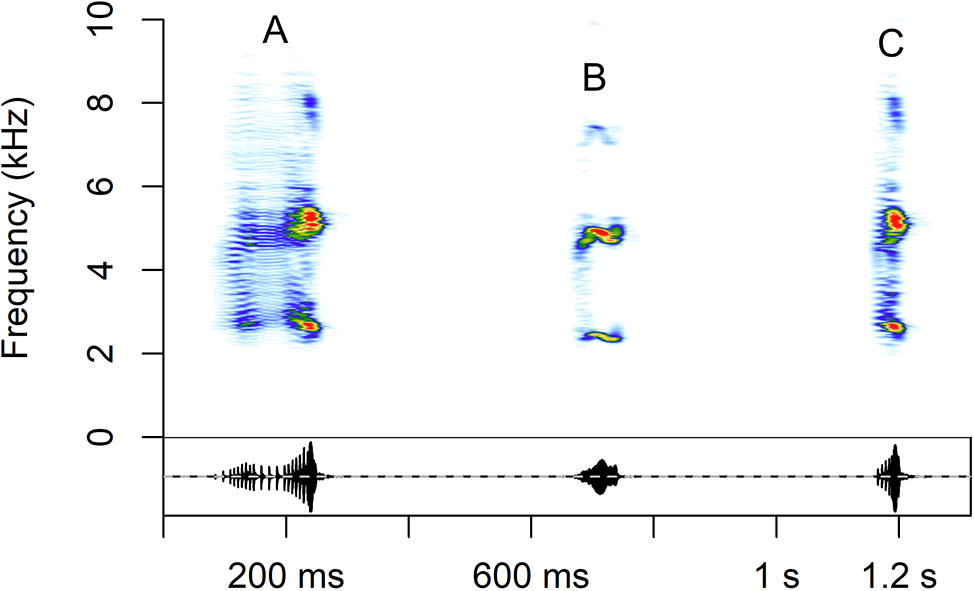
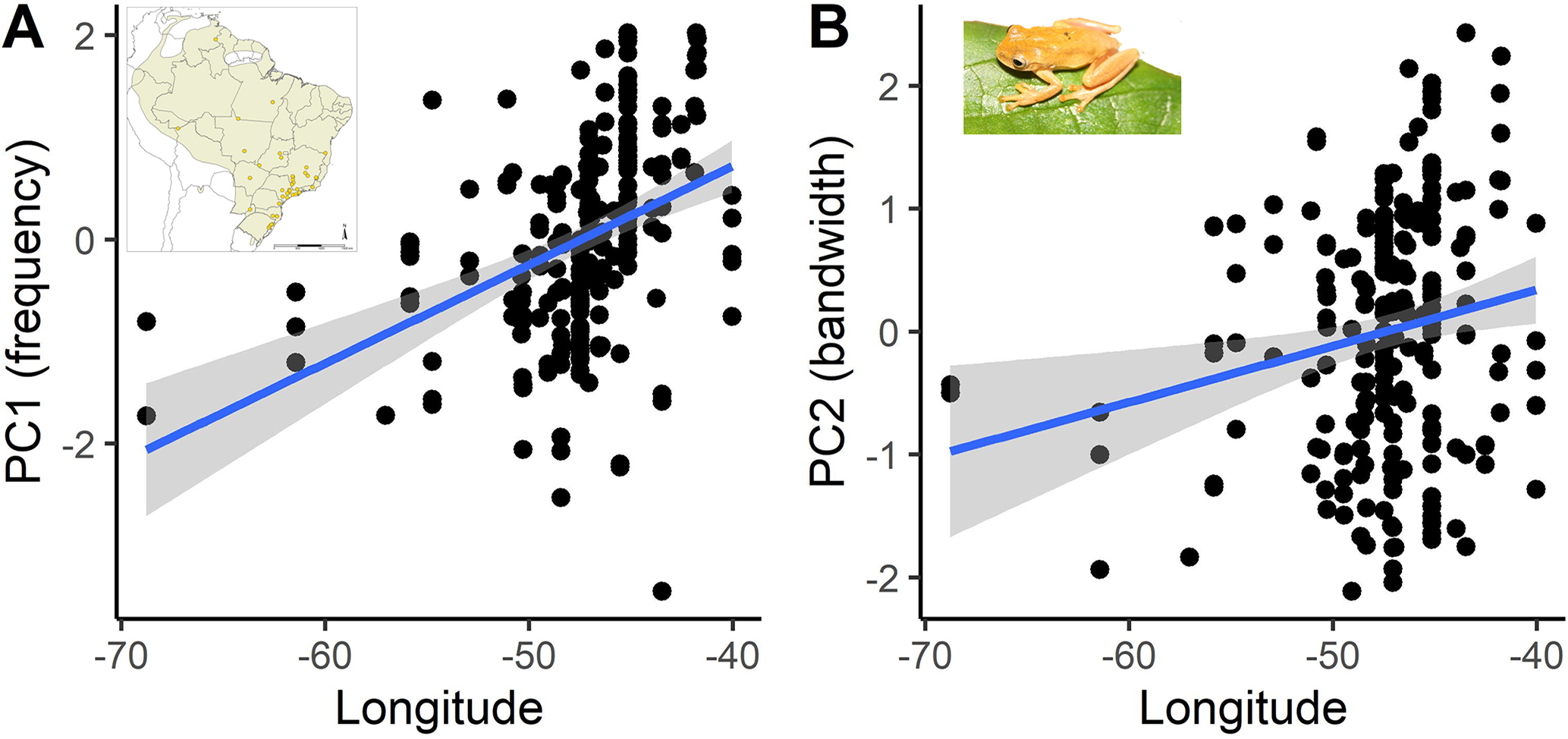
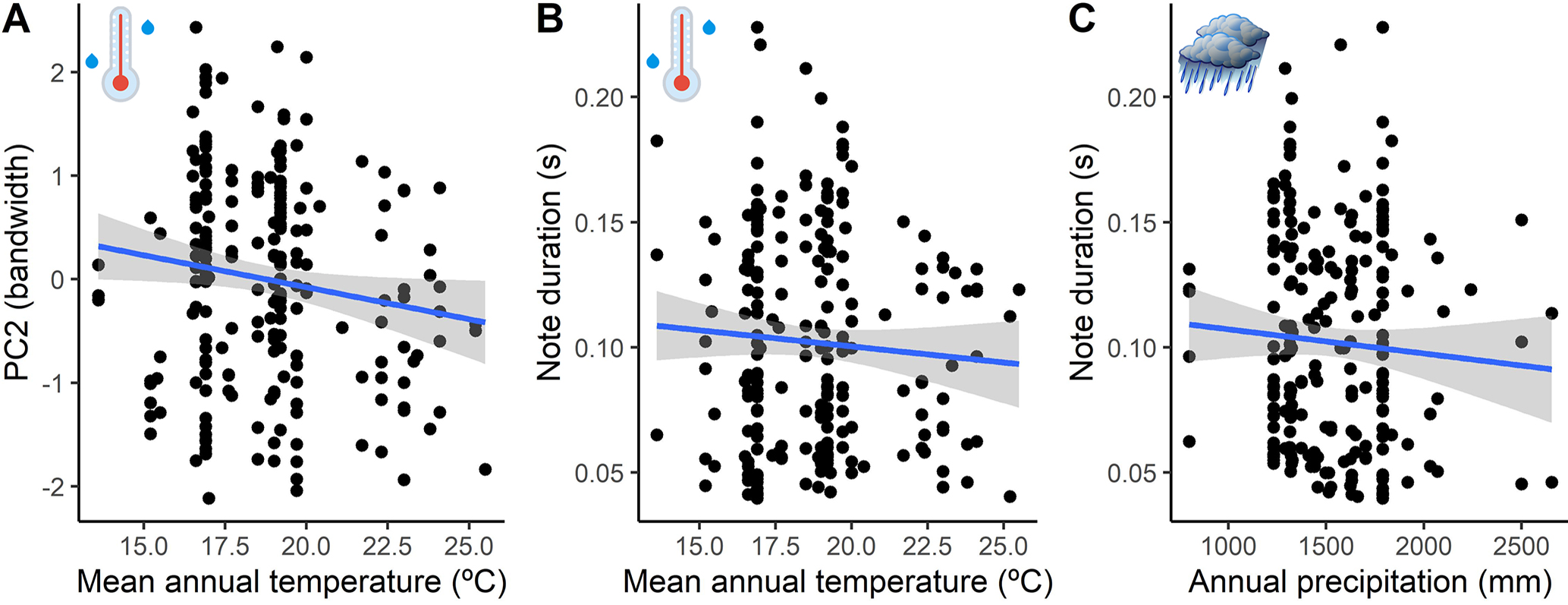
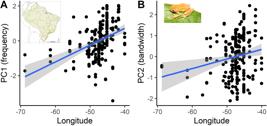
Biological sound archives are a major source to investigate geographic variation in animal acoustic signals and their evolutionary drivers. The acoustic signals of anuran species with wide distribution ranges often vary geographically as a result of isolation by distance and climate amongst other factors. We examined whether the acoustic structure of call notes would vary geographically in lesser treefrogs Dendropsophus minutus using recordings from bioacoustics repositories. We also tested whether climate (mean annual temperature and annual precipitation) drive geographic variation in those signals. The acoustic distance was unrelated to geographic distance, suggesting that isolation by distance solely cannot explain geographic variation in call structure. Overall, lesser treefrogs uttered call notes with lower frequencies and bandwidths in the west of their range. In addition, frogs produced shorter call notes in hotter, wetter sites and narrow-bandwidth notes in hotter environments. We suggest that frogs produce more calls (not measured here) of shorter durations to maximize transmission and minimize the metabolic costs of calling at high air temperatures. We also suggest that hotter environments favor the propagation of lower-bandwidth calls. This study reinforces the feasibility and power of citizen science and acoustic data repositories for understanding the evolution of anuran acoustic signals.
Keywords
Amphibians; Anurans; Bioacoustics; Vocal behavior; Vocal repertoire
 Thumbnail
 Thumbnail
 Thumbnail
 Thumbnail