
 Facial Attractiveness and Its Predictive Factors: A Literature Review
Abstract
Facial attractiveness plays a crucial role in shaping interpersonal interactions and influencing social and economic outcomes. Using a narrative approach, this review examines the main predictive factors of facial attractiveness, including symmetry, averageness, sexual dimorphism, skin quality, adiposity, youthfulness, and personality traits. We also explore the underlying evolutionary, neurobiological, and genetic mechanisms driving these preferences. Synthesizing key findings from the literature, we discuss the hypotheses related to each predictor. We conclude that complementary theories of adaptive advantage, perceptual bias, and cultural influences can explain the relationship between facial attractiveness and its predictors.
Keywords:
attractiveness; faces; preference; aesthetics; beauty
Resumo
A atratividade facial desempenha um papel crucial na formação de interações interpessoais e na influência de desfechos sociais e até mesmo econômicos. Esta revisão narrativa examina os principais fatores preditivos da atratividade facial, incluindo simetria, prototipicidade, dimorfismo sexual, qualidade da pele, adiposidade, juventude e traços de personalidade. Também exploramos os mecanismos evolutivos, neurobiológicos e genéticos que impulsionam essas preferências. Ao sintetizar os principais achados da literatura, discutimos as hipóteses relacionadas a cada preditor. Concluímos que a relação entre a atratividade facial e seus preditores pode ser explicada por teorias complementares de vantagem adaptativa, viés perceptual e influências culturais.
Palavras-chave:
atratividade; faces; preferência; estética; beleza
We are constantly exposed to attractive faces on mobile screens, televisions, and popular magazines. These faces captivate our attention, influencing decision-making processes and even boosting sales. Facial attractiveness significantly impacts individuals' daily lives. Attractive people are often perceived as possessing positive qualities, which affects their evaluations in professional and academic settings (Dion et al., 1972). Furthermore, research has linked facial attractiveness to upward economic mobility, increased romantic opportunities, and higher relationship satisfaction (Little, 2014). But what exactly makes some faces more attractive than others? Over the past years, various theories have been proposed to explain why certain faces are deemed more appealing. In this article, we will explore predictors of facial attractiveness and examine their complex interactions that shape cross-cultural patterns of aesthetic judgment (Figure 1).
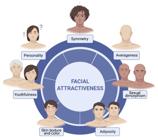
In this review, we provide a narrative examination of the literature on facial attractiveness and its predictive factors. Although we did not adhere to a systematic review methodology, such as predefined inclusion criteria or a rigorous literature search strategy, we aimed to offer a comprehensive overview of the most influential studies in this field. We focused on summarizing the predictors and the supporting evidence for each, followed by a discussion of the hypotheses that explain the relationship between each predictor and facial attractiveness. We begin by addressing key conceptual and methodological considerations with the biological and evolutionary foundations of facial attractiveness. Subsequently, we discuss variables for which evidence suggests an influence on the perception of facial attractiveness.
Attractiveness versus Beauty
We will discuss the current knowledge on how individuals judge faces in terms of their attractiveness. Understanding facial attractiveness also requires distinguishing between related but distinct concepts, like beauty and attractiveness. However, most studies cited in this context do not provide a clear distinction between the two different concepts (attractiveness and beauty). Intuitively, it is understood that a person perceived as beautiful by an individual may not necessarily be considered attractive. Therefore, it is important to explore the differences between these types of aesthetic judgments. Recent research shows that when asked to evaluate beauty and attractiveness, people often give distinct yet correlated responses (Ferdenzi et al., 2015; Kuraguchi et al., 2015; Monteiro et al., 2022; Schulz & Hayn-Leichsenring, 2017).
Although faces considered attractive are often also seen as beautiful, beauty ratings tend to be higher than attractiveness ratings, suggesting that attractiveness involves a more critical evaluation (Ferdenzi et al., 2015; Monteiro et al., 2022; Schulz & Hayn-Leichsenring, 2017). Additionally, attractiveness judgments seem less flexible than beauty evaluations, possibly because attractiveness plays a crucial role in mate selection (Monteiro et al., 2022). These findings suggest that beauty and attractiveness, while correlated, are distinct concepts, and this distinction may affect the interpretation of research on aesthetic evaluations of faces. It remains an open question whether the predictors of facial attractiveness apply similarly to perceived beauty. Moreover, understanding this difference could explain the mixed results in facial attractiveness studies that we will discuss further.
Evolutionary Roots of Facial Attractiveness
Humans have a remarkable sensitivity to faces, supported by specific neurons that activate in response to facial stimuli (Allison et al., 2000). We are particularly attentive to gaze direction, which helps us infer a person’s focus and predict their actions. When we encounter familiar faces, a network of neurons processes facial features (Gobbini & Haxby, 2007). It has been suggested that humans have evolved specialized face recognition systems due to the biological importance of recognizing familiar and unfamiliar individuals (Freiwald et al., 2016). These modules are thought to be evolutionary mechanisms that decode environmental inputs and process them within the brain (Barrett & Kurzban, 2006; Oliva, 2018).
Face recognition is composed of specialized cognitive modules in our brain that process human faces differently from isolated facial components or inanimate objects (Puce et al., 1999). This prioritization of biologically relevant information reflects the crucial role of faces in social and biological behaviors (Freiwald et al., 2016). If facial traits confer reproductive advantages, it is reasonable to assume that they have been shaped by evolution and persist across generations. Certain facial traits are proposed to signal an individual’s biological and social quality, especially in the context of mate selection (Little, 2014).
Sexual selection explains the evolution of facial attractiveness as a selected trait, where individuals with favorable facial traits gain reproductive advantages by outcompeting others for mates. Throughout human evolution, both men and women have employed competitive and selective strategies that favored the development of traits shared by both sexes, such as a preference for attractive faces, as they serve as indicators of health and resistance to parasites (Buss & Schmitt, 2019; Foo, Simmons, et al., 2017b; Sousa & Hattori, 2018).
The healthy mate selection hypothesis suggests that preferences for facial traits signal health and genetic quality. These traits strongly influenced individuals' reproductive success in the past, making them highly sought after in romantic partners (Foo, Simmons, et al., 2017b; Lopes et al., 2018). The consistency of attractiveness evaluations across cultures and developmental stages supports the evolutionary basis of this phenomenon. For instance, infants aged between 3 and 6 months tend to gaze longer at faces previously rated as attractive by adults (Langlois et al., 1987, 2000; Samuels et al., 1994). Cross-cultural evidence further supports this, showing high levels of agreement in facial attractiveness judgments both within and across different cultures (Langlois et al., 2000). Thus, the criteria used to assess facial attractiveness seem to display a certain degree of consistency.
Neural Response to Facial Attractiveness
Given the significance of facial attractiveness, which neural substrates engage in its evaluation? Recent findings highlight two key brain areas that show increased activation when perceiving attractive faces: the fusiform face area (FFA) and the inferior occipital gyrus (IOG) (Bzdok et al., 2011; Chatterjee et al., 2009; Iaria et al., 2008). These regions are known for their role in facial processing (Grill-Spector et al., 2017), and the more attractive a face is perceived to be, the more these areas are activated. Interestingly, this neural activity occurs even when the task does not explicitly involve attractiveness evaluation (Chatterjee et al., 2009; Winston et al., 2007). This suggests that attractiveness influences face perception both at early and later stages of processing, rapidly impacting the emotional and identity-related information extracted from faces (Hahn & Perrett, 2014).
However, facial attractiveness is often linked to stereotypes (see Personality section), with attractive individuals consistently rated more positively, even on traits unrelated to physical appearance. This phenomenon may be explained by how the information processed by the IOG and FFA interacts with other brain regions. These visual areas communicate with reward-related structures, particularly the orbitofrontal cortex (OFC), which activates in response to attractiveness evaluation (Hahn & Perrett, 2014). The medial OFC is associated with attractive faces, while the lateral OFC activates in response to unattractive faces (Cloutier et al., 2008). The medial OFC plays a role in reward processing, while the lateral OFC is implicated in processing punishment (Kringelbach, 2004). Consequently, the medial OFC is implicated in reward processing, while the lateral OFC is associated with punishment processing (Kringelbach, 2004).
Furthermore, the OFC not only processes reward in the context of attractiveness judgments but also plays a role in the moral evaluation of others (Luo et al., 2019). This suggests an overlap in the neural substrates responsible for processing facial attractiveness and moral judgment. Moreover, research indicates that these processes occur simultaneously and automatically, influencing how individuals perceive and judge others and shaping their behavior (Cheng et al., 2022; Luo et al., 2016).
Genetics of Facial Attractiveness
Similar to its neural underpinnings, the genetic basis of facial attractiveness is also being elucidated. Twin studies provide evidence for genetic influences on facial attractiveness, suggesting that facial attractiveness is a heritable trait to some extent (Mitchem et al., 2014). Additionally, Genome-Wide Association Studies (GWAS1) have identified specific genetic variants linked to facial attractiveness. For example, Hu et al. (2019) analyzed over 4,000 individuals and identified a set of genes associated with physical traits like body mass index (BMI), skin color, and facial morphology, all of which are discussed as factors in attractiveness.
In line with mate selection theory, these studies indicate that the genetic architecture of facial attractiveness differs between males and females, likely reflecting sex-specific criteria for selecting romantic partners (White & Puts, 2019). However, it is important to note that these findings are primarily from European samples, and further research is needed to explore their relevance in other populations, including admixed populations like the Brazilian population.
Methods in Facial Attractiveness Research
Two-Alternative Forced Choice Paradigm
One of the most widely used methods in facial attractiveness research is the Two-Alternative Forced Choice (2-AFC) paradigm. In this approach, participants are presented with two faces and asked to choose the more attractive one (Penton-Voak, 2011). Typically, the stimuli consist of variations of the same face, with specific features, such as symmetry or sexual dimorphism, manipulated. This method has greatly contributed to our understanding of facial attractiveness (Rhodes, 2006).
A key advantage of the 2-AFC paradigm is its ability to control confounding variables by manipulating only one facial dimension. However, while this enhances the sensitivity of the experiments, it reduces ecological validity since people do not usually compare nearly identical faces in real life (Penton-Voak, 2011). To address this, researchers have increasingly used non-manipulated faces in their studies.
Rating Studies
Another common approach in attractiveness research is rating studies, in which participants are shown a series of faces, each controlled for a specific variable, and asked to rate their attractiveness on a scale (e.g., 1 to 10) (Penton-Voak, 2011). This approach complements the 2-AFC method and has yielded converging results. However, like the 2-AFC paradigm, rating studies often involve artificial manipulation of faces, which can compromise ecological validity. This limitation is crucial, as real-world attractiveness judgments occur in more dynamic, complex social contexts. To mitigate this, non-manipulated faces are frequently used.
Despite these advantages, both methods are susceptible to potential biases, such as order effects and observer fatigue. To control for these factors, researchers often randomize the presentation order or include these variations in their statistical analyses (Jhangiani et al., 2019). Additionally, the sensitivity of measures used to assess facial features, such as symmetry or sexual dimorphism, is crucial. To improve accuracy, researchers have applied techniques like geometric morphometrics and machine learning to analyze facial dimensions (A. Jones & Jaeger, 2019).
Variables Influencing Facial Attractiveness Judgment
Symmetry
Overview of empirical evidence. One of the facial characteristics extensively investigated concerning facial attractiveness is symmetry. Symmetry refers to the presence of visual patterns characterized by repetition and balance. The human face serves as an example of a bilaterally symmetrical object, where the left and right sides exhibit mirror-image similarity. Studies have consistently highlighted facial symmetry as a predictor of facial attractiveness. Pioneering research by anthropologist Karl Grammer and biologist Randy Thornhill (1994) shed light on the role of symmetry in facial attractiveness, with subsequent experiments consistently confirming the correlation between facial symmetry and attractiveness judgments. Notably, the preference for symmetry extends beyond humans and is observed in various visually perceptive animal species, ranging from insects to non-human primates, underscoring its biological significance (Treder, 2010).
Although the preference for symmetry is consistent across different cultures (Apicella et al., 2007; Perrett et al., 1994), it does not appear to be a universal law. For instance, perfectly symmetrical faces (achieved through computational manipulation) do not seem to be preferred (Zaidel & Deblieck, 2007). In nature, slight degrees of asymmetry are often found in organisms considered symmetrical, suggesting that manipulation toward perfect symmetry may be perceived as unnatural (Swaddle & Cuthill, 1995). Additionally, factors such as age (Huang et al., 2018; Vingilis-Jaremko & Maurer, 2013), sex (Little et al., 2008), and even artistic training appear to influence the impact of facial symmetry on face judgments (Monteiro et al., 2022).
Debating hypothesis. The prevailing explanation for this preference for symmetry is that facial symmetry serves as an indicator of developmental stability in the face of environmental challenges (Watson & Thornhill, 1994). Given the inherent difficulty of acquiring comprehensive knowledge about a potential romantic partner's history, facial symmetry could provide clues about their morphological resilience. Greater facial symmetry suggests higher genetic quality, as it reflects the ability to withstand developmental disruptions and environmental stressors. Detecting subtle deviations from bilateral symmetry, known as fluctuating asymmetry, may confer evolutionary advantages in terms of reproductive success and fitness. Indeed, several studies have demonstrated that individuals with symmetrical faces are not only perceived as more physically attractive but also as healthier (Rhodes, Zebrowitz, et al., 2001). Additionally, individuals with symmetrical faces tend to report better overall physical and mental health compared to those with asymmetrical faces (Shackelford & Larsen, 1997; Thornhill & Gangestad, 2006).
Furthermore, it has been observed that childhood socioeconomic status has an impact on facial symmetry in adulthood, irrespective of current health status (Hope et al., 2013). Adverse living conditions have also been associated with increased facial asymmetry (Özener & Fink, 2010). Nevertheless, while these findings support the hypothesis that facial symmetry serves as an indicator of health, recent research has yielded inconsistent results (Pound et al., 2014). For example, some studies have failed to establish a significant correlation between facial symmetry and self-reported health, oxidative stress, or immune function (Foo, Simmons, et al., 2017a; A. Jones, 2018).
An alternative theory, called the perceptual bias theory, offers a different perspective. While the evolutionary advantage theory posits that facial symmetry signals genetic quality and stability, the perceptual bias theory suggests that the preference for symmetry stems from the ease of processing symmetrical stimuli by the visual system (Enquist & Arak, 1994). According to this theory, symmetrical objects provide repetitive visual information that requires less cognitive effort, leading to improved perceptual fluency (Reber et al., 2004).
Averageness
Overview of empirical evidence. Average faces, also referred to as prototypical or normative faces, are characterized by statistically average features (e.g., shape and size) within a specific population. They represent the central tendencies of facial morphology within a group. Prototypical faces are commonly generated through digital superimposition of a given set of face photographs. The resulting composite image, comprising multiple faces, is typically judged to be more attractive than the individual constituent photos (Langlois et al., 1994). Another approach to investigating the impact of facial averageness on attractiveness involves accentuating specific facial features that distinguish an individual's face from the average face of a population. This technique can be likened to creating a caricature of the individual. Studies have shown that the more exaggerated the facial features in the caricature, the less attractive the face is perceived to be (Little, 2014).
These digitally manipulated faces, however, exhibit a range of characteristics that may indirectly contribute to their perceived attractiveness. As a result of the superimposition process, these blended faces display a high degree of bilateral symmetry and smoothed skin color and texture (Alley & Cunningham, 1991). To ensure that the observed attractiveness is specifically associated with averageness and not confounded by other factors, several studies have implemented control measures. For instance, even when utilizing symmetric faces (typically rated favorably) to generate the superimposed average face, a clear preference for averageness remains evident (Apicella et al., 2007; B. C. Jones et al., 2007). Similarly, studies that controlled for initial variations in facial color and texture have consistently found that averageness continues to influence attractiveness judgments (Apicella et al., 2007; Rhodes & Tremewan, 1996). Furthermore, the preference for averageness has been reported across diverse cultural contexts, providing further support for its cross-cultural relevance (Rhodes, Yoshikawa, et al., 2001).
Debating hypothesis. Facial averageness is thought to be related to genetic diversity, as the average face shape is indicative of a gene blend and may serve as an indicator of pathogen resistance (Thornhill & Gangestad, 1993). From an evolutionary perspective, this function of signaling a ‘strong’ immune system would make facial averageness a desirable trait in potential mates. The heritability of facial averageness further supports the notion of genetic advantage (Lee et al., 2016). On the other hand, like symmetry, another explanation for the preference for averageness is that prototypical stimuli are processed more quickly and efficiently. This fluent processing is linked to positive affective responses, making prototypical stimuli more visually pleasant. It likely occurs because fluent processing is typically error-free and signals successful stimulus recognition (Trujillo et al., 2014; Winkielman et al., 2006). Neurophysiological and behavioral evidence suggests that the perception of attractiveness in average faces indeed involves fluent processing in the early stages of visual perception (Trujillo et al., 2014).
Sexual Dimorphism
Overview of empirical evidence. While prototypical or average faces are somewhat attractive, it is noteworthy that highly attractive faces are often non-prototypical (DeBruine et al., 2007). In fact, specific deviations from the average population features seem to enhance facial attractiveness. These deviations are related to sex-specific changes in facial characteristics (Perrett et al., 1998). The size and shape of the adult face reflect the transformations arising from the development of secondary sexual characteristics during puberty. Consequently, mature faces exhibit varying degrees of masculinization or feminization. These sex differences can be attributed, at least in part, to hormonal variations and are referred to as sexual dimorphisms in the field of biology (Law Smith et al., 2006; Lefevre et al., 2013).
Perceived femininity in women's faces is consistently associated with higher attractiveness across studies using both non-manipulated and manipulated facial stimuli. Additionally, women with more feminine facial features tend to have higher estrogen levels, which are linked to fertility (Probst et al., 2016). Preferences for sexual dimorphism in men's faces are mixed, with some studies showing a preference for less masculine features (e.g., Rhodes et al., 2000), others for more masculine features (e.g., Foo, Nakagawa, et al., 2017; Skrinda et al., 2014), and some for neither (e.g., Mogilski & Welling, 2017). These variations may be due to differences in methodological approaches or may reflect genuine differences in preferences across populations (Fiala et al., 2021).
Debating hypothesis. Masculine sexual dimorphism in facial features has been proposed as a health indicator because of testosterone. Testosterone has been associated with immune suppression (Foo, Nakagawa, et al., 2017) and increased oxidative stress (Alonso-Alvarez et al., 2007). Accordingly, it is hypothesized that only healthy men can sustain high levels of testosterone, which, in turn, contribute to masculinized facial characteristics (Rhodes, 2006). Another possibility is that masculinized faces may serve as indicators of gamete quality, given that testosterone also influences spermatogenesis (Zirkin, 1998).
Similarly, women with more feminine facial characteristics are generally perceived as healthier, although consensus regarding the direct relationship between facial femininity and health has yet to be reached (Rhodes et al., 2003), and female sexual dimorphism in facial features has also been linked to health through similar mechanisms (Gray & Boothroyd, 2012). Finally, a recent study suggests that the impact of perceived versus measured sexual dimorphism on attractiveness may vary across different populations. While morphometric measures of sexual dimorphism are not strong predictors of attractiveness, perceived sexual dimorphism consistently correlates with perceived attractiveness, particularly for heterosexual women assessing male faces (Fiala et al., 2021).
Skin Texture and Color
Overview of empirical evidence. Classic research on facial attractiveness has primarily focused on the impact of overall facial morphology on attractiveness (e.g., averageness and sexual dimorphism, as previously mentioned). However, skin surface characteristics also play a significant role and deserve further investigation. For instance, the distribution and homogeneity of skin color have been found to contribute to the perception of facial attractiveness (Fink et al., 2001, 2006).
Notably, facial redness has been shown to exert a substantial influence on attractiveness (Lu et al., 2021; Thorstenson et al., 2017), even when not directly on the face. Heterosexual men perceive women as more attractive when presented with a red background or when wearing red clothing (Elliot & Niesta, 2008). Moreover, the preference for reddish facial tone has also been observed in non-human primates (Waitt et al., 2003). In addition to redness, the presence of yellowish hues in facial coloration has also been found to play a role in attractiveness (Foo, Simmons, et al., 2017a; Stephen et al., 2012). Although yellowish faces are generally considered attractive, some differences may be observed across different cultures (Han et al., 2018).
Apart from color, facial skin's surface characteristics convey key information about partner quality. Smoother, more uniform skin with fewer blemishes is generally seen as more attractive, suggesting better health (Jaeger et al., 2018). Light reflection also plays a crucial role, with radiant skin - showing moderate reflection - preferred over matte or oily skin (Ikeda et al., 2021). Many individuals use cosmetic products to enhance skin radiance (Ikeda et al., 2021). These traits reveal skin functionality, including the sebaceous barrier's role in water retention, pathogen defense, and thermoregulation (Elias, 2007; Porter, 2001).
Debating hypothesis. There appears to be a connection between skin color and health that influences facial attractiveness, especially a reddish hue. For example, healthier faces often have greater vascularity, resulting in a redder complexion (Stephen et al., 2009). This health indicator in a potential partner, as previously discussed, enhances the appeal of reddish faces. Beyond health, this preference might also stem from a sensory bias. In other species, mating color preferences develop from sensory biases, such as those related to food preference. Humans may share this bias, as evidenced by red preferences in infants and specific color contrasts in women (Franklin et al., 2010), although empirical data tend to support the health hypothesis over the sensory bias hypothesis (Re, Whitehead, et al., 2011).
Similarly, yellowness is associated with the absorption of carotenoids, pigmented compounds involved in the photosynthesis of plants and other microorganisms (Stephen et al., 2009). Ultimately, a more yellowish facial tone may serve as an indicator of a well-rounded diet rich in fruits and vegetables, which are sources of these carotenoids. Although this hypothesis has been explored to a greater extent in other animal groups, its investigation in humans remains somewhat limited (MacDougall & Montgomerie, 2003; Massaro et al., 2003). However, a recent cross-sectional study found a consistent relationship between skin yellowness and factors such as regular physical activity, body weight, a diet rich in fruits and vegetables, self-reported stress, and sleep habits, supporting the hypothesis that skin color is linked to health (Perrett et al., 2020).
Skin coloration is not only relevant in human attractiveness but also holds importance for primates in general. The ability to perceive facial coloration is also linked to the evolution of trichromacy, which refers to the presence of three photopigments in the photoreceptors that allow for the processing of color vision (Barton, 2014). Moreover, trichromatic primates typically have exposed facial skin, facilitating the visual assessment of their skin surface, suggesting an advantage in perceiving facial coloration (Changizi et al., 2006).
Adiposity
Overview of empirical evidence. Facial adiposity has recently emerged as a facial feature of interest in the investigation of attractiveness perception. Perceiving body weight through the face is considered an accurate indicator of Body Mass Index (BMI), implying the ability to discern body weight based on facial adiposity (de Jager et al., 2018). However, while facial weight perception is sensitive to subtle changes in body weight, a substantial increase in weight is necessary to significantly impact perceived facial attractiveness (Re & Rule, 2016). The relationship between adiposity and facial attractiveness is proposed to be nonlinear (Stommel & Schoenborn, 2010). Therefore, faces displaying adiposity within a healthy or average range are considered more attractive (Coetzee et al., 2011; Rantala et al., 2013).
Debating hypothesis. The influence of adiposity on facial attractiveness is attributed to its potential as a health indicator (de Jager et al., 2018). Indeed, facial adiposity, akin to overall body adiposity, has been associated with various negative health outcomes, including cardiovascular issues, infection risks, and even mental health problems (Coetzee et al., 2009; de Jager et al., 2018; Stephen et al., 2017). Notably, the level of leptin in the blood, a protein related to increased body weight, exhibits a negative correlation with perceived facial attractiveness (Żelaźniewicz et al., 2020).
The nonlinear relationship between adiposity and facial attractiveness may be explained by the fact that individuals with very low or very high body weight often have compromised health (Stommel & Schoenborn, 2010). However, some studies have not found direct links between facial adiposity and biological health markers like immune function, and some have even observed an inverse relationship where adiposity is negatively associated with oxidative stress markers (Foo, Simmons, et al., 2017a). Other factors influence the perception of facial adiposity and attractiveness, including exposure to plus-size bodies, internet access, urbanization, and ethnic background (Batres & Perrett, 2014; Re, Coetzee, et al., 2011; Tovee et al., 2006). Hence, it is crucial to consider cultural influences when interpreting attractiveness-related findings related to facial adiposity.
Youthfulness
Overview of empirical evidence. Age significantly influences facial appearance, including the presence of wrinkles, folds, and changes in skin tone and texture. These facial alterations commonly accompany the aging process, impacting both self-perception and how individuals are perceived by others (Gupta & Gilchrest, 2005). Numerous studies have demonstrated that faces of older individuals are generally considered less attractive, suggesting the existence of a negative stereotype associated with aging (Ebner, 2008). Furthermore, individuals tend to perceive faces as younger or older based on their previous judgments of attractiveness, indicating a cognitive bias in age estimation (Foos & Clark, 2011).
As youthfulness is a desirable characteristic, particularly for heterosexual men, the perception of age through facial cues has a greater impact on the assessment of women (Buss & Schmitt, 2019). Compared to younger women or older men, the faces of older women are consistently rated as less attractive (Foos & Clark, 2011). Consequently, cosmetic products, primarily used by women, are often employed to enhance facial youthfulness (Russell et al., 2019), although the use of makeup has little effect on facial attractiveness (A. L. Jones & Kramer, 2015). Moreover, an increase in perceived attractiveness has been observed in women who have undergone rejuvenation surgery (Reilly et al., 2015).
Debating hypothesis. Perceived youthfulness in facial features may confer evolutionary advantages, signaling extended parental investment, fertility, and high reproductive value, particularly in women. According to this perspective, men attracted to younger women at the start of their fertile period increase their chances of successful reproduction, as female fertility declines with age and ends with menopause (B. C. Jones et al., 2022; Little, 2014). Few studies, however, have tested this relationship, although there is some indirect evidence supporting a correlation between fertility-related measures and perceived facial attractiveness (Bovet et al., 2018; Maestripieri et al., 2014). Moreover, it is worth noting that the effect of perceived youthfulness disappears when individuals within a narrower age range (18 to 30 years) are evaluated (e.g., Langlois et al., 1994).
Personality
Overview of empirical evidence. As previously mentioned, positive personality traits are often attributed to individuals perceived as attractive. However, the relationship between personality and facial attractiveness is bidirectional. Providing cues about personality can influence judgments of facial attractiveness (Niimi & Goto, 2023). For instance, Paunonen (2006) found that labeling a face as honest increased its perceived attractiveness. Expanding on this, Zhang et al. (2014) conducted a study in which participants were divided into three groups and presented with the same set of faces. Each group was exposed to faces paired with different valenced personality traits: positive, negative, or neutral. The results revealed that the group presented with faces paired with positive traits rated them as more attractive. Similarly, He et al. (2022) demonstrated that faces associated with morally virtuous behaviors were perceived as more attractive, while faces associated with transgressive acts were considered less attractive. These findings suggest that the “what is beautiful is good” stereotype can be extended to include the notions of “what is good is beautiful” and “what is not good is not beautiful.”
Debating hypothesis. The influence of desired personality traits on judgments of facial attractiveness is contingent upon the perception that the observed face possesses these traits (Little et al., 2006). Furthermore, choosing romantic partners who exhibit prosocial personality traits and behaviors is evolutionarily advantageous, benefiting not only the chooser but also the wider social group (Boyd & Richerson, 2009; Little, 2014). Furthermore, as previously discussed (see section Neural Response to Facial Attractiveness), the overlap in neural processing of attractiveness and moral goodness may provide a physiological explanation for why positive personality traits influence perceptions of attractiveness, and vice versa (Cheng et al., 2022; Luo et al., 2016).
Predictors in Combination
While we have discussed several facial characteristics that influence attractiveness, it is important to note that each of these factors alone explains only a small portion of the variance in facial attractiveness. Therefore, they do not consistently account for why we find faces attractive (Said & Todorov, 2011). However, recent research suggests that the theory of facial attractiveness can benefit from the application of multivariate methods instead of univariate approaches. Employing mathematical models that consider the combined influence of multiple traits allows for a more comprehensive understanding of how facial attractiveness is assessed in real-world contexts (Holzleitner et al., 2019). In the real world, faces are encountered with a diverse range of these characteristics, and we likely evaluate them concurrently.
Debating hypotheses for facial attractiveness predictors
The multifaceted nature of facial attractiveness has led to the development of various hypotheses to explain why certain facial traits are perceived as attractive across different individuals and cultures. Based on the predictors discussed in this paper, these theories can be grouped into three categories: (i) evolutionary perspective, (ii) perceptual processing, and (iii) cultural/developmental influences, each offering unique insights into the factors that determine facial attractiveness.
Evolutionary perspective. Traits that signal genetic fitness, health, and reproductive potential are hypothesized to be universally appealing (also referred to as the healthy mate selection hypothesis). For example, facial symmetry is considered an indicator of developmental stability, with symmetrical faces suggesting an ability to withstand environmental stressors (Watson & Thornhill, 1994). Similarly, facial averageness may signal genetic diversity, reducing disease susceptibility (Thornhill & Gangestad, 1993). Sexual dimorphism, particularly in mate selection, highlights how hormones shape facial features that signal fertility in women and genetic robustness in men (Little, 2014). The preference for youthful features, especially in women, is also viewed as an evolutionary strategy to enhance reproductive success, given that youth is thought to correlate with fertility (Buss & Schmitt, 2019).
Perceptual bias theory. An alternative explanation, known as the perceptual bias theory, suggests that humans are biologically predisposed to prefer faces that are easier to process cognitively. Symmetrical and average faces may be less cognitively demanding due to their familiar structures, leading to smoother neural processing and more positive affective responses (Reber et al., 2004). This perceptual fluency makes symmetrical and prototypical faces more visually appealing, explaining where preference arises from ease of visual processing.
Cultural and developmental influences. Cultural factors also play a significant role in shaping perceptions of attractiveness. Social and media influences often set beauty standards that vary across regions and historical periods. For example, media exposure to certain body types can affect preferences for facial adiposity, with individuals in more industrialized societies frequently preferring leaner faces (Batres & Perrett, 2014). Cultural ideals regarding skin color and texture, influenced by socioeconomic and health-related factors, may affect preferences for skin tone (Stephen et al., 2009). Even artistic training has been shown to influence perceptions of facial beauty (Monteiro et al., 2022). This suggests that while some facial traits may be generally preferred, cultural and social learning significantly shape individual preferences.
When combined, these theories offer a well-rounded view of facial attractiveness. Evolutionary biology explains why certain traits are generally appealing, while perceptual bias theory sheds light on how we process these traits cognitively. Cultural and developmental factors further shape and refine our preferences based on social and historical influences. Together, these perspectives help us understand not only why certain facial features are broadly valued but also how individual preferences can differ.
References
-
Alley, T. R., & Cunningham, M. R. (1991). Averaged Faces Are Attractive, but Very Attractive Faces Are Not Average. Psychological Science, 2(2), 123-125. https://doi.org/10.1111/j.1467-9280.1991.tb00113.x
» https://doi.org/10.1111/j.1467-9280.1991.tb00113.x -
Allison, T., Puce, A., & McCarthy, G. (2000). Social perception from visual cues: role of the STS region. Trends in Cognitive Sciences, 4(7), 267-278. https://doi.org/10.1016/S1364-6613(00)01501-1
» https://doi.org/10.1016/S1364-6613(00)01501-1 -
Alonso-Alvarez, C., Bertrand, S., Faivre, B., Chastel, O., & Sorci, G. (2007). Testosterone and oxidative stress: the oxidation handicap hypothesis. Proceedings of the Royal Society B: Biological Sciences, 274(1611), 819-825. https://doi.org/10.1098/rspb.2006.3764
» https://doi.org/10.1098/rspb.2006.3764 -
Apicella, C. L., Little, A. C., & Marlowe, F. W. (2007). Facial Averageness and Attractiveness in an Isolated Population of Hunter-Gatherers. Perception, 36(12), 1813-1820. https://doi.org/10.1068/p5601
» https://doi.org/10.1068/p5601 -
Barrett, H. C., & Kurzban, R. (2006). Modularity in cognition: Framing the debate. Psychological Review, 113(3), 628-647. https://doi.org/10.1037/0033-295X.113.3.628
» https://doi.org/10.1037/0033-295X.113.3.628 -
Barton, J. J. S. (2014). Visual Color and Form Perception. In Encyclopedia of the Neurological Sciences (pp. 677-680). Elsevier. https://doi.org/10.1016/B978-0-12-385157-4.00141-X
» https://doi.org/10.1016/B978-0-12-385157-4.00141-X -
Batres, C., & Perrett, D. I. (2014). The Influence of the Digital Divide on Face Preferences in El Salvador: People without Internet Access Prefer More Feminine Men, More Masculine Women, and Women with Higher Adiposity. PLoS ONE, 9(7), e100966. https://doi.org/10.1371/journal.pone.0100966
» https://doi.org/10.1371/journal.pone.0100966 -
Bovet, J., Barkat‐Defradas, M., Durand, V., Faurie, C., & Raymond, M. (2018). Women’s attractiveness is linked to expected age at menopause. Journal of Evolutionary Biology, 31(2), 229-238. https://doi.org/10.1111/jeb.13214
» https://doi.org/10.1111/jeb.13214 -
Boyd, R., & Richerson, P. J. (2009). Culture and the evolution of human cooperation. Philosophical Transactions of the Royal Society B: Biological Sciences, 364(1533), 3281-3288. https://doi.org/10.1098/rstb.2009.0134
» https://doi.org/10.1098/rstb.2009.0134 -
Buss, D. M., & Schmitt, D. P. (2019). Mate Preferences and Their Behavioral Manifestations. Annual Review of Psychology, 70(1), 77-110. https://doi.org/10.1146/annurev-psych-010418-103408
» https://doi.org/10.1146/annurev-psych-010418-103408 -
Bzdok, D., Langner, R., Caspers, S., Kurth, F., Habel, U., Zilles, K., Laird, A., & Eickhoff, S. B. (2011). ALE meta-analysis on facial judgments of trustworthiness and attractiveness. Brain Structure and Function, 215(3-4), 209-223. https://doi.org/10.1007/s00429-010-0287-4
» https://doi.org/10.1007/s00429-010-0287-4 -
Changizi, M. A., Zhang, Q., & Shimojo, S. (2006). Bare skin, blood and the evolution of primate colour vision. Biology Letters, 2(2), 217-221. https://doi.org/10.1098/rsbl.2006.0440
» https://doi.org/10.1098/rsbl.2006.0440 -
Chatterjee, A., Thomas, A., Smith, S. E., & Aguirre, G. K. (2009). The neural response to facial attractiveness. Neuropsychology, 23(2), 135-143. https://doi.org/10.1037/a0014430
» https://doi.org/10.1037/a0014430 -
Cheng, Q., Han, Z., Liu, S., Kong, Y., Weng, X., & Mo, L. (2022). Neural responses to facial attractiveness in the judgments of moral goodness and moral beauty. Brain Structure and Function, 227(3), 843-863. https://doi.org/10.1007/s00429-021-02422-5
» https://doi.org/10.1007/s00429-021-02422-5 -
Coetzee, V., Perrett, D. I., & Stephen, I. D. (2009). Facial Adiposity: A Cue to Health? Perception, 38(11), 1700-1711. https://doi.org/10.1068/p6423
» https://doi.org/10.1068/p6423 -
Coetzee, V., Re, D., Perrett, D. I., Tiddeman, B. P., & Xiao, D. (2011). Judging the health and attractiveness of female faces: Is the most attractive level of facial adiposity also considered the healthiest? Body Image, 8(2), 190-193. https://doi.org/10.1016/j.bodyim.2010.12.003
» https://doi.org/10.1016/j.bodyim.2010.12.003 -
de Jager, S., Coetzee, N., & Coetzee, V. (2018). Facial Adiposity, Attractiveness, and Health: A Review. Frontiers in Psychology, 9. https://doi.org/10.3389/fpsyg.2018.02562
» https://doi.org/10.3389/fpsyg.2018.02562 -
DeBruine, L. M., Jones, B. C., Unger, L., Little, A. C., & Feinberg, D. R. (2007). Dissociating averageness and attractiveness: Attractive faces are not always average. Journal of Experimental Psychology: Human Perception and Performance, 33(6), 1420-1430. https://doi.org/10.1037/0096-1523.33.6.1420
» https://doi.org/10.1037/0096-1523.33.6.1420 -
Dion, K., Berscheid, E., & Walster, E. (1972). What is beautiful is good. Journal of Personality and Social Psychology, 24(3), 285-290. https://doi.org/10.1037/h0033731
» https://doi.org/10.1037/h0033731 -
Ebner, N. C. (2008). Age of face matters: Age-group differences in ratings of young and old faces. Behavior Research Methods, 40(1), 130-136. https://doi.org/10.3758/BRM.40.1.130
» https://doi.org/10.3758/BRM.40.1.130 -
Elias, P. M. (2007). The skin barrier as an innate immune element. Seminars in Immunopathology, 29(1), 3-14. https://doi.org/10.1007/s00281-007-0060-9
» https://doi.org/10.1007/s00281-007-0060-9 -
Elliot, A. J., & Niesta, D. (2008). Romantic red: Red enhances men’s attraction to women. Journal of Personality and Social Psychology, 95(5), 1150-1164. https://doi.org/10.1037/0022-3514.95.5.1150
» https://doi.org/10.1037/0022-3514.95.5.1150 -
Enquist, M., & Arak, A. (1994). Symmetry, beauty and evolution. Nature, 372(6502), 169-172. https://doi.org/10.1038/372169a0
» https://doi.org/10.1038/372169a0 -
Ferdenzi, C., Delplanque, S., Vorontsova-Wenger, O., Pool, E. v. a., Bianchi-Demicheli, F., & Sander, D. (2015). Perception of Men’s Beauty and Attractiveness by Women with Low Sexual Desire. The Journal of Sexual Medicine, 12(4), 946-955. https://doi.org/10.1111/jsm.12795
» https://doi.org/10.1111/jsm.12795 -
Fiala, V., Třebický, V., Pazhoohi, F., Leongómez, J. D., Tureček, P., Saribay, S. A., Akoko, R. M., & Kleisner, K. (2021). Facial attractiveness and preference of sexual dimorphism: A comparison across five populations. Evolutionary Human Sciences, 3, e38. https://doi.org/10.1017/ehs.2021.33
» https://doi.org/10.1017/ehs.2021.33 -
Fink, B., Grammer, K., & Matts, P. (2006). Visible skin color distribution plays a role in the perception of age, attractiveness, and health in female faces☆. Evolution and Human Behavior, 27(6), 433-442. https://doi.org/10.1016/j.evolhumbehav.2006.08.007
» https://doi.org/10.1016/j.evolhumbehav.2006.08.007 -
Fink, B., Grammer, K., & Thornhill, R. (2001). Human (Homo sapiens) facial attractiveness in relation to skin texture and color. Journal of Comparative Psychology, 115(1), 92-99. https://doi.org/10.1037/0735-7036.115.1.92
» https://doi.org/10.1037/0735-7036.115.1.92 -
Foo, Y. Z., Nakagawa, S., Rhodes, G., & Simmons, L. W. (2017). The effects of sex hormones on immune function: a meta-analysis. Biological Reviews, 92(1), 551-571. https://doi.org/10.1111/brv.12243
» https://doi.org/10.1111/brv.12243 -
Foo, Y. Z., Simmons, L. W., & Rhodes, G. (2017a). Predictors of facial attractiveness and health in humans. Scientific Reports, 7(1), 39731. https://doi.org/10.1038/srep39731
» https://doi.org/10.1038/srep39731 -
Foo, Y. Z., Simmons, L. W., & Rhodes, G. (2017b). The relationship between health and mating success in humans. Royal Society Open Science, 4(1), 160603. https://doi.org/10.1098/rsos.160603
» https://doi.org/10.1098/rsos.160603 -
Foos, P. W., & Clark, M. C. (2011). Adult Age and Gender Differences in Perceptions of Facial Attractiveness: Beauty is in the Eye of the Older Beholder. The Journal of Genetic Psychology, 172(2), 162-175. https://doi.org/10.1080/00221325.2010.526154
» https://doi.org/10.1080/00221325.2010.526154 -
Franklin, A., Bevis, L., Ling, Y., & Hurlbert, A. (2010). Biological components of colour preference in infancy. Developmental Science, 13(2), 346-354. https://doi.org/10.1111/j.1467-7687.2009.00884.x
» https://doi.org/10.1111/j.1467-7687.2009.00884.x -
Freiwald, W., Duchaine, B., & Yovel, G. (2016). Face Processing Systems: From Neurons to Real-World Social Perception. Annual Review of Neuroscience, 39(1), 325-346. https://doi.org/10.1146/annurev-neuro-070815-013934
» https://doi.org/10.1146/annurev-neuro-070815-013934 -
Gobbini, M. I., & Haxby, J. V. (2007). Neural systems for recognition of familiar faces. Neuropsychologia, 45(1), 32-41. https://doi.org/10.1016/j.neuropsychologia.2006.04.015
» https://doi.org/10.1016/j.neuropsychologia.2006.04.015 -
Grammer, K., & Thornhill, R. (1994). Human (Homo sapiens) facial attractiveness and sexual selection: The role of symmetry and averageness. Journal of Comparative Psychology, 108(3), 233-242. https://doi.org/10.1037/0735-7036.108.3.233
» https://doi.org/10.1037/0735-7036.108.3.233 -
Gray, A. W., & Boothroyd, L. G. (2012). Female Facial Appearance and Health. Evolutionary Psychology, 10(1), 147470491201000. https://doi.org/10.1177/147470491201000108
» https://doi.org/10.1177/147470491201000108 -
Grill-Spector, K., Weiner, K. S., Kay, K., & Gomez, J. (2017). The Functional Neuroanatomy of Human Face Perception. Annual Review of Vision Science, 3(1), 167-196. https://doi.org/10.1146/annurev-vision-102016-061214
» https://doi.org/10.1146/annurev-vision-102016-061214 -
Gupta, M. A., & Gilchrest, B. A. (2005). Psychosocial Aspects Of Aging Skin. Dermatologic Clinics, 23(4), 643-648. https://doi.org/10.1016/j.det.2005.05.012
» https://doi.org/10.1016/j.det.2005.05.012 -
Hahn, A. C., & Perrett, D. I. (2014). Neural and behavioral responses to attractiveness in adult and infant faces. Neuroscience & Biobehavioral Reviews, 46, 591-603. https://doi.org/10.1016/j.neubiorev.2014.08.015
» https://doi.org/10.1016/j.neubiorev.2014.08.015 -
Han, C., Wang, H., Hahn, A. C., Fisher, C. I., Kandrik, M., Fasolt, V., Morrison, D. K., Lee, A. J., Holzleitner, I. J., DeBruine, L. M., & Jones, B. C. (2018). Cultural differences in preferences for facial coloration. Evolution and Human Behavior, 39(2), 154-159. https://doi.org/10.1016/j.evolhumbehav.2017.11.005
» https://doi.org/10.1016/j.evolhumbehav.2017.11.005 -
He, D., Workman, C. I., He, X., & Chatterjee, A. (2022). What is good is beautiful (and what isn’t, isn’t): How moral character affects perceived facial attractiveness. Psychology of Aesthetics, Creativity, and the Arts https://doi.org/10.1037/aca0000454
» https://doi.org/10.1037/aca0000454 -
Holzleitner, I. J., Lee, A. J., Hahn, A. C., Kandrik, M., Bovet, J., Renoult, J. P., Simmons, D., Garrod, O., DeBruine, L. M., & Jones, B. C. (2019). Comparing theory-driven and data-driven attractiveness models using images of real women’s faces. Journal of Experimental Psychology: Human Perception and Performance, 45(12), 1589-1595. https://doi.org/10.1037/xhp0000685
» https://doi.org/10.1037/xhp0000685 -
Hope, D., Bates, T., Penke, L., Gow, A. J., Starr, J. M., & Deary, I. J. (2013). Symmetry of the face in old age reflects childhood social status. Economics & Human Biology, 11(2), 236-244. https://doi.org/10.1016/j.ehb.2011.06.006
» https://doi.org/10.1016/j.ehb.2011.06.006 -
Hu, B., Shen, N., Li, J. J., Kang, H., Hong, J., Fletcher, J., Greenberg, J., Mailick, M. R., & Lu, Q. (2019). Genome-wide association study reveals sex-specific genetic architecture of facial attractiveness. PLOS Genetics, 15(4), e1007973. https://doi.org/10.1371/journal.pgen.1007973
» https://doi.org/10.1371/journal.pgen.1007973 -
Huang, Y., Xue, X., Spelke, E., Huang, L., Zheng, W., & Peng, K. (2018). The aesthetic preference for symmetry dissociates from early-emerging attention to symmetry. Scientific Reports, 8(1), 6263. https://doi.org/10.1038/s41598-018-24558-x
» https://doi.org/10.1038/s41598-018-24558-x -
Iaria, G., Fox, C. J., Waite, C. T., Aharon, I., & Barton, J. J. S. (2008). The contribution of the fusiform gyrus and superior temporal sulcus in processing facial attractiveness: Neuropsychological and neuroimaging evidence. Neuroscience, 155(2), 409-422. https://doi.org/10.1016/j.neuroscience.2008.05.046
» https://doi.org/10.1016/j.neuroscience.2008.05.046 -
Ikeda, H., Saheki, Y., Sakano, Y., Wada, A., Ando, H., & Tagai, K. (2021). Facial radiance influences facial attractiveness and affective impressions of faces. International Journal of Cosmetic Science, 43(2), 144-157. https://doi.org/10.1111/ics.12673
» https://doi.org/10.1111/ics.12673 -
Jaeger, B., Wagemans, F. M. A., Evans, A. M., & van Beest, I. (2018). Effects of Facial Skin Smoothness and Blemishes on Trait Impressions. Perception, 47(6), 608-625. https://doi.org/10.1177/0301006618767258
» https://doi.org/10.1177/0301006618767258 -
Jhangiani, R. S., Chiang, I.-C. A., Cuttler, C., & C., D. (2019). Research Methods in Psychology (4th ed.). Kwantlen Polytechnic University. https://doi.org/10.17605/OSF.IO/H
» https://doi.org/10.17605/OSF.IO/H -
Jones, A. (2018). The influence of shape and colour cue classes on facial health perception. Evolution and Human Behavior, 39(1), 19-29. https://doi.org/10.1016/j.evolhumbehav.2017.09.005
» https://doi.org/10.1016/j.evolhumbehav.2017.09.005 -
Jones, A., & Jaeger, B. (2019). Biological Bases of Beauty Revisited: The Effect of Symmetry, Averageness, and Sexual Dimorphism on Female Facial Attractiveness. Symmetry, 11(2), 279. https://doi.org/10.3390/sym11020279
» https://doi.org/10.3390/sym11020279 -
Jones, A. L., & Kramer, R. S. S. (2015). Facial Cosmetics Have Little Effect on Attractiveness Judgments Compared with Identity. Perception, 44(1), 79-86. https://doi.org/10.1068/p7904
» https://doi.org/10.1068/p7904 -
Jones, B. C., DeBruine, L. M., & Little, A. C. (2007). The role of symmetry in attraction to average faces. Perception & Psychophysics, 69(8), 1273-1277. https://doi.org/10.3758/BF03192944
» https://doi.org/10.3758/BF03192944 -
Jones, B. C., Jones, A. L., Shiramizu, V., & Anderson, C. (2022). What Does Women’s Facial Attractiveness Signal? Implications for an Evolutionary Perspective on Appearance Enhancement. Archives of Sexual Behavior, 51(1), 67-71. https://doi.org/10.1007/s10508-021-01955-4
» https://doi.org/10.1007/s10508-021-01955-4 -
Kringelbach, M. (2004). The functional neuroanatomy of the human orbitofrontal cortex: evidence from neuroimaging and neuropsychology. Progress in Neurobiology, 72(5), 341-372. https://doi.org/10.1016/j.pneurobio.2004.03.006
» https://doi.org/10.1016/j.pneurobio.2004.03.006 -
Kuraguchi, K., Taniguchi, K., & Ashida, H. (2015). The impact of baby schema on perceived attractiveness, beauty, and cuteness in female adults. SpringerPlus, 4(1), 164. https://doi.org/10.1186/s40064-015-0940-8
» https://doi.org/10.1186/s40064-015-0940-8 -
Langlois, J. H., Kalakanis, L., Rubenstein, A. J., Larson, A., Hallam, M., & Smoot, M. (2000). Maxims or myths of beauty? A meta-analytic and theoretical review. Psychological Bulletin, 126(3), 390-423. https://doi.org/10.1037/0033-2909.126.3.390
» https://doi.org/10.1037/0033-2909.126.3.390 -
Langlois, J. H., Roggman, L. A., Casey, R. J., Ritter, J. M., Rieser-Danner, L. A., & Jenkins, V. Y. (1987). Infant preferences for attractive faces: Rudiments of a stereotype? Developmental Psychology, 23(3), 363-369. https://doi.org/10.1037/0012-1649.23.3.363
» https://doi.org/10.1037/0012-1649.23.3.363 -
Langlois, J. H., Roggman, L. A., & Musselman, L. (1994). What Is Average and What Is Not Average About Attractive Faces? Psychological Science, 5(4), 214-220. https://doi.org/10.1111/j.1467-9280.1994.tb00503.x
» https://doi.org/10.1111/j.1467-9280.1994.tb00503.x -
Law Smith, M. ., Perrett, D. ., Jones, B. ., Cornwell, R. ., Moore, F. ., Feinberg, D. ., Boothroyd, L. ., Durrani, S. ., Stirrat, M. ., Whiten, S., Pitman, R. ., & Hillier, S. . (2006). Facial appearance is a cue to oestrogen levels in women. Proceedings of the Royal Society B: Biological Sciences, 273(1583), 135-140. https://doi.org/10.1098/rspb.2005.3296
» https://doi.org/10.1098/rspb.2005.3296 -
Lee, A. J., Mitchem, D. G., Wright, M. J., Martin, N. G., Keller, M. C., & Zietsch, B. P. (2016). Facial averageness and genetic quality: testing heritability, genetic correlation with attractiveness, and the paternal age effect. Evolution and Human Behavior, 37(1), 61-66. https://doi.org/10.1016/j.evolhumbehav.2015.08.003
» https://doi.org/10.1016/j.evolhumbehav.2015.08.003 -
Lefevre, C. E., Lewis, G. J., Perrett, D. I., & Penke, L. (2013). Telling facial metrics: facial width is associated with testosterone levels in men. Evolution and Human Behavior, 34(4), 273-279. https://doi.org/10.1016/j.evolhumbehav.2013.03.005
» https://doi.org/10.1016/j.evolhumbehav.2013.03.005 -
Little, A. C. (2014). Facial attractiveness. WIREs Cognitive Science, 5(6), 621-634. https://doi.org/10.1002/wcs.1316
» https://doi.org/10.1002/wcs.1316 -
Little, A. C., Burt, D. M., & Perrett, D. I. (2006). What is good is beautiful: Face preference reflects desired personality. Personality and Individual Differences, 41(6), 1107-1118. https://doi.org/10.1016/j.paid.2006.04.015
» https://doi.org/10.1016/j.paid.2006.04.015 -
Little, A. C., Jones, B. C., DeBruine, L. M., & Feinberg, D. R. (2008). Symmetry and sexual dimorphism in human faces: interrelated preferences suggest both signal quality. Behavioral Ecology, 19(4), 902-908. https://doi.org/10.1093/beheco/arn049
» https://doi.org/10.1093/beheco/arn049 - Lopes, F., Castro, F., Mafra, A., & Hattori, W. (2018). Preferências Românticas e Sexuais, Escolha e Competição por parceiros. In Manual de Psicologia Evolucionista (pp. 329-363). EDUFRN.
-
Lu, Y., Yang, J., Xiao, K., Pointer, M., Li, C., & Wuerger, S. (2021). Skin coloration is a culturally-specific cue for attractiveness, healthiness, and youthfulness in observers of Chinese and western European descent. PLOS ONE, 16(10), e0259276. https://doi.org/10.1371/journal.pone.0259276
» https://doi.org/10.1371/journal.pone.0259276 -
Luo, Q., Wang, H. L., Dzhelyova, M., Huang, P., & Mo, L. (2016). Effect of Affective Personality Information on Face Processing: Evidence from ERPs. Frontiers in Psychology, 7. https://doi.org/10.3389/fpsyg.2016.00810
» https://doi.org/10.3389/fpsyg.2016.00810 -
Luo, Q., Yu, M., Li, Y., & Mo, L. (2019). The neural correlates of integrated aesthetics between moral and facial beauty. Scientific Reports, 9(1), 1980. https://doi.org/10.1038/s41598-019-38553-3
» https://doi.org/10.1038/s41598-019-38553-3 -
MacDougall, A. K., & Montgomerie, R. (2003). Assortative mating by carotenoid-based plumage colour: a quality indicator in American goldfinches, Carduelis tristis Naturwissenschaften, 90(10), 464-467. https://doi.org/10.1007/s00114-003-0459-7
» https://doi.org/10.1007/s00114-003-0459-7 -
Maestripieri, D., Klimczuk, A. C. E., Traficonte, D. M., & Wilson, M. C. (2014). A greater decline in female facial attractiveness during middle age reflects women’s loss of reproductive value. Frontiers in Psychology, 5. https://doi.org/10.3389/fpsyg.2014.00179
» https://doi.org/10.3389/fpsyg.2014.00179 -
Massaro, M., Davis, L. S., & Darby, J. T. (2003). Carotenoid-derived ornaments reflect parental quality in male and female yellow-eyed penguins (Megadyptes antipodes). Behavioral Ecology and Sociobiology, 55(2), 169-175. https://doi.org/10.1007/s00265-003-0683-3
» https://doi.org/10.1007/s00265-003-0683-3 -
Mitchem, D. G., Purkey, A. M., Grebe, N. M., Carey, G., Garver-Apgar, C. E., Bates, T. C., Arden, R., Hewitt, J. K., Medland, S. E., Martin, N. G., Zietsch, B. P., & Keller, M. C. (2014). Estimating the Sex-Specific Effects of Genes on Facial Attractiveness and Sexual Dimorphism. Behavior Genetics, 44(3), 270-281. https://doi.org/10.1007/s10519-013-9627-5
» https://doi.org/10.1007/s10519-013-9627-5 -
Mogilski, J. K., & Welling, L. L. M. (2017). The Relative Importance of Sexual Dimorphism, Fluctuating Asymmetry, and Color Cues to Health during Evaluation of Potential Partners’ Facial Photographs. Human Nature, 28(1), 53-75. https://doi.org/10.1007/s12110-016-9277-4
» https://doi.org/10.1007/s12110-016-9277-4 -
Monteiro, L. C. P., Nascimento, V. E. F. do, Carvalho da Silva, A., Miranda, A. C., Souza, G. S., & Ripardo, R. C. (2022). The Role of Art Expertise and Symmetry on Facial Aesthetic Preferences. Symmetry, 14(2), 423. https://doi.org/10.3390/sym14020423
» https://doi.org/10.3390/sym14020423 -
Niimi, R., & Goto, M. (2023). Good conduct makes your face attractive: The effect of personality perception on facial attractiveness judgments. PLOS ONE, 18(2), e0281758. https://doi.org/10.1371/journal.pone.0281758
» https://doi.org/10.1371/journal.pone.0281758 - Oliva, A. D. (2018). Modularidade Mental. In Manual de Psicologia Evolucionista (pp. 98-118). EDUFRN.
-
Özener, B., & Fink, B. (2010). Facial symmetry in young girls and boys from a slum and a control area of Ankara, Turkey. Evolution and Human Behavior, 31(6), 436-441. https://doi.org/10.1016/j.evolhumbehav.2010.06.003
» https://doi.org/10.1016/j.evolhumbehav.2010.06.003 -
Paunonen, S. V. (2006). You are honest, therefore I like you and find you attractive. Journal of Research in Personality, 40(3), 237-249. https://doi.org/10.1016/j.jrp.2004.12.003
» https://doi.org/10.1016/j.jrp.2004.12.003 -
Penton-Voak, I. (2011). In retreat from nature? Successes and concerns in Darwinian approaches to facial attractiveness. Journal of Evolutionary Psychology, 9(2), 173-193. https://doi.org/10.1556/JEP.9.2011.2.5
» https://doi.org/10.1556/JEP.9.2011.2.5 -
Perrett, D. I., Lee, K. J., Penton-Voak, I., Rowland, D., Yoshikawa, S., Burt, D. M., Henzi, S. P., Castles, D. L., & Akamatsu, S. (1998). Effects of sexual dimorphism on facial attractiveness. Nature, 394(6696), 884-887. https://doi.org/10.1038/29772
» https://doi.org/10.1038/29772 -
Perrett, D. I., May, K. A., & Yoshikawa, S. (1994). Facial shape and judgements of female attractiveness. Nature, 368(6468), 239-242. https://doi.org/10.1038/368239a0
» https://doi.org/10.1038/368239a0 -
Perrett, D. I., Talamas, S. N., Cairns, P., & Henderson, A. J. (2020). Skin Color Cues to Human Health: Carotenoids, Aerobic Fitness, and Body Fat. Frontiers in Psychology, 11 https://doi.org/10.3389/fpsyg.2020.00392
» https://doi.org/10.3389/fpsyg.2020.00392 -
Porter, A. M. W. (2001). Why do we have Apocrine and Sebaceous Glands? Journal of the Royal Society of Medicine, 94(5), 236-237. https://doi.org/10.1177/014107680109400509
» https://doi.org/10.1177/014107680109400509 -
Pound, N., Lawson, D. W., Toma, A. M., Richmond, S., Zhurov, A. I., & Penton-Voak, I. S. (2014). Facial fluctuating asymmetry is not associated with childhood ill-health in a large British cohort study. Proceedings of the Royal Society B: Biological Sciences, 281(1792), 20141639. https://doi.org/10.1098/rspb.2014.1639
» https://doi.org/10.1098/rspb.2014.1639 -
Probst, F., Bobst, C., & Lobmaier, J. S. (2016). Testosterone-to-oestradiol ratio is associated with female facial attractiveness. Quarterly Journal of Experimental Psychology, 69(1), 89-99. https://doi.org/10.1080/17470218.2015.1024696
» https://doi.org/10.1080/17470218.2015.1024696 -
Puce, A., Allison, T., & Gregory, McCarthy. (1999). Electrophysiological Studies of Human Face Perception. III: Effects of Top-down Processing on Face-specific Potentials. Cerebral Cortex, 9(5), 445-458. https://doi.org/10.1093/cercor/9.5.445
» https://doi.org/10.1093/cercor/9.5.445 -
Rantala, M. J., Coetzee, V., Moore, F. R., Skrinda, I., Kecko, S., Krama, T., Kivleniece, I., & Krams, I. (2013). Facial attractiveness is related to women’s cortisol and body fat, but not with immune responsiveness. Biology Letters, 9(4), 20130255. https://doi.org/10.1098/rsbl.2013.0255
» https://doi.org/10.1098/rsbl.2013.0255 -
Re, D. E., Coetzee, V., Xiao, D., Buls, D., Tiddeman, B. P., Boothroyd, L. G., & Perrett, D. I. (2011). Viewing heavy bodies enhances preferences for facial adiposity. Journal of Evolutionary Psychology, 9(4), 295-308. https://doi.org/10.1556/JEP.9.2011.4.2
» https://doi.org/10.1556/JEP.9.2011.4.2 -
Re, D. E., & Rule, N. O. (2016). Heavy Matters. Social Psychological and Personality Science, 7(1), 69-76. https://doi.org/10.1177/1948550615599829
» https://doi.org/10.1177/1948550615599829 -
Re, D. E., Whitehead, R. D., Xiao, D., & Perrett, D. I. (2011). Oxygenated-Blood Colour Change Thresholds for Perceived Facial Redness, Health, and Attractiveness. PLoS ONE, 6(3), e17859. https://doi.org/10.1371/journal.pone.0017859
» https://doi.org/10.1371/journal.pone.0017859 -
Reber, R., Schwarz, N., & Winkielman, P. (2004). Processing Fluency and Aesthetic Pleasure: Is Beauty in the Perceiver’s Processing Experience? Pers. Soc. Psychol. Rev, 8(4), 364-382. https://doi.org/10.1207/s15327957pspr0804_3
» https://doi.org/10.1207/s15327957pspr0804_3 -
Reilly, M. J., Tomsic, J. A., Fernandez, S. J., & Davison, S. P. (2015). Effect of Facial Rejuvenation Surgery on Perceived Attractiveness, Femininity, and Personality. JAMA Facial Plastic Surgery, 17(3), 202-207. https://doi.org/10.1001/jamafacial.2015.0158
» https://doi.org/10.1001/jamafacial.2015.0158 -
Rhodes, G. (2006). The Evolutionary Psychology of Facial Beauty. Annual Review of Psychology, 57(1), 199-226. https://doi.org/10.1146/annurev.psych.57.102904.190208
» https://doi.org/10.1146/annurev.psych.57.102904.190208 -
Rhodes, G., Chan, J., Zebrowitz, L. A., & Simmons, L. W. (2003). Does sexual dimorphism in human faces signal health? Proceedings of the Royal Society of London. Series B: Biological Sciences, 270(suppl_1). https://doi.org/10.1098/rsbl.2003.0023
» https://doi.org/10.1098/rsbl.2003.0023 -
Rhodes, G., Hickford, C., & Jeffery, L. (2000). Sex‐typicality and attractiveness: Are supermale and superfemale faces super‐attractive? British Journal of Psychology, 91(1), 125-140. https://doi.org/10.1348/000712600161718
» https://doi.org/10.1348/000712600161718 -
Rhodes, G., & Tremewan, T. (1996). Averageness, Exaggeration, and Facial Attractiveness. Psychological Science, 7(2), 105-110. https://doi.org/10.1111/j.1467-9280.1996.tb00338.x
» https://doi.org/10.1111/j.1467-9280.1996.tb00338.x -
Rhodes, G., Yoshikawa, S., Clark, A., Lee, K., McKay, R., & Akamatsu, S. (2001). Attractiveness of Facial Averageness and Symmetry in Non-Western Cultures: In Search of Biologically Based Standards of Beauty. Perception, 30(5), 611-625. https://doi.org/10.1068/p3123
» https://doi.org/10.1068/p3123 -
Rhodes, G., Zebrowitz, L. A., Clark, A., Kalick, S. M., Hightower, A., & McKay, R. (2001). Do facial averageness and symmetry signal health? Evolution and Human Behavior, 22(1), 31-46. https://doi.org/10.1016/S1090-5138(00)00060-X
» https://doi.org/10.1016/S1090-5138(00)00060-X -
Russell, R., Batres, C., Courrèges, S., Kaminski, G., Soppelsa, F., Morizot, F., & Porcheron, A. (2019). Differential effects of makeup on perceived age. British Journal of Psychology, 110(1), 87-100. https://doi.org/10.1111/bjop.12337
» https://doi.org/10.1111/bjop.12337 -
Said, C. P., & Todorov, A. (2011). A Statistical Model of Facial Attractiveness. Psychological Science, 22(9), 1183-1190. https://doi.org/10.1177/0956797611419169
» https://doi.org/10.1177/0956797611419169 -
Samuels, C. A., Butterworth, G., Roberts, T., Graupner, L., & Hole, G. (1994). Facial Aesthetics: Babies Prefer Attractiveness to Symmetry. Perception, 23(7), 823-831. https://doi.org/10.1068/p230823
» https://doi.org/10.1068/p230823 -
Schulz, K., & Hayn-Leichsenring, G. U. (2017). Face Attractiveness versus Artistic Beauty in Art Portraits: A Behavioral Study. Frontiers in Psychology, 8(DEC), 1-9. https://doi.org/10.3389/fpsyg.2017.02254
» https://doi.org/10.3389/fpsyg.2017.02254 -
Shackelford, T. K., & Larsen, R. J. (1997). Facial asymmetry as an indicator of psychological, emotional, and physiological distress. Journal of Personality and Social Psychology, 72(2), 456-466. https://doi.org/10.1037/0022-3514.72.2.456
» https://doi.org/10.1037/0022-3514.72.2.456 -
Skrinda, I., Krama, T., Kecko, S., Moore, F. R., Kaasik, A., Meija, L., Lietuvietis, V., Rantala, M. J., & Krams, I. (2014). Body height, immunity, facial and vocal attractiveness in young men. Naturwissenschaften, 101(12), 1017-1025. https://doi.org/10.1007/s00114-014-1241-8
» https://doi.org/10.1007/s00114-014-1241-8 - Sousa, M. de, & Hattori, W. (2018). Sexo, Diferenciação sexual e Seleção sexual. In Manual de Psicologia Evolucionista (pp. 272-302). EDUFRN.
-
Stephen, I. D., Hiew, V., Coetzee, V., Tiddeman, B. P., & Perrett, D. I. (2017). Facial Shape Analysis Identifies Valid Cues to Aspects of Physiological Health in Caucasian, Asian, and African Populations. Frontiers in Psychology, 8. https://doi.org/10.3389/fpsyg.2017.01883
» https://doi.org/10.3389/fpsyg.2017.01883 -
Stephen, I. D., Law Smith, M. J., Stirrat, M. R., & Perrett, D. I. (2009). Facial Skin Coloration Affects Perceived Health of Human Faces. International Journal of Primatology, 30(6), 845-857. https://doi.org/10.1007/s10764-009-9380-z
» https://doi.org/10.1007/s10764-009-9380-z -
Stephen, I. D., Scott, I. M. L., Coetzee, V., Pound, N., Perrett, D. I., & Penton-Voak, I. S. (2012). Cross-cultural effects of color, but not morphological masculinity, on perceived attractiveness of men’s faces. Evolution and Human Behavior, 33(4), 260-267. https://doi.org/10.1016/j.evolhumbehav.2011.10.003
» https://doi.org/10.1016/j.evolhumbehav.2011.10.003 -
Stommel, M., & Schoenborn, C. A. (2010). Variations in BMI and Prevalence of Health Risks in Diverse Racial and Ethnic Populations. Obesity, 18(9), 1821-1826. https://doi.org/10.1038/oby.2009.472
» https://doi.org/10.1038/oby.2009.472 -
Swaddle, J. P., & Cuthill, I. C. (1995). Asymmetry and human facial attractiveness: symmetry may not always be beautiful. Proceedings of the Royal Society of London. Series B: Biological Sciences, 261(1360), 111-116. https://doi.org/10.1098/rspb.1995.0124
» https://doi.org/10.1098/rspb.1995.0124 -
Thornhill, R., & Gangestad, S. W. (1993). Human facial beauty. Human Nature, 4(3), 237-269. https://doi.org/10.1007/BF02692201
» https://doi.org/10.1007/BF02692201 -
Thornhill, R., & Gangestad, S. W. (2006). Facial sexual dimorphism, developmental stability, and susceptibility to disease in men and women. Evolution and Human Behavior, 27(2), 131-144. https://doi.org/10.1016/j.evolhumbehav.2005.06.001
» https://doi.org/10.1016/j.evolhumbehav.2005.06.001 -
Thorstenson, C. A., Pazda, A. D., Elliot, A. J., & Perrett, D. I. (2017). Facial Redness Increases Men’s Perceived Healthiness and Attractiveness. Perception, 46(6), 650-664. https://doi.org/10.1177/0301006616680124
» https://doi.org/10.1177/0301006616680124 -
Tovee, M., Swami, V., Furnham, A., & Mangalparsad, R. (2006). Changing perceptions of attractiveness as observers are exposed to a different culture. Evolution and Human Behavior, 27(6), 443-456. https://doi.org/10.1016/j.evolhumbehav.2006.05.004
» https://doi.org/10.1016/j.evolhumbehav.2006.05.004 -
Treder, M. S. (2010). Behind the Looking-Glass: A Review on Human Symmetry Perception. Symmetry, 2(3), 1510-1543. https://doi.org/10.3390/sym2031510
» https://doi.org/10.3390/sym2031510 -
Trujillo, L. T., Jankowitsch, J. M., & Langlois, J. H. (2014). Beauty is in the ease of the beholding: A neurophysiological test of the averageness theory of facial attractiveness. Cognitive, Affective, & Behavioral Neuroscience, 14(3), 1061-1076. https://doi.org/10.3758/s13415-013-0230-2
» https://doi.org/10.3758/s13415-013-0230-2 -
Vingilis-Jaremko, L., & Maurer, D. (2013). The Influence of Symmetry on Children’s Judgments of Facial Attractiveness. Perception, 42(3), 302-320. https://doi.org/10.1068/p7371
» https://doi.org/10.1068/p7371 -
Waitt, C., Little, A. C., Wolfensohn, S., Honess, P., Brown, A. P., Buchanan-Smith, H. M., & Perrett, D. I. (2003). Evidence from rhesus macaques suggests that male coloration plays a role in female primate mate choice. Proceedings of the Royal Society of London. Series B: Biological Sciences, 270(suppl_2). https://doi.org/10.1098/rsbl.2003.0065
» https://doi.org/10.1098/rsbl.2003.0065 -
Watson, P. J., & Thornhill, R. (1994). Fluctuating asymmetry and sexual selection. Trends in Ecology & Evolution, 9(1), 21-25. https://doi.org/10.1016/0169-5347(94)90227-5
» https://doi.org/10.1016/0169-5347(94)90227-5 -
White, J. D., & Puts, D. A. (2019). Genes influence facial attractiveness through intricate biological relationships. PLOS Genetics, 15(4), e1008030. https://doi.org/10.1371/journal.pgen.1008030
» https://doi.org/10.1371/journal.pgen.1008030 -
Winkielman, P., Halberstadt, J., Fazendeiro, T., & Catty, S. (2006). Prototypes Are Attractive Because They Are Easy on the Mind. Psychological Science, 17(9), 799-806. https://doi.org/10.1111/j.1467-9280.2006.01785.x
» https://doi.org/10.1111/j.1467-9280.2006.01785.x -
Winston, J. S., O’Doherty, J., Kilner, J. M., Perrett, D. I., & Dolan, R. J. (2007). Brain systems for assessing facial attractiveness. Neuropsychologia, 45(1), 195-206. https://doi.org/10.1016/j.neuropsychologia.2006.05.009
» https://doi.org/10.1016/j.neuropsychologia.2006.05.009 -
Zaidel, D. W., & Deblieck, C. (2007). Attractiveness of natural faces compared to computer constructed perfectly symmetrical faces. International Journal of Neuroscience, 117(4), 423-431. https://doi.org/10.1080/00207450600581928
» https://doi.org/10.1080/00207450600581928 -
Żelaźniewicz, A., Nowak, J., Studzińska, I., & Pawłowski, B. (2020). Do adipokines levels influence facial attractiveness of young women? American Journal of Physical Anthropology, 173(2), 250-257. https://doi.org/10.1002/ajpa.24114
» https://doi.org/10.1002/ajpa.24114 -
Zhang, Y., Kong, F., Zhong, Y., & Kou, H. (2014). Personality manipulations: Do they modulate facial attractiveness ratings? Personality and Individual Differences, 70, 80-84. https://doi.org/10.1016/j.paid.2014.06.033
» https://doi.org/10.1016/j.paid.2014.06.033 -
Zirkin, B. R. (1998). Spermatogenesis: its regulation by testosterone and FSH. Seminars in Cell & Developmental Biology, 9(4), 417-421. https://doi.org/10.1006/scdb.1998.0253
» https://doi.org/10.1006/scdb.1998.0253
-
1
Genome-Wide Association Studies (GWAS) analyze genetic variations across large populations to identify associations between these variations and specific traits or diseases, helping to understand the genetic basis of complex conditions.
-
Data Availability Statement
The data supporting the findings of this study can be requested from the corresponding author upon reasonable request
The data supporting the findings of this study can be requested from the corresponding author upon reasonable request

