 Investigation of antimicrobial resistance genes in Staphylococcus aureus from bovine mastitis milk in Southwest Turkey
ABSTRACT:
One of the most important pathogens of bovine mastitis, Staphylococcus aureus, often shows antibiotic resistance due to the widespread use of antibiotics in dairy herds. Here, we analyzed S. aureus isolates recovered from milk samples of mastitis-affected cows from various dairy farms for the presence of specific antibiotic resistance genes (mecA, blaZ, aacA-aphD, tetK, tetM, vanA, cfr, fusB, and ileS). To isolate and identify S. aureus, milk was inoculated onto Baird-Parker agar plates. The thermonuclease gene (nuc) was used for molecular identification of each S. aureus isolate. The chosen resistance genes were found in 14 verified isolates. The blaZ and tetM genes were found in all isolates (100%), whereas the aacA-aphD, mecA, and cfr genes were found in 42.9%, 14.3%, and 7.1% of the isolates, respectively. TetK, vanA, fusB, and ileS genes were not found in any of the isolates. Every isolate carried at least blaZ and tetM, demonstrating the widespread co-carriage of several genes. The findings show that S. aureus from bovine mastitis in this area exhibits broad genotypic resistance to β-lactams and tetracyclines, and emphasize the need for ongoing regional surveillance of resistance determinants.
INDEX TERMS:
Bovine; mastitis; Staphylococcus aureus; antibiotic resistance genes
RESUMO:
Staphylococcus aureus, um dos patógenos mais importantes da mastite bovina, frequentemente apresenta resistência aos antibióticos devido ao uso generalizado de antibióticos em rebanhos leiteiros. Analisamos isolados de S. aureus recuperados de amostras de leite de vacas afetadas por mastite de várias fazendas leiteiras para a presença de genes específicos de resistência aos antibióticos (mecA, blaZ, aacA-aphD, tetK, tetM, vanA, cfr, fusB, e ileS). Para isolar e identificar S. aureus, o leite foi inoculado em placas de ágar Baird-Parker. O gene termonuclease (nuc) foi usado para a identificação molecular de cada isolado de S. aureus. Os genes de resistência escolhidos foram encontrados em 14 isolados verificados. Os genes blaZ e tetM foram encontrados em todos os isolados (100%), enquanto os genes aacA-aphD, mecA e cfr foram encontrados em 42,9%, 14,3% e 7,1% dos isolados, respectivamente. Os genes TetK, vanA, fusB e ileS não foram encontrados em nenhum dos isolados. Todos os isolados carregavam pelo menos blaZ e tetM, demonstrando o transporte conjunto generalizado de vários genes. Os resultados mostram que S. aureus da mastite bovina nesta região tem ampla resistência genotípica aos β-lactâmicos e tetraciclinas, e enfatizam a necessidade de vigilância regional contínua dos determinantes de resistência.
TERMOS DE INDEXAÇÃO:
Bovinos; mastite; Staphylococcus aureus; genes de resistência aos antibióticos
Introduction
The most significant infectious disease affecting dairy cattle globally is still bovine mastitis, which causes significant financial losses due to decreased milk production, discarded milk, medical expenses, and early culling (Sharun et al. 2021). The illness can be broadly classified as either clinical or subclinical, with the latter being especially troublesome due to its silent nature and extended persistence in herds.Staphylococcus aureus is acknowledged as one of the main infectious agents causing both clinical and, particularly, subclinical intramammary infections among the many pathogens involved (El-Ashker et al. 2015, Lozano et al. 2016).
The main strategy for treating and managing bovine mastitis is still antibiotic therapy. The most commonly used classes in dairy practice are aminoglycosides, tetracyclines, and β-lactams, especially penicillin (Bakir et al. 2011, Li et al. 2023). However, resistant S. aureus populations have been strongly selected for due to the extensive, prolonged, and frequently indiscriminate use of these antimicrobial agents. As a result, strains resistant to one or more of these drug classes, including multidrug-resistant (MDR) isolates, are now frequently found in dairy farms on various continents (Saidi et al. 2019, Rana et al. 2022, Naranjo-Lucena & Slowey 2023, Yang et al. 2023).
The majority of S. aureusresistance is caused by acquired genetic determinants. The genes that are most commonly reported are blaZ (penicillin resistance), mecA (methicillin/oxacillin resistance), aacA-aphD (aminoglycoside resistance), tetK and tetM (tetracycline resistance), vanA (vancomycin resistance), cfr (resistance to phenicols, lincosamides, and streptogramin A), fusB (fusidic acid resistance), and ileS (high-level mupirocin resistance) (Jensen & Lyon 2009, Kumar et al. 2011). There have been reports of regional variations in the occurrence of these resistance genes and in phenotypic resistance profiles, which are probably due to differences in local antibiotic usage patterns, farm management techniques, and selective pressure (Qu et al. 2019, Zhang et al. 2022, Naranjo-Lucena & Slowey 2023, Rodríguez et al. 2023).
The distribution of resistance genes in S. aureus causing subclinical mastitis in Turkey is still poorly understood, especially at the provincial level, despite growing global data. This study was conducted to ascertain the presence and frequency of nine specific antibiotic resistance genes (blaZ, mecA, aacA-aphD, tetK, tetM, vanA, cfr,fusB, and ileS) in S. aureus isolates recovered from milk samples of cows with subclinical mastitis in the Milas district of Muğla Province, Turkey.
Materials and Methods
Ethical approval. The experimental protocols and handling of experimental animals in this study were approved by the “Muğla Sıtkı Koçman University” Experimental Animals Application and Research Center Local Ethics Committee for Animal Experiments, under file number 34/22, approval number: 2022/05.
Sample collection and preparation. From September 2023 to May 2024, 170 milk samples were obtained from individual udder quarters of dairy cows in the district of Milas and its neighboring villages in Muğla Province, Turkey. The Milas district was chosen because it has one of the highest numbers of dairy cows in Muğla Province and supplies a large share of the region’s milk and dairy product consumption. At different stages of lactation, cows with at least one calving and without antibiotic treatment in the last three months were sampled and subjected to the California mastitis test (CMT). CMT was used to identify cases of subclinical mastitis, and the test evaluation (+1, +2, +3, suspicious, and negative) was carried out as previously documented by Kandeel et al. (2018). The presence of abnormalities in the milk, such as pus and blood streaks, and positive CMT results for subclinical mastitis (Abdalhamed et al. 2018). After evaluation, the first milk was discarded before samples were collected, and the udders of animals showing positive, suspicious, or negative reactions to CMT were cleaned with water and dried with 70% alcohol. Subsequently, 10 ml of milk from each udder was stored in sterile tubes and transported to the laboratory via cold chain as quickly as possible.
Bacterial isolation and identification. Ten μL of each milk sample collected under aseptic conditions was sown on Baird-Parker agar (Oxoid, UK) and incubated at 37 ℃ for 24-48 h (Corry et al. 2003). After incubation, colonies with a black or gray, transparent zone-forming, shiny and smooth appearance were evaluated as Staphylococcus aureus. To ensure the purity of the bacterial isolates, each colony that appeared dark gray to black, shiny, and convex with entire margins was restreaked onto fresh Baird-Parker agar. A single colony was selected for further analysis. The purity of the isolates was then confirmed through microscopic examination. Pure Gram-positive colonies exhibiting a typical grape-like cluster under the microscope were identified based on biochemical tests, including catalase and coagulase tests. Isolates that were both catalase-positive and coagulase-positive were considered Staphylococcus aureus and stored in 30% glycerol stocks for further processing. For DNA isolation, bacteria were inoculated into tubes containing 5 mL of tryptic soy broth (TSB) (Oxoid, UK) from pure colonies after single colony cultivation on tryptic soy agar (TSA) (Oxoid, UK) and incubated for 24 h at 37 °C under aerobic conditions. DNA isolation was performed using a commercial genomic DNA purification kit (One-Tube Bacteria Genomic DNA Isolation Kit, BIOBASIC, UK). Obtained template DNA suspensions were stored at -20 °C for the next step. Diagnosis of S. aureus isolates at the species level was performed by polymerase chain reaction (PCR) amplification using primers nuc forward primer, 5’-ATATGTATGGCAATCGTTTCAAT-3’ and nuc reverse primer, 5’-GTAAATGCACTTGCTTCAGGAC-3’, which contain a 395 bp fragment specific for the thermostable nuclease gene (nuc) in S. aureus (Gao et al. 2011). S. aureus ATCC 25923 reference strain and molecular-grade water were used as positive and negative controls, respectively.
Determination of antimicrobial resistance genes. The oligonucleotide sequences, band sizes and primer design references of the primers used for the detection of S. aureus-specific genes (mecA, blaZ, aacA-aphD, tetK/M, vanA, cfr, fusB, ileS) involved in antimicrobial resistance are listed in Table 1. All PCR reactions were performed using Xpert Fast Hotstart DNA Polymerase (Grisp, Porto, Portugal) according to the manufacturer’s instructions. PCR amplifications were performed using a 25 µL reaction mixture containing 3 μL template DNA, 10 pmol of each primer listed in Table 1, and Xpert Fast Hotstart Mastermix (2X) (Grisp, Porto, Portugal). The PCR thermal cycling protocol consisted of an initial denaturation at 95 °C for 3 minutes, followed by 40 cycles of denaturation at 95 °C for 15 seconds, annealing at the optimized temperature described in Table 1, and extension at 72 °C for 15 seconds, with a final extension at 72 °C for 3 minutes using a thermal cycler (Techne TC-512, UK). The amplification products were stained with Xpert Green DNA Stain (5 μl) (Grisp, Porto, Portugal) and electrophoresed in 1% agarose gel at 120 volts and constant current for 40 minutes and observed under UV illumination.
Staphylococcus aureus specific antibiotic resistance genes involved and their oligonucleotide primers for the polymerase chain reactions
Results
Results of isolation and identification
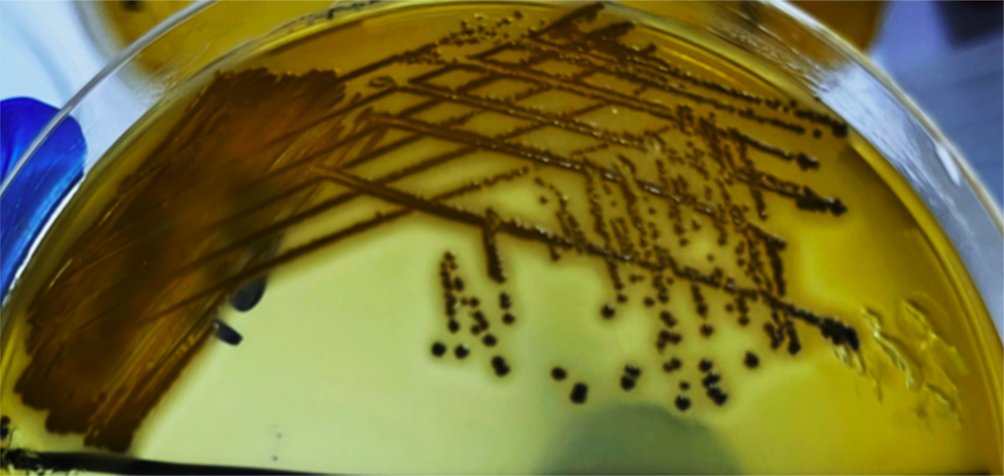
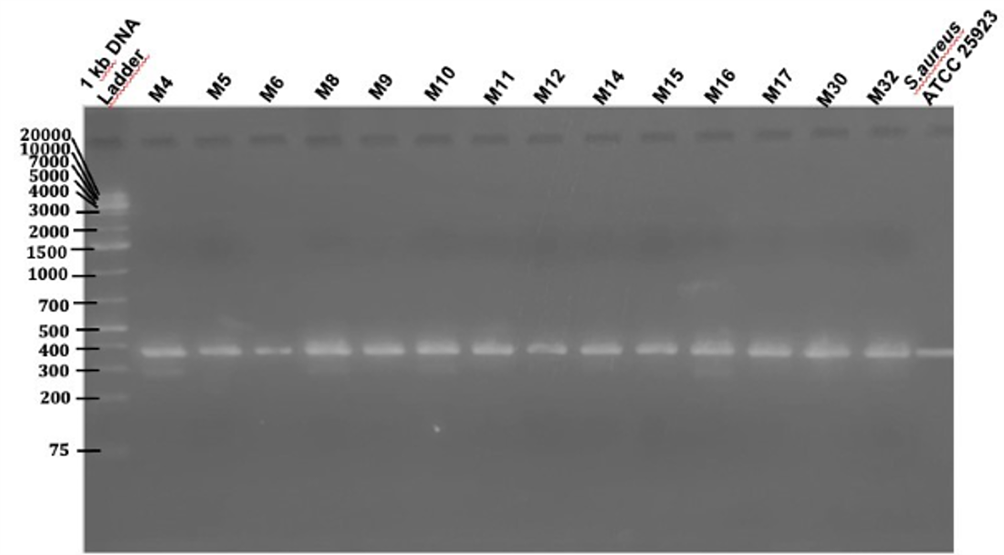
From September 2023 to May 2024, 170 individual milk samples were initially taken from dairy cows in the Milas district of Muğla Province, Turkey, that showed symptoms of subclinical mastitis. The California mastitis test (CMT) was the initial screening method used on the farm for all samples. Samples with a CMT score of ≥ 1 (trace or higher) were regarded as having subclinical mastitis. Fifty (29.4%) of the 170 samples tested positive for CMT and were chosen for additional bacteriological testing. These 50 milk samples that tested positive for CMT were cultivated on Baird-Parker agar. A total of 38 colonies with a characteristic black, shiny appearance and clear zones were selected as presumedStaphylococcusspecies following a 24-48 hour incubation period at 37 °C (Fig. 1). Out of these 38 suspected isolates, 14 (36.8% of cultured samples; 28% of all CMT-positive samples; 8.2% of the original 170 samples) were definitively identified as Staphylococcus aureus by PCR amplification of the S. aureus-specific thermonuclease (nuc) gene, which produced the anticipated 395-bp product (Fig. 2). As a result, 14 confirmed S. aureus isolates made up the final study population.
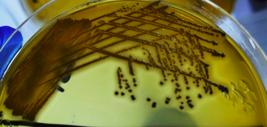
Typical colonies of Staphylococcus aureus on Baird-Parker agar after 48 h of incubation at 37 °C.
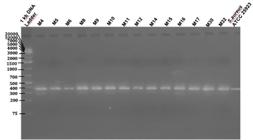
Results of PCR amplicons (395-bp) of Staphylococcus aureus using nuc gene primers. M (4, 5, 6, 8, 9, 10, 11, 15, 16, 17, 30, 32) = S. aureus strains isolated from bovine mastitis milk.
Determination of antimicrobial resistance genes
Among the 14 isolates tested for antibiotic resistance genes, all carried blaZ and tetM genes, followed by aacA-aphD in six isolates. Two isolates contained the mecA gene, and only one contained the cfr gene. None of the isolates was detected as harboring fusB, tetK, ileS, or vanA. A total of five resistance gene combination patterns were found.
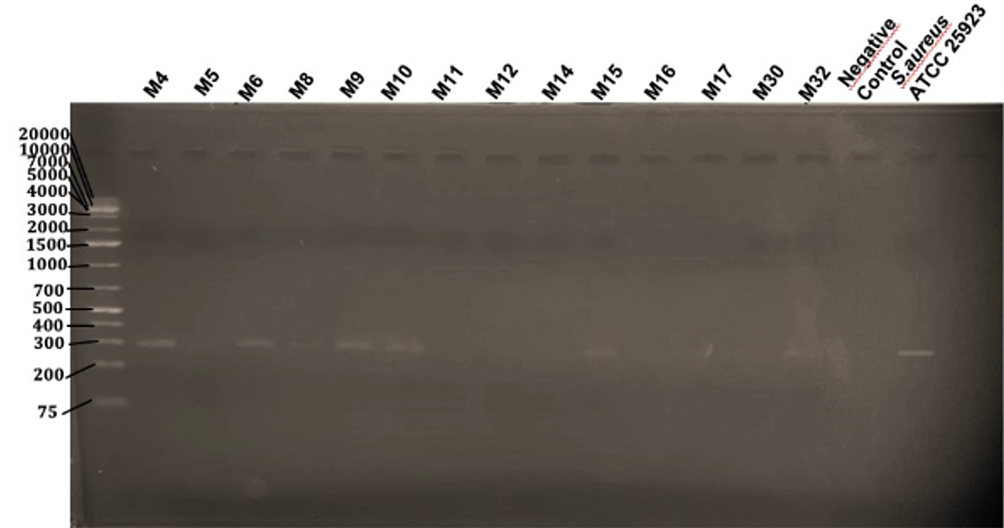
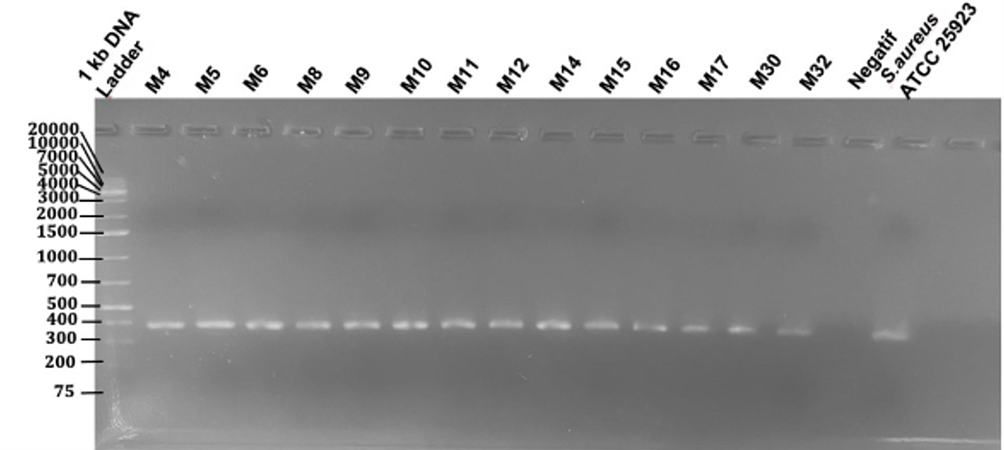
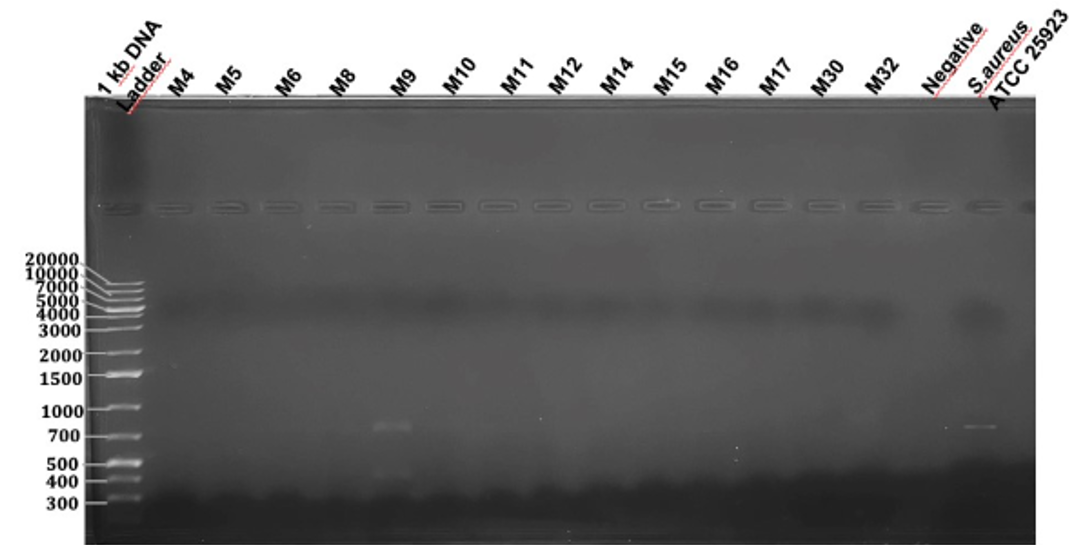
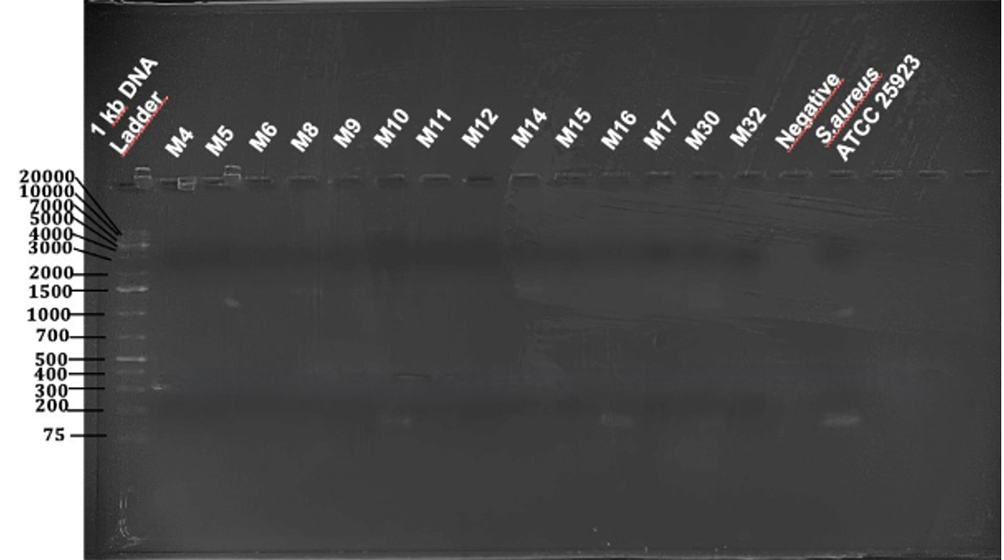
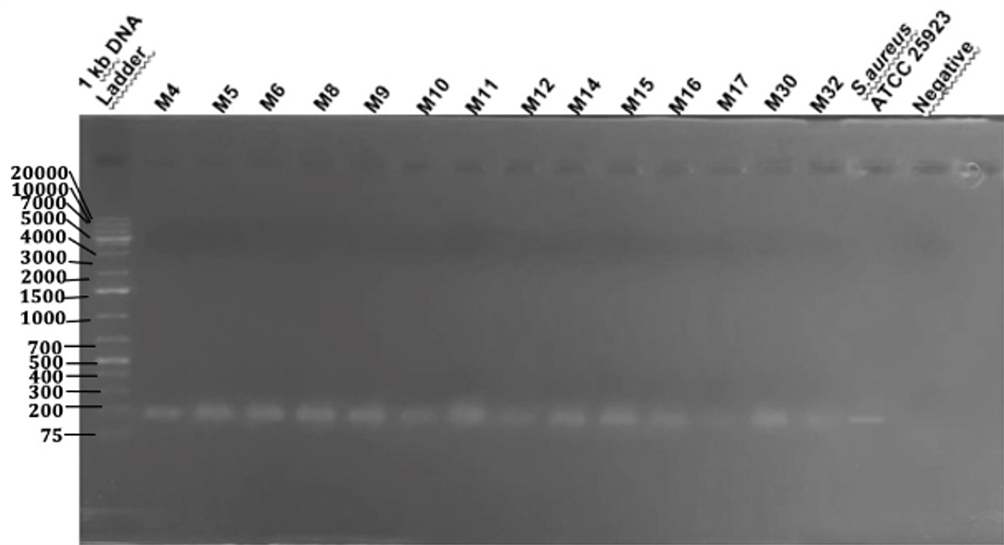
It was also determined which classes of antimicrobial-related genes were present in the isolates. All isolates (100%) had penicillin resistance genes (blaZ) (Fig. 3) and tetracycline resistance genes (tetM) (Fig. 4), aminoglycoside resistance genes (aacA-aphD) in six isolates (42.9%) (Fig. 5), methicillin resistance genes (mecA) in two isolates (14.3%) (Fig. 6), and chloramphenicol, florfenicol, and clindamycin resistance genes (cfr) in just one isolate (7.1%) (Fig. 7).
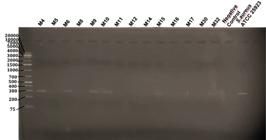
Results of PCR amplicons (227-bp) of Staphylococcus aureus using aacA-aphD gene primers. M (4, 5, 6, 8, 9, 10, 11, 15, 16, 17, 30, 32) = S. aureus strains isolated from bovine mastitis milk.
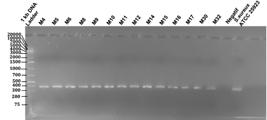
Results of PCR amplicons (377-bp) of Staphylococcus aureus using blaZ gene primers. M (4, 5, 6, 8, 9, 10, 11, 15, 16, 17, 30, 32) = S. aureus strains isolated from bovine mastitis milk.
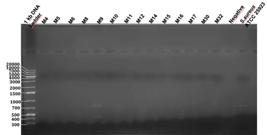
Results of PCR amplicons (746-bp) of Staphylococcus aureus using cfr gene primers. M (4, 5, 6, 8, 9, 10, 11, 15, 16, 17, 30, 32) = S. aureus strains isolated from bovine mastitis milk.
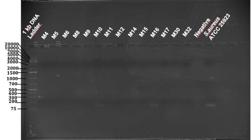
Results of PCR amplicons (174-bp) of Staphylococcus aureus using mecA gene primers. M (4, 5, 6, 8, 9, 10, 11, 15, 16, 17, 30, 32) = S. aureus strains isolated from bovine mastitis milk.
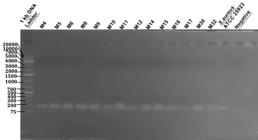
Results of PCR amplicons (158-bp) of Staphylococcus aureus using tetM gene primers. M (4, 5, 6, 8, 9, 10, 11, 15, 16, 17, 30, 32) = S. aureus strains isolated from bovine mastitis milk.
Discussion
The most notable discovery of the current investigation was the consistent presence of tetM and blaZ in every Staphylococcus aureus isolate from subclinical bovine mastitis. According to earlier reports from Turkey and other nations, blaZ and tetM have become the predominant resistance determinants in bovine S. aureus populations. This full carriage of both genes is in striking agreement with those findings (Rychshanova et al. 2022, Zhang et al. 2022, Yang et al. 2023, Cantekin et al. 2024).
The bifunctional aminoglycoside-modifying gene aacA-aphD was present in six isolates (42.9%). Reported prevalence varies widely worldwide, from 10-30% in many European countries (Naranjo-Lucena & Slowey 2023) to 80-100% in some studies from China (Qu et al. 2019, Zhang et al. 2022). The frequency observed here falls in the upper half of the published range.
The methicillin-resistance gene mecA was detected in two isolates (14.3%), whereas the multiline-resistance gene cfr was found in only one isolate (7.1%). The remaining targeted genes (tetK, vanA, fusB and ileS) were not detected. These findings align with previous Turkish surveys, in which mecA prevalence ranged from 0-30%, and cfr was either absent or extremely rare (Buyukcangaz et al. 2013, Cantekin et al. 2024, Pehlivanoglu & Yardimci 2012).
Co-occurrence of multiple genes in the same isolate was common: all 14 isolates carried at least two genes (blaZ + tetM), eight carried three genes (blaZ + tetM + aacA-aphD), and three carried four genes (blaZ + tetM + aacA-aphD + mecA). A single isolate additionally harboured the cfr gene. A more comprehensive picture of expressed antibiotic resistance could be obtained by combining phenotypic antimicrobial susceptibility testing results with the study’s exclusive focus on genotypic analysis.
Reported resistance gene profiles of mastitis pathogens exhibit marked regional variation, and these profiles are likely influenced by local antibiotic use and farm management practices (Rodríguez et al. 2023). These high carriage rates, especially for blaZ, tetM, and aacA-aphD, indicate the importance of province-level surveillance in Turkey to better guide treatment guidelines and antimicrobial stewardship.
In summary, S. aureus isolates from subclinical bovine mastitis in southwestern Turkey uniformly carried blaZ and tetM genes, showed moderate carriage of aacA-aphD (42.9%) and mecA (14.3%), rare carriage of cfr (7.1%), and complete absence of tetK, vanA, fusB and ileS. These results contribute to the growing genotypic evidence on antimicrobial resistance determinants in bovine mastitis and highlight the need for continued regional monitoring, followed by phenotypic susceptibility testing, whole-genome sequencing, and correlation of genotypes with expressed resistance to track the dissemination of successful resistance strains.
Conclusion
In this study, a unique genotypic resistance profile in Staphylococcus aureus isolated from subclinical bovine mastitis in southwest Turkey was documented, with blaZ and tetM present in all isolates, aacA-aphD in more than half, mecA in a significant proportion, and cfr only sporadically; tetK, vanA, fusB, and ileS were not detected at all. The detected resistance gene profile is primarily directed against β-lactams, tetracyclines, and aminoglycosides, the antimicrobial classes most commonly used in Turkish dairy mastitis therapy. Complementary phenotypic antimicrobial susceptibility testing would help elucidate the clinical expression of the detected determinants and solidify conclusions regarding actual resistance patterns. The findings add valuable regional data to the increasing body of knowledge of the prevalence of antimicrobial resistance genes in bovine S. aureus and emphasize the need for continued monitoring.
Acknowledgments
This study was supported by the Scientific and Technological Research Council of Turkey (TUBITAK) 2209-A University Students Research Projects Support Program with the project number of 1919B012109736.
References
-
Abdalhamed AM, Zeedan GSG, Zeina HAAA. Isolation and identification of bacteria causing mastitis in small ruminants and their susceptibility to antibiotics, honey, essential oils, and plant extracts. Vet World 2018; https://doi.org/10.14202/vetworld.2018.355-362
» https://doi.org/10.14202/vetworld.2018.355-362 -
Anthony RM, Connor AM, Power EGM, French GL. Use of the polymerase chain reaction for rapid detection of high-level mupirocin resistance in staphylococci. Eur J Clin Microbiol Infect Dis 1999; https://doi.org/10.1007/s100960050222
» https://doi.org/10.1007/s100960050222 -
Bakir M, Sabrina R, Toufik M. Antibacterial susceptibility profiles of sub-clinical mastitis pathogens isolated from cows in Batna and Setif Governorates (East of Algeria). Vet World 2011; https://doi.org/10.5455/vetworld.2011.537-541
» https://doi.org/10.5455/vetworld.2011.537-541 -
Buyukcangaz E, Kahya S, Sen A, Intas KS, Eyigor A, Temelli S, Carli KT. MecA gene prevalence in Staphylococcus aureus isolates from dairy cows in Turkey. J Biol Environ Sci 2013; https://izlik.org/JA38ML67LT
» https://izlik.org/JA38ML67LT -
Cantekin Z, Ozmen GO, Demir M, Yılmaz Er Z, Gurturk K, Solmaz H, Ekin IH, Ozturk D, Gozer A, Ergun Y. Presence of antibiotic resistance genes in Staphylococci isolated from bovine subclinical mastitis. Large Anim Rev 2024; https://shre.ink/A7QH
» https://shre.ink/A7QH -
Choi SM, Kim S-H, Kim H-J, Lee D-G, Choi J-H, Yoo J-H, Kang J-H, Shin W-S, Kang M-W. Multiplex PCR for the detection of genes encoding aminoglycoside modifying enzymes and methicillin resistance among Staphylococcus species. J Korean Med Sci 2003; https://doi.org/10.3346/jkms.2003.18.5.631
» https://doi.org/10.3346/jkms.2003.18.5.631 - Corry JEL, Curtis GDW, Baird RM. Handbook of Culture Media for Food Microbiology. Amsterdam: Elsevier; 2003. 640p. (progress in industrial microbiology, volume 37).
-
Dutka-Malen S, Evers S, Courvalin P. Detection of glycopeptide resistance genotypes and identification to the species level of clinically relevant enterococci by PCR. J Clin Microbiol 1995; https://doi.org/10.1128/jcm.33.1.24-27.1995
» https://doi.org/10.1128/jcm.33.1.24-27.1995 -
El-Ashker M, Gwida M, Tomaso H, Monecke S, Ehricht R, El-Gohary F, Hotzel H. Staphylococci in cattle and buffaloes with mastitis in Dakahlia Governorate, Egypt. J Dairy Sci 2015; https://doi.org/10.3168/jds.2015-9432
» https://doi.org/10.3168/jds.2015-9432 -
Gao J, Ferreri M, Liu XQ, Chen LB, Su JL, Han B. Development of multiplex polymerase chain reaction assay for rapid detection of Staphylococcus aureus and selected antibiotic resistance genes in bovine mastitic milk samples. J Vet Diagn Invest AAVLD 2011; https://doi.org/10.1177/1040638711416964
» https://doi.org/10.1177/1040638711416964 -
Jensen SO, Lyon BR. Genetics of antimicrobial resistance in Staphylococcus aureus Future Microbiol 2009; https://doi.org/10.2217/fmb.09.30
» https://doi.org/10.2217/fmb.09.30 -
Kandeel SA, Morin DE, Calloway CD, Constable PD. Association of California mastitis test scores with intramammary infection status in lactating dairy cows admitted to a veterinary teaching hospital. J Vet Intern Med 2018; https://doi.org/10.1111/jvim.14876
» https://doi.org/10.1111/jvim.14876 -
Kehrenberg C, Schwarz S. Distribution of florfenicol resistance genes fexA and cfr among chloramphenicol-resistant Staphylococcus isolates. Antimicrob Agents Chemother 2006; https://doi.org/10.1128/AAC.50.4.1156-1163.2006
» https://doi.org/10.1128/AAC.50.4.1156-1163.2006 -
Kumar R, Yadav BR, Anand SK, Singh RS. Molecular surveillance of putative virulence factors and antibiotic resistance in Staphylococcus aureus isolates recovered from intra-mammary infections of river buffaloes. Microbial Pathogenesis 2011; https://doi.org/10.1016/j.micpath.2011.03.006
» https://doi.org/10.1016/j.micpath.2011.03.006 -
Li X, Xu C, Liang B, Kastelic JP, Han B, Tong X, Gao J. Alternatives to antibiotics for treatment of mastitis in dairy cows. Front Vet Sci 2023; https://doi.org/10.3389/fvets.2023.1160350
» https://doi.org/10.3389/fvets.2023.1160350 -
Lozano C, Gharsa H, Ben Slama K, Zarazaga M, Torres C. Staphylococcus aureus in animals and food: methicillin resistance, prevalence and population structure. A review in the African continent. Microorganisms 2016; https://doi.org/10.3390/microorganisms4010012
» https://doi.org/10.3390/microorganisms4010012 -
Naranjo-Lucena A, Slowey R. Invited review: antimicrobial resistance in bovine mastitis pathogens: a review of genetic determinants and prevalence of resistance in European countries. J Dairy Sci 2023; https://doi.org/10.3168/jds.2022-22267
» https://doi.org/10.3168/jds.2022-22267 -
O’Neill AJ, Larsen AR, Henriksen AS, Chopra I. A fusidic acid-resistant epidemic strain of Staphylococcus aureus carries the fusB determinant, whereas fusA mutations are prevalent in other resistant isolates. Antimicrob Agents Chemother 2004; https://doi.org/10.1128/AAC.48.9.3594-3597.2004
» https://doi.org/10.1128/AAC.48.9.3594-3597.2004 -
Olsen JE, Christensen H, Aarestrup FM. Diversity and evolution of blaZ from Staphylococcus aureus and coagulase-negative staphylococci. J Antimicrob Chemother 2006; https://doi.org/10.1093/jac/dki492
» https://doi.org/10.1093/jac/dki492 -
Pehlivanoglu F, Yardimci H. Detection of methicillin and vancomycin resistance in Staphylococcus strains isolated from bovine milk samples with mastitis. Kafkas Univ Vet Fak Derg 2012; https://vetdergikafkas.org/uploads/pdf/pdf_KVFD_1185.pdf
» https://vetdergikafkas.org/uploads/pdf/pdf_KVFD_1185.pdf -
Qu Y, Zhao H, Nobrega DB, Cobo ER, Han B, Zhao Z, Li S, Li M, Barkema HW, Gao J. Molecular epidemiology and distribution of antimicrobial resistance genes of Staphylococcus species isolated from Chinese dairy cows with clinical mastitis. J Dairy Sci 2019; https://doi.org/10.3168/jds.2018-15136
» https://doi.org/10.3168/jds.2018-15136 -
Rana EA, Fazal MA, Alim MA. Frequently used therapeutic antimicrobials and their resistance patterns on Staphylococcus aureus and Escherichia coli in mastitis affected lactating cows. Int J Vet Sci Med 2022; https://doi.org/10.1080/23144599.2022.2038494
» https://doi.org/10.1080/23144599.2022.2038494 -
Rodríguez MF, Gomez AP, Ceballos-Garzon A. Antimicrobial resistance profiles of Staphylococcus isolated from cows with subclinical mastitis: do strains from the environment and from humans contribute to the dissemination of resistance among bacteria on dairy farms in Colombia? Antibiotics 2023; https://doi.org/10.3390/antibiotics12111574
» https://doi.org/10.3390/antibiotics12111574 -
Rychshanova R, Mendybayeva A, Miciński B, Mamiyev N, Shevchenko P, Bermukhametov Z, Orzechowski B, Miciński J. Antibiotic resistance and biofilm formation in Staphylococcus aureusisolated from dairy cows at the stage of subclinical mastitis in northern Kazakhstan. Arch Anim Breeding 2022; https://doi.org/10.5194/aab-65-439-2022
» https://doi.org/10.5194/aab-65-439-2022 -
Saidi R, Mimoune N, Baazizi R, Benaissa MH, Khelef D, Kaidi R. Antibiotic susceptibility of Staphylococci isolated from bovine mastitis in Algeria. J Adv Vet Anim Res 2019; https://doi.org/10.5455/javar.2019.f337
» https://doi.org/10.5455/javar.2019.f337 -
Sharun K, Dhama K, Tiwari R, Gugjoo MB, Iqbal Yatoo M, Patel SK, Pathak M, Karthik K, Khurana SK, Singh R, Puvvala B, Amarpal, Singh R, Singh KP, Chaicumpa W. Advances in therapeutic and managemental approaches of bovine mastitis: a comprehensive review. Vet Q 2021; https://doi.org/10.1080/01652176.2021.1882713
» https://doi.org/10.1080/01652176.2021.1882713 -
Strommenger B, Kettlitz C, Werner G, Witte W. Multiplex PCR assay for simultaneous detection of nine clinically relevant antibiotic resistance genes in Staphylococcus aureus J Clin Microbiol 2003; https://doi.org/10.1128/JCM.41.9.4089-4094.2003
» https://doi.org/10.1128/JCM.41.9.4089-4094.2003 -
Yang F, Shi W, Meng N, Zhao Y, Ding X, Li Q. Antimicrobial resistance and virulence profiles of staphylococci isolated from clinical bovine mastitis. Front Microbiol 2023; https://doi.org/10.3389/fmicb.2023.1190790
» https://doi.org/10.3389/fmicb.2023.1190790 -
Zhang Z, Chen Y, Li X, Wang X, Li H. Detection of antibiotic resistance, virulence gene, and drug resistance gene of Staphylococcus aureus isolates from bovine mastitis. Microbiol Spectrum 2022; https://doi.org/10.1128/spectrum.00471-22
» https://doi.org/10.1128/spectrum.00471-22
-
Data availability statement
All data generated or analyzed during this study are included in this published article
Edited by
-
Editor-in-Chief
Fabiano José Ferreira de Sant’Ana
All data generated or analyzed during this study are included in this published article