 Designing and Building a Low-Cost Geiger-Müller Detector for Radiation Safety Experiments in Physics Education
Abstract
One of the key requirements of the nuclear radiation content in Vietnam’s high school physics curriculum is to elucidate and ensure compliance with the principles of radiation safety. These principles include maintaining a sufficient distance from radioactive sources, using appropriate shielding materials when exposed to ionizing radiation, and minimizing exposure duration. Moreover, it is essential to provide messages aimed at dispelling unnecessary fear of ionizing radiation and addressing common misconceptions about radioactivity. For this purpose, teachers should not only impart theoretical knowledge of radioactivity but also incorporate illustrative experiments into their instruction. Most schools in Vietnam have limited access to radioactive experimental equipment. This study introduces a low-cost radiation detector based on Geiger-Müller counters, accompanied by experiments illustrating radiation safety principles and lesson plans for classroom application.
Keywords:
Geiger-Müller counter; radiation safety; radioactive experiment; radiation misconceptions
1. Introduction
In the Vietnamese high school physics curriculum, three principal types of ionizing radiation are introduced: alpha (), beta ( and ), and gamma () rays [1]. The biological effects of radiation depend on the radiation type, exposure conditions, and duration, and may range from mild symptoms to severe health consequences, including an increased cancer risk [2]. Alpha and beta radiation are hazardous when radioactive substances are taken into the body through ingestion, inhalation, or open wounds, as the emitted particles can irradiate internal organs. Gamma radiation, characterized by its high penetrating power, poses a risk to body tissues even from external sources at considerable distances. Therefore, three fundamental safety principles for protection against exposure to gamma radioactive sources are as follows:
-
Maintaining a safe distance from the radioactive source, as the intensity of the radiation diminishes with the square of the distance from the source to the exposed point.
-
Using appropriate shielding materials of sufficient thickness, such as protective clothing for individuals in contact with radiation or those handling radioactive sources. These shields effectively reduce the radiation intensity.
-
Minimizing the duration of exposure to radiation sources.
It is also necessary to convey messages that eliminate unnecessary fear of ionizing radiation, aiming to promote accurate awareness and overcome misconceptions about radioactivity. Numerous studies have investigated misconceptions about radioactivity, such as many people believe that irradiation causes food to become radioactive and consuming it may lead to poisoning or cancer; students often fail to distinguish between radiation and radioactive substances, believing that sterilized objects or irradiated food become radioactive [3, 4, 5, 6]. In our survey of physics students, 50% incorrectly believed that objects exposed to gamma radiation become radioactive [7]. External gamma irradiation does not render materials radioactive under normal conditions. Activation may occur only through neutron exposure or photonuclear reactions at very high gamma energies, while radioactivity in medical applications arises from the deliberate administration of radionuclides [8]. In addition to dissemination, experimental demonstrations are necessary to dispel misconceptions.
Incorporating real experiments into the curriculum is crucial to visually illustrate theoretical concepts [9, 10]. Various experimental apparatus are commonly used to detect radiation and to teach knowledge about its effects, such as Wilson cloud chambers, ionization chambers, Geiger-Müller (G-M) detectors, Sodium Iodide (Tl)/NaI (Tl) detectors, and other modern devices [11]. However, such equipment is largely unavailable in Vietnamese high schools due to financial constraints and concerns regarding radiation safety. While G-M detectors are readily available online, we aim to introduce a self-made version for three reasons: (1) to build upon previous studies on simple DIY G-M detectors [12, 13, 14] or the concept of a remotely accessible radiation detection laboratory [15]; (2) lower cost compared to genuine models; (3) AI assistance was utilized in designing, coding, and simulating the G-M detector.
The effective use of experimental equipment is essential in teaching. Vietnam’s general education program emphasizes the development of students’ competencies. In physics education, the focus should be on fostering students’ subject-specific competencies, particularly scientific and physics competencies, such as conducting experiments, interpreting results, drawing conclusions, and applying knowledge to real-world contexts [1]. It is imperative for teachers to design lesson plans so that students will do many suitable experimental activities to develop their competence.
This article focuses on G-M counters and provides instructions for constructing such a detector. Subsequently, experiments were conducted to examine the reduction of gamma radiation intensity with respect to distance and material thickness, thereby illustrating the principles of radiation safety. Furthermore, we propose a series of experiments integrated into the teaching process to foster students’ physics competence and to promote accurate understanding of radioactivity. Within these instructional sequences, students are encouraged not merely to follow predetermined procedures but to design experiments, perform experiments, analyze the results, and draw conclusions.
2. Construction of a Geiger-Müller Detector
The Geiger-Müller (G-M) tube, an invention by physicists Hans Geiger and Walther Müller, serves the purpose of detecting and measuring gamma radiation, with some types capable of measuring beta radiation as well. The G-M tube comprises the following essential components:
-
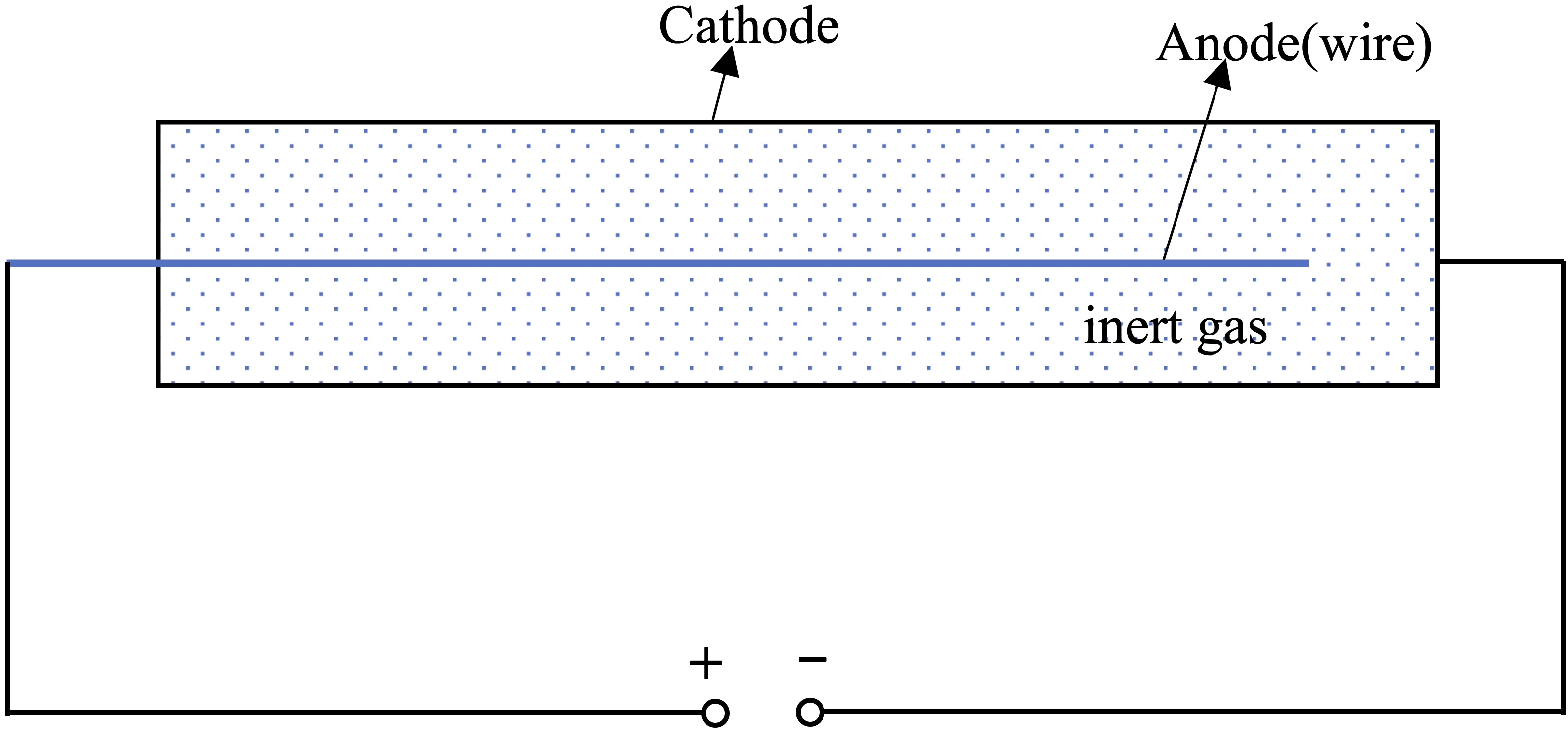
Two electrodes, namely the anode and the cathode, are usually arranged as illustrated in Figure 1[11, 16].
-
Casing: this can be made from thin mica or metal. Within the tube, an inert gas (such as Helium, Argon, or Neon) is present at low pressure.
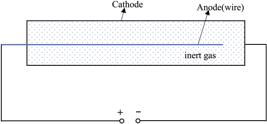
Operating principle of G-M counter: As ionizing radiation enters the G-M tube, it ionizes the gas atoms within, generating charged ions and electrons. Under the influence of high voltage between the two electrodes, an amplification phenomenon occurs. This phenomenon accelerates the electrons and ions produced by ionization to high energy levels leading to further ionization before they reach the electrode known as the Townsend avalanche [17]. Consequently, even a few particles or radiation can produce a substantial current pulse, which can be measured. The pulse amplitude is directly proportional to the incident radiation quantity. The voltage pulse signal is processed to provide an actual count, recording the radiation from the source [11].
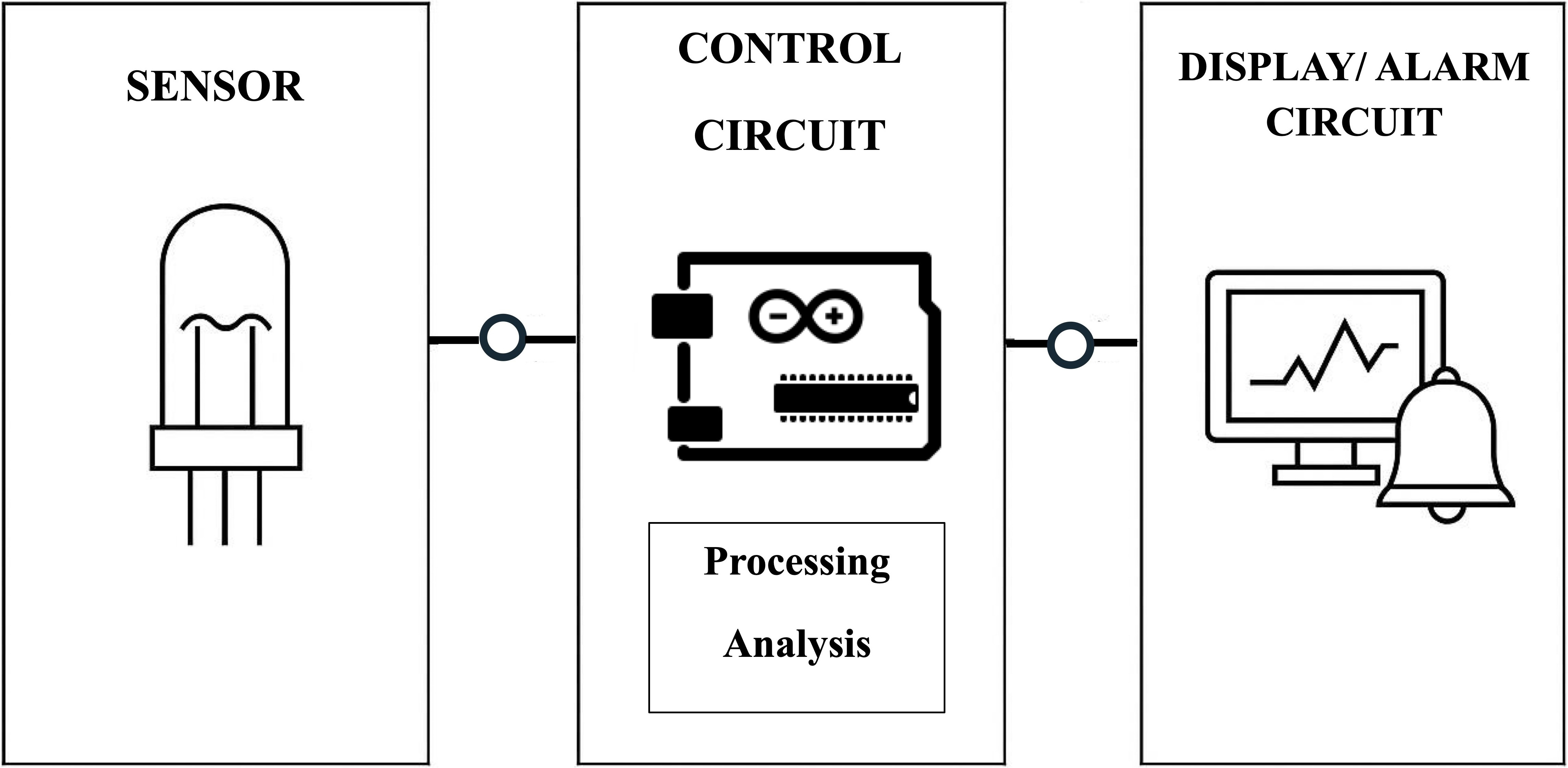
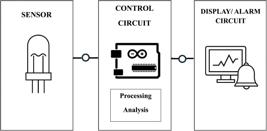
Radiation sensors for detecting gamma rays mainly employ G-M tubes. A simplified block diagram of a system utilizing a G-M sensor is shown as follows (Figure 2):
Our self-built G-M detector includes the following key components: the SBT-11A G-M tube, an Arduino control circuit, a multifunction shield circuit, a voltage boosting circuit, and a power supply from an adapter. The SBT-11A G-M tube operates within a voltage range from 350 V to 475 V (thus requiring an additional voltage boosting circuit). The G-M tube type SBT-11A has one side of the shell made of thin mica. In addition to recording gamma rays, this tube can also detect beta rays as beta particles can penetrate the thin mica membrane to enter the tube. These components will be assembled as illustrated in Figure 3. Detailed step-by-step assembly instructions are provided in the Supplementary Material.
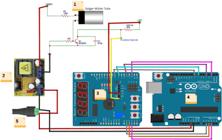
Schematic diagram of the low-cost radiation detector using a G-M tube. (1) G-M tube, (2) Voltage boosting circuit, (3) Multifunction shield (pulse counting and display), (4) Arduino circuit, and (5) Power supply.
In addition to the physical connections, the detector requires appropriate programming to operate, and the source code is provided in the Supplementary Material. The fabrication of similar G-M detectors can utilize this code and modify it as needed to match the specific type of G-M tube, with the assistance of AI tools. The modified code can then be uploaded to the Arduino board using the Arduino IDE software for operation. AI tools can provide guidance on how to connect the components to assemble a detector, using simple step-by-step instructions.
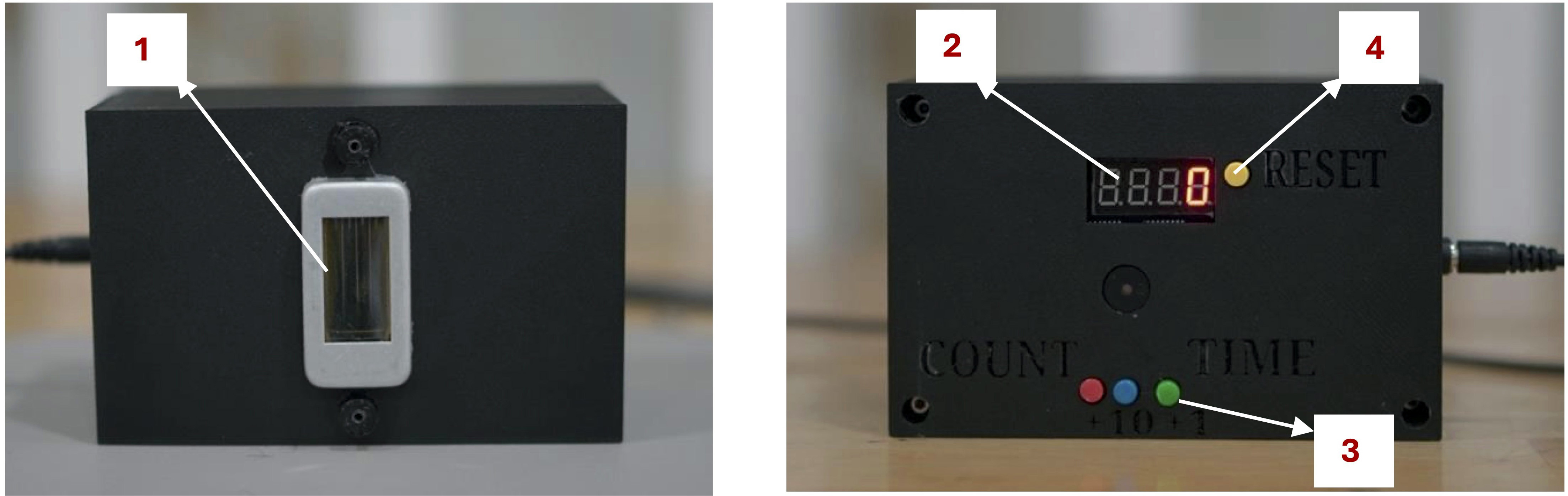
To accommodate storage and experimentation, all parts as shown in Figure 3 are connected into one box (Figure 4). The enclosure can be 3D-printed or CNC-cut to fit the dimensions of the G-M tube, the display, and the control buttons.
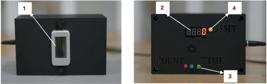
The front and back of the SBT-11A G-M detector. (1) The SBT-11A G-M tube, (2) The screen displays the count, (3) Time setting buttons, (4) Reset button.
The linear dependence of accumulated counts on measurement time was examined for both background radiation and Cs-137 irradiation, confirming stable count rate operation of the detector. Related stability and calibration reference data are provided in the Supplementary Material.
3. Experiments to Verify the Principles of Radiation Safety
In these experiments, a Co-60 gamma source was utilized in the physics laboratory of Ho Chi Minh City University of Education (HCMUE). Manufactured in January 2008, this source has a half-life of 5.27 years and a current activity of 0.11 Ci. It predominantly emits gamma photons with energies of 1.173 MeV and 1.332 MeV. Owing to its very low activity, the source is considered safe for student use in experimental settings. The source is authorized for instructional purposes and undergoes annual verification of activity and quality by the Vietnam Agency for Radiation and Nuclear Safety (VARANS).
3.1. Experiment to test the variation in radiation intensity with distance
Theoretical basis: Assuming there is a point radiation source at O with intensity (in photons per second), the intensity of the gamma beams at point M is determined by the formula [18]:
where is the distance of OM.
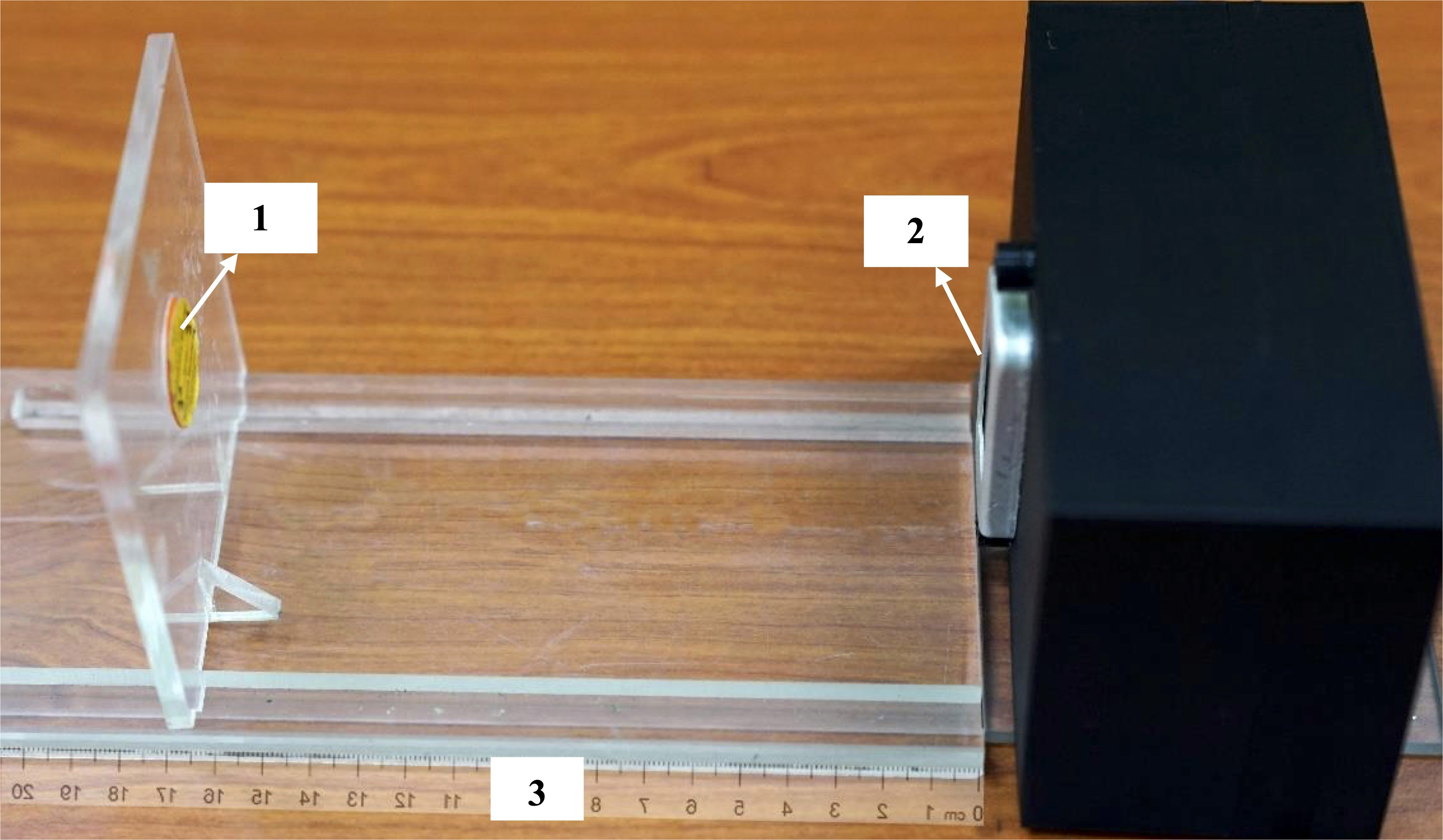
Experimental equipment: G-M detector, gamma source, source stand, and ruler (see Figure 5).
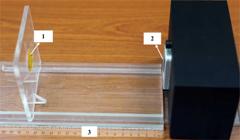
Arrangement of the experiment to measure the decrease in gamma radiation intensity with distance. (1) Radioactive source, (2) G-M tube, (3) Ruler.
Experimental setup and procedure:
The experiment was arranged as shown in Figure 5, with the radiation source placed on the stand opposite the G-M tube. Measurements were performed for a fixed counting time, and background-subtracted counts were recorded while varying the distance between the radiation source and the G-M tube.
Data processing method:
Since these counts are proportional to the intensity of the gamma radiation beam, the formula (1) can be rewritten as:
Taking the common logarithm of both sides, we obtain:
where log denotes the common logarithm (base 10), , , and .
It follows that a linear equation of the form is obtained:
In the measurements, the experimental data were analyzed by means of linear regression of the form:
The coefficients and , together with their associated uncertainties, were determined using the least-squares fitting method [19]. Details of the least-squares fitting method are provided in Appendix A.
Results:
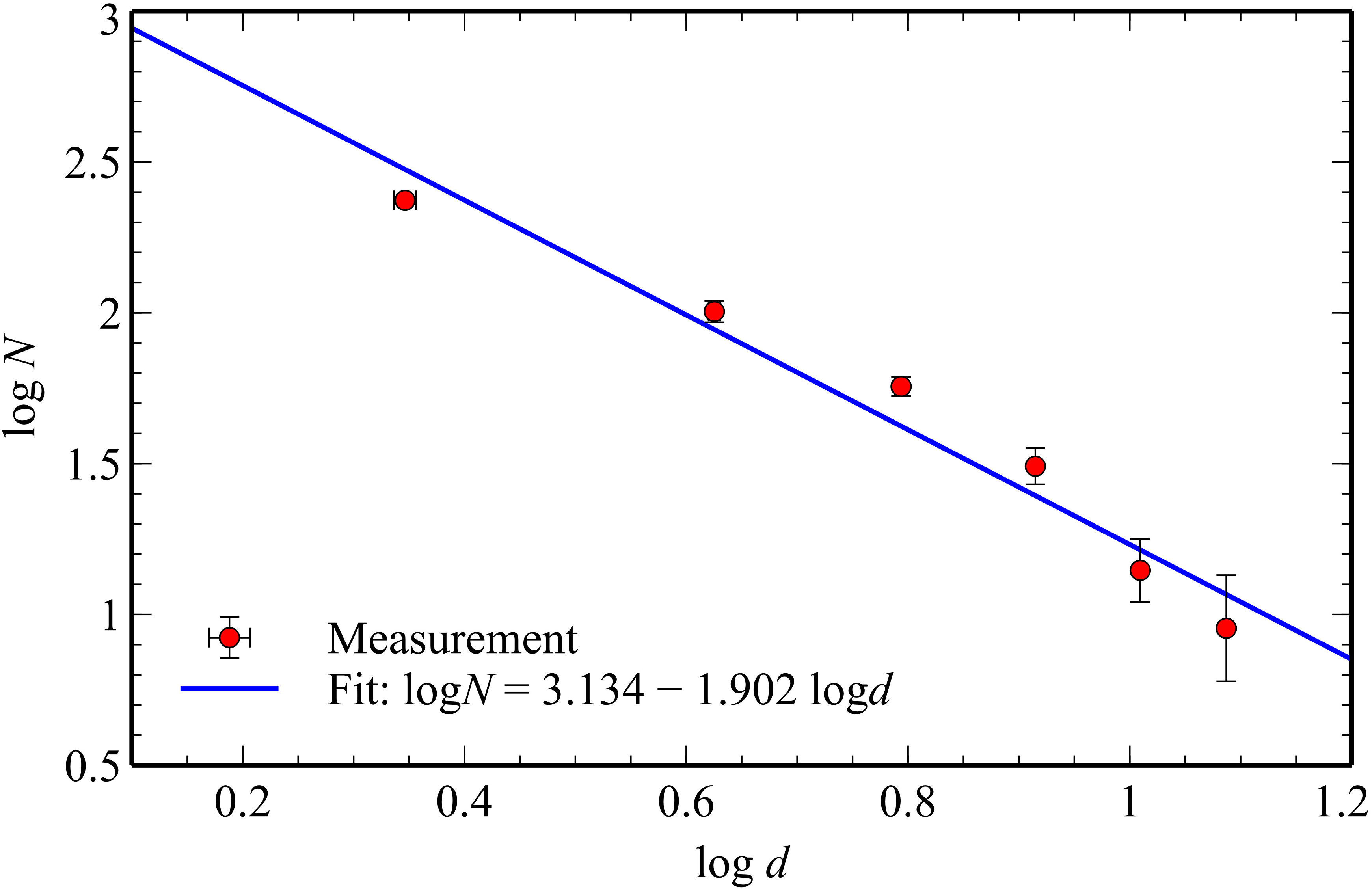
The measurement time was set to 30 s. For each distance, five measurements were performed and averaged. The results are presented in Table 1 and Figure 6.
Experimental data and log-transformed values used for regression analysis, with all count rates background-subtracted and a distance uncertainty of 0.05 cm.
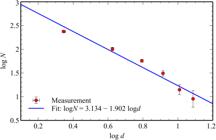
Dependence of log on log for the radiation intensity measured at the detector, with linear regression fit.
Using formulas (A1)–(A4) in Appendix A, the linear fit yielded and , with associated uncertainties and .
We consider that the coefficient , the exponent of deviates from 2 due to several factors: the shape and size of both the source and the detector; the surface area of the SBT-11A G-M tube (29 mm 56 mm), the fact that our gamma source is not a true point source. However, the deviation is approximately 5%, which can be regarded as a reasonably good result in comparison with other G-M counters of cylindrical geometry or detectors with larger sensitive volumes, suchas NaI(Tl).
3.2. Experiment to test the attenuationof gamma radiation intensity when passingthrough shielding materials
In this experiment, a collimator is employed to produce a parallel beam, which then passes through the shielding material to the G-M counter.
Theoretical basis: According to the Beer-Lambert law, a parallel gamma beam with an initial intensity of will experience a decrease in intensity after passing through a material layer of thickness (mm), can be determined by the formula [18, 20]:
where (in mm-1) represents the linear attenuation coefficient of the material.
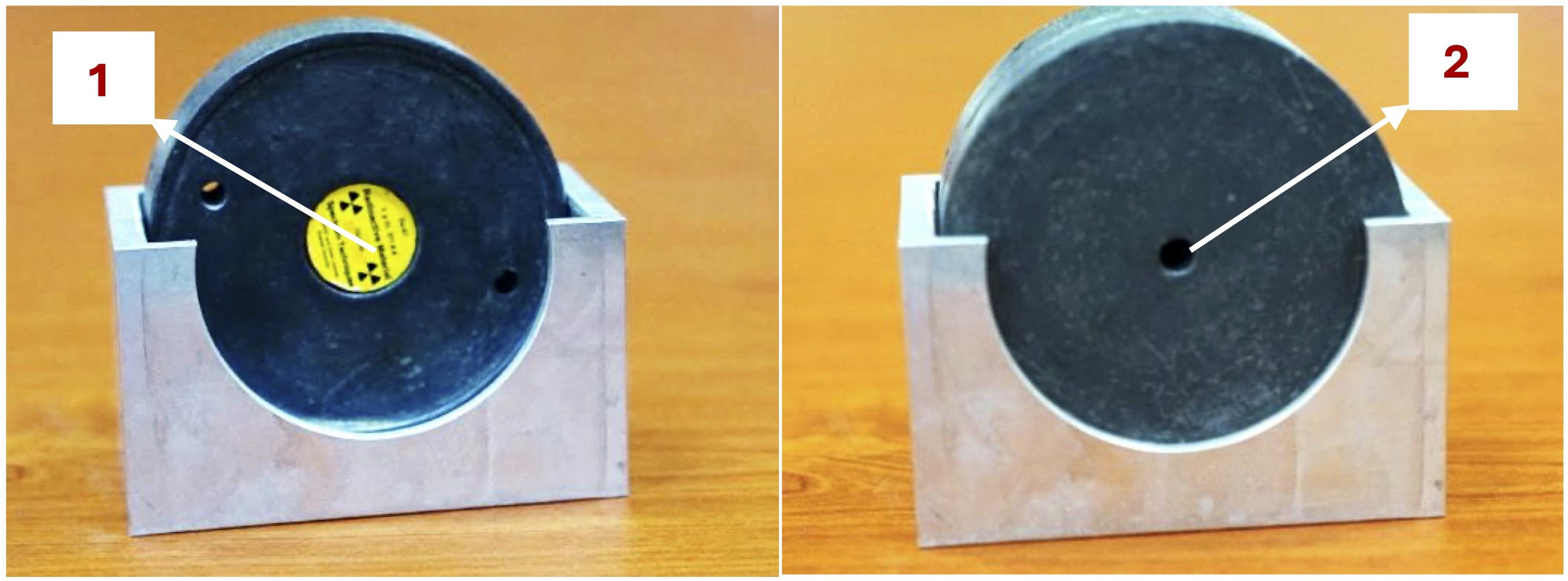
Experimental equipment: G-M detector, gamma radiation source with source stand, a collimator (with a diameter of 6 mm) as illustrated in Figure 7, and metal plates with various thicknesses (such as lead, aluminum).
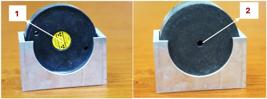
Gamma radiation source (1) with source stand and a collimator (2) (with a diameter of 6 mm).
Experimental setup and procedure:
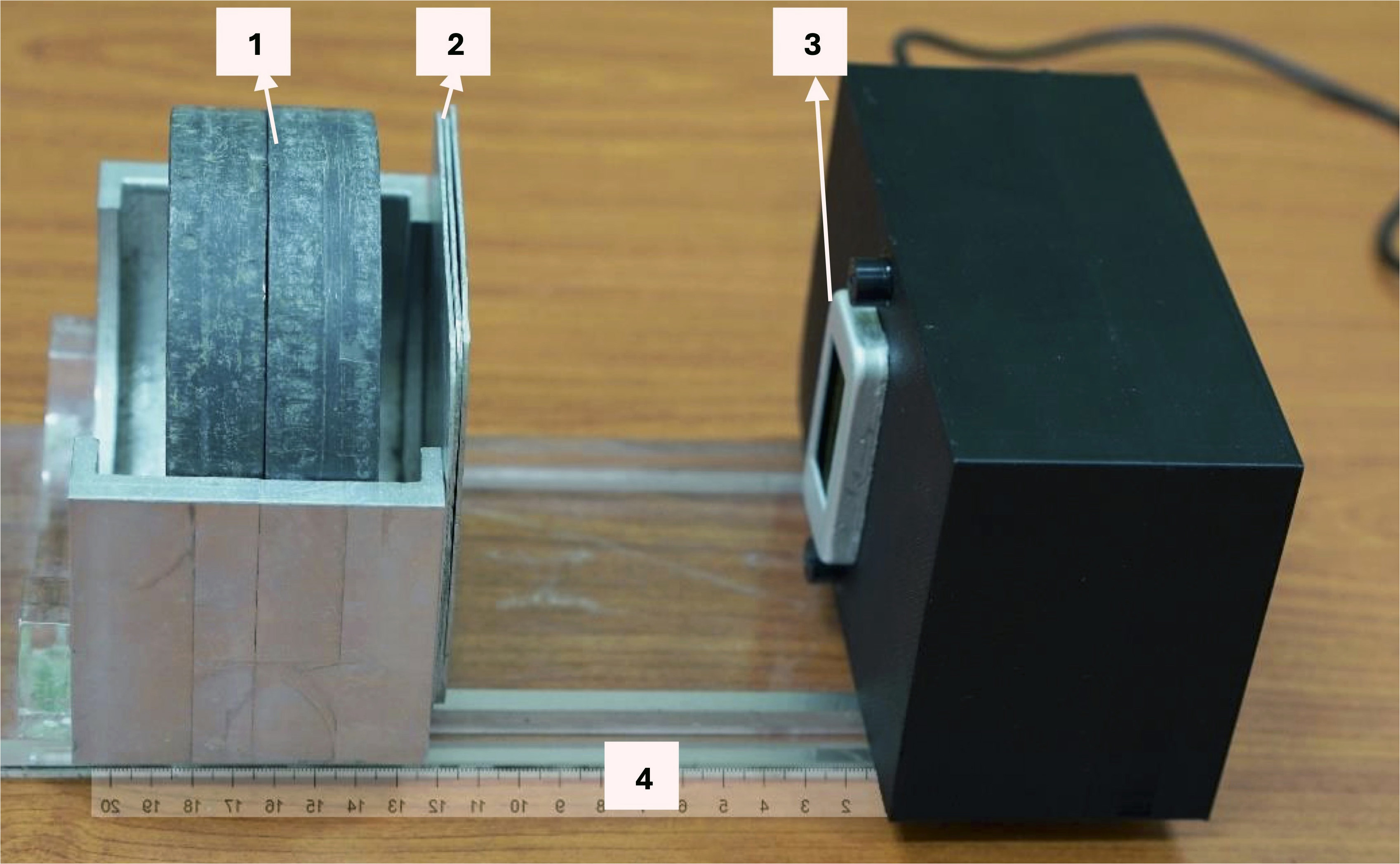
The G-M detector and the radioactive source support were fixed to maintain a constant distance between them (Figure 8). Measurements were first performed without shielding material, after which the material plates were inserted between the source and the detector to record the counts for each thickness. This procedure was repeated for different shielding materials.
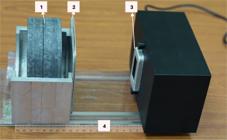
Experimental setup for measuring the decrease in gamma-ray intensity through shielding materials. (1) Radioactive source in collimator, (2) Sheets of aluminum material; (3) G-M tube; (4) Ruler.
Data processing method:
Since the intensity is proportional to the count , the formula (6) can be rewritten as:
where is the count measured in the absence of any shielding material between the radioactive source and the detector.
Taking the natural logarithm (ln) of both sides:
Therefore, the expression depends linearly on .
We further process the data using linear regression in the form:
where is the thickness of the material, is the linear attenuation coefficient , and . The intercept accounts for experimental deviations from the ideal Beer–Lambert model.
Results:
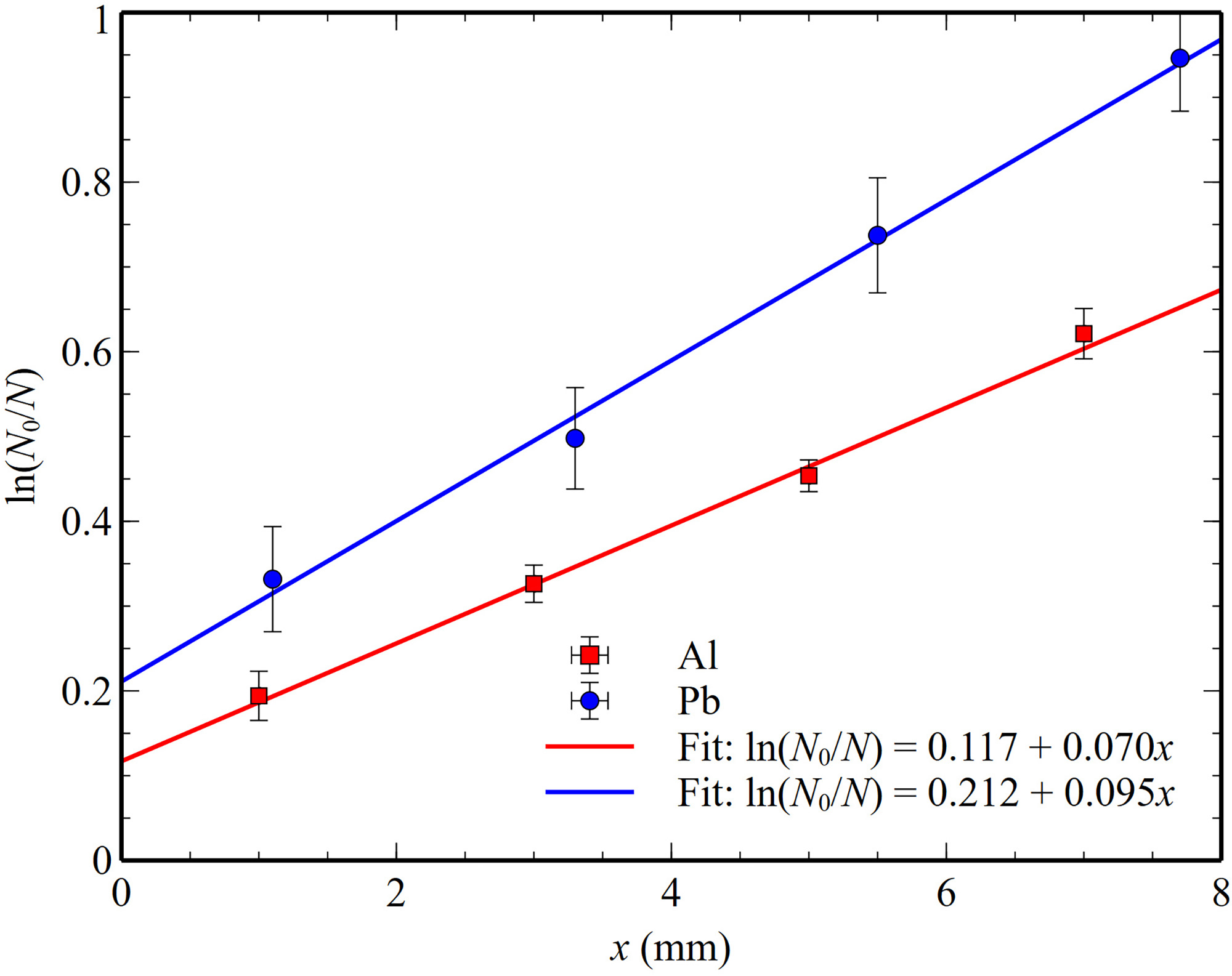
The distance between the radioactive source and the G-M detector was set to 5 cm, and the measurement time was 120 s. For each thickness (including ), five measurements were performed and averaged. The results are presented in Table 2 and Figure 9.
Experimental data N for each material thickness and the corresponding values used in the regression analysis (all count rates are background-subtracted; thickness measured with a caliper, uncertainty 0.01 mm).

By similar calculations, the linear fit yielded for lead mm-1 and , whereas for aluminum mm-1 and (, ).
When the material thickness increases, the intensity of the gamma radiation beam passing through the shielding material gradually decreases. The experimental results indicate that lead attenuates gamma rays more effectively than aluminum. Based on the Least-Squares Fitting method applied to the data in Table 2 and the corresponding slope of the graph (Figure 9), the linear attenuation coefficient of lead is found to be greater than that of aluminum.
-
According to the NIST XCOM1 database, the linear attenuation coefficients of lead (Pb) interpolated at the two gamma energies of Co-60 are 0.070 mm-1 at 1.173 MeV and 0.064 mm-1 at 1.332 MeV. The deviations between these reference values and the experimental results range from 35.7% to 48.4%.
-
For aluminum (Al), the corresponding values from the NIST XCOM database are 0.015 mm-1 at 1.173 MeV and 0.014 mm-1 at 1.332 MeV. The discrepancies between the experimental and standard values can reach up to 400%.
The transmitted gamma intensity decreases with increasing absorber thickness, with lead attenuating more strongly than aluminum, as expected. The experimentally determined linear attenuation coefficients are larger than the corresponding NIST XCOM values, particularly at small thicknesses. This behavior can be attributed to non-ideal beam geometry, in which the incident gamma radiation is not perfectly parallel and scattering effects modify the detected intensity, leading to an apparent increase in attenuation [11, 21]. As the absorber thickness increases, photon buildup becomes more significant, and scattered photons contribute to the detected signal, partially compensating for primary photon loss [22, 23]. These effects reflect the simplified classroom geometry of the experiment rather than deviations from the underlying attenuation physics.
3.3. Discussion
There are many types of G-M tubes available on the market, including standalone G-M tubes and ready-made detector kits. G-M detectors produced by established manufacturers are not only relatively expensive but also difficult to purchase because of distribution restrictions. In contrast, G-M tubes sold through online platforms or by small suppliers often lack reliable quality verification. This study introduces a procedure for building a G-M detector using G-M tubes that are available through online markets, together with simple experiments, making the method affordable and practical for teachers to replicate in similar educational contexts.
Although the G-M counter used in this study is not suitable for advanced research experiments requiring high precision, it is still appropriate for educational purposes. For experiments such as examining the attenuation of radiation intensity with respect to material thickness or comparing the shielding effectiveness of different materials, the G-M counter can provide qualitative results sufficient for illustrating key concepts. Despite its lower accuracy compared to modern detectors such as NaI(Tl) or HPGe, its simple operation and low-cost make it highly suitable for high school and undergraduate physics laboratories.
4. Developing Students’ Physics Competence Through Experimental Teaching
Studies indicate that Problem-Based Learning (PBL) positively impacts students’ abilities, particularly in physics topics [24, 25]. In PBL, students are presented with real-world problems and work in teams in order to find solutions. This method promotes problem solving skills, and the application of theoretical knowledge to practical situations [24, 25, 26]. Based on these foundations, we believe that PBL offers multiple opportunities for students to enhance their physics competence as described in Section 1.
Three experimental teaching processes are designed for students based on the PBL method.
-
–
Experiment to test the variation in radiation intensity with distance (1).
-
–
Experiment to test the attenuation of gamma radiation beam intensity when passing through shielding materials (2).
-
–
Experiment on the safety of irradiated food (3).
For experiments 1 and 2, the real-world problem is as follows: Gamma radiation has a wide range of applications but also poses significant hazards to the human body upon exposure. Therefore, an important question arises: How can the risks be minimized and safety ensured when working with gamma radioactive sources in educational, research, and professional settings?
The expected answer refers to the safety principles for working with radioactive sources, as presented in the Introduction section.
The teacher assigns students a task through a worksheet: Design an experimental approach to verify the principles of radiation safety. Students are expected to sequentially perform the following tasks: drawing the experimental setup, planning the procedure and data collection. Subsequently, the teacher guides the students through performing the experiment, collecting and processing data, and evaluating results and drawing conclusions. During the process in which students perform experimental tasks, teachers must employ appropriate instructional techniques while ensuring that learners remain focused and motivated. Initially, the teacher gradually concretizes each step, providing additional hints. Subsequently, the level of guidance is progressively reduced, leading to the stage where students can complete the tasks independently. This process exemplifies Vygotsky’s Zone of Proximal Development [27].
For experiment 3. the real-world problem is: There are widespread misconceptions suggesting that food exposed to irradiation becomes radioactive and unsafe for consumption.
Task assigned to students: Design an experimental approach to examine whether irradiated food becomes radioactive and to verify its safety for use.
Two approaches can be proposed for the above experiment using a G-M counter:
-
–
Approach 1: Identify food products that have been irradiated, available in supermarkets, and measure the radiation emitted from these products using the G-M detector. If the measured count rate is higher than the background radiation level, it indicates that the food emits radiation. Conversely, if the count rate is equal to the background level, the food does not emit radiation.
-
–
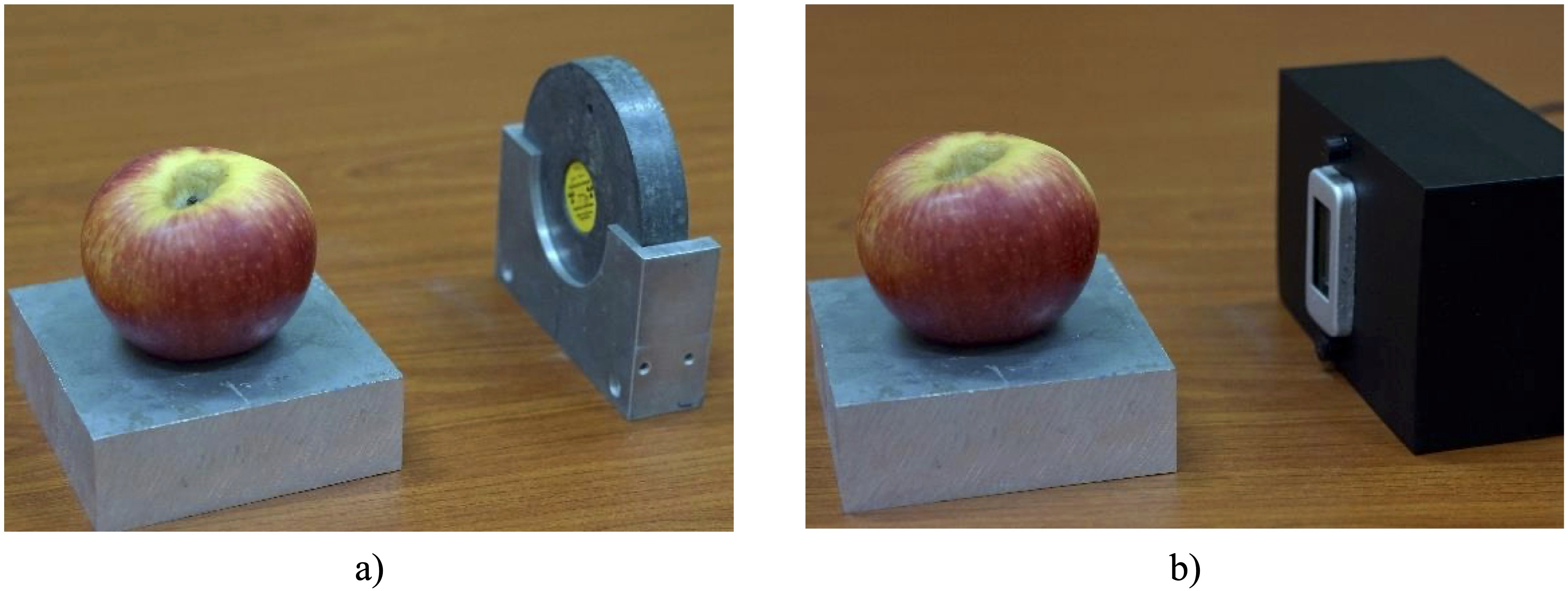
Approach 2: Based on the ideas presented in the works of Millar [3], in which “a strawberry is exposed to radiation from a radioactive source,” a similar experiment can be conducted using an apple. The apple is irradiated with a radioactive source as shown in Figure 10, and subsequently, measurements are taken with a G-M detector to determine whether the apple emits any radioactive rays.
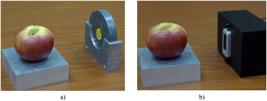
Measuring the radioactivity of an irradiated apple. (a) The apple is continuously irradiated with a gamma radioactive source for a period of one to three days. (b) Measure the radioactivity emitted from the apple after irradiation.
We conducted this experiment and measured the radioactivity emitted from the apple after irradiation. The results showed no difference between the measurements taken before and after irradiation. The radiation level emitted from the apple was equal to the background radiation of the environment.
5. Conclusion
In summary, we successfully developed a low-cost detector using a G-M tube for school experiments. The detector features a simple design and requires minimal time for assembly and setup, making it convenient for students to perform experiments. The results obtained from the G-M detector are sufficiently accurate to verify the principles of radiation safety. The detector design presented in this article, together with the assistance of AI, also serves as a valuable reference for others interested in constructing similar devices. Furthermore, we propose PBL-based teaching processes in which the integration of these experiments into instruction not only enhances students’ learning engagement but also provides opportunities for them to develop their practical experimental skills.
Supplementary Material
The following online material is available for this article:
Appendix A
Figure S1
Figure S2
Table S1
Table S2
Data Availability
The data that support the findings of this study are available from the corresponding author upon reasonable request.
References
- [1] Ministry of Education and Training, General Education Program– Physics Subject (Ministry of Education and Training, Hanói, 2018).
- [2] B. Wahlström, Radiation, Health and Society (DIANE Publishing, Pennsylvania, 1997).
- [3] R. Millar, Public Understanding of Science 3, 53 (1994).
- [4] E.K. Henriksen and D. Jorde, Science Education 85, 189 (2001).
- [5] S. Cooper, S. Yeo and M. Zadnik, Phys. Educ. 38, 123 (2003).
- [6] P.T. Siersma, H.J. Pol, W.R. Joolingen and A.J. Visscher, Int. J. Sci. Educ. 43, 179 (2021).
- [7] A.D. Le, T.Q. Vu, V.T.H. Pham, C.M. Dinh and P.K.T. Nguyen, HCMUE J. Sci. 18, 840 (2021).
- [8] E.B. Podgoršak, Radiation Physics for Medical Physicists (Springer, Cham, 2016).
- [9] E. Etkina, A. Van Heuvelen, D.T. Brookes and D. Mills, Phys. Teach. 40, 351 (2002).
- [10] I.T. Koponen and T. Mäntylä, Sci. Educ. (Dordr). 15, 31 (2006).
- [11] G.F. Knoll, Radiation Detection and Measurement (John Wiley & Sons, New York, 2010), 4 ed.
- [12] C. Thiede, I. Niehues, A.B. Schmidt and M. Donath, Meas. Sci. Technol. 29, (2018).
- [13] M.C. Silva, D.C. Vilela, V.G. Migoto, M.P. Gomes, I.M. Martin and J.S.E. Germano, Phys. Educ. 52, (2017).
- [14] W.R.F. Silva and J.M. Fonseca, Rev. Bras. Ens. Fis. 45, e20230073 (2023).
- [15] G. Emery, Remotely Accessible Radiation Detection Laboratory for Distance Education. Masters Dissertation, Texas A&M University, College Station (2018).
- [16] T.J. Trenn, Ann. Sci. 43, 111 (1986).
- [17] G. Brunner, Nuclear Instruments and Methods 154, 63 (1978).
- [18] G. Gilmore, Practical Gamma-Ray Spectrometry (John Wiley & Son, Warrington, 2008), 2 ed.
- [19] J.R. Taylor, An Introduction to Error Analysis: The Study of Uncertainties in Physical Measurements (University Science Books, Sausalito, 1997), 2 ed.
- [20] T.G. Mayerhöfer, S. Pahlow and J. Popp, ChemPhysChem 21, 2029 (2020).
- [21] J.E. Turner, Atoms, Radiation, and Radiation Protection (Wiley-VCH, Weinheim, 2007), 3 ed.
- [22] M.I. Abbas, J.S. Alzahrani, M.I. Sayyed, D.I. Tishkevich, M.T. Alabsy, A.M. El-Khatib and M. Elsafi, Materials 14, 5051 (2021).
- [23] J.K. Shultis and R.E. Faw, Radiation Shielding (American Nuclear Society, La Grange Park, 2000).
- [24] M. Lee, C.J.K. Larkin and S. Hoekstra, Educ. Sci. (Basel). 13, 321 (2023).
- [25] L. Marcinauskas, A. Iljinas, J. Čyvienė and V. Stankus, Educ. Sci. (Basel). 14, 154 (2024).
- [26] S.T. Kanyesigye, J. Uwamahoro and I. Kemeza, Phys. Rev. Phys. Educ. Res. 18, 010140 (2022).
- [27] L.S. Vygotsky, Mind in Society: The Development of Higher Psychological Processes (Harvard University Press, Cambridge, 1978).
Edited by
-
Editor-in-Chief:
Marcello Ferreira https://orcid.org/0000-0003-4945-3169