 Childhood vaccination coverage and socioeconomic inequalities in the Northern region of Brazil
ABSTRACT
Objective: To evaluate the spatio-temporal variation of childhood immunobiological vaccine coverage in the municipalities of the Northern region of Brazil, comparing cross-sectional data from 2018 and 2022, and its association with socioeconomic and maternal variables.
Methods: This is a comparative ecological study with coverage data for seven immunobiologicals in the municipalities of the Northern region for the years 2018 and 2022. Data were obtained from the Department of Informatics of the Unified Health System. Spatial analysis (global, bivariate, and local Moran’s Index) was used to verify the association between vaccine coverage and independent variables (GDP per capita, Brazilian Deprivation Index, maternal schooling, proportion of indigenous people, full-term births, and birth weight).
Results: There was a widespread decline in vaccine coverage when comparing the two periods, except for the meningococcal C vaccine. Vaccination was positively associated with GDP per capita and maternal schooling, and negatively associated with the Deprivation Index, with these associations intensifying over the period. The spatial correlation between immunization and the proportion of the indigenous population, previously not significant, became strongly negative in 2022. Clusters of low immunization and socioeconomic vulnerability were identified mostly in the states of Pará and Amazonas, and clusters of high immunization and better indicators in Tocantins and Rondônia.
Conclusion: The decline in childhood vaccination in the Northern region is a spatially structured phenomenon that reflects and deepens socioeconomic inequalities. The formation of vulnerability clusters, especially in areas near the Brazilian border, represents a risk for the re-emergence of vaccine-preventable diseases and demands territorially focused public health policies.
Keywords:
Vaccine coverage; Spatial analysis; Health inequalities; Socioeconomic factors; Child health
RESUMO
Objetivo: Avaliar a variação espaço-temporal da cobertura vacinal de imunobiológicos infantis nos municípios da região Norte do Brasil, comparando os cortes transversais de 2018 e 2022, bem como sua associação com variáveis socioeconômicas e maternas.
Métodos: Trata-se de um estudo ecológico comparativo com dados de cobertura para sete imunobiológicos nos municípios da região Norte nos anos de 2018 e 2022. Dados foram obtidos do Departamento de Informática do Sistema Único de Saúde. Utilizou-se análise espacial (Índice de Moran global, bivariado e local) para verificar a associação entre coberturas vacinais e variáveis independentes (PIB per capita, Índice Brasileiro de Privação, escolaridade materna, proporção de indígenas, nascidos a termo e peso ao nascer).
Resultados: Houve um declínio generalizado na cobertura vacinal ao comparar os dois períodos, com exceção da vacina meningocócica C. A vacinação associou-se positivamente ao PIB per capita e à escolaridade materna e negativamente ao Índice de Privação, com intensificação dessas associações no período. A correlação espacial entre imunização e proporção de população indígena, antes não significativa, tornou-se fortemente negativa em 2022. Identificaram-se agrupamentos (clusters) de baixa imunização e vulnerabilidade socioeconômica majoritariamente nos estados do Pará e Amazonas, e de alta imunização e melhores indicadores em Tocantins e Rondônia.
Conclusão: A queda da vacinação infantil na região Norte é um fenômeno espacialmente estruturado que reflete e aprofunda desigualdades socioeconômicas. A formação de clusters de vulnerabilidade, especialmente em áreas próximas à fronteira brasileira, representa um risco para a reemergência de doenças imunopreveníveis e exige políticas públicas de saúde territorialmente focadas.
Palavras-chave:
Cobertura vacinal; Análise espacial; Desigualdades em saúde; Fatores socioeconômicos; Saúde da criança
INTRODUCTION
Vaccination is one of the most effective and cost-effective public health strategies for reducing infant mortality, preventing disease, and promoting healthy development in childhood. Since the implementation of large-scale vaccination strategies, such as the World Health Organization’s (WHO) Expanded Programme on Immunization, it is estimated that more than 154 million deaths have been averted worldwide, including 146 million among children under five years of age and 101 million among infants1,2,3.
In Brazil, the National Immunization Program, established by the Ministry of Health in 1973, provides a comprehensive vaccination schedule free of charge and is internationally recognized for its capacity to eradicate vaccine-preventable diseases, such as the eradication of wild poliovirus and interruption of rubella virus circulation, as well as for the significant reduction in cases and deaths from diseases such as diphtheria, tetanus, measles, and hepatitis B4.
However, since 2016, a decline in vaccination coverage (VC) has been observed across the country4. This trend intensified during the COVID-19 pandemic, which overwhelmed the health system, restricted mobility, and caused fear of exposure to the virus in health services, resulting in sharp declines in vaccination rates5. Regional heterogeneity is remarkable, with the North and Northeast regions showing the largest declines6, although the phenomenon is nationwide and even affects areas historically characterized by high coverage7.
Migration from neighboring countries, especially Venezuela and Guyana, has significantly impacted public health and VC in municipalities along Brazil’s northern border. Increased human mobility driven by humanitarian crises and economic activities, such as mining, is associated with a rise in imported cases of transmissible diseases, like malaria, viral hepatitis, and measles, as well as challenges in maintaining high VCs8,9,10,11,12.
Calculating VC at state or national levels can mask vulnerable areas by diluting spatial and social heterogeneities through aggregated averages. Without granular analysis, interventions may be poorly targeted, perpetuating inequalities and vulnerabilities13,14,15,16,17. One methodological alternative is spatial analysis at the municipal level, which allows mapping areas of epidemiological risk and facilitates the detection of underlying social determinants.
In this context, this study aims to evaluate the spatial and temporal variation of VC for immunobiologicals administered in childhood in municipalities of Brazil’s Northern region between 2018 and 2022, as well as its association with socioeconomic and maternal variables.
METHODS
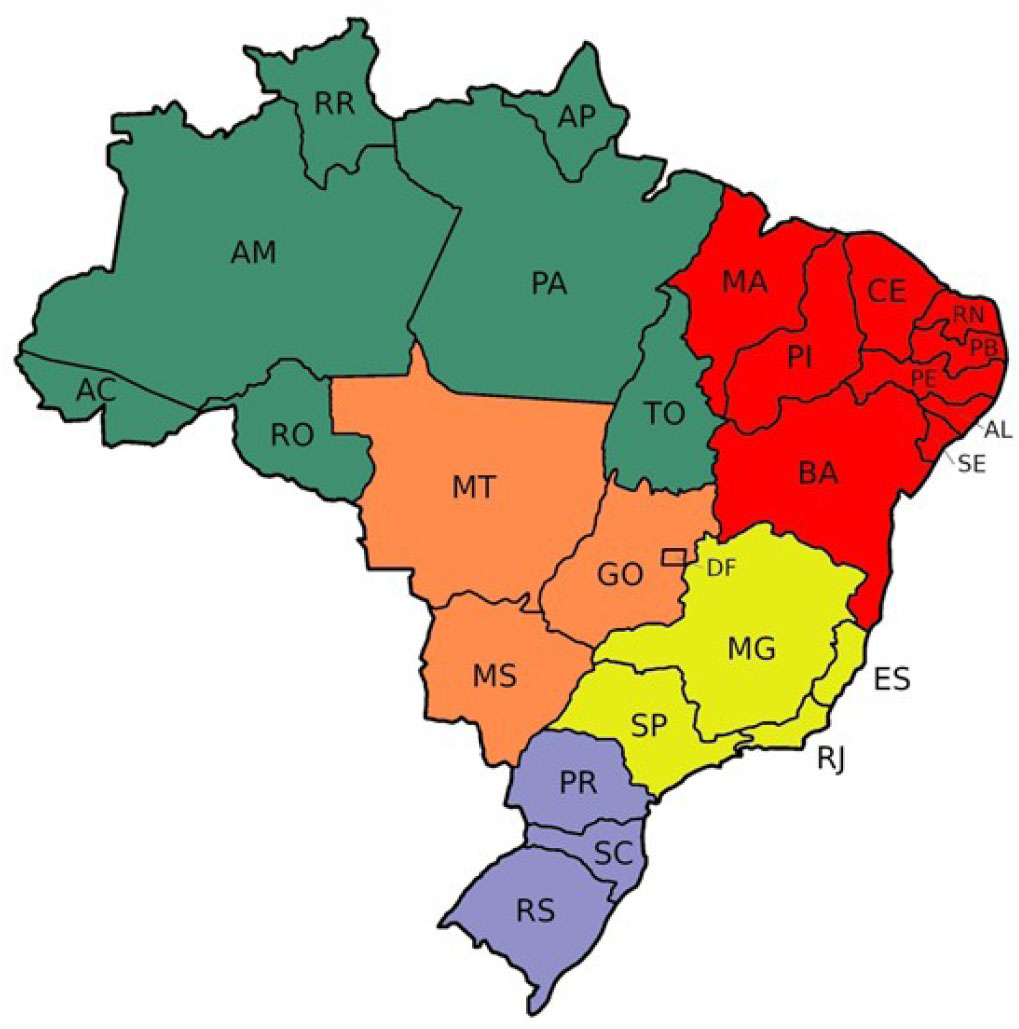
This is an ecological study using VC data from 450 municipalities in the seven states of the Northern region (Figure 1)18 for the years 2018 and 2022, obtained from the Department of Informatics of Brazil’s Unified Health System (DATASUS)19.
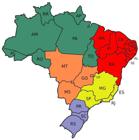
Political map of Brazil identifying the Northern Region and its constituent states: Acre (AC), Amapá (AP), Amazonas (AM), Pará (PA), Rondônia (RO), Roraima (RR) and Tocantins (TO).
The selected immunobiologicals comprised those recommended for childhood vaccination, namely: BCG (tuberculosis), pentavalent (diphtheria, tetanus, pertussis, hepatitis B, and Haemophilus influenzae type b), poliomyelitis, pneumococcal, rotavirus, meningococcal C, and measles-mumps-rubella (MMR).
VCs (dependent variable) were obtained as percentages by antigen for each municipality. Mean values were compared between 2018 and 2022. Subsequently, localities that did not reach the coverage levels recommended by the Ministry of Health were identified: 90% for BCG and rotavirus and 95% for the other immunobiologicals.
The socioeconomic indicators (independent variables) chosen were gross domestic product (GDP) per capita and the Brazilian Deprivation Index (Índice Brasileiro de Privação, IBP), as well as maternal variables such as education (eight or more years of schooling), race (proportion of Indigenous people among live births), low birth weight (<2,500 g), and gestational duration (term births), all expressed as percentage rates.
Created by researchers from Fiocruz Bahia and the University of Glasgow, the IBP measures material deprivation based on information about income, education, and housing conditions at the smallest territorial unit used by the Brazilian Institute of Geography and Statistics (IBGE), the census tract, which allows identification of pockets of poverty within municipalities. This index can take positive and negative values, with higher positive values indicating greater deprivation.
For the analysis of spatial dynamics, global Moran’s I statistics and their p-values were estimated to assess spatial autocorrelation among municipalities for each variable. Bivariate and local Moran’s I (LISA) indices were also calculated.
Moran’s I provides a measure of spatial association for a set of data on a scale from −1 to +1. Positive values (positive autocorrelation) indicate similarity between the values of the variables and their spatial locations; negative values (negative autocorrelation) indicate dissimilarity; and values near zero indicate a random spatial distribution. The global Moran’s I measures spatial autocorrelation for the entire dataset; for example, it assesses whether there is a global spatial pattern across the study area. The bivariate Moran’s I is used to assess spatial autocorrelation between two distinct variables, examining whether high (or low) values of one variable in a location are associated with high (or low) values of another variable in neighboring locations. LISA, in turn, indicates whether a locality and its neighbors have similar values (high–high or low–low clusters) or dissimilar values (high–low or low–high), enabling the identification of areas with distinct spatial patterns within the overall dataset.
For defining spatial neighbors, a first-order Queen contiguity weight matrix was used, row-standardized, considering as neighbors the cities that share common borders or vertices. This choice is justified by the extreme heterogeneity of municipal territorial areas in the Northern Region, which makes fixed-distance centroid-based matrices unfeasible, as they could create false isolation in extensive municipalities or excessive connections in denser areas. The Queen matrix was chosen because it increases topological connectivity among spatial units, reducing the impact of irregular municipal geometries and ensuring that all administrative boundary interfaces are considered potential channels of spatial correlation.
The statistical significance of the Moran indices was assessed using a pseudo-significance test based on 999 random permutations. A significance level of α = 0.05 (5%) was adopted to reject the null hypothesis of spatial randomness. No corrections for multiple comparisons, such as Bonferroni or false discovery rate, were applied, since the exploratory nature of this public health surveillance study prioritized sensitivity in detecting risk clusters, avoiding an increase in Type II error (false negatives) that could obscure emerging vulnerable areas.
Thematic maps and the Moran map were created using the publicly available software TerraView 4.2.2, developed by the National Institute for Space Research (INPE), and GeoDa, provided by the University of Chicago20. The digital municipal boundary mesh for the Northern region was obtained from IBGE21.
As the data were secondary, publicly available, and contained no identifiable subjects, the project was not submitted to the Research Ethics Committee
Data availability statement
The full dataset supporting the results of this study is available upon request from the corresponding author. The dataset is not publicly available due to the integration of databases carried out by the authors.
RESULTS
With a resident population of approximately 16.5 million people, 319,228 live births were recorded in 2018 and 289,158 in 2022 across the entire Northern region.
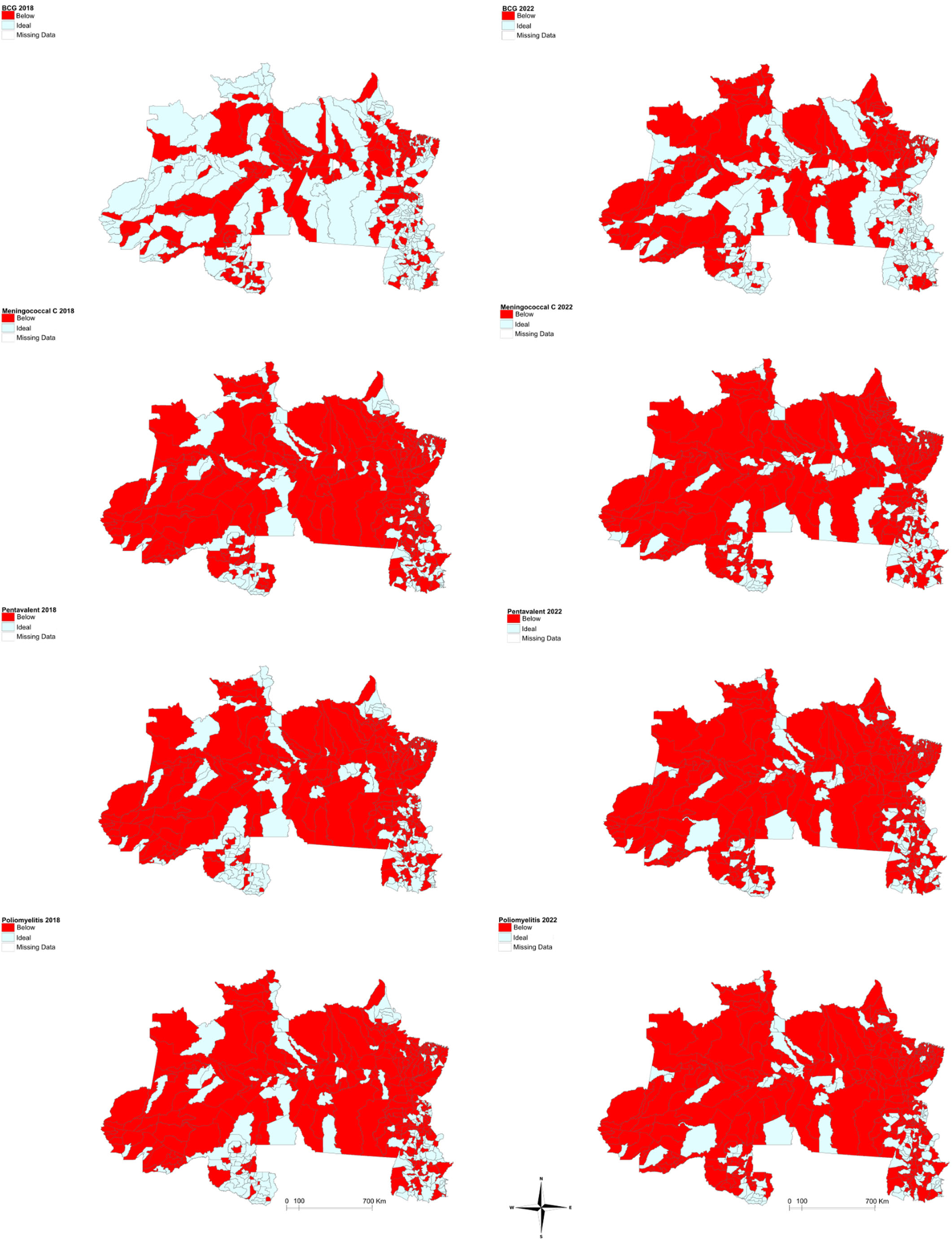
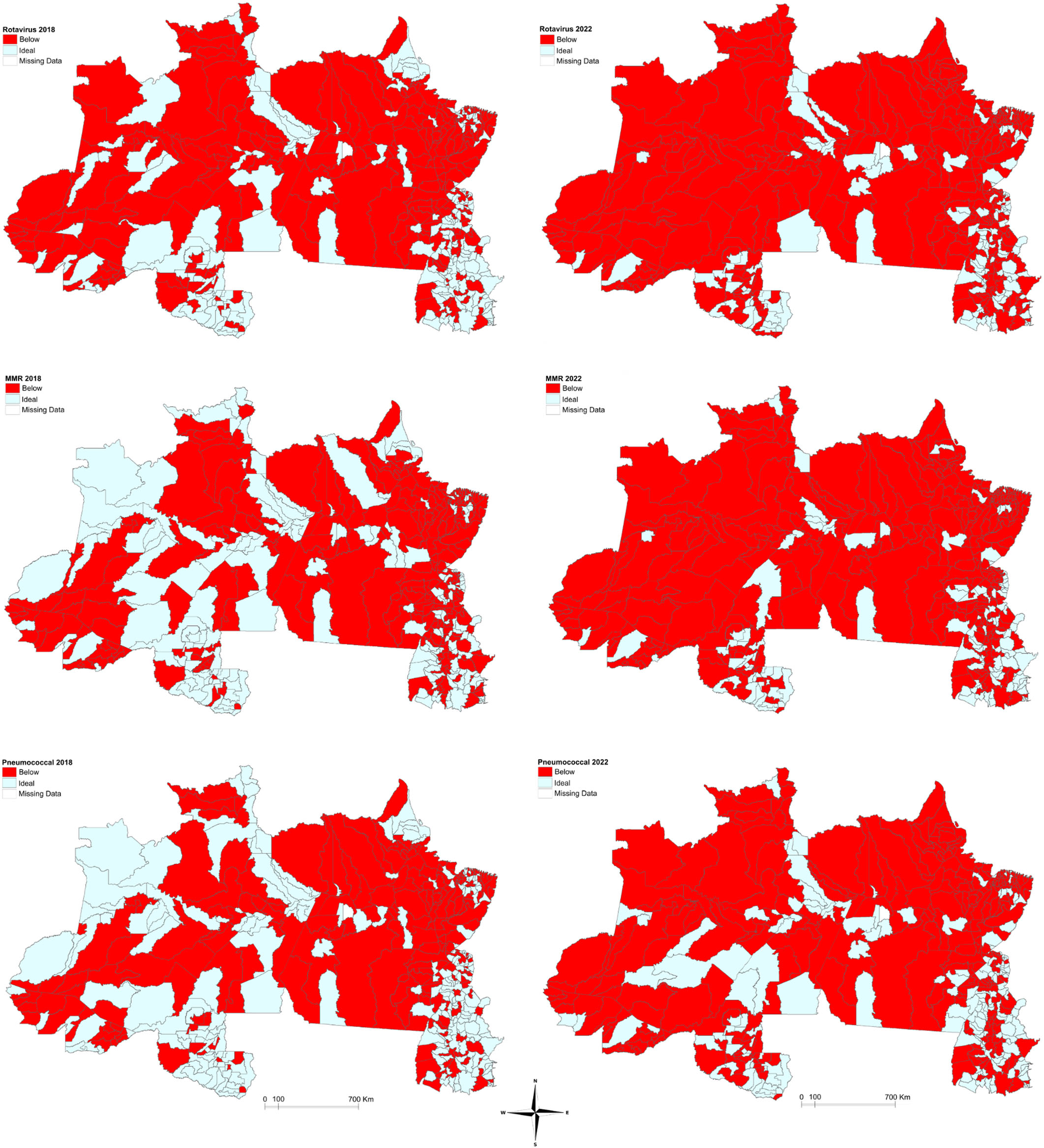
The territory, which comprises 450 municipalities, showed a generalized decline in VC between 2018 and 2022, except for the meningococcal C vaccine (Figure 2). In 2018, 203 municipalities (45.1%) reached the Ministry of Health’s target for rotavirus, a number that fell to 138 (30.7%) in 2022. Pneumococcal coverage decreased from 235 municipalities (52.2%) to 176 (39.1%), and measles-mumps-rubella (MMR) coverage from 190 (42.2%) to 129 (28.7%). BCG coverage fell from 262 municipalities (58.2%), meeting the target in 2018, to 250 (55.6%) in 2022. The pentavalent vaccine followed a similar trajectory, with 174 municipalities (38.7%) in 2018 and 143 (31.8%) in 2022. Poliomyelitis VC decreased from 175 municipalities (38.9%) to 140 (31.1%). Contrasting this predominantly negative trend, the meningococcal C vaccine was the only one to increase, from 133 municipalities (29.6%) in 2018 to 149 (33.1%) in 2022. The largest percentage declines occurred for rotavirus (14.4%), MMR (13.5%), and pneumococcal (13.1%) (Figure 3). Mean, minimum, maximum, and standard deviation values for the study variables are presented in Table 1.
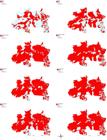
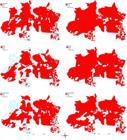
Thematic maps for the immunobiologicals with the largest declines in vaccination coverage. Northern Region, Brazil, 2018 and 2022.
Minimum, maximum, mean, and standard deviation values of vaccination coverages and of maternal, newborn, and socioeconomic variables. Northern Region, 2018 and 2022.
In 2022, across the entire stretch of Brazil’s border with French Guiana, Suriname, Guyana, Venezuela, Colombia, and Peru, only two municipalities reached the target coverage for rotavirus and four for poliomyelitis, pentavalent, and MMR. Specifically on the border with Venezuela, no municipality met the target for rotavirus and BCG, while only one reached the target for the other five vaccines. All municipalities on the borders with Suriname and French Guiana were below the target for all immunobiologicals except BCG.
In general, municipalities that met coverage targets in 2022 were concentrated in the states of Tocantins and Rondônia. No state showed improvement in coverage for rotavirus, pneumococcal, poliomyelitis, or MMR between 2018 and 2022.
The bivariate Moran’s I indices were positive and significant (p < 0.05) for all variables in this study in 2018 and 2022, indicating spatial autocorrelation and the presence of clusters (Table 2).
Values of Moran’s I indices — univariate for vaccination coverages and bivariate with per capita income and the Brazilian Deprivation Index, with p-values in parentheses. Northern Region, 2018 and 2022.
All bivariate Moran’s I values between VC and GDP per capita were positive and significant, except for BCG and MMR in 2018. This indicates that municipalities with high VC tend to be spatially close to municipalities with high GDP per capita, and similarly, municipalities with low VC tend to be near others with low GDP per capita (Table 3).
Values of the bivariate Moran’s I for vaccination coverages and study variables, with p-values in parentheses. Northern Region, 2018 and 2022.
The bivariate Moran’s I between VC and the IBP was negative and highly significant for all immunobiologicals, indicating an inverse association in which municipalities with high VC tend to be near others with low IBP. The index value intensified, as with GDP per capita, signaling that spatial inequality in coverage associated with economic and deprivation indicators worsened between 2018 and 2022.
Additionally, a significant positive spatial correlation was found between VC and maternal education. Although this relationship weakened for most vaccines, it strengthened for BCG and MMR.
The spatial relationship between VC and the proportion of Indigenous population reversed from 2018 to 2022. While in 2018 the association was mostly non-significant (except for a weak positive correlation for BCG and MMR), in 2022 a strong, significant negative correlation emerged for all vaccines.
Regarding the low birth weight rate, the bivariate spatial correlation analysis did not identify a consistent or statistically significant association with VC in either of the analyzed perios. In contrast, the term birth rate showed a strong, positive, and significant linkage, suggesting clusters in which high coverage coincides with high term-birth rates. The strength of this association decreased for almost all vaccines from 2018 to 2022, with BCG being the only exception.
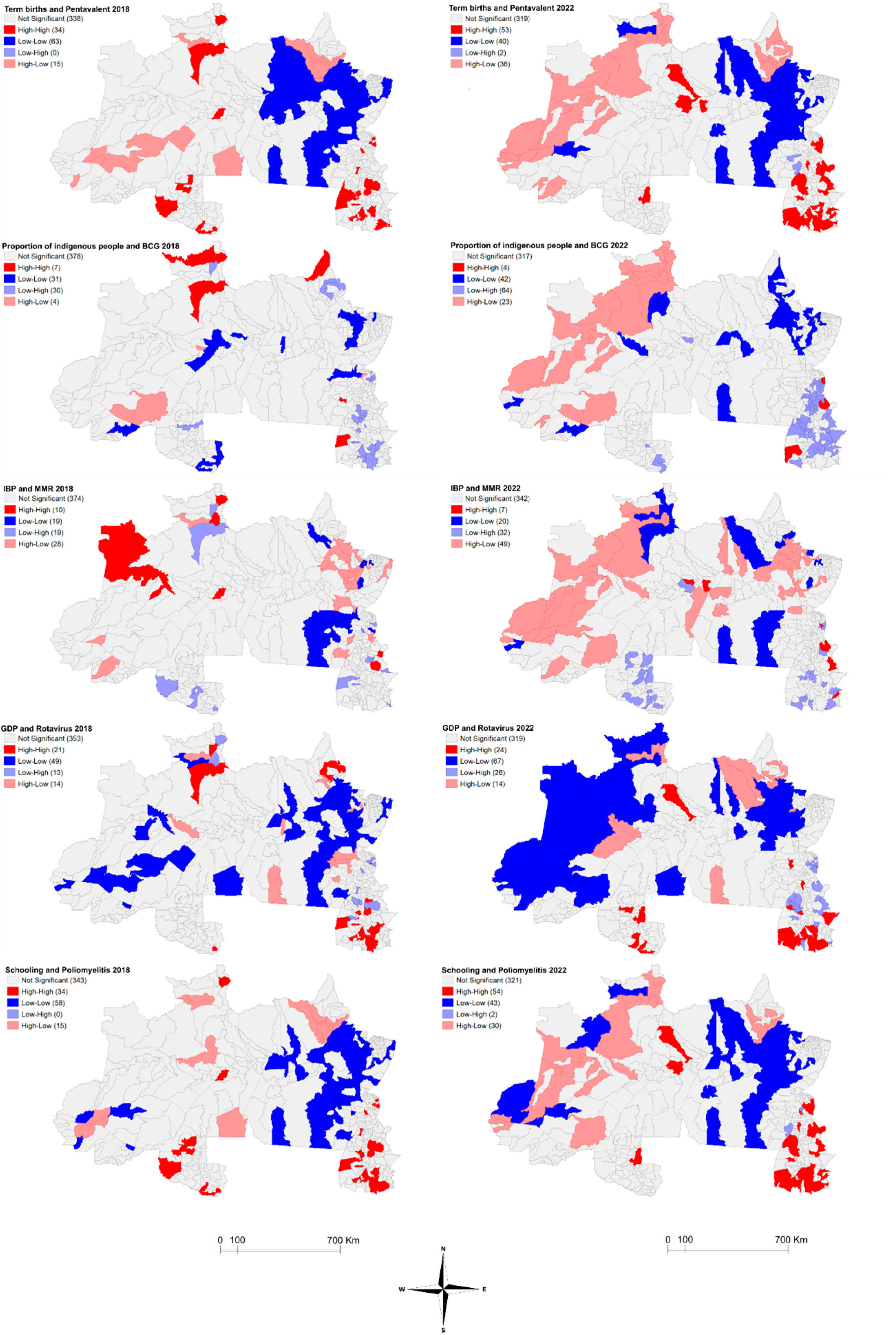
The bivariate spatial analysis revealed clear territorial segregation in the Northern region (Figure 4). An extensive low–low cluster was observed in the state of Pará, where low VC coincided with low maternal schooling and low term-birth indicators. The pattern repeated in Amazonas, with a large low–high cluster linking low MMR coverage to a high IBP in 2022, and low rotavirus coverage to lower GDP per capita. In Roraima and in western Amazonas, low VC coincided with a higher proportion of Indigenous population in the same year. In contrast, a mutual-benefit (high–high) scenario emerged in Tocantins, where high-VC clusters consistently aligned with better socioeconomic indicators, such as higher GDP per capita, maternal schooling, and term-birth rates. It should be noted that the observed associations are at the aggregated municipal level and do not permit individual-level causal inference.
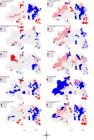
Bivariate local cluster (BiLISA) maps for vaccination coverages and socioeconomic and maternal variables. Northern Region, Brazil, 2018 and 2022.
GDP: gross domestic product; IBP: Brazilian Deprivation Index.
DISCUSSION
To our knowledge, this is the first study to analyze the spatial distribution of VC in the Northern region, using geoprocessing to correlate the set of immunobiologicals with socioeconomic and maternal indicators in the pre- and post-pandemic periods (2018 and 2022).
This study reveals a widespread decline in vaccination coverage, consistent with recent studies. According to a 2025 survey released by the United Nations Children’s Fund (UNICEF) and the World Health Organization (WHO), Brazil is among the 20 countries with the highest number of unvaccinated children22. Recurrent failures in the supply of immunobiologicals and the COVID-19 pandemic are repeatedly cited in the survey as factors that contributed to the reduction in childhood vaccination.
Although the COVID-19 pandemic imposed global disruptions on immunization programs, it is imperative to avoid homogenizing this temporal block. Instead, we propose stratification into two distinct intervals, each characterized by idiosyncratic causal etiologies for the decline in vaccination indicators. The first period, corresponding to 2020 and 2021, was predominantly characterized by physical and operational barriers: social isolation and distancing measures restricted access to health facilities, fear of infection at health services reduced demand for vaccination, and the massive redeployment of teams and resources to combat COVID-19 compromised the provision of routine services23,24,25. In contrast, the 2022 scenario reflected a crisis of confidence and governance. Vaccine hesitancy intensified during this period, fueled by structured misinformation and the strengthening of the anti-vaccine movement—phenomena amplified by the politicization of health26,27. Finally, the health system faced a backlog of demand, with millions of children accumulating delays in vaccination schedules that were not adequately recovered even after restrictions were relaxed28.
Low VC in border municipalities, combined with intense migratory flows, creates an epidemiological scenario conducive to the reemergence of vaccine-preventable diseases. Studies on viral hepatitis in immigrants and refugees show high prevalences of exposure to hepatitis A and B viruses, with substantial vaccination gaps in children11,12. Another example of this risk was the reintroduction of measles in Brazil, directly linked to Venezuelan migration in the context of low MMR coverage in recipient municipalities in the North9. The movement of susceptible populations through areas with barriers to healthcare access, such as border regions, acts as a corridor for pathogen dissemination.
The bivariate analysis with socioeconomic indicators indicates that the spatial distribution of childhood vaccination in the Northern region reflects deep social inequities. For all vaccines, the bivariate Moran’s I values between VC and GDP per capita and between VC and the IBP increased from 2018 to 2022, indicating that the spatial concentration of high VC in wealthier areas and low coverage in poorer areas became more pronounced in 2022. This finding suggests that the pandemic’s impact was asymmetric, disproportionately affecting the most vulnerable municipalities and deepening inequalities in access to immunization.
Nonetheless, the presence of outlier municipalities (characterized by high social vulnerability, yet with elevated VC) represents a phenomenon of “health resilience” that warrants analytical attention. These municipalities show that socioeconomic inequality is not an insurmountable determinant of health outcomes. This scenario is consistent with the literature, which describes the strength of Primary Health Care and the widespread work of Community Health Workers as a key factor in vaccination success in poor territories29,30,31. The extensive reach of the Unified Health System, through the Family Health Strategy and the active outreach of Community Health Workers, mitigates socioeconomic inequities, protecting vulnerable populations even in adverse contexts.
One of the most alarming findings of this study was the reversal in the correlation between VC and the proportion of Indigenous population. In 2018 there was no significant spatial association; however, by 2022 this correlation became strongly negative and statistically significant for all immunobiologicals analyzed. This shift reveals the emergence of a new spatial dynamic, with vulnerability clusters linking low coverage to areas with higher Indigenous presence. The decline in VC among Indigenous populations in Brazil is multifactorial, involving access barriers, socioeconomic inequalities, management failures, misinformation, and political instability that undermine vaccine confidence. Geographic and operational barriers are particularly relevant, as the social and geographic isolation of Indigenous communities hinders the implementation of vaccination strategies and limits regular access to health services, especially in remote and hard-to-reach areas32,33. The absence of health professional visits is also associated with higher rates of incomplete vaccination schedules, indicating that the active presence of health teams is critical for vaccination adherence33.
Moreover, the observed reversal reflects a paradigm shift in Indigenous health management, characterized by the progressive dismantling of the Special Secretariat for Indigenous Health (SESAI)34 and the weakening of territorial protection policies35,36. The expansion of illegal mining on Indigenous lands, which increased by 129% between 2013 and 2021 and intensified especially after 2018, created an environment of violence and insecurity that made it impossible for health professionals to enter critical areas. As evidenced by the Yanomami humanitarian crisis, this process consolidated vulnerability clusters in which geographic isolation was exacerbated by the absence of state protection37,38,39.
The positive spatial correlation between maternal schooling and VC is consistent, at the aggregate level, with literature that identifies education as a determinant of health literacy and proactive care-seeking behaviors. Although ecological analysis does not allow inference about individual behavior, the co-occurrence of high maternal schooling rates and high VC in the same territories supports studies that identify maternal education as a robust factor for better child health outcomes40,41,42,43,44,45,46. A global meta-analysis showed that the odds of complete vaccination are more than twice as high among children of mothers with secondary or higher education, although the effect varies by socioeconomic and geographic context47. The attenuation of this association may be attributed to a systemic decline in VC that affected all social strata, reducing the differential between educational groups.
The spatial patterns identified have direct implications for health surveillance, and low-coverage areas represent an imminent risk for the resurgence of vaccine-preventable diseases that have already been eliminated in the country. Municipal-level analysis, as conducted in this study, is therefore a strategic tool for planning public health actions, allowing managers to target resources and intensified vaccination campaigns to higher-risk territories.
The clusters are not random; they are the spatial manifestation of deep and persistent socioeconomic and structural inequalities that characterize the Northern region. Historically, the region faces a fragile health system, poor infrastructure, and access barriers, especially for its vast and often isolated populations—such as Indigenous, riverside (ribeirinha), and quilombola communities. The COVID-19 pandemic did not create these disparities but deepened and starkly exposed them, producing an epidemiological risk scenario that requires urgent, territorially focused, and culturally sensitive actions.
This study may have limitations inherent to its ecological design, which precludes causal inference at the individual level. In addition, the use of secondary DATASUS data is subject to possible biases and inconsistencies in the recording of information, such as artificially inflated (over 100%) or underestimated coverage rates. VCs above 100% may be related to the numerator being based on the place of vaccine administration rather than the vaccinee’s place of residence, as well as to outdated population estimates in the denominator. In this study, we chose to keep the original recorded values without truncation in order to preserve the statistical variability required for sensitive cluster detection and to avoid the bias of homogenization, or “ceiling effect,” that would occur by equating municipalities with distinct performances. This approach also allows reflecting the actual volume of doses administered and capturing genuine spatial phenomena, such as service polarization in neighboring municipalities and border effects.
However, the robustness of the spatial analysis and the statistical significance of the patterns observed lend validity to our findings, reinforce the urgency of the problem, and provide evidence to inform the planning and strategic targeting of public health actions toward higher-risk areaso.
REFERENCES
-
1. Shattock AJ, Johnson HC, Sim SY, Carter A, Lambach P, Hutubessy RCW, et al. Contribution of vaccination to improved survival and health: modelling 50 years of the Expanded Programme on Immunization. Lancet 2024; 403(10441): 2307-16. https://doi.org/10.1016/S0140-6736(24)00850-X
» https://doi.org/10.1016/S0140-6736(24)00850-X -
2. Montero DA, Vidal RM, Velasco J, Carreño LJ, Torres JP, Benachi MAO, et al. Two centuries of vaccination: historical and conceptual approach and future perspectives. Front Public Health 2023; 11: 1326154. https://doi.org/10.3389/fpubh.2023.1326154
» https://doi.org/10.3389/fpubh.2023.1326154 -
3. Piot P, Larson HJ, O’Brien KL, N’kengasong J, Ng E, Sow S, et al. Immunization: vital progress, unfinished agenda. Nature 2019; 575(7781): 119-29. https://doi.org/10.1038/s41586-019-1656-7
» https://doi.org/10.1038/s41586-019-1656-7 -
4. Domingues CMAS, Maranhão AGK, Teixeira AM, Fantinato FFS, Domingues RAS. The Brazilian National Immunization Program: 46 years of achievements and challenges. Cad Saude Publica 2020; 36(Suppl 2): e00222919. https://doi.org/10.1590/0102-311X00222919
» https://doi.org/10.1590/0102-311X00222919 -
5. Alves YM, Berra TZ, Tavares RBV, Zini N, Ferreira QR, Andrade LKA, et al. Vaccination coverage at birth in Brazil: spatial and temporal trends in the impact of COVID-19 on uptake of BCG and Hepatitis B vaccines. Vaccines 2024; 12(12): 1434. https://doi.org/10.3390/vaccines12121434
» https://doi.org/10.3390/vaccines12121434 -
6. Macedo LFR, Ribeiro EC, Wanzala EJ, Sampaio Neto OC, Brito SA, Oliveira CRT, et al. Pentavalent and poliomyelitis vaccines: a review of the vaccination coverage in Brazilian children in the last 10 years. Arch Virol 2024; 169(1): 17. https://doi.org/10.1007/s00705-023-05939-8
» https://doi.org/10.1007/s00705-023-05939-8 -
7. Arroyo LH, Ramos ACV, Yamamura M, Weiller TH, Crispim JA, Cartagena-Ramos D, et al. Areas with declining vaccination coverage for BCG, poliomyelitis, and MMR in Brazil (2006-2016): maps of regional heterogeneity. Cad Saude Publica 2020; 36(4): e00015619. https://doi.org/10.1590/0102-311X00015619
» https://doi.org/10.1590/0102-311X00015619 -
8. Wangdi K, Wetzler E, Marchesini P, Villegas L, Canavati S. Cross-border malaria drivers and risk factors on the Brazil-Venezuela border between 2016 and 2018. Sci Rep 2022; 12(1): 6058. https://doi.org/10.1038/s41598-022-09819-0
» https://doi.org/10.1038/s41598-022-09819-0 -
9. Pacheco FC, França GVA, Elidio GA, Domingues CMAS, Oliveira C, Guilhem DB. Trends and spatial distribution of MMR vaccine coverage in Brazil during 2007-2017. Vaccine 2019; 37(20): 2651-5. https://doi.org/10.1016/j.vaccine.2019.04.019
» https://doi.org/10.1016/j.vaccine.2019.04.019 -
10. Arisco NJ, Peterka C, Castro MC. Cross-border malaria in Northern Brazil. Malar J 2021; 20(1): 135. https://doi.org/10.1186/s12936-021-03668-4
» https://doi.org/10.1186/s12936-021-03668-4 -
11. Martins TLS, Silva GRC, Silva CA, Gomes DO, Silva BVD, Carneiro MAS, et al. Hepatitis B and C in immigrants and refugees in central Brazil: prevalence, associated factors, and immunization. Viruses 2022; 14(7): 1534. https://doi.org/10.3390/v14071534
» https://doi.org/10.3390/v14071534 -
12. Silva GRC, Martins TLS, Silva CA, Caetano KAA, Carneiro MAS, Silva BVD, et al. Hepatitis A and E among immigrants and refugees in Central Brazil. Rev Saúde Pública 2022; 56: 29. https://doi.org/10.11606/s1518-8787.2022056003839
» https://doi.org/10.11606/s1518-8787.2022056003839 -
13. Dimitrova A, Carrasco-Escobar G, Richardson R, Benmarhnia T. Essential childhood immunization in 43 low- and middle-income countries: analysis of spatial trends and socioeconomic inequalities in vaccine coverage. PLoS Med 2023; 20(1): e1004166. https://doi.org/10.1371/journal.pmed.1004166
» https://doi.org/10.1371/journal.pmed.1004166 -
14. Cunha NSP, Fahrat SCL, Olinda RA, Braga ALF, Barbieri CLA, Pamplona YAP, et al. Spatial analysis of vaccine coverage on the first year of life in the northeast of Brazil. BMC Public Health 2022; 22(1): 1204. https://doi.org/10.1186/s12889-022-13589-9
» https://doi.org/10.1186/s12889-022-13589-9 -
15. Pamplona YAP, Nascimento AMV, Olinda RA, Berbieri CLA, Braga ALF, Martins LC. Spatial analysis of measles vaccination coverage in the State of São Paulo. BMC Public Health 2023; 23(1): 29. https://doi.org/10.1186/s12889-022-14797-z
» https://doi.org/10.1186/s12889-022-14797-z -
16. Johri M, Rajpal S, Kim R, Subramanian SV. Small-area variation in child under-vaccination in india: a multilevel analysis of cross-sectional data from 36 states and Union Territories, 707 districts, and 22,349 small-area clusters. Lancet Reg Health Southeast Asia 2024; 32: 100504. https://doi.org/10.1016/j.lansea.2024.100504
» https://doi.org/10.1016/j.lansea.2024.100504 -
17. Carvalho MCL, Lioi PC, Godoy VN, Santos AOR, Nascimento LFC. Decline in vaccination coverage against poliomyelitis in the municipalities of Vale do Paraíba (SP) under a spatial approach. Rev Paul Pediatr 2024; 42: e2023137. https://doi.org/10.1590/1984-0462/2024/42/2023137
» https://doi.org/10.1590/1984-0462/2024/42/2023137 -
18. Yahoo. Brasil por regiões mapa [Internet]. [accessed on Sep. 3, 2025]. Available at: https://br.search.yahoo.com/search?fr=mcafee&type=E211BR826G0&p=Brasil±por±regi%C3%B5es±mapa
» https://br.search.yahoo.com/search?fr=mcafee&type=E211BR826G0&p=Brasil±por±regi%C3%B5es±mapa -
19. Brasil. Ministério da Saúde. DATASUS Tecnologia da Informação a Serviço do SUS. Imunizações – Cobertura – Brasil [Internet]. Brasília: DATASUS; 2022 [accessed on Sep. 7, 2025]. Available at: http://tabnet.datasus.gov.br/cgi/dhdat.exe?bd_pni/cpnibr.def
» http://tabnet.datasus.gov.br/cgi/dhdat.exe?bd_pni/cpnibr.def -
20. Center for Spatial Data Science. Center for spatial data Science [Internet]. Chicago: The University of Chicago [accessed on Sep. 11, 2025]. Available at: https://spatial.uchicago.edu
» https://spatial.uchicago.edu -
21. Instituto Brasileiro de Geografia e Estatística. Malha municipal [Internet]. Rio de Janeiro: IBGE; 2025 [accessed on Sep. 7, 2025]. Available at: https://www.ibge.gov.br/geociencias/organizacao-do-territorio/malhas-territoriais/15774-malhas.html
» https://www.ibge.gov.br/geociencias/organizacao-do-territorio/malhas-territoriais/15774-malhas.html -
22. United Nations Children’s Fund. Immunization [Internet]. New York: UNICEF; 2025 [accessed on Sep. 4, 2025]. Available at: https://data.unicef.org/topic/child-health/immunization/
» https://data.unicef.org/topic/child-health/immunization/ -
23. Silveira MF, Tonial CT, Maranhão AGK, Teixeira AMS, Hallal PC, Menezes AMB, et al. Missed childhood immunizations during the COVID-19 pandemic in Brazil: Analyses of routine statistics and of a national household survey. Vaccine 2021; 39(25): 3404-9. https://doi.org/10.1016/j.vaccine.2021.04.046
» https://doi.org/10.1016/j.vaccine.2021.04.046 -
24. Moura C, Truche P, Salgado LS, Meireles T, Santana V, Buda A, et al. The impact of COVID-19 on routine pediatric vaccination delivery in Brazil. Vaccine 2022; 40(15): 2292-8. https://doi.org/10.1016/j.vaccine.2022.02.076
» https://doi.org/10.1016/j.vaccine.2022.02.076 -
25. Santos VS, Vieira SCF, Barreto IDC, Gois-Santos VT, Celestino AO, Domingues C, et al. Effects of the COVID-19 pandemic on routine pediatric vaccination in Brazil. Expert Rev Vaccines 2021; 20(12): 1661-6. https://doi.org/10.1080/14760584.2021.1990045
» https://doi.org/10.1080/14760584.2021.1990045 -
26. Seara-Morais GJ, Avelino-Silva TJ, Couto M, Avelino-Silva VI. The pervasive association between political ideology and COVID-19 vaccine uptake in Brazil: an ecologic study. BMC Public Health 2023; 23(1): 1606. https://doi.org/10.1186/s12889-023-16409-w
» https://doi.org/10.1186/s12889-023-16409-w -
27. Verjovsky M, Barreto MP, Carmo I, Coutinho B, Thomer L, Lifschitz S, et al. Political quarrel overshadows vaccination advocacy: How the vaccine debate on Brazilian Twitter was framed by anti-vaxxers during Bolsonaro administration. Vaccine 2023; 41(39): 5715-21. https://doi.org/10.1016/j.vaccine.2023.07.075
» https://doi.org/10.1016/j.vaccine.2023.07.075 -
28. Saavedra RC, Carvalho-Sauer R, Paixao ES, Ichihara MYT, Costa MCN, Teixeira MG. Is Brazil reversing the decline in childhood immunization coverage in the post-COVID-19 era? An interrupted time series analysis. Vaccines (Basel) 2025; 13(5): 527. https://doi.org/10.3390/vaccines13050527
» https://doi.org/10.3390/vaccines13050527 -
29. Hone T, Saraceni V, Coeli CM, Trajman A, Rasella D, Millett C, et al. Primary healthcare expansion and mortality in Brazil’s urban poor: a cohort analysis of 1.2 million adults. PLoS Med 2020; 17(10): e1003357. https://doi.org/10.1371/journal.pmed.1003357
» https://doi.org/10.1371/journal.pmed.1003357 -
30. Hone T, Rasella D, Barreto ML, Majeed A, Millett C. Association between expansion of primary healthcare and racial inequalities in mortality amenable to primary care in Brazil: a national longitudinal analysis. PLoS Med 2017; 14(5): e1002306. https://doi.org/10.1371/journal.pmed.1002306
» https://doi.org/10.1371/journal.pmed.1002306 -
31. Bastos LSL, Aguilar S, Rache B, Maçaira P, Baião F, Cerbino-Neto J, et al. Primary healthcare protects vulnerable populations from inequity in COVID-19 vaccination: an ecological analysis of nationwide data from Brazil. Lancet Reg Health Am 2022; 14: 100335. https://doi.org/10.1016/j.lana.2022.100335
» https://doi.org/10.1016/j.lana.2022.100335 -
32. Machado FCG, Ferron MM, Barddal MTM, Nascimento LA, Rosalen J, Avelino-Silva VI. COVID-19 vaccination, incidence, and mortality rates among indigenous populations compared to the general population in Brazil: describing trends over time. Lancet Reg Health Am 2022; 13: 100319. https://doi.org/10.1016/j.lana.2022.100319
» https://doi.org/10.1016/j.lana.2022.100319 -
33. Lima JOR, Pagotto V, Rocha BS, Scalize PS, Guimarães RA, Lima MD, et al. Low vaccine coverage and factors associated with incomplete childhood immunization in racial/ethnic minorities and rural groups, Central Brazil. Vaccines (Basel) 2023; 11(4): 838. https://doi.org/10.3390/vaccines11040838
» https://doi.org/10.3390/vaccines11040838 -
34. Thomazinho G. Discoordination promoting institutional racism: considerations on Indigenous access to health policy. Saude Soc 2024; 33(2): e230408. https://doi.org/10.1590/S0104-12902024230408en
» https://doi.org/10.1590/S0104-12902024230408en -
35. Castro MC, Arisco NJ, Diniz CG, Ponmattam J, Peterka C, Basta PC, et al. Mining and malaria in the Brazilian Amazon and in the Yanomami indigenous land. PLoS Negl Trop Dis 2025; 19(11): e0013677. https://doi.org/10.1371/journal.pntd.0013677
» https://doi.org/10.1371/journal.pntd.0013677 -
36. Silva-Junior CHL, Silva FB, Arisi BM, Mataveli G, Pessôa ACM, Carvalho NS, et al. Brazilian Amazon indigenous territories under deforestation pressure. Sci Rep 2023; 13(1): 5851. https://doi.org/10.1038/s41598-023-32746-7
» https://doi.org/10.1038/s41598-023-32746-7 -
37. Portugal LF, Souza TR, Burlandy L, Mialon M, Moura BG, Quintanilha MB, et al. Emergência nutricional no território Yanomami: ações desenvolvidas para enfrentamento da fome e sua interface com os determinantes comerciais da saúde. Cad Saúde Pública 2025; 41(11): e00073525. https://doi.org/10.1590/0102-311XPT073525
» https://doi.org/10.1590/0102-311XPT073525 -
38. Garcia HM, Feitosa GGA, Menezes HL, Figueiredo TMR, Alves RNP, Lima NNR, et al. Pandemic of hunger: the severe nutritional deficiency that kills Yanomami ethnic children. J Pediatr Nurs 2022; 65: e1-e2. https://doi.org/10.1016/j.pedn.2021.11.024
» https://doi.org/10.1016/j.pedn.2021.11.024 -
39. Barros JA, Granja F, Siqueira PEL, Epifânio IS, Coelho RR, Ferreira-da-Cruz MF. What impact did the Brazilian Federal Government’s intervention have on malaria cases in the Yanomami Indigenous lands? Malar J 2025; 24(1): 450. https://doi.org/10.1186/s12936-025-05744-5
» https://doi.org/10.1186/s12936-025-05744-5 -
40. Balaj M, York HW, Sripada K, Besnier E, Vonen HD, Aravkin A, et al. Parental education and inequalities in child mortality: a global systematic review and meta-analysis. Lancet 2021; 398(10300): 608-20. https://doi.org/10.1016/S0140-6736(21)00534-1
» https://doi.org/10.1016/S0140-6736(21)00534-1 -
41. Bado AR, Sathiya Susuman A. Women’s education and health inequalities in under-five mortality in selected Sub-Saharan African Countries, 1990-2015. PLoS One 2016; 11(7): e0159186. https://doi.org/10.1371/journal.pone.0159186
» https://doi.org/10.1371/journal.pone.0159186 -
42. Karlsson O, De Neve JW, Subramanian SV. Weakening association of parental education: analysis of child health outcomes in 43 low- and middle-income countries. Int J Epidemiol 2019; 48(1): 83-97. https://doi.org/10.1093/ije/dyy158
» https://doi.org/10.1093/ije/dyy158 -
43. Godah MW, Beydoun Z, Abdul-Khalek RA, Safieddine B, Khamis AM, Abdulrahim S. Maternal education and low birth weight in low- and middle-income countries: systematic review and meta-analysis. Matern Child Health J 2021; 25(8): 1305-15. https://doi.org/10.1007/s10995-021-03133-3
» https://doi.org/10.1007/s10995-021-03133-3 -
44. Morales S, Bowers ME, Shuffrey L, Ziegler K, Troller-Renfree S, Hernandez A, et al. Maternal education prospectively predicts child neurocognitive function: an environmental influences on child health outcomes study. Dev Psychol 2024; 60(6): 1028-40. https://doi.org/10.1037/dev0001642
» https://doi.org/10.1037/dev0001642 -
45. Meyrose AK, Klasen F, Otto C, Gniewosz G, Lampert T, Ravens-Sieberer U. Benefits of maternal education for mental health trajectories across childhood and adolescence. Soc Sci Med 2018; 202: 170-8. https://doi.org/10.1016/j.socscimed.2018.02.026
» https://doi.org/10.1016/j.socscimed.2018.02.026 -
46. Huebener M. Life expectancy and parental education. Soc Sci Med 2019; 232: 351-65. https://doi.org/10.1016/j.socscimed.2019.04.034
» https://doi.org/10.1016/j.socscimed.2019.04.034 -
47. Forshaw J, Gerver SM, Gill M, Cooper E, Manikam L, Ward H. The global effect of maternal education on complete childhood vaccination: a systematic review and meta-analysis. BMC Infect Dis 2017; 17(1): 801. https://doi.org/10.1186/s12879-017-2890-y
» https://doi.org/10.1186/s12879-017-2890-y
Edited by
-
ASSOCIATE EDITOR:
Rosângela Fernandes Lucena Batista http://orcid.org/0000-0002-1529-0165
-
SCIENTIFIC EDITOR:
Cassia Maria Buchalla http://orcid.org/0000-0001-5169-5533
The full dataset supporting the results of this study is available upon request from the corresponding author. The dataset is not publicly available due to the integration of databases carried out by the authors.