 Electronic cigarettes: isolated and combined use among Brazilian adolescents in PeNSE 2019
ABSTRACT
Objective: To analyze the prevalence and factors associated with e-cigarette (EC) use among adolescents aged 13-17 in Brazil, and to describe the pattern of polytobacco/nicotine product use.
Methods: This is a cross-sectional study using data from 159,245 students from the 2019 National School Health Survey (PeNSE). The prevalence of EC use and combined use with other products (conventional cigarettes, hookah, and others) was estimated. The association with sociodemographic variables, mental health, and other substance use was analyzed through multivariate logistic regression, calculating adjusted Odds Ratios (aOR) and their 95% confidence intervals (95% CI).
Results: The prevalence of EC use in the last 30 days was 2.82% (95%CI 2.62–3.04). Polytobacco use was significant, with dual use (EC + conventional cigarette) found in 8.56%. The combined use of all smoked products was 14.83%, and quadruple use (EC + conventional + hookah + straw) reached 14.04%. After adjustment, the factors associated with higher odds of EC use were: alcohol consumption (aOR=3.94), having friends who smoke in their presence (aOR=2.53), regular tobacco use (aOR=2.22), other drug use (aOR=2.04), feeling lonely (aOR=1.25), feeling sad (aOR=1.24), and having parents who smoke (aOR=1.17).
Conclusions: E-cigarette use among Brazilian adolescents is associated with mental health factors, social influences, and the concomitant use of alcohol and other drugs. The polytobacco use is a worrying reality among these adolescents. The findings highlight the need for public policies that articulate tobacco control with mental health initiatives and strategies for preventing alcohol/other drug use.
Keywords:
Adolescent; Tobacco use disorder; Nicotiana; Electronic nicotine delivery systems
RESUMO
Objetivo: Analisar a prevalência e os fatores associados ao uso de cigarros eletrônicos (CE) entre adolescentes de 13 a 17 anos no Brasil, bem como descrever o padrão de poliuso de produtos de tabaco/nicotina.
Métodos: Estudo transversal com dados de 159.245 escolares da Pesquisa Nacional de Saúde do Escolar (PeNSE) de 2019. Foram estimadas prevalências de uso de CE e uso combinado de produtos. A associação com variáveis sociodemográficas, de saúde mental e uso de outras substâncias foi analisada por regressão logística multivariada, com cálculo de odds ratios (OR) ajustados e seus intervalos de confiança de 95% (IC95%).
Resultados: A prevalência de uso atual de CE foi 2,82% (IC95% 2,62–3,04), e de uso dual 8,56%. A utilização combinada de todos os produtos fumados foi 14,83%, enquanto o uso quádruplo (CE + convencional + narguilé + palha) atingiu 14,04%. Após ajuste, os fatores com maior chance de uso de CE foram: consumo de bebidas alcoólicas (OR=3,94), ter amigos que fumam na sua presença (OR=2,53), uso regular de tabaco (OR=2,22), uso de outras drogas (OR=2,04), sentir-se solitário (OR=1,25), sentir-se triste (OR=1,24) e ter pais fumantes (OR=1,17).
Conclusão: O uso de CE entre adolescentes brasileiros está associado a fatores de saúde mental, influências sociais e ao uso concomitante de álcool e outras drogas. O poliuso de produtos de nicotina é uma realidade preocupante. Estes achados reforçam a necessidade de políticas públicas que articulem o controle do tabaco com ações de saúde mental e de prevenção ao uso de álcool e outras drogas.
Palavras-chave:
Adolescente; Tabagismo; Nicotiana; Sistemas eletrônicos de liberação de nicotina
INTRODUCTION
In the late 1990s, Richard Doll stated that "it is now possible to see that the medical evidence of the harm caused by smoking has been accumulating for 200 years […] the evidence was generally ignored until five case-control studies linking smoking to the development of lung cancer were published in 1950"1. Thus, the harmful effects of tobacco are well established in the literature, with no safe form of use or level of exposure identified2.
The introduction of electronic cigarettes (ECs) has added a new dimension to the global nicotine consumption epidemic, promoting novel patterns of use among young people. These include social use in group settings and parties, as well as increased appeal driven by a wide variety of flavors, colors, and device designs, alongside their dissemination through websites, social media platforms, influencer marketing, and fake news, among other factors3. Two systematic reviews4,5, an editorial published in the New England Journal of Medicine6, and studies focusing on specific brands7 have demonstrated that adolescents identify flavors as the primary factor influencing experimentation with ECs.
In Brazil, the use of these products has been increasing among adolescents, posing a significant challenge to efforts aimed at controlling the tobacco/nicotine epidemic8. The National Health Surveillance Agency (Agência Nacional de Vigilância Sanitária – Anvisa) has regulated electronic cigarettes, also referred to as electronic smoking devices (ESDs), since 2009 (Resolution No. 46/2009)9, and more recently through Resolution No. 855/202410. The latter establishes a prohibition on the manufacture, commercialization, importation, advertising, distribution, storage, and use of these products, including accessories, parts, components, and refills intended for use with or in ESDs, encompassing both electronic cigarettes and heated tobacco products10. Additionally, the Resolution prohibits their use in enclosed spaces10. Despite these regulatory measures, such products continue to be sold in the informal market, including in small retail outlets, as well as through various online platforms and social media networks. ECs are often marketed as technological innovations or lifestyle accessories, and as part of a glamorous lifestyle, thereby attracting the attention of young people, as well as individuals who have never used conventional cigarettes.
Concerns regarding, and the reporting of, patterns of concomitant tobacco use among adolescents emerged in the early 2000s11,12. Polyuse is associated with increased nicotine dependence, greater difficulty in smoking cessation, and a higher incidence of tobacco-related cancers13-17.
The World Health Organization (WHO) Framework Convention on Tobacco Control (FCTC) represented a milestone in addressing the tobacco epidemic. To support its implementation, the WHO introduced, in 2008, the MPOWER package, comprising six of the most important and effective tobacco control measures18. Among these, the systematic monitoring of tobacco/nicotine use prevalence and of prevention policies is highlighted18. The implementation of periodic, standardized population-based surveys enables temporal comparability of data, which is essential for effective planning, impact assessment, and the refinement of tobacco control strategies.
This study aimed to describe the prevalence of ESDs use and the combined use of ESDs in the past 30 days, based on data from the most recent edition of the National School Health Survey (Pesquisa Nacional de Saúde do Escolar – PeNSE), and to analyze the factors associated with EC use among adolescents aged 13 to 17 years in Brazil.
METHODS
Study population and sample
This is a cross-sectional study based on data from the 2019 edition of PeNSE, conducted by the Brazilian Institute of Geography and Statistics (Instituto Brasileiro de Geografia e Estatística – IBGE) in partnership with the Ministry of Health. The survey is part of the Surveillance of Risk and Protective Factors for Chronic Noncommunicable Diseases in Brazil and addresses multiple aspects of adolescents’ lives, including health-related behaviors, care practices, risk factors, and protective factors. Previous editions of the survey were conducted in 2009, 2012, and 201519.
In 2015, the survey began to include adolescents aged 13 to 17 years to ensure international comparability. In 2019, new indicators were incorporated, and the geographic scope of the sample was expanded, based on a single-stage sample of students aged 13 to 17 years enrolled in public and private schools across the following geographic levels: Brazil, Major Regions, Federative Units, capital cities, and the Federal District. Data were collected from 4,242 schools, 6,612 classes, and 159,245 students20. Considering enrolled students who did not respond, the non-response rate was approximately 15.4% in 201920. The sample was designed to estimate population parameters for students aged 13–17 years enrolled in and attending public and private schools at the geographic levels previously described20. Detailed information on the sampling plan is available in the IBGE publication20.
Outcome analyzed
Indicators related to the use of EC and other tobacco products were assessed in 2019, when the single question on other tobacco products was replaced by five specific questions. These questions addressed the use, in the past 30 days, of EC, hookah, clove/Bali cigarettes, and hand-rolled cigarettes (made with straw or paper), with binary response options (yes/no). Additionally, the questionnaire included the item: "IN THE LAST 30 DAYS, which of these other tobacco products did you use?", listing all previously mentioned products and including the "other" category21. For this question, respondents were instructed to mark all options corresponding to products they had used in the past 30 days21.
The prevalence of different patterns of tobacco use, including both single-product use and combined use (polyuse), was estimated.
For the outcome "e-cigarette" use in the past 30 days, explanatory variables were analyzed within the following domains: 1) sociodemographic characteristics: gender (male/female), age range (13–15 and 16–17 years), skin color (white, black, yellow, brown, or Indigenous), and cohabitation with father and/or mother (yes/no); 2) family supervision: parental or guardian awareness of the student's activities during free time in the past 30 days (yes/no) and skipping classes without authorization (yes/no); 3) mental health: feeling that no one cares about them in the past 12 months (yes/no), feeling sad (yes/no), and having close friends (one or more/none); 4) substance use: alcohol consumption in the past 30 days (yes: having consumed at least one drink or one serving of an alcoholic beverage in the 30 days prior to the survey; no: none in the 30 days prior) and drug use in the 30 days prior to the survey (yes: having used drugs in the 30 days prior to the survey; no: none in the 30 days prior); and 5) Influence of close individuals: passive smoking/people who smoke in one's presence (no and yes) and parents or guardians who smoke (no and yes).
Statistical analysis
The descriptive analysis included the estimation of prevalences and their respective 95% confidence intervals (95%CI). Pearson's chi-square test was used to assess associations between the independent variables across groups. A p-value ≤0.05 was considered statistically significant.
The magnitude of the associations was estimated using odds ratios (OR), with their respective 95%CI, calculated for all variables of interest that presented a statistical significance level of less than 0.05 in the bivariate analysis. In the final multivariate model, all variables were included, and those with a p-value ≤0.05 were considered statistically significant.
Statistical analysis was performed using Stata software, version 14.1 (StataCorp LP, College Station, United States), employing the survey module, which incorporates post-stratification weights.
Ethical standards
PeNSE complies with the ethical standards for research involving human subjects and was approved by the National Research Ethics Commission of the Ministry of Health (Comissão Nacional de Ética em Pesquisa do Ministério da Saúde – CONEP/MS), under the Certificates of Presentation for Ethical Consideration (Certificados de Apresentação para Apreciação Ética – CAAE) No. 1.006.48718 and No. 3.249.268.
Data availability statement:
The entire dataset supporting the results of this study has been/is publicly available from IBGE.
RESULTS
In 2019, the prevalence of use of other tobacco products in the past 30 days among schoolchildren aged 13 to 17 years was 12.39% (95%CI 11.85–12.95%), with the following distribution: hookah, 7.8% (95%CI 7.33–8.36%); electronic cigarettes, 2.82% (95%CI 2.62–3.04%); hand-rolled cigarettes, 2.5% (95%CI 2.31–2.83%); and Bali cigarettes, 0.8% (95%CI 0.66–0.91%) (Figure 1A). Thus, in the 2019 PeNSE, the proportion of adolescents aged 13 to 17 years reporting current use of hookah was higher than that of electronic cigarettes.
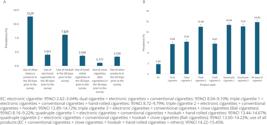
Prevalence of tobacco product use. (A) Prevalence of other tobacco products and electronic cigarettes among adolescents and (B) prevalence of combined use of conventional cigarettes and other tobacco products. National School Health Survey (Pesquisa Nacional de Saúde do Escolhar – PeNSE), 2019.
The combined use of two or more tobacco/nicotine products was verified. So-called dual use (the use of electronic and combustible cigarettes) accounted for 8.56% in the 30 days preceding the survey. Among triple-use patterns, the most frequent combination was electronic cigarettes + conventional cigarettes + hookah: 13.49%. The highest prevalence observed was the combined use of all smoked products (quintuple use plus the "others" category): 14.83%, followed by quadruple use, comprising electronic cigarettes + conventional cigarettes + hookah + straw cigarettes: 14.04% (Figure 1B).
The use of EC showed, in the 13–15-year age group, a prevalence of 2.32% (95%CI 2.09–2.58%), which was higher among those aged 16 and 17 years (3.74%; 95%CI 3.34–4.18%). The prevalence of use of these products among male individuals was 3.33% (95%CI 3.03–3.66%), whereas among females it was 2.33% (95%CI 2.09–2.59%) (Table 1).
Prevalence and factors associated with electronic cigarette use among Brazilian adolescents. National School Health Survey (Pesquisa Nacional de Saúde do Escolhar – PeNSE) 2019.
The bivariate analysis (Table 1) indicated that the highest odds of e-cigarette use were observed among adolescents aged 16–17 years; those who skipped classes without permission; those who reported having no friends; those who experienced feelings of loneliness; those who used other tobacco products, alcoholic beverages, and drugs; those who had friends who smoked in their presence; and those whose parents or guardians were smokers. Living with a parent was identified as a protective factor (Table 2).
Factors associated with electronic cigarette use among Brazilian adolescents, final model. National School Health Survey (Pesquisa Nacional de Saúde do Escolhar – PeNSE) 2019.
In the multivariable analysis, the following factors remained associated with a higher likelihood of EC use: feelings of loneliness (OR=1.25 95%CI 1.05–1.49); feelings of sadness (OR=1.24 95%CI 1.04–1.48); regular tobacco use (OR=2.22 95%CI 1.87–2.63); alcohol consumption (OR=3.94; 95%CI 3.29–4.73%); use of other drugs (OR=2.04; 95%CI 1.67–2.50%); having friends who smoked in their presence (OR=2.53; 95%CI 2.08–3.07%); and having parents or guardians who were smokers (OR=1.17; 95%CI 1.01–1.36%) (Table 2).
DISCUSSION
This study assessed the association between several variables and e-cigarette use among adolescent schoolchildren in Brazil in 2019. Higher odds of use were observed among those who reported feelings of loneliness; experienced feelings of sadness; regularly used tobacco, alcohol, and other drugs; had friends who smoked in their presence; and had parents or guardians who were smokers.
This is the first Brazilian study to report polyuse, or concomitant use, of various forms of tobacco and ESDs. Polyuse of tobacco is defined as the simultaneous use of two or more tobacco products22-36. Among the different patterns of polyuse, dual use (conventional and electronic cigarettes) was the least common, at 8.56%, whereas the combined use of all smoked products was the most prevalent, at 14.83%.
PeNSE reported a prevalence of current use of conventional cigarettes of 6.8%20, whereas the present study found that the use of other tobacco products in the 30 days preceding PeNSE 2019 was 12.39%. In a systematic review and meta-analysis conducted by Barufaldi et al.22, 22 longitudinal studies published between 2016 and 2020 from different countries were identified, totaling 97,659 participants for the outcome of experimentation. The use of EC increased the risk of experimentation with regular (or conventional) cigarettes by nearly three and a half times (relative risk — RR=3.42; 95%CI 2.81–4.15) and increased the risk of current smoking by more than fourfold (RR=4.32; 95%CI 3.13–5.94)22.
Among the analyses of factors associated with EC use, the highest odds of use were observed among individuals who reported feelings of loneliness and experienced feelings of sadness. Tobacco use has a well-established bidirectional relationship with mental health, whereby mental health symptoms predict subsequent smoking, and smoking contributes to the worsening of mental health symptoms23,24. VanFrank et al.25 analyzed self-reported data from the National Youth Tobacco Survey 2024 to examine EC use and symptoms of depression and anxiety among American middle school (grades 6–8) and high school (grades 9–12) students. Among students who had previously used a tobacco product, 42.9% reported current use, while 43.6% of those who had previously used EC reported current ESD use. In 2024, 42.1% of young people who currently used e-cigarettes reported moderate to severe symptoms of depression and anxiety, compared with 21.0% of those who did not use these products25. Among young people who used e-cigarettes, those with moderate to severe symptoms of depression and anxiety (vs. mild symptoms) more frequently reported symptoms of nicotine dependence25. These findings suggest that, similarly to what has been established for conventional cigarettes, a bidirectional relationship may exist between EC use and mental health conditions. However, due to the cross-sectional design, it is not possible to determine whether e-cigarette use preceded the worsening of mental health symptoms, whether worsening mental health symptoms preceded e-cigarette use, or whether both directions are present. This temporal relationship can only be adequately assessed through longitudinal cohort studies; therefore, the associations identified in this study should be interpreted with caution.
The higher likelihood of EC use among adolescents who had friends who smoked in their presence and whose parents or guardians were smokers is consistent with findings reported in the literature. Le26 also identified family and friends as important factors in the initiation of ESD use among adolescents. Bailey et al.27 reported that parental ESD use predicts e-cigarette use among adolescent and young adult offspring, beyond the effect of parental cigarette use. According to Groom et al.28, peer and friend influence constitutes the primary social driver and reinforcer of ESD use.
The promotion and advertising of electronic cigarettes and other tobacco and nicotine products constitute major drivers of their use29. Peer influence was examined by Kim et al.30, who demonstrated that marketing EC-related lifestyles to individuals of the same age group or to peers is a prominent feature of ESD advertising targeting young people on social media platforms. Exposure to EC advertising has been associated with experimentation among adolescents and young adults31. Abreu et al.32 recently published the first investigation of tobacco and nicotine product advertising on social media platforms in Brazil, reporting a high prevalence of content directed at younger audiences, consistent with findings from international studies. PeNSE 2019, as in previous editions, did not include data on exposure of Brazilian adolescents to the promotion and advertising of tobacco/nicotine products on social media platforms.
This investigation identified a higher prevalence of EC use among adolescents who used other psychoactive substances and consumed alcohol. Analysis of comparable indicators among 9th-grade students in PeNSE, conducted in Brazilian capital cities from 2009 to 2019, demonstrated that, despite the legal prohibition of alcohol consumption among adolescents, 67.9% of students had experimented with alcoholic beverages and 25.5% had consumed them in the 30 days preceding the survey33. The literature indicates that early initiation of EC use (defined as use in the ninth grade or earlier) is significantly associated with an increased likelihood of cigarette smoking and engagement in other substance use behaviors22,34. E-cigarette use is generally preceded by alcohol consumption, cigarette smoking, and marijuana use34. Notably, Milicic and Leatherdale35 demonstrated that adolescents who engage in heavy alcohol consumption or marijuana use have a higher likelihood of e-cigarette use compared with cigarette smokers. Audrain-McGovern et al.36 reported that EC and hookah use at age 14 are associated with a 3.6- to 4-fold increase in the OR of initiating and currently using marijuana two years later. Furthermore, early adolescent use of EC and hookah more than doubled the OR of concurrent tobacco and marijuana use during mid-adolescence.
Bertoni and Szklo37 reported data from the 2019 Surveillance of Risk and Protective Factors for Chronic Diseases by Telephone Survey (Vigilância de Fatores de Risco e Proteção para Doenças Crônicas por Inquérito Telefônico – Vigitel), which interviewed 52,443 individuals aged 18 years old or older from the 26 Brazilian state capitals and the Federal District. There was a higher prevalence of current use of ESD among individuals who reported abusive alcohol consumption compared with those who did not drink in this manner (6.33 vs. 1.40%)34. This difference was more pronounced in the 18–24-year age group, an age stratum immediately above that evaluated by PeNSE37.
These data clearly indicate the need for prevention programs that are not limited solely to the domain of tobacco/nicotine control. The theoretical models of school-based tobacco prevention programs are quite diverse, including information-based curricula, social influence approaches, and combined multimodal social skills strategies38. The Education Against Tobacco (EAT) program is an intervention whose effectiveness has already been demonstrated in Brazil39,40.
However, effective public policies for drug use prevention and their articulation with tobacco/nicotine control remain insufficient. In this context, Resolution No. 08 of the National Council on Drug Policies (Conselho Nacional de Políticas sobre Drogas – CONAD) establishes the approval of the National Drug Policy Plan 2022–202741. The Plan is essentially limited to "creating a platform for the identification and subsequent evaluation of the various initiatives carried out in Brazil on prevention"41. In other words, the sole guideline until 2027 is to catalog actions for their subsequent evaluation.
The official publication of PeNSE 2019 investigated how respondents who had already tried cigarettes obtained tobacco products: 37.5% of experimenters reported acquiring them in commercial establishments, such as stores, bars, bakeries, or newsstands20. Cabral et al.42 published a scoping review and a technical report demonstrating the importance of restricting points of sale as a measure to prevent smoking43. They emphasize that, in addition to sales to minors being illegal, the sale of single cigarettes (individual cigarettes rather than packs) still occurs. They also highlight that the multiplicity of points of sale (POS) facilitates access to tobacco products, particularly given their presence near educational institutions42,43. Low-income neighborhoods generally present a higher density of tobacco POS and higher prevalence of tobacco use, contributing to health inequities42,43.
A bill is currently under consideration in the Federal Senate of Brazil that would prohibit the sale of "smoking products" in primary and secondary schools, health services, places where food is sold or consumed, supermarkets, convenience stores, and newsstands44. If approved, it would represent a major advancement in tobacco/nicotine control policies in the country. Greater enforcement of the ban on the sale of ESD is also necessary. Perez et al. identified widespread illegal sales of ESD and other tobacco products on websites, social media, and e-commerce platforms, in defiance of the restrictions established by Brazilian legislation45.
Among the study's limitations, the attribution of causality between the indicators and the investigated outcomes stands out, due to the cross-sectional design, recall bias, and potential misinterpretation of questions in the self-administered questionnaire. There is also selection bias, as the sample is restricted to enrolled students, excluding out-of-school adolescents, a potentially more vulnerable group. However, PeNSE employs a robust methodology that encompasses all major regions, Federative Units, and capital cities, thereby approximating the Brazilian reality.
The study highlighted the association between EC use and mental distress (loneliness and sadness), male gender, and the influence of parents or peers who use these products. Understanding these factors is essential to addressing the increasing popularity of nicotine use among young people. Notably, the findings also underscore the concerning pattern of polytobacco use and its strong correlation with other substances: individuals who use alcohol and illicit drugs were more likely to use electronic cigarettes.
Therefore, efforts to prevent the use of EC should not be limited solely to the domain of tobacco/nicotine control. It is urgent to coordinate tobacco, alcohol, and drug control policies through integrated actions orchestrated by the National Anti-Drug Secretariat. Comprehensive strategies are required, including price and tax increases; monitoring of the illegal sale of loose cigarettes and EC; restrictions on tobacco product sales locations; media campaigns (including social media); and the provision of smoking cessation medications for specific groups of young people within the Unified Health System (Sistema Único de Saúde – SUS). Such measures are essential to reduce the initiation and prevalence of tobacco and nicotine use among young Brazilians.
REFERENCES
-
1 Doll R. Uncovering the effects of smoking: historical perspective. Stat Methods Med Res 1998; 7(2): 87-117. https://doi.org/10.1177/096228029800700202
» https://doi.org/10.1177/096228029800700202 -
2 World Health Organization & WHO Tobacco Free Initiative. Tobacco: deadly in any form or disguise [Internet]. Genebra; 2006 [cited on Mar. 31, 2026]. Available at: https://iris.who.int/handle/10665/43465
» https://iris.who.int/handle/10665/43465 - 3 World Health Organization (WHO). WHO report on the global tobacco epidemic, 2025: warning about the dangers of tobacco. Genebra: WHO; 2025.
-
4 Livingstone-Banks J, Travis N, Conde M, Chen Y (Crystal), Zi P, Jarman H, et al. The impacts of e-cigarette flavours: An overview of systematic reviews. Addiction 2025; 120(7): 1327-44. https://doi.org/10.1111/add.70017
» https://doi.org/10.1111/add.70017 -
5 Zare S, Nemati M, Zheng Y. A systematic review of consumer preference for e-cigarette attributes: Flavor, nicotine strength, and type. PLoS One 2018; 13(3): e0194145. https://doi.org/10.1371/journal.pone.0194145
» https://doi.org/10.1371/journal.pone.0194145 -
6 Drazen JM, Morrissey S, Campion EW. The dangerous flavors of e-cigarettes. N Engl J Med 2019; 380(7): 679-80. https://doi.org/10.1056/NEJMe1900484
» https://doi.org/10.1056/NEJMe1900484 -
7 Kong G, Bold KW, Morean ME, Bhatti H, Camenga DR, Jackson A, et al. Appeal of JUUL among adolescents. Drug Alcohol Depend 2019; 205: 107691. https://doi.org/10.1016/j.drugalcdep.2019.107691
» https://doi.org/10.1016/j.drugalcdep.2019.107691 -
8 Malta DC, Morais ÉAH, Silva AG, Souza JB, Gomes CS, Santos FM, et al. Mudanças no uso do tabaco entre adolescentes brasileiros e fatores associados: Pesquisa Nacional de Saúde do Escolar. Ciên Saúde Coletiva 2024; 29(9): e08252023. https://doi.org/10.1590/1413-81232024299.08252023
» https://doi.org/10.1590/1413-81232024299.08252023 -
9 Agência Nacional de Vigilância Sanitária (Anvisa). Resolução de Diretoria Colegiada da Anvisa: RDC nº 46. Proíbe a comercialização, a importação e a propaganda de quaisquer dispositivos eletrônicos para fumar, conhecidos como cigarro eletrônico. Diário Oficial da União [Internet] 2009 [cited on Mar. 31, 2026]; Seção 1: 45. Available at: https://tabaco.ensp.fiocruz.br/sites/default/files/001426.pdf
» https://tabaco.ensp.fiocruz.br/sites/default/files/001426.pdf -
10 Agência Nacional de Vigilância Sanitária (Anvisa). Resolução da Diretoria Colegiada RDC nº 855, de 23 de abril de 2024 [Internet]. Brasília: Agência Nacional de Vigilância Sanitária; 2024 [cited on Mar. 31, 2026]. Available at: https://anvisalegis.datalegis.net/action/ActionDatalegis.php?acao=abrirTextoAto&link=S&tipo=RDC&numeroAto=00000855&seqAto=000&valorAno=2024&orgao=RDC/DC/ANVISA/MS&cod_modulo=310&cod_menu=9431
» https://anvisalegis.datalegis.net/action/ActionDatalegis.php?acao=abrirTextoAto&link=S&tipo=RDC&numeroAto=00000855&seqAto=000&valorAno=2024&orgao=RDC/DC/ANVISA/MS&cod_modulo=310&cod_menu=9431 -
11 Wetter DW, McClure JB, Moor C, Cofta-Gunn L, Cummings S, Cinciripini PM, et al. Concomitant use of cigarettes and smokeless tobacco: prevalence, correlates, and predictors of tobacco cessation. Prev Med 2002; 34(6): 638-48. https://doi.org/10.1006/pmed.2002.1032
» https://doi.org/10.1006/pmed.2002.1032 -
12 Gilpin EA, Pierce JP. Concurrent use of tobacco products by California adolescents. Prev Med 2003; 36(5): 575-84. https://doi.org/10.1016/s0091-7435(02)00064-6
» https://doi.org/10.1016/s0091-7435(02)00064-6 -
13 Bombard JM, Pederson LL, Nelson DE, Malarcher AM. Are smokers only using cigarettes? Exploring current polytobacco use among an adult population. Addict Behav 2007; 32(10): 2411-9. https://doi.org/10.1016/j.addbeh.2007.04.001
» https://doi.org/10.1016/j.addbeh.2007.04.001 -
14 Centers for Disease Control and Prevention (CDC). Any tobacco use in 13 States --- behavioral risk factor surveillance system, 2008. MMWR Morb Mortal Wkly Rep [Internet] 2010 [cited on Mar. 31, 2026]; 59(30): 946-50. Available at: http://www.ncbi.nlm.nih.gov/pubmed/20689499
» http://www.ncbi.nlm.nih.gov/pubmed/20689499 -
15 Centers for Disease Control and Prevention (CDC). Tobacco use among middle and high school students --- United States, 2000-2009. MMWR Morb Mortal Wkly Rep [Internet]. 2010 [cited on Mar. 31, 2026]; 59(33): 1063-8. Available at: http://www.ncbi.nlm.nih.gov/pubmed/20798668
» http://www.ncbi.nlm.nih.gov/pubmed/20798668 -
16 Fagan P, Moolchan ET, Lawrence D, Fernander A, Ponder PK. Identifying health disparities across the tobacco continuum. Addiction 2007; 102(Supl. 2): 5-29. https://doi.org/10.1111/j.1360-0443.2007.01952.x
» https://doi.org/10.1111/j.1360-0443.2007.01952.x -
17 King BA, Dube SR, Tynan MA. Current tobacco use among adults in the United States: findings from the national adult tobacco survey. Am J Public Health 2012; 102(11): e93-e100. https://doi.org/10.2105/AJPH.2012.301002
» https://doi.org/10.2105/AJPH.2012.301002 -
18 World Health Organization. Report on the Global Tobacco Epidemic, 2008: The MPOWER Package [Internet]. World Health Organization; 2008 [cited on May 23, 2017]. Available at: http://www.who.int/tobacco/mpower/gtcr_download/en
» http://www.who.int/tobacco/mpower/gtcr_download/en -
19 Oliveira MM, Campos MO, Andreazzi MAR, Malta DC, Oliveira MM, Campos MO, et al. Características da Pesquisa Nacional de Saúde do Escolar - PeNSE. Epidemiol Serv Saúde 2017; 26(3): 605-16. https://doi.org/10.5123/S1679-49742017000300017
» https://doi.org/10.5123/S1679-49742017000300017 -
20 IBGE. Pesquisa Nacional de Saúde do Escolar PENSE 2019 [Internet]. IBGE; 2021 [cited on Mar. 31, 2026]. Available at: https://biblioteca.ibge.gov.br/index.php/biblioteca-catalogo?view=detalhes&id=2101852
» https://biblioteca.ibge.gov.br/index.php/biblioteca-catalogo?view=detalhes&id=2101852 -
21 IBGE. Pesquisa Nacional de Saúde do Escolar 2019: questionário do aluno [Internet]. IBGE; 2019 [cited on Mar. 31, 2026]. Available at: https://biblioteca.ibge.gov.br/visualizacao/instrumentos_de_coleta/doc5617.pdf
» https://biblioteca.ibge.gov.br/visualizacao/instrumentos_de_coleta/doc5617.pdf -
22 Barufaldi LA, Guerra RL, Albuquerque RCR, Nascimento A, Chança RD, Souza MC, et al. Risco de iniciação ao tabagismo com o uso de cigarros eletrônicos: revisão sistemática e meta-análise. Ciên Saúde Coletiva 2021; 26(12): 6089-103. https://doi.org/10.1590/1413-812320212612.35032020
» https://doi.org/10.1590/1413-812320212612.35032020 -
23 Farooqui M, Shoaib S, Afaq H, Quadri S, Zaina F, Baig A, et al. Bidirectionality of smoking and depression in adolescents: a systematic review. Trends Psychiatry Psychother 2023; 45: e20210429. https://doi.org/10.47626/2237-6089-2021-0429
» https://doi.org/10.47626/2237-6089-2021-0429 -
24 Park S, Romer D. Associations between smoking and depression in adolescence: an integrative review. J Korean Acad Nurs 2007; 37(2): 227-41. https://doi.org/10.4040/jkan.2007.37.2.227
» https://doi.org/10.4040/jkan.2007.37.2.227 -
25 VanFrank B, Williams TR, Alcantara IC, Hertz M, Al-Shawaf M, Meyers C, et al. E-cigarette use and symptoms of depression and anxiety among US middle and high school students. Prev Chronic Dis 2025; 22: E51. https://doi.org/10.5888/pcd22.250186
» https://doi.org/10.5888/pcd22.250186 -
26 Le TTT. Key risk factors associated with electronic nicotine delivery systems use among adolescents. JAMA Netw Open 2023; 6(10): e2337101. https://doi.org/10.1001/jamanetworkopen.2023.37101
» https://doi.org/10.1001/jamanetworkopen.2023.37101 -
27 Bailey JA, Epstein M, Kosterman R. Parent ENDS use predicts adolescent and young adult offspring ENDS use above and beyond parent cigarette use. Addict Behav 2022; 125: 107157. https://doi.org/10.1016/j.addbeh.2021.107157
» https://doi.org/10.1016/j.addbeh.2021.107157 -
28 Groom AL, Vu THT, Landry RL, Kesh A, Hart JL, Walker KL, et al. The influence of friends on teen vaping: a mixed-methods approach. Int J Environ Res Public Health 2021; 18(13): 6784. https://doi.org/10.3390/ijerph18136784
» https://doi.org/10.3390/ijerph18136784 -
29 U.S. Department of Health and Human Services. Cigarette smoking among young people in the United States. Preventing tobacco use among youth and young adults: a report of the surgeon general [Internet]. 2012 [cited on Mar. 31, 2026]. Available at: https://www.ncbi.nlm.nih.gov/books/NBK99237/pdf/Bookshelf_NBK99237.pdf
» https://www.ncbi.nlm.nih.gov/books/NBK99237/pdf/Bookshelf_NBK99237.pdf -
30 Kim M, Olson S, Jordan JW, Ling PM. Peer crowd-based targeting in E-cigarette advertisements: a qualitative study to inform counter-marketing. BMC Public Health 2020; 20(1): 32. https://doi.org/10.1186/s12889-019-8126-x
» https://doi.org/10.1186/s12889-019-8126-x -
31 Collins L, Glasser AM, Abudayyeh H, Pearson JL, Villanti AC. E-cigarette marketing and communication: how e-cigarette companies market e-cigarettes and the public engages with e-cigarette information. Nicotine Tob Res 2019; 21(1): 14-24. https://doi.org/10.1093/ntr/ntx284
» https://doi.org/10.1093/ntr/ntx284 -
32 Abreu BM, Assimos RDN, Ricardino LM, Frazão JDS, Piras SS, Castello Branco PA, et al. The profile of illegal advertising of tobacco and nicotine products on social networks in Brazil. Tob Prev Cessat 2025; 11. https://doi.org/10.18332/tpc/207095
» https://doi.org/10.18332/tpc/207095 -
33 IBGE. Coordenação de População e Indicadores Sociais. Pesquisa nacional de saúde do escolar: análise de indicadores comparáveis dos escolares do 9o ano do ensino fundamental - municípios das capitais - 2009/2019 [Internet]. IBGE; 2019 [cited on Mar. 31, 2026]. Available at: https://biblioteca.ibge.gov.br/visualizacao/livros/liv101955.pdf
» https://biblioteca.ibge.gov.br/visualizacao/livros/liv101955.pdf -
34 McCabe SE, West BT, McCabe VV. Associations between early onset of e-cigarette use and cigarette smoking and other substance use among US adolescents: a national study. Nicotine Tob Res 2018; 20(8): 923-30. https://doi.org/10.1093/ntr/ntx231
» https://doi.org/10.1093/ntr/ntx231 -
35 Milicic S, Leatherdale ST. The associations between e-cigarettes and binge drinking, marijuana use, and energy drinks mixed with alcohol. J Adolesc Heal 2017; 60(3): 320-7. https://doi.org/10.1016/j.jadohealth.2016.10.011
» https://doi.org/10.1016/j.jadohealth.2016.10.011 -
36 Audrain-McGovern J, Stone MD, Barrington-Trimis J, Unger JB, Leventhal AM. Adolescent e-cigarette, hookah, and conventional cigarette use and subsequent marijuana use. Pediatrics 2018; 142(3): e20173616. https://doi.org/10.1542/peds.2017-3616
» https://doi.org/10.1542/peds.2017-3616 -
37 Bertoni N, Szklo AS. Dispositivos eletrônicos para fumar nas capitais brasileiras: prevalência, perfil de uso e implicações para a Política Nacional de Controle do Tabaco. Cad Saúde Pública 2021; 37(7): e00261920. https://doi.org/10.1590/0102-311X00261920
» https://doi.org/10.1590/0102-311X00261920 - 38 Corrêa PC. Prevenção ao tabagismo. In: Sociedade Brasileira de Pneumologia e Tisiologia (ed.). Tabagismo: prevenção e tratamento. Rio de Janeiro: Di Livros; 2021. p. 393-400.
-
39 Xavier LEDF, Bernardes-Souza B, Lisboa OC, Seeger W, Groneberg DA, Tran TA, et al. A medical student–delivered smoking prevention program, education against tobacco, for secondary schools in Brazil: study protocol for a randomized trial. JMIR Res Protoc 2017; 6(1): e16. https://doi.org/10.2196/resprot.7134
» https://doi.org/10.2196/resprot.7134 -
40 Lisboa OC, Bernardes-Souza B, Xavier LEF, Almeida MR, Corrêa PCRP, Brinker TJ. A smoking prevention program delivered by medical students to secondary schools in Brazil called "Education against Tobacco": Randomized controlled trial. J Med Internet Res 2019; 21(2): e12854. https://doi.org/10.2196/12854
» https://doi.org/10.2196/12854 - 41 Brasil. Ministério da Justiça e Segurança Pública. Conselho Nacional de Políticas sobre Drogas. Resolução CONAD nº 08, de 27 de setembro de 2022. Brasil: Ministério da Justiça e Segurança Pública; 2022.
-
42 Cabral LMS, Giongo MJDS, Jardim FN, Carvalho AM. Restrição da venda de produtos de tabaco apenas em tabacarias: uma medida necessária para o fortalecimento da Política Nacional de Controle do Tabaco. Physis 2023; 33. https://doi.org/10.1590/S0103-7331202333SP101.pt
» https://doi.org/10.1590/S0103-7331202333SP101.pt - 43 Instituto Nacional do Câncer. Experiências e cenários existentes sobre a restrição da venda de produtos de tabaco apenas em tabacarias. Rio de Janeiro: Instituto Nacional do Câncer; 2023.
- 44 Brasil. Projeto de Lei nº 4605, de 2023 - Altera a Lei nº 9.294, de 15 de julho de 1996, para proibir a venda de produtos de tabaco nos locais que especifica. Brasília: Senado Federal; 2023.
- 45 Perez CA, Veloso S, Viegas JR. Venda ilegal de produtos de tabaco e dispositivos eletrônicos para fumar (DEF) na internet. Brasília; 2024.
Edited by
-
SCIENTIFIC EDITOR:
Cassia Maria Buchalla https://orcid.org/0000-0001-5169-5533
The entire dataset supporting the results of this study has been/is publicly available from IBGE.