 Electronic cigarettes: isolated and combined use among Brazilian adolescents in PeNSE 2019
Objective: To analyze the prevalence and factors associated with e-cigarette (EC) use among adolescents aged 13-17 in Brazil, and to describe the pattern of polytobacco/nicotine product use.
Methods: This is a cross-sectional study using data from 159,245 students from the 2019 National School Health Survey (PeNSE). The prevalence of EC use and combined use with other products (conventional cigarettes, hookah, and others) was estimated. The association with sociodemographic variables, mental health, and other substance use was analyzed through multivariate logistic regression, calculating adjusted Odds Ratios (aOR) and their 95% confidence intervals (95% CI).
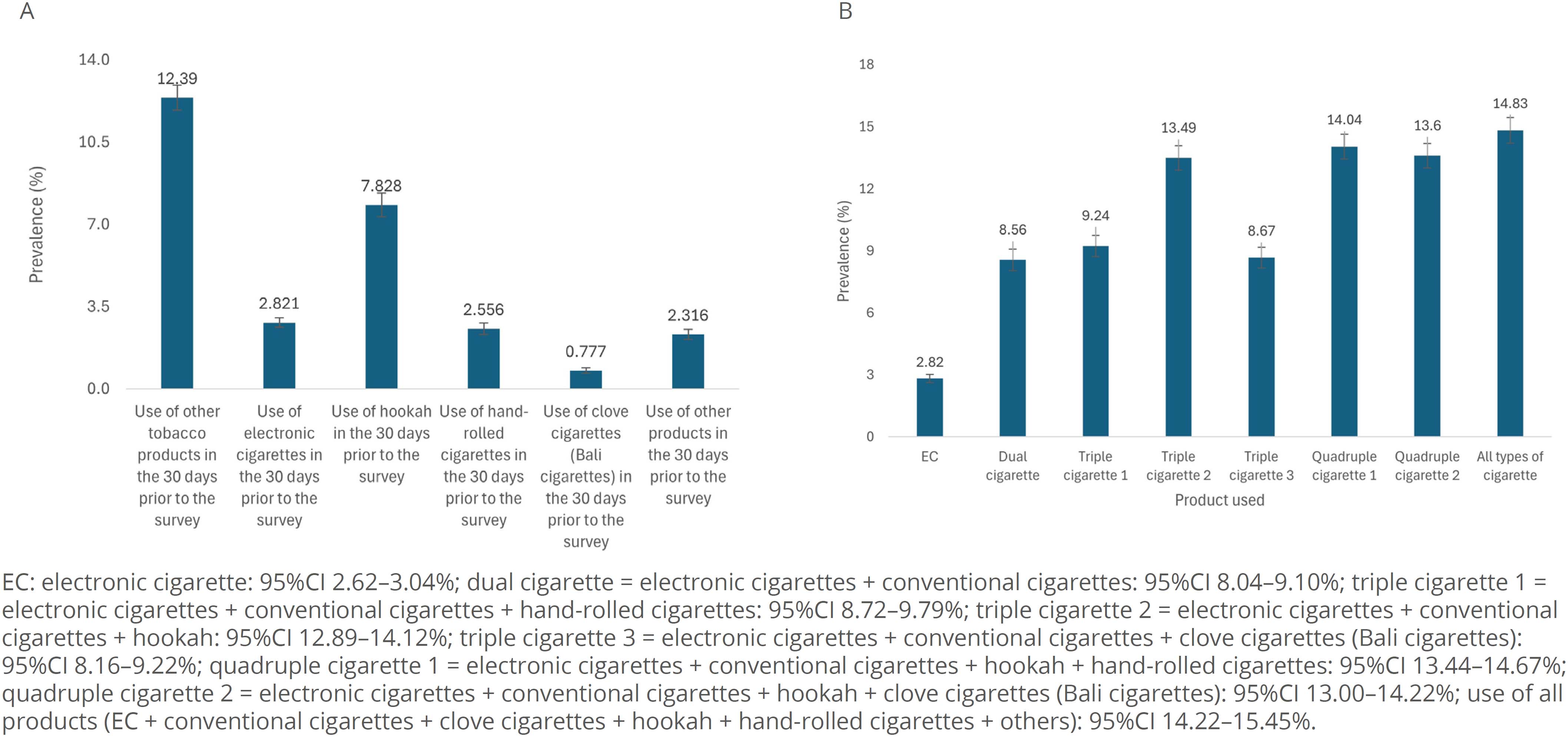
Results: The prevalence of EC use in the last 30 days was 2.82% (95%CI 2.62–3.04). Polytobacco use was significant, with dual use (EC + conventional cigarette) found in 8.56%. The combined use of all smoked products was 14.83%, and quadruple use (EC + conventional + hookah + straw) reached 14.04%. After adjustment, the factors associated with higher odds of EC use were: alcohol consumption (aOR=3.94), having friends who smoke in their presence (aOR=2.53), regular tobacco use (aOR=2.22), other drug use (aOR=2.04), feeling lonely (aOR=1.25), feeling sad (aOR=1.24), and having parents who smoke (aOR=1.17).
Conclusions: E-cigarette use among Brazilian adolescents is associated with mental health factors, social influences, and the concomitant use of alcohol and other drugs. The polytobacco use is a worrying reality among these adolescents. The findings highlight the need for public policies that articulate tobacco control with mental health initiatives and strategies for preventing alcohol/other drug use.
Keywords:
Adolescent; Tobacco use disorder; Nicotiana; Electronic nicotine delivery systems
 Thumbnail