 Variations in shock indicators in arterial blood gas analysis and prognosis in patients with severe trauma
ABSTRACT
Introduction: Shock indicators in arterial blood gas analysis in the context of trauma are essential tools for early diagnosis, when clinical signs are not yet present. The study aimed to analyze the potential prognostic role these indicators may play in the evaluation of trauma patients.
Methods: A retrospective study of 294 patients with severe trauma treated between 2016 and 2025 at a tertiary care hospital. Only patients with blood gas analysis at admission and after 24 hours, activation of the massive transfusion protocol, and exploratory laparotomy were included.
Results: Of the 294 patients, 74 (25.2%) died. Lactate variation was significantly higher in patients who died (p < 0.001). The AUC of the ROC curve was 0.6949, with a sensitivity of 72%, specificity of 98.5%, and positive predictive value of 96.4%. The odds ratio for death in patients with an increase in lactate ≤1 mmol/L was 167.14. In contrast, the variation in base excess was not statistically significant (p = 0.054), with an AUC of 0.5748. There was a weak correlation between the variation in base excess and the outcome (r = -0.1124; p = 0.0063), and a weak to moderate correlation for the variation in lactate (r = 0.2931; p < 0.0001). There was also a significant association between outcome and age, Glasgow Coma Scale score, and laboratory parameters at admission and 24 hours.
Conclusion: Lactate variation in the first 24 hours was associated with mortality in patients with severe trauma and demonstrated superior prognostic performance compared to base excess in this sample, with moderate discriminatory power.
Keywords:
Lactic Acid; Shock; Advanced Trauma Life Support; Arterial Blood Gas Analysis; Blood Coagulation Disorders
RESUMO
Introdução: indicadores de choque na gasometria arterial no contexto de trauma são ferramentas fundamentais para o diagnóstico precoce, quando sinais clínicos ainda não estão presentes. O estudo objetivou analisar o potencial papel prognóstico que esses indicadores podem assumir na avaliação do paciente vítima de trauma.
Métodos: estudo retrospectivo com 294 pacientes vítimas de trauma grave atendidos entre 2016 e 2025 em hospital terciário. Foram incluídos apenas os pacientes com gasometria na admissão e após 24 horas, ativação do protocolo de transfusão maciça e laparotomia exploradora.
Resultados: dos 294 pacientes, 74 (25,2%) evoluíram para óbito. A variação do lactato foi significativamente maior nos pacientes que morreram (p < 0,001). A AUC da curva ROC foi de 0,6949, com sensibilidade de 72%, especificidade de 98,5% e valor preditivo positivo de 96,4%. A odds ratio para óbito em pacientes com aumento do lactato ≤1 mmol/L foi de 167,14. Já a variação do excesso de base não teve significância estatística (p = 0,054), com AUC de 0,5748. Houve correlação fraca entre a variação do excesso de base e o desfecho (r = -0,1124; p = 0,0063), e correlação fraca a moderada para a variação do lactato (r = 0,2931; p < 0,0001). Também houve associação significativa entre desfecho e idade, escore de coma de Glasgow e parâmetros laboratoriais de admissão e 24h.
Conclusão: a variação do lactato nas primeiras 24 horas associou-se à mortalidade em pacientes com trauma grave e apresentou desempenho prognóstico superior ao excesso de base nesta amostra, com capacidade discriminatória moderada.
Palavras-chave:
Ácido Láctico; Choque; Cuidados de Suporte Avançado de Vida no Trauma; Gasometria; Transtornos da Coagulação Sanguínea
INTRODUCTION
Trauma remains a major cause of morbidity and mortality worldwide, accounting for approximately 10% of all recorded deaths globally1 . Among its primary mechanisms of severity, hemorrhagic shock stands out-characterized by hypovolemia, tissue hypoperfusion, and the risk of organ failure and death2. The progression of this condition is associated with significant systemic changes, including metabolic acidosis, coagulopathy, hypothermia, and hypocalcemia-components often described as the lethal triad or lethal diamond of trauma3. In this context, early identification and timely treatment are essential, especially in the first few hours after trauma, a period during which appropriate interventions can alter the prognosis4.
The pathophysiology of shock in trauma involves not only volume loss and reduced oxygen delivery to tissues, but also a systemic inflammatory response, endothelial dysfunction, coagulation abnormalities, and fibrinogen depletion-factors that contribute to clinical severity and the patient’s progressive deterioration5,6. Although clinical signs such as tachycardia and hypotension are traditionally used in the initial assessment, they may have low specificity or appear late, when hypoperfusion is already established. Thus, complementary tools are necessary to aid in the early stratification of severity and monitoring of the therapeutic response.
In this scenario, arterial blood gas analysis plays a key role in the evaluation of trauma patients, particularly through markers such as serum lactate and base excess. These parameters aid in identifying tissue hypoperfusion, estimating the severity of shock, and making prognostic assessments, and can complement the interpretation of initial clinical data8. Lactate, in particular, has been described as a marker associated with the need for blood product transfusion in trauma patients, reinforcing its utility in identifying more severe cases9.
The management of hemorrhagic shock in trauma involves volume resuscitation, blood product transfusion, activation of massive transfusion protocols, and, when indicated, surgical control of bleeding, depending on the severity and the patient’s response to treatment7,10. Despite advances in care and the existence of well-established protocols, patients with severe hemorrhagic shock requiring massive transfusion still have high mortality rates11.
Thus, considering the importance of blood gas markers in the evaluation of severe trauma, the present study aimed to analyze the prognostic performance of the lactate and base excess, not only based on their single values at admission and after 24 hours, but also based on their variations over this interval, in patients with severe trauma who underwent activation of the massive transfusion protocol and exploratory laparotomy.
METHODS
This is a retrospective observational study with descriptive and inferential analysis, performed under the supervision of the Department of Surgery and the Department of Epidemiology and Public Health (DESC) at the São José do Rio Preto School of Medicine. The study involved the analysis of medical records of patients admitted to the Emergency Department of the Hospital de Base de São José do Rio Preto, a Level I trauma center in the state of São Paulo. Data collection was performed with the assistance of the Integrated Technology Center (NTI) team, selecting patients who had an initial trauma assessment form, an admission arterial blood gas analysis, activation of the Massive Transfusion Protocol, exploratory laparotomy due to trauma, and an arterial blood gas analysis 24 hours after the admission test in their medical records, exclusively treated between January 2016 and January 2025. After selecting these patients, the medical records were manually reviewed to ensure that only patients meeting all inclusion criteria had their data used in the statistical analysis. Thus, severe trauma was defined as cases in which the in-hospital course progressed to the point of requiring activation of the Massive Transfusion Protocol and exploratory laparotomy. Therefore, the sample represents a specific subpopulation of patients with severe trauma undergoing highly complex procedures, and the results should not be extrapolated indiscriminately to all trauma patients. This operational definition was adopted to select individuals with greater clinical severity and a higher risk of adverse outcomes. The indication for laparotomy was based on clinical and imaging criteria, including persistent hemodynamic instability, signs of peritoneal irritation, and findings of surgical intra-abdominal injury on CT.
Patients treated outside the study period were excluded, as were medical records lacking essential data for the primary analysis, particularly arterial blood gas results at admission and after 24 hours, patients who did not meet the severe trauma criteria adopted (activation of the massive transfusion protocol and need for trauma-related laparotomy), as well as cases in which it was not possible to calculate the variation in blood gas indicators over the evaluation period.
The requirement for arterial blood gas analysis at admission and after 24 hours may have introduced selection bias, since patients who died early or who did not undergo a second blood gas test could not be included in the analysis of marker variation. Therefore, the results should be interpreted for the population that was actually eligible for serial assessment of blood gas parameters.
The research project was submitted to the Research Ethics Committee of the São José do Rio Preto School of Medicine (CAAE: 79286724.5.0000.5415 and opinion 6.887.619), and the study was initiated only after its approval. The data collected from the electronic medical records of the Hospital de Base de São José do Rio Preto were analyzed anonymously, and the results will be presented in aggregate form, preventing the identification of study participants. We emphasize the research team’s commitment to respecting patient confidentiality, always adhering to the norms and ethics of the process.
After data tabulation, descriptive statistical analysis was performed using calculations of measures of central tendency and dispersion, as well as frequency counts. For the inferential statistical analysis of quantitative variables, the Kolmogorov-Smirnov test was used to verify data normality, followed by the Mann-Whitney test. Frequency comparisons were performed using the Chi-square and Fisher’s Exact Tests.
Correlation analyses were performed using Pearson’s method. The coefficients were classified as follows: r = 0.10 to 0.30 (weak), r = 0.40 to 0.60 (moderate), r = 0.70 to 1 (strong).
Receiver Operating Characteristic (ROC) curve analysis was performed to assess the discriminatory ability of blood gas variables regarding the outcome of death. The findings were interpreted in an associative manner, considering the retrospective design of the study, without inferring causality.
In all analyses, p < 0.05 was considered statistically significant. For statistical analysis, the Statistical Package for the Social Sciences (SPSS, IBM, version 24.0), GraphPad Instat 3.10, and GraphPad Prism 6.07 were used.
RESULTS
In the present study, 294 patients with severe trauma were analyzed between January 2016 and January 2025. Of this total, 82.7% (243) were male, and 17.3% (51) were female, with a mean age of 37.5 ± 0.85 years, ranging from 15 to 83 years.
Regarding neurological assessment, 271 patients had complete data for the Glasgow Coma Scale and its components. The mean total score was 10.54 ± 0.32, with a median of 14 points and a mode of 15, ranging from 3 to 15. The mean eye-opening score was 2.82 ± 0.08, the verbal response score was 3.39 ± 0.11, and the motor response score was 4.33 ± 0.14. The minimum values observed were 1 for each component, with maximums of 4, 5, and 6, respectively.
Analysis of acid-base balance revealed that the base excess at admission had a mean of -6.86 ± 0.29 mEq/L (minimum -27.6 and maximum 3.6), while 24 hours later, the mean was -2.23 ± 0.29 mEq/L (minimum -22.1 and maximum 6.2). The change in base excess between these two time points was, on average, 4.40 ± 0.33 mEq/L, with values ranging from -15.1 to 29.4. Baseline serum lactate had a mean of 4.40 ± 0.18 mmol/L, a median of 3.7, ranging from 0.7 to 26.0. Lactate 24 hours after admission had a mean of 3.74 ± 0.22 mmol/L, a median of 2.4, a minimum of 0.5, and a maximum of 25.0. The change in lactate had a mean of -0.67 ± 0.20 mmol/L, with values ranging from -12.3 to 20.9.
Regarding hospital outcomes, 74.8% (220) of patients were discharged, and 25.2% (74) died during hospitalization.
Based on the analysis of lactate variation in the first 24 hours, a significant association was observed between this marker and clinical variables related to initial severity. Patients with lower Glasgow Coma Scale scores (p < 0.001), including its components-eye opening (p < 0.001), verbal response (p < 0.001), and motor response (p < 0.001) exhibited a smaller reduction or increase in lactate levels over time, indicating poorer perfusion. Similarly, age was also associated with lactate variation (p < 0.001), suggesting an association between older age and reduced normalization of this marker. These findings reinforce the relationship between greater initial clinical severity and persistent tissue hypoperfusion.
When analyzed in relation to hospital outcomes, laboratory parameters related to metabolic and perfusion status showed statistically significant differences between the groups. It was observed that base excess showed a difference both at admission (p < 0.001) and after 24 hours (p < 0.001); however, the variation in this parameter over time did not show a statistically significant difference between the groups (p = 0.054), suggesting lower discriminatory power regarding the outcome.
Regarding lactate, both levels at admission (p < 0.001) and after 24 hours (p < 0.001), as well as the variation in values over this interval (p < 0.001), showed significant differences between the groups, suggesting that the behavior of serum lactate over time is strongly associated with hospital outcome. These results reinforce the role of lactate as a prognostic marker in trauma patients.
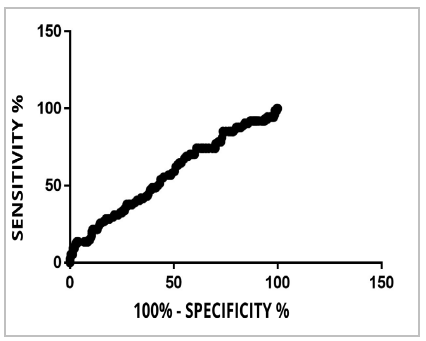
A ROC curve analysis was performed to assess the predictive ability of the variation in base excess and the variation in lactate regarding the outcome of death. The area under the curve (Figure 1) for the variation in base excess was 0.5748 (95% CI 0.4981 to 0.6515) and p = 0.0543, indicating low discriminatory power for the outcome of death in the analyzed sample. However, a negative and weak, yet significant, association was observed between the variation in base excess and the outcome of death (r = −0.1124; p = 0.0063).
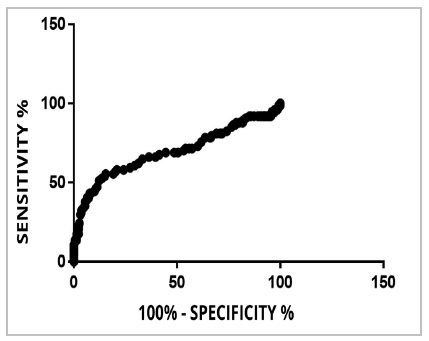
For lactate variation, the area under the curve (Figure 2) was 0.6949 (95% CI 0.6149 to 0.7749) and p < 0.0001, suggesting moderate discriminatory power for the death outcome. Similarly, a weak positive correlation was observed (r = 0.2931; p < 0.0001). When a cutoff value of -1.450 was applied to lactate variation, 115 patients fell below this value (21 deaths, 18.2%, and 94 discharges), while 179 patients were above it (53 deaths, 29.6%, and 126 discharges), suggesting that higher values in lactate variation are associated with a greater probability of death.
Additionally, an analysis was performed considering a clinically relevant cutoff point for lactate behavior between admission and 24 hours, defined by the absence of a significant reduction or an increase of up to 1 mmol/L. In this approach, a statistically significant association with the clinical outcome was observed (p < 0.0001).
Regarding the performance of the clinical cutoff value adopted for lactate levels as a marker associated with death, the observed sensitivity was 72.0% (95% CI 60.46% to 81.79%), and the specificity was 98.48% (95% CI 94.63% to 99.82%). The positive predictive value was 96.43% (95% CI 87.69% to 99.56%), while the negative predictive value was 86.09% (95% CI 79.54% to 91.19%). The positive likelihood ratio was 47.52, suggesting potential clinical utility of the cutoff point evaluated in this sample.
The odds ratio for death in patients with unfavorable lactate behavior, defined by the clinical cutoff adopted for the change between admission and 24 hours, was 167.14 (95% CI 37.856 to 737.98; p < 0.0001). This finding suggests a strong association between the absence of adequate lactate reduction and in-hospital mortality. However, the high magnitude of the odds ratio should be interpreted with caution, considering the retrospective design, the selection of a population with greater severity, and the wide confidence interval.
DISCUSSION
It was observed that patients who progressed to death had significantly higher lactate levels both on admission and after 24 hours, as well as a smaller reduction or increase in values over time, suggesting persistence of the state of tissue hypoperfusion. These findings are widely supported in the literature and reinforce the central role of lactate as a metabolic marker in trauma. According to Wardi et al.13, elevated lactate directly reflects cellular hypoxia and the transition to anaerobic metabolism, being associated not only with initial severity but also with an inadequate response to resuscitation. Studies such as those by Baxter et al.14 and Bellomy and Freundlich15 demonstrate that lactate has greater predictive power for mortality when compared to isolated clinical parameters, such as blood pressure or heart rate, which often change late in the course of shock.
A particularly relevant aspect observed in this study was the role of lactate variation over the first 24 hours, demonstrating that the dynamic assessment of this marker has greater prognostic value than the analysis of isolated values. This observation suggests that the body’s ability to reduce lactate levels over time is directly related to the effectiveness of resuscitation and the reversal of the state of hypoperfusion. The literature supports this concept: Scriven, Battaloglu, Goodwin, and Rothberg16,17,19 demonstrate that serial lactate monitoring allows for the early identification of patients with an inadequate response to treatment, while Qi et al.20 show that lactate variation performs better in predicting mortality compared to single values. In this sense, the persistence of elevated levels or the absence of a significant drop in lactate may indicate resuscitation failure, the need for therapeutic reevaluation, and a higher risk of an unfavorable outcome.
Furthermore, the high odds ratio observed for mortality associated with unfavorable lactate behavior reinforces the magnitude of the association found in this sample. However, this result should be interpreted with caution, as the retrospective design, the selection of patients with greater severity, and the width of the confidence interval may influence the effect estimate. Lactate may also be influenced by multiple factors not directly related to trauma, such as liver dysfunction, catecholamine use, pre-existing metabolic abnormalities, and systemic inflammatory status. Thus, lactate variation should be understood as a complementary tool in prognostic assessment, rather than as an isolated marker for clinical decision-making.
Analysis of the base excess also revealed significant differences between admission values and those after 24 hours, indicating an overall improvement in acid-base status as patients progressed. However, unlike lactate, changes in base excess did not demonstrate significant predictive power for mortality. Although more negative values are associated with greater severity and mortality, as demonstrated by Davis et al.21, the results of this study suggest that base excess has lower sensitivity for detecting dynamic changes related to tissue perfusion. Zander23 highlights that base excess can be influenced by various factors, including mixed acid-base disorders, fluid administration, and therapeutic interventions, which limit its specificity as an isolated marker. Thus, the lower prognostic performance observed in this study may be related to the influence of multiple factors on base excess, which reduces its specificity as an isolated dynamic marker of tissue perfusion.
In contrast, lactate demonstrated more consistent behavior and greater discriminatory power over the first 24 hours, more accurately reflecting the physiological response to resuscitation. Hamed et al.22 and Demir et al.18 also demonstrate that, although base excess is useful in initial assessment and in combined models, its isolated application is limited when compared to lactate. Thus, the findings of the present study suggest better performance of lactate as a dynamic prognostic marker in severe trauma in this sample, especially when analyzed serially.
An association was also observed between lower Glasgow Coma Scale scores and a less favorable lactate profile in the first 24 hours. This finding suggests that greater initial clinical severity may be related to persistent hypoperfusion, reinforcing the link between neurological impairment, metabolic response, and prognosis in severe trauma12.
From a clinical perspective, the results reinforce the potential utility of serial lactate monitoring as an accessible tool for risk stratification in patients with severe trauma, aiding in the identification of an inadequate response to resuscitation and a higher probability of an unfavorable outcome.
Among the study’s limitations are its retrospective design, reliance on the quality of medical record entries, and the inclusion of a selected population with higher severity, comprising patients who underwent activation of the massive transfusion protocol and exploratory laparotomy. Furthermore, the requirement for arterial blood gas analysis at admission and after 24 hours may have introduced a survival bias, since patients who died early or who did not undergo a repeat test were not included in the analysis of variations in these markers. It was also not possible to systematically control for the presence of comorbidities and clinical factors potentially associated with lactate levels and base excesses, such as liver dysfunction, renal failure, diabetes mellitus, cardiovascular diseases, catecholamine use, and other metabolic conditions. Thus, the findings should be interpreted as prognostic associations observed in this specific population, rather than as a causal relationship.
Despite these limitations, the sample size and the consistency of the statistical findings reinforce the relevance of the results presented. The association between lactate variation and in-hospital mortality contributes to strengthening the evidence regarding the utility of serial monitoring of this marker in the prognostic stratification of patients with severe trauma, especially when interpreted in conjunction with other clinical and laboratory data.
CONCLUSION
Changes in lactate levels during the first 24 hours were significantly associated with mortality in patients with severe trauma who underwent the massive transfusion protocol and exploratory laparotomy. Dynamic analysis of this marker showed better prognostic performance than changes in base excess in this sample, although its discriminatory power was moderate. In contrast, the variation in base excess did not show a statistically significant association with the outcome of death. These findings suggest that serial lactate monitoring may aid in risk stratification and in identifying patients with a higher probability of an unfavorable outcome, and should be interpreted in conjunction with other clinical and laboratory data.
ACKNOWLEDGMENTS
The authors thank the Department of Surgery, the Department of Epidemiology and Public Health at the São José do Rio Preto School of Medicine, the São José do Rio Preto Surgical Skills Laboratory, and the team at the Integrated Technology Center for their support in the development of this study. The authors also pay tribute to Manaf Ahmad El Sayed for his example of perseverance and his encouragement of medical and scientific education.
REFERENCES
-
1 Van Veelen MJ, Brodmann Maeder M. Hypothermia in trauma. Int J Environ Res Public Health. 2021;18(16):8719. doi: 10.3390/ijerph18168719.
» https://doi.org/10.3390/ijerph18168719 -
2 Rossaint R, Bouillon B, Cerny V, Coats TJ, Duranteau J, Fernández-Mondéjar E, et al. The European guideline on management of major bleeding and coagulopathy following trauma: sixth edition. Crit Care. 2023;27(1):1. doi: 10.1186/s13054-023-04327-7.
» https://doi.org/10.1186/s13054-023-04327-7 -
3 Debot M, de Beco N, Degroote T, Duhoux T, Gérard F, Piagnerelli M. Trauma-induced hypocalcemia. Transfusion. 2022;62 Suppl 1:S274-S280. doi: 10.1111/trf.16959.
» https://doi.org/10.1111/trf.16959 -
4 Gruen RL, Jacobs IG, Reade MC, Marsh B, Griffin BR, Presneill J, et al. Prehospital tranexamic acid for severe trauma. N Engl J Med. 2023;389(2):127-136. doi: 10.1056/NEJMoa2215457.
» https://doi.org/10.1056/NEJMoa2215457 -
5 Pape HC, Halvachizadeh S, Leenen LPH, Giannoudis PV, Gunst M, Scalea TM, et al. Pathophysiology in patients with polytrauma. Injury. 2022;53(7):2400-12. doi: 10.1016/j.injury.2022.04.009.
» https://doi.org/10.1016/j.injury.2022.04.009 -
6 Zanza C, Romenskaya T, Racca F, Rocca E, Piccolella F, Piccioni A, et al. Severe trauma-induced coagulopathy: molecular mechanisms underlying critical illness. Int J Mol Sci. 2023;24(8):7118. doi: 10.3390/ijms24087118.
» https://doi.org/10.3390/ijms24087118 -
7 Dilday J, Lewis MR. Transfusion management in the trauma patient. Curr Opin Crit Care. 2022;28(6):725-31. doi: 10.1097/MCC.0000000000000992.
» https://doi.org/10.1097/MCC.0000000000000992 -
8 Ozakin E. Lactate and base deficit combination score for predicting blood transfusion need in blunt multi-trauma patients. Ulus Travma Acil Cerrahi Derg. 2022;28(5):599-606. doi: 10.14744/tjtes.2021.02404.
» https://doi.org/10.14744/tjtes.2021.02404 -
9 Zadorozny EV, Paladino L, Sinert R. Prehospital lactate is associated with the need for blood in trauma. Prehosp Emerg Care. 2021;26(4):590-599. doi: 10.1080/10903127.2021.1983096.
» https://doi.org/10.1080/10903127.2021.1983096 -
10 Lier H, Hossfeld B. Massive transfusion in trauma. Curr Opin Anesthesiol. 2024;37(2):117-24. doi: 10.1097/ACO.0000000000001347.
» https://doi.org/10.1097/ACO.0000000000001347 -
11 Jebbia M, Beery PR, Quinn D, McClendon B, Callahan C, Murray T, et al. Predictors of mortality in trauma patients receiving massive transfusion protocol. Am Surg. 2023;89(10):4089-94. doi: 10.1177/00031348231175503.
» https://doi.org/10.1177/00031348231175503 -
12 Collie BL, Emami S, Lyons NB, Ramsey WA, O'Neil CF Jr, Meizoso JP, et al. Survival of in-hospital cardiopulmonary arrest in trauma patients. J Surg Res. 2024;298:379-84. doi: 10.1016/j.jss.2024.03.043.
» https://doi.org/10.1016/j.jss.2024.03.043 -
13 Wardi G, Brice J, Correia M, Liu D, Self M, Tainter C. Demystifying lactate in the emergency department. Ann Emerg Med. 2020;75(2):287-98. doi: 10.1016/j.annemergmed.2019.06.027.
» https://doi.org/10.1016/j.annemergmed.2019.06.027 -
14 Baxter J, Cranfield KR, Clark G, Harris T, Bloom B, Gray AJ. Do lactate levels in the emergency department predict outcome in adult trauma patients? J Trauma Acute Care Surg. 2016;81(3):555-66. doi: 10.1097/TA.0000000000001156.
» https://doi.org/10.1097/TA.0000000000001156 -
15 Bellomy ML, Freundlich RE. Hyperglycemia and elevated lactate in trauma: where do we go from here? Anesth Analg. 2018;126(3):748-9. doi: 10.1213/ANE.0000000000002757.
» https://doi.org/10.1213/ANE.0000000000002757 -
16 Ter Avest E, Griggs J, Wijesuriya J, Russell MQ, Lyon RM. Determinants of prehospital lactate in trauma patients. BMC Emerg Med. 2020;20(1):18. doi: 10.1186/s12873-020-00314-1.
» https://doi.org/10.1186/s12873-020-00314-1 -
17 Scriven JW, Battaloglu E. Continuous lactate monitoring in trauma: systematic review. Prehosp Disaster Med. 2024;39(1):78-84. doi: 10.1017/S1049023X23006623.
» https://doi.org/10.1017/S1049023X23006623 -
18 Demir B, Sasmaz MI, Saglam Gurmen E, Bilge A. Prognostic value of lactate to hematocrit ratio score. Ulus Travma Acil Cerrahi Derg. 2022;28(7):927-32. doi: 10.14744/tjtes.2021.51189.
» https://doi.org/10.14744/tjtes.2021.51189 -
19 Goodwin ML, Rothberg DL. Lactate metabolism in trauma. J Trauma Acute Care Surg. 2014;77(1):182-3. doi: 10.1097/TA.0000000000000162.
» https://doi.org/10.1097/TA.0000000000000162 -
20 Qi J, Bao L, Yang P, Chen D. Comparison of base excess, lactate and pH predicting mortality. BMC Emerg Med. 2021;21(1):80. doi: 10.1186/s12873-021-00465-9.
» https://doi.org/10.1186/s12873-021-00465-9 -
21 Davis JW, Sue LP, Dirks RC, Kaups KL, Kwok AM, Wolfe MM, et al. Admission base deficit is superior to lactate. Am J Surg. 2020;220(6):1480-4. doi: 10.1016/j.amjsurg.2020.10.005
» https://doi.org/10.1016/j.amjsurg.2020.10.005 - 22 Hamed R, Mekki I, Aouni H, Hedhli H, Zoubli A, Maaref A, et al. Base excess usefulness for mortality prediction. Tunis Med. 2019;97(12):1357-61.
-
23 Zander R. Base excess (BE): reloaded. Eur J Med Res. 2024;29(1):281. doi: 10.1186/s40001-024-01796-6.
» https://doi.org/10.1186/s40001-024-01796-6