 Effectiveness of an educational intervention on knowledge about anticoagulant therapy: a quasi-experimental study
ABSTRACT
Objectives: to assess the effectiveness of a nursing education intervention on patients’ knowledge about anticoagulant therapy.
Methods: a quasi-experimental study was conducted with 25 patients using warfarin. The intervention, based on the Self-Care Deficit Nursing Theory and applied using the Supported Self-Care methodology, consisted of remote follow-up with identification of difficulties in self-care, counseling, development of a care plan, assistance, and monitoring of results. Therapeutic knowledge was assessed before and after the follow-up. The results were compared using the Wilcoxon test.
Results: the comparison of knowledge scores before and after the intervention showed an increase from 5.24 to 7.74 (p<0.001). After follow-up, no participant demonstrated insufficient knowledge.
Conclusions: the educational intervention proved effective in increasing knowledge about the treatment. This finding demonstrates the potential of qualified nursing care through telehealth.
Descriptors:
Nursing; Anticoagulants; Knowledge; Health Education; Remote Patient Monitoring.
RESUMO
Objetivos: avaliar a efetividade de uma intervenção educativa de enfermagem no conhecimento dos pacientes sobre a terapia anticoagulante.
Métodos: estudo quase-experimental, realizado com 25 pacientes em uso de varfarina. A intervenção, fundamentada na Teoria Geral do Autocuidado e aplicada pela metodologia do Autocuidado Apoiado, consistiu em um acompanhamento remoto com identificação das dificuldades para o autocuidado, aconselhamento, elaboração de um plano de cuidados, assistência e monitoramento dos resultados. O conhecimento terapêutico foi avaliado antes e após o acompanhamento. Os resultados foram comparados pelo teste de Wilcoxon.
Resultados: a comparação dos escores de conhecimento antes e após a intervenção apontou para um aumento de 5,24 para 7,74 (p<0,001). Após o acompanhamento, nenhum participante demonstrou conhecimento insuficiente.
Conclusões: a intervenção educativa demonstrou efetividade com o aumento do conhecimento sobre o tratamento. Esse achado demonstra a potencialidade de uma assistência de enfermagem qualificada através da telessaúde.
Descritores:
Enfermagem; Anticoagulante; Conhecimento; Educação em Saúde; Monitoramento Remoto de Pacientes.
RESUMEN
Objetivos: evaluar la efectividad de una intervención educativa de enfermería sobre el conocimiento de los pacientes acerca de la terapia anticoagulante.
Métodos: se realizó un estudio cuasiexperimental con 25 pacientes que utilizaban Warfarina. La intervención, basada en la Teoría General del Autocuidado y aplicada mediante la metodología de Autocuidado Asistido, consistió en seguimiento remoto con identificación de dificultades en el autocuidado, asesoramiento, elaboración de un plan de cuidados, asistencia y monitorización de resultados. Se evaluó el conocimiento terapéutico antes y después del seguimiento. Los resultados se compararon mediante la prueba de Wilcoxon.
Resultados: la comparación de las puntuaciones de conocimiento antes y después de la intervención mostró un aumento de 5,24 a 7,74 (p<0,001). Tras el seguimiento, ningún participante demostró conocimientos insuficientes.
Conclusiones: la intervención educativa resultó eficaz para aumentar el conocimiento sobre el tratamiento. Este hallazgo demuestra el potencial de la atención de enfermería cualificada mediante la telemedicina.
Descriptores:
Enfermería; Anticoagulante; Conocimiento; Educación en Salud; Monitorización Remota de Pacientes.
INTRODUCTION
The prescription of oral anticoagulants (OACs) has been increasing significantly in recent years, coinciding with a growing prevalence of cardiovascular conditions that commonly present with coagulopathies(1,2). These drugs work by increasing clotting time, but their main side effect is the occurrence of hemorrhagic events, which requires careful management of their therapy(3).
Warfarin is a vitamin K antagonist anticoagulant widely used due to its low cost, in addition to clinical factors that contraindicate the use of newer anticoagulants(4). However, the narrow therapeutic range of this drug, as well as its greater predisposition to drug and food interactions, makes outpatient monitoring of patients essential for monitoring plasma coagulation time, represented by the International Normalized Ratio (INR), in addition to dosage adjustments(1).
Several factors hinder a patient’s ability to reach and maintain a therapeutic INR range, such as genetics, socioeconomic and educational level, clinical conditions, and factors related to individuals’ behavior(5,6). From a behavioral standpoint, noteworthy factors include the decision to adhere to medication, forgetting doses, dietary restrictions, cessation of alcohol consumption, vigilance regarding interactions with other drugs, and frequent monitoring(7). Therefore, understanding the importance of warfarin treatment and its specificities is one of the essential elements for its success.
However, it is common to find inadequate levels of knowledge among patients treated with warfarin(6), a factor that can lead to ineffective adherence to treatment(8). In this scenario, the main knowledge gaps for these patients relate to what to do if a dose is missed, the consequences of an INR higher or lower than the target, identification of complications, and uncertainty about food and drug interactions(7).
Considering the complexity of managing anticoagulant treatment, nurses’ role is undeniably relevant in promoting self-care through health education. This professional’s training includes developing skills and competencies focused on health education for patients and their families, utilizing elements such as communication, awareness, and autonomy to fulfill the role of educator(9,10).
Despite the emphasis on the role of nursing in conducting educational actions to change risky behaviors, promote health, and manage therapy, in the last five years, no published studies have been found that assess the effectiveness of educational interventions conducted by nurses on clinical outcomes in the context of oral anticoagulation. However, some research indicates that educational interventions applied by healthcare professionals yield positive results in therapeutic knowledge, adherence, treatment satisfaction, and coagulation control(11-14).
Some strategies used in public health to address chronic conditions may be useful in this context, such as Supported Self-Care (SSC), which aims to systematically provide educational and support interventions to increase patients’ confidence and skills in managing their health problems and their respective treatments(15). This process involves regular monitoring of individuals, setting goals, and developing a personalized care plan(16).
In this sense, the Educational Support System (ESS), addressed in the Nursing Systems Theory, which comprises Dorothea Orem’s Self-Care Deficit Nursing Theory (SCDNT), corroborates the proposal to encourage and guide patients’ self-care. In this theory, the ESS considers individuals’ preserved self-care capacity, directing nursing care towards supporting and guiding the patient in performing specific care tasks(17).
Therefore, considering the deficiencies in knowledge about OAC therapy and its unfavorable clinical consequences, the use of educational interventions becomes pertinent, as well as assessing their effect on clinical outcomes of anticoagulation. This study aims to assess the effectiveness of a nursing educational intervention in patients’ knowledge about anticoagulant therapy.
OBJECTIVES
To assess the effectiveness of a nursing education intervention on patients’ knowledge about anticoagulant therapy. The hypothesis considered in this study is that SSC via teleconsultation increases knowledge about anticoagulant therapy in patients chronically using warfarin.
METHODS
Ethical aspects
The research was conducted following the ethical guidelines for research involving human subjects, having been approved by the Universidade de Pernambuco Research Ethics Committee and by the Brazilian Registry of Clinical Trials - RBR-3ms5dgd.
Potential adverse events associated with the intervention included discomfort or embarrassment in answering certain questions about personal aspects and the treatment. In order to minimize these discomforts, the researchers prepared to adopt measures such as interrupting the interview and providing immediate and subsequent emotional support. Despite this, none of the patients interviewed and followed up in the research presented any adverse event.
Study design, period and location
This is a quasi-experimental, single-group before-and-after study without allocation, where the unit of analysis was the participant in paired measures. There was no blinding during participation, intervention application, or analysis. The description of this study was based on the Enhancing the Quality and Transparency of Health Research Network Transparent Reporting of Evaluations with Nonrandomized Designs protocol, used in public health interventions with non-randomized designs(18). The investigation was conducted with patients from the oral anticoagulation outpatient clinic of a reference cardiology hospital in the state of Pernambuco from September 2022 to August 2023.
Sample, inclusion and exclusion criteria
The sample consisted of 25 individuals undergoing warfarin treatment. Sample size calculation was performed using the paired single-sample t-test. An effect size of 20% after the intervention was considered, with a standard deviation of 1.8 obtained from a previous study(19), a standardized effect size of 0.90, a two-tailed test with 80% power and a significance level of 5%, totaling 11 patients. Adding at least 25% to account for losses to follow-up, a minimum of 15 participants would be required.
Inclusion criteria comprised being at least 18 years old, undergoing warfarin treatment, being followed up at the anticoagulation outpatient clinic, obtaining an unsatisfactory score (≤8) on the knowledge scale about anticoagulant treatment, presenting a satisfactory cognitive assessment according to the Mini-Cog© test application(20), and having a landline or mobile phone available for remote follow-up. Exclusion criteria comprised pregnant women, any communication barriers that would limit the intervention, memory impairment, and a desire to withdraw from follow-up.
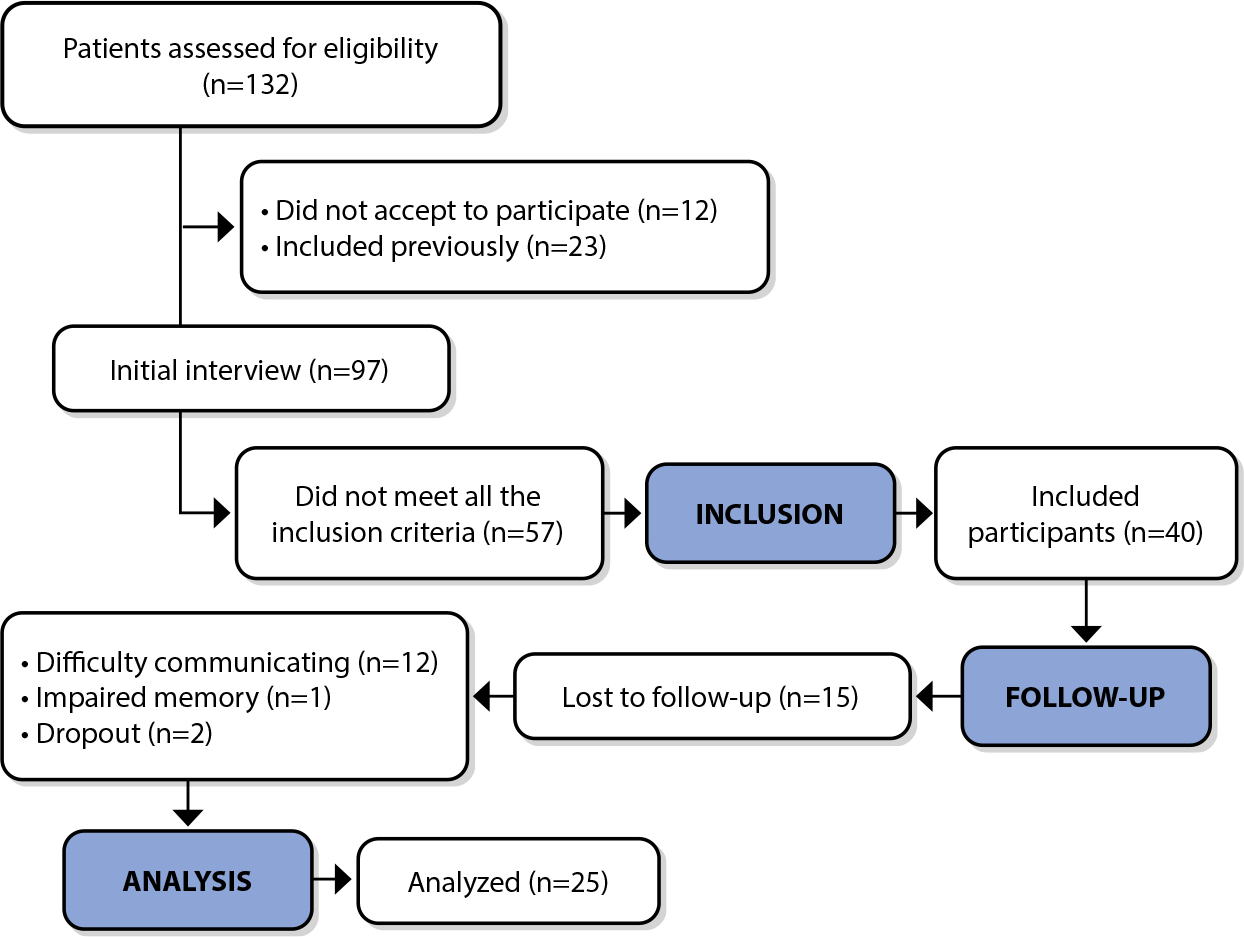
The sampling process was non-probabilistic, based on convenience, considering that there were few patients at the study site who met all the inclusion criteria. A total of 132 patients were approached, of whom 97 proceeded to an initial interview. Of these, 40 were included in the study after meeting all the inclusion criteria. During follow-up, 15 patients were excluded. Figure 1 presents the participant flowchart.
Study protocol
Recruitment and presentation of Informed Consent Form and other instruments
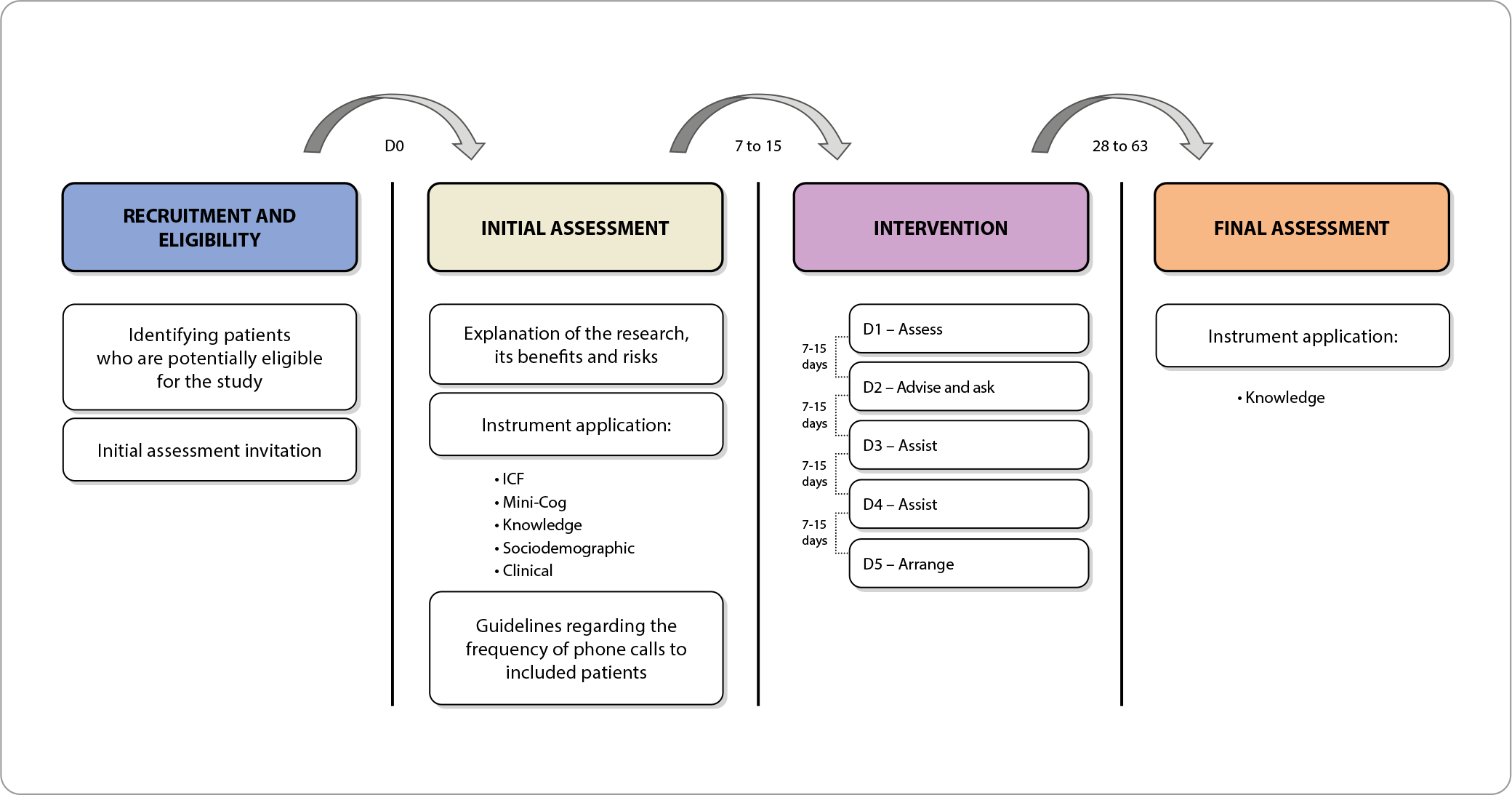
To recruit participants, active outreach was conducted weekly at the hospital’s anticoagulation clinic. After explaining the study, participants were invited to participate, accepting the offer by signing the Informed Consent Form, followed by an assessment of their level of knowledge about anticoagulant treatment, as well as a cognitive assessment. A sociodemographic and clinical questionnaire was administered to patients who met all inclusion criteria.
During recruitment, participants were instructed on how to receive phone calls as part of the study intervention. They were asked about their preferred day and time for this phone contact, as well as their availability to use WhatsApp to receive messages or calls (Figure 2).
Educational intervention and outcome reassessment
The intervention took place via telephone contact and was conducted by a nurse trained to apply an SSC promotion script for patients chronically using OACs, which had undergone prior content validity with specialists. A smartphone with a SIM card exclusively for research use was employed. Contact attempts were always made in a quiet environment, on the days and times indicated by participants, and when contact was unsuccessful, the attempt was repeated once more on the same day.
During the educational intervention, efforts were made to respect each individual’s beliefs and prior knowledge, as well as the self-care deficits identified during the assessment phase, in order to meet their real needs. From this perspective, the application of SSC protocol was guided by the ESS, and included activities such as teaching, guiding, supervising, and providing a supportive environment for the development of self-care in anticoagulant treatment, which are strategic axes in Systems Theory(17).
Furthermore, the educational intervention actions were structured for systematic application based on the 5As method. The first day of intervention (D1) corresponded to the self-care assessment stage, with an estimated duration of about seven minutes; on the second day (D2), the counseling and agreement stages were applied, with a time of approximately 20 minutes; the third and fourth days of intervention (D3 and D4) were planned to offer assistance with difficulties in complying with the agreement made on the second day, with an approximate duration of 15 minutes each day; finally, on the last day of follow-up (D5), the self-care plan was monitored with a new knowledge assessment, with a telephone call time of approximately eight minutes. In total, five completed calls were made to each participant, with an estimated duration of 65 minutes, distributed among the completed phone calls.
Chart 1 presents the actions taken to promote self-care among patients using OACs.
Supported Self-Care Actions for anticoagulated patients according to the 5As method and intervention days, Recife, Pernambuco, Brazil, 2023
The interval adopted between each call/intervention day was seven to 15 days, considering that some contact attempts were unsuccessful. Thus, the mean follow-up time for participants was 38 days (±8.5), with the shortest and longest follow-up times being 28 and 63 days, respectively.
In addition to phone calls to study participants, they also received WhatsApp or SMS messages, and were asked about their preference for written or audio messages. The content of these messages was developed by two specialist nurses with experience in the anticoagulation clinic. The messages were further adapted for better patient comprehension, after assessment and suggestions from an undergraduate nursing student.
The messages were personalized according to the self-care difficulties identified in each individual on the first day of intervention (D1). This communication via message allowed for the reinforcement of information received by participants during counseling, focusing on the areas most difficult to understand. The messages also reinforced the goals agreed upon in the self-care plan, as well as serving as a means of motivational support for self-care continuity.
During the follow-up period, each participant received two weekly scheduled messages, with a minimum interval of three days. Individuals frequently responded to the messages sent to them or sent messages to clarify doubts or report difficulties. In these situations, they received a response within 24 hours.
Knowledge assessment was conducted using an instrument that measures this outcome in patients using OACs, which was duly translated and validated for Portuguese(21). The questionnaire consists of 11 questions, with the answer options being “does not know”, “knows partially”, or “knows”, with values of zero, half a point, and one point assigned to each answer, respectively. Based on the quantification and summation of the answers, the following classification was obtained: insufficient knowledge (up to four points); regular knowledge (from five to eight points); and adequate knowledge (above eight points).
Analysis of results and statistics
For statistical processing, the Statistical Package for the Social Sciences version 26.0 (IBM Corp., Armonk, NY, USA), RStudio 2025.09.0, and STATA 12.0 were used. Descriptive statistical tools were employed. Differences in baseline characteristics between retained and excluded individuals were assessed using the chi-square test for categorical variables and the Mann-Whitney test for continuous variables.
For comparison of paired means, the Bootstrap method was used to increase the robustness of the analysis and minimize possible sampling biases. The 95% Confidence Intervals for the difference between the means were estimated considering the resampling procedure using Bootstrap BCa (Bias-Corrected and Accelerated), which provides greater statistical precision, especially in small sample sizes. The magnitude of the intervention effect was expressed by Cohen’s d for paired data, a standardized indicator of the practical relevance of the observed differences. The 95% Confidence Interval for Cohen’s d was also calculated based on Bootstrap BCa, ensuring greater reliability of the estimates.
To assess the marginal homogeneity between knowledge categories before and after the intervention, the Stuart-Maxwell test was used. This test allows us to verify whether the marginal distributions of categories remain equivalent over time. All tests were applied with a significance level of 5% (p-value ≤ 0.05), and no additional analyses were performed.
RESULTS
Twenty-five patients on chronic warfarin therapy were followed. When comparing sociodemographic characteristics between retained (n=25) and excluded (n=15) patients, no statistically significant differences were observed regarding mean age (58 years ± 11.7 versus 63.60 ± 13.27 years, p=0.154), female sex (60% versus 46.7%; p=0.412), non-white race (80% versus 93.3%; p=0.381), marital status in a conjugal union (68% versus 66.7%; p=1.000), absence of employment (92% versus 73.3%; p=0.174), mean education (6.72 ± 3.47 versus 7.73 ± 5.87 years of study; p=0.622) and mean monthly per capita family income (561.44 ± 351.50 versus 717.02 ± 612.72 reais; p=0.705).
Concerning baseline clinical variables, homogeneity was also observed between both groups, such as medication costs (92% versus 93.3%; p=1.000), atrial fibrillation as the most frequent clinical indication for anticoagulation (56% versus 60%; p=0.804), and median treatment time (4 [p25=2; p75=9] versus 3 [p25-2; p75-5] years; p=0.287), episodes of hemorrhagic (28% versus 33.3%; p=0.736) or thromboembolic (20% versus 26.7%; p=0.705) complications, self-reported treatment interruption (24% versus 20%; p=1.000), receiving professional guidance on anticoagulant therapy (56% versus 53.3%; p=0.870), doubts about treatment (36% versus 53.3%; p=0.283), and mean knowledge score about treatment (5.24 ± 1.38 versus 4.63 ± 2.01%; p=0.249).
Participants’ knowledge was assessed at two points in time when this outcome was measured (before and after the intervention). Table 1 shows the total knowledge, partial knowledge, and lack of knowledge about points relevant to anticoagulant treatment. The most frequent knowledge deficit before the intervention was regarding the medication’s side effects, the necessary care during treatment, the target INR value, factors that interfere with INR stability, the consequences of not using the medication, as well as the clinical indication for treatment. Follow-up led to lower percentages of knowledge deficit.
Patients’ knowledge about oral anticoagulant therapy before and after the intervention (N = 25), Recife, Pernambuco, Brazil, 2023
As shown in Table 2, the mean scores of participants’ knowledge about treatment increased by more than two points after the nursing intervention. This difference showed statistical significance (p<0.001) with a significant effect size (d = 1.53; 95%CI: 1.07 - 2.04). When comparing the outcome categories before and after the intervention, a positive shift between knowledge categories is observed (from insufficient to regular and satisfactory). The Stuart-Maxwell marginal homogeneity test showed a statistically significant difference between the marginal distributions of the two time points (p<0.001), indicating that participants’ knowledge profile underwent a relevant change over time.
Knowledge score regarding anticoagulant therapy before and after the intervention (N = 25), Recife, Pernambuco, Brazil, 2023
Some of the self-care actions suggested to patients are: organizing their daily routine, as well as using alarms and family help to avoid forgetting to take medication; increasing knowledge about food, drug, and herbal medicine interactions; regular INR monitoring with in-person consultations or teleconsultations; meal planning; using protective equipment in activities with a risk of cuts or bleeding; and dialogue with the healthcare team to seek possible alternatives for health treatment in the face of financial difficulties in acquiring medications.
DISCUSSION
In the results regarding knowledge of aspects related to treatment with OACs, it was observed that, after the intervention, adequate knowledge was achieved in most areas, with particular emphasis on increased knowledge about the side effects of the medication and the necessary precautions when using OACs.
When comparing the mean outcome score before and after the intervention, a positive impact on therapeutic knowledge is observed. A quasi-experimental study, conducted in an anticoagulation outpatient clinic, found that, after follow-up with periodic visits and counseling on anticoagulant medication, there was a significant increase in the knowledge score about treatment(19).
Remote educational interventions using technology have also proven to be viable options with a significant impact on patients’ knowledge of their therapy. A systematic review showed improved knowledge levels among patients who received educational and self-management instructions in the context of anticoagulation through mobile applications on smartphones or tablets(11).
Additionally, it is worth highlighting the prominence that telehealth has gained, especially after the COVID-19 pandemic, demonstrating its ability in many situations to guarantee the continuity of healthcare for patients remotely. This resource is capable of generating positive impacts on clinical outcomes, as well as more flexible access to the healthcare system. In this context, there are projections for the continued use of telehealth and its likely expansion as a complementary format to in-person patient care(22).
Therefore, reports of the use of technologies applied to anticoagulant treatment have become increasingly common, with satisfactory results both in healthcare continuity and in improving levels of knowledge, therapeutic adherence, satisfaction, and clinical outcomes. These technological approaches are implemented through health education programs via teleconsultation, text messaging, and mobile applications(12,13).
Strategies for repeating advice within the context of health education, including through text messages, have been cited in the literature as ways to better consolidate patients’ knowledge(6,12). In this way, it can be inferred that both the telephone reinforcement of instructions on warfarin treatment and the periodic weekly sending of text messages to patients in this study were likely contributing factors to achieving more satisfactory levels of knowledge.
From this perspective, an educational experience and active patient participation, including discussion of negative experiences with medication and treatment, can strengthen knowledge and adherence to anticoagulant therapy(8).
Regarding the literature’s approach to SSC in anticoagulation, international studies show that the way this topic is presented generally focuses on self-care for the purpose of self-testing and self-management of medication doses(14,23). This differs from the Brazilian approach, whose focus on promoting self-care is more directed towards general care without involving more complex aspects of treatment(24).
Regarding the systematic use of SSC for anticoagulated patients, two studies with this approach were found. A study conducted in Turkey used systematized SSC within the 5As method as part of a home care program developed by nurses for patients using warfarin, obtaining positive effects on self-management and patient satisfaction(14).
Another study was developed in Brazil, corresponding to the construction and validity of a protocol to promote behavioral change in patients using warfarin, seeking their active participation in self-care. Although it did not cite the 5As method as its basis, the protocol created includes some of the stages of that method, such as patient assessment with problem definition, goal setting, development of a care plan, and assistance in achieving the goals agreed upon in the plan(24).
From the perspective SCDNT, Orem mentions the specific self-care requirements in the face of health deviations. This specificity was designed for people who have some illness, disability, or disorder with particular care needs(17). From this perspective, it is understood that people with chronic health conditions commonly require a specific self-care routine, considering the demands that arise during the course of their illness(25). Patients on anticoagulants also require specific care, given the complexity of their treatment.
Furthermore, it is important to highlight the importance of the bond between the healthcare team, individuals, and their family as a guiding thread within the process of promoting self-care and providing educational support from nurses to achieve favorable outcomes. Therefore, building a bond implies responsibility between professionals and individuals, resulting from the coexistence of elements such as effective communication, establishing trust, and fostering affective relationships(25).
Study limitations
This study had some limitations regarding sample size, as the researchers encountered saturation of eligible individuals within the studied population, in addition to the infeasibility of randomizing the sample.
Furthermore, it is pertinent to highlight the biases that can affect the study’s internal validity. Some of these biases are: regression to the mean, minimized by the presence of varying initial knowledge scores among patients; test effect, attenuated by the minimum time interval of four weeks between assessments and by the conceptual nature of the questionnaire; fidelity in the implementation of the intervention, which was ensured by following a protocol for conducting the educational intervention and by external monitoring; and history and maturation bias, which may have influenced the positive results of the intervention, although the short follow-up time suggests a low impact on participants’ natural maturation.
With regard to external validity, the generalizability of results must consider the intervention frequency and standardization according to protocol, the language of the educational intervention adapted to the education and local culture, access to technological resources for communication, and the conduct of the study by a team linked to a reference hospital in cardiology, whose support is different from that offered in less complex services.
In light of the above, it is recommended that further studies with randomized designs be conducted in more than one healthcare facility to test the application of SSC in anticoagulated patients and its clinical benefits.
Contributions to health and nursing
The findings of this research, regarding the positive impact of SSC via teleconsultation conducted by a professional nurse, may serve as a basis for the application and improvement of this care model in the outpatient follow-up of individuals using OACs, as well as in the context of other chronic conditions.
Furthermore, they expand the possibilities for nursing practice through communication technologies, enabling the provision of qualified care while optimizing available resources. Maintaining and strengthening the bond with patients through telehealth has therefore highlighted the potential of this tool in assisting individuals undergoing anticoagulant treatment.
CONCLUSIONS
The nursing education intervention had a positive impact on patients’ knowledge about anticoagulant therapy, indicating its effectiveness. Therefore, the study points to the potential for success in conducting health education programs, led by nurses and carried out remotely with anticoagulated patients.
-
FUNDING
The work was extracted from the Thesis entitled “Teleconsultation-supported Self-Care and its Effect on Knowledge and Adherence to Oral Anticoagulant Treatment,” which was presented to the Associated Postgraduate Program in Nursing at the University of Pernambuco and the State University of Paraíba, in 2023. Its execution was supported by the Coordination for the Improvement of Higher Education Personnel - Brazil (CAPES) - Finance Code 001.
AVAILABILITY OF DATA AND MATERIAL
The research data are available within the article.
REFERENCES
-
1 Olaya MQX, Meneses SJG, Ortiz RA, Tor BCM, Silvera G, Ormaechea GG, et al. Adherencia y calidad de vida en pacientes con fibrilación auricular e insuficiencia cardíaca anticoagulados con Apixaban. Rev Urug Med Interna. 2023;8(3): 59-69. https://doi.org/10.26445/08.03.6
» https://doi.org/10.26445/08.03.6 -
2 Pereyra A, Silvera G, Eiraldi R, Chamorro C, Florio L, Vázquez M, et al . Estudio URUguayo de intervención educativa potenciada en pacientes anticoagulados con WArfarina en una unidad de Insuficiencia cardíaca (URUWAI). Rev Urug Med Interna. 2024;9: e308. https://doi.org/10.26445/09.01.16
» https://doi.org/10.26445/09.01.16 -
3 Aynalem M, Adane T, Getawa S. Magnitude of coagulation abnormalities and associated factors among patients with heart diseases at the University of Gondar Comprehensive Specialized Hospital. Vasc Health Risk Manag. 2022;18:617-627. https://doi.org/10.2147/VHRM.S371912
» https://doi.org/10.2147/VHRM.S371912 -
4 Praxedes MFDS, Silva JLPD, Cruz AJAD, Viana CC, Barbosa HC, Guimarães NS, et al. Assessment of the relationship between the level of patient knowledge on warfarin therapy and the quality of oral anticoagulation: a systematic review and meta-analysis. PLoS One. 2023;18(8):e0289836. https://doi.org/10.1371/journal.pone.0289836
» https://doi.org/10.1371/journal.pone.0289836 -
5 Tolga D, Fatih L. The short-term effect of the COVID-19 pandemic on the management of warfarin therapy. Kardiologiia. 2021;61(7):55-59. https://doi.org/10.18087/cardio.2021.7.n1593
» https://doi.org/10.18087/cardio.2021.7.n1593 -
6 Feldeisen D, Alexandris-Souphis C, Haymart B, Gu X, Perry L, Watts S, et al. Higher OAK (Oral Anticoagulation Knowledge) score at baseline associated with better TTR (Time in Therapeutic Range) in patients taking warfarin. J Thromb Thrombolysis. 2023;55(1):141-8. https://doi.org/10.1007/s11239-022-02718-1
» https://doi.org/10.1007/s11239-022-02718-1 -
7 Ahmed H, Saddouh EA, Abugrin ME, Ali AMM, Elgdhafi EO, Khaled A, et al. Association between Patients’ Knowledge and Adherence to Anticoagulants, and Its Effect on Coagulation Control. Pharmacology. 2021;106(5-6):265-274. https://doi.org/10.1159/000511754
» https://doi.org/10.1159/000511754 -
8 Park S, Jang I. Factors affecting medication adherence in patients with mechanical heart valves taking warfarin: the role of knowledge on warfarin, medication belief, depression, and self-efficacy. Int J Environ Res Public Health. 2021;18(10):5214. https://doi.org/10.3390/ijerph18105214
» https://doi.org/10.3390/ijerph18105214 -
9 Ferreira PBP, Porto IS, Santo FHE, Figueiredo NMA, Enders BC, Cameron LE, et al. Health education for hospitalized patient in nursing care: a conceptual analysis. Rev Bras Enferm. 2022;75(2):e20200459. https://doi.org/10.1590/0034-7167-2020-0459
» https://doi.org/10.1590/0034-7167-2020-0459 -
10 Khazhymurat A, Paiyzkhan M, Khriyenko S, Seilova S, Baisanova S, Kuntuganova A, et al. Health education competence: an investigation of the health education knowledge, skills and attitudes of nurses in Kazakhstan. Nurse Educ Pract. 2023;68:103586. https://doi.org/10.1016/j.nepr.2023.103586
» https://doi.org/10.1016/j.nepr.2023.103586 -
11 Jang I. A systematic review on mobile health applications’ education program for patients taking oral anticoagulants. Int J Environ Res Public Health. 2021;18(17):8902. https://doi.org/10.3390/ijerph18178902
» https://doi.org/10.3390/ijerph18178902 -
12 Souza-Silva MVR, Domingues MLP, Chagas VS, Pereira DN, Sá LC, Almeida MSS, et al. Implementation of a text messaging intervention to patients on warfarin therapy in Brazilian primary care units: a quasi-experimental study. BMC Prim Care. 2022; 23(1):54. https://doi.org/10.1186/s12875-022-01647-5
» https://doi.org/10.1186/s12875-022-01647-5 -
13 Zhu Z, Li C, Shen J, Wu K, Li Y, Liu K, et al. New internet-based warfarin anticoagulation management approach after mechanical heart valve replacement: prospective, multicenter, randomized controlled trial. J Med Internet Res. 2021;23(8):e29529. https://doi.org/10.2196/29529
» https://doi.org/10.2196/29529 -
14 Yıldırım JG, Bayık Temel A. The effect of nurse home-support program on self-management of patients receiving oral anticoagulation (Warfarin) Therapy. Florence Nightingale J Nurs. 2020;28(1):13-22. https://doi.org/10.5152/FNJN.2020.19020
» https://doi.org/10.5152/FNJN.2020.19020 -
15 Mendes EV. O cuidado das condições crônicas na atenção primária à saúde: o imperativo da consolidação da Estratégia da Saúde da Família [Internet]. Brasília (BR): Organização Pan-Americana da Saúde; 2012 [cited 2022 Jan 08]. 512p. Available from: https://bvsms.saude.gov.br/bvs/publicacoes/cuidado_condicoes_atencao_primaria_saude.pdf
» https://bvsms.saude.gov.br/bvs/publicacoes/cuidado_condicoes_atencao_primaria_saude.pdf -
16 Batista AFMB, Nóbrega VM, Fernandes LTB, Vaz EMC, Gomes GLL, Collet N. Self-management support of adolescents with type 1 Diabetes Mellitus in the light of healthcare management. Rev Bras Enferm. 2021; 74(3):e20201252. https://doi.org/10.1590/0034-7167-2020-1252
» https://doi.org/10.1590/0034-7167-2020-1252 -
17 Nascimento TF, Almeida GMF, Bello MP, Silva RPL, Fontes CMB. Coronavirus infections: health care planning based on Orem’s Nursing Theory. Rev Bras Enferm. 2021; 74:e20200281. https://doi.org/10.1590/0034-7167-2020-0281
» https://doi.org/10.1590/0034-7167-2020-0281 -
18 Des Jarlais DC, Lyles C, Crepaz N. Improving the reporting quality of nonrandomized evaluations of behavioral and public health interventions: the TREND statement. Am J Public Health. 2004; 94(3):361-6. https://doi.org/10.2105/ajph.94.3.361
» https://doi.org/10.2105/ajph.94.3.361 -
19 Lin SY, Chen YW, Kang HC, Wu YJ, Chen PZ, Wu CW, et al. Effects of a pharmacist-managed anticoagulation outpatient clinic in Taiwan: evaluation of patient knowledge, satisfaction, and clinical outcomes. Postgrad Med. 2021;133(8): 964-73. https://doi.org/10.1080/00325481.2021.1949212
» https://doi.org/10.1080/00325481.2021.1949212 -
20 Borson S, Scanlan J, Brush M, Vitaliano P, Dokmak A. The mini-cog: a cognitive ‘vital signs’ measure for dementia screening in multi-lingual elderly. Int J Geriatr Psychiatry. 2000; 15(11):1021-1027. https://doi.org/10.1002/1099-1166(200011)15:11<1021::aid-gps234>3.0.co;2-6
» https://doi.org/10.1002/1099-1166(200011)15:11<1021::aid-gps234>3.0.co;2-6 -
21 Rocha HT, Rabelo ER, Aliti G, Souza EN. Knowledge of patients with mechanical valve prostheses concerning chronic oral anticoagulant therapy. Rev Latino-Am Enfermagem. 2010;18(4):696-702. https://doi.org/10.1590/S0104-11692010000400006
» https://doi.org/10.1590/S0104-11692010000400006 -
22 Shatla I, El-Zein RS, Ubaid A, ElBallat A, Sammour Y, Kennedy KF, et al. An analysis of telehealth in the outpatient management of atrial fibrillation during the COVID-19 Pandemic. Am J Cardiol. 2023;192:174-81. https://doi.org/10.1016/j.amjcard.2023.01.028
» https://doi.org/10.1016/j.amjcard.2023.01.028 -
23 Ritchie LA, Penson PE, Lane DA. Warfarin-Is Self-Care the Best Care? Thromb Haemost. 2022;122(4):471-4. https://doi.org/10.1055/s-0042-1742363
» https://doi.org/10.1055/s-0042-1742363 -
24 Barbosa HC, Torres HC, Oliveira JAQ, Santos RPM, Costa JM, Miranda LG, et al. Construção e Validação do Protocolo EmpoderACO Direcionado a Pacientes em Anticoagulação Oral com Varfarina. Arq Bras Cardiol. 2023; 120(6):e20220576. https://doi.org/10.36660/abc.20220576
» https://doi.org/10.36660/abc.20220576 -
25 Gondim MC, Silva RC, Silva AKB, Vieira FVM, Guimarães JV, Siqueira KM, et al. Self-care for people with heart failure: the importance of tele-nursing in the COVID-19 pandemic . Rev Latino-Am Enfermagem. 2024; 32:e4227. https://doi.org/10.1590/1518-8345.6975.4227
» https://doi.org/10.1590/1518-8345.6975.4227
Edited by
-
EDITOR IN CHIEF:
Antonio José de Almeida Filho
-
ASSOCIATE EDITOR:
Ana Fátima Fernandes