 A systematic review of NOx emission reduction techniques for iron ore pelletization processes
Abstract
Depending on the fuel and process conditions, nitrogen oxides (NOx) are important air pollutants generated by combustion processes when using ambient air (which contains N2) or nitrogen-containing fuels. The iron and steel industry, particularly iron ore pelletization, is a significant NOx emitter. Although NOx abatement has been widely applied in various industries, the straight grate pelletization process remains under-researched despite its global relevance. This study systematically reviews the technical publications on NOx reduction techniques applicable to iron ore pelletization, aiming to identify practical and scalable solutions for industrial implementation. Using 19 Boolean search queries across two major academic databases, we retrieved 626 articles, ultimately selecting 56 for in-depth analysis.The acquired data revealed that coal (39.29%) was the most used fuel, while natural gas (1.79%), a cleaner alternative, was rarely utilized. Selective Non-Catalytic Reduction (SNCR) emerged more often (21.43%) than Selective Catalytic Reduction (SCR), and ammonia was the predominant reducing agent (68.42%). Strategies, such as reducing peak combustion temperature (48.21%), also appeared regularly. Regionally, China (33.33%), the United Kingdom (16.67%), and South Korea (12.50%) led research output. These findings emphasize the significant gaps-especially the lack of focus on natural gas and the straight grate pelletization process-while highlighting to promising avenues for innovation. By consolidating current knowledge and practices, this review provides a foundation for future research and industrial strategies aimed at achieving cleaner, more sustainable iron ore pelletization technologies.
Keywords:
NOx abatement; pelletizing; straight grade; pellet induration; iron ore pellet.
1. Introduction
Nitrogen oxides (NOx) are significant air pollutants generated from various combustion processes (Li & Chyang, 2020). NOx emissions pose substantial environmental and health risks, contributing to the formation of photochemical smog, acid rain, and tropospheric ozone, which can lead to respiratory and cardiovascular diseases in humans and adverse effects on ecosystems and materials (Dvořák et al., 2010; Boningari and Smirniotis, 2016). Given these detrimental impacts, controlling and reducing NOx emissions are crucial for environmental sustainability and public health (Ma et al., 2017;).
The iron and steel industries are a significant source of NOx emissions (Sun et al., 2019), with the iron ore pelletizing process being a relevant contributor. Iron ore pellets are essential for blast furnace ironmaking, offering improved metallurgical properties and reduced energy consumption (Kawatra & Claremboux, 2021). Global iron ore pellet production is substantial, with China producing approximately 200 million tons annually (Hu et al., 2020) and Brazil ranking as the second-largest producer, with roughly 54.7 million tons per year (Moraes and Ribeiro, 2018). The straight grate process is a widely used method for iron ore pelletization, involving the drying, preheating, and firing of green pellets in a moving grate system (Singh et al., 2015; DOI: 10.1016/j.proeps.2015.06.060). This process generates high levels of NOx (Moraes et al., 2018), primarily due to thermal NOx formation at elevated temperatures when the fuel is not nitrogen-rich (Li & Chyang, 2020).
NOx abatement strategies can be categorized into two main approaches: combustion and post-combustion (Hodžić et al., 2016). During combustion, the techniques aim to reduce NOx formation by modifying the combustion process, such as through fuel staging, air staging, and the use of low-NOx burners (Skalska et al., 2010). Post-combustion techniques, on the other hand, focus on reducing NOx in the flue gases, with methods including selective catalytic reduction (SCR), selective non-catalytic reduction (SNCR), and advanced reburning (Gholami et al., 2020).
Fuel staging involves altering the fuel injection to reduce peak temperatures where NOx forms (Zabetta et al., 2005). This technique helps in minimizing the thermal NOx formation by creating a fuel-rich zone followed by a fuel-lean zone, thus controlling the combustion temperature. Air staging adjusts the air supply to control combustion conditions, typically by introducing air in stages to create a reducing environment that limits NOx formation (Yoon et al., 2023). Low-NOx burners are designed to minimize NOx formation through optimized combustion, often by controlling the mixing of fuel and air to lower peak flame temperatures (Dutka et al., 2015).
Post-combustion techniques include Selective Catalytic Reduction (SCR) and Selective Non-Catalytic Reduction (SNCR) (Ma et al., 2017; Garbacz et al., 2020). SCR uses catalysts to convert NOx into nitrogen and water by injecting a reducing agent, such as ammonia, into the flue gas stream (Kling, 2007). SNCR involves injecting reducing agents like ammonia or urea into the flue gases at high temperatures to reduce NOx without the need for a catalyst (Romero et al., 2020). Advanced reburning is another post-combustion technique where a secondary fuel is injected to create reducing conditions that lower NOx levels (Shen; Yao; Xu, 2004; Li et al., 2018). Besides this, fuel staging sinergically applied with air staging and SNCR, which can amplify reduction, rendering the operating window more flexible (Zabetta; Hupa; Saviharju, 2005).
In this study, the systematic review of scientific technical publications aims to identify and evaluate NOx abatement techniques suitable for application in the straight-grate iron ore pelletizing process. By examining the mechanisms of NOx formation and effectiveness of various abatement strategies, this study provides insights into the development of cleaner and more sustainable iron ore pelletization technologies.
2. Materials and methods
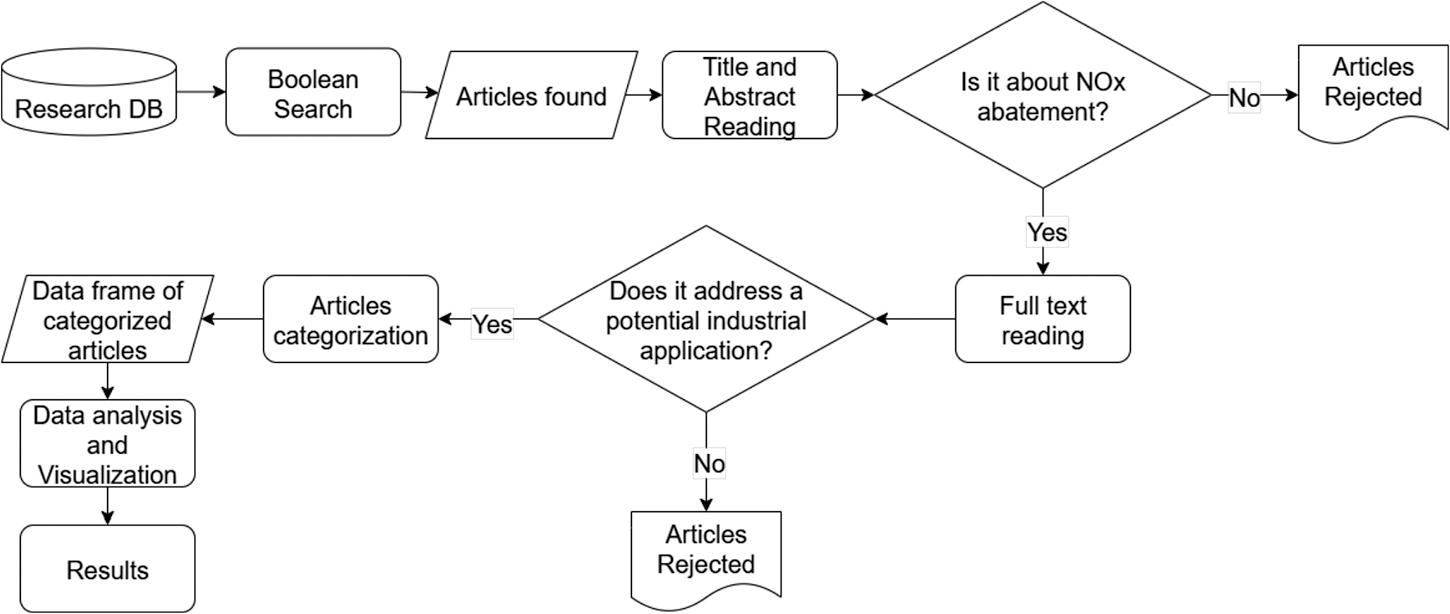
The systematic review evaluates industrial techniques for mitigating nitrogen oxides (NOx) emissions in the iron ore pelletization process, focusing on practical and scalable solutions to reduce the environmental impact. The methodology follows the systematic review framework by Dresch et al. (2015), as illustrated in Figure 1.
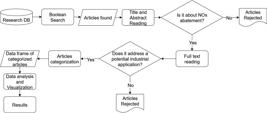
The articles for this study were sourced from two prominent academic databases: ScienceDirect and Web of Science. A 20-year time range (2004-2023) was used to ensure the inclusion of the most relevant and up-to-date research. To identify articles related to NOx emission reduction, 19 Boolean search queries were designed (see Table 1), incorporating the techniques and terms previously highlighted in reviews on NOx abatement. These searches were tailored to capture all techniques associated with the pelletizing method. The initial search yielded 2165 articles. After removing duplicates, 626 unique articles remained for further analysis.
The first screening phase involved a review of the title and abstract of each article. The primary criterion was whether the article was directly related to NOx abatement. Articles not meeting this criterion were excluded, resulting in 412 articles proceeding to the next stage.
During this process, it was observed that many studies focused on catalysts for automotive applications rather than pelletizing or the iron and steel industries. To address this, a second criterion was introduced for the next screening phase: “Does the article have an industrial application?” This ensured relevance to industrial NOx abatement, particularly in the iron and steel sectors..
The second screening phase is based on full-text reading, which excludes articles on internal combustion engines, turbines, SCR catalytic development, and combustion engines. The remaining articles were classified based on:
1. Industrial application,
2. Type of fuel utilized,
3. Emission control method,
4. NOx abatement technology (e.g., SCR or SNCR),
5. Type of reducing agent used (if applicable), and
6. Location of research (if mentioned).
This classification process ensured that the selected articles were directly relevant to the study’s focus, resulting in 56 articles for in-depth analysis. A structured database was created from these articles, containing predefined classifications, such as industrial application, type of fuel, emission control method, NOx abatement technique, and type of reducing agent (where applicable). This database served as the primary source for generating visualizations and conducting statistical analyses.
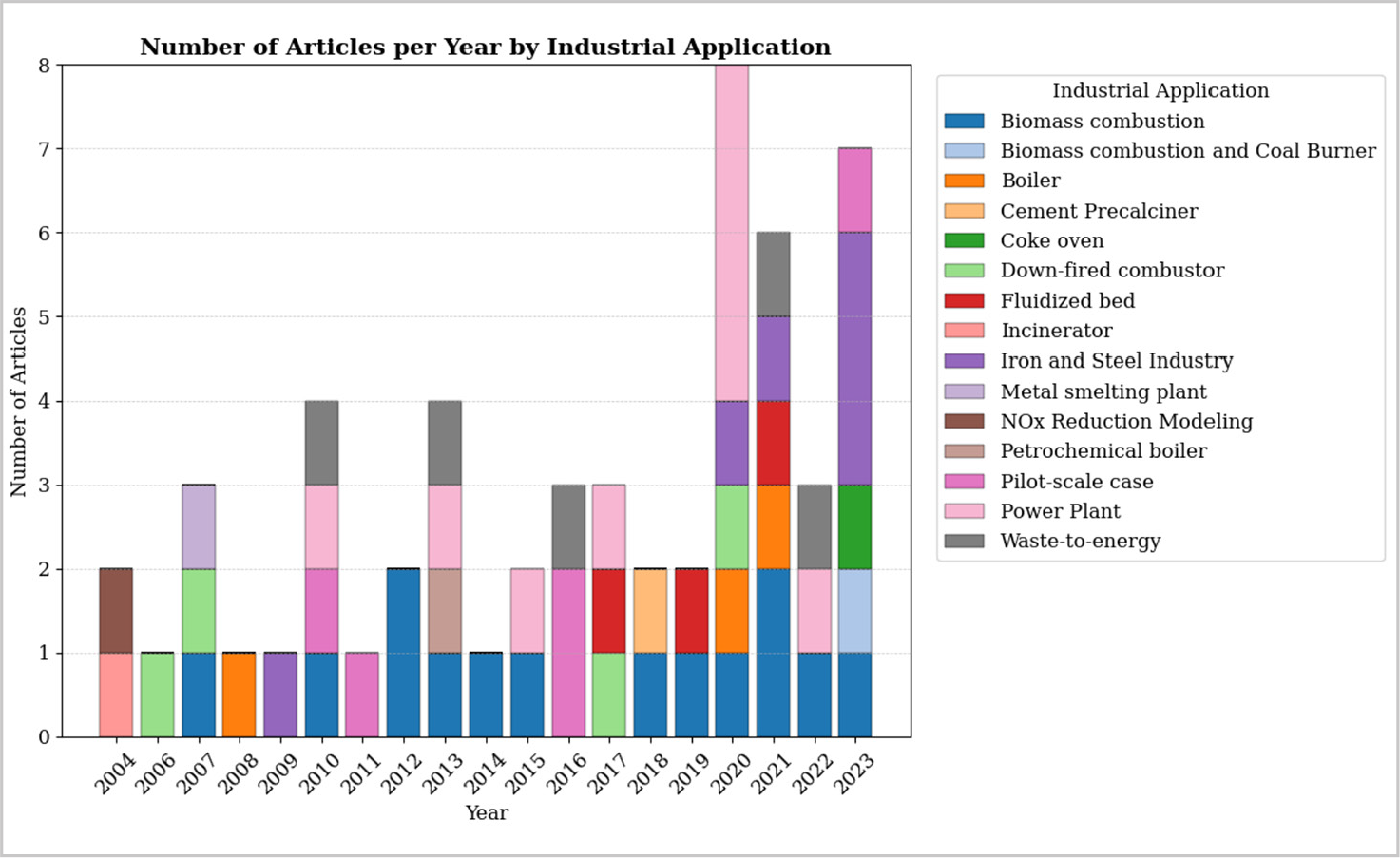
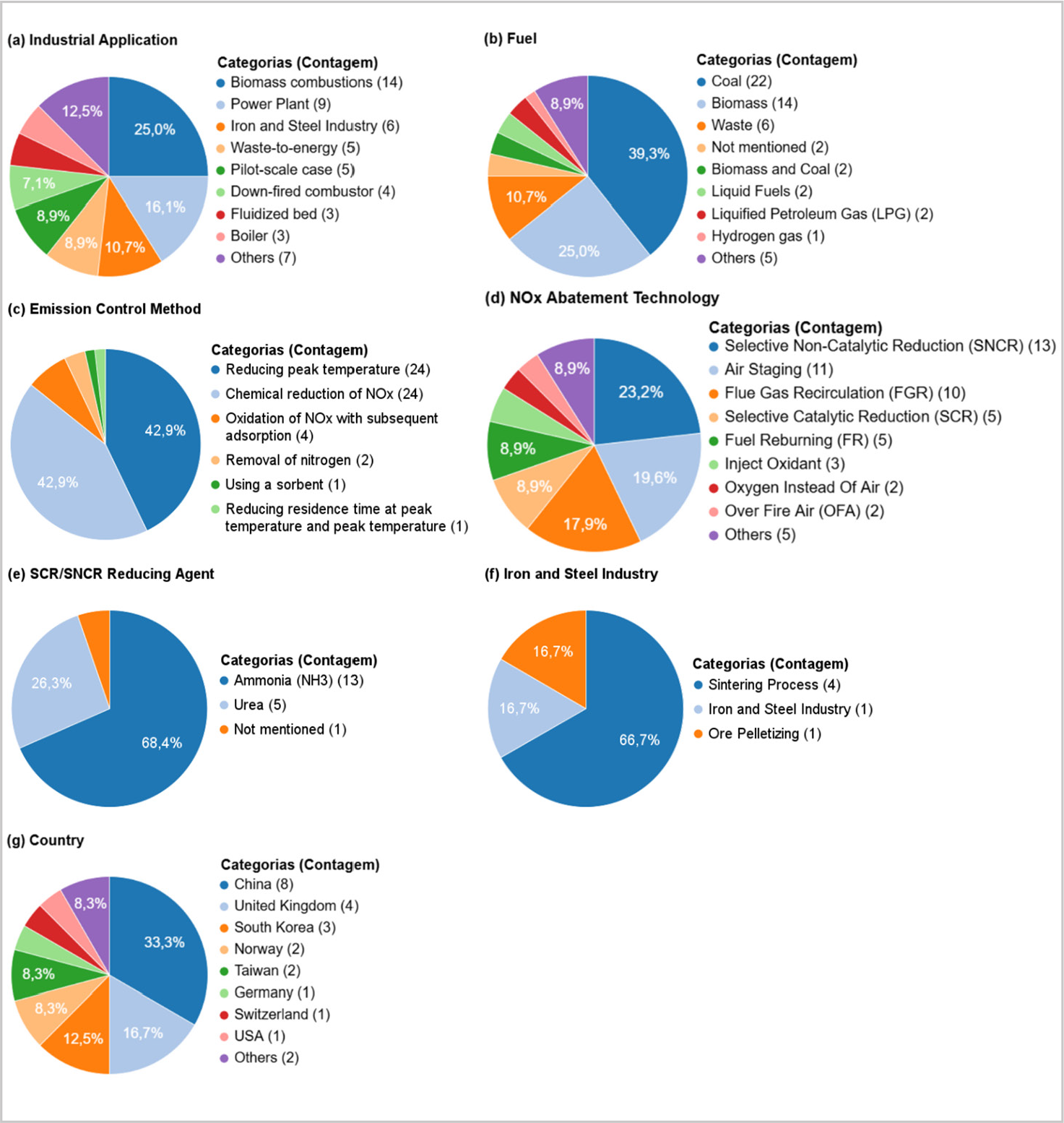
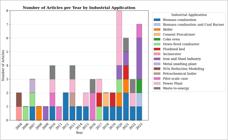
Figure 2 shows a bar chart, generated to visualize the temporal distribution of publications over the analyzed period (2004-2023). This chart was used to identify trends, such as increases or decreases in research activity, and highlighted peak years of interest related to NOx abatement in the iron and steel industry. For each classification category (e.g., type of fuel or NOx abatement technique), pie charts, are shown (Figure 3) to represent the proportion of unique values within each category. These charts provided a quick and intuitive understanding of the distribution of data, such as the prevalence of specific fuels or abatement techniques in literature.
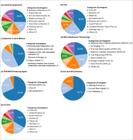
Proportional distribution of unique values for the analyzed categories: (a) Industrial Application, (b) Fuel, (c) Emission Control Method, (d) NOx Abatement Technology, (e) SCR/SNCR Reducing Agent, (f) Iron and Steel Industry, and (g) Country.
The analysis of the 56 selected articles provided valuable insights into the trends and focus areas of NOx abatement research over the past two decades. The results are presented through a combination of statistical analyses and visualizations, which highlight the distribution of research across different industrial applications and the evolution of NOx abatement techniques over time (as described in Figure 2).
Notably, the iron and steel industries have gained significant attention in recent years, with a peak of 3 publications in 2023. This contrasts with the period between 2020 and 2021, during which only two publications were identified, indicating fluctuating but growing interest in this sector. The bar chart also highlights broader trends, such as the steady rise in research on biomass combustion and power plants, which remain dominant areas of study. These findings underscore the importance of continued innovation in NOx abatement, particularly in high-impact industries like iron and steel. The pie charts in Figure 3 depict the proportional distribution of unique values for each analyzed column.
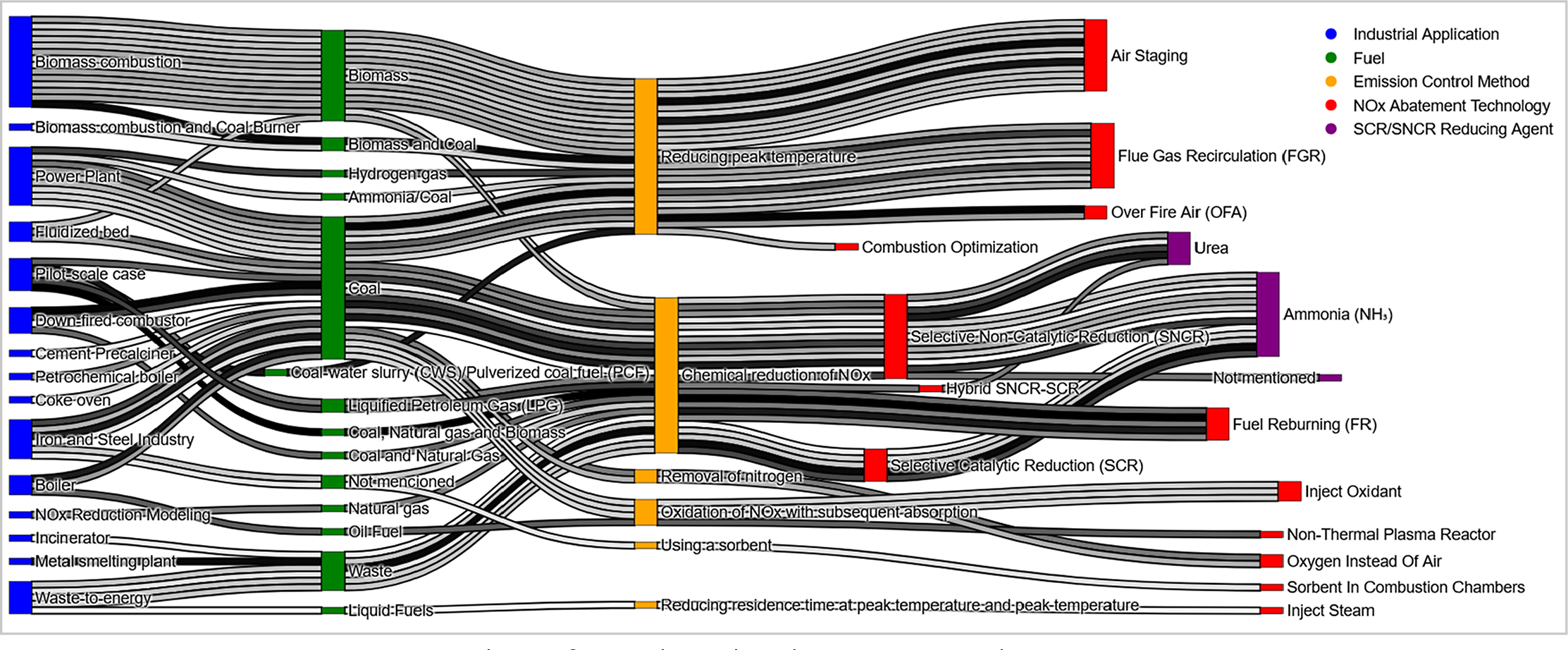
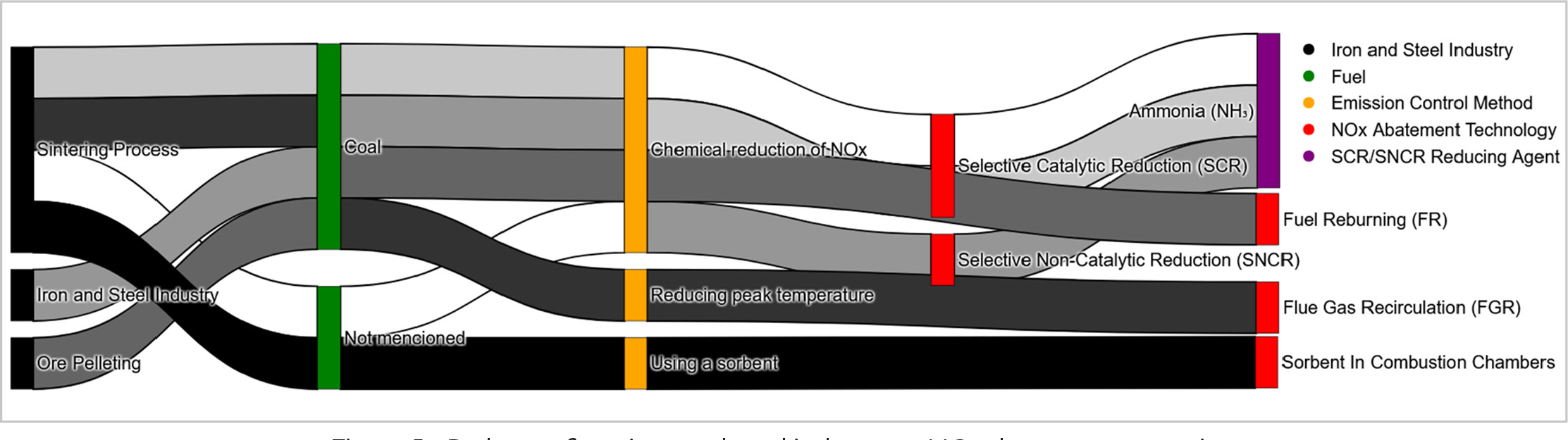
Figures 4 and 5 show two Sankey diagrams developed to map relationships between the different classifications. The first diagram mapped the relationships across all selected articles, illustrating connections between classifications, such as industrial application → type of fuel → abatement techniques → reducing agent. For example, it showed how specific fuels (e.g., natural gas) were linked to abatement techniques (e.g., SCR) and reducing agents (e.g., ammonia). The second diagram focused exclusively on articles related to the iron and steel industry, highlighting sector-specific trends and providing insights into how NOx abatement techniques are applied in this industry.
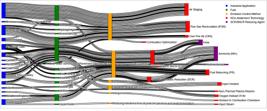
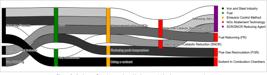
The structured database served as the input for creating the Sankey diagrams, with each classification category (e.g., industrial application, fuel type) acting as a node in the diagram. Relationships between nodes, such as a specific industrial application using a particular fuel, were represented as flows. The width of each flow was proportional to the frequency or significance of the relationship, providing a visual representation of the strength and direction of connections. Tools like Python (Plotly and Matplotlib) were used to generate diagrams.
These visualizations facilitated comprehensive and intuitive analysis, enabling the identification of patterns (e.g., dominant abatement techniques like SCR with ammonia), gaps (e.g., under-researched methods such as non-thermal plasma), and relevant insights for the study.
The analysis of the distribution of unique values in the selected columns revealed significant patterns in NOx reduction techniques applied across different industrial contexts. In the 'Industrial Application' chart (Figure 3(a)), biomass combustion (25.0%) and power plants (16.1%) emerged as the most studied applications, followed by the iron and steel industries (10.7%), reflecting the focus on sectors with high environmental impact. Regarding 'Fuel' (Figure 3(b)), coal (39.3%) and biomass (25.0%), were the most frequently used fuels, highlighting the relevance of these energy sources in NOx generation. In the 'Emission Control Method' chart (Figure 3(c)), peak temperature reduction (42.9%) and chemical reduction of NOx (42.9%) were the most common strategies, indicating a preference for methods that directly address the combustion process. As for NOx abatement technologies, 'Selective Non-Catalytic Reduction (SNCR)' (23.2%) and 'Air Staging' (19.6%) (Figure 3(d)) were the most frequently mentioned, while ammonia (NH) (68.4%) (Figure 3(e)) was the most widely used reducing agent in SCR/SNCR. Within the iron and steel industries, the sintering process (66.7%) (Figure 3(f)) was the most addressed, followed by ore pelletizing (16.7%). Geographically, China (33.3%) (Figure 3(g)) led in publications, followed by the United Kingdom (16.7%) and South Korea (12.5%), underscoring the concentration of research in regions with strong industrial presence and stringent environmental regulations. These results highlight current trends and gaps in NOx reduction research, providing valuable insights for future studies and industrial applications.
Studies involving configurations, such as pilot-scale, down-fired combustors, fluidized beds, and boilers, were included in the review because, although they do not directly represent an industrial application, they validate NOx abatement technologies (such as SNCR, SCR, and temperature control) under different fuel and operational conditions. These studies provide fundamental principles and efficiency data that can be extrapolated or adapted for specific industrial applications, including steelmaking. The inclusion of these cases is justified by the need to assess the technical feasibility of NOx reduction strategies under varied conditions, serving as a foundation for future implementations in more complex industrial processes.
To understand the relationships between industrial applications, types of fuel, emission control methods, and NOx abatement technologies, two Sankey diagrams were developed. The first diagram, presented in Figure 4, maps the connections between these variables for all analyzed industrial applications, highlighting how different fuels are associated with specific NOx reduction methods and technologies. For example, the diagram illustrates how the use of coal or biomass is often linked to techniques, such as Selective Catalytic Reduction (SCR) or Selective Non-Catalytic Reduction (SNCR), as well as the most common reducing agents, such as ammonia (NH) or urea.
The diagram, shown in Figure 5, focuses exclusively on the iron and steel sector, detailing the specific relationships within this industry. It highlights, for instance, how the sintering process, widely used in the iron and steel industries, is associated with fuels, such as coal and abatement techniques like Selective Non-Catalytic Reduction (SNCR) or Flue Gas Recirculation (FGR). Additionally, the diagram emphasizes the predominance of reducing agents, such as ammonia, in this sector. Furthermore, the ore pelletizing process is shown to utilize Fuel Reburning (FR) as a NOx abatement technology, illustrating the diversity of approaches within the industry to address NOx emissions.
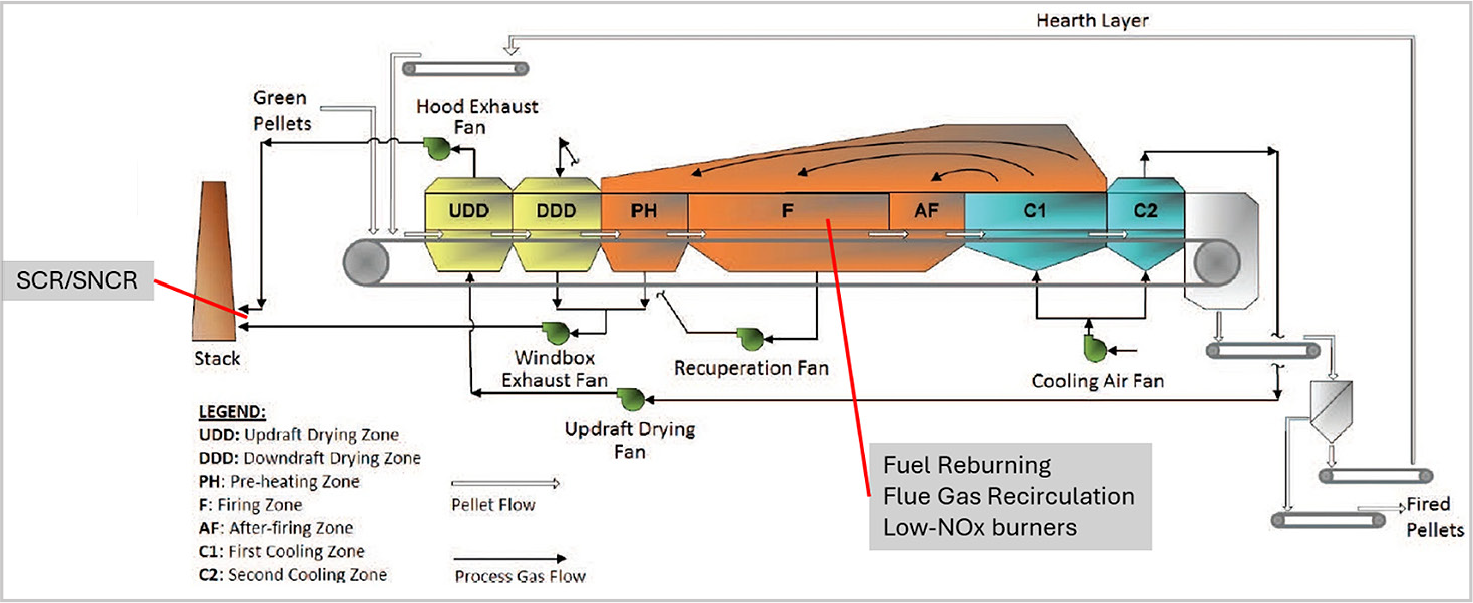
Based on the findings from the Sankey diagrams and pie charts, it was observed that Selective Non-Catalytic Reduction (SNCR) is more common than Selective Catalytic Reduction (SCR) among the studies reviewed. Additionally, ammonia is used more frequently as a reducing agent compared to urea. The reduction of peak temperatures is also a widely employed strategy in the research examined. Given these findings, Figure 6 suggests future research directions. Specifically, it highlights the potential for studying SNCR in exhaust flue gas within the straight grate process and exploring Fuel Reburning in the firing zone of the induration process. Furthermore, it underscores the importance of investigating Flue Gas Recirculation and the application of Low NOx burners as promising areas for reducing NOx emissions.
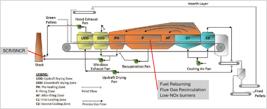
The proposed straight grate process integrated with NOx abatement technologies (Moraes, 2018).
The Sankey diagrams provide a clear and intuitive view of the interconnections between the analyzed variables, enabling the identification of patterns, trends, and gaps in NOx reduction strategies. They are valuable tools for understanding how different approaches are applied in various industrial contexts, as well as for guiding future research and technological decisions in the iron and steel sectors and other relevant industries.
3. Results and discussion
This research focuses on identifying NOx abatement techniques related to the iron ore pelletizing process using the straight grate method during pellet induration. From the results, it is evident that there is a relatively low number of articles addressing the iron and steel sectors compared to other industrial applications, even though the Boolean search queries prioritized keywords, such as "´pelletizing" and "iron." This highlights a significant gap in the literature, as the iron and steel industry is an important contributor to NOx emissions, particularly in processes such as pelletizing and sintering.
Coal was the most observed fuel in the studies, accounting for 39.29% of fuel usage. It is widely used across various sectors, from power generation to the steel industry, due to its availability and established infrastructure. Biomass, which accounts for 25.00% of fuel usage, has also been increasingly studied due to its potential contribution to carbon reduction goals, as it is considered a more sustainable alternative to fossil fuels. However, unlike coal and natural gas, biomass generally contains a higher proportion of organically bound nitrogen compounds, inherent to its vegetal origin. This characteristic leads to an increased formation of fuel-derived NOx during combustion, since the nitrogen present in the fuel is more readily oxidized under conventional furnace operating conditions. Consequently, the substitution of coal by biomass does not necessarily imply an immediate reduction in NOx emissions; in fact, it can increase primary emissions unless complemented by additional abatement strategies. Despite this limitation, the interest in biomass persists due to its lower carbon footprint, availability in certain regions, and its potential integration with cost-reduction measures when coupled with temperature-lowering mechanisms, such as air or fuel staging, that suppress thermal NOx formation.
Other fuels, such as waste (10.71%), were also considered in several studies. However, natural gas-a cleaner alternative with inherently lower NOx emissions due to its simple hydrocarbon composition and absence of fuel nitrogen-accounted for only 1.79% of fuel usage. This limited application can be attributed to the geographical distribution of research, concentrated in regions where coal remains dominant and natural gas infrastructure is less developed. The distribution of research by country shows that China (33.33%), the United Kingdom (16.67%), and South Korea (12.50%) are the leading contributors, reflecting the persistence of coal as the primary energy source in these industrial hubs. This situation highlights the challenges in adopting natural gas in regions where coal-based supply chains are deeply entrenched, suggesting that future policy and research efforts should also address infrastructure development to enable a gradual transition.
With respect to the abatement strategies, the most recurrent pre-combustion approach was the reduction of peak combustion temperature, representing nearly half of the reviewed techniques. This strategy is particularly relevant in coaland biomass-based processes, as lowering flame temperature reduces the conditions for thermal NOx formation. Secondary abatement techniques were also prominent, particularly Selective Non-Catalytic Reduction (SNCR), which was more frequently reported than Selective Catalytic Reduction (SCR). The predominance of SNCR can be explained by its relatively simpler implementation and lower operational costs when compared to SCR. Unlike catalytic systems, SNCR does not require complex reactor configurations or costly catalysts, which makes it easier to adapt to existing furnaces. Moreover, in coal-based processes, the typical flue gas characteristics provide favourable conditions for the reaction between the reducing agent and nitrogen oxides, further enhancing its applicability. These factors combined help to justify the preference for SNCR as the dominant secondary abatement technique in the studies reviewed. Within SNCR applications, ammonia was the most common reducing agent (68.42%), while urea appeared less frequently. Ammonia is often preferred because of its higher reactivity at the temperature windows typical of coal combustion, while urea requires decomposition steps that reduce efficiency. This direct association of ammonia-based SNCR with coal combustion reflects both technological maturity and cost considerations within the iron and steel sectors.
Notably, no studies specifically addressed the straight grate pelletizing process, even though this method is one of the most widely used in industrial pellet induration. The few references identified focused on rotary kiln configurations for pelletizing, where advanced reburning and SNCR techniques were tested. This gap in the literature underscores the urgent need for dedicated research into the straight grate process, particularly because its thermal profile, flow dynamics, and pollutant formation mechanisms differ substantially from rotary kilns. Given the global importance of iron ore pellet production, and the high contribution of pellet induration to industrial NOx emissions, the lack of targeted studies in this area represents a major limitation in current knowledge.
Considering of the reviewed literature, several opportunities emerge for advancing NOx abatement in iron ore pelletization. The predominance of SNCR and the widespread use of ammonia as a reducing agent indicate that research has largely focused on solutions compatible with coal-based systems. However, the straight grate process remains underexplored, despite its industrial relevance and high emission potential. Future studies should prioritize evaluating the performance of SNCR in flue gases from straight grate furnaces, as well as the integration of complementary strategies, such as Fuel Reburning in the firing zone, Flue Gas Recirculation, and the application of Low NOx burners. These approaches, whether applied individually or in combination, hold significant promises for reducing NOx emissions in pellet induration. By addressing these research gaps, the iron and steel industries can move towards cleaner production pathways, aligning operational practices with global environmental and sustainability goals.
4. Conclusion
This systematic review has identified several key insights and research gaps on NOx emission reduction techniques for the iron ore pelletization process, particularly focusing on the straight grate method. The findings reveal a significant lack of studies addressing NOx abatement specifically within the iron ore pelletization process. This gap is especially evident given the high NOx emissions associated with this process and the broader environmental impact of the iron and steel industries.
One notable observation is the absence of studies that consider natural gas as a fuel source in the pelletization process. Natural gas, known for its lower NOx emissions compared to coal, offers significant environmental advantages. Unlike coal, which contains fuel-bound nitrogen, sulfur, and ash that contribute to NOx, SO2, and particulate emissions, natural gas consists mainly of methane (CH4), with negligible nitrogen or sulfur and no ash. As a result, its combustion produces primarily CO2 and H2O, with NOx formation limited to thermal mechanisms that can be effectively controlled. Therefore, replacing coal with natural gas in pelletizing furnaces could substantially reduce both primary NOx emissions and associated pollutants, representing a cleaner pathway for iron ore induration.
The review also suggests that combining multiple NOx abatement techniques could be a promising approach for the iron ore pelletization process. Techniques such as Selective Non-Catalytic Reduction (SNCR), Fuel Reburning, Flue Gas Recirculation, and Low NOx burners show potential for integration and further optimization. This combination could lead to more effective and sustainable NOx reduction strategies.
The review highlights the need for more research on pelletization processes using the straight grate method, as no studies that specifically addressed this process using the Boolean search queries designed for this review were found. This highlights the necessity for future research to focus on developing and optimizing NOx abatement techniques tailored to the straight grate pelletization process.
In conclusion, this review underscores the critical need for further research and innovation in NOx abatement techniques for the iron ore pelletization process. Future studies should explore the potential of natural gas, the integration of multiple abatement techniques, and the specific application of these strategies to the straight grate process. By addressing these gaps, the iron and steel industries can progress towards more sustainable and environmentally friendly practices.
-
Funding information
We acknowledge the financial support of the Conselho Nacional de Desenvolvimento Científico e Tecnológico (CNPq) (Grant No. 311171/2020-6), which was essential for the completion of this research.
Data availability
The dataset comprising the articles considered in this systematic review, which served as the basis for the results presented, has been shared with the REM - International Engineering Journal. Upon reasonable request, these data can be made available to readers.
References
- BONINGARI, T.; SMIRNIOTIS, P. G. Impact of nitrogen oxides on the environment and human health: Mn-based materials for the NOx abatement. Current Opinion in Chemical Engineering, v. 13, p. 133-141, 2016.
- DRESCH, A.; LACERDA, D. P.; ANTUNES JR., J. A. V. Design science research: a method for science and technology advancement. Cham: Springer, 2015. 161 p.
- DUTKA, M.; DITARANTO, M.; LOVAS, T. Application of a central composite design for the study of NOx emission performance of a low NOx burner. Energies, v. 8, n. 5, p. 3606-3627, 2015.
- DVOŘÁK, R.; CHLÁPEK, P.; JECHA, D.; PUCHÝŘ, R.; STEHLÍK, P. New approach to common removal of dioxins and NOx as a contribution to environmental protection. Journal of Cleaner Production, v. 18, n. 9, p. 881-888, 2010.
- FAN, W.; LIN, Z.; KUANG, J.; LI, Y. Impact of air staging along furnace height on NOx emissions from pulverized coal combustion. Fuel Processing Technology, v. 91, n. 6, p. 625-634, 2010.
-
GARBACZ, P.; WOJTASIK, M.; KRAWCZYK, J. Numerical research on the SNCR method in a grate boiler equipped with the innovative FJBS system. Energy, v. 207, p. 118240, 2020. DOI: 10.1016/j.energy.2020.118240.
» https://doi.org/10.1016/j.energy.2020.118240. - GHOLAMI, F.; TOMAS, M.; GHOLAMI, Z.; VAKILI, M. Technologies for the nitrogen oxides reduction from flue gas: A review. Science of the Total Environment, v. 714, p. 136712, 2020.
- HODŽIĆ, N.; KAZAGIĆ, A.; SMAJEVIĆ, I. Influence of multiple air staging and reburning on NOx emissions during co-firing of low rank brown coal with woody biomass and natural gas. Applied Energy, v. 168, p. 38-47, 2016.
- HU, B.; HU, P.; LU, B.; ZIE, Z.; LIU, L.; CHENG, G.; WEI, J. NOx emission reduction by advanced reburning in grate-rotary kiln for the iron ore pelletizing production. Processes, v. 8, n. 11, p. 3606-3627, 2020.
-
KAWATRA, S. K.; CLAREMBOUX, V. Iron Ore Pelletization: part I. Fundamentals. Mineral Processing and Extractive Metallurgy Review, v. 42, n. 3, p. 181-200, 2021. DOI: 10.1080/08827508.2021.1897586.
» https://doi.org/10.1080/08827508.2021.1897586. - KLING, A.; ANDERSSON, C.; MYRINGER, A.; ESKILSSON, D.; JÄRAS, S. Alkali deactivation of high-dust SCR catalysts used for NOx reduction exposed to flue gas from 100MW-scale biofuel and peat fired boilers: influence of flue gas composition. Applied Catalysis B: Environmental, v. 69, n. 3, p. 240-251, 2007.
-
LI, P.-W.; CHYANG, C.-S. A comprehensive study on NOx emission and fuel nitrogen conversion of solid biomass in bubbling fluidized beds under staged combustion. Journal of the Energy Institute, v. 93, n. 1, p. 324-334, 2020. DOI: 10.1016/j.joei.2019.02.007.
» https://doi.org/10.1016/j.joei.2019.02.007. - LI, S.; GE, Y.; WEI, X. Experiment on NOx reduction by advanced reburning in cement precalciner. Fuel, v. 224, p. 235-240, 2018.
-
MA, S.; ZHAO, Y.; YANG, J.; ZHANG, S. Research progress of pollutants removal from coal-fired flue gas using non-thermal plasma. Renewable and Sustainable Energy Reviews, v. 67, p. 791-810, 2017. DOI: 10.1016/j.rser.2016.09.066.
» https://doi.org/10.1016/j.rser.2016.09.066. - MORAES, S. L.; LIMA, J. R. B.; RIBEIRO, T. R. Iron ore pelletizing process: an overview. In: SHATOKHA, V. (ed.). Iron ores and iron oxide materials. Rijeka: IntechOpen, 2018. p. 41-60.
- MORAES, S. L.; RIBEIRO, T. R. Brazilian iron ore and production of pellets. Mineral Processing and Extractive Metallurgy Review, v. 40, n. 1, p. 16-23, 2019.
- ROMERO, C. E.; VAHEDI, N.; QIN, Y. Chemical kinetics modeling and analysis of monomethylamine for power plants selective non-catalytic reduction (SNCR) systems. Emission Control Science and Technology, v. 6, n. 4, p. 431-441, 2020.
-
SHEN, B. X.; YAO, Q.; XU, X. C. Kinetic model for natural gas reburning. Fuel Processing Technology, v. 85, n. 11, p. 1301-1315, 2004. DOI: 10.1016/j.fuproc.2003.09.005.
» https://doi.org/10.1016/j.fuproc.2003.09.005. -
SINGH, G. P.; SUNDEEP, A.; CHOUDHARY, R. P.; VARDHAN, H.; ARUNA, M.; AKOLKAR, A. B. Iron Ore Pelletization Technology and its Environmental Impact Assessment in Eastern Region of India - A Case Study. Procedia Earth and Planetary Science, v. 11, p. 582-597, 2015. DOI: 10.1016/j.proeps.2015.06.060.
» https://doi.org/10.1016/j.proeps.2015.06.060. - SKALSKA, K.; MILLER, J. S.; LEDAKOWICZ, S. Trends in NOx abatement: A review. Science of the Total Environment, v. 408, n. 19, p. 3976-3989, 2010.
- SUN, W.; ZHOU, Y.; LV, J.; WU, J. Assessment of multi-air emissions: case of particulate matter (dust), SO2, NOx and CO2 from iron and steel industry of China. Journal of Cleaner Production, v. 232, p. 350-358, 2019.
-
YOON, S. H.; KIM, S. J.; BAEK, G.-U. Operational optimization of air staging and flue gas recirculation for NOx reduction in biomass circulating fluidized bed combustion. Journal of Cleaner Production, v. 387, p. 135878, 2023. DOI: 10.1016/j.jclepro.2023.135878.
» https://doi.org/10.1016/j.jclepro.2023.135878. -
ZABETTA, E. C.; HUPA, M.; SAVIHARJU, K. Reducing NOx emissions using fuel staging, air staging, and selective noncatalytic reduction in synergy. Industrial & Engineering Chemistry Research, v. 44, n. 13, p. 4552-4561, 2005. DOI: 10.1021/ie050051a.
» https://doi.org/10.1021/ie050051a.
Edited by
-
Associate Editor
Jório Coelho