 Eruptive sebaceous hyperplasia induced by oral tacrolimus with good therapeutic response to systemic isotretinoin: a case report
Dear Editor,
Sebaceous hyperplasia (SH) is a benign and common condi-tion characterized by an increase in the size of the sebaceous glands that occurs as a result of aging, exposure to ultraviolet radiation, genetic/familial predisposition, or as part of syndromes such as Muir-Torre.1,2 Clinically, it presents as small, yellowish or normochromic papules with a central umbilication, usually restricted to the face.3
Eruptive sebaceous hyperplasia (ESH) was originally reported in patients receiving solid organ and hematopoietic stem cell transplants using cyclosporine.3 The multiplicity of lesions and their occurrence in exposed areas can negatively impact self-esteem, reflecting on interpersonal relation-ships and the quality of life of these patients. In addition, treatment is challenging due to the number of lesions and the possibility of permanent dyschromias resulting from ablative interventions. Systemic isotretinoin has proven effective in the treatment and control of ESH.1,4,5 This report describes a patient with exuberant tacrolimus-induced ESH, with good response to oral isotretinoin monotherapy and control with continuous use of low doses.
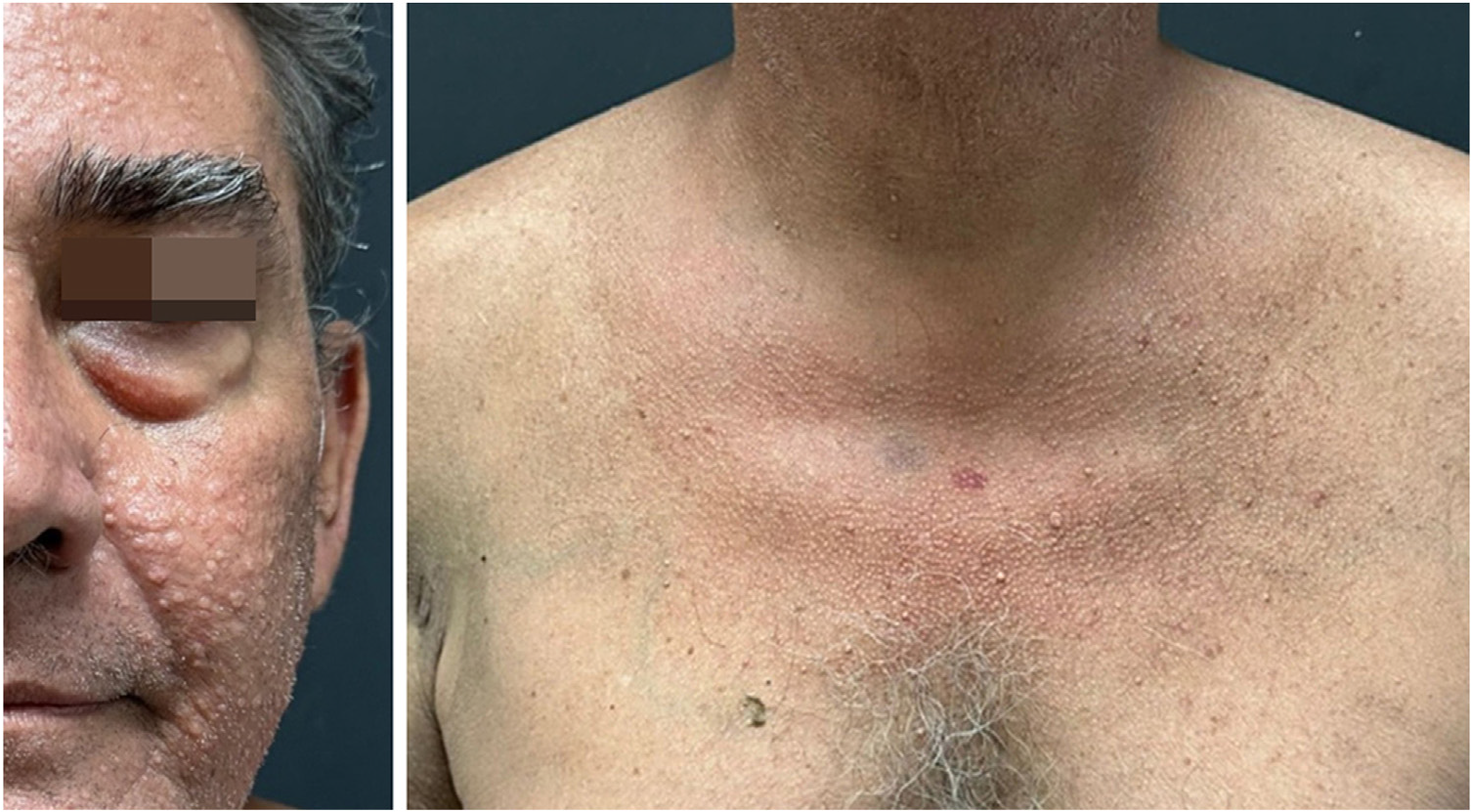
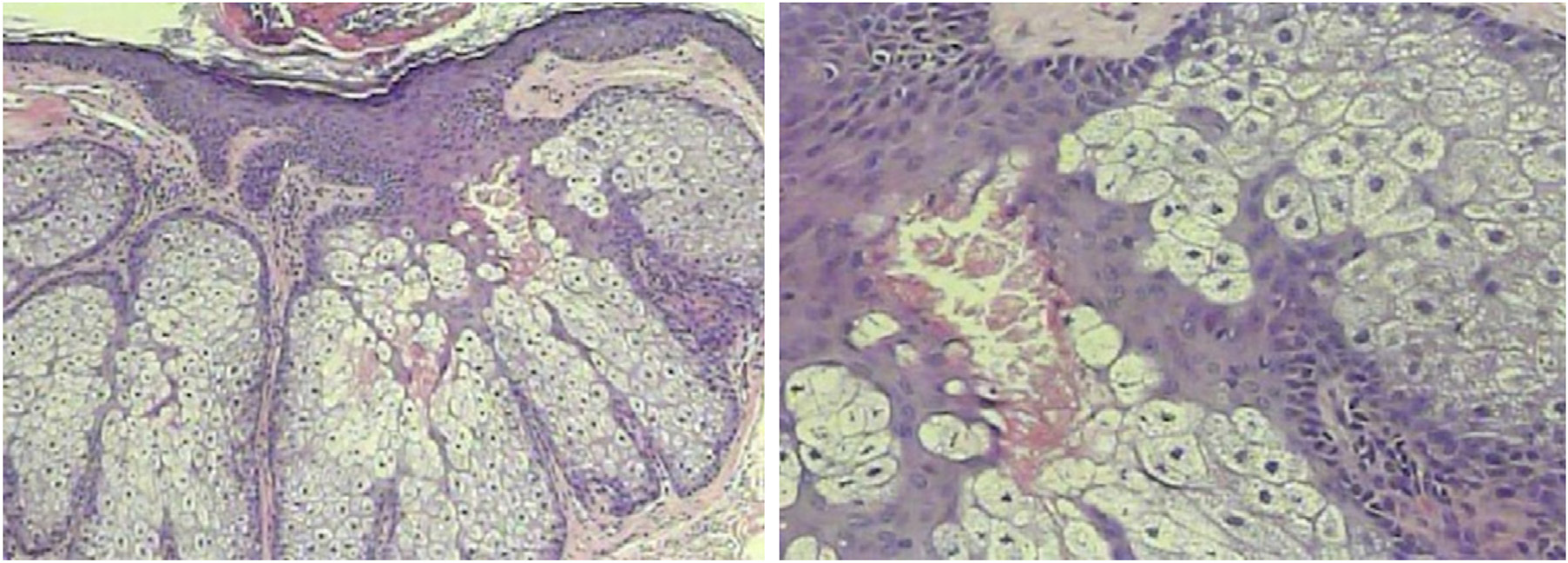
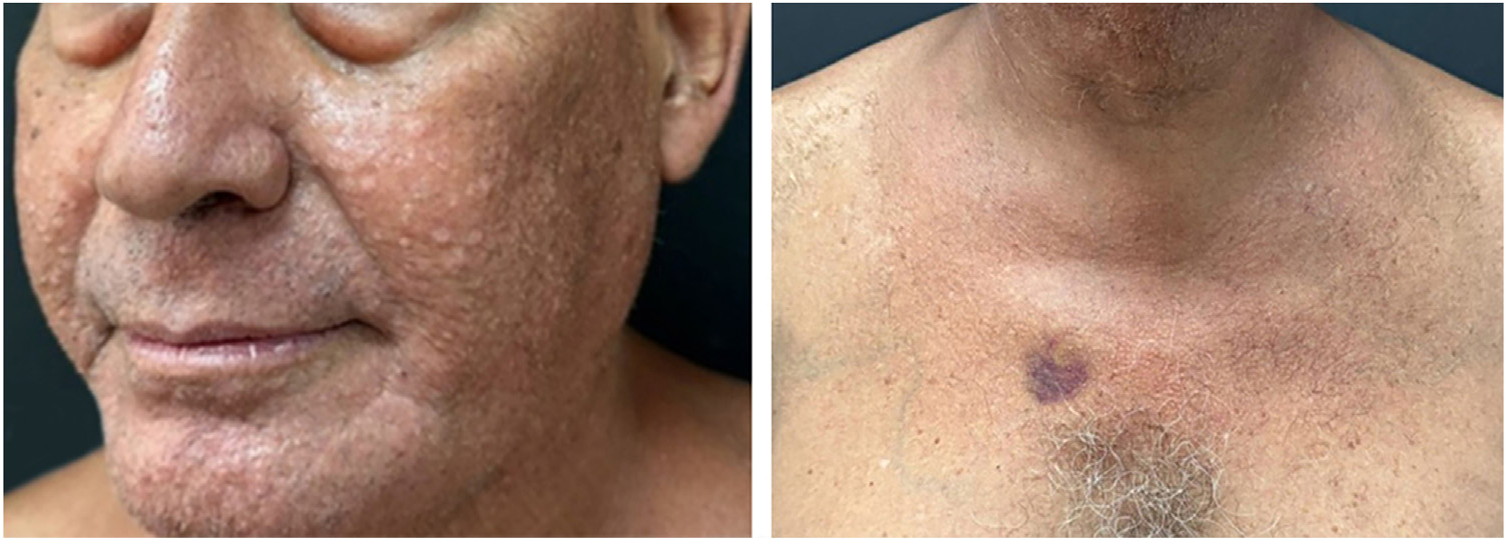
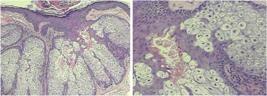
A 53-year-old male patient, a kidney transplant recipi-ent, complained of a "skin rash for three to four months." On examination, multiple normochromic asymptomatic papules with central umbilication were present on the face, neck, and anterosuperior thorax (Fig. 1), with abrupt onset months before and progressive worsening. He underwent kidney transplantation four years ago and is currently maintained on tacrolimus monotherapy. He was also an insulin-dependent diabetic. ESH was suspected, and mollus-cum contagiosum was considered as a differential diagnosis due to immunosuppression, along with eruptive syringoma. An incisional biopsy was performed at two points (face and neck), with histopathological examination showing seba-ceous hyperplasia (Fig. 2). Combining the clinical findings, histopathology, and the patient’s medication history, a diag-nosis of tacrolimus-induced ESH was concluded. This was discussed with the transplant team, and treatment with isotretinoin 20 mg/day was initiated for two months, with significant improvement in the lesions (Fig. 3). Currently, the patient maintains isotretinoin 10 mg, three times a week, without complications or complaints and with maintenance of the therapeutic response.
Multiple normochromic papules with central umbilication on the face, neck, and anterosuperior thorax.
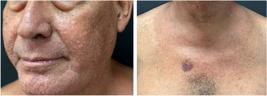
After 2 months of oral isotretinoin (20 mg/day): complete regression of lesions on the trunk and cervical region, with significant improvement in facial lesions.
Currently, ESH seems to be an occurrence practically restricted to adult men, consistent with the present findings, and is strongly associated with immunosuppression induced by medications (cyclosporine, prednisone, mycophenolate mofetil, and tacrolimus) in multiple clinical contexts (kid-ney disease, allogeneic transplantation, and other systemic inflammatory disorders that require immunosuppression).6 Cyclosporine-induced ESH in patients receiving solid organ transplants, such as kidney and heart; and hematopoietic cells is well documented in the literature, showing its asso-ciation with the development not only of ESH, but also of multiple seborrheic lesions.7 As for tacrolimus as a causative agent of ESH, there are few reports, especially when con-sidering its isolated use.3
Both cyclosporine and tacrolimus are calcineurin inhibitors, with lipophilic properties that favor their accu-mulation in the skin.1,3,6 This characteristic may contribute to the aberrant proliferation of immature sebocytes, leading to the emergence of ESH.3 This effect is believed to result from chronic inhibition of the local immune response and indirect stimulation of sebaceous gland activity.6
The aesthetic impact of facial lesions, especially when numerous as in ESH, can negatively affect patients’ self-esteem and quality of life.1 Furthermore, treatment is challenging due to the multiplicity of lesions, risk of scarring and recurrence.5 Ablative procedures, such as electrodis-section, cryotherapy, CO2 laser and photodynamic therapy, although effective, present a risk of dyschromia and scarring sequelae.4
Systemic isotretinoin, on the other hand, acts dif-fusely and globally, with well-established sebostatic and antiproliferative effects.2 In the present case, monother-apy with isotretinoin resulted in significant and rapid clinical improvement, with good tolerance and sustained control with a low dose (10 mg, three times/week).
In conclusion, this report reinforces tacrolimus as a causative agent of ESH, corroborating the scarce reports in the literature, and highlights the efficacy and safety of oral isotretinoin as a therapeutic option, whether in monother-apy or not.
Research data availability
Does not apply.
References
- 1 Caytemel C, Demir FT, Uzuner EG, Turkoglu Z. Systemic isotretinoin treatment in a renal transplant patient developing sebaceous hyperplasia due to cyclosporine. North Clin Istanb. 2020;7:628-30.
- 2 El-Behaedi S, Ng S, Goyal PK, Pritzker R, Choi JN. Widespread sebaceous neoplasms in the setting of chronic immunosuppres-sion with near-complete clearance on isotretinoin. JAAD Case Rep. 2022;30:59-62.
- 3 Levandoski KA, Girardi NA, Loss MJ. Eruptive sebaceous hyper-plasia as a side effect of oral tacrolimus in a renal transplant recipient. Dermatol Online J. 2017;23:13030.
- 4 McDonald SK, Goh MS, Chong AH. Successful treatment of cyclosporine-induced sebaceous hyperplasia with oral isotretinoin in two renal transplant recipients. Australas J Dermatol. 2011;52:227-30.
- 5 Hussein L, Perrett CM. Treatment of sebaceous gland hyper-plasia: a review of the literature. J Dermatol Treatment. 2021;32:866-77.
- 6 Steinmetz CZ, Getz A, Schaffer A, Richardson SK. Eruptive seba-ceous hyperplasia: a case report and review of the literature. HCA Healthc J Med. 2023;4:315-9.
- 7 Oh CC, Lee HY, Tan BK, Assam PN, Kee TYS, Pang SM. Dermatolog-ical conditions seen in renal transplant recipients in a Singapore tertiary hospital. Singapore Med J. 2018;59:519-23.
Edited by
-
Editor
Hiram Larangeira de Almeida Jr.