
 Gender equality in public administration: where are they?
Abstract
The State Court of Accounts (TCE) carried out an operational audit of the Alfa State Government to evaluate the implementation of Sustainable Development Goal 5 (Gender Equality) regarding the proportion of women in management positions. The TCE presented a diagnosis to the governor, highlighting structural disparities such as the low number of women occupying strategic leadership positions and the underrepresentation of Black and Indigenous women in management. To develop the action plan requested by the auditors, the governor delegated the mission to João Pessoa, the Secretary of People Management. Simultaneously, João faces a profound ethical dilemma: his colleague Aniela, the Secretary of Administration, has been sexually harassed for two years by the Secretary of Human Rights, a close ally of the governor. A single mother from a humble background, Aniela hesitates to file a formal complaint, fearing retaliation and the loss of the position she fought so hard to attain. João, who is nearing retirement, also fears jeopardizing his own professional stability. Within this context, he convenes a multidisciplinary team to help him make a decision: to what extent is he willing to risk his reputation, stability, and retirement for a gender equity policy? This teaching case fosters critical reflection on the challenges managers face when formulating institutional policies for gender equity, addressing intersectionalities and ethical dilemmas. Furthermore, it introduces the concept of representative bureaucracy, underscoring the vital importance of diversity.
Keywords:
gender; people management; SDG 5
Resumo
O Tribunal de Contas Estadual (TCE) realizou uma auditoria operacional no Governo do Estado Alfa para avaliar a implementação do Objetivo de Desenvolvimento Sustentável 5 (Igualdade de Gênero) quanto à proporção de mulheres em cargos de gestão. O TCE apresentou um diagnóstico ao governador, no qual são destacadas algumas disparidades, como o reduzido número de mulheres ocupando cargos de gestão estratégica e, além disso, a baixa representatividade de mulheres pretas e indígenas nos cargos de gestão. Para a elaboração do plano de ação solicitado pelas auditoras, o governador delegou a missão a João Pessoa, secretário de Gestão de Pessoas. Associado a isso, João se vê diante de um dilema ético: sua colega Aniela, secretária de Administração, sofre assédio sexual há dois anos por parte do secretário de Direitos Humanos, aliado do governador. Mãe solo e de origem humilde, Aniela hesita em formalizar a denúncia, temendo retaliações e a perda da posição que tanto lutou para conquistar. João, próximo da aposentadoria, também teme comprometer sua estabilidade profissional. Nesse contexto, ele convoca uma equipe multidisciplinar para ajudá-lo a tomar uma decisão: até que ponto estaria disposto a arriscar seu nome, sua estabilidade e sua aposentadoria por uma política de equidade de gênero? Este caso de ensino promove uma reflexão crítica sobre os desafios enfrentados por gestores na formulação de políticas institucionais voltadas à equidade de gênero, abordando interseccionalidades e dilemas éticos. Apresenta, ainda, o conceito de burocracia representativa, destacando a importância da diversidade.
Palavras-chave:
gênero; gestão de pessoas; ODS 5
Resumen
El Tribunal de Cuentas Estatal (TCE) realizó una auditoría operativa en el Gobierno del Estado Alfa para evaluar la implementación del Objetivo de Desarrollo Sostenible 5 (Igualdad de Género) en lo que respecta a la proporción de mujeres en cargos de gestión. El TCE presentó un diagnóstico al gobernador en el cual se destacan algunas disparidades, como el reducido número de mujeres ocupando cargos de gestión estratégica y la baja representatividad de mujeres negras e indígenas en los puestos directivos. Para la elaboración del plan de acción solicitado por las auditoras, el gobernador delegó la misión en João Pessoa, secretario de Gestión de Personas. Asimismo, João se enfrenta a un dilema ético: su colega Aniela, secretaria de Administración, sufre acoso sexual desde hace dos años por parte del secretario de Derechos Humanos, un importante aliado del gobernador. Madre soltera y de origen humilde, Aniela duda en formalizar la denuncia por temor a las represalias y a la pérdida del cargo que tanto le costó conseguir. João, próximo a la jubilación, también teme comprometer su estabilidad profesional. En este contexto, convoca a un equipo multidisciplinario para ayudarle a tomar una decisión: ¿hasta qué punto estaría dispuesto a arriesgar su nombre, su estabilidad y su jubilación por una política de equidad de género? Este caso de enseñanza promueve una reflexión crítica sobre los desafíos que enfrentan los gestores en la formulación de políticas institucionales orientadas a la equidad de género, abordando la interseccionalidad y los dilemas éticos. Asimismo, presenta el concepto de burocracia representativa, destacando la importancia de la diversidad.
Palabras clave:
género; gestión de personas; ODS 5
INTRODUCTION
This case addresses the challenges faced by a public manager in implementing Sustainable Development Goal (SDG) 5 of the United Nations (UN) 2030 Agenda, whose purpose is to achieve gender equality and empower all women and girls.
In this case, SDG 5 target 5.5 will be examined: Ensure women’s full and effective participation and equal opportunities for leadership at all levels of decision-making in political, economic, and public life. The focus will be on indicator 5.5.2: Proportion of women in managerial positions.
Brazilian Public Administration is embedded within the country’s unequal social context and reproduces prejudices and discrimination rooted in a sexist, patriarchal, and racist society, particularly when considering the dimensions of gender and race/ethnicity.
On the other hand, several initiatives have emerged in pursuit of fairer institutions for vulnerable groups. One example is the emergence of the acronym ESG (Environmental, Social, and Governance) in 2004, in a publication by the World Bank in partnership with the UN Global Compact. The social pillar (the “S” in ESG) strengthened discussions surrounding diversity, inclusion, and gender and racial equity practices. It is within this perspective of confronting such inequalities that the present case is developed.
In their audits related to SDG 5, Brazilian Courts of Accounts use as their legal foundation the Convention on the Elimination of All Forms of Discrimination Against Women (CEDAW), adopted by the UN General Assembly in 1979 and entered into force in 1981. Considered the “International Bill of Rights for Women,” CEDAW is the principal international human rights treaty dedicated exclusively to promoting gender equality. It establishes legally binding standards for signatory states to ensure the elimination of discrimination against women in all its forms (UN, 2024).
It is within this context that the State Court of Accounts sends a recommendation to the Government of Alfa State requesting an action plan to address gender disparities in appointed positions, particularly within the senior leadership of the Direct Administration. Responsibility falls on João Pessoa, Secretary of People Management, who, in addition to the technical challenge of designing the plan, faces an ethical dilemma: his colleague Aniela, Secretary of Administration, has been subjected to sexual harassment and fears reporting the perpetrator — a political ally of the governor. Although sympathetic, João weighed the political risks, since any exposure of the case could generate a scandal with unpredictable consequences. Retirement was approaching, and João wanted to end his career peacefully. He asked himself: to what extent would he be willing to risk his name, his stability, and his retirement for a gender equity policy?
THE CASE
The Direct Administration of the Government of Alfa State
Alfa State, with a population of approximately 3.9 million inhabitants, 50.13% of whom were women, was undergoing a significant transformation. The State Court of Accounts issued a recommendation to the state government requesting the presentation of an action plan focused on implementing SDG 5, aimed at achieving gender equality, specifically regarding the proportion of women in managerial positions.
The recommendation was part of a broader movement to strengthen the governance, transparency, and alignment agenda with international commitments undertaken by the country, although such guidelines did not always materialize in public administration practices.
From a political-institutional perspective, Alfa State was characterized by a highly centralized Executive Branch administration, in which senior leadership positions were predominantly appointed at the governor’s discretion and largely functioned as spaces for political negotiation. Although official discourse emphasized the modernization of public management and the adoption of best practices aligned with the ESG agenda, strategic decisions tended to be influenced by party alliances, personal relationships, and delicate political balances. In this context, issues such as gender equality, diversity, and combating harassment were often handled cautiously, frequently remaining confined to rhetorical discourse in order to avoid internal conflicts and tensions with established power groups.
Aware of the importance of this movement, the governor delegated the task of drafting the plan to João Pessoa, Secretary of People Management. Although João was an experienced lawyer familiar with the workings of the public administration system, he did not expect the task to be so challenging. Throughout his career at the department, João had dealt with traditional human resources management issues such as civil service examinations, career structures, and compensation, but he had never faced a challenge requiring the reconciliation of international commitments, oversight pressures, internal resistance, and moral dilemmas as evident as those raised by an institutional gender equity policy in Alfa State.
The Arrival of the Recommendation
Aniela was deep in thought when the phone rang. It was Fernanda, a representative of the NGO Never Silent, a non-governmental organization known for supporting and reporting cases of moral and sexual harassment in the public sector. Aniela was uncertain whether to proceed with the harassment complaint involving Human Rights Secretary Silvino Barros, whose harassment she had endured for two years.
Aniela simply wanted the harassment and inappropriate advances to stop. Coming from a low-income family, she had fought hard to reach her current position. As a single mother, she had always balanced her studies, work, and childcare responsibilities. Achieving the position of Secretary of Administration had been both a personal and professional milestone. However, remaining in the role was becoming unbearable. She had already reported the harassment to her colleague João Pessoa. He had shown sympathy, but no action had been taken.
João Pessoa reflected on the situation. Despite his solidarity, he weighed the political risks. Silvino was an ally of the governor, and any exposure of the case could trigger a scandal with unpredictable consequences. Retirement was approaching, and João wanted to end his career peacefully.
It was a hot July morning when he, immersed in documents at the Department of People Management, was informed about the arrival of a recommendation from the Court of Accounts. The recommendation was straightforward: the state government needed to address gender inequalities in managerial positions, especially at the highest leadership levels. There was a glaring disparity in women’s representation in leadership positions. Along with the recommendation, they sent a link directing him to a statistical dashboard prepared by the Court of Accounts containing data on the number of men and women across several levels of disaggregation, including leadership level, race, and ethnicity.
Intrigued, João analyzed the data: there were 70,463 civil servants, 56% of whom were women. However, when considering strategic management positions — such as State Secretaries, directors, and attorneys — female representation dropped significantly, totaling 98 women compared to 138 men in these positions. João felt the weight of responsibility grow heavier. Now, in addition to the individual issue involving Aniela, he was facing an institutional call to address gender disparities in leadership positions.
But how should he act? Developing a robust gender equality policy could create discomfort among his peers and be poorly received by the governor. And what about Aniela’s complaint? Should João formally support her and expose the case? Or should he continue avoiding confrontation and focus on more neutral and palliative actions?
Excerpt from the Preliminary Audit Report
Audit Objective: To assess the implementation of SDG 5 (Gender Equality) regarding women’s occupation of public positions at different levels within the Direct Administration of Alfa State.
The first stage of the audit consisted of collecting data from the agencies of the Direct Administration of Alfa State. This phase resulted in a statistical dashboard prepared by the Court of Accounts containing information on the number of men and women across several levels of disaggregation, including leadership level, race, and ethnicity.
The second stage of the audit consisted of administering a questionnaire to the various departments and agencies of the Direct Administration of Alfa State, seeking to answer three main questions:
Q1. Does the Public Administration adopt policies and actions to promote women’s leadership among female civil servants and expand women’s representation in decision-making positions and functions? Does it also maintain a dedicated body or structure specialized in combating gender discrimination and sexual and moral harassment?
Q2. Does the Public Administration collect, monitor, and publish data and indicators related to the workforce and women’s occupation of leadership positions, including detailed information on the highest management levels and disaggregated by sector from a gender perspective?
Q3. Does the Public Administration present satisfactory proportionality indicators (indicator 5.5.2) and gender parity in the occupation of leadership positions?
Within the Direct Administration of Alfa State, based on the analysis of questionnaire responses and public documents available on the Government Transparency Portal, no objective and formal set of affirmative actions aimed at increasing women’s influence in the upper hierarchical levels of Public Administration was identified. Likewise, no indicators related to the workforce and women’s occupation of leadership positions were found that would allow for data monitoring.
The Team Is Convened
With the Court of Accounts report in hand and the weight of past omissions weighing heavily on his conscience, João Pessoa realized he could no longer postpone difficult decisions. Aniela’s informal complaint still echoed in his mind, and now the Court was bringing alarming data on gender inequality within the State Administration to light. It was time to act — or at least try.
He therefore convened a meeting with key individuals capable of bringing different perspectives to the development of an institutional plan that would be effective, fair, and feasible. João knew this would not be merely a technical task: it would involve political, human, and moral decisions. Among the invitees were:
Júlia Pimentel, a career public-sector attorney and women’s rights activist. Recognized for her work on internal committees and her close relationship with civil society organizations, she was known for refusing to remain silent in the face of injustice, even at the cost of institutional isolation or political wear. Although she did not hold a leadership position, her career trajectory granted her technical legitimacy and moral authority, making her a voice capable of challenging the debate, albeit with limited formal decision-making power.
Pedro Freire, director of the School of Government, held a strategic role in the training and development of public servants. A respected educator, he defended meritocracy as an organizing principle of Public Administration but acknowledged that structural inequalities, especially those related to gender and race, produced asymmetries in access to opportunities. His work enabled him to influence medium- and long-term changes through leadership training and development programs, even though their effects were neither immediate nor directly binding.
Cláudia Godoy, who held a Ph.D. in Computer Science, was a technical reference in open data and public transparency in Alfa State. Responsible for projects aimed at modernizing government information systems, she had the concrete ability to produce evidence, indicators, and dashboards that made gender and racial inequalities visible. However, her work depended on authorization from higher authorities and on the availability of high-quality data, which limited the immediate political reach of her analyses.
Geraldo Barros, director of Budget and Finance, was a cautious, technically oriented public servant recognized for his fiscal rigor and commitment to compliance with budgetary guidelines. Averse to initiatives that could generate permanent increases in expenditures or scrutiny from oversight agencies, Geraldo tended to act as an institutional brake on more ambitious proposals. Nevertheless, his approval was essential for making any resource-dependent policy viable, making him a key actor in defining the financial limits and sustainability of the proposed actions. João needed this team not only to help him think of a response to the Court but also to find an institutional path through a silent crisis.
The Meeting
The following morning, everyone gathered in the conference room of the Department of People Management. João Pessoa opened the meeting in a serious yet cordial tone:
— Good morning, everyone. Thank you for accepting this invitation on such short notice. We have received a preliminary report from the State Court of Accounts containing a very clear recommendation: we must formulate and implement an institutional plan to address gender inequality in leadership positions. We have three months to present a response. This is not merely about complying with an oversight body, but about addressing a historical debt owed to female public servants.
He projected the data onto the screen. Due to the absence of gender data, the Court of Accounts used sex-based data for the diagnosis (Table 1).
— In management positions, which are commissioned positions, excluding Advisory roles, the proportion of female managers is also Higher, although by a smaller margin than that off emale civil servants (Table 2).
— In strategic management positions (Table 3) lies the problem. These are high-level government positions, such as Secretary of State, Executive Secretary, Deputy Executive Secretary, President, Vice President, Provost, Rector, Director General, Director, and equivalent roles.
After presenting the data, João pointed out:
— I even argued that women are very well represented in operational management positions (Table 4), which include other management roles such as manager, unit director, course coordinator, academic secretary, department head, unit head, coordinator, and similar positions.
— However, according to the auditors, SDG 5 indicator — the proportion of women in decision-making positions — should be considered across all levels. Thus, our main problem is the low representation of women in strategic management positions. Another major issue is the lack of representation of Indigenous ethnic groups at the strategic management level; and, in the case of Black individuals, there is only one man occupying a strategic management position and no women (Table 5).
— He intersection with race/ethnicity is important for both women and men, since historically there are privileged groups and underrepresented minorities (Table 6).
— Another aspect highlighted by the Court of Accounts concerns pay disparities. Women occupying management positions earn, on average, R$ 8,478.38, whereas men earn an average of R$ 12,351.16. Part of this discrepancy may be explained by the fact that there are fewer women in strategic management positions, where salaries are higher. However, when considering only those occupying strategic management positions, the difference becomes even greater: on average, women earn R$ 15,113.99, while men earn R$ 22,924.40.
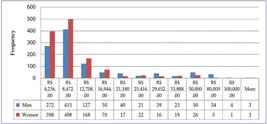
Although the law requires individuals holding the same position to receive equal pay, the composition of public servants’ income also includes additional compensation, such as participation in committees or councils, as well as assignments involving per diem payments, among others. When salary ranges are analyzed, a greater number of men occupying management positions receive the highest salaries (Figure 1).
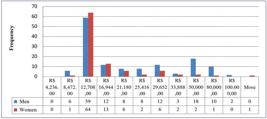
— When examining the remuneration of strategic management positions, it i salso evidente that men receive the highest salaries (Figure 2).
João took a deep breath and continued:
— In addition, we are facing a delicate internal dilemma. One of our secretaries, Aniela, reported to me persistent episodes of harassment by another member of the senior leadership. So far, no action has been taken. What if this complaint becomes public before we act?
Silence filled the room for a few seconds. Júlia Pimentel was the first to speak:
— João, this is extremely serious. It is precisely this type of institutional omission that perpetuates the culture of silence and impunity. We need to establish mechanisms to combat sexual and moral harassment, as well as all forms of disrespect related to gender and race/ethnicity rights. People exposed to this type of behavior need to feel welcomed and safe when reporting it. We must also approach gender issues from an intersectional perspective. It is not only about increasing the number of women in leadership positions, but also ensuring that these women come from different races and ethnicities and represent all segments of society. Gender equality must be broad and inclusive.
Júlia added:
— Another important issue affecting women’s participation in decision-making positions is the burden of unpaid care work. Women need flexible schedules so they can balance leadership positions with domestic responsibilities. If we truly want more women in decision-making positions, we must, for example, make late meetings more flexible.
João agreed, but he knew the challenges extended beyond that:
— How can we change this? What data do we need to measure if we are on the right path?’ he asked, addressing the question to Cláudia Godoy.
— We need data transparency. It is not enough to increase the number of women in managerial positions. It is essential that all data be public and disaggregated by leadership level, gender, race, and other factors. Only then will we be able to measure the real impact of these policies,” Cláudia replied confidently.
In turn, Pedro Freire emphasized the importance of developing female leadership:
— Dr. João, we need to invest in leadership programs for women so they are prepared to assume management positions. In addition, we must educate all public servants about gender equality and racial literacy so they can understand the positive impact this brings to public administration.
Finally, Geraldo Barros highlighted the financial issue:
— If we want this to work, we need to secure funding. I propose the creation of a specific fund for the promotion of gender equality, linked to the Multi-Year Plan.
Challenges and Dilemmas
João listened carefully. He knew that every word spoken there could represent a different path. He could follow the expected course and produce a bureaucratic response merely to formally comply with the Court’s recommendation. Or he could embrace the challenge, take risks, and lead a real institutional transformation — even if that meant jeopardizing the peace of mind of his final months before retirement.
He wondered to what extent he would be willing to risk his name, his stability, and his retirement for a gender equity policy. In addition, João’s advisory team informed him that the information had spread and opened space for fake news claiming that male managers would be dismissed en masse to make room for women.
CONCLUSION
At the end of the meeting, João was exhausted but hopeful. He knew that the road toward gender equality in Public Administration would be long and challenging, but he believed that, with the support of his team and the government’s commitment, it would be possible to develop a strong action plan. Now he would need to select and prioritize what would be included in the action plan to be submitted for the governor’s approval.
ALTERNATIVE ENDINGS
a) Conservative ending: formal response and maintenance of the status quo.
After a period of reflection, João Pessoa chooses to develop an essentially formal action plan focused primarily on leadership training for women, without addressing the structural aspects of gender inequality or proposing changes to the appointment criteria for strategic positions. The plan minimally complies with the Court of Accounts’ recommendation but avoids measures that could generate internal political resistance. At the same time, João decides not to formally pursue Aniela’s harassment complaint through institutional channels, treating the case as a personal matter.
Faced with the Administration’s lack of action, Aniela seeks external support and formally files the complaint with the NGO Never Silent, which makes the case public. The repercussions generate political damage for the government. In response, the governor claims to have been unaware of the facts and, in order to contain the crisis and preserve his image, dismisses João Pessoa, assigning him responsibility for the inadequate handling of the case. The action plan is shelved, and the issue of gender equity loses space on the government agenda.
b) Transformative ending: structural confrontation and institutional risks.
After weighing the risks and responsibilities involved, João Pessoa decides to develop a comprehensive and structural action plan, assuming that promoting gender equality requires deep institutional changes. The plan includes the creation of a specific body for receiving, protecting, and processing complaints of moral and sexual harassment; the implementation of affirmative action policies, including quotas for Black and Indigenous women in senior leadership positions; a permanent awareness program on gender and racial equity aimed at public servants and leaders; and a training program for new female leaders in partnership with the School of Government.
The proposal generates different reactions within the government. While technical sectors and civil society organizations recognize the institutional progress, part of the political leadership resists the proposal, citing budgetary, legal, and governance risks. João begins to face internal pressure, but the plan is submitted to both the Court of Accounts and the governor as the formal response to the recommendation. The ending remains open, allowing classroom discussion of the personal, political, and institutional costs of leading change processes in contexts marked by structural inequalities.
ACKNOWLEDGMENTS
We thank the Brazilian School of Public and Business Administration of Fundação Getulio Vargas for the Public Administration master’s program and the Court of Accounts of the State of Amazonas for providing the opportunity for author Rosenilda Freitas da Silva to participate in the program and consequently develop this teaching case under the supervision of Prof. Dr. Fabricio Stocker.
References
-
Organização das Nações Unidas. (2024). 45 anos da CEDAW: cinco coisas que você precisa saber sobre a Convenção para a Eliminação de Todas as Formas de Discriminação contra as Mulheres https://www.onumulheres.org.br/noticias/45-anos-da-cedaw-cinco-coisas-que-voce-precisa-saber-sobre-a-convencao-para-a-eliminacao-de-todas-as-formas-de-discriminacao-contra-as-mulheres/
» https://www.onumulheres.org.br/noticias/45-anos-da-cedaw-cinco-coisas-que-voce-precisa-saber-sobre-a-convencao-para-a-eliminacao-de-todas-as-formas-de-discriminacao-contra-as-mulheres/
-
TEACHING NOTES
The teaching notes for this case have restricted access and are available only to professors and instructors affiliated with academic institutions upon request at https://periodicos.fgv.br/cadernosebape/article/view/98239
-
RESEARCH DATA AVAILABILITY
The entire dataset supporting the results of this study was published within the article itself.
-
REVIEWERS
Two reviewers did not authorize the disclosure of their identities.
-
PEER REVIEW REPORT
The peer review report is available at https://periodicos.fgv.br/rap/article/view/97420
-
ARTIFICIAL INTELLIGENCE USAGE
The artificial intelligence tool ChatGPT was used to assist with the technical and grammatical review of the text and the standardization of references.
Edited by
The entire dataset supporting the results of this study was published within the article itself.

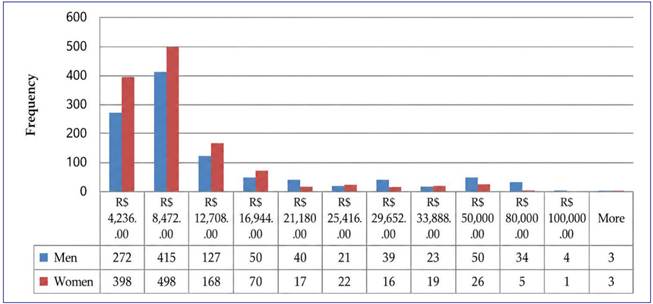 Source: Elaborated by the authors.
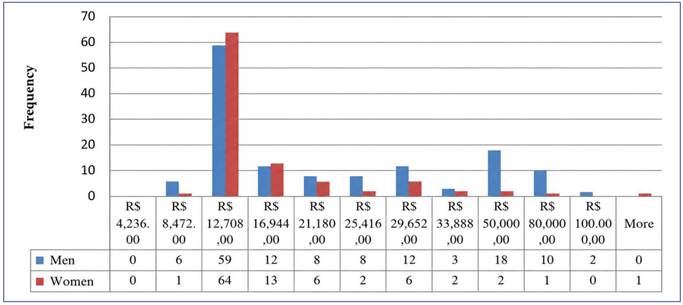 Source: Elaborated by the authors.