 Stakeholders’ perspectives on the effectiveness of agricultural advisory sources in Ontario: a Q methodology approach
ABSTRACT:
In the face of various market and digital forces, agricultural extension and advisory systems have evolved into an integrated system called pluralistic extension and advisory system. This new system of extension and advisory services (EAS) is employed by many countries, including Canada. Despite growing research on the topic, there is no evidence of studies that evaluate the effectiveness of various advisory sources within a pluralistic EAS. Such an assessment is crucial as farmers have different needs; therefore, knowing what best suits them is pivotal for effective EAS. Employing Q-methodology, we administered an online survey via Qualtrics to 49 deliberately chosen participants, including producers, advisors, researchers, and personnel from policy and administration organizations. Using PQMethod software, we analyzed stakeholders’ perspectives on pluralistic agricultural extension in Ontario, obtaining important insights for understanding the role of various agricultural advisory sources. Our findings revealed that most stakeholders favored an integrated approach to accessing advisory services, utilizing diverse advisory sources (both formal and informal), including peers as well as advisory organizations (Perspective 1). This is followed by those advocating for a formal organizations-oriented approach (Perspective 2) and a peers-oriented approach (Perspective 3). The findings imply that farmers find the best advice from a combination of traditional and personal sources that bring together formal and informal connections. These sources are more interactive, with frequent face-to-face interactions. The study highlighted the need for a comprehensive advisory approach that integrates different types of sources, including formal advisory providers and experience-sharing among farmers, as the latter was noted as an important source of information. We recommended policy measures that foster collaboration among advisory actors to support more integrated, farmer-responsive extension systems.
Key words:
Farm advisory; extension pluralism; agricultural communication; perceived effectiveness
RESUMO:
Diante de diversas forças de mercado e digitais, os sistemas de extensão e aconselhamento agrícola evoluíram para um sistema integrado chamado sistema pluralista de extensão e aconselhamento. Esse novo sistema de Serviços de Extensão e Aconselhamento (SEA) é empregado por muitos países, incluindo o Canadá. Entretanto, apesar do crescente número de pesquisas sobre o tema, não há evidências de estudos que avaliem a eficácia de diversas fontes de aconselhamento dentro de um SEA pluralista. Por isso, o objetivo deste estudo é, analisar as perspectivas das partes interessadas sobre a extensão agrícola pluralista em Ontário. uma vez que, tal avaliação é crucial, já que os agricultores têm necessidades diferentes. Dessa maneira, saber o que melhor os atende é fundamental para um SEA eficaz. Utilizando a metodologia Q, aplicamos uma pesquisa online via Qualtrics em 49 participantes selecionados intencionalmente, incluindo produtores, consultores, pesquisadores e pessoal de organizações de políticas e administração. Usando o software PQMethod, analisamos as perspectivas das partes interessadas sobre a extensão agrícola pluralista em Ontário, obtendo importantes insights para a compreensão do papel das diversas fontes de aconselhamento agrícola. Nossos resultados revelaram que a maioria das partes interessadas favorece uma abordagem integrada para o acesso a serviços de aconselhamento, utilizando diversas fontes de aconselhamento (formais e informais), incluindo pares, bem como organizações de consultoria (Perspectiva 1). Isso é seguido por aqueles que defendem uma abordagem orientada para organizações formais (Perspectiva 2) e uma abordagem orientada para pares (Perspectiva 3). Os resultados implicam que os agricultores encontram o melhor aconselhamento em uma combinação de fontes tradicionais e pessoais que reúnem conexões formais e informais. Essas fontes são mais interativas, com interações presenciais frequentes. O estudo destaca a necessidade de uma abordagem abrangente de aconselhamento que integre diferentes tipos de fontes, incluindo provedores de aconselhamento formais e o compartilhamento de experiências entre agricultores, visto que este último foi apontado como uma importante fonte de informação. Recomendamos medidas políticas que promovam a colaboração entre os atores de aconselhamento para apoiar sistemas de extensão mais integrados e responsivos às necessidades dos agricultores.
Palavras-chave:
aconselhamento agrícola; pluralismo de extensão; comunicação agrícola; eficácia percebida
INTRODUCTION
Farmers have a critical role in providing food security for the world’s increasing population. To maintain productivity, profitability, and environmental sustainability, farmers rely on different organizations and sources for information and advice for the proper functioning of their farms (CARR et al., 2016; NIKAM et al., 2022). In the face of contemporary challenges, farmers need regular access to authentic and up-to-date information for better management of their farms. Timely advice improves farmers’ understanding of better farm management practices that can enhance or sustain their agricultural productivity (KHAN et al., 2019). Hence, agricultural advice plays a critical role in maintaining the sustainability of the agricultural and food sectors.
Farm advisory is generally provided by extension and advisory services (EAS) organizations, serving as a useful source of knowledge on key agricultural issues. The primary objective of the EAS organizations is to support and facilitate people engaged in agricultural production to solve their problems and to equip them with the necessary information, skills, and technologies to improve their livelihoods and general well-being (FAURE et al., 2016). Over the years, EAS organizations have embraced enormous changes considering farmers’ ever-changing needs, which include governance structure, communication approaches, and the way they collaborate with other stakeholders. Specifically, EAS has seen a variety of institutional reforms, such as decentralization, outsourcing, privatization, and the increasing role of non-governmental organizations, farmers’ organizations, and community-based organizations (RIVERA, 2011). This approach is referred to as the pluralistic extension and advisory system (EAS), where multiple actors and organizations, including government, private sector, and non-governmental groups, provide agricultural extension and advisory services. This contrasts with traditional models that rely heavily on a single, public extension service (FAURE et al., 2016; SAHA et al., 2025). All advisory organizations in the pluralistic EAS system are pivotal stakeholders in the agriculture-food sector; therefore, it is necessary for policymakers and practitioners to understand the usefulness of these organizations comparatively from the key stakeholders’ perspective. This understanding can help develop effective outreach strategies that can reach and assist farmers effectively.
Ontario’s agricultural industry has a diverse system of information and advisory services, which includes various public and private organizations (CHOWDHURY & KABIR, 2024). This system offers multiple sources and channels to farmers to access information and advice. However, due to the wide variety of advisory sources available, it can be challenging for farmers to identify and utilize the most relevant and useful sources. Besides, farmers have different information and technological needs, depending on their farm size, location, crops grown, experience level, and, most importantly, challenges faced (RAHMAN et al., 2020). Therefore, it is critical for farmers to understand suitable EAS organizations. Especially in Ontario, where farmers face a range of challenges, including climate variability, soil health degradation, rising input costs, and evolving market and policy demands (POTTER et al., 2024). These issues require timely, context-specific, and reliable information to make informed decisions that support both productivity and sustainability. Access to agricultural advisory services is therefore crucial, as it enables farmers to address these challenges effectively, adopt best management practices, and respond to emerging risks.
Despite growing recognition of the importance of EAS, there is limited research available on how farmers perceive and utilize the diverse landscape of information and advisory services available to them. Most of the existing studies (Table S1) either deal with actors’ interaction, cooperation, and configuration within a pluralistic EAS system or are related to training, technology generation, and delivery aspects of pluralistic EAS. None of the existing research, to the authors’ best knowledge, explored the perceived effectiveness of various advisory sources in pluralistic EAS. This research gap makes it difficult to tailor EAS strategies to meet the needs of Ontario farmers effectively. Therefore, this study aims to address this gap by examining the relative usefulness of different sources of information and advice for Ontario farmers. By understanding how farmers navigate the pluralistic EAS landscape, targeted outreach strategies can be developed to align with their preferences and effectively meet their specific needs. The findings of this study will provide valuable insights for policymakers, agricultural organizations, and EAS providers seeking to improve the accessibility, relevance, and effectiveness of information and advice for farmers in Ontario, where research on pluralistic EAS is still scant. By better understanding how farmers prioritize and utilize information, we can better assist them in making informed decisions that benefit their farms, communities, and the environment.
The remainder of the paper is as follows: the next section includes the theoretical framework and literature review for this study. Section 3 describes the methods used in this research, including a description of the study area. Section 4 presents the key findings of this research and their discussion. The fifth and last section provides the conclusion of the research findings, along with highlighting key recommendations and policy implications.
Theoretical framework and literature review
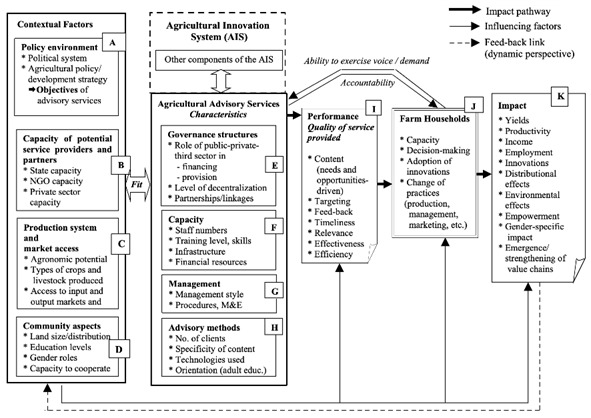
This study draws on the best-fit framework developed by BIRNER et al. (2009) as a heuristic tool to analyze the effectiveness of pluralistic Extension and Advisory Services (EAS) from the stakeholders’ perspective (Figure 1). The framework is particularly suitable for evaluating advisory systems in multi-actor environments, such as those characterized by pluralism. FAURE et al. (2016) further refined this framework to assess performance and impact across varying local contexts, emphasizing its adaptability.
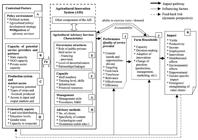
The framework includes four key components, governance structures, institutional capacity, management, and advisory methods, that together shape the performance and responsiveness of EAS. Governance structures refer to the organizational and policy arrangements of public, private, and non-profit service providers, including mechanisms for strategy, funding, and performance goals (FAURE et al., 2013). Institutional capacity focuses on the human, technical, and logistical resources necessary for delivering effective services, with both “soft” skills (e.g., communication, facilitation) and “hard” tools (e.g., infrastructure, technologies) playing essential roles (KHAN et al., 2020; KNIERIM et al., 2017; RAGASA et al., 2016).
Management practices, including planning, monitoring, and flexibility in implementation, are critical to adapting advisory services to local needs (KNIERIM et al., 2017). The final component, advisory methods, refers to the communication channels and tools used to share knowledge with farmers. These range from face-to-face interactions to group-based approaches like Farmer Field Schools (FFS), and digital tools such as smartphones and social media platforms (FAURE et al., 2016).
While these four components structure our analysis, this study pays particular attention to the nature and effectiveness of advisory sources within pluralistic systems, with a focus on service integration. Pluralistic extension, as defined by SAHA et al. (2025), refers to “multiple service providers from government, private, and civil society sectors working together to offer a variety of services by pooling resources, technology, and expertise”. In this context, service integration entails the deliberate coordination of these actors to reduce fragmentation, increase efficiency, and deliver consistent, context-responsive support to farmers. This includes joint planning, information sharing, complementary roles, and harmonized delivery mechanisms across providers.
To situate our study within the existing body of work, we reviewed key empirical studies on pluralistic extension and advisory systems. Table S1 summarizes these studies, highlighting their focus areas, methods, findings, and limitations. This synthesis helps identify knowledge gaps, particularly around the role of service integration and the effectiveness of advisory services, which this study intends to address. As shown in Table S1, while several studies have explored the diversity of service providers in pluralistic EAS, few have explicitly examined how these elements are coordinated or integrated. This study responds to that gap by focusing on service integration and the interplay of advisory methods in a multi-actor extension system. Furthermore, existing literature on pluralistic EAS is mostly focused on Asian and African contexts, often examining extension systems broadly without evaluating their effectiveness. In North America, especially the U.S., research emphasizes challenges in technology transfer, while Canadian studies primarily address the evolution of advisory systems and communication methods. However, no studies have assessed the perceived effectiveness of advisory sources in Ontario’s pluralistic EAS. Moreover, many global studies mix advisory methods with sources and offer limited theoretical grounding, relying heavily on empirical assessments without deeper conceptual analysis.
We used this conceptual framework not only to structure the literature review but also to inform the study design, including the selection of stakeholders, the formulation of survey questions, and the interpretation of empirical findings. By examining advisory sources as part of the lens of these four interconnected components, we are able to assess both systemic strengths and gaps in achieving effective, integrated, and responsive pluralistic extension systems.
MATERIALS AND METHODS
This research employed the Q methodology approach to explore stakeholders’ perceptions of various extension sources in pluralistic EAS in Ontario, Canada. The study design was informed by the conceptual framework, with survey questions and stakeholder categories aligned with the four main components - governance, capacity, management, and advisory methods - ensuring consistency between theoretical orientation and empirical inquiry. We chose this approach to understand the individualistic beliefs of various stakeholders. Instead of simply rating advisory sources using other quantitative methods, this approach uses a mix of qualitative and quantitative methods to explore the research objectives (BROWN, 1980; SCHALL et al., 2018). Q methodology sorts respondents into three groups called factors or perspectives, which share similar beliefs. This use of this method is growing among researchers exploring similar research topics in disciplines such as public health, rural development, sociology, education, veterinary science, transportation, and engineering (ALEXANDER et al., 2018; TAHERI et al., 2020; WIJAYA & OFFERMANS, 2019). Q methodology uses a small sample size to draw analogies among the study participants based on their agreement or disagreement about a certain belief (BOND, 2016). Other distinct features of this approach include its ability to be applied to a wide range of research topics, generate concise responses, and limit a researcher’s personal interference (or inclination toward certain beliefs) to a minimum, reducing the chances of biases (TAHERI et al., 2020). Therefore, considering these strengths, we chose Q methodology to explore our research objectives. The application of the Q methodology involved the following four steps.
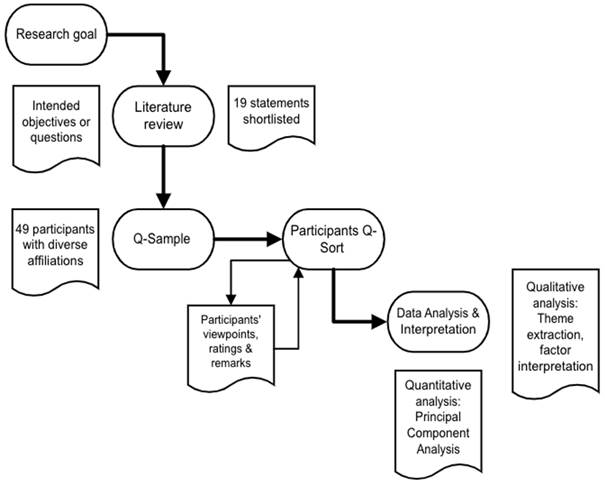
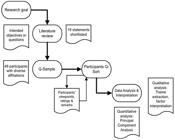
The first step involved the accumulation of diverse statements on the intended research topic, on which the approach mainly relies. Therefore, the identification of statements is a prerequisite to later steps and is the core of the methodology. The formation of the statements is based on an in-depth understanding of the research topic being explored through an intensive literature review, interviews with the target population, and analyses of content on various media platforms. In the case of this research, we relied on a literature review to formulate the statements (Table S1). These statements consider diverse facets of the usefulness of various advisory sources. In total, we shortlisted nineteen statements that list various advisory networks prevalent in the area. As part of standard research practice, the final statements underwent a pre-test, which ensured that any ambiguity or overlap of information was eliminated. After the selection of the statement, the second step involved choosing the research sample.
We used purposive sampling to select a diverse group of stakeholders involved in agriculture, including crop and livestock farmers, advisory providers, consultants, and researchers. The survey was conducted in Ontario, a key province of Canada for agricultural production. In total, we selected 49 respondents, comprising nine farmers, nine researchers, twenty-three advisors, and eight professionals from engineering, industry, administration, and policymaking. The use of a non-equitable distribution of stakeholder groups was based on the study’s focus on capturing diverse perspectives rather than achieving statistical representation. The Q method approach is suitable for such a small and diverse sample (Wijaya; Offermans, 2019). This approach allows for in-depth insights into stakeholders’ perceptions and experiences, providing a rich understanding of the advisory services landscape in Ontario. While the sample size was small, it was sufficient to identify key perspectives and facilitate meaningful analysis.
The third step involved the rating of Q statements by the respondents, who were requested to participate in an online survey to rank 19 statements. Using Qualtrics, a Q-sort activity was completed between February and March 2022. Prior to accruing their responses, participants were provided with information about ethical guidelines and a description of the research project. In order to facilitate their understanding of these two aspects, a short video tutorial was also shown that simplified the process. Participants were advised to review statements one by one and then carefully place cards to opt for agreed, disagreed, and undecided, followed by dragging and dropping them into the final Q-sort grid. Finally, Qualtrics statements were sorted using a nine-point scale: strongly agree (+4) to undecided (0) and strongly disagree (-4). Participants completing the sorting could see the outcome in Qualtrics. At this stage, we also requested participants to provide some remarks about their decisions to gain more details and their viewpoints. After completion of the Qualtrics survey, information about respondents’ socioeconomic attributes was also extracted. Besides the online Q-sorting, participants’ detailed responses were also recorded. These detailed responses were also collected through the online survey, where participants were asked to elaborate on their perceptions of the usefulness of various advisory sources.
As a fourth and final step of the Q-methodology, the analysis and interpretation of data were done using the Principal Component Analysis (PCA) approach with the help of PQMethod software (SCHMOLCK, 2014). Forty-nine Q-sorts were pooled into the PQMethod, which correlated participants’ Q-sorts with the sample of Q statements and generated factors, which basically represent respondents’ perspectives (RITTELMEYER, 2020). Initially, the analysis generated a high number of components, eight, which contradicted the standard range of 2-4 components (WIJAYA & OFFERMANS, 2019). Therefore, following BROWN (1980), we only considered those factors that had at least two significant factor loadings (0.48 at p 0.01) and an eigenvalue exceeding 1. The purpose of this was to group those factors that contained and represented the perspectives of producers, advisors, or other stakeholders on the effectiveness of various extension sources. For a better understanding of the readers, we have summarized and presented the key stages of Q methodology as a diagram flowchart (Figure 2).
RESULTS AND DISCUSSION
The findings (Table S2 ) revealed that the analysis formed three different categories of respondents (F1-F3) based on their preferences in using various advisory sources. The detailed distribution is given in table S3, where Q sort ID represents stakeholders’ configuration, while F1-F3 represent three perspectives, which indicate sources of advice and information. Details on participants’ affiliations and their personal characteristics are given in table SA1. Each of these three perspectives showcases a distinctive standpoint in terms of the perceived effectiveness of various agricultural advisory sources. Therefore, based on what each of these three perspectives represented, we named these perspectives as follows:
Perspective 1: Integrated approach advocates
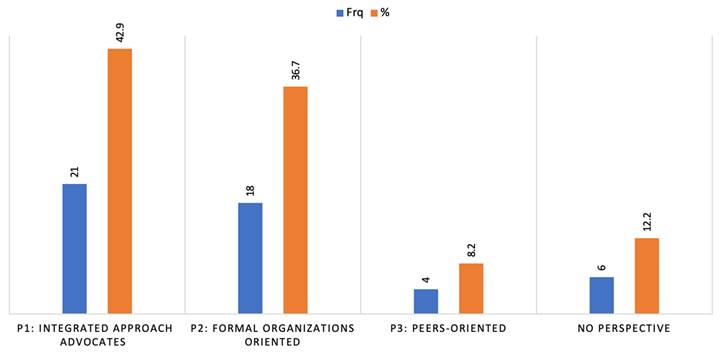
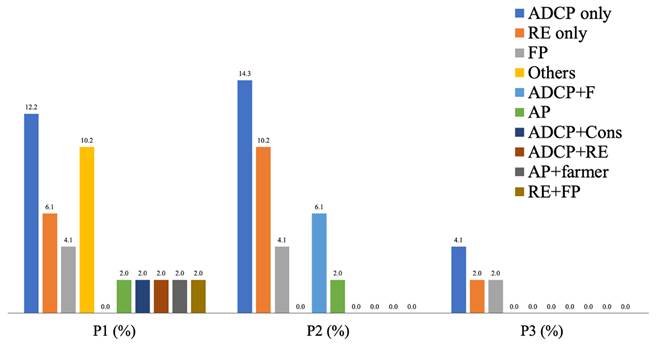
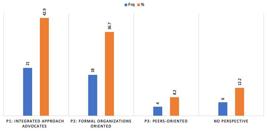
This perspective was formed by the majority of the respondents (42%), who indicated both formal (advisory organizations and consultants) and informal (peer networks) actors as useful sources of advisory (Figure 3). Specifically, they rated peers (S11: +3) as the most useful information source that meets their information needs, followed by equipment dealers and manufacturers (S9: +1) and subject matter specialists /advisors/agronomists from local ministry, Ontario Ministry of Agriculture, Food, and Rural Affairs or OMAFRA (S5: +1). This showed an inclination towards a pluralistic approach that considers information and advice from multiple sources, which could be more helpful to farm owners as having access to multiple advisory sources on specific issues, farmers are better able to make informed decisions. The reason for such a diversified use of advisory sources could be due to the fact that this perspective includes a wide range of stakeholders, including respondents from research and education (6%), personnel from agricultural advisory organizations (12%), farmers (4%) as well as personnel from policy and administration (Figure 4).
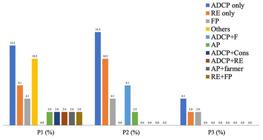
Respondents distributions in terms of their affiliations, The legend includes abbreviations representing respondent types (ADCP: Agriculture Advisor/consultant/practitioner for environmental issues, RE: Researches/education in other sector, RE+FP: Researcher/educator also a farmer/producer, FP: Farmer/producer from livestock sector, ADCP+F: Agriculture Advisor/consultant/practitioner also doing farming in the field of crop/soil, ADCP+Cons: Agriculture Advisor/consultant/practitioner also a conservator in other sector, ADCP+RE: Agriculture Advisor/consultant/practitioner also a researcher/educator in other sector, AP: Administrator/policy maker, AP+farmer: Administrator/policy maker also a farmer, Others: respondents belong to other categories).
Most respondents were of the view that farmers’ direct social networks, which include their friends, family members, and acquaintances who are in the farming business, are a great source of advice. Their perception is based on the notion that they are at a similar level of technical literacy in understanding and comprehending advisory content. Furthermore, a close connection with fellow farm owners also provides them with an opportunity to observe the changes as a result of new practices and technology adoption. This was also evident in the detailed responses, as a research and education consultant mentioned:
“Peers (friends and families) have been there, and can tell you how their results changed” (RE_4_L), RE_4_L represents respondent type, see table SA1 for details.
This perspective further reveals that respondents were not only inclined towards peers, but some advocated that crop inputs and equipment dealers are useful sources for sharing useful advice.
One added:
“Input dealers and their certified crop advisors on staff connect with the farmers more often than any other extension personnel” (ADCP_15_C/S).
This showed that advisory actors have more physical presence when visiting their farms. This is evident from an ADCP’s interview:
“Peers, and those with their ‘boots on the ground’ are generally very influential. Farmers respect each other. Consultants and specialists are generally also very well respected among farmers” ADCP_16_L.
Besides peers and equipment dealers, many respondents favored specialists.
“I still find the relevance, objectivity, and knowledge of OMAFRA staff to be very high” RE_5_O.
“OMAFRA subject matter specialists /advisors/agronomists have unbiased facts and agenda need more of them” ADCP_12_C/S.
We further found that some respondents were opposed to advisory sources that are too technical and expected to connect with those who have impartial advice. One added:
“We do not expect deep technical knowledge from our politicians, and so looking to them for detailed technical advice would be futile. I have placed the OMAFRA subject matter specialists slightly ahead of the industry advisors solely on the basis that their advice should be unbiased, but there is a lot of cross-over between these categories in both the level of technical expertise and the unbiased nature of the advice” RE_8_C/S.
The reliance on both types of advisory sources basically shows respondents’ inclination to adopt an inclusive approach that integrates knowledge from both scientific and traditional (cultural) sources and then assesses as per need or usefulness. We also find evidence of such an approach in other countries in Africa and Asia, which suggests farmers’ usage of both public and private advisory services as well as consultation with fellow farmers in their personal social networks (KHAN et al., 2019; MSOFFE & NGULUBE, 2017). RUST et al. (2022) argued that some progressive farmers also tend to stay in the loop of social networks of friends, neighbors, and family members in getting advice in addition to relying on extension agents and research officers. This is because of the strong sense of trust they have in each other.
We further assume that farmers might be opting for such an approach to favor those advisory and information sources that have a two-way mode of communication, enabling instant feedback, something endorsed by recent empirical studies (ORTIZ-CRESPO et al., 2021) and reportedly lacking in digital advisory sources (KHAN et al., 2019). Therefore, interactive sources such as advisors, consultants, and fellow farmers who are physically accessible and able to provide advice are usually perceived as useful advisory sources. For instance, MSOFFE & NGULUBE (2017) argued that farmers enjoy interpersonal sources because they allow two-way communication, provide quick access, immediate feedback, ease of use, and convey information specific to their local situations.
Perspective 2: Formal organizations-oriented
As the name suggests, over one-third of the respondents shaped this perspective, ranking consultants (e.g., veterinarians, crop consultants, nutritionists, etc.) (S3: +3) as the most useful sources in meeting their advisory needs, followed by producer and commodity organizations (S12: +1). Studies showed that these organizations have been a crucial source of information because they value trust as a key resource (KASSEM et al., 2019; RUST et al., 2022). This implies that farmers, having built a strong network with any organization, such as private input or equipment providers, considered such resources a key asset in terms of farming advice. For instance, one respondent mentioned that:
“Trusted advisors that know the farmer, their objectives and style are the best... again based on trust” (Oth_1_L).
By rating advisory consultants as the most effective information source, a respondent argued that:
“Advisory consultants - these are the folks who live on the front lines - they have invested a great deal in training, accreditation, their industry and genuinely have a personal and professional interest in seeing their clients & our industry move forward. They are limited for resources though so obviously need to prioritize time and resources to where they can generate sufficient income to justify their overhead” (ADCP_F_5_C/S_Oth).
This perspective shows an exchange of farm knowledge between producers and members of commodity organizations such as dairy and poultry farmers or horticultural crop growers associations. The flow of information between these groups of people enables them to share, discuss, and compare various methods and new technologies because of members’ firsthand experience in common farm management operations. Studies in Meso-America and Sub-Saharan Africa (HELLIN et al., 2009; SHIFERAW et al., 2011) suggested that these networks are a pivotal source of market information for farm owners, which helps them regularly access relevant information needed for their everyday transactions in terms of selling farm commodities or buying farm inputs. Interestingly, this perspective includes a representation of advisors and consultants who were also farmers, something absent in perspective 1, which might explain why the narrative of this group favored community and producer organizations as preferred advisory sources, among other providers.
We further found that respondents in this perspective also raised concerns about some of the sources; they indicated private sector grant providers and donors (e.g., private industry grants) (S17, -2) and other non-profit organizations (S13, -2) as the least effective resources. We assumed that since these actors are not directly associated with providing farmers with crop-specific advisory, they are considered less useful than other mainstream partners focusing on agronomic inputs and related advisory. This is evident in our findings, which suggested respondents were mostly in favor of those advisory providers that had more physical presence at a grassroots level, highlighting the significance of localized and tangible support in agricultural practices. This preference suggested that producers place a high value on direct engagement, accessibility, and proximity while seeking advisory services. One possible explanation for this trend could be the immediate and noticeable benefits derived from on-the-ground presence. Advisors who are physically present can better understand the unique challenges, environmental conditions, and contextual factors specific to the local farmers. This interaction facilitates more personalized guidance, enabling advisors to offer solutions tailored to meet farmers’ immediate needs.
Moreover, a strong physical presence at the grassroots level fosters trust and understanding between farmers and advisory networks. Face-to-face interactions build relationships and allow farmers to establish a sense of reliability in the advice they receive. RUST et al. (2022) argued that this trust is fundamental in encouraging farmers to confidently adopt recommended practices and innovations, knowing that the advice comes from a source intimately familiar with the local agricultural landscape.
Perspective 3: peer-oriented
We further find that a few respondents (8%) are grouped in perspective 3, which indicates their inclination towards peers (e.g., farmers, friends, and families) (S11: +1) as the primary source of agricultural advice. As the name suggests, respondents in this perspective consider informal networks of friends as the most useful networks for their advisory needs. Respondents having this viewpoint disagreed with other sources like input dealers (S2: -3), regulatory organizations (e.g., CFIA) (S15: -2), and politicians (municipal, provincial, federal) (S8: -2). Despite the proliferation of EAS sources and organizations, it is fascinating to see that farmers still rely most on their peers and advisory consultants for the advice and information they require.
Previous research suggested that among various advisory sources available, some farmers still prefer going to their fellow farmers for any advice (LIN et al., 2021; YASEEN et al., 2016). This could possibly be due to cultural beliefs or due to the fact that in some cultures, farmers feel reluctant to take advice from outsiders due to trust issues (RUST et al., 2022).
A respondent mentioned that:
“Farmers traditionally don’t like being told what to do, but like to learn from those testing out their theories in field” (ADCP_F_4_C).
Another respondent raised concerns over the impartiality of the advice:
“Advisory consultants should provide less biased advice, often have professional designation” (ADCP_2_L).
While advocating peers as the most useful network of information exchange, a respondent stated:
“Peers (farmers’ friends and families) have been there, and can tell you how their results changed” (RE_4_L).
We further found some respondents in perspective three criticizing a few advisory sources such as equipment dealers and manufacturers (S9, -1) and politicians (municipal, provincial, federal) (S8, -2). Their perception was driven by the understanding that these organizations do not possess practical knowledge about farming.
One interviewee stated:
“Politicians (municipal, provincial, federal) have limited knowledge and interaction with farmers” (RE_2_O).
Another respondent added:
“Politicians unless they are or have farmed are not helpful. Peers and Omafra staff that you respect are invaluable” (FP_2_C/O).
Studies showed that while peer-to-peer knowledge exchange, especially on online platforms such as WhatsApp and Facebook groups, provides farmers with timely and context-specific information, the absence of professional mediation increases the risk of misinformation (CHOWDHURY et al., 2023; KANKANAMGE et al., 2025). Without the guidance of trained extensionists, technical details may be misunderstood, oversimplified, or inaccurately applied, potentially leading to ineffective or even harmful practices on farms.
While this perspective suggested farmers’ higher tendency to exchange information with peers, RAHMAN et al. (2020) report that it largely depends on the type of information required. For instance, the farmers’ choices of advisory sources largely change in different phases, such as the problem detection phase and the seeking advice for new practices phase. This implies that the preference for advisory sources largely depends on contextual factors. We further find that respondents in this group were adversaries of most formal advisory organizations, such as equipment dealers and manufacturers, input dealers (e.g., fertilizer, seed, pesticide), and salespersons.
One reason could be increasing market volatility, as these service providers mainly deal with selling inputs and farm equipment to farmers. Due to rising inflation, the cost of farm hardware is increasing continuously, negatively affecting the perception of input providers as a credible advisory source. Another reason could be their concerns about impartiality, as some respondents described that since these dealers and input providers are mainly interested in marketing their brands, their advice is not credible. Several studies reported similar issues regarding advisory services by private sector input supplies dealers (KHAN et al., 2019; STUART et al., 2018; WUEPPER et al., 2021). However, STUART et al. (2018) argued that despite such concerns, some suppliers still find a way to win farmers’ trust in terms of providing them both the advisory and farm inputs.
Towards an integrated approach for integrating services in pluralistic advisory systems in Ontario
Together, these perspectives illustrate the need for an integrated approach, which utilized the strengths of both formal and informal actors while addressing their limitations. Public-private partnerships, enhanced training initiatives, and mechanisms for ensuring the quality and consistency of advisory services across all sources are essential steps toward achieving a truly integrated and effective pluralistic extension system. This integration not only ensures a holistic support system for farmers but also aligns with the evolving dynamics of EAS in response to market and technological shifts (KING & MEYER, 2006; VAN DUIJN et al., 2018; WOUTERS et al., 2023). In the global north, innovation platforms (TURNER et al., 2020) have been used for coordination and integration of advisory services in a pluralistic system. While any actors from the public, producer, or private sectors can take on the role of platform facilitator (SCHUT et al., 2019), there should be strong public sector support (AKIS, 2019; MOREDDU, 2013; SCAR, 2013) to legitimize coordination efforts and equip advisory services with the power and tools necessary for effective service delivery (COOK et al., 2021).
The three perspectives derived from this study offer further insights into how such service integration might be realized. While the integrated approach (Perspective 1) emphasizes a balanced reliance on both formal and informal sources, the other two perspectives provide complementary pathways for incorporating diverse contributions from various stakeholders. This aligns with the conceptual framework, which highlighted advisory methods and governance structures as central to understanding how pluralistic systems function. By examining respondents’ preferences and critiques of different advisory sources, such as face-to-face extension, peer networks, and hybrid approaches, we illustrate how real-world practices reflect systemic strengths and weaknesses outlined in the framework. For instance, formal advisors can work closely with commodity groups to tailor recommendations that align with specific crop or livestock needs while ensuring technical accuracy and strategic foresight. Perspective 3, conversely, underscores the critical role of informal and private sector actors, such as friends, family, and farm equipment dealers, in meeting farmers’ information needs. While these sources are often trusted for their accessibility and relatability, public actors and producer organizations can play a crucial role in ensuring the accuracy and impartiality of advice disseminated by such informal sources. This could involve creating frameworks for informal advisors to access verified information or offering training programs that strengthen their capacity to provide reliable guidance on issues farmers face.
CONCLUSION
This study examined stakeholders’ perceptions of the effectiveness of various advisory sources within a pluralistic Extension and Advisory Services (EAS) system in Ontario, Canada. Using Q methodology, we identified three distinct perspectives among 49 respondents representing farmers, advisors, researchers, and other professionals. The majority supported an integrated approach (Perspective 1), favoring a combination of formal advisory organizations and peer-based sources. This was followed by those who preferred a formal, organization-driven model (Perspective 2), and finally, those who prioritized peer-based advisory sources (Perspective 3).
Specifically, respondents in Perspective 1 rated information sharing with friends and family, advice from farm equipment dealers, and OMAFRA specialists as the most useful advisory sources. Perspective 2 respondents valued advisory consultants and producer associations as the most useful information sources. In contrast, respondents in Perspective 3 strongly emphasized knowledge exchange with friends and family as a key resource. These differences reveal that even within a diverse advisory landscape, conventional extension approaches (e.g., public sector-led, top-down advisory services focused on technology transfer and expert-driven recommendations) and trusted personal networks continue to play a central role in how agricultural advice can effectively be accessed and utilized.
The findings underscore the value of promoting integrated advisory models that combine formal expertise with locally grounded, trust-based networks. Sources that offer interactive, frequent, and in-person engagement are particularly valued by farmers, as they enable two-way communication and responsiveness to specific concerns.
REFERENCES
-
AKIS, E. U. S. Preparing for future AKIS in Europe. Brussels, European Commission, v.2, n.0, p.1, 2019. <https://scar-europe.org/images/AKIS/Documents/report-preparing-for-future-akis-in-europe_en.pdf>. Accessed: Jun. 12, 2025.
» https://scar-europe.org/images/AKIS/Documents/report-preparing-for-future-akis-in-europe_en.pdf -
ALEXANDER, K. S. et al. Rice farming systems in Southern Lao PDR: Interpreting farmers’ agricultural production decisions using Q methodology. Agricultural Systems, v.160, p.1-10, 2018. Available from: <Available from: https://www.sciencedirect.com/science/article/abs/pii/S0308521X17308570 >. Accessed: May, 02, 2025. doi: 10.1016/j.agsy.2017.10.018.
» https://doi.org/10.1016/j.agsy.2017.10.018.» https://www.sciencedirect.com/science/article/abs/pii/S0308521X17308570 -
BIRNER, R. et al. From best practice to best fit: a framework for designing and analyzing pluralistic agricultural advisory services worldwide. The Journal of Agricultural Education and Extension, v.15, n.4, p.341-355, 2009. Available from: <Available from: https://www.tandfonline.com/doi/abs/10.1080/13892240903309595 >. Accessed: May, 02, 2025. doi: 10.1080/13892240903309595.
» https://doi.org/10.1080/13892240903309595.» https://www.tandfonline.com/doi/abs/10.1080/13892240903309595 -
BOND, J. Extension agents and conflict narratives: a case of Laikipia County, Kenya. The Journal of Agricultural Education and Extension, v.22, n.1, p.81-96, 2016. Available from: <Available from: https://doi.org/10.1080/1389224X.2014.997256 >. Accessed: Jun. 12, 2025. doi: 10.1080/1389224X.2014.997256.
» https://doi.org/10.1080/1389224X.2014.997256.» https://doi.org/10.1080/1389224X.2014.997256 -
BROWN, S. R. Political subjectivity: Applications of Q methodology in political science. New Haven, CT, USA.: Yale University Press, 1980. Available from: <Available from: https://www.researchgate.net/publication/247202200_Political_Subjectivity_Applications_of_Q_Methodology_in_Political_Science >. Accessed: Jun. 12, 2025.
» https://www.researchgate.net/publication/247202200_Political_Subjectivity_Applications_of_Q_Methodology_in_Political_Science -
CARR, E. R. et al. Understanding women’s needs for weather and climate information in agrarian settings: the case of Ngetou Maleck, Senegal. Weather, Climate, and Society, v.8, n.3, p.247-264, 2016. Available from: <Available from: https://journals.ametsoc.org/view/journals/wcas/8/3/wcas-d-15-0075_1.xml >. Accessed: Mar. 02, 2025. doi: 10.1175/WCAS-D-15-0075.1.
» https://doi.org/10.1175/WCAS-D-15-0075.1.» https://journals.ametsoc.org/view/journals/wcas/8/3/wcas-d-15-0075_1.xml -
CHOWDHURY, A.; KABIR, K. H. How do agricultural advisory services meet the needs of farmers? Applying Q-methodology to assessing multi-stakeholders’ perspectives on the pluralistic advisory system in Ontario, Canada. Journal of Rural Studies, v.105, p.103186, 2024. Available from: <Available from: https://www.sciencedirect.com/science/article/abs/pii/S0743016723002528 >. Accessed: Mar. 02, 2025. doi: 10.1016/j.jrurstud.2023.103186.
» https://doi.org/10.1016/j.jrurstud.2023.103186.» https://www.sciencedirect.com/science/article/abs/pii/S0743016723002528 -
CHOWDHURY, A. et al. Systematic review of misinformation in social and online media for the development of an analytical framework for agri-food sector. Sustainability, v.15, n.6, p.4753, 2023. Available from: <Available from: https://www.mdpi.com/2071-1050/15/6/4753 >. Accessed: Mar. 02, 2025. doi: 10.3390/su15064753.
» https://doi.org/10.3390/su15064753.» https://www.mdpi.com/2071-1050/15/6/4753 -
COOK, B. R. et al. Humanising agricultural extension: a review. World Development, v.140, p.105337, 2021. Available from: <Available from: https://www.sciencedirect.com/science/article/pii/S0305750X20304642 >. Accessed: Jun. 12, 2025. doi: 10.1016/j.worlddev.2020.105337.
» https://doi.org/10.1016/j.worlddev.2020.105337.» https://www.sciencedirect.com/science/article/pii/S0305750X20304642 - FAURE, G. et al. Framework to assess performance and impact of pluralistic agricultural extension systems: The best-fit framework revisited. Intl Food Policy Res Inst, 2016. v.1567.
-
FAURE, G. et al. Which advisory system to support innovation in conservation agriculture? The case of Madagascar’s Lake Alaotra. The Journal of Agricultural Education and Extension, v.19, n.3, p.257-270, 2013. Available from: <Available from: https://www.tandfonline.com/doi/abs/10.1080/1389224X.2013.782169 >. Accessed: Mar. 02, 2025. doi: 10.1080/1389224X.2013.782169.
» https://doi.org/10.1080/1389224X.2013.782169.» https://www.tandfonline.com/doi/abs/10.1080/1389224X.2013.782169 -
HELLIN, J. et al. Farmer organization, collective action and market access in Meso-America. Food Policy, v.34, n.1, p.16-22, 2009. Available from: <Available from: https://www.sciencedirect.com/science/article/abs/pii/S0306919208000754 >. Accessed: Jun. 12, 2025. doi: 10.1016/j.foodpol.2008.10.003.
» https://doi.org/10.1016/j.foodpol.2008.10.003.» https://www.sciencedirect.com/science/article/abs/pii/S0306919208000754 -
KANKANAMGE, K. S. I. et al. Evils of knowledge sharing and learning: The case of agri-food misinformation in virtual communities of practices in Sri Lanka. Data and Information Management, p.100090, 2025. Available from: <Available from: https://www.sciencedirect.com/science/article/pii/S2543925124000263 >. Accessed: Jun. 12, 2025. doi: 10.1016/j.dim.2024.100090.
» https://doi.org/10.1016/j.dim.2024.100090.» https://www.sciencedirect.com/science/article/pii/S2543925124000263 -
KASSEM, H. S. et al. Farmers’ perception of the quality of mobile-based extension services in egypt: A comparison between public and private provision. Information Development, p. 0266666919832649, 2019. Available from: <Available from: https://journals.sagepub.com/doi/abs/10.1177/0266666919832649 >. Accessed: Jun. 12, 2025. doi: 10.1177/0266666919832649.
» https://doi.org/10.1177/0266666919832649.» https://journals.sagepub.com/doi/abs/10.1177/0266666919832649 -
KHAN, N. A. et al. Public institutions’ capacities regarding climate change adaptation and risk management support in agriculture: the case of Punjab Province, Pakistan. Scientific Reports, v.10, n.1, 2020. Available from: <Available from: https://www.nature.com/articles/s41598-020-71011-z >. Accessed: Mar. 02, 2025. doi: 10.1038/s41598-020-71011-z.
» https://doi.org/10.1038/s41598-020-71011-z.» https://www.nature.com/articles/s41598-020-71011-z -
KHAN, N. A. et al. Farmers’ use of mobile phone for accessing agricultural information in Pakistan: A case of Punjab province. Ciencia Rural, v.49, n.10, 2019. Available from: <Available from: https://www.scielo.br/j/cr/a/v4VvTspq6JLYCKR5YdxM6PR/?lang=en >. Accessed: Mar. 02, 2025. doi:10.1590/0103-8478cr20181016.
» https://doi.org/10.1590/0103-8478cr20181016.» https://www.scielo.br/j/cr/a/v4VvTspq6JLYCKR5YdxM6PR/?lang=en -
KING, G.; MEYER, K. Service integration and co-ordination: a framework of approaches for the delivery of co-ordinated care to children with disabilities and their families. Child: Care, Health and Development, v.32, n.4, p.477-492, 2006. Available from: <Available from: https://onlinelibrary.wiley.com/doi/abs/10.1111/j.1365-2214.2006.00610.x >. Accessed: Jun. 12, 2025. doi: 10.1111/j.1365-2214.2006.00610.x.
» https://doi.org/10.1111/j.1365-2214.2006.00610.x.» https://onlinelibrary.wiley.com/doi/abs/10.1111/j.1365-2214.2006.00610.x -
KNIERIM, A. et al. Pluralism of agricultural advisory service providers-Facts and insights from Europe. Journal of rural studies, v.55, p.45-58, 2017. Available from: <Available from: https://www.sciencedirect.com/science/article/abs/pii/S0743016716302042 >. Accessed: Jun. 12, 2025. doi: 10.1016/j.jrurstud.2017.07.018.
» https://doi.org/10.1016/j.jrurstud.2017.07.018.» https://www.sciencedirect.com/science/article/abs/pii/S0743016716302042 -
LIN, T. et al. Farmer social networks: The role of advice ties and organizational leadership in agroforestry adoption. PLOS ONE, v.16, n.8, p.e0255987, 2021. Available from: <Available from: https://journals.plos.org/plosone/article?id=10.1371/journal.pone.0255987 >. Accessed: Jun. 12, 2025. doi: 10.1371/journal.pone.0255987.
» https://doi.org/10.1371/journal.pone.0255987.» https://journals.plos.org/plosone/article?id=10.1371/journal.pone.0255987 -
MOREDDU, C. Agricultural innovation systems: A framework for analysing the role of the government. OECD, 2013. Available from: <Available from: https://www.oecd.org/en/publications/2013/06/agricultural-innovation-systems_g1g2ec7d.html >. Accessed: Jun. 12, 2025.
» https://www.oecd.org/en/publications/2013/06/agricultural-innovation-systems_g1g2ec7d.html -
MSOFFE, G. E. P.; NGULUBE, P. Information sources preference of poultry farmers in selected rural areas of Tanzania. Journal of Librarianship and Information Science, v.49, n.1, p.82-90, 2017. Available from: <Available from: https://journals.sagepub.com/doi/abs/10.1177/0961000616632054 >. Accessed: Jun. 12, 2025. doi: 10.1177/0961000616632054.
» https://doi.org/10.1177/0961000616632054.» https://journals.sagepub.com/doi/abs/10.1177/0961000616632054 -
NIKAM, V. et al. Farmers’ information needs, access and its impact: Evidence from different cotton producing regions in the Maharashtra state of India. Agricultural Systems, v.196, p.103317, 2022. Available from: <Available from: https://www.sciencedirect.com/science/article/abs/pii/S0308521X21002705 >. Accessed: Mar. 02, 2025. doi: 10.1016/j.agsy.2021.103317.
» https://doi.org/10.1016/j.agsy.2021.103317.» https://www.sciencedirect.com/science/article/abs/pii/S0308521X21002705 -
ORTIZ-CRESPO, B. et al. User-centred design of a digital advisory service: enhancing public agricultural extension for sustainable intensification in Tanzania. International Journal of Agricultural Sustainability, v.19, n.5-6, p.566-582, 2021. Available from: <Available from: https://www.tandfonline.com/doi/full/10.1080/14735903.2020.1720474 >. Accessed: Mar. 02, 2025. doi: 10.1080/14735903.2020.1720474.
» https://doi.org/10.1080/14735903.2020.1720474.» https://www.tandfonline.com/doi/full/10.1080/14735903.2020.1720474 -
POTTER, C. et al. Best management practice adoption amongst potato producers in Ontario: a study of drivers and barriers. Frontiers in Sustainable Food Systems, v.8, n.23, 2024. Available from: <Available from: https://www.frontiersin.org/journals/sustainable-food-systems/articles/10.3389/fsufs.2024.1358515/full >. Accessed: Mar. 02, 2025. doi: 10.3389/fsufs.2024.1358515.
» https://doi.org/10.3389/fsufs.2024.1358515.» https://www.frontiersin.org/journals/sustainable-food-systems/articles/10.3389/fsufs.2024.1358515/full -
RAGASA, C. et al. Factors affecting performance of agricultural extension: evidence from Democratic Republic of Congo. The Journal of Agricultural Education and Extension, v.22, n.2, p.113-143, 2016. Available from: <Available from: https://www.tandfonline.com/doi/abs/10.1080/1389224X.2015.1026363 >. Accessed: Mar. 02, 2025. doi: 10.1080/1389224X.2015.1026363.
» https://doi.org/10.1080/1389224X.2015.1026363.» https://www.tandfonline.com/doi/abs/10.1080/1389224X.2015.1026363 -
RAHMAN, T. et al. Agro-information service and information-seeking behaviour of small-scale farmers in rural Bangladesh. Asia-Pacific Journal of Rural Development, v.30, n.1-2, p.175-194, 2020. Available from: <Available from: https://journals.sagepub.com/doi/abs/10.1177/1018529120977259 >. Accessed: Mar. 02, 2025. doi: 10.1177/1018529120977259.
» https://doi.org/10.1177/1018529120977259.» https://journals.sagepub.com/doi/abs/10.1177/1018529120977259 -
RITTELMEYER, P. Socio-cultural perceptions of flood risk and management of a levee system: Applying the Q methodology in the California Delta. Geoforum, v.111, p.11-23, 2020. Available from: <Available from: https://www.sciencedirect.com/science/article/abs/pii/S0016718520300658 >. Accessed: Mar. 02, 2025. doi: 10.1016/j.geoforum.2020.02.022.
» https://doi.org/10.1016/j.geoforum.2020.02.022.» https://www.sciencedirect.com/science/article/abs/pii/S0016718520300658 -
RIVERA, W. M. Public sector agricultural extension system reform and the challenges ahead. The Journal of Agricultural Education and Extension, v.17, n.2, p.165-180, 2011. Available from: <Available from: https://www.tandfonline.com/doi/abs/10.1080/1389224X.2011.544457 >. Accessed: Mar. 02, 2025. doi: 10.1080/1389224X.2011.544457.
» https://doi.org/10.1080/1389224X.2011.544457.» https://www.tandfonline.com/doi/abs/10.1080/1389224X.2011.544457 -
RUST, N. A. et al. Have farmers had enough of experts? Environmental Management, v.69, n.1, p.31-44, 2022. Available from: <Available from: https://link.springer.com/article/10.1007/s00267-021-01546-y >. Accessed: Mar. 02, 2025. doi: 10.1007/s00267-021-01546-y.
» https://doi.org/10.1007/s00267-021-01546-y.» https://link.springer.com/article/10.1007/s00267-021-01546-y -
SAHA, P. et al. An overview of pluralism in agricultural extension and advisory services. International Research Journal of Multidisciplinary Scope, v.06, n.01, p.131-138, 2025. Available from: <Available from: https://www.irjms.com/wp-content/uploads/2025/01/Manuscript_IRJMS_02074_WS.pdf >. Accessed: Mar. 02, 2025. doi: 10.47857/irjms.2025.v06i01.02074.
» https://doi.org/10.47857/irjms.2025.v06i01.02074.» https://www.irjms.com/wp-content/uploads/2025/01/Manuscript_IRJMS_02074_WS.pdf -
SCAR, E. U. Agricultural knowledge and innovation systems towards 2020 - an orientation paper on linking innovation and research. Brussels, Belgium, 2013. Available from: <Available from: https://scar-europe.org/images/AKIS/Documents/AKIS_towards_2020.pdf >. Accessed: Mar. 02, 2025.
» https://scar-europe.org/images/AKIS/Documents/AKIS_towards_2020.pdf -
SCHALL, D. et al. Understanding stakeholder perspectives on agricultural best management practices and environmental change in the Chesapeake Bay: A Q methodology study. Journal of Rural Studies, v.60, p.21-31, 2018. Available from: <Available from: https://www.sciencedirect.com/science/article/abs/pii/S0743016717305739 >. Accessed: Feb. 03, 2025. doi: 10.1016/j.jrurstud.2018.03.003.
» https://doi.org/10.1016/j.jrurstud.2018.03.003.» https://www.sciencedirect.com/science/article/abs/pii/S0743016717305739 -
SCHMOLCK, P. PQMethod manual. Retrieved from the PQ Method website. 2014. Available from: <Available from: https://schmolck.org/qmethod/pqmanual.htm >. Accessed: Jan. 12, 2025.
» https://schmolck.org/qmethod/pqmanual.htm -
SCHUT, M. et al. Innovation platforms in agricultural research for development. Experimental Agriculture, v.55, n.04, p.575-596, 2019. Available from: <Available from: https://www.cambridge.org/core/journals/experimental-agriculture/article/innovation-platforms-in-agricultural-research-for-development/E149AE573D72F5E04B1CFEFC4E68D48F >. Accessed: Mar. 02, 2025. doi: 10.1017/S0014479718000200.
» https://doi.org/10.1017/S0014479718000200.» https://www.cambridge.org/core/journals/experimental-agriculture/article/innovation-platforms-in-agricultural-research-for-development/E149AE573D72F5E04B1CFEFC4E68D48F -
SHIFERAW, B. et al. Improving market access and agricultural productivity growth in Africa: what role for producer organizations and collective action institutions? Food Security, v.3, n.4, p.475-489, 2011. Available from: <Available from: https://link.springer.com/article/10.1007/s12571-011-0153-0 >. Accessed: Mar. 12, 2025. doi: 10.1007/s12571-011-0153-0.
» https://doi.org/10.1007/s12571-011-0153-0.» https://link.springer.com/article/10.1007/s12571-011-0153-0 -
STUART, D. et al. Farmer selection of sources of information for nitrogen management in the US Midwest: Implications for environmental programs. Land Use Policy, v.70, p.289-297, Jan. 2018. Available from: <Available from: https://www.sciencedirect.com/science/article/abs/pii/S0264837717305707 >. Accessed: Sept. 02, 2025. doi: 10.1016/j.landusepol.2017.10.047.
» https://doi.org/10.1016/j.landusepol.2017.10.047.» https://www.sciencedirect.com/science/article/abs/pii/S0264837717305707 -
TAHERI, F. et al. Wireless sensor network for small-scale farming systems in southwest Iran: Application of Q-methodology to investigate farmers’ perceptions. Computers and Electronics in Agriculture, v.177, p.105682, 2020. Available from: <Available from: https://doi.org/ 10.1016/j.compag.2020.105682 >. Accessed: Mar. 02, 2025. doi: 10.1016/j.compag.2020.105682.
» https://doi.org/10.1016/j.compag.2020.105682.» https://doi.org/ 10.1016/j.compag.2020.105682 -
TURNER, J. A. et al. Revealing power dynamics and staging conflicts in agricultural system transitions: Case studies of innovation platforms in New Zealand. Journal of Rural Studies, v.76, p.152-162, 2020. Available from: <Available from: https://doi.org/ 10.1016/j.jrurstud.2020.04.022 >. Accessed: Mar. 02, 2025. doi: 10.1016/j.jrurstud.2020.04.022.
» https://doi.org/10.1016/j.jrurstud.2020.04.022.» https://doi.org/ 10.1016/j.jrurstud.2020.04.022 -
VAN DUIJN, S. et al. Service integration across sectors in Europe: literature and practice. International Journal of Integrated Care, v.18, n.0, p.6, 2018. Available from: <Available from: https://pmc.ncbi.nlm.nih.gov/articles/PMC6095054/ >. Accessed: Mar. 02, 2025. doi: 10.5334/ijic.3107.
» https://doi.org/10.5334/ijic.3107.» https://pmc.ncbi.nlm.nih.gov/articles/PMC6095054/ -
WIJAYA, A.; OFFERMANS, A. Public agricultural extension workers as boundary workers: identifying sustainability perspectives in agriculture using Q-methodology. The Journal of Agricultural Education and Extension, v.25, n.1, p.3-24, 2019. Available from: <Available from: https://www.tandfonline.com/doi/abs/10.1080/1389224X.2018.1512875 >. Accessed: Mar. 02, 2025. doi: 10.1080/1389224X.2018.1512875.
» https://doi.org/10.1080/1389224X.2018.1512875.» https://www.tandfonline.com/doi/abs/10.1080/1389224X.2018.1512875 -
WOUTERS, S. et al. Strategies to advance the dream of integrated digital public service delivery in inter-organizational collaboration networks. Government Information Quarterly, v.40, n.1, p.101779, 2023. Available from: <Available from: https://www.sciencedirect.com/science/article/abs/pii/S0740624X22001150 >. Accessed: Jan. 20, 2025. doi: 10.1016/j.giq.2022.101779.
» https://doi.org/10.1016/j.giq.2022.101779.» https://www.sciencedirect.com/science/article/abs/pii/S0740624X22001150 -
WUEPPER, D. et al. Does it matter who advises farmers? Pest management choices with public and private extension. Food Policy, v.99, p.101995, 2021. Available from: <Available from: https://www.sciencedirect.com/science/article/pii/S0306919220302013 >. Accessed: Mar. 15, 2025. doi: 10.1016/j.foodpol.2020.101995.
» https://doi.org/10.1016/j.foodpol.2020.101995.» https://www.sciencedirect.com/science/article/pii/S0306919220302013 -
YASEEN, M. et al. Farmers’ access to agricultural information sources: evidences from rural Pakistan. Journal of Agricultural Chemistry and Environment, v.05, n.01, p.12-19, 2016. Available from: <Available from: http://dx.doi.org/10.4236/jacen.2016.51B003 >. Accessed: Feb. 02, 2025. doi: 10.4236/jacen.2016.51B003.
» https://doi.org/10.4236/jacen.2016.51B003.» http://dx.doi.org/10.4236/jacen.2016.51B003
-
CR-2024-0621.R3
-
DATA AVAILABILITY STATEMENT
The datasets generated and/or analyzed during the current study are not publicly available but may be made available from the corresponding author upon reasonable request.
-
DECLARATION OF USE OF ARTIFICIAL INTELLIGENCE
During the preparation of this paper, the author(s) used ChatGPT (OpenAI) to support the writing process by refining grammar, enhancing clarity, and improving the structure of selected sections of the manuscript. After using this tool, the author(s) reviewed and edited the content as needed and take full responsibility for the content of the published article.
-
Funding Statement
There was no funding for this publication
Edited by
-
ASSOCIATE EDITOR:
Alessandro Dal’Col Lúcio (0000-0003-0761-4200)
-
SCIENTIFIC EDITOR:
Janaína Balk Brandão (0000-0002-3044-3473)
The datasets generated and/or analyzed during the current study are not publicly available but may be made available from the corresponding author upon reasonable request.