 Seroreactivity for leptospirosis in pigs with poor reproductive performance in Espirito Santo state, Brazil
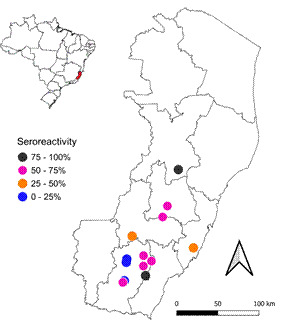
Leptospirosis is a significant cause of reproductive losses in the pig industry worldwide, affecting reproductive efficiency and resulting in substantial economic losses. In Brazil, many studies on pig infections focus on serosurveys of random populations, independent of reproductive efficiency, and many regions, such as the state of Espírito Santo, remain poorly studied. Therefore, this study conducted a leptospirosis serosurvey in sow herds with poor reproductive performance from different regions of Espírito Santo, Brazil. Blood samples for serology (Microscopic Agglutination Test - MAT) were collected from 131 sows with poor reproductive performance from 13 herds. A seroreactivity rate of 29.8% (39/131) sows were revealed, and all the tested herds had at least one seroreactive animal. The most common serogroups were Autumnalis 43.8% (17/39), Icterohaemorrhagiae 30.8% (12/39), and Australis 15.4% (6/39). Thus, the study highlighted the importance of leptospirosis for the pig industry in that region, leading to significant economic impacts due to reproductive problems, and reinforcing the importance of specific prevention and control measures.
Key words:
reproductive disorders; epidemiology;
Leptospira
; pigs; serology
 Thumbnail