 PERCEPTIONS AND PRACTICES OF PUBLIC-SCHOOL TEACHERS IN MINAS GERAIS REGARDING THE CONTRIBUTIONS OF OUT-OF-SCHOOL ACTIVITIES TO STUDENTS’ HOLISTIC EDUCATION
ABSTRACT:
This study investigated the contribution of out-of-school activities to students’ holistic education from the perspective of four Basic Education teachers working in public schools in the city of Uberaba, Minas Gerais, Brazil. Out-of-school activities can be understood as educational experiences that take into account students’ relationship with society and foster an integrated academic and sociocultural education. The study was divided into two phases: the provision of a continuing teacher education course and the subsequent monitoring of the teachers’ practices in out-of-school activities with their students. This article discusses the second phase, which constitutes the corpus of the study. Within a qualitative research approach, data were generated through semi-structured interviews with the participating teachers and non-participant observations of the activities they conducted. The data were analyzed using Content Analysis based on Laurence Bardin’s approach. The results highlighted the relevance of out-of-school activities to fostering more meaningful and contextualized learning experiences and to enriching students’ cognitive, social, and cultural education. However, challenges were also identified, including exclusionary practices in selecting students to participate in out-of-school activities, a lack of teacher involvement in organizing these activities, which are often left to school administrators, and a lack of institutional support for their implementation.
Keywords:
out-of-school activities; holistic education; Basic Education; school inclusion; public policies
RESUMO:
Esta pesquisa investigou a contribuição de atividades extraescolares para a formação integral dos alunos, na perspectiva de quatro professoras atuantes na Educação Básica de escolas públicas da cidade de Uberaba, Minas Gerais. Atividades extraescolares podem ser entendidas como ações que consideram a relação com a sociedade na formação do aluno, constituindo experiências que permitem conectá-lo ao seu potencial de formação acadêmica e sociocultural integral. A investigação foi dividida em dois blocos: a oferta de um curso de formação continuada para professores e o acompanhamento de suas práticas em atividades extraescolares com os alunos após o curso de formação. Neste artigo, são apresentadas discussões relativas ao segundo bloco, que constitui o corpus da investigação. Em uma abordagem qualitativa de pesquisa, foram adotadas, na construção dos dados, entrevistas semiestruturadas com as professoras participantes e observações não participantes das atividades por elas realizadas. A análise dos dados pautou-se na Análise de Conteúdo, na perspectiva de Laurence Bardin. Os resultados evidenciaram a relevância das atividades extraescolares na construção de aprendizagens mais significativas e contextualizadas, contribuindo para o desenvolvimento cognitivo, social e cultural dos alunos. Entretanto, também foram identificados desafios, como práticas excludentes na seleção de alunos para as atividades extraescolares, falta de envolvimento das professoras na organização das atividades, que ficam, muitas vezes, sob responsabilidade da gestão escolar, e falta de apoio institucional para sua realização.
Palavras-chave:
atividades extraescolares; formação integral; Educação Básica; inclusão escolar; políticas públicas
RESUMEN:
Esta investigación analizó la contribución de las actividades extraescolares a la formación integral del alumnado desde la perspectiva de cuatro docentes de Educación Básica que trabajan en escuelas públicas de la ciudad de Uberaba, Minas Gerais, Brasil. Las actividades extraescolares pueden entenderse como experiencias educativas que consideran la relación del alumnado con la sociedad y favorecen el desarrollo de su potencial de formación académica y sociocultural integral. La investigación se dividió en dos etapas: la oferta de un curso de formación continua para docentes y el posterior seguimiento de sus prácticas en actividades extraescolares con el alumnado. En este artículo se presentan las discusiones relativas a la segunda etapa, que constituye el corpus de la investigación. Desde un enfoque cualitativo, los datos se produjeron mediante entrevistas semiestructuradas con las docentes participantes y observaciones no participantes de las actividades realizadas por ellas. Los datos se analizaron mediante el análisis de contenido, desde la perspectiva de Laurence Bardin. Los resultados evidenciaron la relevancia de las actividades extraescolares para promover aprendizajes más significativos y contextualizados y contribuir al desarrollo cognitivo, social y cultural del alumnado. Sin embargo, también se identificaron desafíos, como prácticas excluyentes en la selección del alumnado para participar en las actividades extraescolares, la escasa participación de las docentes en su organización, que a menudo queda a cargo de la gestión escolar, y la falta de apoyo institucional para su realización.
Palabras clave:
actividades extraescolares; formación integral; Educación Básica; inclusión escolar; políticas públicas
INTRODUCTION
Holistic education must currently be understood as an urgent need in the pursuit of a school that can truly integrate academic content with practice and social needs, fostering a life that is meaningful and aligned with social demands and perspectives. According to Arroyo (2013), classrooms are spaces for building identities and citizenship. The curriculum is viewed as a contested territory where the role of the school in addressing contemporary needs can be debated.
Although the National Common Curricular Base (BNCC-Base Nacional Comum Curricular) seeks, according to its introductory texts, to promote an educational approach that considers the holistic development of students (Brasil, 2018), it is necessary to examine the contradictions arising from this proposal and relate them to neoliberalism. The discourse on holistic education and the full development of students takes on a progressive character; however, the document’s guidelines reveal a subordination to economic and market-driven interests. This is evidenced by an emphasis on competency-based education, which frequently prioritizes the development of skills geared toward the labor market, while relegating critical citizenship and education aimed at social emancipation to the background.
The neoliberal trend in education has pointed toward a reduction in the role of the school and its social importance, while also fostering a narrowing of education to the acquisition of skills and competencies demanded by the market. We agree with Hill (2003, p. 37) when he notes that “[...] education is not a commodity to be bought and sold.” By endorsing the individual responsibility of the student in their learning process, the BNCC ignores the inequalities that affect access to a truly comprehensive education. Schools, embedded within an unequal society, have a responsibility to provide the elements necessary for all individuals to develop to their full potential, a point underscored by Opinion number 5 of the National Council of Education/Basic Education Chamber (CNE/CEB-Conselho Nacional de Educação/Câmara de Educação Básica), dated May 4, 2011, which established the National Curricular Guidelines for Secondary Education-Diretrizes Curriculares Nacionais para o Ensino Médio (Brasil, 2011). In this sense, while the school “[...] although it cannot, on its own, resolve social inequalities, it can expand the conditions for social inclusion by providing access to science, technology, culture, and work” (Brasil, 2011, p. 25). Thus, it serves as a space where individuals learn to construct their sense of belonging and identity, an essential aspect in the formation of critical and participatory citizens.
We understand holistic education, or holistic development, as the cultivation of skills that extend beyond the formal school curriculum, integrating these with society at large. This approach enables students to engage across various spheres, including the economic, social, cultural, and emotional, among others (Pires, 2024). We advocate for a holistic education model that values the interplay between formal, informal, and non-formal education. Rather than seeking models that overlap or supersede one another, we look for those that interact, each with its distinct nuances, to foster a holistic development that engages the student within society, connecting their learning to everyday life. While there are various ways to classify formal, informal, and non-formal education, we define formal education as that which is structured through specific programs and curricula, leading to advancement upon the completion of each cycle or stage. This intentional learning process takes place within educational institutions, encompassing Basic Education (Early Childhood Education, Elementary, Middle, and High School), as well as Technical and Higher Education. This modality is governed by legislation, such as the 1988 Federal Constitution (Brasil, 1988) and the Law of Directives and Bases for National Education (LDB-Lei de Diretrizes e Bases da Educação Nacional), Law number 9,394 of December 20, 1996 (Brasil, 1996).
In contrast, informal education occurs naturally through human relationships; it is spontaneous and lacks specific intentionality. When we examine the various educational models intertwined within society, these different forms of “education” work in alignment to contribute to the holistic development of the human being, reflecting the diverse facets of society, whether through formal institutions or civil society organizations (Libâneo, 2010). There is significant criticism regarding the lack of alignment between formal education and society, specifically concerning the need for closer engagement with families (Costa, Moita, & Costa, 2023), a process that is essential for holistic development.
Non-formal education involves intentionality in the learning process. However, learning is closely linked to the connections that individuals establish with their environments. This educational model lacks defined curricula or formal advancement criteria at the end of specific stages, as such stages do not exist. Examples of settings for non-formal education include museums, public parks, zoos, and libraries, or any other initiatives that, while purposeful, allow the learning process to unfold through people’s interactions with these spaces.
In this context, we are in favor of the school being a space that fosters the integration of knowledge from curricular subjects with the knowledge gained through students' diverse life experiences, while also encompassing aspects of non-formal and informal education. As noted by Rego and Previtali (2025), education takes place in all settings; learning processes also occur, as highlighted by Coutinho et al. (2026, p. 2), in a “[...] continuous manner and across multiple spaces, given that education is an integrated process involving formal, informal, and non-formal dimensions.” By bringing these different forms of education together, the school contributes to the student’s holistic development, preparing them to live in a complex and constantly evolving society. This process is not without its challenges, as there are numerous obstacles to overcome. Preciozo, Adams, and Nunes (2022, p. 14) point to a significant strain regarding holistic education, observing that “[...] it is impossible to develop citizens without highly qualified teachers who are equipped with appropriate didactic materials and favorable working conditions, all of which are essential for promoting a scientific education geared toward citizenship and the construction of a more democratic society.”
Thus, this study investigates how teachers working in basic education within public schools in the municipality of Uberaba, Minas Gerais (MG), interpret the contributions of extracurricular environments and activities to the holistic development of their students, in dialogue with the school. The investigation is divided into two parts: Part 1 consists of a professional development course for basic education teachers in Uberaba’s public schools, structured as a university extension course. In Part 2, we followed four teachers, all graduates of this course, as they engaged in out-of-school activities with their students, to examine the relationship between these teachers' discourse and their actual practice in such activities. Both parts represent segments of a doctoral research project conducted within the Graduate Program in Education at the Federal University of the Triângulo Mineiro (UFTM).
Given the length of the text, we discuss the results from the second section of the study, which seeks to address the following research questions: What is the relationship between the discourse and the out-of-school activities carried out with students by teachers who completed the continuing education program? From the teachers' perspective, how do these out-of-school activities contribute to the students' holistic development? It should be noted that this research was approved by the Research Ethics Committee (CEP) of UFMT, under the Certificate of Presentation for Ethical Consideration (CAAE) number 55035722.8.0000.5154 and Opinion number 5,237,806, with the consent of all participants formalized through an Informed Consent Form (ICF).
METHODOLOGICAL DESIGN
This research is classified as qualitative and seeks to provide an in-depth analysis of the object under investigation, in line with the characteristics of this approach. Vilela (2003, pp. 458-459) summarizes some of the specific features of qualitative research:
a) The natural setting is the place where the investigation takes place; it is the primary source of data. Researchers enter the field, whether it be a school, a family environment, or other educational settings, with the goal of clarifying educational issues. b) The researcher is the primary instrument of the study, observing, recording, and, in some instances, interacting with the research situation. Thus, even when material or technical resources (such as field journals, notebooks, audio recorders, or video equipment) are employed, the researcher remains the most critical element in data collection. Certain types of information can only be captured through direct contact; furthermore, all data gathered, regardless of whether or not they were recorded using mechanical means, are subsequently reviewed by the researcher. c) For the qualitative researcher, the data obtained only hold meaning within their specific context, which is why researchers spend time in the research setting. The locations, groups, or individuals under study must be understood within the context of the history of the institutions to which they belong [...].
Based on the characteristics outlined by the author, we have sought to integrate these aspects into an investigation in the field of education. It is important to focus on certain authors who not only use this approach but also contribute to its understanding through their studies and research, specifically within education. According to Bogdan and Biklen (1994), qualitative research possesses, specifically, five characteristics:
-
Natural setting - the natural setting is the direct source of data, with the researcher acting as the primary research instrument and immersing in the situation under study. In this research, the natural setting consisted of the spaces where we accompanied the participants during their out-of-school activities.
-
Descriptive data - the qualitative investigation is descriptive, requiring the researcher to describe the elements and findings of the investigation. In this study, such description was achieved through the transcription of semi-structured interviews, as well as through observations made during the out-of-school activities.
-
Focus on the process - the process is far more important than the product, as everyday interactions manifest within the process. In this study, this aspect was considered in the relationship between the extension course taken by the teachers and the out-of-school activities they developed, with the aim of establishing a link between perceptions and practices.
-
Importance of “meaning” - the researcher needs to investigate how research participants perceive the elements under study. We used Content Analysis, which, among its features, allows for the examination of the process of (de)construction during this phase, enabling the extraction of meanings and codes from the approach taken with the research participants.
-
Inductive analysis - research data are constructed based on ongoing observations. It is important to note that the empirical data gathered throughout this research extended beyond semi-structured interviews, including observations made during out-of-school activities, which made it possible to relate these observations to the entire research corpus.
For the purpose of data collection, semi-structured interviews, conducted at both the beginning and the end of the study, were held with the four teachers, alongside non-participant observation during their out-of-school activities. The participants worked in five schools, all part of the municipal school system in Uberaba, Minas Gerais (MG): two in early childhood education, one in the early years of elementary education, and one in the final years of elementary education. To maintain anonymity, they are identified as Ângela, Diana, Beth, and Zuleica. Ângela had two years of teaching experience and carried out the out-of-school activity with a third-grade elementary class (8-year-old children). Diana had 12 years of experience and, at the time of the research, was working with young children (4 years old). Beth had 11 years of experience and worked with a sixth-grade elementary class (12-year-old children). Zuleica had 31 years of experience and conducted the out-of-school activity within an early childhood education setting, with young children (5 years old).
The initial and final interviews were conducted via the Google Meet platform, recorded in both audio and video formats, and subsequently transcribed to form the corpus, which also included descriptions of the out-of-school activities we observed on-site. The initial interview always took place one week before the out-of-school activity, and the final interview, one week after the activity. This criterion was established to allow for the analysis of the teachers' plans before the out-of-school activity, as well as to gain insight into what was actually carried out following the activity.
For the analysis of empirical data, we used Content Analysis, based on Bardin (2011), a key reference for this analytical methodology (Mozzato; Grzybovski, 2011). As Valle and Ferreira (2025, p. 3) point out, “[...] several studies highlight the relevance and contributions of this technique to the interpretation of complex data.” Bardin (2011, p. 48) defines Content Analysis as a set of “[...] techniques for analyzing communications, aiming to obtain, through systematic and objective procedures for describing the content of messages, indicators (quantitative or not) that allow for the inference of knowledge regarding the conditions under which these messages were produced or received (inferred variables).”
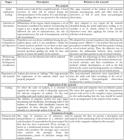
Content analysis is divided into three fundamental stages: (i) pre-analysis; (ii) exploration of the material; and (iii) treatment of the material, analysis, and interpretation. In the pre-analysis stage, the material gathered throughout the empirical research is organized. This stage is structured into five interconnected steps: initial exploratory reading, selection of documents, formulation of hypotheses and objectives, establishment of indices and indicators, and preparation of the material. The exploration of the material follows the pre-analysis stage and precedes the treatment of the results. Bardin (2011) notes that this is an extensive phase requiring significant attention. It involves coding and categorization. Coding entails aggregating and enumerating; this process transforms the content by grouping it. Coding is organized into three steps: selecting units of analysis, defining counting rules, and choosing categories. The final stage, the treatment of the results, also referred to as the phase of intuition, inferences, and interpretations, consists of a reflective and critical analysis based on the processed data, as described by Bardin (2011). The author further highlights that every message relies on a fundamental premise: the existence of a sender (who produces the message) and a receiver (who receives the message). From this communication, points of inference emerge that require analysis. In Chart 1, we summarize each of these stages, as well as their specific relevance to the present research.
FROM RESEARCH FINDINGS TO ANALYSES
We begin this section by presenting, in summary, the four out-of-school activities carried out by the teachers we observed (Chart 2). The table brings together a description of the activities, the approach implemented at the school with the students, the plan proposed by the teacher for the execution of the activity, and, finally, the approach developed by the teacher following the out-of-school activity.

Based on an analysis of the entire research corpus, we delineated one context unit, titled “Monitoring of out-of-school activities,” and three categories of analysis: CI - “Obstacles and difficulties in the development of out-of-school activities,” which presents and discusses the challenges faced by teachers in carrying out such activities; CII - “Contributions of out-of-school activities to the teaching and learning process,” which lists and analyzes the potential of these activities, as evidenced in the proposals and tasks implemented, and their relationship to the extension course (Block 1); and CIII - “Teachers’ proposals for assessment processes regarding out-of-school activities,” which brings together the assessment approaches developed for these activities, as well as the results of such assessments, while examining the strengths or weaknesses of the evaluation process.
Category CI - Obstacles and difficulties in the development of out-of-school activities
This category seeks to present and discuss the challenges that teachers faced when developing out-of-school activities. Often, these professionals encounter obstacles such as a lack of resources, a deficiency in skills that were not addressed during their initial training, a scarcity of information on the subject among their peers, both within the school environment and beyond, including among families, and even difficulties related to inclusive practices. All these factors make the development of out-of-school activities a significant challenge for teachers.
One of the most common obstacles is the provision of school transportation for out-of-school activities. Of the four teachers we followed, two (Ângela and Beth) required transportation, which was provided by CODAU, while the other two (Diana and Zuleica) did not, as they conducted their out-of-school activities in the vicinity of the schools where they work.
All the teachers expressed a lack of support, from either their schools or the Municipal Department of Education (Semed-Secretaria Municipal de Educação), for organizing field trips. Ângela, for example, reflected on her time as a student in the public basic education system, noting that her parents used to contribute toward transportation costs so that students could access such out-of-school activities.
This finding points to the public sector’s commitment to providing students with a holistic education, in line with the principles set forth by the BNCC. In previous research (Pires; Colombo Junior, 2022), we highlighted the potential for developing out-of-school activities, particularly in non-institutionalized settings, near municipal educational facilities in Uberaba, Minas Gerais. However, institutionalized sociocultural assets, such as museums, theaters, and cinemas, which offer non-formal education, are not always located in close proximity to schools; consequently, school transportation becomes necessary (Cazelli, 2005). There is an urgent need for greater support and resources to overcome these obstacles and provide students with a more enriching educational experience. Out-of-school activities in non-formal educational spaces offer a significant opportunity for integration with society, thereby contributing to the students' holistic development (Souza; Rocha; Santos, 2024).
Regarding didactic organization, we observe a sense of insecurity among teachers, at times stemming from a lack of opportunity, during their initial teacher education programs, to experience and theoretically explore various ways of organizing out-of-school activities. On this point, Diana noted: “[...] the teacher education programs I attended were quite deficient in offering activities or courses that addressed current needs and possibilities, such as how to integrate with society or how to value non-formal education [...]”. These reflections highlight the importance of teacher education; given that teachers contribute to the development of individuals as citizens, they require a solid knowledge base, ideally established during their initial training, a field that has seen a decline in enrollment in recent years (Rego; Previtali, 2025). Consequently, this gap in the training of many teachers is a cause for concern. Often, educators have not encountered such experiences either throughout their professional careers or during their initial training. According to Tardif (2014), teaching practice is strongly influenced by an educator’s prior experiences and training; therefore, the absence of preparation that encompasses non-formal education and out-of-school activities limits a teacher’s ability to effectively plan and carry out such initiatives, resulting in shortcomings within the process.
Such gaps create significant difficulties, which are further exacerbated by the lack of specific courses within teacher education programs that foster critical reflection on non-formal education and its importance to the holistic development of students. In most cases, initial teacher training remains centered on a pedagogical model that prioritizes the classroom as the sole site of learning, relegating educational practices that take place in alternative settings, such as technical field trips and other out-of-school activities, to the background. Furthermore, it should be noted that many “[...] specific subject-matter contents to be taught in the classroom are not addressed in initial teacher education programs” (Gatti, 2010, p. 1368).
Out-of-school activities offer unique opportunities for students to connect with the real world, broadening their learning perspectives and fostering holistic development, building autonomy, critical thinking, and a sense of agency (Libâneo; Oliveira; Toschi, 2023). Such practices allow students to experience knowledge within broader social contexts, enriching their educational journeys and facilitating learning that extends beyond the school walls. It is important for teachers to engage in this process, so they may realize that encountering the new also shapes and consolidates learning. As proposed in the framework by Quadra and D’Ávila (2016, p. 23):
What does non-formal education promote? Feeling first, learning later. Socialization. An interest in environmental issues. More ethical stances. The de-fragmentation of subject matter. Transdisciplinarity. A questioning attitude. It connects everyday life to learning. The development of values. Culture and respect for public heritage. Tolerance and the valuing of diversity.
Supporting this finding, microdata from the 2019 Basic Education Assessment System (Saeb-Sistema de Avaliação da Educação Básica), the reports for which were only released in 2024, indicate that, according to a questionnaire completed by teachers working in the public basic education system in Uberaba, Minas Gerais, 7% of respondents have never visited exhibitions (such as those in museums or cultural centers), 65% have done so only a few times, 21% have visited many times, and only 7% always visit (QEdu, 2024).
These figures reveal a clear lack of access for teachers, who play a foundational role in their students' development, to cultural spaces essential for a holistic education. Furthermore, these data align with the results of previous research conducted within the public school system in Uberaba, which showed that teachers do not have a habit of visiting out-of-school cultural venues, whether with their classes, their families, or even on their own (Pires; Colombo Junior, 2022). The failure to visit such locations not only limits students' cultural enrichment but also reflects a deficiency in public policies designed to encourage and facilitate these types of activities.
A scarcity of opportunities for out-of-school activities can contribute to educational inequality, where only students from better-resourced schools have regular access to cultural activities (Cazelli, 2005). Therefore, it is crucial to develop strategies to improve this situation by providing more equitable and regular access to cultural resources, a move that could significantly benefit students' educational and social development.
Organization and planning are fundamental premises of out-of-school activities. Regarding the activity carried out by Ângela, she reported attempting to organize tasks for the phases before, during, and after the out-of-school session; however, she encountered difficulties, as the activity had not been designed by her. Furthermore, due to limited transportation capacity, the school held a lottery among three classes, and her class was the one selected. For a teacher to feel confident in their actions and successfully implement their intended goals with students, it is essential that the planning of an out-of-school activity originates with the teacher themselves. Teacher planning is vital for ensuring that the activities developed are integrated into the curriculum, enabling a connection between theory and practice, a concept that is also central to the internship experiences that are part of initial teacher training (Pimenta; Lima, 2012).
When planning does not originate with the teacher, an out-of-school activity risks becoming frustrating for both the educator and the students, as the latter will lack the necessary pedagogical guidance. If the teacher is not involved in the planning process, the activity may be perceived merely as an outing, thereby losing its educational value (Pires; Colombo Junior, 2022). In this context, it is essential for school management to work collaboratively with teachers, respecting their professional autonomy and ensuring that out-of-school activities serve as a meaningful extension of classroom learning.
Teacher Ângela described an experience in which she was not the one who conceived or planned an out-of-school activity. This situation led to a sense of demotivation; instead of continuing with her existing lesson plan, she had to rework a plan she had already finalized in order to accommodate the new out-of-school activity. According to Tardif (2014), this feeling of being overburdened is linked to a lack of teacher autonomy. When excluded from the planning process, teachers lose the ability to align activities with previously established pedagogical objectives, which in turn compromises the students' continuous development. Furthermore, an excessive workload can discourage innovative practices—particularly when teachers seek to adapt their professional approach to new societal demands, as was the case for Ângela.
From this perspective, we ask: How can one determine who participates in an out-of-school activity through a random draw, as was the case at the school where Ângela works? Could this be a conscious or unconscious way of limiting access to sociocultural development to only a portion of the student body? Excluding any group through mechanisms such as a random draw violates the principle of equity in education. Therefore, the practice of selecting students for these activities by chance is questionable, as it may compromise the democratization of knowledge and equal access to educational opportunities. Furthermore, “[...] the school should be a space that values differences, where all individuals can develop fully, overcoming physical, educational, and attitudinal barriers” (Jesus; Guimarães; Silva, 2025, p. 179), with the school itself bearing the responsibility to provide the means for the inclusion of all.
Similar practices were also observed in Beth’s experience, where only students who were “disciplined, participatory, and earned good grades” had access to the activity. Such criteria can create a meritocratic scenario that disregards the needs and potential of all students. Although Freire (1987) does not directly discuss the use of lotteries, he highlights the importance of an inclusive and critical education, one that values the active participation of all students without resorting to methods that might foster exclusion. Consequently, school administration and faculty must remain vigilant to prevent exclusionary practices; a holistic approach to education presupposes the inclusion of all students in educational opportunities, whether formal or non-formal, while consistently prioritizing student participation and critical agency (Libâneo, Oliveira, & Toschi, 2023). In this sense, using lotteries to determine who may participate in such activities contradicts the fundamental principles of inclusion advocated by official policy documents and educational theorists, given that practices failing to account for pre-existing inequalities can perpetuate and even exacerbate them (Bourdieu & Passeron, 2014).
Diana and Zuleica, who devised their own out-of-school activities, structured the activity into three phases: before, during, and after. According to Diana, “[...] I developed some activities with the class, such as using children’s songs related to the topic, as well as holding a discussion circle [where] the students could talk about the subject at hand.” This method of didactic organization is considered essential for student comprehension, as it integrates prior knowledge with new learning, as noted by Pires (2024). During the activity, Diana demonstrated confidence in her approach, engaging in dialogue with the students about the traffic signs they observed, which allowed them to express themselves freely. The following day, the teacher brought the topic to a close with a themed bingo game and the creation of mock driver’s licenses, highlighting the importance of planning that addresses the student’s holistic development. This type of approach reinforces the insights of Allard, Boucher, and Forest (1994), who suggest that planning an out-of-school visit in distinct stages (originally framed in the context of school visits to museums) contributes to more contextualized and meaningful learning.
Zuleica held discussion circles with her students on the topic; they listened to music, prepared pamphlets, and, following the out-of-school activity, consolidated the experience by creating drawings, which were then displayed for the entire class. The active participation of students at every stage of an activity is a core element of successful pedagogical practices. According to Pires (2024), the integration of school and society is essential for developing a form of education centered on citizenship, capable of shaping critical and engaged individuals. This type of interaction enables students to develop social and cognitive skills that extend beyond the classroom, strengthening their connection to the world around them.
Beth, who used grades and appropriate behavior as selection criteria for participation in the out-of-school activity, planned the post-activity phase as follows: “After the visit, I intend to hold a group discussion to gather input from the students on what they thought of the visit, what they learned, and whether they enjoyed it. This also serves as a moment for sharing knowledge, even for those students who did not attend.” It is important to emphasize that interactions occur primarily between the students and the environment, making each experience unique. Connecting classroom activities with out-of-school ones, and subsequently revisiting these experiences upon returning to the classroom, is essential, given that “[...] the quality of an activity and its pedagogical significance depend on the care the teacher invests in the planning process” (Pacheco, 2012, pp. 68-69). Consequently, a group discussion compensates for the exclusionary nature of the selection process, as the students who did not participate would only benefit secondhand through the accounts of those who did.
When a teacher recognizes the importance of out-of-school activities, she often involves other teachers whenever possible. A case in point is Zuleica, who shared: “There are three ‘Pré dois’ [preschool/kindergarten] classes at the school, and I thought it would be appropriate to invite my colleagues to join in the activity; they agreed, and we carried it out together.” This initiative highlights the value of partnership and teamwork among educators, even when neither the school administration nor the teachers involved have received specific training on organizing out-of-school activities. According to Hargreaves (1998), collaboration among teachers is essential to the success of pedagogical practices, as it enables the exchange of experiences and the collective development of strategies. In the author’s words, “[...] collaboration can be a way to help teachers work together in pursuing or revising their own goals as a professional community” (Hargreaves, 1998, p. 20). Zuleica exemplifies this dynamic by involving her colleagues, which strengthens a sense of cooperation and facilitates the execution of more enriching activities. Furthermore, it is important to note that engaging with families is a key element in planning such activities; the participation and authorization of guardians are fundamental to the success of educational field trips—a point that reinforces the observation by Costa, Moita, and Costa (2023, p. 1) that “[...] families and schools must work together to promote better student performance.”
In Ângela’s case, the absence of signed consent forms from the guardians of three students on the day of an out-of-school activity led to friction with the students and delays in transportation, a situation that could have been avoided with more rigorous planning. Advance organization and family involvement are essential to the success of out-of-school activities, ensuring that all students can participate without setbacks, whether by securing the necessary authorization for leaving school grounds or by completing the preparatory tasks assigned by teachers. This situation highlights the importance of establishing effective communication between the school and families.
In the out-of-school activity proposed by Beth, which used students' grades and levels of participation as criteria for inclusion, no students with atypical needs were involved. Such exclusionary practices run counter to educational policies that promote inclusion and equal opportunity for all students, regardless of their individual circumstances. As Monteiro and Marchi (2023, p. 7) emphasize, “[...] it is necessary to seek means and strategies to ensure quality education for all, free from discrimination, segregation, exclusion, or ‘false inclusion’, as this is a fundamental right.”
In Diana’s out-of-school activity, two of the three students with atypical development were absent; their families expressed concern about letting their children leave the school premises without parental supervision. This situation highlights a recurring challenge in inclusive practices: family engagement and trust. Effective inclusion within a school setting depends not only on the school’s own preparation but also on building a relationship of trust with families, who need to feel secure about their children’s participation in all activities. As Hollerweger and Santa Catarina (2014, p. 6) point out, “[...] the presence and support of the family in any child’s life are crucial for their full development. The family’s role is to provide a space where children can develop safely and learn how to interact within society. [This] effort is, undoubtedly, more challenging for the families of children with disabilities.” One of the students with atypical development who did attend the activity was highly engaged, demonstrating that, when properly integrated, out-of-school activities can offer valuable developmental opportunities for students with disabilities.
Regarding the absence of children with atypical development from out-of-school activities, there is a significant opportunity for school management to act as a mediator. This involves engaging in prior dialogue with families to provide reassurance or offer alternative forms of support and supervision. We believe that dialogue between the school and families can foster inclusion within the school environment, while also expanding avenues for the participation of these students (Hollerweger & Santa Catarina, 2014; Monteiro & Marchi, 2023).
During the organization of an out-of-school activity led by Zuleica (focused on the topic of dengue), a staff member, apparently a student supervisor, told a student who held a signed permission slip that “students who don’t behave cannot go on field trips.” This situation was subsequently addressed and resolved by the school administrator. Such an incident underscores the need to re-evaluate attitudes and disciplinary practices within the school to ensure they do not hinder students' access to learning experiences outside the classroom.
Excluding these students from out-of-school activities can intensify feelings of marginalization and rejection, exacerbating behavioral problems and hindering their integration into the school environment. Furthermore, it is necessary to understand the context of these students in order to intervene effectively. Participating in such activities offers valuable opportunities for learning and social development, which can be particularly beneficial for these students. It is essential to develop inclusive approaches and support strategies that enable everyone to participate in these activities, thereby fostering a fairer and more inclusive educational environment (Freire, 1987).
Diana reported: “When I proposed this activity, I faced resistance from my pedagogical coordinator and my principal, who told me it was too risky and carried too much responsibility to take the students from the Cemei [early childhood education center] off-site.” This account highlights the need to prepare all school staff to handle out-of-school activities, specifically regarding the planning process and the recognition of the benefits these activities can offer for student development. Diana’s experience demonstrates that, with the right knowledge and preparation, it is possible to overcome such barriers and show others that these activities are not only feasible but also essential for enriching learning. Had the teacher remained passive in the face of resistance from her leadership, the activity would never have taken place. Instead, she demonstrated both the necessity and the viability of out-of-school activities in contributing to the holistic development of the students.
Zuleica described difficulties in coordinating with the pedagogical leadership, noting that “[...] we end up providing guidance to those who are supposed to be guiding us; I find the pedagogical coordination team to be very ill-prepared.” This account underscores the need for preparation not only among teachers but also within the management teams of educational institutions.
Category CII - Contributions of out-of-school activities to the teaching and learning process
Activities carried out in settings outside of school offer potential that can enrich the educational process and maximize student learning (Colombo Junior; Silva, 2020). Such activities expand students' cultural and social repertoires through practical, concrete experiences. The dynamics of these activities can foster collaboration, creativity, and critical thinking by engaging students in projects that require problem-solving and teamwork. Furthermore, this level of engagement tends to boost motivation and the development of skills essential for holistic education. During these activities, students also exercise their imagination as they attempt to connect their environment to history. This process contributes to a sense of ownership and belonging within the group to which they belong. In line with this perspective, teachers have identified pedagogical disparities between students who have access to such activities and those who do not. Regarding this, Diana noted:
There are significant differences between students who regularly participate in out-of-school activities and those who do not. These differences manifest in areas such as the development of skills and talents, socioemotional growth, school engagement, the broadening of perspectives, and the creation of wider, more diverse social networks. Furthermore, such activities provide enriching experiences that boost self-esteem and foster socialization. These students tend to be more engaged and interested; they take a more proactive role in their own learning, expressing their aspirations, ideas, and initiatives with greater freedom.
The teacher points out that students involved in out-of-school activities develop skills and talents in a more significant way. This is essential for the student's holistic development, contributing to their growth beyond the conventional skills outlined in official documents. The teacher’s remarks highlight that participation in out-of-school activities has a multifaceted, positive impact on student development. Such activities foster skills and talents, socioemotional development, school engagement, the expansion of social networks, increased self-esteem, and socialization, while also promoting student autonomy and commitment. This analysis supports the thesis that students with access to out-of-school activities enjoy broader opportunities for development across various areas compared to those who lack such access.
Student involvement in out-of-school activities is a way to expand their leadership capabilities and develop skills essential to the contemporary world. A visit to a museum, for example, as an extracurricular setting, can foster an inclusive environment where students develop empathy and teamwork skills. As Marandino (2001, p. 98) argues, museums and schools “[...] are social spaces that possess their own histories, languages, and educational and pedagogical approaches. Socially, they are spaces that interpenetrate and complement one another, and both are indispensable for the development of a scientifically literate citizen.” Furthermore, out-of-school activities can promote the development of autonomy and a sense of responsibility, factors that are crucial for shaping critical and active citizens.
Out-of-school activities facilitate the creation of diverse social networks, providing students with opportunities to interact with different groups and contexts, which enriches their experiences and learning. This was observed by Zuleica, who, while organizing a field trip for her students to address the topic of dengue, reported that they created informational pamphlets and posters, not merely to step outside the school and observe, but also to engage with the broader community by distributing these materials and raising awareness about this recurring public health issue. Participation in out-of-school activities boosts self-esteem and enhances students' socialization skills. This was evident during the interactions among the students themselves and with their surroundings, including the playground equipment, at the Parque das Barrigudas, during an outdoor out-of-school activity led by Beth.
Autonomy in speech, in the act of questioning, and in commitment to peers are characteristics observed in students who participate in out-of-school activities. Such students develop a sense of responsibility and camaraderie, which is essential for fostering a positive school environment. Engaging in these activities outside of school encourages the development of social-emotional skills, which are vital to a student’s overall growth. A visit to a science museum, for instance, “[...] can give rise to a complex web of objective and subjective sensations that guide human actions and relationships, shaping how one thinks and interacts with the environment” (Rolim; Folador; Colombo Junior, 2025, p. 4).
Out-of-school activities also foster integration between the school and the community, strengthening social and educational ties. This integration is essential for creating a more cohesive and collaborative learning environment. We can observe this connection in a statement made by Ângela while on the way from school to an out-of-school activity: “Out-of-school activities are vital for connecting students to the real world, providing practical contexts.” This testimony reinforces the idea that students who regularly participate in out-of-school activities tend to take a more proactive, leading role in their own learning process. They demonstrate the freedom to express their aspirations, proposals, and actions, which points to a more dynamic and interactive learning environment, one that helps develop collaboration, creativity, and a critical perspective toward the world around them.
The teacher exemplifies this dynamic by recounting an out-of-school activity that involved a presentation on environmental preservation. The students were enthusiastic and engaged. Although they were unable to participate in the first part of the out-of-school activity, which consisted of a workshop with recyclable materials, during the theatrical presentation they paid attention not only to the content presented but also to the course of the activity, demonstrating active interest and increased awareness of environmental issues. This fact is also exemplified by the activity proposed by Diana, who reported that, during the out-of-school activity:
We showed the students traffic signs and held a traffic-themed bingo game; we also plan to have the students create their own “driver’s licenses.” It is interesting to note that during these group discussions, the students bring up various situations that occur within their own families: one child mentions that their grandfather was hit by a vehicle because he didn’t use a crosswalk; another shares that their father didn’t stop at a red light; a third points out that their mother doesn’t wear a seatbelt. Through this, the children feel truly heard, everyone has the chance to speak and is actually listened to. This is something that often doesn’t happen at home, where many children are treated as inferior by adults who, frequently preoccupied with social media, forget that the child is right there beside them.
The statement describes an educational activity focused on traffic safety, highlighting the importance of raising awareness not only among students but also within their families and the broader community. One student mentioned unsafe behavior by their mother, to which the teacher responded by emphasizing the need for education regarding the dangers of not wearing a seatbelt. Educational initiatives that incorporate the everyday realities of students and schools, as well as experiences outside the classroom involving families, contribute to maximizing learning and fostering a culture of safety. It is necessary to understand reality as it presents itself to us (Fiorio, Lyrio, & Ferraço, 2012). During the activity, the students showed enthusiasm in sharing information about their family members and familiar locations, demonstrating a strong connection to their community.
An interaction with a local resident, who stopped to ask about the activity, allowed the students to demonstrate what they had learned regarding safe street crossing and the proper use of seat belts. This interaction reflects the school’s role as a mediator between academic knowledge and the students' social reality, as highlighted by Pires and Colombo Junior (2025). The resident’s response, praising the students, reinforces the importance of contextualized, practical education. Freire (1996) argues that meaningful learning occurs when there is a connection between educational content and the students' life context.
During the activity proposed by Beth, we observed a process of "schooling" applied to an out-of-school activity, as the facilitators established rigid deadlines and rules for the experience, such as a two-minute limit for students to observe the water collection facility. Situations like this deprive students of the opportunity to interact with their environment and their peers, a point noted by Beth, who remarked: “I thought it was really good; the students enjoyed it a lot. I just felt they could have participated more, they tend to be a bit reserved.” This scenario stands in stark contrast to the insights provided by Martins (2024), who argues that time management is both fundamental and a significant challenge for student development in learning contexts that take place outside the classroom and involve interaction with the environment.
There is a clear need for reflection and further professional development on this topic, especially since, in this instance, the entire responsibility for failing to meet the intended objectives with the students falls upon the teacher. Achieving these goals would, in fact, have been complex, given the school-like approach imposed by the monitors during the activity—as well as the previously discussed fact that selection criteria were used to determine which students could participate in this out-of-school activity. This complexity is further highlighted by the teacher’s remark: “[...] the students really enjoy leaving the classroom, though they don’t know why or for what purpose. The class is a bit unruly [...]”. The experience with the activity proposed by Zuleica was very positive and underscores the need to involve students at every stage, from planning and execution to the final wrap-up, as the teacher noted:
Most of the students are from the neighborhood; however, I found it very interesting that, although they are familiar with the area surrounding the school, once we set out, they seemed to begin noticing situations and places they usually overlook in their daily lives. It was as if their gaze had become more attentive; for many, it felt like a completely new experience, as though they were passing through that location for the very first time.
The statement describes an out-of-school activity in which students distributed leaflets to homes in the community. The experience was well-received by residents, who greeted the students with smiles, delighted by the children’s initiative. Interacting with their own environment allows students to make connections between what they learn at school and the reality around them (Fiorio; Lyrio; Ferraço, 2012). This activity highlighted the complexity of organizing initiatives outside of the school setting, particularly when involving young children and students with disabilities, underscoring the need for proper preparation and ongoing support to ensure the safety and success of the activity.
Zuleica highlighted that, although most students were already familiar with the neighborhood, the activity offered a fresh perspective, prompting them to observe their surroundings with greater attention and curiosity, as if seeing the area for the very first time. The initiative involved 40 students, all with parental consent; the distribution of pamphlets was a success, drawing praise from the community and leaving the students feeling valued and fulfilled. The experience underscores the importance of activities that bridge the gap between students, the school, and the community, fostering practical and meaningful learning, as noted by Pires (2024). The discussions presented in this category demonstrate that out-of-school activities play a fundamental role in the teaching and learning process, as they enable students to connect theoretical knowledge with real-world, practical experiences, immersing them in society through a learning process that holds personal significance for them. Such activities are essential for broadening students' repertoires, allowing them to develop social-emotional and cognitive competencies in a more concrete way.
Category CIII - Proposals by teachers for assessment processes regarding out-of-school activities
In this category, we bring together the assessment approaches planned by the teachers and implemented following out-of-school activities, while discussing the strengths and weaknesses identified. In summary, the assessment processes designed for these activities were as follows: Ângela, a drawing based on the out-of-school activity; Diana, a game of bingo and the creation of a “driver’s license”; Beth, a written report or a drawing; and Zuleica, a drawing based on the out-of-school activity.
Assessing out-of-school activities from the perspective of a student’s holistic development and education is a delicate and novel subject. During out-of-school activities, students interact with their environment and their peers; this interaction can, in itself, be viewed as a form of assessment. We must shift our perspective and recognize that the connections formed between students and their environment, as well as among the students themselves, vary significantly, as they reflect the cultural framework that each student already possesses (Cazelli, Costa, & Mahomed, 2010).
Holistic education encompasses not only academic development but also the emotional, social, and cultural growth of the student. Ângela proposed that students create drawings, noting that:
We arrived at the school, and that day, I asked the students to draw a picture in their notebooks about the activity. They completed their drawings just as the lesson was coming to an end. The following day, I asked them what they thought of it, and they all loved it. I believe that to have more activities like this, we need professional development; I had access to such training, but what about the other teachers? It would be wonderful to have opportunities like this, provided there is also sufficient time for study and the development of activities. I feel there is a significant lack of interest from everyone—teachers, the school administration, and even the department of education. For example, there is never any transportation available; this time it was provided because of Water Week (Semana da Água), but what about the rest of the year?
The teacher faced difficulties in organizing the various stages of the out-of-school activity, as the proposal had not been designed by her, and she was unfamiliar with its specific details. It is worth noting that her class was selected by a random draw. Regarding the request for students to create a drawing, it appears this task was structured as a concluding element of the activity. There is, however, room to diversify this practice, for instance, by incorporating stages for the students to share their work with one another. Such an approach holds great potential for fostering the exchange of insights and the sharing of knowledge among students. Ultimately, the record ended there. We did not have access to the records of this acitvity. Recent research on the importance of teacher autonomy in the development of out-of-school activities underscores the significance of active participation in the organization of educational initiatives (Marandino, 2001; Martins, 2024; Pires; Colombo Junior, 2025; Silva; Colombo Junior; Marques, 2025).
As an assessment method for the out-of-school activity, Diana proposed a bingo game centered on the theme of traffic, alongside the creation of a driver’s license for each student, complete with their photograph. We did not have access to records of this activity itself—only the templates used, which can be found in the previous section. It is evident that the teacher employed a highly varied approach: prior to the out-of-school activity, she facilitated group discussions, incorporated music, and organized a range of other tasks; following the activity, she introduced the bingo game and the creation of the driver’s licenses. These activities reflect an understanding of the importance of using playful, game-based methods in education—an approach widely recognized as an effective tool for fostering engagement and learning (Brougére, 2002).
This diversity of activities allows for the involvement of more students. Furthermore, carrying out various activities before and after the extracurricular session, such as playing bingo and creating driver’s licenses, contributed to student integration and engagement in several ways. The combination of playful and educational methods enabled students with different learning styles to find ways to get involved and participate actively. This observation is also reflected in the account provided by the teacher, Beth, who notes that “[...] the proposed activity complements the learning that takes place during regular classes [...]”.
Beth proposed a group discussion, a useful approach for identifying both the positive aspects and the areas that warrant attention in future activities. However, a complication arises: how can one hold a group discussion in a class where several students were excluded from participating in the activity itself? In this context, the teacher shared with us: “[...] I told those who had participated: ‘Don’t talk about it and make the others wish they had gone[...]’”
The activity proposed following the field trip proves frustrating when the preceding stages, as well as those carried out during the excursion itself, are poorly structured. It is worth recalling that the students were selected to participate in this activity based on subjective criteria, such as their behavior and academic grades. Could the lack of discipline observed by the teacher be a consequence of these selection criteria? Since the group discussion did not go well, the teacher resorted to requesting reports and drawings, tasks that not all participating students actually completed. The work submitted was merely acknowledged with a checkmark and returned to the students, without any further engagement or discussion. Among the students who took part, we had access to three accounts, which are presented in Chart 3.

The excerpts presented show that the students view the out-of-school activity as an outing rather than as a didactic-pedagogical activity integrated into the school curriculum. One hypothesis for why the students treat the out-of-school activity as an outing may be related to the way they were selected for it; in the students' view, if it were not an outing, wouldn't everyone have the right to participate? Nevertheless, despite some setbacks that marked this out-of-school activity, the students still reported learning something, such as the issue regarding oil, mentioned by Student 1, and the reference to bacteria, made by Student 2. The perception of out-of-school activities as leisure may be linked to how the experience is presented or planned, which contrasts with the recommendations of Allard, Boucher, and Forest (1994) regarding preparation for a visit, structured in three stages: before, during, and after the visit.
Participant Zuleica reported that the out-of-school activity was designed as the culmination of a project, which included students creating drawings; the field trip took place only after the topic had been extensively explored in the classroom through group discussions, songs, and various other activities. As part of this process, she implemented preparatory activities prior to the field trip, with the specific intent of fostering direct contact with the community, facilitated by the students themselves, who created informational pamphlets. Activities of this nature demonstrate to students the importance of engaging with the community, thereby contributing to the development of their social, interpersonal, and critical-thinking skills.
It is important that activities in settings outside of school, sometimes categorized as spaces for non-formal education, connect the school to the community and foster the development of social and critical skills in students, while accounting for the collective construction of knowledge, collaborative learning, and social interactions (Souza; Rocha; Santos, 2024). In this regard, we concur with Souza, Rocha, and Santos (2024, p. 729) when they state that “[...] education must be understood as a crucial element for the realization of citizenship. It should be considered beyond formal [school] contexts,” aligning with an approach to holistic education that contributes to the cognitive, social, and cultural development of students.
SOME FINAL CONSIDERATIONS
The analyses conducted provide significant evidence regarding the participating teachers' perceptions of the development of out-of-school activities, the obstacles to their implementation, and the anxieties surrounding this topic in their daily school lives. The teachers came to perceive and acknowledge the importance of out-of-school activities as a fundamental component of a more meaningful and contextualized learning process. In the cases of Diana, Beth, and Zuleica, the out-of-school activities were conceived by the teachers themselves. In the case of Ângela, although she did not originate the activity, and despite encountering various difficulties, she sought to organize herself and align a course of action with her students both during and after the activity.
Certain common practices reported during the research warrant urgent reflection, particularly regarding school inclusion and teacher autonomy in organizing out-of-school activities. Exclusionary practices, such as selecting students for these activities through lotteries or based on their grades, run counter to the principle of equity and may exacerbate inequalities among students, effectively sidelining those who stand to benefit the most from such activities. The research further highlights the need for greater integration and appreciation of out-of-school activities within student development; it reveals that, despite some progress, there is still a long way to go in aligning theory with practice in this area, a process that requires ensuring teachers have the autonomy to plan and implement these initiatives. Consequently, there is a need to align the theoretical framework of “holistic development” (holistic education) through out-of-school activities with actual practices that reflect these principles. This is essential to fostering an educational experience that is truly consistent with the objectives set out in official policy documents, such as the BNCC (National Common Curricular Base).
We hope that our findings may contribute to discussions within the field of education, to the initial and continuing education of teachers, and to policies developed in collaboration with Departments of Education, with a view toward the holistic development of students. Furthermore, we aim to raise awareness among education professionals, including teachers, teacher educators, and administrators, regarding the need for a more attentive perspective on educational possibilities that go beyond traditional approaches and seek to build an "educating society."
ACKNOWLEDGMENTS
We thank the members of the Grupo de Estudo e Pesquisa em Educação Não Formal e Ensino de Ciências (GENFEC) and the teachers who participated in the extension course that made this research possible. The second author acknowledges the Conselho Nacional de Desenvolvimento Científico e Tecnológico (CNPq) for the award of a research productivity fellowship (Grant number 307471/2026-8).
References
-
ALLARD, Michel; BOUCHER, Suzanne; FOREST, Lina. The museum and the school. McGill Journal of Education, Montreal, v. 29, n. 2, p. 197-212, 1994. Disponível em: Disponível em: https://mje.mcgill.ca/article/view/8169 Acesso em: 8 out. 2026.
» https://mje.mcgill.ca/article/view/8169 - ARROYO, Miguel G. Currículo, território em disputa 5. ed. Petrópolis: Vozes, 2013.
- BARDIN, Laurence. Análise de conteúdo São Paulo: Edições 70, 2011.
- BOGDAN, Robert; BIKLEN, Sari Knopp. Investigação qualitativa em educação: uma introdução à teoria e aos métodos. Porto: Porto Editora, 1994.
- BOURDIEU, Pierre; PASSERON, Jean-Claude. A reprodução: elementos para uma teoria do sistema de ensino. Tradução: Reynaldo Bairão. 7. ed. Petrópolis: Vozes, 2014.
- BRASIL. [Constituição (1988)]. Constituição da República Federativa do Brasil Brasília, DF: Senado Federal, Centro Gráfico, 1988.
-
BRASIL. Lei nº 9.394, de 20 de dezembro de 1996 Estabelece as diretrizes e bases da educação nacional. Brasília: Presidência da República, Casa Civil, Subchefia para Assuntos Jurídicos, [1996]. Disponível em: Disponível em: http://www.planalto.gov.br/ccivil_03/leis/l9394.htm Acesso em: 14 jan. 2025.
» http://www.planalto.gov.br/ccivil_03/leis/l9394.htm - BRASIL. Parecer CNE/CEB nº 5, de 4 de maio de 2011 Diretrizes Curriculares Nacionais para o Ensino Médio. Brasília: Ministério da Educação, Conselho Nacional de Educação, Câmara de Educação Básica, [2011].
-
BRASIL. Ministério da Educação. Parecer CNE/CEB nº 5, de 4 de maio de 2011 Diretrizes Curriculares Nacionais para o Ensino Médio. Conselho Nacional de Educação. Câmara de Educação Básica. Brasília, DF: MEC/CNE, 2011. Disponível em: Disponível em: https://www.gov.br/mec/pt-br/cne/pdf/pareceres-do-cne/ceb/2011/pceb005_11.pdf Acesso em: 9 out. 2026.
» https://www.gov.br/mec/pt-br/cne/pdf/pareceres-do-cne/ceb/2011/pceb005_11.pdf -
BRASIL. Ministério da Educação. Base Nacional Comum Curricular Brasília: MEC, 2018. Disponível em: Disponível em: http://basenacionalcomum.mec.gov.br/ Acesso em: 14 jan. 2025.
» http://basenacionalcomum.mec.gov.br/ -
BROUGÉRE, Gilles. Lúdico e educação: novas perspectivas. Linhas Críticas, Brasília, v. 8, n. 14, p. 5-20, 2002. https://doi.org/10.26512/lc.v8i14.2985
» https://doi.org/10.26512/lc.v8i14.2985 -
CAZELLI, Sibele. Ciência, cultura, museus, jovens e escolas: quais as relações? 2005. 260 f. Tese (Doutorado em Educação) - Pontifícia Universidade Católica do Rio de Janeiro, Rio de Janeiro, 2005. Disponível em: Disponível em: https://fiocruz.br/brasiliana/media/tese_sibelecazelli.pdf . Acesso em: 29 set. 2026.
» https://fiocruz.br/brasiliana/media/tese_sibelecazelli.pdf -
CAZELLI, Sibele; COSTA, Andréa Fernandes; MAHOMED, Carla. O que precisa ter um futuro professor em seu curso de formação para vir a ser um profissional de educação em museus? Ensino em Re-Vista, Uberlândia, v. 17, n. 2, p. 579-595, jul./dez. 2010. Disponível em: Disponível em: https://seer.ufu.br/index.php/emrevista/article/view/11360 . Acesso em: 29 set. 2026.
» https://seer.ufu.br/index.php/emrevista/article/view/11360 -
COLOMBO JUNIOR, Pedro Donizete; SILVA, Cibelle Celestino. Relações articuladoras: viabilizando o uso instrumental do losango didático em sequências de ensino-aprendizagem. Ensaio Pesquisa em Educação em Ciências, Belo Horizonte, v. 22, e12041, p. 1-17, 2020. https://doi.org/10.1590/21172020210108
» https://doi.org/10.1590/21172020210108 -
COSTA, Antonia Kecya França Moita; MOITA, Iza Maria Coelho; COSTA, Leonardo Emanuel de Oliveira. A importância da interação escola-família no processo de ensino aprendizagem. Revista Exitus, Santarém, v. 13, n. 1, p. 1-21, 2023. https://doi.org/10.24065/re.v13i1.2523
» https://doi.org/10.24065/re.v13i1.2523 -
COUTINHO, Catiane da Cruz; GONÇALVES, Janaina Pinheiro; RIBEIRO, Daniel Pereira Lins; LUZ, Nayane de Jesus Sousa; SILVA, Ludimila dos Santos; MONTEIRO-ALVES, Raynon Joel; TERRA, Ionara Antunes; CARNEIRO, João da Silva. Piscicultura como uma atividade não formal para o ensino de química. RECIMA21 - Revista Científica Multidisciplinar, Jundiai, v. 7, n. 2, p. 1-13, 2026. https://doi.org/10.47820/recima21.v7i2.7258
» https://doi.org/10.47820/recima21.v7i2.7258 -
FIORIO, Angela Francisca Caliman; LYRIO, Kelen Antunes; FERRAÇO, Carlos Eduardo. Pesquisar com os cotidianos: os múltiplos contextos vividos pelos/as alunos/as. Educação & Realidade, Porto Alegre, v. 37, n. 2, p. 569-587, maio/ago. 2012. https://doi.org/10.1590/S2175-62362012000200013
» https://doi.org/10.1590/S2175-62362012000200013 - FREIRE, Paulo. Pedagogia do oprimido 17. ed. Rio de Janeiro: Paz e Terra, 1987.
- FREIRE, Paulo. Pedagogia da autonomia: saberes necessários à prática educativa. São Paulo: Paz e Terra, 1996.
-
GATTI, Bernadete Angelina. Formação de professores no Brasil: características e problemas. Educação & Sociedade, Campinas, v. 31, n. 113, p. 1355-1379, out./dez. 2010. https://doi.org/10.1590/S0101-73302010000400016
» https://doi.org/10.1590/S0101-73302010000400016 - HARGREAVES, Andy. Os professores em tempos de mudança: o trabalho e a cultura dos professores na idade pós-moderna. Lisboa: McGraw-Hill, 1998.
-
HILL, Dave. O neoliberalismo global, a resistência e a deformação da educação. Currículo sem Fronteiras, [s. l], v. 3, n. 2, p. 24-59, jul./dez. 2003. Disponível em: Disponível em: https://www.curriculosemfronteiras.org/vol3iss2articles/hill.pdf . Acesso em: 9 out. 2026.
» https://www.curriculosemfronteiras.org/vol3iss2articles/hill.pdf -
HOLLERWEGER, Silvana; SANTA CATARINA, Mirtes Bampi. A importância da família na aprendizagem da criança especial. REI: Revista de Educação do IDEAU, [s. l], v. 9, n. 19, p. 1-12, jan./jun. 2014. Disponível em: Disponível em: https://rhemaeducacao.com.br/public/downloads/material-turma/db7f020db4ca3c21265dae1217aec796.pdf . Acesso em: 8 out. 2026.
» https://rhemaeducacao.com.br/public/downloads/material-turma/db7f020db4ca3c21265dae1217aec796.pdf -
JESUS, Dalci Mendes de; GUIMARÃES, Luciene Benjamin Silva; SILVA, Jeromice Moreira da. Currículo inclusivo: estratégias para superar a exclusão de minorias culturais no ambiente escolar. Humanidades & Tecnologia (FINOM), Paracatu, v. 58, n. 1, 2025, p. 170-182. Disponível em: Disponível em: https://revistas.icesp.br/index.php/FINOM_Humanidade_Tecnologia/article/view/6275 . Acesso em: 8 out. 2026.
» https://revistas.icesp.br/index.php/FINOM_Humanidade_Tecnologia/article/view/6275 - LIBÂNEO, José Carlos. Pedagogia e pedagogos, para quê? 12. ed. São Paulo: Cortez, 2010.
- LIBÂNEO, José Carlos; OLIVEIRA, João Ferreira de; TOSCHI, Mirza Seabra. Educação escolar: políticas, estrutura e organização. 10. ed. rev. e ampl. São Paulo: Cortez, 2023.
-
MARANDINO, Martha. Interfaces na relação museu-escola. Caderno Catarinense de Ensino de Física, Florianópolis, v. 18, n. 1, p. 85-100, abr. 2001. Disponível em: Disponível em: https://periodicos.ufsc.br/index.php/fisica/article/view/6692 Acesso em: 9 out. 2026.
» https://periodicos.ufsc.br/index.php/fisica/article/view/6692 -
MARTINS, Catarina Filipa Manteigas. Aprender fora da sala de aula: a visita de estudo como metodologia para o envolvimento na aprendizagem de estudo do meio. 2024. 131 f. Relatório de Investigação (Mestrado em Ensino) - Escola Superior de Educação, Instituto Politécnico de Setúbal, Setúbal, 2024. Disponível em: Disponível em: https://comum.rcaap.pt/entities/publication/cc02f4af-6db5-493e-9fe7-1e3cf17ba5db Acesso em: 9 out. 2026.
» https://comum.rcaap.pt/entities/publication/cc02f4af-6db5-493e-9fe7-1e3cf17ba5db -
MONTEIRO, Janete Lopes; MARCHI, Rita de Cassia. Reflexões sobre práticas pedagógicas inclusivas com estudantes com deficiência intelectual. Revista Educação Especial, Santa Maria, v. 36, n. 1, p. 1-26, jan. 2023. https://doi.org/10.5902/1984686X69440
» https://doi.org/10.5902/1984686X69440 -
MOZZATO, Anelise Rebelato; GRZYBOVSKI, Denize. Análise de conteúdo como técnica de análise de dados qualitativos no campo da administração: potencial e desafios. Revista de Administração Contemporânea, Curitiba, v. 15, n. 4, p. 731-747, jul./ago. 2011. https://doi.org/10.1590/S1415-65552011000400010
» https://doi.org/10.1590/S1415-65552011000400010 -
PACHECO, Ricardo de Aguiar. O museu na sala de aula: propostas para o planejamento de visitas aos museus. Revista Tempo e Argumento, Florianópolis, v. 4, n. 2, p. 63-81, jul./dez. 2012. https://doi.org/10.5965/2175180304022012063
» https://doi.org/10.5965/2175180304022012063 - PIMENTA, Selma Garrido; LIMA, Maria Socorro Lucena. Estágio e docência 7. ed. São Paulo: Cortez, 2012.
- PIRES, Bruno Inácio da Silva. A escola e as atividades extraescolares na percepção de professores da Educação Básica de escolas públicas de Uberaba/MG: contribuições para a formação integral dos alunos. 2024. 271 f. Tese (Doutorado em Educação) - Universidade Federal do Triângulo Mineiro, Uberaba, 2024.
-
PIRES, Bruno Inácio da Silva; COLOMBO JUNIOR, Pedro Donizete. A escola vai ao museu(!)(?): um olhar de coordenadores pedagógicos e da gestão educacional de Uberaba, Minas Gerais. Acta Scientiarum Education, Maringá, v. 44, n. 1, p. 1-13, dez. 2022. https://doi.org/10.4025/actascieduc.v44i1.53678
» https://doi.org/10.4025/actascieduc.v44i1.53678 -
PIRES, Bruno Inácio da Silva; COLOMBO JUNIOR, Pedro Donizete. Visitas extraescolares como recurso pedagógico para uma formação integral do aluno. Revista Cocar, Belém, v. 23, n. 41, p. 1-21, ago. 2025. Disponível em: Disponível em: https://periodicos.uepa.br/index.php/cocar/article/view/8757 Acesso em: 8 out. 2026.
» https://periodicos.uepa.br/index.php/cocar/article/view/8757 -
PRECIOZO, Sidélia Ribeiro Neto; ADAMS, Fernanda Welter; NUNES, Simara Maria Tavares. Dificuldades e desafios dos professores do ensino fundamental 1 em relação ao ensino de ciências. Revista Devir Educação, Lavras, v. 6, n. 1, e-536, maio 2022. Disponível em: Disponível em: https://devireducacao.ded.ufla.br/index.php/DEVIR/article/view/536/336 Acesso em: 29 set. 2026.
» https://devireducacao.ded.ufla.br/index.php/DEVIR/article/view/536/336 -
QEDU. Uberaba: Questionário Saeb - Professores. QEdu, [s. l], 2024. Disponível em: Disponível em: https://qedu.org.br/questionarios-saeb/professores/3170107-uberaba Acesso em: 9 out. 2026.
» https://qedu.org.br/questionarios-saeb/professores/3170107-uberaba -
QUADRA, Gabrielle Rabello; D’ÁVILA, Sthefane. Educação Não-Formal: qual a sua importância? Revista Brasileira de Zoociências, Juiz de Fora, v. 17, n. 2, p. 22-27, 2016. Disponível em: Disponível em: https://periodicos.ufjf.br/index.php/zoociencias/article/view/24644/13817 Acesso em: 28 nov. 2024.
» https://periodicos.ufjf.br/index.php/zoociencias/article/view/24644/13817 -
REGO, Thais Cristina Figueiredo; PREVITALI, Fabiane Santana. Falando em formação docente: perfil dos estudantes de licenciaturas em Minas Gerais. Educação em Revista, Belo Horizonte, v. 41, e48969, p. 1-23, 2025. https://doi.org/10.1590/0102-4698-48969
» https://doi.org/10.1590/0102-4698-48969 -
ROLIM, Camila Luqueis; FOLADOR, Heloisa Faria; COLOMBO JUNIOR, Pedro Donizete. Memórias fossilizadas em meio ao despertar de emoções no museu dos dinossauros. Revista Triângulo, Uberaba, v. 18, n. esp. 2, p. 1-15, set. 2025. https://doi.org/10.18554/rt.v18iEsp.2.8307
» https://doi.org/10.18554/rt.v18iEsp.2.8307 -
SILVA, Camila Manoela; COLOMBO JUNIOR, Pedro Donizete; MARQUES, Lucio Alvaro. O mito da caverna de Platão e suas sombras na educação contemporânea: contribuições dos espaços extraescolares. In: COLOMBO JUNIOR, Pedro Donizete; OVIGLI, Daniel Fernando Bovolenta; USTRA, Sandro Rogério Vargas; MARTINS, Silvia (org.). Museus de Ciências & Divulgação Científica São Carlos: Pedro & João Editores, 2025. p. 141-162. Disponível em: Disponível em: https://pedroejoaoeditores.com.br/produto/coletanea-museus-de-ciencias-divulgacao-cientifica/ Acesso em: 8 out. 2026.
» https://pedroejoaoeditores.com.br/produto/coletanea-museus-de-ciencias-divulgacao-cientifica/ -
SOUZA, Francisca Alves de; ROCHA, Gabriel Kafure da; SANTOS, Débora Maria dos. A educação não formal e sua contribuição para a comunicação e formação social do sujeito. Boletim de Conjuntura (BOCA), Boa Vista, v. 17, n. 49, p. 723-740, 2024. Disponível em: Disponível em: https://revista.ioles.com.br/boca/index.php/revista/article/view/3243 Acesso em: 9 out. 2026.
» https://revista.ioles.com.br/boca/index.php/revista/article/view/3243 - TARDIF, Maurice. Saberes docentes e formação profissional Tradução: Francisco Pereira. 17. ed. Petrópolis: Vozes, 2014.
-
VALLE, Paulo Roberto Dalla; FERREIRA, Jacques de Lima. Análise de conteúdo na perspectiva de Bardin: contribuições e limitações para a pesquisa qualitativa em educação. Educação em Revista, Belo Horizonte, v. 41, e49377, p. 1-21, 2025. https://doi.org/10.1590/0102-469849377
» https://doi.org/10.1590/0102-469849377 -
VILELA, Rita Amélia Teixeira. O lugar da abordagem qualitativa na pesquisa educacional: retrospectiva e tendências atuais. Perspectiva, Florianópolis, v. 21, n. 2, p. 431-466, jul./dez. 2003. Disponível em: Disponível em: https://periodicos.ufsc.br/index.php/perspectiva/article/view/9759 Acesso em: 29 set. 2026.
» https://periodicos.ufsc.br/index.php/perspectiva/article/view/9759
1
DATA AVAILABILITY STATEMETN
Section editor:
CONFLICT OF INTEREST STATEMENT
History
-
Received
19 Feb 2025 -
Preprint posted on
19 Feb 2025
10.1590/SciELOPreprints.11279 -
Accepted
21 Aug 2026

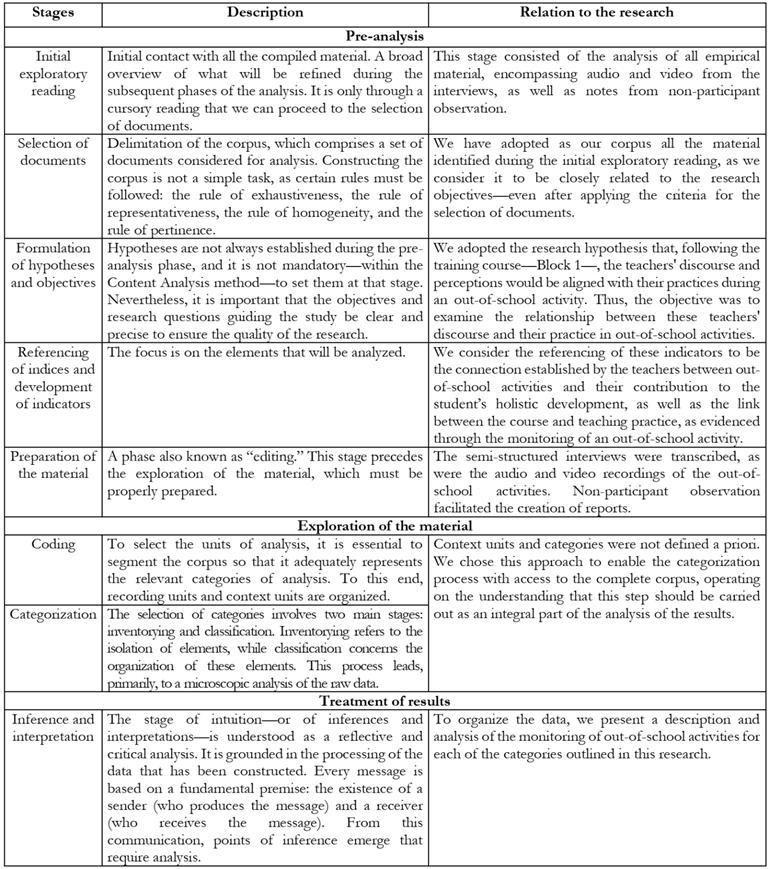 Source: Prepared by the authors (2024).
 Source: Prepared by the authors (2024).
 Source: Prepared by the authors. Material provided by Beth (2024).