
 THE USE OF DESIGN THINKING IN THE DEVELOPMENT OF FIRST AID TRAINING ACTIONS: AN EXPERIENCE WITH BASIC EDUCATION PROFESSIONALS
ABSTRACT:
Accidents, as unexpected or undesirable events, can result in injuries and may be prevented in various environments, including schools. When they occur, immediate actions are required regarding providing first aid. In this context, the Lucas Law (Federal Law No. 13.722/2018) is cited as a regulatory framework that mandates public and private basic education schools to be trained to provide first aid in case of accidents. However, despite this obligation, studies frequently reveal insufficient practices or the lack of preparedness among Basic Education professionals in providing first aid. Thus, this applied, exploratory, and descriptive research with a qualitative approach, which led to a practical solution, sought to primarily report an experience in developing a training action using the Design Thinking methodology to guide Basic Education professionals in first aid provision. It should be noted that this methodology is aimed at the collaborative design of innovative solutions for specific problems, culminating in the creation of unique and refined knowledge to achieve the desired solution. In the end, a First Aid Manual for Basic Education Professionals was developed with the support of professionals from a public school and was also used in professional training. The aim was to minimize errors in the aid process and promote a culture of accident prevention by providing clear and reliable guidance on emergencies.
Keywords:
design thinking; accidents; first aid; prevention; school safety.
RESUMO:
Os acidentes, enquanto eventos inesperados ou indesejados, resultam em lesões, podendo ser evitados em diversos ambientes, como o escolar. Após a sua ocorrência, exige-se ações imediatas no que tange à prestação de primeiros socorros. A Lei Lucas - Lei Federal n.º 13.722/2018 - é um marco regulatório que obriga escolas de educação básica, públicas ou privadas, a capacitarem-se ao atendimento de primeiros socorros no caso de acidentes. Entretanto, mesmo frente a essa obrigação, são recorrentes os estudos que constatam práticas insuficientes ou o despreparo de profissionais da educação básica na prestação de primeiros socorros. Sendo assim, esta pesquisa do tipo aplicada, exploratória e descritiva, de abordagem qualitativa, deu origem a uma solução prática, buscando, como objetivo principal, relatar uma experiência de desenvolvimento de ação formativa a partir da metodologia design thinking para direcionar profissionais da educação básica na prestação de primeiros socorros. Acrescenta-se que tal metodologia é voltada para a concepção de soluções inovadoras para problemas específicos de modo colaborativo, culminando com a criação de um conhecimento singular e refinado para se obter a solução desejada. Ao final, obteve-se um Manual de Atendimento em Primeiros Socorros para Profissionais da Educação Básica que foi desenvolvido com o apoio de profissionais de uma escola pública e utilizado em uma capacitação profissional com o intuito de minimizar as falhas no processo de socorro, além de promover a cultura de prevenção de acidentes ao fornecer orientações claras e confiáveis acerca de emergências.
Palavras-chave:
design thinking; acidentes; primeiros socorros; prevenção; segurança escolar
RESUMEN: Los accidentes, como eventos inesperados o no deseados, resultan en lesiones y pueden evitarse en diferentes ambientes, incluido el escolar, y tras ocurrir requieren acciones inmediatas con relación a la prestación de primeros auxilios. En este contexto, se cita la Ley Lucas (Ley Federal N° 13.722/2018), un marco normativo que obliga a las escuelas de Educación Básica, ya sean públicas o privadas, a capacitarse para brindar primeros auxilios en caso de accidentes. Sin embargo, mismo frente a esta obligación, son recurrentes los estudios que constatan prácticas insuficientes o falta de preparo de los profesionales de la Educación Básica en la prestación de primeros auxilios. Por lo tanto, esta investigación aplicada, exploratoria y descriptiva con enfoque cualitativo que dio lugar a una solución práctica buscó, como objetivo principal, relatar una experiencia de desarrollo de una acción formativa basada en la metodología Design Thinking para orientar a los profesionales de la Educación Básica en la prestación de servicios. Cabe agregar que esta metodología está orientada a diseñar soluciones innovadoras a problemas específicos de manera colaborativa, culminando en la creación de conocimiento único y refinado para obtener la solución deseada. Al final se obtuvo un Manual de Atención en Primeros Auxilios para Profesionales de la Educación Básica, que fue elaborado con el apoyo de profesionales de una escuela pública y que también fue utilizado en la formación profesional con el objetivo de minimizar fallas en el proceso de atención y promover una mayor atención y promover la cultura de prevención de accidentes, proporcionando orientación clara y fiable en materia de emergencias.
Palabras clave:
design thinking; accidentes; primeros auxilios; prevención; seguridad escolar
INTRODUCTION
Design thinking is an innovation methodology that organizes a process to design solutions to challenges for certain contexts. This methodology is characterized by its collaborative nature and is materialized through questions aimed at fostering the generation of innovative ideas. This process is based on the explanation, sharing, and validation of the participants' particular knowledge, culminating in the creation of unique and refined knowledge that allows the establishment of the desired solution (Morais; Fonseca, 2022).
Its use has been growing in the educational field (Santos; Fonseca, 2021), and, from the perspective of promoting knowledge, it is relevant for the design of training initiatives - such as teaching how to perform first aid in the school context, given the frequency of accidents involving children in this environment. Thus, it is imperative to have tools such as manuals available to train teachers and other staff in basic education schools to help them deal with urgent and emergencies.
Accidents are unexpected or unwanted events that result in injuries and can be avoided in many environments, including schools, due to their potential to cause more serious damage (Silva et al., 2023). Primary care refers to emergency actions and care provided at the location where an accident or sudden illness occurs - situations that require immediate assessment and assistance carried out by a properly prepared individual to minimize the consequences and increase the chances of survival (Loureiro et al., 2022).
The literature consensually states that the main types of accidents that affect children are choking, suffocation, falls, burns, poisoning, drowning, traffic accidents, and gunshot wounds, in addition to catastrophic events such as landslides and floods - which can occur in domestic environments or outside them, as in the case of the school environment (Casadevall et al., 2020; Amadigi et al., 2023; Farias; Paula; Tenório, 2023; Martins et al., 2023; Miranda et al., 2023). In this sense, according to the latest research carried out by the Non-Governmental Organization (NGO) Criança Segura Brasil (2018), the categories of accidents with the highest occurrence in the school environment are: falls; cuts and scratches; fractures; burns; allergies; poisoning; suffocation or choking; and convulsions.
Therefore, Federal Law number 13,722, known as the Lucas Law, requires public or private elementary schools to be trained to provide first aid in the event of accidents in the school environment (Brazil, 2018). The Statute of Children and Adolescents (ECA-Estatuto da Criança e do Adolescente) also determines the rights to life, health, and education for all children and adolescents as priorities (Brazil, 1990). The Inclusion Law number 13,146 recognizes children, adolescents, women, and elderly people with disabilities as particularly vulnerable (Brazil, 2015). Nevertheless, the 1988 Federal Constitution, currently in force in Brazil, prescribes citizens' rights to education and health as unchangeable clauses (Brazil, 1988). Furthermore, article 135 of the Brazilian Penal Code, originating from Law number 2,848/1940, states that failing to assist an accident victim or a person in imminent danger is a crime and results in a penalty. This article also details that the main causes of death and irreversible damage are the failure to provide assistance and the lack of efficient emergency care (Brazil, 1940).
Considering that there are national laws that protect children and establish forms of care in the event of accidents in all contexts and environments, professionals working in schools must understand the basic notions for providing first aid (Amadigi et al., 2023). In other words, given this legal context, it is clear that the protection and care of a child must be ensured by an adult. In schools, this adult is usually represented by an education professional, whether a teacher, a school manager, or an administrative technician.
The fact is that the school routine is unpredictable, and unexpected events such as accidents can occur at any time. Therefore, schools need to have a team trained to deal with these situations that can change the child's diagnosis and reduce possible complications (Silva et al., 2023). In situations of accidents at school, education professionals are also responsible for the students, although they are rarely prepared to provide initial care and refer them to health services (Cruz et al., 2022). Miranda et al. (2023) state that teachers and staff have insufficient knowledge, attitudes, and practices to provide first aid, despite being the ones who witness and provide first aid in accident situations in the school environment.
Given the above, this article sought to provide answers to the following research question: Is it possible, through the design thinking methodology, to develop a training action to guide basic education professionals in first aid? As a main objective, we sought to report an experience of developing a training action based on the design thinking methodology to guide basic education professionals in providing first aid. To this end, an applied, exploratory, descriptive, and qualitative research was carried out to give rise to a practical solution to this problem, characterized as a technical-technological product, specifically, a First Aid Care Manual for Basic Education Professionals (Manual de Atendimento em Primeiros Socorros para Profissionais da Educação Básica) that was also used in a training action.
We believe that the approach to accidents and risks to which students are subject in the school environment, as well as the proposal of training actions for basic education professionals, are justified and relevant not only to guarantee first aid to victims, but also to establish awareness and, consequently, a culture of accident prevention within schools.
MAIN RISKS AND ACCIDENTS IN THE SCHOOL ENVIRONMENT
According to the School Health and Safety Handbook (Cartilha de Segurança e Saúde nas Escolas) published by the Ministry of Labor and Social Security, which presents data for 2021, there are 2,200,000 teachers and 162,796 principals working in 178,400 basic education schools in Brazil, serving 46,668,401 enrolled students (Brasil, 2022). Therefore, this population needs consistent pedagogical planning that enables to meet what is required by the legislation that regulates basic education, as well as, and no less important, planning aimed at preventing accidents and illnesses that may occur in the school environment, avoiding absences, disabilities and even loss of life (Farias; Paula; Tenório, 2023). Nevertheless, since the construction of the first schools in Brazil, there has been a risk of accidents in these environments, whether due to faults in the physical structure, lack of maintenance, or carelessness of students. Such risks are worrying and can cause physical harm to students, teachers, and staff (Grimaldi et al., 2020).
An accident is understood as any unplanned and unforeseen episode (Barros et al., 2019). In popular language, an accident is something harmful, random and that causes damage. Therefore, it would be the existence of an empirical impossibility of anticipating or controlling a situation that is likely to happen (Pereira et al., 2020).
The importance of planning aimed at accident prevention is even more evident when analyzing data from the latest survey conducted by the NGO Criança Segura Brasil (2018). According to this survey, accidents are the most common causes of death among children aged 1 to 14, and the main causes are traffic accidents, drowning, suffocation, fires, burns, falls, and poisoning. This survey also identified that, during 2018, approximately 111,555 adolescents and children in this age group were hospitalized due to accidents, according to data from the Hospital Information System (SIH-Sistema de Informações Hospitalares) of the Unified Health System (SUS-Sistema Único de Saúde).
It should be noted that these accidents can occur both inside and outside the facilities of educational institutions due to extracurricular activities, such as excursions and nature walks, which can trigger accidents such as: falls that lead to injuries; fractures/dislocations; seizures and cardiorespiratory arrests; bites from venomous animals; among other situations (Bezerra et al., 2022). Accidents involving children can also cause anoxic encephalopathy with possible neurological deficits, non-fatal trauma, and disfigurement, impacting the family in the long term by causing emotional, financial, and social damage (Pereira et al., 2020).
Accidents involving children in the school environment can often have numerous consequences, such as fractures, head trauma, obstruction of the airways by foreign bodies, injuries caused by school supplies (e.g., scissors, pencils, etc.), and ingestion of chemical products (hygiene and cleaning materials). Some situations can occur due to previous health, psychological, and emotional problems, such as dizziness, convulsions, fainting, and sudden illness, among others. These accidents can cause irreversible damage (Mendes et al., 2018).
Investigations into injuries caused by playground equipment within schools involving bars, swings and slides (83%) indicated approximately 22,700 patient admissions to the emergency department with: fractures (42%); contusions/abrasions (23%); lacerations (15%); strains/sprains (11%) and brain injuries (9%) (Almeida et al., 2020).
In the context of accidents involving children and adolescents, the data demonstrate a higher incidence among males, with other characteristics of this population such as: low family income; low maternal education; housing that presents risk factors - chemical, biological and physical risks; and vulnerability factors - daily stress, illness or loss of a parent, poverty, social inequalities, lack of affection and urban violence (Cabral et al., 2019).
The literature describes that the highest accident rate occurs in daycare centers and preschools that receive students aged 0 to 6 years, a phase in which children require constant supervision. In this sense, the lack of knowledge about risk situations and the lack of preparation of those responsible contribute to the increase in conditions favorable to the occurrence of accidents, which can cause serious complications for the injured party, including death (Ferreira; Borges; Schwiderski, 2019; Barros et al., 2019; Pereira et al., 2020; Grimaldi et al., 2020; Farias; Paula; Tenório, 2023). Therefore, educational institutions need to be prepared to deal with these unforeseen events since students are under their responsibility while they are carrying out school activities on or off their premises (Casadevall et al., 2020; Loureiro et al., 2022).
Therefore, prevention is the best way to avoid these accidents in schools. However, to do so, educational institutions must identify and minimize risks by regularly inspecting infrastructure and equipment and training their employees to provide a safe environment for everyone. Furthermore, in the event of accidents, education professionals must know how to deal with the situation immediately to promote the health and well-being of the injured party (Martins et al., 2023; Farias; Paula; Tenório, 2023; Silva et al., 2023).
Prevention and maintenance to minimize accident risks
Despite appearing safe and welcoming, the school environment is also exposed to incidents, mainly because anyone - be it a child, teenager, or adult - can suffer an accident in which they may be injured, feel unwell, or have some health problem such as fainting, dizziness, and convulsions. Depending on the age and dependence of the student on an adult, objects and food, when put in the mouth can cause choking. In this sense, other situations, such as those involving falls, can cause injuries ranging from simple to more serious - more complex, leading to serious complications or death (Almeida et al., 2020; Grimaldi et al., 2020).
It is important to note that school is the place where students spend most of their time during the day, between five and eight hours, and, as it is a space that prioritizes student development, it can present risks to their integrity (Brito et al., 2020). According to Reis et al. (2021), there must be concern with the prevention of accidents and violence to build a safe school; however, this is a complex task since some activities that are present in the curriculum and that contribute to the occurrence of accidents, such as Physical Education activities, are fundamental for the motor, social and cognitive development of students and cannot, therefore, be restricted.
During the time that children and adolescents are present in the school environment, the educational institution, whether public or private, is responsible for promoting and ensuring their health and safety through strategies that prevent illnesses and accidents (Oliveira et al., 2022). However, many schools do not have the structural conditions for this, increasing the risk of accidents, for example: the use of broken chairs and tables; cracks and uneven floors; exposed wires and sharp glass; swimming pools without protection around them; stairs without handrails; and lack of non-slip flooring (Almeida et al., 2020).
According to the School Health and Safety Handbook (Cartilha de Segurança e Saúde nas Escolas), published by the Ministry of Labor and Social Security, some educational institutions have toys for children, while others have playgrounds with seesaws, swings, and other equipment. To make this environment safe, constant maintenance is required, as well as access restrictions according to age, weight, and height, as specified in the manufacturer's instructions. Another fundamental decision to make for student safety is choosing a suitable location to install this equipment, considering lighting, distance from streets, and busy areas with people passing by. In addition, the flooring must be suitable for the activities that will be carried out (Brazil, 2022). However, the lack of investment in the maintenance of Brazilian public schools aggravates safety issues, favoring the occurrence of accidents. Some schools are maintained in old buildings, which increases the risks (Almeida et al., 2020). The literature also warns that the presence of many people in school environments that are unsuitable for a large number of individuals can favor the spread of contagious diseases such as flu and colds, which affects students' health (Mendes et al., 2018).
THE RELEVANCE OF FIRST AID IN CASE OF ACCIDENTS AT SCHOOL
First aid is a simple procedure that aims to save the life of a person who is in a vulnerable situation of urgency or emergency. First aid involves performing some immediate action on the person who is the victim of an accident until specialized help arrives at the scene to begin assistance in the appropriate prehospital manner (Leite et al., 2018). For Miranda et al. (2023, p.2), “[...] first aid is understood as assistance that is provided by a health professional or not. This assistance helps individuals who are in suffering or even at risk of death”.
Primary care can also be understood as immediate procedures performed on a victim who has suffered an accident before they receive specialized care from a health professional, to maintain vital signs to minimize the risk of death of the injured person, and are normally performed at the scene of the incident (Cruz et al., 2021).
It is important to emphasize that primary care does not replace the need to call existing emergency services, such as the Mobile Emergency Ambulance Service (SAMU), firefighters, and municipal hospital services, as the injured person must be assessed later by these professionals (Martins et al., 2023). However, first responders contribute to saving time until the specialized emergency service arrives at the scene so that the victim can be directed to the nearest hospital (Farias, Paula; Tenório, 2023).
When faced with an accident, solidarity is the feeling that drives a large part of the population to help the injured person (Silva et al., 2023). However, many actions are carried out based on popular knowledge rather than validated scientific knowledge. Although this help is a heroic attitude, certain actions can be dangerous since inadequate first aid care can worsen the victim's condition, causing permanent sequelae and even death (Miranda et al., 2023).
Regarding the legal responsibility of educational institutions in the event of accidents, the Brazilian Penal Code clearly states that failure to provide assistance or failure to request assistance from public authorities constitutes a crime (Brazil, 1940). According to Mantovani et al. (2023), anyone can provide assistance, but to do so, they must have the necessary knowledge to perform the techniques correctly; that is, they must know how to act, perform the maneuvers, and be able to identify when to start and stop such actions.
Among the fundamental principles of first aid, the 3Cs rule stands out, which comprises three crucial steps, equipped with specific techniques: (1) checking the environment: carefully assessing the location where the victim is, identifying potential risks to take appropriate precautions; (2) calling for help: immediately contacting emergency services to ensure that the victim receives specialized assistance as quickly as possible; (3) caring for the victim: after ensuring the safety of the environment and making the call for help, it is necessary to provide first aid to the victim and wait for the necessary assistance to put them in stable condition (Silva et al., 2023).
First aid techniques involve complex actions and movements with a predominance of motor technical knowledge. Therefore, it is necessary to understand their development through theoretical knowledge, observation of practice, and, subsequently, execution. Thus, it will be possible to obtain significant learning about these maneuvers in the cognitive and motor areas (Cabral et al., 2019). It is important to emphasize that the inadequate execution of such techniques in an emergency that causes additional harm to the patient is considered negligence and may even be characterized as a crime. Therefore, the individual who proposes to perform them must be trained to be a first responder, both theoretically and practically (Mantovani et al., 2023; Farias; Paula; Tenório, 2023).
Thus, the goal of first aid is to keep a person alive in a life-threatening situation, in addition to promoting a quick recovery after an accident. Therefore, training that enables the development of the necessary skills and abilities is essential so that basic education professionals know how to act in these situations in the environment in which they are inserted (Mantovani et al., 2023; Farias; Paula; Tenório, 2023).
The Lucas Law (Law number 13722/2018) and first aid at school
The Lucas Law, Law number 13,722/2018, is a Brazilian law that imposes the need for first aid training for teachers and staff of basic education and children's recreation establishments, whether public or private (Brazil, 2018). The law was established after a tragic incident that occurred in 2017 that resulted in the death of student Lucas Begalli Zamora, 10 years old, due to choking during a school trip in Campinas, São Paulo (Farias, Paula; Tenório, 2023).
The aforementioned legislation, in its article 2, establishes that teachers and employees of basic education institutions must acquire basic knowledge of first aid, with a special focus on cardiopulmonary resuscitation (CPR) techniques and maneuvers to clear the airways due to foreign bodies, such as the Heimlich maneuver (Amadigi et al., 2023).
Art. 2 establishes that first aid training courses will be taught by municipal or state entities or similar professionals and services, specialized in immediate and emergency assistance practices to the population, with the objective of: I - Identifying and acting preventively in emergency and urgent medical situations; II - Intervening in the immediate assistance of the injured person(s) until specialized medical support, local or remote, becomes possible (Brazil, 2018, p. 1).
The purpose of the Lucas Law is to ensure that education professionals are prepared to intervene in emergencies in the school environment, enabling an immediate and appropriate response to incidents such as choking, seizures, and falls, among others. Therefore, first aid training plays a crucial role in saving lives and reducing harm in critical situations (Loureiro et al., 2022).
Therefore, training will make these professionals capable of dealing with emergencies through initial emergency procedures that seek to maintain vital functions and prevent the worsening of the victims' condition until specialized assistance arrives. Therefore, these procedures aim to save lives in urgent or emergencies, providing immediate support until adequate intervention by health professionals (Mantovani et al., 2023).
TRAINING ACTIONS FOR RESPONSE AND ACCIDENT PREVENTION IN SCHOOLS
To comply with the requirements established in the legislation - and specifically in the Lucas Law - it is imperative that training actions are duly prioritized. Thus, it becomes evident that basic education professionals must engage in a continuous process of improvement to deal with different situations that may require the provision of first aid (Casadevall et al., 2020; Farias; Paula; Tenório, 2023; Mantovani et al., 2023; Martins et al., 2023; Miranda et al., 2023). However, it is regrettable to note that, generally, this topic - health education - does not receive due attention in continuing education plans that usually prioritize the improvement of teaching practice (Casadevall et al., 2020).
One alternative to meet this need is the inclusion of nurses in the school environment to promote health and prevent injuries (Silva et al., 2023). The presence of a nurse in school routines could contribute to the implementation of training actions aimed at teachers and administrative technicians on relevant topics, especially those related to first aid, strengthening the integration between health and education professionals (Ferreira; Borges; Schwiderski, 2019; Brito et al., 2020).
Thus, the combination of efforts arising from legislation, the continuing education of education professionals, and the work of health professionals within the educational institution is essential to guarantee a school environment that ensures the health of students (Farias, Paula; Tenório, 2023). In this sense, it is important to emphasize that conducting training, developing teaching resources, carrying out simulations of care, and creating realistic scenarios on an ongoing basis offer education professionals the opportunity to acquire first aid skills and abilities (Oliveira et al., 2022).
The term first aid is still not well known in schools (Cabral et al., 2019). Therefore, health professionals, through their skills and abilities to promote health and prevent diseases and injuries, will be able to promote the inclusion of this content in schools to establish an environment focused on well-being (Farias, Paula; Tenório, 2023).
However, although some basic education professionals have already dealt with emergencies, it is known that their repertoire of technical knowledge is still restricted - which prevents the adoption of effective attitudes in accidental occasions in the school environment, reinforcing the need for training (Ferreira; Borges; Schwiderski, 2019; Brito et al., 2020; Silva et al., 2023).
This context becomes evident when analyzing the curricular structures of undergraduate courses, which generally do not have a subject that teaches basic first aid procedures. Therefore, future education professionals will not know how to act in circumstances that pose a risk to their students (Farias, Paula; Tenório, 2023).
Regarding accident prevention in schools, education professionals such as teachers and administrative technicians can mitigate the damage caused in these scenarios by being the first to have contact with victims when providing primary care (Silva et al., 2023). Training, awareness, and educational prevention actions, in addition to changes in the school environment, can contribute to a reduction of up to 90% of injuries that commonly occur in this context (Farias, Paula; Tenório, 2023).
It is believed that acquiring this knowledge will help minimize future suffering and damage to accident victims and, in the most serious cases, even save them, since in the case of emergencies and urgent cases, rapid care immediately after the accident can mean the difference between life and death (Miranda et al., 2023). Therefore, courses, dynamics, lectures, and monitoring to assess the knowledge acquired by education professionals in these training actions are essential for accident prevention, and need to be valued and prioritized by school management to create and disseminate a culture of prevention (Casadevall et al., 2020; Farias; Paulo; Tenório, 2023; Mantovani et al., 2023; Martins et al., 2023; Miranda et al., 2023).
Design thinking as a methodological path for training
Design thinking is a user-centered methodology that seeks to solve complex problems through empathy, collaboration, and experimentation. This approach has been increasingly applied in several areas, whether to promote innovations in products and services or to solve social problems (Silva, Lourenço; Baldissera, 2023). It is a user-centered approach; that is, it aims to understand the needs and desires of customers to develop solutions that meet their demands. Due to its efficiency, it has also been advocated in the field of education (Morais; Fonseca, 2022). Therefore:
[...] design thinking is a participatory and interactive strategy, centered on the human being, anchored in movements of divergence and convergence of ideas through the interaction of people and environments, involved in observation, dialogue, questioning, intentions, cooperation, creativity and co-creation, under the need for innovation in the face of demands (Silva; Lourenço; Baldissera, 2023, p.2).
Silva, Lourenço, and Baldissera (2023) emphasize the relevance of prototyping and experimentation in the context of design thinking. The authors emphasize that it is essential to apply the solutions developed to ensure that they are both viable and desirable for the end user. In addition, design thinking can be applied in a variety of contexts, ranging from solving simple problems to designing new business models and disruptive innovations.
Barbosa et al. (2023) highlight the importance of leadership and organizational culture in the application of this methodology, suggesting that it is necessary to create an environment conducive to innovation and creativity so that the solutions developed are successfully implemented. In addition, the authors emphasize the importance of collaboration between the different sectors of a company - or actors within an institution - to ensure that the method is applied in an integrated and effective way.
For its application to occur assertively, the following phases/stages must be followed: (1) discovery: deeply understand the problem to be solved by putting yourself in the user or client's shoes; (2) ideation: generate several ideas to solve the problem without worrying about their viability or feasibility; (3) prototyping: based on the information collected in the previous stage, structure what was defined as viable for execution and that could solve the problem; (4) experimentation: transform the ideas into something concrete, testing and trying out the different solutions; (5) evolution: evaluate the performance of the solutions created to validate or refute hypotheses and adjust the prototypes (Santos; Fonseca, 2021; Morais; Fonseca, 2022).
Therefore, this methodology can be used to propose training actions in the area of health education by enabling its development following the reality and expectations of health and basic education professionals in providing first aid to students in schools.
TRAINING IN FIRST AID FOR BASIC EDUCATION PROFESSIONALS IN A PUBLIC SCHOOL: REPORT OF THE PRACTICE
This article is the result of a larger research project that gave rise to a master's dissertation in the area of management, planning, and teaching, which generated a practical solution to a problem present in a specific context - the occurrence of accidents in a school -, imputing to basic education professionals the preparation of qualified initial actions to save lives or mitigate consequences. This initiative, through the methodology used, materialized an informative manual that was used in a professional qualification focused on providing first aid in the school environment. Therefore, this research was characterized as applied, exploratory, descriptive, and with a qualitative approach (Gil, 2022) to: (i) investigate whether the school professionals, the focus of this study, have basic knowledge about first aid; (ii) identify the main accidents that occur in the environment of this school; (iii) implement a training action in first aid that is adapted to the reality of basic education institutions and obtain evidence about its effectiveness.
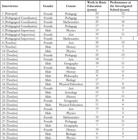
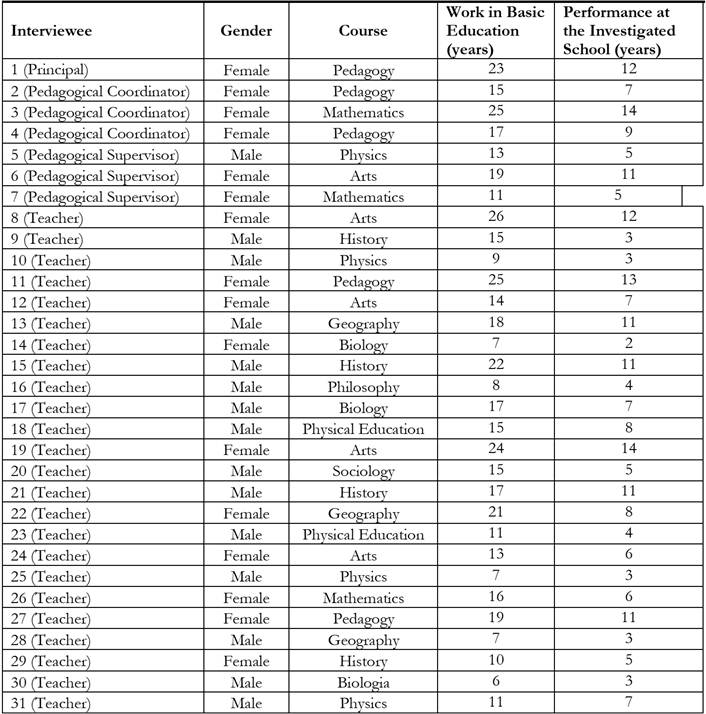
Thirty-one professionals from basic education participated in this study, including 1 principal, 3 pedagogical coordinators, 3 pedagogical supervisors, and 24 teachers from a state school located in Belo Horizonte, Minas Gerais, with 948 students enrolled and distributed in morning and afternoon shifts. A public school was chosen because it generally does not have the resources and support to implement continuing education programs that do not aim to improve the teaching and learning process. Chart 1 shows the demographic profile of the interviewees representing the pedagogical management and teaching staff.
This research was carried out through the following stages: (1) data collection to understand the level of capacity of education professionals to provide first aid; (2) data collection to understand the reasons that favor the occurrence of accidents in the school investigated; (3) development of a first aid flow to ensure safety in the school; (4) development of a First Aid Manual for Basic Education Professionals. These phases were completed in the period from October to December 2023.
Design thinking was adopted as the methodological path to create the manual, a method applied according to its five stages: discovery, ideation, prototyping, experimentation, and evolution (Morais; Fonseca, 2022).
For data collection, semi-structured interviews and a questionnaire consisting of questions with pre-established answers (Gil, 2022) were used. The interview reports were analyzed using the coding technique, and the questionnaire responses were analyzed using percentage frequency (Gibbs, 2009).
The project for this research was submitted to Plataforma Brasil and approved under the substantiated opinion of the Research Ethics Committee (CEP) number 6,304,440 on September 15, 2023.
Discovery stage
To obtain more information about the profile of the education professionals at the school under investigation, we sought to discover the level of education in which they work, the number of students, people they have daily contact with, their knowledge of the Lucas Law and their experience with relief actions at the school - as described in Table 1.
It can be seen that the distribution of these professionals among the levels of education is almost balanced, and most of them work with elementary, middle, and high school students, with daily contact with 100 to 300 students. However, most of them were unaware of the Lucas Law at the time of the research, although they had already experienced accidents that required assistance, such as falls, fractures/sprains/twists, fainting (syncope), and bleeding in the school environment.
Ideation stage
The authors of this article met with education professionals individually to ask some questions according to the established semi-structured interview script to identify the reasons that lead to accidents at school and solutions to prevent them, in addition to complying with the Lucas Law, This investigation with the 31 basic education professionals took place over eight days. The results obtained through the analysis of the reports were presented as codes, as recommended by the coding technique (Gibbs, 2009). One of the researchers has a degree in nursing and works in the area, which makes her qualified to develop, evaluate, and validate the proposed solutions - training actions - established by the group.
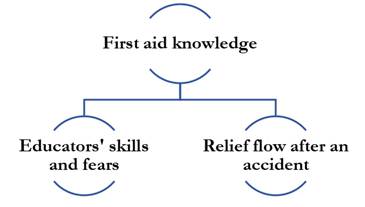
As for the reasons that lead to accidents in the school environment identified based on the perception of the interviewees, the following codes were obtained: school infrastructure, crowding of people; activities carried out in school spaces; and student behavior, as seen in Figure 1.
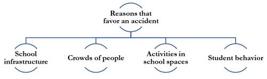
The infrastructure, in the interviewees' view, is an aspect that considerably favors the occurrence of accidents, especially in the case of the school investigated, which operates in an old building that did not consider all the safety measures currently required in its construction project. Here are some reports:
Our building, for example, is old and is not renovated frequently. It has obstacles, imperfections in the floors, inadequate movement of students and staff on the school premises, and disorganized physical spaces [...] (Interviewee 7).
The old-school floor is slippery. The court is also not safe enough for sports activities, in addition to the bad taste games that involve physical contact and rushing down the stairs [...]. Accidents also occur due to the old and broken furniture that we use as cabinets and tables (Interviewee 12).
Studies such as the one conducted by Almeida et al. (2020) highlight that schools with poor infrastructure, which are not subject to frequent maintenance and which have inadequate spaces, are more prone to accidents. In this sense, narrow corridors, playgrounds without safe recreation areas, overcrowded classrooms, and the lack of signage are some examples of problems that can increase risks. Therefore, school infrastructure plays a crucial role in preventing accidents. In addition, the organization of the school space, signage and accessibility are also fundamental aspects in this preventive process.
Another problem listed, in addition to infrastructure, is overcrowding. Below are some reports from basic education professionals who participated in this study:
We have a lot of children and teenagers together in the same place, which is dangerous because the building is old, with stairs, and sports activities can cause accidents because the facilities are too small for all the students who are running around and moving around [...] (Interviewee 19).
It is easy for an accident to happen here because we are in an environment with a lot of people, where we spend more than 5 hours a day, and several problems can arise (Interviewee 8).
Crowding in school environments is another condition that favors the occurrence of accidents. When there is an excessive concentration of individuals in limited spaces such as hallways, cafeterias, or classrooms, the likelihood of incidents such as slips, falls, and collisions that can result in injuries increases. The study by Mendes et al. (2018) examined the relationship between overcrowding in schools and the risk of accidents and highlighted that crowding in areas with little physical space, or overcrowding, can hinder safe movement and adequate supervision by teachers and administrative staff.
The way activities carried out in school spaces are planned, supervised and conducted can also directly impact student safety. A pertinent study that addresses this topic is Barros et al. (2019), which investigates the relationship between school activities and accidents. The authors highlight that poorly organized or supervised recreational, sports, and leisure activities can result in incidents such as falls, bruises, and collisions among students.
This scenario was presented by some interviewees who highlighted the difficulties in organizing and supervising physical education and recreational activities due to the small physical structure and the large number of students for few teachers. Below are some reports from basic education professionals who participated in this investigation:
Having one teacher organize sports activities for many students in a class makes supervision difficult. Therefore, accidents are common in physical education classes, as they are all in the same room with many people [...] (Interviewee 3).
There are many students for a few teachers, and they are in a small room. Therefore, falls due to running around or playing can make accidents more likely [...] (Interviewee 15).
We have many students together during recess. In addition to the small space, it is impossible to stop everyone from running and playing. Therefore, falls and collisions are common (Interviewee 29).
Barros et al. (2019) also emphasize the importance of considering the age of students and the appropriate level of supervision for each type of activity. Activities involving younger children, for example, may require closer supervision and additional precautions.
Another important factor that should be considered is student behavior. Student actions can vary widely from recklessness to caution, so it is necessary to understand how these behaviors influence their safety. Recklessness, for example, tends to be frequent in the case of younger students. On this subject, Pereira et al. (2020) explored in a study the relationship between student behavior and school accidents and found that inappropriate behavior, such as running in the hallways, playing rough, or simply not paying attention, can lead to an increase in accidents such as falls and collisions.
This situation was also presented by some interviewees:
Students' lack of knowledge about the risks of playing makes it easier for accidents to occur (Interviewee 5).
[...] students' lack of limits when playing. The desire to take risks, characteristic of their age, can cause serious accidents [...] (Interviewee 21).
For Pereira et al. (2020), it is essential to promote school safety through student education. According to the authors, it is necessary to make students aware of the importance of adopting safe behaviors such as walking carefully, using protective equipment correctly during sports activities, and respecting school rules, reducing the risk of accidents.
Therefore, to promote student safety in the school environment, it is essential to consider all these aspects and implement preventive measures such as improvements in infrastructure, crowd control, adequate supervision of activities, and implementation of school safety awareness programs. These actions aim to create a safer and more secure environment for students, minimizing the occurrence of accidents.
The interviewees aimed to identify whether they knew how to act in the event of accidents that could occur at school. In general terms, education professionals claimed to be afraid of providing first aid due to a lack of knowledge on how to properly assist accident victims, which could cause serious consequences such as after-effects and even death (Leite et al., 2018). Therefore, the researchers, together with the interviewees, concluded that it was essential to develop a flowchart describing the actions that should be taken after an accident, as shown in Figure 2.
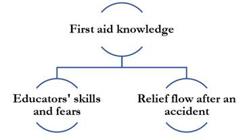
In Brazil, according to the NGO Criança Segura (2018), accidents are the main cause of death among children aged 1 to 14, with the most frequent accidents occurring in traffic, followed by drowning, suffocation, burns, falls, and poisoning. Based on this scenario and after identifying that lack of knowledge would be the main obstacle to assisting an accident victim, the education professionals who participated in this investigation were asked to self-assess their aptitude to assist in the school environment. The results are shown in Table 2.
This result indicates that there is a considerable number of school professionals who do not have the skills/knowledge to provide first aid or who only have basic knowledge, which consists of contacting emergency services by telephone. Only two education professionals with intermediate knowledge and one with advanced knowledge were found. These data reinforce the results identified in a study carried out by Verçosa et al. (2021), in which it was found that education professionals generally have inadequate knowledge about first aid, a situation that reduces the chances of accident victims receiving the correct assistance.
Given this context, we sought to explore this issue further through interviews. Initially, education professionals were asked about what they normally do when accidents occur in the school environment. At this point, many reported that they ask for help from someone responsible for the school, be it the principal or coordinator. Here are some reports:
I immediately informed the school administration (Interviewee 4).
I have never witnessed it. But I would call the pedagogical coordination (Interviewee 31).
I forwarded it to the vice-administrator (Interviewee 7).
The lack of knowledge about how to act in cases involving accidents with students causes teachers and administrative staff to attribute this responsibility to the school administrator, an attitude that can compromise the well-being of students who, in certain situations, will require immediate assistance. Some interviewees reported that they would call someone such as the emergency department. Here are some reports:
I call SAMU (Interviewee 14).
In case of falls, I use ice, communicate with the family member and call SAMU (Interviewee 28).
I will provide first aid and call the fire department (Interviewee 15).
In the health field, the term “time is life” is often used to emphasize that a patient who needs immediate assistance cannot be neglected and to provide them with more favorable conditions after an accident. According to Loureiro et al. (2022), the skills needed to help a student after an accident involve the ability to remain calm, assess the situation, apply first aid techniques, and make decisions quickly.
To better understand the anxieties of the education professionals surveyed when providing first aid, they were asked about their fears in the event of an accident in a school setting. The responses emphasized precisely the fear of causing the injured person’s condition to worsen due to inadequate procedures:
I am afraid of acting inappropriately (Interviewee 19).
Not knowing what to do to help the victim correctly (Interviewee 22).
Performing first aid incorrectly (Interviewee 25).
I am afraid of not knowing how to behave correctly so as not to make the situation worse (Interviewee 7).
I work in the classroom, and I do not want to feel obligated to provide first aid, especially because when something goes wrong, the family blames the teacher (Interviewee 30).
The main fears of these professionals when assisting an accident victim are valid because, as previously discussed, inappropriate action when assisting a victim can compromise their condition. These fears refer to concerns about their safety, fear of making mistakes that could worsen the situation, and uncertainty about how to proceed (Reis et al., 2021).
On the other hand, we also sought to identify the main skills that could help an accident victim who needs first aid. Most professionals listed calmness at the time of the situation:
I can stay calm enough to call the first aid service, SAMU. Furthermore, I don't mind seeing blood or fractures (Interviewee 8).
In situations involving accidents, I know how to guide students and others to stay calm and ask for help from supervision or coordination. (Interviewee 18).
I am calm and relaxed [...] (Interviewee 14).
Other interviewees stated that they do not have any skills that could contribute significantly in such a situation:
None, or rather, I simply forward it to someone who can help (Interviewee 3).
I don't have any skills (Interviewee 11).
I don't have the skills to deal with a difficult situation like this. I'm not emotionally or technically prepared (Interviewee 15).
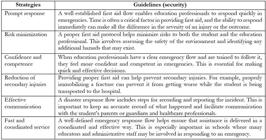
For Verçosa et al. (2021), these skills are essential for these professionals so that they know how to deal with accidents, in addition to being able to assess injuries, administer cardiopulmonary resuscitation, and perform basic first-aid interventions. Furthermore, Cabral et al. (2019) reaffirm the importance of regular training and updates to maintain and improve this knowledge. Therefore, still at this stage, the researchers, together with the teachers of the investigated school, developed a rescue flow for the safety of students and other people who pass through the school environment, based on the guidelines of the Health Organizations - OS, as shown in Chart 2.
The need for a flow was identified based on suggestions from some education professionals - clients/users - who participated in this stage of design thinking so that the school can comply with what is determined by the Lucas Law, so they can be prepared to provide first aid. Below are the reports from some education professionals who proposed this solution:
A teaching manual and step-by-step instructions would be very helpful in assisting correctly (Interviewee 7).
Knowing who to call for support, and a step-by-step guide on what to do (Interviewee 24).
Knowing what we can and cannot do with a student and having a reference for each situation (Interviewee 30).
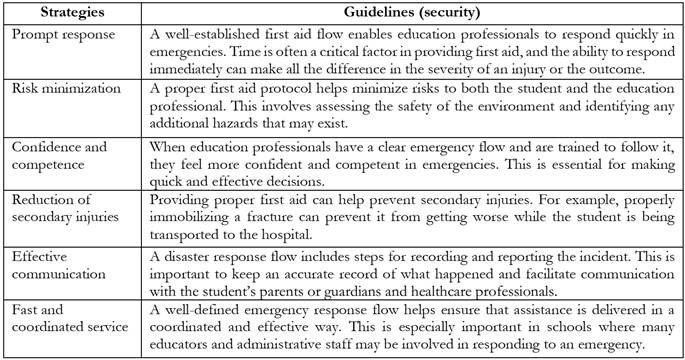
Although there is no specific bibliographic reference that proposes a relief flow for education professionals, the general guidelines for primary care and the recommendations of health organizations from the Brazilian Red Cross (2020) can be used as a basis for creating an action procedure in emergencies in schools. Therefore, based on these references, the following relief flow was created, presented in Chart 3.
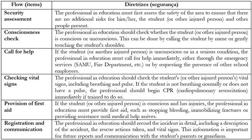
In conclusion, having a well-defined first aid flow and a roadmap for education professionals to assist students - or other injured people - after an accident is essential to ensure the safety and well-being of those involved. This not only helps to minimize the risk of worsening injuries but also promotes the confidence and competence of these professionals to deal with emergencies (Lima, Neto, & Brito, 2023). Based on this flow, an informative manual for providing first aid was developed with theoretical content and practical learning activities to deal with different emergencies that may occur in schools.
Prototyping stage
Before beginning the development of the First Aid Manual for Basic Education Professionals (Manual de Atendimento em Primeiros Socorros para Profissionais da Educação Básica), the interviewees were asked about its relevance. Twenty-eight professionals in education (90.32%) of 31 stated that such a manual is important, and only 3 (9.67%) said that such material would not be relevant. Therefore, its prototyping or development began.
Also, this prototype was designed with the aim of solving critical issues associated with the lack of knowledge about how to perform primary care and the need to institutionalize appropriate procedures that need to be applied after an accident. The methodology followed a series of important steps that were organized in Table 4.
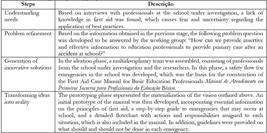
The contents of the manual were divided into three modules. The first module discussed the Lucas Law and the fundamental principles of first aid, that is, the 3Cs rule: 1. Check the environment; 2. Call for help; 3. Care for the victim. The second module presented guidelines for providing first aid in various emergencies that may occur in schools. The third module described the actions that should and should not be taken in each accident situation. In addition to the theoretical content, this manual presented examples, video links, and learning exercises to be applied by those who provided continuing education, which took place in December 2023 on the premises of the school investigated.
This First Aid Manual for Basic Education Professionals demonstrates how design thinking can be used to collaboratively establish innovative and assertive solutions - including training actions - to meet the needs of clients/users and that are in line with their reality.
Experimentation stage
In the experimental phase, the aim is to validate the proposed solutions for their usefulness and effectiveness. To this end, training on first aid was provided to the 31 professionals from the school under investigation - teachers and school management - who helped develop the manual and agreed to participate in this moment. It is important to note that the administrative technicians did not participate in this training since a large number of participants would prevent the instructors, authors of this article, from meeting everyone's needs when clarifying doubts and evaluating the activities. The researchers used the manual - which was sent to the participants in advance - to address the theoretical content that was also presented during the training through slides. The learning exercises were applied through simulations with people and anatomical dolls. This training took place over one day, in the morning and afternoon, totaling 7 hours. Later, to obtain evidence about its effectiveness, the participants were asked for their perceptions about the proposed manual. Below are some reports:
The manual is excellent. It allowed us to carry out training that made us understand how to act in the event of accidents at school. In addition, it can be used as a guide when accidents occur (Participant 11).
It is necessary to know about first aid in certain situations. It presents the content clearly for laypeople. The examples and practical exercises helped us understand how to act in a real accident situation (Participant 29).
The manual helps us better understand emergency needs. Before the training, I didn't know how to behave in an accident situation. Today I know the initial steps to take (Participant 8).
It is very valuable for the school. The structure of our school makes accidents easier, in addition to the significant number of students. Therefore, we need to be prepared to deal with these situations. I feel prepared to put into practice what I learned. The flow also helped a lot in understanding the initial stages of care (Participant 4).
These reports indicate that participants perceive the manual as a useful tool to assist them in urgent and emergency situations. Therefore, the material helps develop the skills and abilities needed to deal assertively and effectively with critical situations involving accidents in the school environment.
Evolution stage
At this stage, strategies for continuous improvement of the established solution are identified. In the case of the solution developed in this study, the following mechanisms were defined for its continuous improvement: surveys with education professionals who assisted using the knowledge acquired in the training, to identify whether the content met their needs in a real situation or whether it is necessary to address other knowledge that was not covered in the training material; recording and analyzing suggestions from teachers, administrative staff, students and parents for improving the material, which may be presented to the pedagogical coordinator at any time; annual review of the material by a health professional to improve it.
For Moreira (2004), technical-technological solutions and products, including those developed in professional master's degree research, need to be improved through analysis and reflection on the results obtained to date, in addition to verifying whether they meet current needs and trends, to guarantee the effectiveness of these solutions when used in different situations and contexts with similar characteristics. To this end, it is recommended that adverse situations be recorded so that solutions can be improved.
The application of the manual should be encouraged so that it becomes an institutional practice. If necessary, the training action that uses this manual can be carried out every six months or when basic education professionals feel the need to improve their knowledge on the subject. It is also important that this training provides a certificate of participation as a way of demonstrating its importance as professional training and attesting that those who participated were exposed to theoretical and practical knowledge for providing first aid.
FINAL CONSIDERATIONS
At the end, it was possible to meet the study's main objective, which is to report an experience of developing a training action based on the design thinking methodology to guide basic education professionals in providing first aid. Therefore, this methodology can be used to propose training actions in the area of health education because it enables the resolution of problems and the establishment of solutions according to the reality and expectations of health and education professionals in providing first aid in schools.
The First Aid Manual for Basic Education Professionals (Manual de Atendimento em Primeiros Socorros para Profissionais da Educação Básica) played a fundamental role in providing clear and relatable guidance for dealing with emergencies. Furthermore, the research revealed that participants expressed a positive acceptance of the importance of providing primary care in the event of accidents after undergoing the training action, even though most of them reported fear of a preliminary investigation. This result demonstrates the participants' understanding of the duties imposed by specific legislation, as well as their awareness of the relevance of this stance.
The interaction between the education professionals who participated in this research provided a significant sharing of knowledge among those involved, allowing them to enrich their repertoires, gain training through experiences, and create improved collective knowledge that gave rise to an effective solution for dealing with emergencies that may occur in the school context. This collective effort, one of the principles of the design thinking methodology, was fundamental in reducing the insecurity and fears of these professionals when assisting an accident victim.
This result also reinforces the need for greater involvement by the school administrators to ensure the effective applicability of the Lucas Law in schools, in addition to the importance of partnerships with health professionals to promote health education, including first aid for all members of the school community. It is also important that accident prevention through the establishment of a preventive behavioral culture and structural modifications meet the safety guidelines imposed on buildings. It is also necessary to promote the development of comprehensive safety policies and/or protocols that include the assessment and management of risks associated with activities carried out in school spaces.
We concluded that this research fulfilled its objective and highlighted, through a formative action, the importance of collective commitment to safety in the school environment, demonstrating that, through knowledge, collaboration, and adequate infrastructure, it is possible to provide an environment that favors learning and well-being. As a limitation, it is mentioned that the research was carried out in a single public school. Therefore, we suggest future studies with the same research purpose in other basic education institutions, including private ones, to validate the results obtained or complement them.
References
- ALMEIDA, Amanda Rodrigues et al Infraestrutura escolar e segurança: uma análise sobre a prevenção de acidentes nas instituições de ensino. Revista Brasileira de Educação, n. 25, v. 1. p. 1-15, 2020.
-
AMADIGI, Felipa Rafaela et al Posturas e conhecimentos de educadoras em relação aos primeiros socorros na escola. Saberes Plurais: Educação na Saúde, v. 6, n. 2, [s. p.], 2023. <https://doi.org/10.54909/sp.v6i2.127296>
» https://doi.org/10.54909/sp.v6i2.127296 -
BARBOSA, Maria do Socorro Alecio et al Design thinking na construção da interface para avaliação da saúde mental em trabalhadores da saúde. Lecturas: Educación Física y Deportes, v. 27, n. 296, p.169-184, 2023. <https://doi.org/10.46642/efd.v27i296.3640>
» https://doi.org/10.46642/efd.v27i296.3640 - BARROS, Laura Ferreira et al Atividades escolares e acidentes com estudantes: uma análise dos riscos e medidas preventivas. Revista de Educação e Segurança, n.1, v.11, p. 36-50, 2019.
-
BEZERRA, Maria Augusta Rocha et al Death of children by domestic accidents: unveiling the maternal experience. Revista Brasileira de Enfermagem, v. 75, n. 4, e20210435, 2022. <https://doi.org/10.1590/0034-7167-2021-0435>
» https://doi.org/10.1590/0034-7167-2021-0435 -
BRASIL. Lei nº. 2.848, de 07 de dezembro de 1940. Rio de Janeiro, 1940. Disponível em: <https://www.planalto.gov.br/ccivil_03/decreto-lei/del2848compilado.htm>. Acesso em:30/09/2023.
» https://www.planalto.gov.br/ccivil_03/decreto-lei/del2848compilado.htm -
BRASIL. Constituição da República Federativa do Brasil de 1988 Brasília, 1988. Disponível em: <Disponível em: https://www2.senado.leg.br/bdsf/bitstream/handle/id/518231/CF88_Livro_EC91_2016.pdf >. Acesso em:30 /09/2023.
» https://www2.senado.leg.br/bdsf/bitstream/handle/id/518231/CF88_Livro_EC91_2016.pdf -
BRASIL. Lei n.º 8.069, de 13 de julho de 1990. Brasília, 1990. Disponível em: <Disponível em: https://www.planalto.gov.br/ccivil_03/leis/l8069.htm >. Acesso em:30 /09/2023.
» https://www.planalto.gov.br/ccivil_03/leis/l8069.htm -
BRASIL. Lei n.º 13.146, de 06 de julho de 2015. Brasília, 2015. Disponível em: <Disponível em: https://www.planalto.gov.br/ccivil_03/_ato2015-2018/2015/lei/l13146.htm >. Acesso em: 01/10/2023.
» https://www.planalto.gov.br/ccivil_03/_ato2015-2018/2015/lei/l13146.htm -
BRASIL. Lei 13.722, de 4 de outubro de 2018. Brasília, 2018. Disponível em: <Disponível em: https://www.planalto.gov.br/ccivil_03/_ato2015-2018/2018/lei/l13722.htm >. Acesso em:10/10/2023.
» https://www.planalto.gov.br/ccivil_03/_ato2015-2018/2018/lei/l13722.htm -
BRASIL. Cartilha de Segurança e Saúde nas Escolas Brasília: Secretaria do Trabalho, 2022. Disponível em: <Disponível em: https://www.gov.br/trabalho-e-previdencia/pt-br/composicao/orgaos-especificos/secretaria-de-trabalho/inspecao/dnsse/cartilha-seg-saude-para-escolas.pdf >. Acesso em:01/03/2023.
» https://www.gov.br/trabalho-e-previdencia/pt-br/composicao/orgaos-especificos/secretaria-de-trabalho/inspecao/dnsse/cartilha-seg-saude-para-escolas.pdf -
BRITO, Jackeline Gonçalves et al Efeito de capacitação sobre primeiros socorros em acidentes para equipes de escolas de ensino especializado. Rev Bras Enferm, v. 73, n. 2, e20180288, 2020. <https://doi.org/10.1590/0034-7167-2018-0288>
» https://doi.org/10.1590/0034-7167-2018-0288 -
CABRAL, Elaine Viana; OLIVEIRA, Maria de Fátima Alves. Primeiros socorros na escola: conhecimento dos professores. Revista Práxis, v. 11, n. 22, p. 97-106, 2019. <https://doi.org/10.47385/praxis.v11.n22.712>>
» https://doi.org/10.47385/praxis.v11.n22.712> -
CASADEVALL, Meyssa Quezado de Figueiredo Cavalcante et al Capacitação docente para execução dos primeiros socorros em escolares. Brazilian Journal of Development, v. 6, n. 6, p. 39751-39770, 2020. <https://doi.org/10.34117/bjdv6n6-497>
» https://doi.org/10.34117/bjdv6n6-497 -
CRIANÇA SEGURA BRASIL. Ranking dos acidentes que mais matam e ferem crianças no Brasil 2018. Disponível em: <Disponível em: https://criancasegura.org.br/noticias/acidentes/ranking-dos-acidentes-que-mais-matam-e-ferem-criancas-no-brasil-2018/ >. Acesso em:10/10/2023.
» https://criancasegura.org.br/noticias/acidentes/ranking-dos-acidentes-que-mais-matam-e-ferem-criancas-no-brasil-2018/ -
CRUZ, Karine Bianco da et al Intervenções de educação em saúde de primeiros socorros, no ambiente escolar: uma revisão integrativa. Revista Enfermería Actual, Costa Rica, v. 1, n. 40, p. 1-20, 2021. <http://dx.doi.org/10.15517/revenf.v0i40.43542>
» https://doi.org/10.15517/revenf.v0i40.43542 -
CRUZ, Karine Bianco da et al Aptidão, conhecimento e atitude de profissionais da educação infantil sobre primeiros socorros. Revista de Enfermagem da UFMS, v. 12, e7, p. 1-20, 2022. <https://doi.org/10.5902/2179769266542>
» https://doi.org/10.5902/2179769266542 -
CRUZ VERMELHA BRASILEIRA. Primeiros Socorros nas Escolas 2020. Disponível em:<Disponível em:https://www.cruzvermelha.org.br/primeiros-socorros/ >. Acesso em:24/08/ 2023.
» https://www.cruzvermelha.org.br/primeiros-socorros/ -
FARIAS, Larissa dos Anjos; PAULA, Nair Albuquerque Gomes de; TENÓRIO, Hulda Alves de Araújo. Capacitação em primeiros socorros para profissionais da educação baseado na Lei Lucas: relato de experiência.Revista JRG de Estudos Acadêmicos, São Paulo, v. 6, n. 13, p. 1906-1921, 2023. <https://doi.org/10.55892/jrg.v6i13.770>
» https://doi.org/10.55892/jrg.v6i13.770 -
FERREIRA, Katia de Jesus; BORGES, Beatriz Essenfelder; SCHWIDERSKI, Antonio Carlos. Atuação do enfermeiro como educador em saúde de primeiros socorros em escola de ensino infantil. Publ UEPG Ciências Biológicas Saúde, v. 25, n.1, p. 37-49, 2019. <https://doi.org/10.5212/Publ.Biologicas.v.25i1.0004>
» https://doi.org/10.5212/Publ.Biologicas.v.25i1.0004 - GIBBS, G. Análise de Dados Qualitativos Porto Alegre: Artmed, 2009.
- GIL, A. C. Como elaborar projetos de pesquisa 7. ed. São Paulo: Atlas, 2022.
-
GRIMALDI, Monaliza Ribeiro Mariano et al A escola como espaço para aprendizado sobre primeiros socorros. Revista de Enfermagem da UFSM, v. 10, p. 20, 2020. <https://doi.org/10.5902/2179769236176>
» https://doi.org/10.5902/2179769236176 -
LEITE, Hellen Samara Nunes et al Primeiros Socorros na Escola: conhecimentos da equipe que compõe a gestão educacional. Temas em Saúde, v. 23, n.1, p. 290-312, 2018. Disponível em: <Disponível em: https://temasemsaude.com/wp-content/uploads/2018/10/fip201819.pdf >. Acesso em:10/10/2023.
» https://temasemsaude.com/wp-content/uploads/2018/10/fip201819.pdf -
LIMA, Elcilene Oliveira; Fernandes NETO, Izidorio Paz; BRITO, Jordania da Silva. A importância dos primeiros socorros como disciplina nos cursos de licenciatura. Facit Business and Technology Journal, v.1, n.44, p.149-162, 2023. Disponível em: Disponível em: https://revistas.faculdadefacit.edu.br/index.php/JNT/article/view/2361>. Acesso em: 10/10/2023.
» https://revistas.faculdadefacit.edu.br/index.php/JNT/article/view/2361>. Acesso em: -
LOUREIRO, Lorena Bastos Andrade Cathalá et al A importância da popularização de primeiros socorros nas escolas para salvar vidas: uma revisão integrativa. Revista Nursing, v. 25, n. 291, p. 8404-8410, 2022. <https://doi.org/10.36489/nursing.2022v25i291p8404-8417>
» https://doi.org/10.36489/nursing.2022v25i291p8404-8417 -
MANTOVANI, Julia de Lima et al Avaliação do conhecimento sobre a Lei Lucas e sua aplicabilidade: estudo piloto na rede de ensino pública do ensino infantil e fundamental. Arquivos de Ciências da Saúde da UNIPAR, v. 27, n. 4, p. 1946-1961, 2023. <https://doi.org/10.25110/arqsaude.v27i4.2023-022>
» https://doi.org/10.25110/arqsaude.v27i4.2023-022 -
MARTINS, Gabriella Pessoa. A importância do conhecimento de práticas de primeiros socorros no ambiente escolar: uma revisão de literatura. Facit Business and Technology Journal, v. 1, n. 44, p. 209-223, 2023. Disponível em: <Disponível em: https://revistas.faculdadefacit.edu.br/index.php/JNT/article/view/2365/1590 >. Acesso em:30/09/2023.
» https://revistas.faculdadefacit.edu.br/index.php/JNT/article/view/2365/1590 - MENDES, Leandro Rodrigues et al Superlotação em escolas: um estudo sobre a influência na ocorrência de acidentes. Revista de Educação e Segurança, v. 10, n. 2, p. 45-58, 2018.
-
MIRANDA, Priscila da Silva et al Conhecimento, atitudes e práticas em primeiros socorros no ambiente escolar: uma revisão integrativa. Revista de Enfermagem do Centro-Oeste Mineiro, v. 13, n. 1, p. 1-13, 2023. <https://doi.org/10.19175/recom.v13i0.4453>
» https://doi.org/10.19175/recom.v13i0.4453 -
MORAIS, Render Silva; FONSECA, Letícia Rodrigues da. O uso do Design Thinking no desenvolvimento de jogos digitais para o ensino da química na educação básica. Revista Tempos e Espaços em Educação, v. 15, n. 34, p. 1-24, 2022. <https://doi.org/10.20952/revtee.v15i34.17778>
» https://doi.org/10.20952/revtee.v15i34.17778 -
MOREIRA, Marco Antonio. O mestrado (profissional) em ensino. Revista Brasileira de Pós-Graduação, Brasília, v. 1, n. 1, p. 131-142, jul. 2004. <https://doi.org/10.21713/2358-2332.2004.v1.26>
» https://doi.org/10.21713/2358-2332.2004.v1.26 -
OLIVEIRA, Willian Bil de et al Impacto da capacitação em primeiros socorros sobre o conhecimento de educadores e agentes escolares. REVISA, v. 11, n. 2, p. 220-231, 2022. <https://doi.org/10.36239/revisa.v11.n2.p220a231>
» https://doi.org/10.36239/revisa.v11.n2.p220a231 - PEREIRA, Armando Rocha et al Comportamento dos alunos e acidentes escolares: uma análise dos fatores de risco. Revista de Educação e Segurança, v.12, n.2, p.78-91, 2020.
-
REIS, Tahoane da Silva et al Knowledge and attitudes of schoolchildren about the prevention of accidents. Ciência & Saúde Coletiva, v. 26, n. 3, p. 1077-1084, 2021. <https://doi.org/10.1590/1413-81232021263.06562019>
» https://doi.org/10.1590/1413-81232021263.06562019 -
SANTOS, Elisa Queiroz dos; FONSECA, Letícia Rodrigues. Development of active-teaching methodologies through the design thinking. Research, Society and Development, v. 10, n. 14, p. 1-17, 2021. <https://doi.org/10.33448/rsd-v10i14.21752>
» https://doi.org/10.33448/rsd-v10i14.21752 -
SILVA, Blenda Reis da et al Conhecimento e abordagem de primeiros socorros em ambiente escolar: educação em saúde e enfermagem. Research, Society and Development, v. 12, n.1, 2023. <https://doi.org/10.33448/rsd-v12i1.39609>
» https://doi.org/10.33448/rsd-v12i1.39609 -
SILVA, Poliana Avila; LOURENÇO, Mariana Pissioli; BALDISSERA, Vanessa Denardi Antoniassi. Educação permanente em Saúde: Design Thinking para planejamento e construção de diretrizes. Esc Anna Nery, v. 27, n. 1, p. 1-10, 2023. <https://doi.org/10.1590/2177-9465-EAN-2022-0397pt>
» https://doi.org/10.1590/2177-9465-EAN-2022-0397pt -
VERÇOSA, Rosa Caroline Mata et al Conhecimento dos professores que atuam no âmbito escolar acerca dos primeiros socorros. Revista de Ensino, Educação e Ciências Humanas, v. 22, n. 1, p. 78-84, 2021. <https://doi.org/10.17921/2447-8733.2021v22n1p78-84>
» https://doi.org/10.17921/2447-8733.2021v22n1p78-84

 Source: Created by the authors (2023).
 Source: Created by the authors (2023).
 Source: Created by the authors (2023).
 Source: Created by the authors (2023).
 Source: Created by the authors (2023).
 Source: Created by the authors (2023).