
 Antibullying Interventions, Their Effects, and Lessons Learned: An Umbrella Review
Abstract:
Bullying and cyberbullying impact students’ health and development. This study aimed to synthesize and critically evaluate the effectiveness of antibullying interventions. An umbrella review was conducted according to the PRISMA guidelines. Five databases were consulted, and all the articles retrieved and identified were exported to the Rayyan platform. The review process was conducted using a multi-stage approach. Methodological quality and risk of bias assessments were performed using the ROBIS tool. Data were analyzed descriptively and exploratively. The corpus reviewed consisted of 12 articles. The intervention programs utilized a variety of methods or strategies. In terms of effects and heterogeneity, it was found that all the student interventions reviewed showed potential to reduce the occurrence of these phenomena. The identification of the effects of antibullying interventions can facilitate decision-making thus helping to address the issues thereof.
Keywords:
school violence; antibullying; intervention; systematic review
Resumo:
O bullying e o cyberbullying afetam a saúde e o desenvolvimento dos estudantes. Esse estudo teve como objetivo sintetizar e avaliar criticamente a eficácia de intervenções antibullying. Foi realizada uma umbrella review seguindo as diretrizes PRISMA. Cinco bases de dados foram consultadas e todos os artigos identificados foram exportados para a plataforma Rayyan. O processo de revisão foi realizado usando uma abordagem multi-estágio. A avaliação da qualidade metodológica e do risco de viés foi realizada através da ferramenta ROBIS. Os dados foram analisados de forma descritiva e exploratória. O corpus revisado foi constituído por 12 artigos. Os programas interventivos revisados utilizaram uma variedade de métodos ou estratégias. Em termos de efeitos e heterogeneidade, verificou-se que todas as intervenções revisadas apresentavam algum potencial para reduzir a ocorrência dos fenômenos entre estudantes. Identificar os efeitos das intervenções antibullying pode facilitar a tomada de decisões para enfrentar os problemas alvo dessa análise.
Palavras-chave:
violência escolar; bullying; intervenção; revisão sistemática
Resumen:
El acoso escolar y el ciberacoso afectan la salud y el desarrollo de los estudiantes. Este estudio tuvo como objetivo sintetizar y evaluar críticamente la efectividad de las intervenciones contra el acoso escolar. Se realizó una revisión general siguiendo las directrices PRISMA. Se consultaron cinco bases de datos y todos los artículos identificados se exportaron a la plataforma Rayyan. El proceso de revisión se realizó mediante un enfoque de múltiples etapas. La evaluación de la calidad metodológica y el riesgo de sesgo se realizaron utilizando la herramienta ROBIS. Los datos se analizaron de manera descriptiva y exploratoria. El corpus revisado consistió en 12 artículos. Los programas de intervención revisados utilizaron una variedad de métodos o estrategias. En términos de efectos y heterogeneidad, se encontró que todas las intervenciones revisadas mostraron algún potencial para reducir la ocurrencia de estos fenómenos entre los estudiantes. Identificar los efectos de las intervenciones contra el acoso escolar puede facilitar la toma de decisiones para abordar los problemas analizados en este estudio.
Palabras clave:
violencia escolar; bullying; intervención; revisión sistemática
Bullying and cyberbullying in school students are issues of concern in various fields (psychology, health and education, for example). Traditional bullying is described as an aggressive, repetitive, and intentional behavior, based on an unequal power relationship between aggressors and victims (Fernandes & Dell’Aglio, 2023; Zequinão et al., 2020). The phenomenon refers to any physical, verbal, or psychological abuse. Cyberbullying, violence that occurs in virtual environments, is also defined based on these aspects, but its severity is enhanced by the lack of control over the posted/shared information and the anonymity of the aggressors (Zhang et al., 2022). Cyberbullying can be described as any situation involving threats, social exclusion, flaming, defamation, the spreading of fake news, sexting, etc. Some investigations characterize these phenomena as being global, including episodes of perpetration or victimization due to bullying and cyberbullying (Fraguas et al., 2021).
According to a large Brazilian survey (National School Health Survey, PeNSE), which involved more than 100,000 students in its fourth edition (2019), the data show that about 12.0% of the sample members were involved in some bullying situation (Malta et al., 2022). The same survey reported that 13.2% of the students were victims of cyberbullying. A prospective analysis with data from the first, second, and third PeNSE editions showed a growth in the reports of verbal bullying from 14.2% in 2009 to 21.7% in 2015 (Silva et al., 2019). In general, boys are more frequently identified or categorized as being aggressors compared to girls (Zequinão et al., 2020).
As a major threat to students worldwide and especially, to Brazilian students in this particular study, bullying and cyberbullying have deleterious consequences for both aggressors and victims, as well as for the school community in general. Indeed, bullying or cyberbullying experience has been associated with reduced academic performance, as well as less school satisfaction, poor quality of life outcomes, mental health disorders (anxiety and depression), and even suicidal or homicidal behaviors. In general such bullying and cyberbullying disorders affect more the victims; however it has been documented that also students who observe or engage in these behaviors experience similar problems. Known perpetrators, for example, are more likely to adopt health-risk behaviors (substance use, unprotected sex, for example) (Santos & Verly, 2021).
In Brazil, in order to deal with this issue, three types of laws related to school bullying have been enacted: informative, preventive, and punitive (Pereira et al., 2022). Law No. 13,185/2015 set up the Program to Combat Systematic Intimidation (Bullying), aiming at intervention and prevention against all types of violence. Law No. 13,277/2016 instituted the National Day to Combat Bullying and Violence in Schools, with an informative focus. Law No. 13,663/2018, amending the National Education Guidelines and Bases Law, includes measures to foster awareness and prevention as well as combating violence and promoting a culture of peace. More recently, a law has been enacted that has enhanced bullying and cyberbullying legal implications in relation to possible punitive reactions.
Additionally, 43 state laws on school bullying were found, covering most state entities (Pereira et al., 2022). These laws were classified as informative, preventive, and punitive; some of them address both physical bullying and cyberbullying. Preventive laws are more common; they include teachers’ training, family guidance, and inclusion of norms in the school regulations. Punitive laws include measures such as the installation of monitoring cameras in schools and penalties for schools that do not adopt prevention and repression actions against bullying.
This scenario reveals the importance of specifically thinking about antibullying interventions to promote more effective actions to address this issue in schools, as well as inducing policies. Because it is hypothesized that even within a certain legislative framework, the prevalence rates of bullying and cyberbullying have not been reduced; thus initiatives with proven ability to reduce the occurrence of these phenomena are needed. In this sense, there are different structure models for antibullying interventions, each with its specific approaches and different efficacies (Ng et al., 2022). School-based models often include components such as clear school policies against this behavior, awareness programs for students, parents, and teachers, and incident monitoring and reporting systems. Community-based interventions models have a broader scope. Other models, such as those focused on therapeutic processes, aim to empower victims or aggressors to deal with bullying in a healthier way (Ng et al., 2022).
All these models aim to create a safe and inclusive school environment, promoting empathy and respect among students. Ultimately, the combination of different models and approaches may be more effective in addressing bullying albeit with adaptations to the specific needs of each school and community. However, for this combination to come true, knowledge and pertinent evidence ought to be disseminated among the scientific community, the teachers, and the public policy agents. It is hypothesized that different models offer possibilities to reduce the occurrence of bullying or cyberbullying among students; in such models, students who participate in the interventions would be less likely to engage in aggressive behaviors in schools or virtually or even to be victimized. With this in mind, a comprehensive review was conducted with the aim of synthesizing and critically evaluating the effectiveness of antibullying interventions.
Method
This is an umbrella review (UR), which is considered a novel methodological approach developed to address the growing volume of literature systematic reviews (Choi & Kang, 2023). This type of comprehensive review allows the systematic reviews data to be summarized using a structured quality assessment; this allows a clearer overview of a large body of research literature and of individual systematic reviews that may have reported different results. In addition, we also followed the Preferred Reporting Items for Systematic Reviews and Meta-Analyses (PRISMA) guidelines (Page et al., 2022).
The literature search was conducted by an experienced investigator in literature reviews (WAO). In March and April 2024, five databases (Web of Science, Scopus, APA PsycInfo, PubMed, and SciELO) were screened. The searches used a combination of terms considered natural language and related to the phenomena under review. Controlled terms from the databases were not used. Natural language terms were derived from three main concepts under analysis, and a single crossing was performed: intervention AND bullying OR cyberbullying OR antibullying AND review OR systematic review AND meta-analysis. Only papers written in Portuguese, English, and Spanish were considered. Document type (article or review) limits were applied.
All articles identified in the searches were uploaded to the Rayyan platform (Ouzzani et al., 2016). The review process was conducted using a multi-stage approach, including title and abstract screening (on the Rayyan platform) and full-text evaluation. After title and abstract screening, full articles were assessed to determine if they met the following inclusion criteria: systematic review articles with meta-analyses, including interventions with students, professionals, or family members, written in Portuguese, Spanish, or English. No date limits were imposed. Articles of other types (reviews, primary, theoretical studies, editorials, etc.) and cases of systematic reviews that did not provide general data on the effects and heterogeneity of the reviewed interventions were excluded.
Methodological quality and risk of bias assessments were conducted using the ROBIS tool (Whiting et al., 2016). The assessment occurs in three phases: (1) assessing the relevance of the review (optional), (2) identifying concerns with the review process, and (3) bias risk judgment. Phase 2 covers four domains of concern: eligibility criteria; identification and selection; data collection and evaluation; synthesis and findings. In this phase 2, each of the four domains is characterized as of low concern, high concern, or unclear concern. Phase 3 assesses the overall bias risk in interpreting the review results and whether the limitations identified in any of the domains of phase 2 have been considered. At the end of the assessment, articles could be classified as of low risk of bias, high risk of bias, or unclear information. The results are presented descriptively and exploratively, as recommended when performing a UR (Choi & Kang, 2023).
Results
The search and selection process yielded 12 studies in connection with this review. The search flow chart according to the PRISMA guidelines (Page et al., 2022) is shown in Fig.1.
The publication year of the reviews ranged from 2011 to 2023, reflecting a continued interest of the scientific community in understanding and mitigating issues related to bullying and cyberbullying. The numbers of studies included in each article selected varied considerably from 6 to 100 studies included in each review. This variation suggests a wide range of methodological approaches and research foci within the field considered going from more specific and focused reviews (fewer studies included) to broader reviews (involving up to 100 studies). The quantity of studies selected in each review reflects the complexity and breadth of the accumulated knowledge on the topic.
The data also reveal a wide range in the number of students involved in antibullying interventions, ranging from a total of 1,027 to 335,440 students. In addition to students, one of the studies also included the participation of parents/caregivers (n = 887) and school staff (n = 671). However, three articles did not mention the number of participants in the interventions reviewed thus adding a dose of uncertainty to the overall understanding of the impact of the interventions reported.
The diversity in numbers, either the number of studies included in each review or the number of participants involved, highlights the importance of a careful analysis of the literature reviews to understand the extent and depth of existing research, as well as to identify gaps that may require further investigations. Furthermore, the wide variation in the number of participants underscores the complexity and diversity of research approaches in the domain of antibullying interventions, suggesting the need for careful analysis of methods and results when interpreting the interventions impact. The magnitude of the numbers in particular, emphasizes the importance of considering not only the effectiveness of interventions but also the scalability and feasibility of their implementation in different school contexts. These two aspects already confirm the relevance and initial justification for conducting this UR.
Table 1 presents the main characteristics and statistical results revealed by the studies reviewed.
After reviewing the objectives proposed by the reviews included, it was observed that the research addresses a variety of topics related to bullying and cyberbullying, focusing the effectiveness of different types of interventions. Among the most recurring themes the following were retrieved: the evaluation of the effectiveness of antibullying programs in schools and the analysis of specific interventions, such as parental, educational, and digital health programs. Additionally, there is a considerable focus on identifying gaps in the literature and searching for effective prevention and intervention strategies against cyberbullying. The research also explores the influence of moderating variables, such as students’ age and associations between the social, behavioral variables, and the intervention outcomes.
It is noted that the intervention programs reviewed used a variety of methods and strategies. Psychoeducational actions, students’ training targeting their becoming moderators or interveners in bullying or cyberbullying situations, use of multimedia materials, dissemination of information in informational pamphlets, and social skills training were the most referenced types of interventions. Interventions by parents or caregivers were based on offering training courses or workshops, group discussions on prevention strategies, as well as offering informational materials to be read by students at home, while another may have promoted bullying (Chen et al., 2021). This demonstrates that there is no single or best approach to addressing the phenomena and as will be observed hereafter, different methods may be effective in different contexts.
Overall, the reviewed antibullying interventions highlight a variety of approaches and outcomes. Chen et al. (2021) focused on parental programs, observing reductions in bullying reports and positive impacts on other aspects, such as parenting and empathy. Polanin et al. (2022) found that most programs were associated with significant reductions in both perpetration and victimization of cyberbullying and traditional bullying. Gaffney, Farrington, et al. (2019) observed that students who participated in anticyberbullying programs were less likely to be involved in perpetration or victimization. Another study revealed efficacy in reducing overall bullying and improving participants’ mental health (Fraguas et al., 2021). Lan et al. (2022) evidenced a short-term reduction in cyberbullying, but insignificant long-term results, while Yeager et al. (2015) suggested a decline in the effectiveness of antibullying programs with the advancement of students’ age.
Chen et al. (2023) pointed out more significant effects on bullying observers and more effective cyberbullying interventions in reducing perpetration. Wang and Jiang (2023) emphasized the importance of parental components and longer interventions to reap more significant results. Ttofi and Farrington (2011), in a review considered classic, highlighted the effectiveness of programs with older students and elements such as parent training and school policies. Two reviews found positive effects upon reducing both perpetration and victimization, promoting a safer school environment (Gaffney et al., 2021; Gaffney, Ttofi, et al., 2019). Silva et al. (2018) observed heterogeneous results, indicating low programs effectiveness in addressing the issue based solely on students’ social skills development.
In terms of effects, a variety of effects were observed, and the effectiveness of interventions can vary widely. For example, studies like those of Chen et al. (2021) and Fraguas et al. (2021) show moderate and significant effect sizes, while others, such as those of Yeager et al. (2015), point to small and non-significant effects in certain age groups. Additionally, there is a variation in the direction of the effect, with some interventions showing a reduction in bullying perpetration and victimization, as observed in Gaffney et al. (2021), while others show null or even iatrogenic effects, as indicated by Lan et al. (2022). Interventions targeting both traditional bullying and cyberbullying demonstrated significant reductions in perpetration and victimization, indicating the importance of comprehensive strategies. However, some studies highlight the need for more specific approaches to address unique aspects of cyberbullying. And as mentioned earlier, it is worth noting non-significant effects in interventions based on social skills to reduce bullying perpetration or victimization (Silva et al., 2018).
The analysis of data heterogeneity among studies reveals a wide variation in the results of antibullying interventions. For example, Chen et al. (2021) and Gaffney, Farrington, et al. (2019) presented high I2 values, indicating considerable heterogeneity among the studies included in their reviews. On the other hand, Polanin et al. (2022) highlighted different variation levels among studies for different forms of bullying, with τ2 values ranging from 0.02 to 0.06. This heterogeneity was also observed in Fraguas et al. (2021), whose assessments showed high heterogeneity for general bullying (I2 = 85.3%) and low heterogeneity for cyberbullying (I2 = 19.7%). Lan et al. (2022) demonstrated significant variations in results between short and long term, highlighting the importance of considering time as a relevant factor in assessing data heterogeneity. Finally, other studies, such as those of Wang and Jiang (2023) and Ttofi and Farrington (2011), also presented results heterogeneity, emphasizing the complexity in interpreting the effects of antibullying interventions. On the other hand, the absence of information about data heterogeneity limits the understanding of the consistency of results in the case of one of the studies reviewed (Yeager et al., 2015).
Methodological quality assessment was conducted in all the reviewed studies, resulting in an overall low risk of bias. There was an overall consistency regarding eligibility criteria, study identification and selection, data collection and study evaluation, synthesis, and results, as well as control of aspects that could increase bias risk in the reviews. This assessment allows inferring that the articles reviewed have methodological robustness, being capable of offering reliable results. The data from this assessment are shown in Table 2.
Discussion
This study aimed to synthesize and critically evaluate the effectiveness of antibullying interventions. The results reveal significant diversity in the intervention approaches, particularly among students. The wide range of studies included in the meta-analyses reflects the complexity of the topic and the quest for effective strategies to address bullying and cyberbullying in schools. The general conclusion drawn from the data reviewed is that it is important to take action against bullying and cyberbullying, regardless of the strategy used, as all interventions showed some potential to reduce the occurrence of these behaviors among students. In this regard, the effects observed varied considerably among the studies, with some interventions showing more significant results and others showing small or non-significant effects. These studies’ outcome heterogeneity highlights the research complexity in this area and the importance of a careful analysis when interpreting the data. The assessment of methodological quality in the studies reviewed suggests overall robustness in avoiding bias, enhancing the findings reliability.
It is important to note that since the earliest studies on bullying in schools that date back to the late 1960s, there has been a debate about the most effective methods to control this issue. This concern stems from the recognition that bullying is based on a relationship in which victims cannot, on their own, stop the aggression (Sullivan et al., 2021). The problem is recognized as complex and requires interventions across the school ecology, involving different stakeholders and, primarily, involving students. This is an aspect confirmed in broad and in specialized reviews since the earliest studies on how to address this issue (Gaffney, Farrington, et al., 2019; Ng et al., 2022; Ttofi & Farrington, 2011, for example). This aspect was not fully identified in the present review, as it was not an objective thereof. However, it can be observed that the studies included in the meta-analyses reviewed comprised various methods and different proposals, considering that this aspect (action focused on the school ecology) was a concern in many interventions.
When looking specifically at Brazil, it is evident that research on antibullying interventions is scarce. There are significant gaps in this regard, although the occurrence of the problem is widely recognized (Malta et al., 2022; Pereira et al., 2022). This issue acquires further importance when considering the continental size of this country and the fact that some initiatives end up being isolated or poorly disseminated. Yet, initiatives do exist: For example, a recent study on antibullying intervention was aimed at boosting awareness and preventing bullying episodes (Fernandes & Dell’Aglio, 2023). The intervention consisted of eight weekly group meetings with a multicomponent format in terms of approaches and techniques. The results obtained revealed low to moderate effect of the actions taken, and it was not possible to draw definite conclusions about the effectiveness of the intervention; however signs of the proposal’s relevance surfaced (Fernandes & Dell’Aglio, 2023).
This example, compared with the data found in this UR, highlights the need to consider the diversity of approaches to the problem to achieve more effective results. In terms of legislation, it is noted that the field is open in Brazil, as there are policies that are inducers and that can guide the work of addressing the problems experienced by students (Pereira et al., 2022). Additionally, we found that certain types of universal bullying and cyberbullying prevention interventions were more promising than others. This aspect is well explored in the literature reviews on the subject, enhancing the fact that interventions should be ecological in terms of the type of activity proposed, as well as the target audience - including the pair students and teachers as well as the pair students and families, for example (Gaffney, Ttofi, et al., 2019; Ng et al., 2022).
In this case the specificity of the program does not seem to be a key principle for an effective antibullying prevention program. All the reviewed meta-analyses include some kind of consideration in this regard. This suggests that the interventions effectiveness is not necessarily linked to a highly specific approach, but rather to a combination of factors that may include psychoeducational components, student training as moderators, use of multimedia materials, among others. This conclusion is enhanced considering the variety of methods and strategies employed in the programs reviewed, which demonstrated positive results in different contexts and target populations. Furthermore, it seems that when developing and implementing antibullying prevention programs, it is crucial to consider the diversity of approaches and adapt them to the specific needs of each school community, rather than adopting a single, highly specific approach (such as social skills development or solely informative actions, for example).
On the other hand, the distal changes in bullying or cyberbullying occurrence ought to be retrieved in other investigations. Although some interventions reviewed have shown significant short-term effects in reducing said behaviors, as reported by Lan et al. (2022), the sustainability of these effects over time may vary. Brazilian studies ought therefore to cover long-term follow-up to assess whether the observed changes persist or whether there is a tendency to return to previous levels after the intervention’s termination. Additionally, further investigations are needed to better understand the moderating and mediating factors that influence the effectiveness of antibullying interventions in the Brazilian scenario.
Hence, despite the diversity of topics addressed in this review, it is acknowledged that there are potential gaps in relation to more in-depth investigation into: 1. the population impact of interventions and the long-term evaluation of their effects, and 2. the manner in which antibullying interventions occur in Brazil. Therefore, future studies could address these gaps and explore the effectiveness of specific interventions in different contexts and target populations, such as specific socioeconomic groups or students with special needs, for example. This approach could significantly contribute to the development of more comprehensive and effective strategies for the prevention and curbing of bullying and cyberbullying in the Brazilian or South American context.
As can be seen, this UR has some strengths as well as limitations. Firstly, although it provides a general review of the systematic reviews with meta-analysis available on antibullying interventions, it has a limitation in that all studies with a different design were excluded. Secondly, only reviews published in English were included; therefore, systematic reviews conducted at the country level in other languages may have been left out of this review. Thirdly, all the reviews included reported overall positive effects, which may suggest publication biases and fidelity in studying the phenomena. Additionally, the heterogeneity of the reviews included may be explained by sample characteristics and study settings.
Data Availability
The datasets generated and/or assessed during the current study are available from the corresponding author on reasonable request.
References
-
Chen, Q., Chan, K. L., Guo, S., Chen, M., Lo, C. K., & Ip, P. (2023). Effectiveness of digital health interventions in reducing bullying and cyberbullying: A meta-analysis. Trauma, Violence, & Abuse, 24(3), 1986-2002. https://doi.org/10.1177/15248380221082090
» https://doi.org/10.1177/15248380221082090 -
Chen, Q., Zhu, Y., & Chui, W. H. (2021). A Meta-analysis on effects of parenting programs on bullying prevention. Trauma, Violence, & Abuse, 22(5), 1209-1220. https://doi.org/10.1177/1524838020915619
» https://doi.org/10.1177/1524838020915619 -
Choi, G. J., & Kang, H. (2023). Introduction to umbrella reviews as a useful evidence-based practice. Journal of Lipid and Atherosclerosis, 12(1), 3-11. https://doi.org/10.12997/jla.2023.12.1.3
» https://doi.org/10.12997/jla.2023.12.1.3 -
Fernandes, G., & Dell’Aglio, D. D. (2023). Evaluation of an anti-bullying intervention in the school context. Estudos de Psicologia (Campinas), 40, e210096. https://doi.org/10.1590/1982-0275202340e210096
» https://doi.org/10.1590/1982-0275202340e210096 -
Fraguas, D., Díaz-Caneja, C. M., Ayora, M., Durán-Cutilla, M., Abregú-Crespo, R., Ezquiaga-Bravo, I., Martín-Babarro, J., & Arango, C. (2021). Assessment of school anti-bullying interventions: A meta-analysis of randomized clinical trials. JAMA Pediatrics, 175(1), 44-55. https://doi.org/10.1001/jamapediatrics.2020.3541
» https://doi.org/10.1001/jamapediatrics.2020.3541 -
Gaffney, H., Farrington, D. P., Espelage, D. L., & Ttofi, M. M. (2019). Are cyberbullying intervention and prevention programs effective? A systematic and meta-analytical review. Aggression and Violent Behavior, 45, 134-153, https://doi.org/10.1016/j.avb.2018.07.002
» https://doi.org/10.1016/j.avb.2018.07.002 -
Gaffney, H., Ttofi, M. M., & Farrington, D. P. (2019). Evaluating the effectiveness of school-bullying prevention programs: An updated meta-analytical review. Aggression and Violent Behavior, 45, 111-133. https://doi.org/10.1016/j.avb.2018.07.001
» https://doi.org/10.1016/j.avb.2018.07.001 -
Gaffney, H., Ttofi, M. M., & Farrington, D. P. (2021). Effectiveness of school-based programs to reduce bullying perpetration and victimization: An updated systematic review and meta-analysis. Campbell Systematic Reviews, 17(2), e1143. https://doi.org/10.1002/cl2.1143
» https://doi.org/10.1002/cl2.1143 -
Lan, M., Law, N., & Pan, Q. (2022). Effectiveness of anti-cyberbullying educational programs: A socio-ecologically grounded systematic review and meta-analysis. Computers in Human Behavior, 130, e107200. https://doi.org/10.1016/j.chb.2022.107200
» https://doi.org/10.1016/j.chb.2022.107200 -
Malta, D. C., Oliveira, W. A., Prates, E. J. S., Mello, F. C. M., Moutinho, C. S., & Silva, M. A. I. (2022). Bullying among Brazilian adolescents: Evidence from the National Survey of School Health, Brazil, 2015 and 2019. Revista Latino-Americana de Enfermagem, 30(spe), e3679. https://doi.org/10.1590/1518-8345.6278.3679
» https://doi.org/10.1590/1518-8345.6278.3679 -
Ng, E. D., Chua, J. Y. X., & Shorey, S. (2022). The effectiveness of educational interventions on traditional bullying and cyberbullying among adolescents: A systematic review and meta-analysis. Trauma, Violence & Abuse, 23(1), 132-151. https://doi.org/10.1177/1524838020933867
» https://doi.org/10.1177/1524838020933867 -
Ouzzani, M., Hammady, H., Fedorowicz, Z., & Elmagarmid, A. (2016). Rayyan - a web and mobile app for systematic reviews. Systematic Reviews, 5, 210. http://doi.org/10.1186/s13643-016-0384-4
» https://doi.org/10.1186/s13643-016-0384-4 -
Page, M. J., McKenzie, J. E., Bossuyt, P. M., Boutron, I., Hoffmann, T. C., Mulrow, C. D., Shamseer, L., Tetzlaff, J. M., Akl, E. A., Brennan, S. E., Chou, R., Glanville, J., Grimshaw, J. M., Hróbjartsson, A., Lalu, M. M., Li, T., Loder, E. W., Mayo-Wilson, E., McDonald, S., McGuinness, L. A., … Moher, D. (2022). A declaração PRISMA 2020: diretriz atualizada para relatar revisões sistemáticas [The PRISMA 2020 statement: an updated guideline for reporting systematic reviews]. Revista Panamericana de Salud Publica, 46, e112. https://doi.org/10.26633/RPSP.2022.112
» https://doi.org/10.26633/RPSP.2022.112 -
Pereira, E. A., Fernandes, G., & Dell’Aglio, D. D. (2022). O bullying escolar na legislação brasileira: Uma análise documental [School bullying in the Brazilian legislation: A documentary analysis]. Educação e Pesquisa, 48, e249984. https://www.scielo.br/j/ep/a/3c5JH9PMJ4hZTCDm49vJwTJ/?format=html⟨=pt
» https://www.scielo.br/j/ep/a/3c5JH9PMJ4hZTCDm49vJwTJ/?format=html⟨=pt -
Polanin, J. R., Espelage, D. L., Grotpeter, J. K., Ingram, K., Michaelson, L., Spinney, E., Valido, A., El Sheikh, A., Torgal, C., & Robinson, L. (2022). A systematic review and meta-analysis of interventions to decrease cyberbullying perpetration and victimization. Prevention Science, 23(3), 439-454. https://doi.org/10.1007/s11121-021-01259-y
» https://doi.org/10.1007/s11121-021-01259-y -
Santos, R. F., & Verly, E, Junior . (2021). Bullying e associação de comportamentos de risco entre adolescentes da Região Norte: Um estudo a partir da Pesquisa Nacional de Saúde do Escolar, 2015 [Bullying and association of risk behaviors among adolescents in the Northern Region: A study based on the National School Health Survey, 2015]. Desidades, (29), 217-231. http://pepsic.bvsalud.org/scielo.php?script=sci_arttext&pid=S2318-92822021000100014&lng=pt&tlng=pt
» http://pepsic.bvsalud.org/scielo.php?script=sci_arttext&pid=S2318-92822021000100014&lng=pt&tlng=pt -
Silva, A. N., Marques, E. S., Peres, M. F. T., & Azeredo, C. M. (2019). Trends in verbal bullying, domestic violence, and involvement in fights with firearms among adolescents in Brazilian state capitals from 2009 to 2015. Cadernos de Saúde Pública, 35(11), e00195118. https://doi.org/10.1590/0102-311X00195118
» https://doi.org/10.1590/0102-311X00195118 -
Silva, J. L., Oliveira, W. A., Zequinão, M. A., Lizzi, E. A. S., Pereira, B. O., & Silva, M. A. I. (2018). Resultados de intervenções em habilidades sociais na redução de bullying escolar: Revisão sistemática com metanálise [Results from interventions addressing social skills to reduce school bullying: A systematic review with meta-analysis]. Temas em Psicologia, 26(1), 509-522. https://doi.org/10.9788/TP2018.1-20Pt
» https://doi.org/10.9788/TP2018.1-20Pt -
Sullivan, T. N., Farrell, A. D., Sutherland, K. S., Behrhorst, K. L., Garthe, R. C., & Greene, A. (2021). Evaluation of the Olweus Bullying Prevention Program in US Urban Middle Schools using a multiple baseline experimental design. Prevention Science, 22(8), 1134-1146. https://doi.org/10.1007/s11121-021-01244-5
» https://doi.org/10.1007/s11121-021-01244-5 -
Ttofi, M. M., & Farrington, D. P. (2011). Effectiveness of school-based programs to reduce bullying: A systematic and meta-analytic review. Journal of Experimental Criminology, 7(1), 27-56. https://doi.org/10.1007/s11292-010-9109-1
» https://doi.org/10.1007/s11292-010-9109-1 -
Wang, L., & Jiang, S. (2023). Effectiveness of parent-related interventions on cyberbullying among adolescents: A systematic review and meta-analysis. Trauma, Violence, & Abuse, 24(5), 3678-3696. https://doi.org/10.1177/15248380221137065
» https://doi.org/10.1177/15248380221137065 -
Whiting, P., Savović, J., Higgins, J. P. T., Caldwell, D. M., Reeves, B. C., Shea, B., Davies, P., Kleijnen, J., Churchill, R. & ROBIS group. (2016). ROBIS: A new tool to assess risk of bias in systematic reviews was developed. Journal of Clinical Epidemiology, 69, 225-234. https://doi.org/10.1016/j.jclinepi.2015.06.005
» https://doi.org/10.1016/j.jclinepi.2015.06.005 -
Yeager, D. S., Fong, C. J., Lee, H. Y., & Espelage, D. L. (2015). Declines in efficacy of anti-bullying programs among older adolescents: Theory and a three-level meta-analysis. Journal of Applied Developmental Psychology, 37, 36-51. https://doi.org/10.1016/j.appdev.2014.11.005
» https://doi.org/10.1016/j.appdev.2014.11.005 -
Zequinão, M. A., Medeiros, P., Silva, J. L., Pereira, B. O., & Cardoso, F. L. (2020). Sociometric status of participants involved in school bullying. Paidéia (Ribeirão Preto), 30, e3011. https://doi.org/10.1590/1982-4327e3011
» https://doi.org/10.1590/1982-4327e3011 -
Zhang, W., Huang, S., Lam, L., Evans, R., & Zhu, C. (2022). Cyberbullying definitions and measurements in children and adolescents: Summarizing 20 years of global efforts. Frontiers in Public Health, 10, 1000504. https://doi.org/10.3389/fpubh.2022.1000504
» https://doi.org/10.3389/fpubh.2022.1000504
-
How to cite this article:
Oliveira, W. A., Santos, M. A., & Menesini, E. (2026). Antibullying Interventions, Their Effects, and Lessons Learned: An Umbrella Review. Paidéia (Ribeirão Preto), 36, e3607. https://doi.org/10.1590/1982-4327e3607
-
Support:
This study was financed, in part, by the São Paulo Research Foundation (FAPESP), Brazil. Process Number 2023/11828-1.

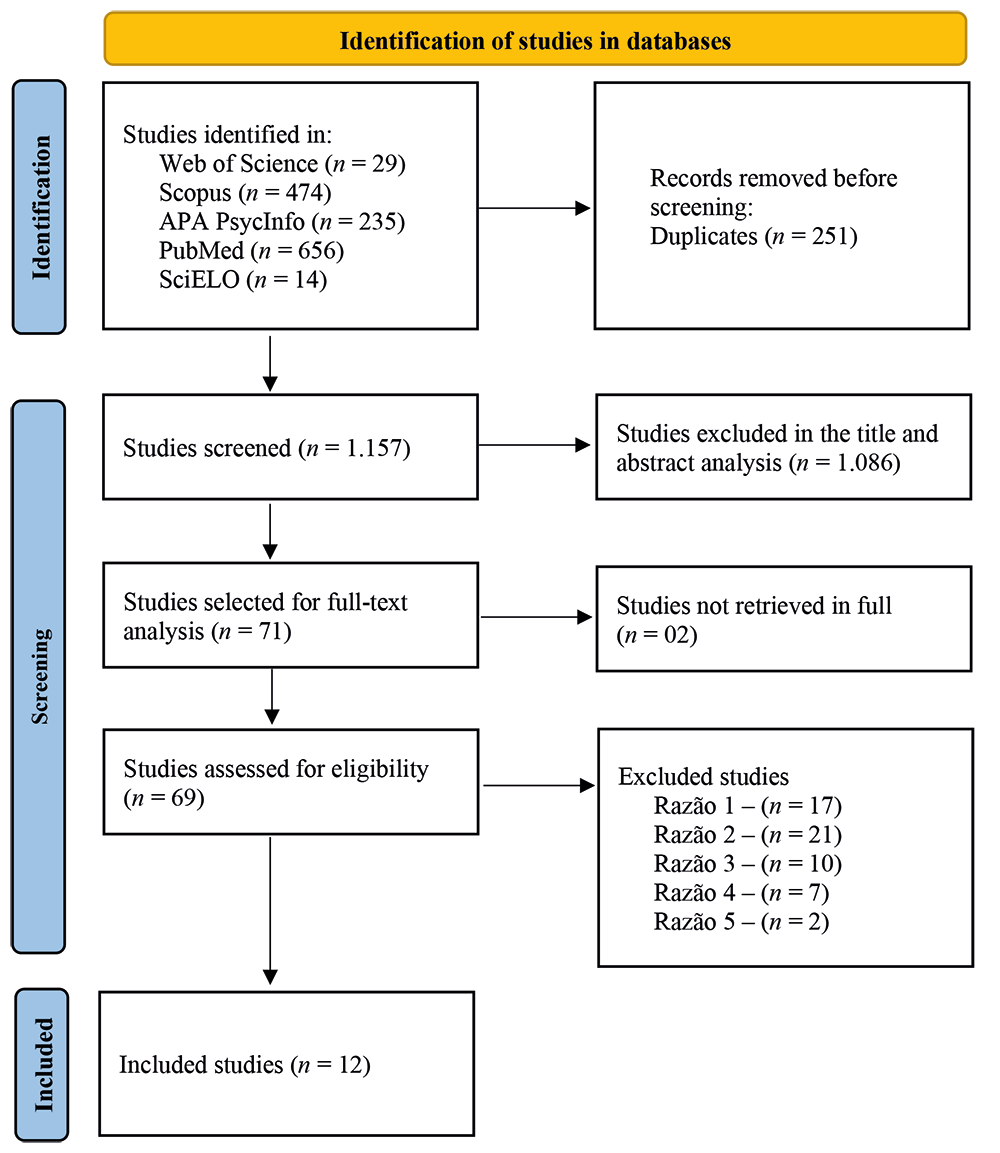 Note. Reason 1 - other types of review (narrative, scoping, etc.); Reason 2 - systematic reviews without meta-analysis; Reason 3 - lack of overall or direct approach to interventions; Reason 4 - other types of articles (corrections, theoretical, reflective, etc.); Reason 5 - addressing violence or aggression in general and not focusing on the phenomena of interest in this review.