 Trauma-induced coagulopathy in pediatric patients: an evidence-based approach
ABSTRACT
Trauma is the leading pediatric public health problem worldwide. Immaturity of the hemostatic system in children increases the risk of Trauma-Induced Coagulopathy (TIC). Therefore, based on a literature review, a clinical protocol was developed. The literature analysis was conducted by selecting systematic reviews, randomized controlled trials, observational studies, and expert consensus statements. Grades of recommendation and levels of evidence were classified according to the 2014 Oxford University criteria. Laboratory monitoring during the first hour is of paramount importance. For fluid resuscitation, crystalloid solutions are recommended up to 20 mL/kg, with a transition to blood components as soon as they become available. The indication for blood component transfusion should be based on clinical signs and symptoms, rather than laboratory results alone. Thromboelastography may be useful to guide blood component transfusion. In patients refractory to 20 mL/kg of crystalloid infusion with severe hemorrhage, a massive transfusion protocol is recommended, with plasma-to-red blood cell ratios of 1:1 or 1:2. When available, whole blood should be used. With regard to tranexamic acid, there are unresolved issues; however, its use is recommended by experts in cases of severe hemorrhage. Deep vein thrombosis prophylaxis with enoxaparin should be considered after hemodynamic stabilization in patients older than 15 years with a low risk of bleeding, as well as in pubertal patients younger than 15 years who have sustained severe trauma and have a low bleeding risk.
Keywords:
Pediatrics; Blood Coagulation Disorders; Multiple Trauma
RESUMO
Introdução: O trauma é o principal problema de saúde pública pediátrica em todo o mundo. A imaturidade do sistema hemostático de crianças aumenta o risco de coagulopatia induzida pelo trauma. Portanto, a partir de uma revisão de literatura foi possível a elaboração de um protocolo clínico. A análise bibliográfica foi realizada com a seleção de revisões sistemáticas, estudos randomizados controlados, observacionais e consensos de especialistas. Os graus de recomendações e os níveis de evidência foram classificados de acordo com os critérios da Universidade de Oxford de 2014. A monitorização laboratorial na primeira hora é de suma importância. Em relação à fluidoterapia, recomenda-se o uso de soluções cristaloides até, no máximo, 20mL/kg, com substituição para os hemocomponentes, assim que estiverem disponíveis. A indicação da transfusão de hemocomponentes deve se basear nos sinais, sintomas e não apenas em resultados laboratoriais. A tromboelastografia pode ser útil para guiar a transfusão de hemocomponentes. Nos pacientes refratários à infusão de 20mL/kg de cristaloides com hemorragia grave, recomenda-se o protocolo de transfusão maciça com as proporções entre plasma e hemácias de 1:1 ou 1:2. Quando disponível, o sangue total deve ser utilizado. Em relação ao ácido tranexâmico, há questões não elucidadas, mas seu uso é recomendado por especialistas em casos de hemorragia grave. A profilaxia para trombose venosa profunda com enoxaparina deve ser considerada nos pacientes maiores de 15 anos com baixo risco de sangramento ou em menores de 15 anos púberes, com traumas graves e baixo risco de sangramento, após estabilização hemodinâmica.
Palavras-chave:
Pediatria; Transtornos de Coagulação Sanguínea; Traumatismo Múltiplo
INTRODUCTION
Trauma is the top pediatric public health issue worldwide. Each year in Brazil, traumatic injuries cause more deaths among children and teens than the combined pediatric mortality from cancer, congenital anomalies, heart disease, respiratory illnesses, sepsis, and cerebrovascular conditions1.
Pediatric patients are generally able to tolerate relatively greater blood loss than adults due to their higher physiological reserve2. However, the hemostatic system is underdeveloped at birth, with low levels of anticoagulant and procoagulant proteins3. In the pediatric age group, concentrations of plasminogen, tissue plasminogen activator, and α-antiplasmin are reduced. In contrast, tissue plasminogen activator inhibitor levels are elevated, reducing plasmin generation and fibrinolytic activity. Furthermore, although platelet counts are similar to those of the adult population, platelet function is often impaired, which may significantly contribute to an increased risk of TIC in children4-6. In the pediatric population, the reported incidence of TIC ranges from 5.8 to 77% and is associated with worse outcomes7,8.
The main mechanisms associated with the development of TIC include endothelial injury, shock, hemodilution, hypothermia, acidemia, and inflammation5. In children, TIC may present as hypocoagulability or hypercoagulability and may vary according to the number of days after trauma9. Three fibrinolytic phenotypes following pediatric trauma have been described. Approximately 25% of patients develop hyperfibrinolysis, with mortality in this group ranging from 9 to 50%. About 45% of patients develop fibrinolytic shutdown following a period of hyperfibrinolysis. These patients frequently have associated Traumatic Brain Injury (TBI), and mortality in this group ranges from 8 to 10%. The remaining 30% exhibit physiologic fibrinolysis and have lower mortality rates (1 to 8%)10.
There is a scarcity of methodologically robust studies on TIC, resulting in heterogeneous management primarily based on the experience of individual institutions. The development of a clinical protocol for the diagnosis and management of TIC may contribute to evidence-based care, reducing the likelihood of iatrogenic interventions and improving the quality and safety of care for pediatric trauma victims. The use of such a protocol will also enable research on the subject, as it promotes standardized management strategies11. Accordingly, this study aimed to develop a protocol for the diagnosis and management of TIC in pediatric patients based on the best available evidence. This study addresses the diagnostic approaches to TIC and its clinical management, with particular emphasis on indications for blood component transfusion, the use of antifibrinolytic agents, and thromboprophylaxis in pediatric and adolescent trauma patients.
METHODS
The study consisted of an integrative literature review followed by the development of a clinical protocol for the diagnosis and management of Trauma-Induced Coagulopathy (TIC) in pediatric patients. A bibliographic search was conducted on the PubMed platform using the following keywords: “pediatric trauma”, “polytrauma”, “pediatric massive transfusion protocol”, and “coagulopathy of trauma”.
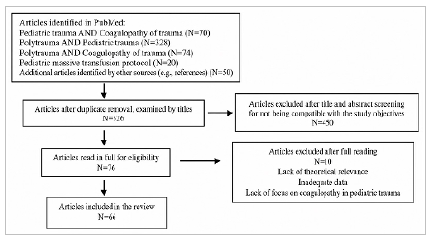
Studies on the diagnosis and management of TIC in pediatric patients were identified. Articles were screened by abstract, and randomized controlled trials, prospective and retrospective observational studies, systematic reviews, and case-control studies, as well as expert consensus guidelines published in English, were selected for full-text review using the rayyan AI tool12. Two authors independently searched; the results were then combined and reviewed by a senior researcher. The search was limited to the past 15 years (2010-2025), and additional references were included based on the review of selected articles (Figure 1).
Based on the selected studies, a protocol was proposed for the diagnosis and management of TIC in pediatric patients. The protocol addresses the following:
-
a) Analysis of the main laboratory markers of TIC;
-
b) Initial clinical management based on the main phenotypes: hypercoagulability or hypocoagulability.
Grades of recommendation and levels of evidence were classified according to the 2014 Oxford University criteria13.
RESULTS
Diagnosis of TIC
TIC should be diagnosed in patients who present with an international normalized ratio (INR) ≥1.3 and/or activated Partial Thromboplastin Time (aPTT) >36 seconds and/or platelet count <100,000/mm3,14-16.
The following laboratory tests should be obtained within the first hour of care of the trauma patient: complete blood count, Prothrombin Time (PT)/INR, aPTT, fibrinogen concentration, blood gas analysis, lactate, electrolytes, blood glucose, urea, creatinine, blood type, and crossmatch17. When available, Viscoelastic Hemostatic Assays (VHAs), which rapidly and accurately assess functional coagulation status at the bedside, may contribute to targeted TIC therapy19-23.
Clinical Management
Early recognition of patients at high risk for massive bleeding and TIC is essential; these include patients with severe abdominal and/or thoracic visceral injuries, severe pelvic trauma, amputations, multiple bone fractures, or severe TBI.
The primary goal in managing patients with massive hemorrhage is to control bleeding, which almost always requires damage control surgical intervention. The second goal is to restore tissue perfusion, correct acidosis, reverse hypothermia, and manage coagulation24.
Fluid Therapy
The goals of fluid resuscitation include achieving hemodynamic stability, maintaining urine output of at least 1mL/kg/h, preserving mental status, and normalizing tissue perfusion markers, such as serum lactate levels. Hypotension should not be used as a reference for volume resuscitation, as pediatric compensatory mechanisms, including tachycardia, increased cardiac output, and increased systemic vascular resistance, allow blood pressure to remain stable even in the presence of circulatory shock24.
Use of Crystalloids
The use of warmed crystalloids should be considered in the initial post-trauma phase to prevent hypothermia and worsening of TIC, particularly while blood components are not yet available. Volume expansion should be administered in 10mL/kg aliquots of crystalloid solution, up to a maximum of 20mL/kg, with continuous assessment of hemodynamic status and signs of pulmonary congestion. As soon as blood components become available, resuscitation with crystalloid solution should be discontinued, as higher crystalloid volumes are associated with worse outcomes25-29.
Blood Component Transfusion
Decisions regarding transfusion of blood components (packed red blood cells, plasma, platelets, and cryoprecipitate) should be guided by the overall clinical context, both in the prehospital setting and at emergency department admission, taking into account the presence of significant hemorrhage, the mechanism of injury, and persistent hemodynamic instability following an initial crystalloid bolus exceeding 20mL/kg26,30,31.
In children with active bleeding but without signs of hemodynamic instability or life-threatening hemorrhage, transfusion of packed red blood cells is recommended when hemoglobin (Hb) is below 5g/dL and, based on clinical judgment, when Hb is between 5 and 7g/dL. In cases of TBI, priority should be given to maintaining Hb levels above 9g/dL32.
There is insufficient evidence to recommend a specific laboratory test as a trigger or target for platelet and/or plasma transfusion for either therapeutic or prophylactic indications33. The use of thromboelastography and thromboelastometry data may assist in decision-making20,21. In patients with moderate to severe bleeding, the decision to transfuse plasma and/or platelets is based on clinical judgment. It is important to emphasize that plasma should not be used to correct INR in the absence of moderate to severe bleeding, especially in patients with TBI34.
Cryoprecipitate administration is recommended only in patients with active bleeding and hypofibrinogenemia35.
Transfusion of coagulation factor concentrates, such as prothrombin complex concentrate, activated factor VII, or fibrinogen concentrate, is not routinely indicated due to insufficient evidence demonstrating outcome benefit, except in specific cases, such as prior anticoagulant use11,36,37.
Massive Transfusion
In patients with massive hemorrhage, activation of a Massive Transfusion Protocol (MTP) is indicated. MTPs are components of hemostatic resuscitation designed to correct hemorrhagic shock through balanced transfusion of plasma, platelets, and packed red blood cells2.
Patients who may benefit from MTP include those who do not improve after infusion of 20mL/kg of crystalloid solution or 20mL/kg of blood components within one hour38, those with evidence of coagulopathy or acidosis, hypofibrinogenemia at admission39, associated severe TBI41, or severe trauma42, particularly involving the abdomen and extremities, and hypotension at admission43.
In pediatric patients with hemorrhagic shock after trauma, the resuscitation strategy with fresh frozen plasma and packed red blood cells in a 1:1 or 1:2 ratio should be considered44- 49.
Table 1 presents the recommended volumes of crystalloids and blood components in pediatric trauma patients.
Thromboelastography may be useful to guide transfusion, as shown in Table 2 50,51.
Whole Blood
Whole blood transfusion in patients with massive hemorrhage is considered safer and more effective, offers greater logistical simplicity, and is less coagulopathic than MTPs using separated blood components52-55. Therefore, when available, whole blood should be used.
Tranexamic Acid (TXA)
TXA is an antifibrinolytic agent that binds to plasminogen, preventing fibrinogen degradation and promoting clot stability. TXA should be routinely administered within the first three hours after trauma in patients with poor response to crystalloid boluses and evident significant bleeding. In children under 12 years of age, the dose is 15mg/kg (maximum 1g) intravenously over 10 minutes, followed by a 2mg/kg/h infusion over eight hours or until bleeding stops. For adolescents aged 12 years and older, the same regimen used in adults is recommended: a 1g intravenous bolus over 10 minutes, followed by an infusion of 1g over 8 hours. Its use should also be considered in cases where LY30 analysis by thromboelastography is available5. Reported adverse effects include an increased risk of seizures56.
Deep Vein Thrombosis Prophylaxis
Deep vein thrombosis (DVT) prophylaxis should be performed with enoxaparin 1mg/kg/day, administered subcutaneously once daily, in patients older than 15 years with low bleeding risk, or in pubertal patients younger than 15 years with severe trauma and low bleeding risk. Prophylactic enoxaparin should be initiated after hemodynamic stabilization, within the first 24-48 hours after trauma. In prepubertal children, venous thromboembolism prophylaxis is contraindicated57-60.
The protocol for the diagnosis and management of TIC in pediatric patients is summarized in Table 3.
DISCUSSION
Based on a comprehensive literature review, we developed a protocol for the diagnosis and management of TIC in pediatric patients. Over the past 15 years, since the publication of landmark studies in adult trauma populations61,62 demonstrating strategies such as balanced blood component transfusion and tranexamic acid use, which marked a paradigm shift in the management of severe trauma, there has been a growing body of literature focused on pediatric patients. However, studies involving the pediatric population generally have smaller sample sizes and less robust methodologies compared with adult studies. Therefore, proposing a protocol based on the best currently available evidence is both timely and relevant. In Brazil, a recent study found that fewer than half of surgeons involved in research reported that their hospitals had a massive transfusion protocol, and fewer than 20% reported using whole blood63. Thus, the proposed protocol may serve as a foundation for local institutional adaptations and help improve pediatric trauma care.
Within the first 24 hours after trauma, hemorrhage is the leading cause of death64. Accordingly, laboratory monitoring is of paramount importance and should include a complete blood count and coagulation studies, as well as tissue perfusion markers, a metabolic panel, and pretransfusion testing11,17,65. Viscoelastic assays have increased the proportion of patients receiving TIC-directed protocols27,51, although their use still requires further validation in pediatric patients23.Special attention should be given to ionized calcium, which acts as a cofactor in the coagulation cascade and may be consumed or inactivated by blood components containing citrate64.
The recommendation to restrict crystalloid use in trauma patients is justified by the deleterious effects of large-volume administration, including dilution of coagulation factors, disruption of the hemostatic thrombus, hypothermia, cellular edema, alterations in inflammatory mechanisms and metabolic processes, myocardial depression, development of acute respiratory distress syndrome, abdominal compartment syndrome, and multiple organ dysfunction66.
Blood components should be considered judiciously and early in patients with suspected or confirmed bleeding associated with clinical deterioration. It is important to emphasize that the administration of large volumes of blood components (>40mL/kg) is associated with adverse effects, including DVT, increased risk of infection, and acute kidney injury67.
Regarding early empirical transfusion (<4 hours from admission) of cryoprecipitate or fibrinogen concentrate, a systematic review of studies involving patients older than 16 years found no impact on mortality35. However, a retrospective cohort study of pediatric patients undergoing massive transfusion demonstrated that early administration (<4 hours from admission) of cryoprecipitate was associated with lower 24-hour mortality68.
There is no consensus on the triggers for massive transfusion protocol activation69. Some molecules released from damaged tissue and involved in the post-trauma inflammatory response may serve as promising markers for the need for MTP activation, such as amphoterin and syndecan-170,71. Until these biomarkers are validated and widely available, decisions regarding MTP activation should be based on clinical and laboratory data72. In patients requiring massive transfusion, balancing fresh frozen plasma and packed red blood cells in a 1:1 or 1:2 ratio appears to be beneficial44-49.
Evidence also suggests an association between the use of whole blood and improved outcomes in pediatric patients54,55. The main concern regarding the routine use of whole blood in trauma centers is the risk of alloimmune transfusion reactions and massive hemolysis. To mitigate this risk, some trauma centers have implemented the use of group O whole blood with low anti-A and anti-B titers52,73.
With respect to tranexamic acid use in the pediatric population, mortality benefits comparable to those observed in adult studies have not been demonstrated62, as indicated by a 2022 meta-analysis that included only retrospective studies74. However, a multicenter prospective observational study demonstrated the benefits of antifibrinolytic agents in pediatric patients with life-threatening hemorrhage5. Unresolved questions remain regarding optimal dosing, timing, and fibrinolytic phenotypes that may benefit, which are currently being addressed in an ongoing randomized clinical trial75.
TIC may also manifest as a hypercoagulable state, particularly 24-48 hours after trauma. In pediatric patients, several risk factors have been identified, including age >13 years, trauma severity, use of central venous catheters, parenteral nutrition, fibrinolytic abnormalities at admission, immobility, need for inotropic support, massive transfusion, TBI, and nonaccidental trauma67,57-60.
Among the limitations of this review are the inclusion of retrospective, single-center studies and some meta-analyses involving adult patients, as well as the absence of national studies. A major strength of this article is its focus on an issue of undeniable public health relevance that lacks standardized protocols in Brazil. Future studies should evaluate the impact of institutional implementation of this protocol on pediatric trauma outcomes.
CONCLUSION
This clinical protocol for the management of trauma-induced coagulopathy in pediatric patients is grounded in the best evidence published over the past 15 years. It represents a practical advance with potential educational and scientific value for standardizing clinical practice in Brazil.
REFERENCES
-
1 de Almeida CK, Krauzer CC, Sela E de O, Cichowicz T de F, da Silveira A, Soccol LS. et al. Principais causas de morte em crianças e adolescentes no Brasil: análise de 2011 a 2020. Rev. Contexto & Saúde. 2024;24(49):e14647. doi: 10.21527/2176-7114.2024.49.14647.
» https://doi.org/10.21527/2176-7114.2024.49.14647 -
2 Maw G, Furyk C. Pediatric Massive Transfusion: A Systematic Review. Pediatr Emerg Care. 2018;34(8):594-598. doi: 10.1097/PEC.0000000000001570..
» https://doi.org/10.1097/PEC.0000000000001570. - 3 Parmar N, Albisetti M, Berry LR, Chan AK. The fibrinolytic system in newborns and children. Clin Lab. 2006;52(3-4):115-24. Erratum in: Clin Lab. 2006;52(5-6):324.
-
4 Nair A, Flori H, Cohen MJ. Characterization of organ dysfunction and mortality in pediatric patients with trauma with acute traumatic coagulopathy. Trauma Surg Acute Care Open. 2020;5(1):e000382. doi: 10.1136/tsaco-2019-000382.
» https://doi.org/10.1136/tsaco-2019-000382 -
5 Spinella PC, Leonard JC, Gaines BA, et al. Use of Antifibrinolytics in Pediatric Life-Threatening Hemorrhage: A Prospective Observational Multicenter Study. Crit Care Med. 2022;50(4):e382-e392. doi:10.1097/CCM.0000000000005383.
» https://doi.org/10.1097/CCM.0000000000005383 -
6 Christiaans SC, Duhachek-Stapelman AL, Russell RT, Lisco SJ, Kerby JD, Pittet JF. Coagulopathy after severe pediatric trauma. Shock. 2014;41(6):476-90. doi:10.1097/SHK.000000000000015.
» https://doi.org/10.1097/SHK.000000000000015 -
7 Hendrickson JE, Shaz BH, Pereira G, et al. Coagulopathy is prevalent and associated with adverse outcomes in transfused pediatric trauma patients. J Pediatr. 2012;160(2):204-9.e3. doi:10.1016/j.jpeds.2011.08.019.
» https://doi.org/10.1016/j.jpeds.2011.08.019 -
8 Strumwasser A, Speer AL, Inaba K, Branco BC, Upperman JS, Ford HR, Lam L, Talving P, Shulman I, Demetriades D. The impact of acute coagulopathy on mortality in pediatric trauma patients. J Trauma Acute Care Surg. 2016;81(2):312-8. doi: 10.1097/TA.0000000000001060.
» https://doi.org/10.1097/TA.0000000000001060 -
9 Leeper CM, Neal MD, McKenna CJ, Gaines BA. Trending Fibrinolytic Dysregulation: Fibrinolysis Shutdown in the Days After Injury Is Associated With Poor Outcome in Severely Injured Children. Ann Surg. 2017;266(3):508-515. doi: 10.1097/SLA.0000000000002355.
» https://doi.org/10.1097/SLA.0000000000002355 -
10 Borgman MA, Nishijima DK. Tranexamic acid in pediatric hemorrhagic trauma. J Trauma Acute Care Surg. 2023;94(1S Suppl 1):S36-S40. doi: 10.1097/TA.0000000000003775.
» https://doi.org/10.1097/TA.0000000000003775 -
11 Rossaint R, Bouillon B, Cerny V, Coats TJ, Duranteau J, Fernández-Mondéjar E, et al. The European guideline on management of major bleeding and coagulopathy following trauma: fourth edition. Crit Care. 2016;20:100. doi: 10.1186/s13054-016-1265-x.
» https://doi.org/10.1186/s13054-016-1265-x -
12 Ouzzani M, Hammady H, Fedorowicz Z, Elmagarmid A. Rayyan-a web and mobile app for systematic reviews. Syst Rev. 2016;5(1):210. doi: 10.1186/s13643-016-0384-4.
» https://doi.org/10.1186/s13643-016-0384-4 -
13 Howik J et al. Oxford Centre for Evidence-Based Medicine: Levels of Evidence (March 2009). Disponível em: https://www.cebm.ox.ac.uk/resources/levels-of-evidence/oxford- centre-for-evidence-based-medicine-levels-of-evidence-march-2009 . (Acesso em: 15 de setembro de 2025).
» https://www.cebm.ox.ac.uk/resources/levels-of-evidence/oxford- centre-for-evidence-based-medicine-levels-of-evidence-march-2009 -
14 Burggraf M, Polan C, Husen M, et al. Trauma induced clotting factor depletion in severely injured children: a single center observational study. World J Emerg Surg. 2020;15(1):31. doi:10.1186/s13017-020-00311-6.
» https://doi.org/10.1186/s13017-020-00311-6 -
15 Davenport R, Manson J, De'Ath H, et al. Functional definition and characterization of acute traumatic coagulopathy. Crit Care Med. 2011;39(12):2652-8. doi:10.1097/CCM.0b013e3182281af5.
» https://doi.org/10.1097/CCM.0b013e3182281af5 -
16 Leeper CM, Kutcher M, Nasr I, et al. Acute traumatic coagulopathy in a critically injured pediatric population: Definition, trend over time, and outcomes. J Trauma Acute Care Surg. 2016;81(1):34-41. doi:10.1097/TA.0000000000001002.
» https://doi.org/10.1097/TA.0000000000001002 -
17 Gaessler H, Helm M, Kulla M, et al. Prehospital evaluation and detection of induced coagulopathy in trauma: The PREDICT study. J Trauma Acute Care Surg. 2021;91(2):344-51. doi:10.1097/TA.0000000000003246.
» https://doi.org/10.1097/TA.0000000000003246 -
18 Ostrowski SR, Henriksen HH, Stensballe J, Gybel-Brask M, Cardenas JC, Baer LA, et al. Sympathoadrenal activation and endotheliopathy are drivers of hypocoagulability and hyperfibrinolysis in trauma: A prospective observational study of 404 severely injured patients. J Trauma Acute Care Surg. 2017;82(2):293-301. doi: 10.1097/TA.0000000000001304.
» https://doi.org/10.1097/TA.0000000000001304 -
19 Coggins AR, Nguyen VDD, Pasalic L, Ramesh M, Wangoo K. Utility of point of care viscoelastic haemostatic assays for trauma patients in the emergency department. Scand J Trauma Resusc Emerg Med. 2025;33(1):68. doi:10.1186/s13049-025-01388-1.
» https://doi.org/10.1186/s13049-025-01388-1 -
20 Lindsay C, Davenport R, Baksaas-Aasen K, et al. Correction of Trauma-induced Coagulopathy by Goal-directed Therapy: A Secondary Analysis of the ITACTIC Trial. Anesthesiology. 2024;141(5):904-12. doi:10.1097/ALN.0000000000005183.
» https://doi.org/10.1097/ALN.0000000000005183 -
21 Vogel AM, Radwan ZA, Cox CS Jr, Cotton BA. Admission rapid thrombelastography delivers real-time "actionable" data in pediatric trauma. J Pediatr Surg. 2013;48(6):1371-6. doi:10.1016/j.jpedsurg.2013.03.036.
» https://doi.org/10.1016/j.jpedsurg.2013.03.036 -
22 Wikkelsø A, Wetterslev J, Møller AM, Afshari A. Thromboelastography (TEG) or thromboelastometry (ROTEM) to monitor haemostatic treatment versus usual care in adults or children with bleeding. Cochrane Database Syst Rev. 2016;2016(8):CD007871. doi: 10.1002/14651858.CD007871.pub3.
» https://doi.org/10.1002/14651858.CD007871.pub3 -
23 George S, Wake E, Sweeny A, Campbell D, Winearls J. Rotational thromboelastometry in children presenting to an Australian major trauma centre: A retrospective cohort study. Emerg Med Australas. 2022 Aug;34(4):590-8. doi: 10.1111/1742-6723.13939.
» https://doi.org/10.1111/1742-6723.13939 -
24 Stensballe J, Henriksen HH, Johansson PI. Early haemorrhage control and management of trauma-induced coagulopathy: the importance of goal-directed therapy. Curr Opin Crit Care. 2017;23(6):503-10. doi:10.1097/MCC.0000000000000466.
» https://doi.org/10.1097/MCC.0000000000000466 -
25 Schauer SG, April MD, Becker TE, Cap AP, Borgman MA. High crystalloid volumes negate benefit of hemostatic resuscitation in pediatric wartime trauma casualties. J Trauma Acute Care Surg. 2020 Aug;89(2S Suppl 2):S185-S191. doi: 10.1097/TA.0000000000002590. PMID: 31972756.
» https://doi.org/10.1097/TA.0000000000002590 -
26 Polites SF, Nygaard RM, Reddy PN, et al. Multicenter study of crystalloid boluses and transfusion in pediatric trauma - When to go to blood?. J Trauma Acute Care Surg. 2018;85(1):108-12. doi:10.1097/TA.0000000000001897.
» https://doi.org/10.1097/TA.0000000000001897 -
27 Polites SF, Moody S, Williams RF, et al. Timing and volume of crystalloid and blood products in pediatric trauma: An Eastern Association for the Surgery of Trauma multicenter prospective observational study. J Trauma Acute Care Surg. 2020;89(1):36-42. doi:10.1097/TA.0000000000002702.
» https://doi.org/10.1097/TA.0000000000002702 -
28 Zhu H, Chen B, Guo C. Aggressive crystalloid adversely affects outcomes in a pediatric trauma population. Eur J Trauma Emerg Surg. 2021;47(1):85-92. doi:10.1007/s00068-019-01134-0.
» https://doi.org/10.1007/s00068-019-01134-0 -
29 Edwards MJ, Lustik MB, Clark ME, Creamer KM, Tuggle D. The effects of balanced blood component resuscitation and crystalloid administration in pediatric trauma patients requiring transfusion in Afghanistan and Iraq 2002 to 2012. J Trauma Acute Care Surg. 2015;78(2):330-5. doi: 10.1097/TA.0000000000000469.
» https://doi.org/10.1097/TA.0000000000000469 -
30 Shirek G, Phillips R, Shahi N, et al. To give or not to give? Blood for pediatric trauma patients prior to pediatric trauma center arrival. Pediatr Surg Int. 2022;38(2):285-93. doi:10.1007/s00383-021-05015-9.
» https://doi.org/10.1007/s00383-021-05015-9 -
31 Morgan KM, Abou-Khalil E, Strotmeyer S, Richardson WM, Gaines BA, Leeper CM. Association of Prehospital Transfusion With Mortality in Pediatric Trauma. JAMA Pediatr. 2023;177(7):693-9. doi:10.1001/jamapediatrics.2023.1291.
» https://doi.org/10.1001/jamapediatrics.2023.1291 -
32 Valentine SL, Bembea MM, Muszynski JA, et al. Consensus Recommendations for RBC Transfusion Practice in Critically Ill Children From the Pediatric Critical Care Transfusion and Anemia Expertise Initiative. Pediatr Crit Care Med. 2018;19(9):884-98. doi:10.1097/PCC.0000000000001613.
» https://doi.org/10.1097/PCC.0000000000001613 -
33 Nellis ME, Karam O, Valentine SL, et al. Executive Summary of Recommendations and Expert Consensus for Plasma and Platelet Transfusion Practice in Critically Ill Children: From the Transfusion and Anemia EXpertise Initiative-Control/Avoidance of Bleeding (TAXI-CAB). Pediatr Crit Care Med. 2022;23(1):34-51. doi:10.1097/PCC.0000000000002851.
» https://doi.org/10.1097/PCC.0000000000002851 -
34 Leeper CM, Neal MD, Billiar TR, Sperry JL, Gaines BA. Overresuscitation with plasma is associated with sustained fibrinolysis shutdown and death in pediatric traumatic brain injury. J Trauma Acute Care Surg. 2018;85(1):12-7. doi:10.1097/TA.0000000000001836.
» https://doi.org/10.1097/TA.0000000000001836 -
35 Burt T, Guilliam A, Cole E, Davenport R. Effect of early administration of fibrinogen replacement therapy in traumatic haemorrhage: a systematic review and meta-analysis of randomised controlled trials with narrative synthesis of observational studies. Crit Care. 2025;29(1):49. doi:10.1186/s13054-025-05269-y.
» https://doi.org/10.1186/s13054-025-05269-y -
36 Hannadjas I, James A, Davenport R, Lindsay C, Brohi K, Cole E. Prothrombin complex concentrate (PCC) for treatment of trauma-induced coagulopathy: systematic review and meta-analyses. Crit Care. 2023;27(1):422. doi:10.1186/s13054-023-04688-z.
» https://doi.org/10.1186/s13054-023-04688-z -
37 Itagaki Y, Hayakawa M, Takahashi Y, et al. The efficacy of coagulation factor concentrates in the management of patients with trauma-induced coagulopathy: a systematic review and meta-analysis. Shock. 2025;63(5):695-705. doi:10.1097/SHK.0000000000002534.
» https://doi.org/10.1097/SHK.0000000000002534 -
38 Morgan KM, Gaines BA, Richardson WM, Strotmeyer S, Leeper CM. Recognizing life-threatening bleeding in pediatric trauma: A standard for when to activate massive transfusion protocol. J Trauma Acute Care Surg. 2023;94(1):101-6. doi:10.1097/TA.0000000000003784.
» https://doi.org/10.1097/TA.0000000000003784 -
39 Meizoso JP, Moore EE, Pieracci FM, et al. Role of Fibrinogen in Trauma-Induced Coagulopathy. J Am Coll Surg. 2022;234(4):465-73. doi:10.1097/XCS.0000000000000078.
» https://doi.org/10.1097/XCS.0000000000000078 -
40 Samuels JM, Moore EE, Silliman CC, et al. Severe traumatic brain injury is associated with a unique coagulopathy phenotype. J Trauma Acute Care Surg. 2019;86(4):686-93. doi:10.1097/TA.0000000000002173.
» https://doi.org/10.1097/TA.0000000000002173 -
41 Leeper CM, Strotmeyer SJ, Neal MD, Gaines BA. Window of Opportunity to Mitigate Trauma-induced Coagulopathy: Fibrinolysis Shutdown not Prevalent Until 1 Hour Post-injury. Ann Surg. 2019;270(3):528-34. doi:10.1097/SLA.0000000000003464.
» https://doi.org/10.1097/SLA.0000000000003464 -
42 Hesling JD, Paulson MW, McKay JT, et al. Characterizing pediatric supermassive transfusion and the contributing injury patterns in the combat environment. Am J Emerg Med. 2022;51:139-43. doi:10.1016/j.ajem.2021.10.032.
» https://doi.org/10.1016/j.ajem.2021.10.032 -
43 Zhu CS, Braverman M, Goddard S, et al. Prehospital shock index and systolic blood pressure are highly specific for pediatric massive transfusion. J Trauma Acute Care Surg. 2021;91(4):579-83. doi:10.1097/TA.0000000000003275.
» https://doi.org/10.1097/TA.0000000000003275 -
44 Spinella PC, Leonard JC, Marshall C, et al. Transfusion Ratios and Deficits in Injured Children With Life-Threatening Bleeding. Pediatr Crit Care Med. 2022;23(4):235-44. doi:10.1097/PCC.0000000000002907.
» https://doi.org/10.1097/PCC.0000000000002907 -
45 Butler EK, Mills BM, Arbabi S, et al. Association of Blood Component Ratios With 24-Hour Mortality in Injured Children Receiving Massive Transfusion. Crit Care Med. 2019;47(7):975-83. doi:10.1097/CCM.0000000000003708.
» https://doi.org/10.1097/CCM.0000000000003708 -
46 Mehl SC, Vogel AM, Glasgow AE, et al. Prevalence and outcomes of high versus low ratio plasma to red blood cell resuscitation in a multi-institutional cohort of severely injured children. J Trauma Acute Care Surg. 2024;97(3):452-9. doi:10.1097/TA.0000000000004301.
» https://doi.org/10.1097/TA.0000000000004301 -
47 Noland DK, Apelt N, Greenwell C, Tweed J, Notrica DM, Garcia NM, et al. Massive transfusion in pediatric trauma: An ATOMAC perspective. J Pediatr Surg. 2019;54(2):345-9. doi: 10.1016/j.jpedsurg.2018.10.040.
» https://doi.org/10.1016/j.jpedsurg.2018.10.040 -
48 Akl M, Anand T, Reina R, El-Qawaqzeh K, Ditillo M, Hosseinpour H, et al. Balanced hemostatic resuscitation for bleeding pediatric trauma patients: A nationwide quantitative analysis of outcomes. J Pediatr Surg. 2022;57(12):986-993. doi: 10.1016/j.jpedsurg.2022.07.005.
» https://doi.org/10.1016/j.jpedsurg.2022.07.005 -
49 Cunningham ME, Rosenfeld EH, Zhu H, Naik-Mathuria BJ, Russell RT, Vogel AM. A High Ratio of Plasma: RBC Improves Survival in Massively Transfused Injured Children. J Surg Res. 2019;233:213-220. doi: 10.1016/j.jss.2018.08.007.
» https://doi.org/10.1016/j.jss.2018.08.007 -
50 ACS TQIP Massive Transfusion In Trauma Guidelines. Available at: https://www.facs.org/-/media/files/quality-programs/trauma/ tqip/transfusion_guildelines.ashx?la=en (Acesso em 12 de agosto de 2025)
» https://www.facs.org/-/media/files/quality-programs/trauma/ tqip/transfusion_guildelines.ashx?la=en -
51 Hutspardol S, Borja T, Kroeker J, et al. Comparison of conventional coagulation tests and ROTEM in identifying trauma-induced coagulopathy for massive haemorrhage protocol activation. Transfus Med. 2025;35(3):266-74. doi:10.1111/tme.13128.
» https://doi.org/10.1111/tme.13128 -
52 Leeper CM, Yazer MH, Cladis FP, Saladino R, Triulzi DJ, Gaines BA. Use of Uncrossmatched Cold-Stored Whole Blood in Injured Children With Hemorrhagic Shock. JAMA Pediatr. 2018;172(5):491-2. doi:10.1001/jamapediatrics.2017.5238.
» https://doi.org/10.1001/jamapediatrics.2017.5238 -
53 Leeper CM, Yazer MH, Neal MD. Whole-Blood Resuscitation of Injured Patients: Innovating from the Past. JAMA Surg. 2020;155(8):771-2. doi:10.1001/jamasurg.2020.0811.
» https://doi.org/10.1001/jamasurg.2020.0811 -
54 Anand T, Obaid O, Nelson A, et al. Whole blood hemostatic resuscitation in pediatric trauma: A nationwide propensity-matched analysis. J Trauma Acute Care Surg. 2021;91(4):573-8. doi:10.1097/TA.0000000000003306.
» https://doi.org/10.1097/TA.0000000000003306 -
55 Gaines BA, Yazer MH, Triulzi DJ, et al. Low Titer Group O Whole Blood In Injured Children Requiring Massive Transfusion. Ann Surg. 2023;277(4):e919-e924. doi:10.1097/SLA.0000000000005251.
» https://doi.org/10.1097/SLA.0000000000005251 -
56 Maeda T, Michihata N, Sasabuchi Y, et al. Safety of Tranexamic Acid During Pediatric Trauma: A Nationwide Database Study. Pediatr Crit Care Med. 2018;19(12):e637-e642. doi:10.1097/PCC.0000000000001724.
» https://doi.org/10.1097/PCC.0000000000001724 -
57 Mahajerin A, Petty JK, Hanson SJ, Thompson AJ, O'Brien SH, Streck CJ, et al. Prophylaxis against venous thromboembolism in pediatric trauma: A practice management guideline from the Eastern Association for the Surgery of Trauma and the Pediatric Trauma Society. J Trauma Acute Care Surg. 2017;82(3):627-636. doi: 10.1097/TA.0000000000001359.
» https://doi.org/10.1097/TA.0000000000001359 -
58 Yen J, Van Arendonk KJ, Streiff MB, et al. Risk Factors for Venous Thromboembolism in Pediatric Trauma Patients and Validation of a Novel Scoring System: The Risk of Clots in Kids With Trauma Score. Pediatr Crit Care Med. 2016;17(5):391-9. doi:10.1097/PCC.0000000000000699.
» https://doi.org/10.1097/PCC.0000000000000699 -
59 Leeper CM, Neal MD, McKenna C, Sperry JL, Gaines BA. Abnormalities in fibrinolysis at the time of admission are associated with deep vein thrombosis, mortality, and disability in a pediatric trauma population. J Trauma Acute Care Surg. 2017;82(1):27-34. doi:10.1097/TA.0000000000001308.
» https://doi.org/10.1097/TA.0000000000001308 -
60 Mahajerin A, Petty JK, Hanson SJ, Shabanova V, Faustino EVS. Use of Pharmacologic Prophylaxis Against Venous Thromboembolism in Hospitalized Injured Children. J Pediatr Hematol Oncol. 2022;44(2):e349-e357. doi:10.1097/MPH.0000000000002167.
» https://doi.org/10.1097/MPH.0000000000002167 -
61 Holcomb JB, Tilley BC, Baraniuk S, Fox EE, Wade CE, Podbielski JM, et al. Transfusion of plasma, platelets, and red blood cells in a 1:1:1 vs a 1:1:2 ratio and mortality in patients with severe trauma: the PROPPR randomized clinical trial. JAMA. 2015;313(5):471-82. doi: 10.1001/jama.2015.12.
» https://doi.org/10.1001/jama.2015.12 -
62 CRASH-2 trial collaborators; Shakur H, Roberts I, Bautista R, Caballero J, Coats T, et al. Effects of tranexamic acid on death, vascular occlusive events, and blood transfusion in trauma patients with significant haemorrhage (CRASH-2): a randomised, placebo-controlled trial. Lancet. 2010;376(9734):23-32. doi: 10.1016/S0140-6736(10)60835-5.
» https://doi.org/10.1016/S0140-6736(10)60835-5 -
63 Ribeiro Junior MAF, Pacheco LS, Duchesne JC, Parreira JG, Mohseni S. Damage control resuscitation: how it's done and where we can improve. A view of the Brazilian reality according to trauma professionals. Rev Col Bras Cir. 2025;51:e20243785. doi: 10.1590/0100-6991e-20243785-en.
» https://doi.org/10.1590/0100-6991e-20243785-en -
64 Moore EE, Moore HB, Kornblith LZ, et al. Trauma-induced coagulopathy. Nat Rev Dis Primers. 2021;7(1):30. doi:10.1038/s41572-021-00264-3.
» https://doi.org/10.1038/s41572-021-00264-3 -
65 Yang WT, Wang IJ, Cho SJ, Yeom SR, Park SW, Tae WU, Goh TS, Huh U, Ryu D, Song C, Cho YM. Roles of lactate and base deficit in predicting traumatic coagulopathy. PLoS One. 2025 Jul 11;20(7):e0327321. doi: 10.1371/journal.pone.0327321. PMID: 40644352; PMCID: PMC12250580.
» https://doi.org/10.1371/journal.pone.0327321 -
66 Cotton BA, Guy JS, Morris JA Jr, Abumrad NN. The cellular, metabolic, and systemic consequences of aggressive fluid resuscitation strategies. Shock. 2006;26(2):115-21. doi:10.1097/01.shk.0000209564.84822.f2.
» https://doi.org/10.1097/01.shk.0000209564.84822.f2 -
67 Reppucci ML, Pickett K, Stevens J, Nolan MM, Moulton SL. Outcomes in Pediatric Trauma Patients Who Receive Blood Transfusion. J Surg Res. 2023;282:232-8. doi:10.1016/j.jss.2022.10.007.
» https://doi.org/10.1016/j.jss.2022.10.007 -
68 Tama MA, Stone ME Jr, Blumberg SM, Reddy SH, Conway EE Jr, Meltzer JA. Association of Cryoprecipitate Use With Survival After Major Trauma in Children Receiving Massive Transfusion. JAMA Surg. 2021;156(5):453-60. doi:10.1001/jamasurg.2020.7199.
» https://doi.org/10.1001/jamasurg.2020.7199 -
69 Horst J, Leonard JC, Vogel A, Jacobs R, Spinella PC. A survey of US and Canadian hospitals' paediatric massive transfusion protocol policies. Transfus Med. 2016;26(1):49-56. doi:10.1111/tme.12277.
» https://doi.org/10.1111/tme.12277 -
70 Frelich M, Bebej M, Pavlícek J, et al. HMGB-1 as a predictor of major bleeding requiring activation of a massive transfusion protocol in severe trauma. Sci Rep. 2025;15(1):4651. doi:10.1038/s41598-025-89139-1.
» https://doi.org/10.1038/s41598-025-89139-1 -
71 Johansson PI, Vigstedt M, Curry NS, et al. Trauma induced coagulopathy is limited to only one out of four shock induced endotheliopathy (SHINE) phenotypes among moderate-severely injured trauma patients: an exploratory analysis. Scand J Trauma Resusc Emerg Med. 2024;32(1):71. doi:10.1186/s13049-024-01236-8.
» https://doi.org/10.1186/s13049-024-01236-8 -
72 Kamyszek RW, Leraas HJ, Reed C, Ray CM, Nag UP, Poisson JL, Tracy ET. Massive transfusion in the pediatric population: A systematic review and summary of best-evidence practice strategies. J Trauma Acute Care Surg. 2019;86(4):744-54. doi: 10.1097/TA.0000000000002188.
» https://doi.org/10.1097/TA.0000000000002188 -
73 Yazer MH, Jackson B, Sperry JL, Alarcon L, Triulzi DJ, Murdock AD. Initial safety and feasibility of cold-stored uncrossmatched whole blood transfusion in civilian trauma patients. J Trauma Acute Care Surg. 2016;81(1):21-6. doi: 10.1097/TA.0000000000001100.
» https://doi.org/10.1097/TA.0000000000001100 -
74 Kornelsen E, Kuppermann N, Nishijima DK, et al. Effectiveness and safety of tranexamic acid in pediatric trauma: A systematic review and meta-analysis. Am J Emerg Med. 2022;55:103-10. doi:10.1016/j.ajem.2022.01.069.
» https://doi.org/10.1016/j.ajem.2022.01.069 -
75 Nishijima DK, VanBuren JM, Linakis SW, et al. Traumatic injury clinical trial evaluating tranexamic acid in children (TIC-TOC): A pilot randomized trial. Acad Emerg Med. 2022;29(7):862-73. doi:10.1111/acem.14481.
» https://doi.org/10.1111/acem.14481
Datasets related to this article will be available upon request to the corresponding author.