 Factors Influencing the Choice of Surgical Specialties Among Female Medical Students: A Cross-Sectional Study in Universities in Rio Grande do Sul, Brazil
ABSTRACT
Introduction: Although several barriers that discourage women physicians from pursuing surgical careers have been described, the factors that dissuade female medical students from choosing surgery during their training remain insufficiently understood.
Methods: This was a descriptive, cross-sectional, exploratory study approach among female medical students in the state of Rio Grande do Sul (RS), Brazil. Data were collected through a non-probability convenience sample between November 2022 and March 2023 using an online questionnaire.
Results: A total of 584 valid responses were analyzed. Most respondents (75.5%) had considered pursuing a surgical career at some point, with initial interest most commonly arising before medical school admission. No statistically significant association was found between stage of training progression and interest in surgery (p = 0.564). The primary reason for abandoning interest in surgery was dissatisfaction with the perceived lifestyle associated with the specialty. Overall, 59.6% of participants reported perceiving gender as a limiting factor in surgical careers. A substantial majority (75.9%) indicated they would be more likely to pursue a surgical career if there were greater female representation among faculty. Additionally, 70.2% reported experiencing gender bias during medical school, with many incidents attributed to faculty members. Faculty engagement and institutional support emerged as key strategies to promote greater female participation in surgery.
Conclusion: Despite the limitations inherent to the sample and study design, the findings highlight multiple factors contributing to the underrepresentation of women in surgical specialties and underscore the critical role of the educational environment in shaping career trajectories. These results may contribute to broader national discussions, given the shared curricular framework among Brazilian medical schools.
RESUMO
Introdução: Apesar dos conhecidos fatores que afastam médicas mulheres da especialização cirúrgica, as circunstâncias que desincentivam estudantes do sexo feminino a optarem pela cirurgia ainda durante a formação acadêmica permanecem pouco compreendidas.
Métodos: Estudo observacional descritivo transversal de caráter exploratório e quanti-qualitativo desenvolvido no Estado do Rio Grande do Sul (RS) entre mulheres estudantes de medicina; coleta de dados por amostragem não probabilística por conveniência entre Novembro de 2022 e Março de 2023 via questionário virtual.
Resultados: Entre 584 respostas válidas obtidas, 75,5% das alunas já cogitaram seguir carreira cirúrgica, com maior proporção da escolha ocorrida antes do ingresso na faculdade. Não houve associação estatisticamente significativa entre progressão nos ciclos de formação e interesse por cirurgia (p = 0,564). O principal fator de desistência para a carreira foi estilo de vida não condizente com as expectativas das estudantes. Ademais, incluindo justificativas elencadas, 59,6% consideraram que ser mulher é um fator limitante em cirurgia. A maioria (75,9%) indicou que seria mais propensa a seguir a carreira na presença de maior representatividade feminina entre docentes. Do total de alunas, 70,2% já foram expostas a preconceito de gênero, sendo uma parcela importante dos episódios atribuídos a professores médicos. Entre estratégias futuras para estimular a adesão feminina na área, o incentivo docente e institucional foi a mais evidente.
Conclusão: Diante do contexto amostral e das limitações metodológicas, o estudo demonstra múltiplos determinantes da baixa participação feminina em cirurgia e reforça o papel do ambiente formativo na construção de trajetórias de sucesso das mulheres na área. O trabalho pode fomentar a discussão em âmbito nacional acerca do tema, considerando que as escolas médicas brasileiras seguem diretrizes educacionais semelhantes.
INTRODUCTION
Maria Augusta Generoso Estrela was the first Brazilian woman to earn a medical degree in 1881. She completed her training abroad and defended a doctoral thesis in Dermatology. Beginning in 1887, other pioneering physicians, namely Rita Lobato Lopes, Ermelinda Lopes de Vasconcelos, and Antonieta Cesar Dias, all born in the state of Rio Grande do Sul (RS), graduated in Brazil and published doctoral theses in Pediatrics and in Obstetrics and Gynecology. From this perspective, the predominance of women in certain medical specialties reflects a historically established pattern1-15.
Although female representation in Medicine has increased substantially in both Brazil and RS16-20, this growth does not extend to the choice of surgical specialization12,20. The only surgical medical residency program in which the number of men - although higher - is close to the number of women is Pediatric Surgery, with 51.9% and 48.1%, respectively20.
This study aimed to investigate the primary factors influencing female medical students in Rio Grande do Sul, Brazil, to forgo surgical specialties. Although previous studies have conducted similar analyses with female physicians18,13,21-28, discouragement during academic training remains poorly understood. We therefore assessed the prevalence of interest in surgical careers throughout medical school and its association with academic stage, gender-related perceptions, and environmental influences. We hypothesized that interest in surgical careers declines progressively over the course of undergraduate medical training among female students.
METHODS
This is a descriptive, cross-sectional observational study of an exploratory, quantitative-qualitative nature - approved by the Ethics and Research Committee of the University of Santa Cruz do Sul (CAAE 60738322.0.0000.5343) - conducted in the state of Rio Grande do Sul (RS), Brazil, exclusively through the Google Forms virtual questionnaire platform (link). The study was conducted between March 2022 and September 2025, with data collection between November 2022 and March 2023.
The inclusion criteria were women aged > 18 years who were regularly enrolled in a Medicine course at one of the 20 institutions in the state of RS (more information in Table 1.1). The exclusion criteria included male individuals, individuals not enrolled in a medical course, and individuals not enrolled in one of the 20 eligible institutions.
For student recruitment, the instrument was widely and consistently disseminated through the social media platforms Instagram and WhatsApp, as well as the virtual page of the university extension project linked to the researchers, thereby characterizing snowball sampling. Therefore, a list of institutional registration numbers was not used for the individualized distribution of the invitation.
Thus, the form was answered voluntarily and without any direct benefit or risk to the students, in accordance with CNS Resolution No. 510/2016, without knowledge of the number of invitations sent, that is, non-probabilistic convenience sampling - used in exploratory observational research, mainly when it is necessary to capture perceptions in specific populations. To participate in the survey, the participant was required to read the explicit inclusion criteria and sign the Informed Consent Form (ICF, available in the Supplementary Material).
The instrument was developed by the researchers specifically for this study; it was not submitted to psychometric validation or a pilot study, as it is an exploratory observational study. It was based on national and international literature on women in surgery and was not validated by expert judges.
The self-administered questionnaire (available in full in the Supplementary Material) addressed the surgical context of academic experiences through objective questions; for dissertations, it included only one optional free-text field for final considerations. The outcomes included: intention to specialize in medicine, reasons for abandoning a surgical career, women’s perception of surgery, contact with female surgical teachers/mentors, and possible experiences of prejudice in the field.
Moreover, to characterize interest in different medical areas, the specialties were grouped into “clinical,” “surgical,” and “clinical-surgical” categories - referring to approaches to diagnosis and treatment. Therefore, Dermatology, Orthopedics and Traumatology, Otorhinolaryngology, Ophthalmology, Gynecology, and Obstetrics were considered clinical-surgical specialties.
Furthermore, since the electronic questionnaire was an open-access link on a platform without the ability to detect discrepancies, complete access restriction was not feasible, and some responses could be received from ineligible individuals, thereby introducing potential selection bias. Given this situation, the instrument requested participants’ identification data (name and email), which were used to validate the responses based on the inclusion/exclusion criteria. However, the information collected was treated confidentially with access restricted to the researchers, as explicitly stated in the Informed Consent Form, and used exclusively for validation, not being disclosed or included in the analyses.
The number of eligible responses collected determined the sample size. The response rate was estimated by the proportionality between the number of female students enrolled in Medicine courses in RS (INEP Census 2022 - the most recent available in relation to the period of data collection from the participants)29 and the number of eligible responses. However, given the non-probabilistic convenience sampling and open distribution of the questionnaire, there was neither a prior definition of the sample size nor a known number of individuals invited. Thus, the term “estimated proportion of participation” was adopted, in accordance with methodological recommendations for observational studies with self-selected samples30-33.
Quantitative analyses were conducted as follows: the categories “not applicable” and “don’t know/don’t remember” were included in statistical and descriptive analyses but were not included in inferential analyses because they did not allow for a clear definition of the outcome. Missing or incomplete data were also excluded from the inferential analyses.
The software used were JASP, Excel, and Pages (for creating figures). Variable comparison was conducted via Pearson’s or Fisher’s chi-square test of association. A significance level of p < 0.05 was adopted. Confidence intervals of 95% (95% CI) were calculated for the main proportions using Wilson’s method. Stratified analyses based on undergraduate year and training cycle (basic, clinical, and internship) were interpreted in light of potential confounding factors. Sensitivity analyses were not performed, given the exploratory and descriptive nature of the study.
Finally, the qualitative assessment was complementary, aimed at contextualizing the quantitative findings. To this end, a thematic category analysis of the open-ended responses was conducted by 5 researchers responsible for organizing and interpreting the data independently and in a consensual manner, without formally structuring a coding tree.
RESULTS
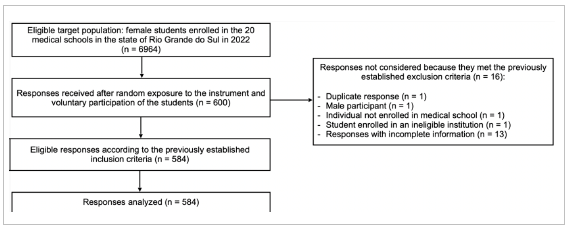
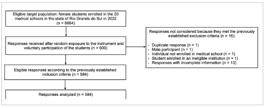
During the data collection period, 600 responses were obtained to the electronic questionnaire. After eligibility assessment, responses that were inconsistent with the inclusion/exclusion criteria or incomplete were excluded, resulting in 584 valid responses for the inferential analyses (Figure 1).
There were no additional losses due to missing data in the variables analyzed, beyond the exclusions previously described. The estimated participation rate was 8.4% (n = 584/6964; 95% CI 7.7-9.0). The overall distribution of participants by subgroups is described in Table 1.2, with a predominance of students enrolled in the clinical cycle of their undergraduate studies. (Table 1.1 and Table 1.2).
Regarding the intention to pursue medical specialization, 441 students (75.5%; 95% CI 71.9-78.8) reported having considered, at some point, pursuing a career in surgery. The largest proportion of this interest occurred before entering undergraduate studies (Table 2). At the time of participation in the questionnaire, among the students who had already decided on a specialization - clinical, surgical or clinical-surgical (n = 536), the proportion of interest in surgery was 19.7% (95% CI 13.6-27.6) during the internship years, 22.5% (95% CI 18.3-27.3) during the clinical cycle and 17.6% (95% CI 11.0-27.0) during the basic cycle. There was no statistically significant association between training cycle and interest in a surgical career (p = 0.564).
In this context, as presented in Table 3, specific reasons were associated with abandoning a surgical career, organized into four analytical categories: (1) factors related to quality of life; (2) absence of female role models; (3) sexism/male chauvinism in the surgical environment; and (4) other factors. From this perspective, the lifestyle in surgery not meeting students’ expectations - category 1 - was the main reason for dropping out, reported by 33.4% of students (n = 195; 95% CI, 29.7-37.3). Among the other categories, lack of self-confidence proved to be the most relevant factor (n = 126; 21.6%; 95% CI 18.4-25.0).
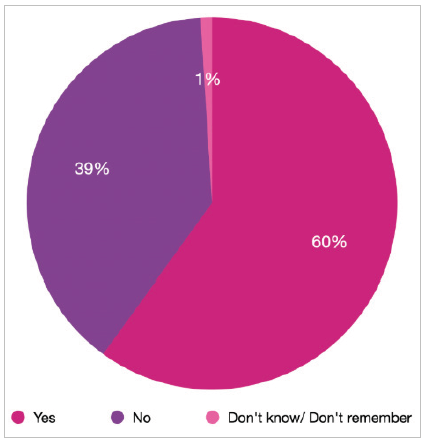
Furthermore, among female students who participated, 59.6% (95% CI 55.5-63.5) considered being a woman a limiting factor in surgery. The reasons given included perceived prejudice/harassment (51.2%), a predominantly male environment (48.3%), high time commitment requirements for the career (18.8%), and factors related to being female (17.5%) (Graph 1).
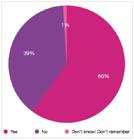
Distribution of responses regarding the perception of being a woman as a limiting factor in a surgical career. Source: Prepared by the author, based on data from the research (2022-2023).
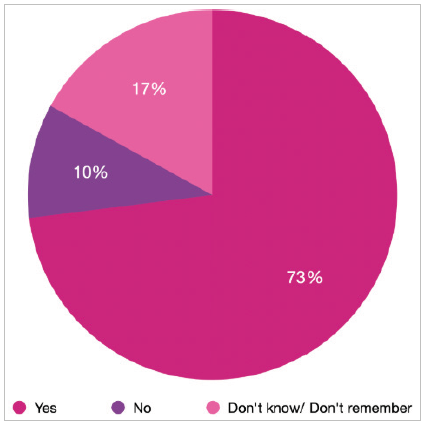
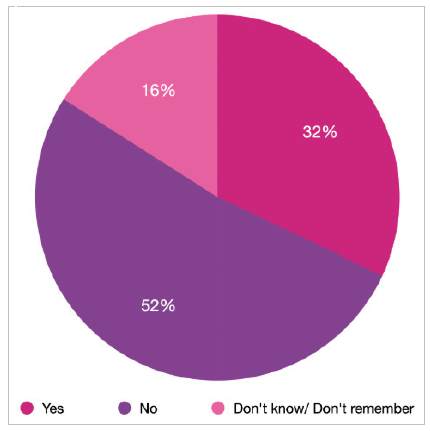
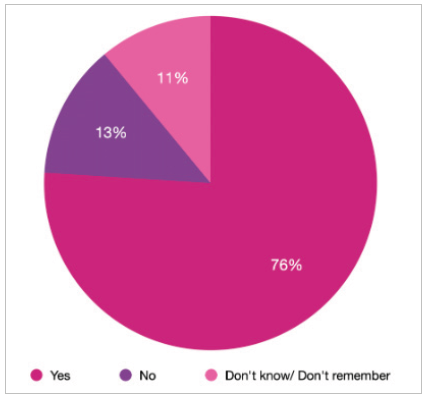
Regarding contact with female surgeons in the university environment, 73.1% (95% CI 69.4-76.5) of female students reported that they have or will have contact with female professors in the field, however 51.7% reported discomfort with the distribution between male and female professors in surgical disciplines (95% CI 47.7-55.7). Most female students (n = 443; 75.9%; 95% CI 72.2-79.1) indicated that they would be more likely to pursue a surgical career in the presence of greater female representation among faculty (Graphs 2, 3, and 4).
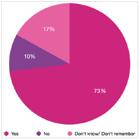
Distribution of responses regarding the current presence or expectation of female surgeons as faculty members at the university. Source: Prepared by the author, based on data from the research (2022-2023).
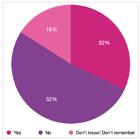
Distribution of responses regarding the perception of comfort in relation to the gender distribution among professors in surgical disciplines at universities. Source: Prepared by the author, based on data from the research (2022-2023).
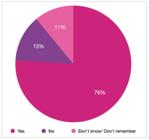
Distribution of responses regarding the greater propensity to pursue a surgical career when given the opportunity to learn in surgical areas with female instructors. Source: Prepared by the author, based on data from the research (2022-2023).
Regarding prejudice in the surgical environment, 70.2% of all female students were exposed at some point to sexist situations in the field (95% CI 66.4-73.8), with most episodes attributed to medical professors (n = 235; 40.2%) (Table 4).
The association analyses between the variables investigated demonstrated that discomfort with faculty gender distribution was related to a greater tendency to pursue a surgical career in the presence of greater female representation (p < 0.00001) and that the presence of female surgical professors was associated with a greater propensity to specialize in the area (p = 0.0119).
Furthermore, among students who reported having considered pursuing a surgical career at some point (n = 441), experiencing prejudice from medical professors was associated with the presence of at least one factor contributing to dropping out (p = 0.004). Moreover, experiencing/observing prejudice against women in the medical environment was associated with the perception of women as a limiting factor in career advancement (p = 0.0001).
Finally, future strategies to encourage female participation in the field included faculty and institutional incentives (n = 109; 18.7%), the need for residency programs that promote the reconciliation of motherhood and career (n = 21; 3.6%), and a greater presence of female surgical professors (n = 11; 1.9%). Other suggestions included greater access to information on surgical specialties (n = 5; 0.9%) and knowledge of mechanisms for reporting harassment and prejudice (n = 2; 0.3%).
DISCUSSION
Our study demonstrated that although most participants had considered pursuing a surgical career at some point, this interest had arisen before entering undergraduate studies, and this decision did not persist throughout university years. However, the initial hypothesis that the desire for surgery is related to the undergraduate studies stage (basic, clinical, or internship) was not confirmed. The main reasons for this scenario could be understood with the application of the virtual form and reinforce that the professional decision is dynamic and influenced by accumulated and correlated experiences during medical training22. Furthermore, the main finding of the present study corroborates data from the literature, which shows that the decline in interest in surgery throughout medical training, although not exclusive to women, occurs more markedly among women than among men22,34.
The results should be interpreted with caution due to study limitations and their associated risks of bias: (1) nonprobability convenience sampling via the Google Forms platform prevents determining the actual number of students exposed to the invitation or to refusals to complete the form, and consequently, the true response rate cannot be obtained. This introduces potential selection bias, as students with greater interest in the topic, greater availability, or greater access to the internet may have been more likely to participate; (2) the denominator was derived from secondary census data (INEP)29, which may not accurately reflect the number of eligible students during the study period and may underestimate participation; (3) the absence of formal validation of the instrument limits the assessment of aspects relevant to the work, such as the official verification of participants’ identity and the understanding of the questions; (4) the sample’s demographic characteristics (only students from RS) restrict external validity and prevent direct, generalized inferences about the population; (5) the absence of a male comparison group prevents assessing whether the identified factors are specific to female students or also manifest among men in medical training; (6) the larger absolute number of respondents from UNISC, the institution of origin of the study, may reflect greater local adherence and introduce potential overrepresentation of this institutional context; and (7) the absence of multivariate control for confounding factors limits the causal interpretation of the associations found.
To mitigate these effects, strategies were implemented in addition to considerations regarding the external validity of the results, corresponding respectively to: (1) the term “estimated proportion of participation” was used, and “response rate”, to explicitly acknowledge that the findings should be interpreted in the context of the sample; (2) the most recent census data available and compatible with the data collection period were used, this choice being made explicit in the “Methods” section of the article; (3) the questionnaire was developed based on national and international literature on women in surgery and applied in a standardized manner. Confidential identification data - a clause stipulated in the ICF - were collected for eligibility validation; responses were supplemented by qualitative analysis of open-ended responses, which allowed for greater contextualization of the findings; (4) the inclusion of participants from different medical schools in the state broadens the heterogeneity of the sample, allows for the evaluation of regional particularities, and offers relevant insights for reflection in similar academic contexts, given that Brazilian medical schools are included in the same national regulatory framework; (5) this choice was consistent with the central objective of the study, specifically focused on the female experience in deciding on a surgical career; (6) the number of responses does not necessarily correspond to the actual size of the course; furthermore, students from all eligible medical schools in the state were included, and the distribution of the sample by institution was presented transparently; and (7) the absence of control for confounding factors is foreseen by methodological guidelines in the context of cross-sectional studies; in addition, stratified analyses and findings were interpreted descriptively and exploratorily, without any intention of inferring independent causal relationships. Finally, it is reiterated that the limitations of this study are recognized by guidelines, including the “Strengthening the Reporting of Observational Studies in Epidemiology” (STROBE), and applied in electronic questionnaires30-33.
Therefore, among the factors most frequently cited as reasons for abandoning a surgical career in this study, quality-of-life issues stood out. Unlike other studies, financial aspects22,35 were not mentioned by the participants, possibly due to the absence of specific alternatives in the questionnaire - a factor that also did not emerge in the open-ended responses. Regarding motherhood, although it is widely described in the literature as a central element in the decision to pursue surgical careers22,35-46, in this study, it was mentioned only once in the open-ended responses and minimally addressed (3.6%) in the context of strategies to encourage female participation in the field. This finding may reflect the underrepresentation of the topic in the instrument or, conversely, represent the topic of “motherhood” integrated with two assertions made by the students: difficulty in balancing personal and professional life and the female condition as a limiting factor in career advancement. Nevertheless, previous evidence shows that postponing motherhood is more frequent among female plastic surgeons (72.6%) than among male surgeons in this specialty (39.2%)43, for example, reinforcing the importance of the topic in women’s career paths, even when not explicitly reported.
Furthermore, lack of self-confidence, identified in 21.6% of participants, also stood out as a relevant factor in dropping out, corroborating the literature indicating that men tend to express more confidence than women in professional contexts, even when they have equivalent or inferior performance. Research also suggests that female surgeons often feel compelled to adopt behaviors traditionally associated with men to gain greater recognition in the workplace. This perception converges with discussions that the infrastructure and instruments of the operating room are planned based on male anatomical parameters21,23,35,47-61.
The prejudice experienced by medical professors emerged as one of the most important factors behind female students abandoning their surgical careers, highlighting the direct impact of the academic environment on professional decisions. This result is consistent with the literature27,44,62-69, which demonstrates a high prevalence of harassment and discrimination against women in surgery, often by hierarchical superiors - as evidenced in the scoping review by Xepoleas et al.,70 in which 72% of cases of harassment against female residents were attributed to attendings. In this context, the association between experiencing/observing prejudice and the perception of the female gender as a limiting factor in a surgical career corroborates the idea that discriminatory experiences not only coexist but also act as determinants in reducing women’s interest in the area, perpetuating the gender inequality already widely described21,27,38.
Finally, female representation and the presence of mentors in the surgical field also emerged as central factors in career choice. These results reinforce evidence23,27,71 that points to the scarcity of women in academic and leadership positions in surgery, both internationally72,73 and in Brazil74, where female participation remains a minority in university departments and surgical societies. This scenario contributes to the perception of incompatibility between the surgical lifestyle and the social expectations attributed to women34,75. This corroborates another finding of the present study: among the strategies to encourage women to undergo surgery, teacher and institutional encouragement were the most recurrent. Thus, the presence of female surgeons on medical school faculties represents more than a symbolic presence; it functions as a tangible and influential factor shaping women’s interest in pursuing surgical careers42,76.
CONCLUSION
Within the limitations of the analyzed sample, the primary factors influencing female medical students in Rio Grande do Sul, Brazil, to forgo surgical specialties were concerns regarding quality of life and diminished self-confidence, both closely associated with experiences of gender bias during undergraduate training and the scarcity of female role models in surgery. These findings underscore the critical role of the educational environment in shaping sustainable and successful career trajectories for women in surgical fields. The hypothesis that interest in surgical careers declines progressively over the course of undergraduate medical training among female students was not supported by the present study.
ACKNOWLEDGEMENTS
We thank God, source of all wisdom and guidance. We appreciate the 2022 leadership of the Association of Women Surgeons, UNISC Chapter (AWS UNISC), for their dedication to the development of this work. We are also grateful to our colleague and current Obstetrics and Gynecology PGY-1, Rafaela Manetti Geisler MD, for conceiving the project, and to our pediatric surgery professor, Cristina Manera Dorneles MD, MS, for her support and encouragement, which remains essential to many medical students throughout their training.
REFERENCES
-
1 Braga G. As mulheres no contexto das sociedades ocidentais: uma luta por igualdade. Humanidades & Inovação [Internet]. 2019 Aug 8;6(10):308-20. Available from: https://revista.unitins.br/index.php/humanidadeseinovacao/article/view/1560 Referenced in ISSN: 2358-8322.
» https://revista.unitins.br/index.php/humanidadeseinovacao/article/view/1560 -
2 Chen ZB, Aikawa E, Alfaidi M, Ali K, Clift CL, Erbay E, et al. Institutional Support for the Career Advancement of Women Faculty in Science and Academic Medicine: Successes, Challenges, and Future Directions. Arterioscler Thromb Vasc Biol. 2024;1916-24. Available from: https://pubmed.ncbi.nlm.nih.gov/38957985/ Referenced in doi: 10.1161/ATVBAHA.124.320910
» https://doi.org/10.1161/ATVBAHA.124.320910» https://pubmed.ncbi.nlm.nih.gov/38957985 - 3 Pinheiro FPQ. Feminização da Medicina X dominação masculina nas áreas cirúrgicas [monografia/TCC]. Manhuaçu: Centro Universitário Unifacig; 2022. Disponível em: https://unifacig.edu.br
-
4 Santos ICO, Lima TCB, Paiva LEB, Marques DS, Guimarães ET. Socialização profissional sob a ótica de cirurgiãs: desafios e realização na carreira profissional. Rev Adm Contemp. 2021 Jul;25(4):e180303. [cited 2025 Oct 10]. Available from: https://www.scielo.br/j/rac/a/H4sTC7bdC9hGzzMjWZHjGDL/?lang=pt Referenced in doi: 10.1590/1982-7849rac2021180303.por.
» https://doi.org/10.1590/1982-7849rac2021180303.por -
5 Colling AM. As primeiras médicas brasileiras - Mulheres à frente de seu tempo. Fronteiras [Internet]. 2016;13(24):169-83. [cited 2025 Oct 10]. Available from: https://ojs.ufgd.edu.br/FRONTEIRAS/article/view/1607. Referenced in ISSN: 2176-0742.
» https://doi.org/https://ojs.ufgd.edu.br/FRONTEIRAS/article/view/1607 - 6 Santos EG, Toulson MI, Correia D, Araújo MC, Moreira C. Mulheres na cirurgia: história e perspectiva atual. In: Junior SR, Salles RARV, editors. Tratado de Cirurgia do CBC. 3ed. Rio de janeiro: Ed Atheneu, 2023. p. 1549-1560. [cited 2025 Oct 10]. Available from:https://www.researchgate.net/publication/367532116_CBC_CAP_113-_MULHERESnaCIRURGIA Referenced in ISSN: 1809-4546.
-
7 Rosa TT. Mulheres na medicina: suas contribuições para o desenvolvimento das ciências médicas. Brasília Méd. 2003;40(1-4):23-6. Disponível em: https://bvsalud.org
» https://bvsalud.org - 8 Koch RW. As três primeiras ondas do feminismo brasileiro (1832 - 1932) e as demandas econômicas femininas específicas de cada uma delas [trabalho de conclusão de curso]. Florianópolis: Universidade Federal de Santa Catarina; 2024. Disponível em: https://ufsc.br
-
9 Junior JMCA, Miranda AG. Mulheres na Medicina no início do século XX: o percurso de Olga Maia Paes de Andrade, a primeira médica formada no estado do Pará, Brasil (1928). Rev Pan-Amaz Saude. 2024;15:e202401556. Available from: http://scielo.iec.gov.br/scielo.php?script=sci_arttext&pid=S2176-62232024000100005 Referenced in doi: 10.5123/s2176-6223202401556.
» https://doi.org/10.5123/s2176-6223202401556 -
10 Kovaleski NVJ et al. As relações de gênero na história das ciências: a participação feminina no progresso científico e tecnológico (Gender relations in the istory of science: The women´s participation in the scientific and technological progress) Doi: 10.5212/Emancipacao.v.13. Emancipação [Internet]. 2014 Dec. 18 [cited 2026 Jun. 12];13(3):9-26. Available from: https://revistas.uepg.br/index.php/emancipacao/article/view/5047
» https://revistas.uepg.br/index.php/emancipacao/article/view/5047 -
11 Palharini LA, Figueirôa SF de M. Gênero, história e medicalização do parto: a exposição "Mulheres e práticas de saúde". Hist cienc saude-Manguinhos [Internet]. 2018Oct;25(4):1039-61. Available from: https://doi.org/10.1590/S0104-59702018000500008
» https://doi.org/10.1590/S0104-59702018000500008 -
12 Santana BRS, Jansen RC, Nascimento VNB, Moura DSC. Compreensão de médicas sobre gênero e a influência na formação acadêmica: um estudo qualitativo. Rev Bras Educ Med. 2024;48(3):e071. Available from: https://www.scielo.br/j/rbem/a/4Ltq6dFxxmWPVYf5ng88CLS/ Referenced in doi: 10.1590/1981-5271v48.3-2023-0201.
» https://doi.org/10.1590/1981-5271v48.3-2023-0201 -
13 Vieira MAP de L. Mulheres na Medicina: Construindo Espaços na São Paulo do Início do Século XX [thesis]. Itatiba (SP): Universidade São Francisco. 2006; 102p. [cited 2025 Oct 10]. Available from: https://www.usf.edu.br/galeria/getImage/385/6992215998875410.pdf
» https://www.usf.edu.br/galeria/getImage/385/6992215998875410.pdf -
14 Rohden F. Uma ciência da diferença: sexo e gênero na medicina da mulher. Editora FIOCRUZ; 2001; 224p. [cited 2025 Oct 10]. Available from: https://static.scielo.org/scielobooks/8m665/pdf/rohden-9788575413999.pdf Referenced in doi: 10.7476/9788575413999.
» https://doi.org/10.7476/9788575413999» https://static.scielo.org/scielobooks/8m665/pdf/rohden-9788575413999.pdf -
15 Martins APV. A mulher, o médico e as historiadoras: um ensaio historiográfico sobre a história das mulheres, da medicina e do gênero. Hist Cienc Saude Manguinhos. 2020;27(1):241-64. Available from: https://www.scielo.br/j/hcsm/a/WXyDxMvxjdR3m993grpbKqw/ Referenced in doi: 10.1590/S0104-59702020000100014.
» https://doi.org/10.1590/S0104-59702020000100014 -
Scheffer M, Alex C, Aureliano B. Demografia médica no Brasil 2023. FMUSP, AMB. 2023. 344 p. [cited 2025 Oct 10]. Available from: https://amb.org.br/wp-content/uploads/2023/02/DemografiaMedica2023_8fev-1.pdf Referenced in ISBN: 978-65-00-60986-8.
» https://amb.org.br/wp-content/uploads/2023/02/DemografiaMedica2023_8fev-1.pdf - 17 Galdencio RCB. A história da medicina da mulher no Brasil: uma perspectiva bibliométrica [dissertação]. Rio de Janeiro: Instituto de Comunicação e Informação Científica e Tecnologia em Saúde, Fundação Oswaldo Cruz; 2018. Available from: https://www.arca.fiocruz.br/handle/icict/35146.
-
18 Almeida NRC, Bentes LGB, Aranha MFAC, Lemos RS, Santos DR, Yasojima EY. Women in surgery: do surgical specialties keep up with the feminization of medicine in Brazil?. Rev Col Bras Cir. 2023;50:e20233614. Available from: https://doi.org/10.1590/0100-6991e-20233614-en
» https://doi.org/10.1590/0100-6991e-20233614-en -
19 Scheffer MC, Cassenote AJF. A feminização da medicina no Brasil. Rev Bioet. 2013;21(2):268-77. Available from: https://www.scielo.br/j/bioet/a/XtCnKjggnr6gFR3bTRckCxs/. Referenced in ISSN 1983-8042.
» https://www.scielo.br/j/bioet/a/XtCnKjggnr6gFR3bTRckCxs - 20 Scheffer M. Demografia médica no Brasil 2025. Brasília: FMUSP, AMB; 2025. Available from: http://bvsms.saude.gov.br/bvs/publicacoes/demografia_medica_brasil_2025.pdf Referenced in ISBN: 978-65-5993-754-7.
-
21 Paulo D, Assis MS, Kreuger MRO. Análise dos fatores que levam mulheres médicas a não optarem por especialidades cirúrgicas. Rev Med (São Paulo). 2020;99(3):230-5. Available from: https://www.revistas.usp.br/revistadc/article/view/150416/161295 Referenced in doi: 10.11606/issn.1679-9836.v99i3p230-235.
» https://doi.org/10.11606/issn.1679-9836.v99i3p230-235 -
22 Singh C, Loseth C, Shoqirat N. Women in surgery: a systematic review of 25 years. BMJ Leader. 2021;5(4):283-90. Available from: https://bmjleader.bmj.com/content/leader/5/4/283.full.pdf Referenced in doi: 10.1136/leader-2019-000199.
» https://doi.org/10.1136/leader-2019-000199 -
23 Grant-Kels JM. Maternity Leave for Residents and Young Attendings. Int J Womens Dermatol. 2015;1(1):56. Available from: https://pmc.ncbi.nlm.nih.gov/articles/PMC5418669/ Referenced in doi: 10.1016/j.ijwd.2014.12.006.
» https://doi.org/10.1016/j.ijwd.2014.12.006 -
24 Martins MT SL, Taquette SR. O racismo e o sexismo na trajetória das estudantes de Medicina negras: uma revisão integrativa. Interface (Botucatu). 2024;28:e230343. [cited 2025 Oct 10]. Available from: https://www.scielo.br/j/icse/a/Z7kjbK5mWMv6VH7JkzhyPzC/ Referenced in doi: 10.1590/interface.230343.
» https://doi.org/10.1590/interface.230343 -
25 Fujii PCYS, Moraes TVZ de, Nobre PF, Fredrich VCR, Sanches L da C. Os privilégios reproduzidos pelo elitismo no ensino da medicina: uma revisão integrativa de literatura. Rev bras educ med. 2024;48(4):e114. [cited 2025 Oct 10]. Available from: https://www.scielo.br/j/rbem/a/ZZX43K584J4hSHfZZynrypc/ Referenced in doi: 10.1590/1981-5271v48.4-2024-0043.
» https://doi.org/10.1590/1981-5271v48.4-2024-0043 -
26 Ávila RC. Formação das mulheres nas escolas de medicina. Revista Brasileira de Educação Médica. 2014 Mar; 38:142-9. [cited 2025 Oct 10]. Available from: https://www.scielo.br/j/rbem/a/LfWJZy3Jg8XDmC9R3BQdZhM/abstract/?lang=pt Referenced in doi: 10.1590/S0100-55022014000100019.
» https://doi.org/10.1590/S0100-55022014000100019 -
27 Santos EG, Roque L, Maya MC, Moreira RC, Lima FL, Correia MITD. Perception of harassment among female surgeons. Rev Col Bras Cir [Internet]. 2021;48:e20213123. Available from: https://doi.org/10.1590/0100-6991e-20213123
» https://doi.org/10.1590/0100-6991e-20213123 -
28 Costa MC. Divulgando a visibilidade das mulheres na ciência. Hist Cienc Saude Manguinhos. 2008;15(Supl):289-93. Available from: https://www.scielo.br/j/hcsm/a/N767RMhdzjSWdDnNCgMRg9J/ Referenced in doi: 10.1590/S0104-59702008000500017.
» https://doi.org/10.1590/S0104-59702008000500017 - 29 Brasil. Instituto Nacional de Estudos e Pesquisas Educacionais Anísio Teixeira (INEP). Censo da Educação Superior 2022: microdados [Internet]. Brasília: INEP; 2023 [cited 2026 Feb 28]. Available from: https://www.gov.br/inep/pt-br/acesso-a-informacao/dados-abertos/microdados/censo-da-educacao-superior
-
30 von Elm E, Altman DG, Egger M, Pocock SJ, Gøtzsche PC, Vandenbroucke JP; STROBE Initiative. The Strengthening the Reporting of Observational Studies in Epidemiology (STROBE) statement: guidelines for reporting observational studies. Lancet. 2007 Oct 20;370(9596):1453-7. doi: 10.1016/S0140-6736(07)61602-X. PMID: 18064739.
» https://doi.org/10.1016/S0140-6736(07)61602-X -
31 Kelley K, Clark B, Brown V, Sitzia J. Good practice in the conduct and reporting of survey research. Int J Qual Health Care. 2003 Jun;15(3):261-6. doi: 10.1093/intqhc/mzg031. PMID: 12803354.
» https://doi.org/10.1093/intqhc/mzg031 -
32 Draugalis JR, Coons SJ, Plaza CM. Best practices for survey research reports: a synopsis for authors and reviewers. Am J Pharm Educ. 2008 Feb 15;72(1):11. doi: 10.5688/aj720111. PMID: 18322573; PMCID: PMC2254236.
» https://doi.org/10.5688/aj720111 -
33 Bethlehem J. Selection bias in web surveys. Int Stat Rev. 2010;78(2):161-88. doi:10.1111/j.1751-5823.2010.00112.x.
» https://doi.org/10.1111/j.1751-5823.2010.00112.x -
34 Ketzer C, et al. Gender differences in medical students' interest in orthopaedics and trauma surgery throughout medical school: a cross-sectional study. BMC Med Educ. 2025;25:e125. Available from: https://link.springer.com/article/10.1186/s12909-025-08320-2 Referenced in doi:10.1186/s12909-025-08320-2
» https://doi.org/10.1186/s12909-025-08320-2 -
35 Povedano A, Ribeiro L. Pregnancy for female surgeons: an eternal challenge. Revista da Associação Médica Brasileira. 2023;69(Supp1):e2023S107. [cited 2025 Oct 10]. Available from: https://www.scielo.br/j/ramb/a/JMqDbdYGpF3YwH6PYN3z4pL/?lang=en Referenced in doi: 10.1590/1806-9282.2023S107.
» https://doi.org/10.1590/1806-9282.2023S107 -
36 Montagner MI, Montagner MÂ. Mulheres e trajetórias na Faculdade de Ciências Médicas da Unicamp: vozes singulares e imagens coletivas. Hist cienc saude - Manguinhos. 2010 Apr;17(2):379-97. [cited 2025 Oct 10]. Available from: https://www.scielo.br/j/hcsm/a/SP4wGQNf9qt7gRyX5PmySSQ/abstract/?lang=pt Referenced in doi: 10.1590/S0104-59702010000200007.
» https://doi.org/10.1590/S0104-59702010000200007 -
37 Cortés-Flores AO, Fuentes-Orozco C, López-Ramírez MKL, Velázquez-Ramírez GA, Farías-Llamas OA, Olivares-Becerra JJ et al. Medicina académica y género: La mujer en especialidades quirúrgicas. Gac. Méd. Méx [Internet]. 2005 Ago; 141(4): 341-344. [cited 2025 Oct 10]. Available from: http://www.scielo.org.mx/scielo.php?script=sci_arttext&pid=S0016-38132005000400016&lng=es Referenced in ISSN: 2696-1288.
» http://www.scielo.org.mx/scielo.php?script=sci_arttext&pid=S0016-38132005000400016&lng=es -
38 Lim WH, Wong C, Jain SR, Ng CH, Tai CH, Devi MK, et al. The unspoken reality of gender bias in surgery: A qualitative systematic review. PLoS One. 2021;16(2):e0246420. Available from: https://pubmed.ncbi.nlm.nih.gov/33529257/ Referenced in doi: 10.1371/journal.pone.0246420.
» https://doi.org/10.1371/journal.pone.0246420 -
39 Corsi PR, Fernandes ÉL, Intelizano PM, Montagnini CCB, Baracat FI, Ribeiro MCSA. Fatores que influenciam o aluno na escolha da especialidade médica. Rev Bras Educ Med. 2014;38(2):213-220. Available from: https://doi.org/10.1590/S0100-55022014000200008
» https://doi.org/10.1590/S0100-55022014000200008 - 40 Martins JB, Rodriguez FP, Coelho ICMM, Silva EDM. Fatores que influenciam a escolha da especialização médica pelos estudantes de medicina em uma instituição de ensino de Curitiba (PR). Rev Bras Educ Med. 2019;43(2):152-158. Available from:
-
41 Olsen BC, Barron SL, Gutheil CM, Blazick EA, Mayo SW, Turner EN, et al. Understanding the Effect of Bias on the Experience of Women Surgeons: A Qualitative Study. J Am Coll Surg. 2022;234(6):1064-72. Available from: https://pubmed.ncbi.nlm.nih.gov/35703798/ Referenced in doi: 10.1097/XCS.0000000000000162.
» https://doi.org/10.1097/XCS.0000000000000162 -
42 Araújo J, Bacelar S, Jesus LE. Family planning among female medical students: are their plans comparable to other professionals?. Rev Assoc Med Bras. 2020;66(4):485-92. Available from: https://www.scielo.br/j/ramb/a/cjsbY4HYffg4pbVhjrrYHzz/abstract/?lang=pt Referenced in doi:10.1590/1806-9282.66.4.485.
» https://doi.org/10.1590/1806-9282.66.4.485 -
43 Jesus LE, Rosina AG, Oliveira LNS, Feldman K, Justiniano RR, Resende GC, Dekermacher S. Family planning and parity among pediatric surgeons - it is time to confront a serious problem (a survey among Brazilian female pediatric surgeons). Ann Pediatr Surg. 2022;18:57. Available from: https://d-nb.info/1266703373/34 Referenced in doi:10.1186/s43159-022-00194-.
» https://doi.org/10.1186/s43159-022-00194- -
44 Martin N. Women surgeons and the challenges of "having it all". The Clayman Institute for Gender Research. 2015 Nov 17. Available from: https://gender.stanford.edu/news/women-surgeons-and-challenges-having-it-all
» https://gender.stanford.edu/news/women-surgeons-and-challenges-having-it-all -
45 Azevêdo ES, Fortuna CMM. A mulher na medicina: estudo de caso e considerações. Ciênc. cult. 1989;41(11):1086-90. [cited 2025 Oct 10]. Available from: https://pesquisa.bvsalud.org/portal/resource/pt/lil-89197 Referenced in ISSN: 0009-6725.
» https://pesquisa.bvsalud.org/portal/resource/pt/lil-89197 -
46 Silva MRB, Oliveira IB. A atuação e presença das mulheres nas revistas médicas paulistas: 1898-1930. Rev Estud Fem. 2018;26(2):e44043. Available from: https://www.scielo.br/j/ref/a/S7xfvSjdFQbLsK6rnC9Y8gs/?lang=pt Referenced in doi: 10.1590/1806-9584-2018v26n244043.
» https://doi.org/10.1590/1806-9584-2018v26n244043 -
47 Scheffer M. Demografia Médica no Brasil 2020. FMUSP, CFM [Internet]. 2020. 312 p. [cited 2025 Oct 10]. Available from: https://www.gov.br/saude/pt-br/composicao/sgtes/acoes-em-educacao-em-saude/cfm-e-usp/07-relatorio-demografia-medica-no-brasil_2020-5.pdf Referenced in ISBN: 978-65-00-12370-8.
» https://www.gov.br/saude/pt-br/composicao/sgtes/acoes-em-educacao-em-saude/cfm-e-usp/07-relatorio-demografia-medica-no-brasil_2020-5.pdf -
48 Franco T, Santos EG. Mulheres e cirurgiãs. Rev Col Bras Cir. 2010;37(1):72-7. Available from: https://www.scielo.br/j/rcbc/a/HpWHF5srbtKSrLZFMbt8KYr/abstract/?lang=pt Referenced in doi: 10.1590/S0100-69912010000100015.
» https://doi.org/10.1590/S0100-69912010000100015 -
49 Koo YE, Allen C, Ballantyne A, Yassaie E. Androcentric bias in surgical equipment - What challenges do women face?. Am J Surg. 2024;227:106-10. Available from: https://pubmed.ncbi.nlm.nih.gov/37805302/ Referenced in doi: 10.1016/j.amjsurg.2023.09.049.
» https://doi.org/10.1016/j.amjsurg.2023.09.049 -
50 Basager A, Williams Q, Hanneke R, Sanaka A, Weinreich HM. Musculoskeletal disorders and discomfort for female surgeons or surgeons with small hand size when using hand-held surgical instruments: a systematic review. Syst Rev. 2024;13(1):57. Referenced in doi: 10.1186/s13643-024-02462-y. PMID: 38326919; PMCID: PMC10848514.
» https://doi.org/10.1186/s13643-024-02462-y -
51 Sutton E, Irvin M, Zeigler C, Lee G, Park A. The ergonomics of women in surgery. Surg Endosc. 2014;28(4):1051-5. Available from: https://pubmed.ncbi.nlm.nih.gov/24232047/ Referenced in doi: 10.1007/s00464-013-3281-0.
» https://doi.org/10.1007/s00464-013-3281-0 -
52 Merriman JT, Humphries JE, Ferrero R, Hennessey I. Gender differences of fatigue in the workplace for surgeons. Journal of Patient Safety and Risk Management. 2023;28(4):163-169. [cited 2025 Oct 10]. Available from: https://journals.sagepub.com/doi/full/10.1177/25160435231185389 Referenced in doi:10.1177/25160435231185389.
» https://doi.org/10.1177/25160435231185389 -
53 Bellini MI, Amabile MI, Saullo P, Zorzetti N, Testini M, Caronna R, et al. A Woman's Place Is in Theatre, but Are Theatres Designed with Women in Mind? A Systematic Review of Ergonomics for Women in Surgery. J Clin Med. 2022;11(12):3496. Available from: https://pubmed.ncbi.nlm.nih.gov/35743578/ Referenced in doi: 10.3390/jcm11123496.
» https://doi.org/10.3390/jcm11123496 -
54 Abelson JS, Chartrand G, Moo TA, Moore M, Yeo H. The climb to break the glass ceiling in surgery: trends in women progressing from medical school to surgical training and academic leadership from 1994 to 2015. Am J Surg. 2016 Oct;212(4):566-572.e1. doi: 10.1016/j.amjsurg.2016.06.012. Epub 2016 Jul 18. PMID: 27649976.
» https://doi.org/10.1016/j.amjsurg.2016.06.012 -
55 Seemann NM, Webster F, Holden HA, Moulton CE, Baxter N, Desjardins C, et al. Women in academic surgery: why is the playing field still not level? The American Journal of Surgery. 2016 Feb;211(2):343-9. [cited 2025 Oct 10]. Available from: https://pubmed.ncbi.nlm.nih.gov/26723836/ Referenced in doi: 10.1016/j.amjsurg.2015.08.036.
» https://doi.org/10.1016/j.amjsurg.2015.08.036 -
56 Ferrari L, Mari V, De Santi G, Parini S, Capelli G, Tacconi G, et al. Early Barriers to Career Progression of Women in Surgery and Solutions to Improve Them: A Systematic Scoping Review. Ann Surg. 2022;276(2):246-55. [cited 2025 Oct 10]. Available from: https://pubmed.ncbi.nlm.nih.gov/35797642/ Referenced in doi:10.1097/SLA.0000000000005510.
» https://doi.org/10.1097/SLA.0000000000005510 -
57 Edmunds LD, Ovseiko PV, Shepperd S, Greenhalgh T, Frith P, Roberts NW, Pololi LH, Buchan AM. Why do women choose or reject careers in academic medicine? A narrative review of empirical evidence. Lancet. 2016 Dec 10;388(10062):2948-2958. Available from: https://pubmed.ncbi.nlm.nih.gov/27105721/ Referenced in doi: 10.1016/S0140-6736(15)01091-0. Epub 2016 Apr 19. PMID: 27105721.
» https://doi.org/10.1016/S0140-6736(15)01091-0 -
58 Dorna LBH, Muniz HP. Relações Sociais de Sexo e Psicodinâmica do Trabalho: a sexuação das defesas no trabalho de care. Fractal Rev Psicol. 2018;30(2):154-60. Available from: https://www.scielo.br/j/fractal/a/7HLdqmb7PwvxrBKYjdJtY8R/ Referenced in doi: 10.22409/1984-0292/v30i2/5870.
» https://doi.org/10.22409/1984-0292/v30i2/5870 -
59 Amaral A, Calcado I, Gomez A, Ricci C, Oberlohr V, Mackechnie MC, Miclau Iii T, Giordano V. The Perspective of Brazilian Women Orthopaedic Surgeons on Gender Discrimination: Initial Insights to Understand Gender Bias in the Brazilian Healthcare System. Cureus. 2024 May 29;16(5):e61325. doi: 10.7759/cureus.61325. PMID: 38947667; PMCID: PMC11213644.
» https://doi.org/10.7759/cureus.61325 -
60 Brown A, Bonneville G, Glaze S. Nevertheless, They Persisted: How Women Experience Gender-Based Discrimination During Postgraduate Surgical Training. J Surg Educ. 2021;78(1):17-34. Available from: https://pubmed.ncbi.nlm.nih.gov/32654996/ Referenced in doi: 10.1016/j.jsurg.2020.06.027.
» https://doi.org/10.1016/j.jsurg.2020.06.027 -
61 Viana SW, Campos LN, Nascimento MEFM, et al. Representatividade das Mulheres nas Especialidades Cirúrgicas: Reflexões sobre Equidade de Gênero após o 34º Congresso Brasileiro de Cirurgia. Rev Col Bras Cir. 2022;49:e20223204EDIT01. Available from: https://www.scielo.br/j/rcbc/a/n9tzjWgVwkX7Fx4qctXMFMg/?lang=pt Referenced in doi: 10.1590/0100-6991e-20223204EDIT01.
» https://doi.org/10.1590/0100-6991e-20223204EDIT01 -
62 Linscheid LJ, Holliday EB, Ahmed A, Somerson JS, Hanson S, et al. Women in academic surgery over the last four decades. PLoS One. 2020;15(12):e0243308. Available from: https://pubmed.ncbi.nlm.nih.gov/33326486/ Referenced in doi: 10.1371/journal.pone.0243308.
» https://doi.org/10.1371/journal.pone.0243308 -
63 Leal IPS, Moura LSCS, Souza SML, Madeiro A, Rufino AC. Violência sexual contra mulheres estudantes em escolas médicas. Rev Bras Educ Med. 2023;47(3):e106. Available from: https://www.scielo.br/j/rbem/a/V7LqLcr7ghxbnLtLmmH6Hjd/ Referenced in doi: 10.1590/1981-5271v47.3-2022-0325.
» https://doi.org/10.1590/1981-5271v47.3-2022-0325 -
64 Hryniewicz LGC, Vianna MA. Mulheres em posição de liderança: obstáculos e expectativas de gênero em cargos gerenciais. Cad EBAPE.BR. 2018;16(3):331-44. Available from: https://www.scielo.br/j/cebape/a/Wwqj4gNdm8k8jcGRjCFxvqm/abstract/?lang=pt Referenced in doi: 10.1590/1679-395174876
» https://doi.org/10.1590/1679-395174876 -
65 Freedman-Weiss MR, Coppersmith NA, Chiu AS, et al. Sexual Harassment in Surgery-Is Operating Room Culture the Culprit?. Am Surg. 2023;89(12):6121-6. Available from: https://pubmed.ncbi.nlm.nih.gov/37489517/ Referenced in doi:10.1177/00031348231189832.
» https://doi.org/10.1177/00031348231189832 -
66 Freedman-Weiss MR, Chiu AS, Heller DR, Cutler AS, Longo WE, Ahuja N, Yoo PS. Understanding the Barriers to Reporting Sexual Harassment in Surgical Training. Ann Surg. 2020;271(4):608-13. Available from: https://pubmed.ncbi.nlm.nih.gov/30946072/ Referenced in doi: 10.1097/SLA.0000000000003295.
» https://doi.org/10.1097/SLA.0000000000003295 -
67 Mason MA, Ekman EM. Mothers on the fast track : how a new generation can balance family and careers. Oxford: Oxford University Press. 2007. [cited 2025 Oct 10]. Available from: https://academic.oup.com/book/37031 Referenced in ISBN: 978-0195373691.
» https://academic.oup.com/book/37031 -
68 Minella LS. Medicina e feminização em universidades brasileiras: o gênero nas interseções. Rev Estud Fem. 2017;25(3):1111-28. Available from: https://www.scielo.br/j/ref/a/jdNNPhx6yVJ47Dg6vSxHBjg/ Referenced in doi: 10.1590/1806-9584.2017v25n3p1111.
» https://doi.org/10.1590/1806-9584.2017v25n3p1111 -
69 Luna NMB, Costa MVF, Cunha KRO, Diniz AMM, Costa TMR, Tavares LF, et al. Análise dos Desafios Sociais e Profissionais Enfrentados por Cirurgiãs. Braz J Implantol Health Sci. 2024;6(8):3206-14. Available in: https://bjihs.emnuvens.com.br/bjihs/article/view/3045
» https://bjihs.emnuvens.com.br/bjihs/article/view/3045 -
70 Xepoleas MD, Munabi NCO, Auslander A, et al. The experiences of female surgeons around the world: a scoping review. Hum Resour Health. 2020;18:80. Available from: https://pubmed.ncbi.nlm.nih.gov/33115509/ Referenced in doi: 10.1186/s12960-020-00526-3XEPOLEAS.
» https://doi.org/10.1186/s12960-020-00526-3XEPOLEAS -
71 Grant-Kels JM. Sexism in medicine, circa 2016-2017. Int J Womens Dermatol. 2017 Feb 27;3(1):68-69. doi: 10.1016/j.ijwd.2017.01.007. PMID: 28492058; PMCID: PMC5418952. Available from: https://pmc.ncbi.nlm.nih.gov/articles/PMC5418952/ Referenced in doi: 10.1016/j.ijwd.2017.01.007.
» https://doi.org/10.1016/j.ijwd.2017.01.007 -
72 de Costa, Josephine BA/LLB; Chen-Xu, José BSc, MD; Bentounsi, Zineb MD; Vervoort, Dominique MD. Women in surgery: challenges and opportunities. International Journal of Surgery: Global Health 1(1):p e02, July 2018. Available from: https://journals.lww.com/ijsgh/fulltext/2018/07000/women_in_surgery__challenges_and_opportunities.2.aspx Referenced in doi: 10.1097/GH9.0000000000000002.
» https://doi.org/10.1097/GH9.0000000000000002» https://journals.lww.com/ijsgh/fulltext/2018/07000/women_in_surgery__challenges_and_opportunities.2.aspx -
73 Myrcha P, Siripurapu V, Gloviczki M, Dua A, Gloviczki P. Women Surgeons: Barriers and Solutions. Ann Vasc Surg. 2024 Aug;105:325-333. [cited 2025 Oct 10]. Available from: https://pubmed.ncbi.nlm.nih.gov/38599486/ Referenced in doi: 10.1016/j.avsg.2024.02.024. Epub 2024 Apr 8. PMID: 38599486.
» https://doi.org/10.1016/j.avsg.2024.02.024 -
74 Motter SB, Brandão GR, Iaroseski J, et al. Women representation in academic and leadership positions in surgery in Brazil. Am J Surg. 2022. 223(1):71-75. [cited 2025 Oct 10]. Available from: https://pubmed.ncbi.nlm.nih.gov/34315578/ Referenced in doi:10.1016/j.amjsurg.2021.07.023.
» https://doi.org/10.1016/j.amjsurg.2021.07.023» https://pubmed.ncbi.nlm.nih.gov/34315578 -
75 McLemore EC, Ramamoorthy S, Peterson CY, Bass BL. Women in surgery: bright, sharp, brave, and temperate. Perm J. 2012;16(3):54-59. [cited 2025 Oct 10]. Available from: https://pubmed.ncbi.nlm.nih.gov/23012600/ Referenced in doi: 10.7812/TPP/12.964.
» https://doi.org/10.7812/TPP/12.964 -
76 Nascimento MEFM, Niquen-Jimenez M, Campos LN, Ribeiro LLPA, Gois AFT. Promovendo equidade de gênero nas especialidades cirúrgicas: experiência de programa de mentoria na América Latina. Rev Bras Educ Med. 2021;45:e102. Available from: https://doi.org/10.1590/1981-5271v45.supl.1-20210086
» https://doi.org/10.1590/1981-5271v45.supl.1-20210086
Supplementary Material - Informed Consent Form (ICF)
Dear Participant,
You are invited to voluntarily participate in the research project entitled “Analysis of the Circumstances Discouraging Female Medical Students from Universities in the State of Rio Grande do Sul (RS), Brazil, from Choosing Surgical Specialties”, which aims to identify the main factors leading female medical students in RS to refrain from pursuing surgical careers. The study seeks to better understand how the predominance of men within the surgical environment influences women’s decisions regarding surgical careers and to shed light on potential strategies to address these circumstances.
This research is affiliated to University of Santa Cruz do Sul (UNISC) Medical School. The main investigator of this study is Cristina Manera Dorneles MD, MS, who may be contacted at any time by telephone (*displayed in the original ICF*) or e-mail (*displayed in the original ICF*).
You are eligible to participate because you meet the inclusion criteria established for this study: a female medical student aged 18 years or older, enrolled from the first to the sixth year of medical school at the University of Santa Cruz do Sul or any other medical school in the State of Rio Grande do Sul, Brazil.
Participation consists of completing a Google Forms questionnaire, available through a link, containing 22 questions regarding intended medical specialty and potential reasons for choosing or not choosing surgical specialties. The participant’s name and e-mail address are mandatory fields in the questionnaire; however, participants may choose not to provide this information if they feel uncomfortable, in which case they will not be included in the study without any penalty or disadvantage. If consent is withdrawn, an email confirmation will be sent, and both the consent form and associated data will be permanently removed from the database.
Potential discomforts may include expressing personal opinions regarding specialty choice and reasons for not pursuing surgical careers, as well as confidentiality risks inherent to virtual environments, including the potential exposure of personal information such as participant name and e-mail address. After completion of data collection and analysis, all data will be stored on a single device and permanently deleted from the collection platform (Google Forms) and any electronic cloud storage to minimize confidentiality risks.
Should any risks or discomfort arise, they will be minimized through immediate research descontinuation/ suspencion. On the other hand, participation may provide benefits, including the opportunity to reflect on the factors influencing specialty choice and to contribute to research that may offer new perspectives on medical careers and surgical specialties.
Your participation in this study will involve no financial cost. Upon completion of the study, participants will receive the results via e-mail. In addition, a copy of this consent form and the questionnaire responses will be sent to the participant’s personal e-mail address if participation is confirmed. Participants are encouraged to retain a copy for their records.
I have also been informed…:
a) that I am entitled to receive answers to any questions and clarification regarding procedures, risks, benefits, and any other aspects related to the study;
b) that I may withdraw my consent and discontinue participation at any time without penalty or prejudice;
c) that my identity will not be disclosed in any publication or presentation of results and that the information collected will be used exclusively for scientific purposes related to this research project;
d) that I will be informed of any relevant new information obtained during the study that may affect my willingness to continue participating;
e) that compensation will be available, as established by applicable legislation, in the event of any harm directly resulting from participation in this study;
f) that my participation does not involve expenses requiring reimbursement; and
g) that any costs related to my participation, should they arise, will be covered by the research budget.
By signing this Informed Consent Form, I voluntarily agree to participate in this research project. I declare that I have received clear and detailed information, free from any form of coercion or undue influence, regarding the objectives, justification, procedures, risks, discomforts, benefits, and alternatives related to participation, all of which are described above.
Furthermore, when applicable, I authorize the researcher to use my image and voice, free of charge, in any media format for publication and dissemination of the research findings, provided that I cannot be identified through such materials.
This document has been executed in two identical copies, one retained by the participant (or legal representative) and the other by the principal investigator.
The Research Ethics Committee responsible for reviewing this project may be contacted for clarification regarding the methodology or any questions, concerns, complaints, or requests for assistance at:
Research Ethics Committee (CEP-UNISC)
Address: (*displayed in the original ICF*)
Phone: (*displayed in the original ICF*)
E-mail: (*displayed in the original ICF*)
Location: _________________________
Date: _____________________________
Participant’s Name and Signature
Name and Signature of the Person Responsible for Presenting this Informed Consent Form
Supplementary Material - Questionnaire Administered to Medical Students
Completion contingent upon signing the Informed Consent Form
Section 1 - Academic Characteristics
1. University (please provide the acronym in uppercase letters only, e.g., “UNISC”).
2. Year/Semester of medical school.
3. Was medicine your first career choice?
( ) Yes
( ) No
( ) I do not know/I do not remember
4. Do you intend to pursue a medical specialty?
( ) Yes
( ) No
( ) I do not know / I do not remember
Section 2 - Interest in Surgical Careers
5. If you answered “Yes” to the previous question, is your intended specialty:
( ) Clinical
( ) Clinical-surgical
( ) Surgical
( ) I do not know / I do not remember
( ) Not applicable
6. Have you ever considered becoming a surgeon?
( ) Yes
( ) Maybe
( ) No
( ) I do not know / I do not remember
7. If you have considered becoming a surgeon, when did this occur?
( ) Before entering medical school
( ) During the 1st year
( ) During the 2nd year
( ) During the 3rd year
( ) During the 4th year
( ) During the 5th year
( ) During the 6th year
( ) Not applicable
( ) I do not know / I do not remember
8. Have you completed any university classes (credits/subjects) related to surgery?
( ) Yes
( ) No
( ) I do not know / I do not remember
9. Has surgery always been your first medical specialty choice?
( ) Yes
( ) No
( ) Not applicable
( ) I do not know / I do not remember
10. If surgery was your first choice, did this change during medical school?
( ) Yes
( ) No
( ) Not applicable
( ) I do not know / I do not remember
Section 3 - Factors Contributing to Abandoning Interest
in Surgery
11. If your intention to become a surgeon changed during medical school, were any of
the following factors involved? (Select all that apply.)
( ) Lifestyle not aligned with my expectations
( ) Excessive workload
( ) Difficulty balancing personal and professional life
( ) Demanding residency workload
( ) High level of training requirements in surgery
( ) Lack of encouragement to pursue a surgical specialty
( ) Lack of knowledge about surgical specialties
( ) Lack of self-confidence
( ) Dissatisfaction with surgical subject (classes/ credits)
( ) Lack of female surgeon role models in the academic environment
( ) Bias/prejudice on the part of teacher with medical training
( ) Bias/prejudice on the part of classmates/ fellow graduates
( ) Bias/prejudice on the part of patients
( ) Bias/prejudice on the part of other healthcare professionals
( ) Bias/prejudice on the part of family members
( ) Not applicable
Section 4 - Experiences of Gender Bias
12. Have you ever experienced or witnessed prejudice or harassment against women
within medicine?
( ) Yes
( ) No
( ) I do not know / I do not remember
13. If yes, which group was responsible for it? (Select all that apply.)
( ) Teachers with medical training/ Physician faculty members
( ) Classmates/ Fellow graduates
( ) Patients
( ) Other healthcare professionals
( ) Family members
Section 5 - Perceptions of Gender and Surgical
Education
14. Do you believe being a woman is a limiting factor in a surgical career?
( ) Yes
( ) No
( ) I do not know / I do not remember
15. If yes, which of the following factors may be limiting? (Select all that apply.)
( ) Being a female surgeon
( ) Working as a female surgeon in a predominantly male environment
( ) Exposure to prejudice and harassment as a female surgeon
( ) The extensive time commitment and availability required by the profession
( ) Other
( ) Not applicable
16. Have you had, or do you expect to have female surgeon professors during your
medical training?
( ) Yes
( ) No
( ) I do not know / I do not remember
17. Are you comfortable with the distribution of male and female faculty members in
surgical classes (credits/subjects) in your medical school?
( ) Yes
( ) No
( ) I do not know / I do not remember
18. Would you be more likely to pursue a surgical career if you had the opportunity to
learn from more female surgeon professors?
( ) Yes
( ) No
( ) I do not know / I do not remember
19. In your opinion, what could be modified during medical school to encourage more
women to choose surgical specialties? (Select all that apply).
( ) Increased presence of female surgeon professors
( ) Greater encouragement to pursue surgical careers through faculty support, organizations such as Association of Women Surgeons (AWS), student interest groups, mentorship opportunities, internships/ observerships, practical activities, etc
( ) Greater awareness of surgical residency programs that support work-life
balance and motherhood
( ) Better understanding of reporting mechanisms for discrimination and harassment
( ) Increased access to information about surgical specialties
( ) Other
20. Do you have any final comments regarding the topic of this research?
Datasets related to this article will be available upon request to the corresponding author.