 Preoperative audiovisual aid for patients undergoing coronary revascularization: a randomized clinical trial
ABSTRACT
Objectives: to evaluate the effect of an audiovisual aid on knowledge acquisition and anxiety levels during the preoperative period of coronary revascularization.
Methods: we conducted a randomized, double-blind clinical trial with 44 participants at a large tertiary hospital in northeastern Brazil. The control group (n = 22) received verbal instructions alone, while the experimental group (n = 22) received verbal instructions and an audiovisual intervention. Data were collected using a knowledge questionnaire and the State-Trait Anxiety Inventory. Statistical analysis included Student’s t-test, the chi-square test, and Fisher’s exact test.
Results: in the experimental group, positive affect increased and anxiety decreased significantly. Knowledge about the procedure improved with the audiovisual aid (p < 0.005), and state anxiety declined more in the experimental group than in the control group (p = 0.001).
Conclusions: educational technologies such as audiovisual aids enhance preoperative education, reduce anxiety, and increase patient knowledge.
Descriptors:
Health Education; Preoperative Period; Nursing; Audiovisual Aids; Myocardial Revascularization
RESUMO
Objetivos: avaliar o efeito de um recurso audiovisual na aquisição de conhecimento e no nível de ansiedade no pré-operatório de revascularização do miocárdio.
Métodos: ensaio clínico randomizado, duplo-cego, realizado com 44 participantes em hospital de grande porte do Nordeste brasileiro. O grupo-controle (n=22) recebeu orientações verbais; e o grupo experimental (n=22), orientações e intervenção audiovisual. Coletaram-se os dados mediante questionário de conhecimento e Inventário de Ansiedade Traço-Estado. Analisou-se a estatística pelos testes t de Student, qui-quadrado e exato de Fisher.
Resultados: no grupo experimental, os sentimentos positivos aumentaram, houve diferença significante na redução da ansiedade, o conhecimento sobre a cirurgia aumentou com o recurso audiovisual (p<0,005), e a ansiedade-estado diminuiu mais comparativamente ao controle (p=0,001).
Conclusões: tecnologias educativas, como recursos audiovisuais, melhoram a orientação pré-operatória, reduzem a ansiedade e aumentam o conhecimento do paciente.
Descritores:
Educação em Saúde; Período Pré-Operatório; Enfermagem; Recursos Audiovisuais. Revascularização Miocárdica
RESUMEN
Objetivos: evaluar el efecto de un recurso audiovisual en el conocimiento y la ansiedad en el preoperatorio de revascularización miocárdica.
Métodos: ensayo clínico aleatorizado, doble ciego, con 44 pacientes en un hospital de referencia del Nordeste de Brasil. El grupo control (n = 22) recibió solo orientaciones verbales; el experimental (n = 22), además, la intervención audiovisual. Los datos se obtuvieron con un cuestionario de conocimiento y el Inventario de Ansiedad Estado-Rasgo. Se usaron las pruebas t de Student, chi-cuadrado y la prueba exacta de Fisher.
Resultados: en el experimental aumentaron las respuestas positivas y hubo reducción significativa de la ansiedad; el conocimiento sobre la cirugía mejoró con el recurso audiovisual (p < 0,005) y la ansiedad-estado disminuyó más que en el control (p = 0,001).
Conclusiones: las tecnologías educativas, como los recursos audiovisuales, mejoran la orientación preoperatoria, reducen la ansiedad y aumentan el conocimiento del paciente.
Descriptores:
Educación en Salud; Periodo Preoperatorio; Enfermería; Recursos Audiovisuales; Revascularización Miocárdica
INTRODUCTION
Coronary revascularization (CR) is considered a therapeutic option to improve survival in patients with acute myocardial infarction or severe coronary artery disease (CAD)(1). However, the preoperative period for CR is often marked by hemodynamic instability and elevated levels of anxiety and depression(1-3). Educational interventions have been shown to effectively increase patients’ knowledge about the procedure and, consequently, help manage these negative emotions(4).
From this perspective, patients must understand the entire surgical process to reduce the distress caused by uncertainty(5,6). Thus, preoperative assessment must go beyond the physical examination and laboratory tests to address patient confidence, since insecurity and anxiety may increase the risk of postoperative complications(7). This holistic approach can mitigate negative feelings, clarify the procedures to be performed, and promote a safer, more effective recovery(8).
Currently, CR is frequently performed in young adults with CAD; reported mortality rates are approximately 8% for men and 6% for women, which may heighten preoperative anxiety among patients unfamiliar with the procedure(5,9,10).
This issue can be addressed through educational technologies such as video-based audiovisual aids, which have demonstrated efficacy in this population. The video aims to reduce anxiety levels and improve patient knowledge while supporting nurses and the health care team in delivering preoperative guidance and contributing to the systematization of care(9,11).
The European Guidelines for Myocardial Revascularization reinforce the use of educational technologies in patient counseling, recommending research and the development of educational tools and programs to integrate generated data into preoperative clinical practice for CR(12).
Against this background, the present study sought to contribute to nursing practice by integrating an educational tool into nurses’ preoperative visits, thereby enhancing the quality and systematization of care. We expect this strategy to help patients understand the planned procedure, reduce preoperative anxiety, and support faster recoveries with fewer complications. From a scientific perspective, the study may provide results to support the implementation of evidence-based practices and encourage the adoption of innovative educational technologies across diverse clinical settings.
The study hypothesis was that an audiovisual aid could increase knowledge and improve anxiety management in patients during the preoperative period for CR.
OBJECTIVES
To evaluate the effect of an audiovisual aid on knowledge acquisition and anxiety levels during the preoperative period of coronary revascularization.
METHODS
Ethical aspects
The study was registered in the Brazilian Registry of Clinical Trials (REBEC; RBR-24c5qwm) on May 27, 2021, and approved by the Research Ethics Committee of the Federal University of Rio Grande do Norte (UFRN). All participants provided written informed consent (ICF).
Study design, period, and setting
This study was a randomized controlled trial (RCT) conducted with patients undergoing CR during the preoperative period in a cardiology ward of a tertiary hospital in northeastern Brazil, adhering to CONSORT 2010 guidelines(13). The trial was conducted as part of a master’s dissertation at the Federal University of Rio Grande do Norte(14).
Population or sample; inclusion and exclusion criteria
The randomized sample comprised 44 participants, equally allocated to two groups. Sample size calculation was based on an expected effect size (Cohen’s d = 0.80), statistical power (1 − β) = 0.80, and a significance level of α = 0.05.
Included were patients of both sexes aged ≥ 18 years who were admitted to the cardiology ward for isolated coronary revascularization. Excluded were patients with prior cardiac surgery, those undergoing additional surgical procedures during the same admission, patients who were healthcare professionals, and individuals with any psychiatric disorder or learning disability that could impair comprehension of the study procedures or instructions.
Study protocol
Participants were recruited between May 28 and November 28, 2021, following ethics approval and REBEC registration. Simple randomization was performed using www.randomizer.org; the generated allocation list was used to assign participants after eligibility screening and was accessible only to the principal investigator until the assignment was made.
Weekly ward visits were used to identify patients scheduled for preoperative coronary revascularization. Blinding was applied only to the clinical care team—those responsible for patient care—who remained unaware of group assignments; the principal investigator administered all interventions. The intervention was delivered at the bedside, with privacy curtains drawn, and without the involvement of ward staff. A second researcher, blinded to the allocation, carried out outcome assessments and the administration of study instruments.
Interactions among participants were minimized at all three intervention time points. An independent statistician, blinded to group allocation, conducted the study’s statistical analyses.
Allocation of participants is shown in the CONSORT flow diagram(13) (Figure 1). Eligible patients were approached in the ward, given an explanation of the study and the intervention, and allowed time to read the Informed Consent Form (ICF); those who agreed provided written informed consent (ICF). The study comprised two groups as follows.
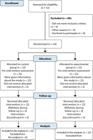
CONSORT flow diagram of enrollment, randomization, follow-up, and analysis of study groups. Adapted from the Consolidated Standards of Reporting Trials (CONSORT), Natal, Rio Grande do Norte, Brazil; 2024
The control group (CG) comprised 22 patients who received standard preoperative verbal instructions. The experimental group (EG) comprised 22 patients who received standardized verbal instructions and a video-based audiovisual aid delivered at the bedside. A license to use the audiovisual material was obtained for the study period. The material provided information about CR and the perioperative period and was developed by a U.S.–based company specializing in 3D medical illustrations and animations.
A second researcher who did not deliver the intervention assessed participants’ anxiety levels before and after the intervention. Following the interventions, this researcher evaluated each participant’s knowledge about the procedure they were to undergo.
Blinding
This is a double-blind study. Outcome assessors and the study statistician were blinded to group allocation.
Outcome analysis and statistical methods (revised)
The primary outcome was patient knowledge of the surgical process, assessed using the Knowledge Assessment Instrument (IAC)(15). The IAC comprises nine items addressing aspects of coronary revascularization: Q1 – Knowledge about the surgery, Q2 – Preoperative preparation, Q3 – Intraoperative care, Q4 – Intraoperative respiratory care and interventions, Q5 – Immediate postoperative care, Q6 – Institutional routine during the immediate postoperative period, Q7 – Post-procedure recovery, Q8 – Postoperative care, Q9 – Post-surgical rehabilitation. Total scores ranged from 0 to 9. Between-group comparisons evaluated mean scores and the percentage of correct responses.
The secondary outcome was anxiety, measured with the State-Trait Anxiety Inventory (STAI)(16), which includes state (STAI-S) and trait (STAI-T) scales. STAI score categories were: 20–40 (low), 41–60 (moderate), and 61–80 (high). For each participant, total scores were calculated, and group means and categorical distributions were compared before and after the interventions.
Descriptive statistics were used to characterize the independent and dependent variables (sex, age, educational attainment, frequency of correct answers, and anxiety level). Student’s t-test and Fisher’s exact test were used to compare primary and secondary outcomes. The IAC and STAI classifications, and their relationships with educational attainment between the experimental and control groups, were compared using the chi-square test (χ²) and McNemar’s test, in addition to the tests cited above. All tests were two-sided, and the significance level was set at α = 0.05 (p < 0.05). An independent statistician blinded to group allocation performed the analyses using SPSS, version 26.
RESULTS
Participant characteristics
The total sample comprised 44 patients, equally distributed between the CG and the EG; there were no losses to follow-up during the interventions. Participant flow is shown in Figure 1, and baseline sociodemographic and clinical characteristics for each group are presented in Table 1.
Baseline table with demographic and clinical variables of the total sample, Natal, Rio Grande do Norte, Brazil
Patient knowledge level
Knowledge levels differed significantly between groups: the EG had a higher mean number of correct responses (mean [SD] 7.77 [1.45]; p < 0.05). When individual questionnaire items were analyzed, differences reached statistical significance for Question 2 (“In the hours before surgery, what can you do?”), on which the EG achieved a higher percentage of correct answers (95.4% [n = 21]; p < 0.05). The likelihood of answering Q2 correctly was 90.0% lower in the control group than in the experimental group.
Questions Q3, Q4, and Q8, which relate to intraoperative and postoperative care, showed higher correct response rates in the EG, although these differences did not reach statistical significance (Table 2). Question 6 showed identical correct and incorrect response rates in both groups (72.7% correct; 27.3% incorrect).
Evaluation of correct and incorrect responses for each question of the Knowledge Assessment Instrument, applied in each group after the intervention, Natal, Rio Grande do Norte, Brazil, 2024
Regarding preoperative guidance, a large proportion of the total sample reported receiving no prior information about the surgery or preoperative procedures (EG 60.0% [n = 13] vs CG 40.0% [n = 9]). However, participants in both groups who had received prior guidance exhibited substantially lower anxiety: reported reductions in STAI-S and STAI-T scores were 6.71-fold and 8.15-fold, respectively.
After the intervention, when asked whether the intervention had resolved all their doubts, 64.0% (n = 28) did not know or preferred not to answer, 29.0% (n = 13) reported that the intervention had clarified their doubts, and 7.0% (n = 3) still had unanswered questions. Conversely, when asked about their readiness and feelings regarding the surgery, 77.0% (n = 34) reported feeling prepared and confident.
By group, after the intervention, the EG differed significantly from the CG: 86.3% (n = 19) of EG participants felt prepared and confident for the surgery following the audiovisual intervention, whereas 68.1% (n = 15) of CG participants reported the same feeling of confidence.
Anxiety levels before and after the intervention
When the two groups were analyzed by sex, women had higher mean anxiety levels than men in both groups (21.4% vs 6.6%).
Education level also influenced response to the intervention. Participants with higher, secondary, and primary education reduced the proportion classified with moderate STAI-T from 27.2%, 50.0%, and 12.5% to 9.1%, 12.5%, and 12.5%, respectively. For STAI-S, participants with secondary and primary education reduced the proportion in the moderate category from 22.7% and 37.5% to 9.1% and 12.5%, respectively. Participants with higher education showed a complete reduction of moderate anxiety. Participants with no formal education showed the smallest change in moderate STAI-T (33.3% to 16.7%), whereas 100.0% of participants with no formal education remained in the low STAI-S category with no change after the intervention.
The secondary outcome showed that anxiety levels decreased when comparing STAI scores before and after the intervention in both groups (Table 3). In the control group (CG), mean STAI-S decreased from 34.0 (SD 7.93) to 29.0 (SD 8.23); p < 0.05, and mean STAI-T decreased from 36.0 (SD 9.32) to 32.0 (SD 6.74); p < 0.05. In the experimental group (EG), mean STAI-S decreased from 31.0 (SD 6.72) to 26.0 (SD 5.47); p < 0.05 — a larger reduction than that observed in the CG.
Anxiety level assessed by the State-Trait Anxiety Inventory before and after the intervention in each study group, Natal, Rio Grande do Norte, Brazil, 2024
Both groups showed shifts in anxiety category from moderate to low (Table 3). In the EG, a complete reduction from moderate to low anxiety was observed (p < 0.05). Notably, no participants in either group scored in the high anxiety range.
When individual STAI-S responses were evaluated, the EG showed a reduction in negative feelings after the interventions, with participants responding “no” to items such as “I am tense” (68.1%), “I feel upset” (100.0%), and “I am worried” (68.1%).
In the analysis of STAI-T responses, the EG performed better after the intervention, showing an overall decline in negative trait anxiety, particularly on the items “I make decisions easily” (EG = 68.1% vs CG = 45.4%) and “I lack self-confidence” (EG = 86.3% vs CG = 68.1%).
DISCUSSION
The sample’s demographic profile—predominantly male (68.1%) and older than 60 years—is consistent with the global epidemiology of coronary artery disease (CAD)(17). However, the literature is heterogeneous: some studies report a female predominance when the disease coexists with factors such as advanced age, diabetes, and dyslipidemia, conditions that increase cardiovascular risk, particularly after menopause(18). Regarding age, sources also note that the mean age of patients undergoing coronary revascularization is high, and prolonged delays between indication and surgery may increase mortality by up to threefold(17).
With respect to educational attainment, primary education predominated, indicating low educational attainment and underscoring the need for clear, simplified preoperative instruction. This finding is consistent with prior reports(19–21). Low educational attainment is associated with greater difficulty in managing anxiety and represents an obstacle to patients’ understanding of preoperative guidance; this association has also been linked to worse prognosis in other studies(22).
One of the most alarming findings, reflecting a critical lack of preoperative information, was that a substantial proportion of patients arrived for a high-complexity procedure without having received any prior guidance (EG 60.0% vs CG 40.0%). This information gap is a known risk factor for increased anxiety. Data from this study strongly support that association: patients who had received any prior guidance, regardless of group, exhibited substantially lower anxiety—STAI-S scores were 6.71-fold lower and STAI-T scores were 8.15-fold lower. These results demonstrate that health education is more than an adjunct; it is an essential component of perioperative care(17).
Accordingly, we found that preoperative instruction combined with an educational technology reduced anxiety levels in patients undergoing coronary revascularization, with anxiety decreasing from moderate to low across all evaluated groups (p < 0.05). Prior studies reinforce this finding, highlighting that media-based audiovisual education is effective at increasing patients’ attention and memory retention because educational content is delivered simultaneously through both visual and auditory channels(5,23). This mode of communication contrasts with others that often require a higher level of literacy and instruction and, therefore, may constitute a barrier to communication, increasing anxiety and stress(5,15).
Moreover, participants in the EG achieved significantly higher knowledge scores than those in the CG (mean number of correct answers 7.77; p < 0.05). The effect was particularly evident for practically relevant items such as preoperative preparation (Q2): participants in the CG were 90.0% less likely to answer Q2 correctly compared with those in the EG. This finding indicates that the audiovisual aid not only conveys information but also facilitates its effective assimilation, outperforming traditional verbal instruction, which can be inconsistent or insufficient. Such acquisition of content is vital because adherence to measures, such as preoperative fasting, is directly linked to procedural safety(24).
Studies report patient safety benefits when individuals are educated of the surgical process, since negative emotions are associated with physiological and emotional instability(15,23).
Another noteworthy finding is that no participant scored in the high anxiety range, which may be related to the male predominance in the sample. In this regard, multiple studies have documented that female participants exhibit higher levels of anxiety and depression in the perioperative setting(3,25-28).
There is also evidence of reduced anxiety and improved knowledge when a video-based audiovisual aid is used. Specifically, instruction covering cardiac anatomy, disease pathophysiology, the surgical procedure, postoperative care, and rehabilitation is effective for knowledge acquisition and anxiety reduction(25-27). The literature widely associates lower preoperative anxiety with better outcomes, including reduced perceived pain, lower postoperative analgesic consumption, greater hemodynamic stability, and faster recovery(7,27-37).
It is important to emphasize that educational technology does not replace nursing practice, but enhances it. Nurses are central to preparing patients for high-complexity procedures such as CR. Clear preoperative guidance is a core nursing intervention: it raises patient knowledge, increases confidence in the team and the procedure, and, as demonstrated here, reduces anxiety. Thus, the audiovisual aid functions as a powerful tool that strengthens nursing educational practice, allowing clinical encounters to focus on clarifying specific doubts and reinforcing the therapeutic relationship, rather than merely delivering basic information(17,21,29-32).
Health education combined with anxiety management is essential in the cardiac preoperative setting because it increases patients’ sense of control and autonomy by clarifying the surgical process and disease prognosis. Consequently, it contributes to more effective care, which helps reduce postoperative complications and improves quality of life(12).
The intervention in this study effectively increased patients’ confidence to undergo surgery: initially, 64.0% of the total sample were unable to state whether they felt confident. After the intervention, 86.3% of EG participants felt prepared and confident—substantially higher than the 68.1% observed in the CG. In addition, the audiovisual aid improved participants’ understanding of the postoperative phase and surgical recovery. Research shows that providing patients with knowledge promotes patient activation in self-care, which is essential to improving quality of life and long-term outcomes(32-37).
In summary, this study demonstrates that implementing video-based audiovisual educational technologies, such as the audiovisual aid, is an effective and well-accepted strategy to prepare patients for coronary revascularization. The intervention proved particularly suitable for a population with low educational attainment, overcoming communication barriers and contributing to anxiety reduction. These results reinforce the indispensable role of health education in the preoperative period and highlight the importance of equipping nursing professionals with innovative tools to improve care quality, safety, and patient well-being.
Study limitations
A significant limitation of this study is that it was conducted at a single hospital, which underscores the need to replicate it in different contexts, both locally and internationally. To obtain stronger evidence and to develop effective interventions for surgical patients, we recommend conducting additional multicenter studies with larger sample sizes and more diverse populations.
Contributions to the field of nursing
Video-based audiovisual aids can complement verbal instruction by making communication clearer and more accessible, particularly for patients with varying levels of educational attainment or comprehension difficulties. This study contributes to nurses’ continuing education by encouraging the integration of educational technologies into clinical practice to enhance communication and teaching skills. The results provide a solid basis for future research on other technological tools that may improve nursing practice, offering an evidence-based approach.
By demonstrating the benefits of audiovisual aids, the study may inform institutional and public health policies that promote the incorporation of these technologies into hospital workflows. Ultimately, incorporating audiovisual aids can enhance patient satisfaction with the care received, which may positively affect the perceived quality and reputation of nursing services.
CONCLUSIONS
This study evaluated the effect of an audiovisual aid on preoperative education for patients undergoing CR. The video, as an audiovisual aid, had a positive effect on increasing knowledge and reducing anxiety levels in the preoperative period. Using this strategy enhances the nursing care process by integrating educational technologies into the preoperative phase, without causing complications to the patient. Moreover, it is an easily implementable method in health services and is well accepted by patients.
It is worth noting that this study indirectly reinforces the importance of nonpharmacological interventions in anxiety management and suggests that educational approaches can be adjuvants to traditional methods. Given the ease of implementation, this strategy can be incorporated into routine nursing care, positioning the nurse as a central actor in this approach, with the potential to transform patients’ experiences.
FUNDING
-
This study was funded by the Conselho Nacional de Desenvolvimento Científico e Tecnológico (CNPq), grant number 403907/2023-3.
AVAILABILITY OF DATA AND MATERIAL
The research data are available within the article.
REFERENCES
-
1 Saito Y, Kobayashi Y. Complete revascularization in acute myocardial infarction: a clinical review. Cardiovasc Interv Ther. 2023;38:177-86. https://doi.org/10.1007/s12928-022-00907-6
» https://doi.org/10.1007/s12928-022-00907-6 -
2 Thorup CB, Spindler H, Nohr D, Skinbjerg H, Andreasen JJ. Distress and anxiety following postponed cardiac surgery prior to and during the COVID-19 pandemic. Dan Med J [Internet] 2022 [cited 2023 Sep 02];69:A06210492. Available from:https://pubmed.ncbi.nlm.nih.gov/34913429/
» https://pubmed.ncbi.nlm.nih.gov/34913429/ -
3 Milisen K, Grootven BV, Hermans W, Mouton K, Tmimi LA, Rex S, et al. Is preoperative anxiety associated with postoperative delirium in older persons undergoing cardiac surgery? secondary data analysis of a randomized controlled trial. BMC Geriatr. 2020;20:478. https://doi.org/10.1186/s12877-020-01872-6
» https://doi.org/10.1186/s12877-020-01872-6 -
4 Murphy B, Le Grande M, Alvarenga M, Worcester M, Jackson A. Anxiety and depression after a cardiac event: prevalence and predictors. Front Psychol. 2020;10. https://doi.org/10.3389/fpsyg.2019.03010
» https://doi.org/10.3389/fpsyg.2019.03010 -
5 Ralapanawa U, Sivakanesan R. Epidemiology and the magnitude of coronary artery disease and acute coronary syndrome: a narrative review. J Epidemiol Glob Health. 2021;11(2):169-77. https://doi.org/10.2991/jegh.k.201217.001
» https://doi.org/10.2991/jegh.k.201217.001 -
6 Virani SS, Alonso A, Aparicio HJ, Benjamin EJ, Bittencourt MS, Callaway CW, et al. Heart Disease and Stroke Statistics: 2021 update. Circulation. 2021;143(8):e254-e743. https://doi.org/10.1161/cir.0000000000000950
» https://doi.org/10.1161/cir.0000000000000950 -
7 Poliwczak AR, Jędrzejczak-Pospiech K, Polak B, Błaszczyk J, Irzmański R. The impact of cardiac rehabilitation on the level of anxiety and symptoms of depression in patients after coronary revascularization. Postepy Hig Med Dosw. 2021;75(1):939–46. https://doi.org/10.2478/ahem-2021-0048
» https://doi.org/10.2478/ahem-2021-0048 -
8 Xue X, Wang P, Wang J, Li X, Peng F, Wang Z. Preoperative individualized education intervention reduces delirium after cardiac surgery: a randomized controlled study. J Thorac Dis. 2020;12(5):2188–96. https://doi.org/10.21037/jtd.2020.04.26
» https://doi.org/10.21037/jtd.2020.04.26 -
9 Sannakki S, Sannakki D, Echebarria JJ, Patteril M. Preoperative assessment for cardiac surgery. Anaesth Intensive Care Med. 2021;22(4):216–22. https://doi.org/10.1016/j.mpaic.2021.02.004
» https://doi.org/10.1016/j.mpaic.2021.02.004 -
10 Araújo NM, Oliveira ES, Silva BVS, Melo EBB, Dantas RAN, Dantas DV. Audiovisual aids in preoperative cardiac surgery education: a scoping review. Texto Contexto Enferm. 2022;31:e20210334. https://doi.org/10.1590/1980-265X-TCE-2021-0334
» https://doi.org/10.1590/1980-265X-TCE-2021-0334 -
11 Kim MY, Oh S. Nurses’ perspectives on health education and health literacy of older patients. Int J Environ Res Public Health. 2020;17(18):6455. https://doi.org/10.3390/ijerph17186455
» https://doi.org/10.3390/ijerph17186455 -
12 Neumann FJ, Sousa-Uva M, Ahlsson A, Alfonso F, Banning AP, Benedetto U, et al. 2018 ESC/EACTS Guidelines on myocardial revascularization. Eur Heart J. 2018;40(2):87–165. https://doi.org/10.1093/eurheartj/ehy394
» https://doi.org/10.1093/eurheartj/ehy394 -
13 Schulz KF, Altman DG, Moher D. CONSORT 2010 Statement: updated guidelines for reporting parallel group randomised trials. BMJ. 2010;340(1):c332-c332. https://doi.org/10.1136/bmj.c332
» https://doi.org/10.1136/bmj.c332 - 14 Araújo, NM. Efeito do recurso audiovisual no nível de ansiedade e na aquisição de conhecimento em pacientes em pré-operatório de revascularização do miocárdio: ensaio clínico randomizado[Dissertação]. Natal: Universidade Federal do Rio Grande do Norte. 2021.
-
15 Oliveira APA, Souza EN, Pellanda LC. Effectiveness of video resources in nursing orientation before cardiac heart surgery. Rev Assoc Med Bras [Internet] 2016 [cited 2023 Sep 10];62(8):762–7. https://doi.org/10.1590/1806-9282.62.08.762
» https://doi.org/10.1590/1806-9282.62.08.762 -
16 Biaggio AMB, Natalício L, Spielberger CD. Desenvolvimento da forma experimental em português do Inventário de Ansiedade Traço-Estado (IDATE) de Spielberger. Arq Bras Psic Apl [Internet] 1977 [cited 2023 Sep 02];29(3):31-44. Available from:https://bibliotecadigital.fgv.br/ojs/index.php/abpa/article/view/17827
» https://bibliotecadigital.fgv.br/ojs/index.php/abpa/article/view/17827 -
17 Nascimento RKMN, Andrade KBS, Camerini FG, Franco AS, Marins ALC, Naves CBOC. Consulta pré-procedimento de cateterismo cardíaco. Rev Enferm UERJ. 2021;29(1):e49970. https://doi.org/10.12957/reuerj.2021.49970
» https://doi.org/10.12957/reuerj.2021.49970 -
18 Lima AV, Breno WACS, Melo VL; Silva JÁ, Costa IKF. Learning needs and educational strategies for adult patients in the preoperative period of myocardial revascularization: scoping review. Aquichan. 2022;22(3):e2237. https://doi.org/10.5294/aqui.2022.22.3.7
» https://doi.org/10.5294/aqui.2022.22.3.7 - 19 Kazitani BS. Ansiedade cardíaca no perioperatório de cirurgias de revascularização do miocárdio e de correção de valvopatias[Dissertação]. Escola de Enfermagem de Ribeirão Preto, Universidade de São Paulo, Ribeirão Preto. 2020. 88f.
-
20 Carneiro EM, Costa NRD, Passos MMB, Ferreira LGF, Silva JRP, Melo Neto AQ, et al. Patients who carried out myocardial revascularization surgery in HU-UFPI. Braz J Health Rev. 2020;3(3):4012–22. https://doi.org/10.34119/bjhrv3n3-012
» https://doi.org/10.34119/bjhrv3n3-012 -
21 Lemos MFL, Lemos-Neto SV, Barrucand L, Verçosa N, Tibirica E. Preoperative education reduces preoperative anxiety in cancer patients undergoing surgery: usefulness of the self‐reported Beck anxiety inventory. Braz J Anesthesiol. 2025;69(1):1-6. https://doi.org/10.1016/j.bjan.2018.07.003
» https://doi.org/10.1016/j.bjan.2018.07.003 -
22 Farwana R, Sheriff A, Manzar H, Farwana M, Yusuf A, Sheriff I. Watch this space: a systematic review of the use of video-based media as a patient education tool in ophthalmology. Eye. 2020;34:1563–69. https://doi.org/10.1038/s41433-020-0798-z
» https://doi.org/10.1038/s41433-020-0798-z -
23 Davis SA, Carpenter DM, Blalock SJ, Budenz DL, Lee C, Muir KW et al. Glaucoma patient preferences for video education on eye drop technique. Optom Vis Sci. 2019;96(5):325-30. https://doi.org/10.1097/OPX.0000000000001375
» https://doi.org/10.1097/OPX.0000000000001375 -
24 Régis AP, Rosa GCD, Lunelli T. Cuidados de enfermagem no cateterismo cardíaco e angioplastia coronariana: desenvolvimento de um instrumento. Rev Recien. 2017;7(21):3-20. https://doi.org/10.24276/rrecien2358-3088.2017.7.21.3-20
» https://doi.org/10.24276/rrecien2358-3088.2017.7.21.3-20 -
25 Montgomery CL, Thanh NX, Stelfox HT, Norris CM, Rolfson DB, Meyer SR, et al. The impact of preoperative frailty on the clinical and cost outcomes of adult cardiac surgery in Alberta, Canada: a chort study. CJC Open. 2021;3(1):54-61. https://doi.org/10.1016/j.cjco.2020.09.009
» https://doi.org/10.1016/j.cjco.2020.09.009 -
26 Pazar B, Iyigun E. The effects of preoperative education of cardiac patients on haemodynamic parameters, comfort, anxiety and patient-ventilator synchrony: a randomised, controlled trial. Intensive Crit. 2020;58:102799. https://doi.org/10.1016/j.iccn.2020.102799
» https://doi.org/10.1016/j.iccn.2020.102799 -
27 Elgazzar SE, Qalawa SAA, Hassan AM. Impact of educational programme on patient’s health outcomes following open heart surgeries. Nursing Open [Internet] 2022 [cited 2023 Sep 12];10(5):3028-41. https://doi.org/10.1002/nop2.1549
» https://doi.org/10.1002/nop2.1549 -
28 Rousseaux F, Faymonville ME, Nyssen AS, Dardenne N, Ledoux D, Massion PB, et al. Can hypnosis and virtual reality reduce anxiety, pain and fatigue among patients who undergo cardiac surgery: a randomised controlled trial. Trials. 2020;21(330). https://doi.org/10.1186/s13063-020-4222-6
» https://doi.org/10.1186/s13063-020-4222-6 -
29 Benevides LMB, Silva LF, Silva GC, Farias MS. Práticas educativas no controle da ansiedade de pacientes em pré-operatório de cirurgia cardíaca: revisão integrativa. Rev Pesq Cuid Fundam. 2020;12:437-43. https://doi.org/10.9789/2175-5361.rpcfo.v12.8496
» https://doi.org/10.9789/2175-5361.rpcfo.v12.8496 -
30 Nicoletti AM, Hillesheim SF, Zamberlan C, Maldaner CR, Rosa N, Pitthan LO. Ansiedade e intensidade da experiência dolorosa no perioperatório de cirurgia cardíaca. Braz J Health Rev. 2021;2:9162-72. https://doi.org/10.34119/bjhrv4n2-419
» https://doi.org/10.34119/bjhrv4n2-419 -
31 Rodrigues HF, Furuya RK, Dantas RAS, Rodrigues AJ, Dessotte CAM. Association of preoperative anxiety and depression symptoms with postoperative complications of cardiac surgeries. Rev Latino-Am Enfermagem. 2018;26:1-10. https://doi.org/10.1590/1518-8345.2784.3107
» https://doi.org/10.1590/1518-8345.2784.3107 -
32 Santos KVG, Dantas JKS, Fernandes TEL, Medeiros KS, Sarmento ACA, Ribeiro KRB, et al. Music to relieve pain and anxiety in cardiac catheterization: a systematic review and meta-analysis. Heliyon. 2024;10(13):e33815. https://doi.org/doi.org/10.1016/j.heliyon.2024.e33815
» https://doi.org/doi.org/10.1016/j.heliyon.2024.e33815 -
33 Santos KVG, Leal KCS, Silva LCMA, Medeiros KS, Feijão AR, Oliveira MC, et al. Music-induced analgesia for adults and older adults during femoral arterial sheath removal after cardiac catheterization: a randomized clinical trial protocol. BMC Complement Med Ther. 2022;22(243):1-8. https://doi.org/doi.org/10.1186/s12906-022-03725-8
» https://doi.org/doi.org/10.1186/s12906-022-03725-8 -
34 Santos KVG, Rocha MA, Dantas JKS, Araújo SCM, Dantas DV, Dantas RAN. Non-pharmacological analgesia strategies in adult and elderly endovascular procedures: a scoping review. Rev Bras Enferm. 2022;75(suppl.4):1-8. https://doi.org/10.1590/0034-7167-2021-0741
» https://doi.org/10.1590/0034-7167-2021-0741 -
35 Silva LCMA, Mendes FCO, Teixeira FC, Fernandes TELF, Ribeiro KRB, Leal KCS, et al. Use of Lavandula angustifolia essential oil as a complementary therapy in adult health care: a scoping review. Heliyon. 2023;9(5):e15446. https://doi.org/doi.org/10.1016/j.heliyon.2023.e15446
» https://doi.org/doi.org/10.1016/j.heliyon.2023.e15446 -
36 Mendes FCO, Santos KVG, Dantas JKS, Dantas JKS, Araújo SCM, Teixeira FC, et al. Non-pharmacological strategies to reduce stress and anxiety in endovascular procedures: a scoping review. Nurs Open. 2024;11(3):e2105. https://doi.org/10.1002/nop2.2105
» https://doi.org/10.1002/nop2.2105 -
37 Teixeira FC, Fernandes TEL, Leal KCS, Ribeiro KRB, Dantas DV, Dantas RAN. Factors associated with increased lactate levels in cardiac surgeries: scoping review. Rev Bras Enferm. 2023;76. https://doi.org/10.1590/0034-7167-2023-0117
» https://doi.org/10.1590/0034-7167-2023-0117
Edited by
-
EDITOR IN CHIEF
Dulce Barbosa
-
ASSOCIATE EDITOR
Mitzy Danski