 Health promotion strategies for adolescents with suicidal behavior: a scoping review
ABSTRACT
Objective: To map strategies for promoting the health of adolescents with suicidal behavior.
Method: Scoping review in accordance with JBI methodological guidelines, without language or time limitations. Inclusion criteria for the studies: adolescents aged ten to 19 years with suicidal behavior to explore the concept of health promotion, in any health service, but without limiting this context. Sources consulted: MEDLINE/PubMed, PubMed Central/NLM, CINAHL, Academic Search Premier, Fonte Acadêmica/EBSCO, Scopus, Embase/Elsevier, LILACS, BDENF, INDEXPSI, CUMED, BINACIS, LIPECS, MedCarib, BBO, ARGMSAL, BDNPAR, BIGG, BRISA, HomeoIndex, PAHOIRIS, SES-SPBVS, SciELO, PsycInfo/APA.
Results: Of the 22 articles selected, two strategic approaches emerged targeting adolescents: development of life skills – peer support, mental health literacy, youth engagement – and involvement of different social actors – family, professionals, community leaders, intersectoral support networks.
Conclusion: Health promotion strategies were identified and mapped using two strategic approaches: first, they were directed at adolescents; then, they involved different social actors, broadening the scope of health promotion.
DESCRIPTORS
Adolescent; Health Strategies; Suicide Prevention; Health Promotion; Suicide
RESUMO
Objetivo: Mapear estratégias de promoção da saúde a adolescentes com comportamento suicida.
Método: Revisão de escopo conforme diretrizes metodológicas da JBI, sem limitação de idioma e sem recorte temporal. Critérios de inclusão dos estudos: adolescentes de dez a 19 anos com comportamento suicida para explorar o conceito de promoção da saúde, em qualquer serviço de saúde, mas sem limitar esse contexto. Fontes consultadas: MEDLINE/PubMed, PubMed Central/NLM, CINAHL, Academic Search Premier, Fonte Acadêmica/EBSCO, Scopus, Embase/Elsevier, LILACS, BDENF, INDEXPSI, CUMED, BINACIS, LIPECS, MedCarib, BBO, ARGMSAL, BDNPAR, BIGG, BRISA, HomeoIndex, PAHOIRIS, SES-SPBVS, SciELO, PsycInfo/APA.
Resultados: Selecionados 22 artigos, emergiram dois enfoques estratégicos direcionados a adolescentes: desenvolvimento de habilidades para a vida – apoio entre pares, alfabetização em saúde mental, engajamento juvenil – e envolvimento de diferentes atores sociais – família, profissionais, líderes comunitários, redes de apoio intersetoriais.
Conclusão: As estratégias de promoção da saúde foram identificadas e mapeadas em dois enfoques estratégicos: primeiro foram direcionadas aos adolescentes; depois, envolveram diferentes atores sociais ampliando o alcance da promoção da saúde.
DESCRITORES
Adolescente; Estratégias de Saúde; Prevenção do Suicídio; Promoção da Saúde; Suicídio
RESUMEN
Objetivo: Mapear estrategias para promover la salud de los adolescentes con conductas suicidas.
Método: Revisión del alcance de acuerdo con las directrices metodológicas de JBI, sin limitaciones de idioma ni restricciones de tiempo. Criterios de inclusión para los estudios: adolescentes de entre diez y 19 años con conducta suicida para explorar el concepto de promoción de la salud, en cualquier servicio de salud, pero sin limitar este contexto. Fuentes consultadas: MEDLINE/PubMed, PubMed Central/NLM, CINAHL, Academic Search Premier, Academic Source/EBSCO, Scopus, Embase/Elsevier, LILACS, BDENF, INDEXPSI, CUMED, BINACIS, LIPECS, MedCarib, BBO, ARGMSAL, BDNPAR, BIGG, BRISA, HomeoIndex, PAHOIRIS, SES-SPBVS, SciELO, PsycInfo/APA.
Resultados: De los 22 artículos seleccionados, surgieron dos enfoques estratégicos dirigidos a los adolescentes: el desarrollo de habilidades para la vida (apoyo entre pares, alfabetización en salud mental, participación juvenil) y la implicación de diferentes actores sociales (familia, profesionales, líderes comunitarios, redes de apoyo intersectoriales).
Conclusión: Se identificaron y mapearon estrategias de promoción de la salud utilizando dos enfoques estratégicos: primero, se dirigieron a los adolescentes; luego, involucraron a diferentes actores sociales, ampliando el alcance de la promoción de la salud.
DESCRIPTORES
Adolescente; Estrategias de Salud; Prevención del Suicidio; Promoción de la Salud; Suicidio
INTRODUCTION
Health promotion strategies are gaining prominence in Primary Health Care (PHC) due to their strong convergence with its principles, which favor access to services and the implementation of integrated actions(1). The PHC also allows the coordination of interventions aimed at both individual and collective issues, with the goal of improving living conditions and strengthening community health(2,3). In this regard, health promotion (HP) broadens the concept of health and emerges as a promising strategy to address public health challenges by focusing on the determinants of health and enhancing intersectoral actions(4,5).
With the aim of improving living and health conditions in both individual and collective dimensions, HP establishes a range of political strategies with cross-cutting guidelines and axes. Thus, the strategies are characterized by cooperation between different sectors and within the health sector itself, by coordination with social protection networks, and by encouraging broad participation and social control. Its main focus is to reduce vulnerabilities and risks resulting from multifaceted determinants – social, economic, political, cultural and environmental. Additionally, it prioritizes empowering individuals and the community to have greater control over their life process. Starting from a comprehensive understanding of the health-disease process and its determinants, HP seeks to integrate and value popular knowledge with technical and scientific knowledge through actions that encompass behavioral change, collective interventions, and the implementation of integrated public policies(3,4).
In PHC, especially in the field of mental health, the need for care from the HP perspective, guided by the psychosocial paradigm, empowers people experiencing mental distress to become active subjects integrated into their communities, enabling new expressions of life, autonomy, and socialization(6).
People experiencing mental distress, especially children and adolescents, require broad, intersectoral strategies focused on developing social skills and competencies, strengthening, coping mechanisms, and social support, with a focus on HP(4,7), considering their uniqueness and the territory in which they are located.
Among the various manifestations of psychological suffering, especially among children and adolescents, suicide stands out as one of its most serious forms, given its complexity and social impact, resulting from the neuropsychosocial and emotional immaturity of this population. From 2011 to 2022, there was evidence of an increase in suicide rates in all Brazilian regions, with a higher incidence among young people aged ten to 24, representing a growth of 6.14%(8). In the Americas region, between 2000 and 2019, an increase of 17% in cases was observed, while in Brazil there was a significant 43% increase in the number of suicides(9) during that same period.
Suicide among adolescents reflects multiple contributing factors, such as mental disorders, family conflicts, violence, bullying, social exclusion, substance use (alcohol and drugs), as well as the impact of technologies through media and social networks, which are frequently associated with negative effects on mental health(10,11). Given this scenario, the need to identify strategies not only restricted to the prevention of harm, but also those that address the complexity of these public health problems, that are comprehensive and articulated with different sectors capable of facing these public health threats, becomes evident(10,12).
Preliminary searches were conducted to find published reviews or ongoing protocols on the same topic, to ensure the originality of the study and avoid duplication of effort. This search included MEDLINE/PubMed, Cochrane Database of Systematic Reviews, Regional Portal of the Virtual Health Library (VHL), PROSPERO, and JBI Evidence Synthesis databases, identifying two review protocols: one focused on intersectoral care strategies for adolescents with suicidal behavior and self-harm, and another on interventions aimed at preventing and managing suicide and self-harm in educational settings. Although related to the topic, these studies do not address the specific focus of this proposal. Thus, no current or ongoing reviews were found that address health promotion strategies aimed at adolescents with suicidal behavior, which highlights a gap in knowledge and reinforces the relevance of this investigation. Therefore, this study aims to map health promotion strategies directed at adolescents with suicidal behavior.
METHOD
Design of Study
This is a scoping review conducted in accordance with JBI methodological guidelines(13), aiming to ensure methodological rigor, clarity, and organization of the review process, and reported in accordance with guidelines of the PRISMA Extension for Scoping Reviews (PRISMA-ScR) checklist(14). The protocol for this review was registered on the Open Science Framework (OSF) platform, with DOI https://doi.org/10.17605/OSF.IO/J9MQB.
Research Question
The research question was defined in accordance with the acronym PCC (population/concept/context), where the population (P) is “adolescents with suicidal behavior”; the concept (C) alludes to “health promotion”; and the context (C) refers to any mental health services at all levels of care, but not limited to them. The following research question was established: What are the health promotion strategies for adolescents with suicidal behavior?
Eligibility Criteria
Population – This review considers studies involving adolescents aged ten to 19 years(15) with suicidal behavior. The World Health Organization (WHO)(16) highlights suicide as a serious public health issue requiring a coordinated response. With timely, evidence-based, and low-cost interventions, it is possible to significantly reduce the occurrence of suicides. Although many incidents are impulsive, suicidal behavior is strongly associated with disasters, conflicts, violence, abuse or loss, and feelings of isolation. The WHO establishes effective, evidence-based interventions, which include the identification, assessment, management, and early follow-up of anyone affected by suicidal behavior(16).
Concept – Studies addressing health promotion strategies for adolescents with suicidal behavior were included. The definition considered was that of the Ottawa Charter, which defines health promotion as “the process of enabling people to increase control over, and to improve, their health”(4,17).
Context – The included studies were conducted in any location providing mental health services at any level of care. Services at any level of healthcare assistance, taking into account the age range of the participants, were considered equally, but not being limited to them.
Studies with experimental and quasi-experimental designs (randomized clinical trials, non-randomized controlled trials, before-and-after studies, and interrupted time series), analytical observational studies (prospective and retrospective cohorts, case-control studies, and analytical cross-sectional studies), and descriptive observational studies (case series, case reports, and descriptive cross-sectional studies) were considered. Qualitative studies (phenomenology, grounded theory, ethnography, qualitative description, and action research) were included, in addition to theoretical texts, opinion articles, dissertations, and theses. Systematic, scoping, and integrative reviews, as well as conference abstracts, letters, and editorials, were excluded.
Search Strategy
The search strategy was carried out in three stages, aiming to locate published and unpublished studies, in collaboration with a specialized librarian certified by the JBI in review methods. Initially, a preliminary search was conducted in the following databases: MEDLINE/PubMed, Cochrane Database of Systematic Reviews, Regional Portal of the Virtual Health Library (VHL), PROSPERO and JBI Evidence Synthesis. In the second stage, the definitive strategy presented in Chart 1 was adapted for the following databases/portals: MEDLINE/PubMed, PubMed Central/NLM, CINAHL, Academic Search Premier, Fonte Acadêmica/EBSCO, Scopus, Embase/Elsevier, LILACS, BDENF, INDEXPSI, CUMED, BINACIS, LIPECS, MedCarib, BBO, ARGMSAL, BDNPAR, BIGG, BRISA, HomeoIndex, PAHOIRIS, SES-SPLILACS, BDENF, Index Psicologia/VHL, SciELO, and PsycInfo/APA. Grey literature was explored through the platform Science.gov; and the Google Scholar search tool was added. There were no restrictions on language or publication period. Finally, in the third stage, a manual search was conducted in the references of the included studies. The search was conducted on January 23, 2025.
Selection of Studies
After searching the databases, the identified references were uploaded to EndNote 21 (Clarivate Analytics, PA, USA), and duplicates were removed. Next, these references were exported to the software Intelligent Systematic Review (Rayyan) for managing the selection process. The documents were evaluated by title and abstract based on the inclusion criteria, a process conducted by four independent reviewers, following a pilot test. Following evaluation, the relevant sources were retrieved and fully assessed, and the decisions were recorded in Rayyan.
The disagreements arising among the reviewers at each stage of the selection process were resolved through discussion, consensus, and even a fifth reviewer. The results of the search and study inclusion process are presented in the flowchart, in accordance with the PRISMA-ScR guidelines(14).
Data Extraction and Analysis
Data were extracted from the included articles by four independent reviewers using a data extraction tool (Chart 2) developed by the reviewers, based on the JBI manual. Data included specific details about the characteristics of the studies (citation, year, country, objective, type of study, sample), participants, concept, context (PCC), study methods, and main conclusions relevant to the review question.
Characteristics of the studies included in the scoping review – Florianópolis, SC, Brazil, 2025.
Data that answered the objective of the review were analyzed and presented through a narrative summary, which described the results related to the research question. It is important to emphasize that they were presented in table form based on the categorized data to facilitate understanding.
Ethical Aspects
This scoping review followed applicable methodological and ethical guidelines, respecting best practices in scientific research and the copyright of the included studies. Since this analysis involved publicly available secondary data without the involvement of human beings or identifiable information, there was no need to submit it to the Research Ethics Committee or obtain Free Informed Consent.
RESULTS
Based on the application of search strategies in the selected databases and portals, a total of 3,884 were obtained for titles and abstracts reading, of which 235 studies were selected for full-text reading, adhering to the eligibility criteria and the research question. Of these, 22 studies were selected for analysis and discussion, as presented in the PRISMA-ScR flowchart in Figure 1.
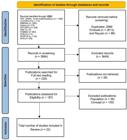
PRISMA-ScR flowchart of the selection process for included studies – Florianópolis, SC, Brazil, 2025.
Studies started in 1993, with the highest occurrence in 2024 (n = 4; 18%), followed by the year 2021 (n = 3; 14%). Regarding nationality, Canada stands out (n = 6; 27%), followed by the United States (n = 5; 23%). Regarding the type of study, seven (31.5%) consisted of quasi-experimental studies; subsequently, case studies (n = 3; 14%) and participatory qualitative studies (n = 3; 14%). Regarding the setting, the school has a prominent place among the studies included (n = 18, 82%). Some studies included more than one setting, such as rural, urban, and indigenous communities, virtual environments, and universities, among others, as shown in Chart 2.
Regarding the sample/participants, it was observed that the majority of the included studies (n = 18; 82%) were developed with students from public schools. However, some also included teenagers from rural and indigenous communities, as well as teachers, community leaders, young adults, and parents. The sample composition varied according to the type of study and its objectives, which contributed to the diversity of health promotion strategies.
Regarding health promotion strategies, two strategic approaches emerged, as illustrated in Figure 2, created using the Google Drawings tool. The identified actions are proposed in a combined and coordinated manner, aiming to broaden the reach and enhance the effects of interventions with adolescents exhibiting suicidal behavior. The first approach is directed at adolescents, highlighting strategies such as developing life skills, peer support, strengthening socio-emotional competencies, mental health literacy, encouraging youth engagement and protagonism, extracurricular activities, and artistic practices. The second approach focuses on different social actors involved in care, including educational campaigns, training for teachers and professionals from various fields, leadership development, involvement of community and family leaders, strengthening of social support and support networks, intersectoral coordination, use of active/multimodal methodologies and digital platforms.

Health promotion strategies targeting adolescents with suicidal behavior – Florianópolis, SC, Brazil, 2025.
DISCUSSION
The studies included in this scoping review presented health promotion strategies for adolescents with suicidal behavior, highlighting the school setting, as it is a conducive context for both the implementation of these strategies and suicide prevention(7,40). At school, it is possible to detect changes such as behavioral problems, a drop in academic performance, and frequent absenteeism, which can be early signs of psychological distress in adolescents(10).
Alongside the school environment, the community setting – which includes urban, rural, and indigenous contexts – has gained similar importance in the implementation of health promotion strategies. In these communities, especially when united, the deepening of social networks and participation in collective activities, such as religious practices and group exercise, have shown potential to improve physical and emotional well- being and to reduce the risk of suicide among adolescents(39,41).
Concurrently, digital platforms and social media are emerging as relevant spaces for connecting teenagers with their peers and providing emotional support(42). These tools not only allow the expression of feelings and experiences but also facilitate online interventions, since they promote changes in attitude and encourage people to seek help(43,44).
Primary care services have excelled in school, community, and digital settings, emerging as strategic locations for promoting the mental health of adolescents with suicidal behavior, by expanding access and enabling the implementation of care(42). Although challenges remain, initiatives such as collaborative models and innovative solutions have been developed(45). However, the study points to limitations related to the training and experience of primary care professionals in managing situations such as suicide attempts, which reinforces the need for teams’ continuous training and strengthening(46).
Mapping the intervention scenarios revealed that schools, communities, digital environments, and primary care broaden access and facilitate the implementation of health promotion strategies. These strategies demonstrate diversity and encompass both actions directed at adolescents and initiatives involving the participation of other social actors.
First, the development of life skills and socio-emotional competencies stands out, strengthening autonomy, decision- making, emotion management, resilience, and the building of healthy interpersonal relationships - fundamental elements for promoting mental health and reducing the risk of suicide among adolescents(18-21,23,29,30,32,36,38). To maximize these results, these skills should be worked on in an integrated way within school, family, and health service contexts, with emphasis on the use of the principles of cognitive-behavioral therapy (CBT), recognized for its effectiveness in managing situations related to suicidal behavior and in promoting protective factors(10,26,36,43,47,48).
Other strategies involve strengthening peer support groups, coupled with youth engagement and protagonism, which promote the psychosocial development of adolescents by enabling the sharing of difficult and similar experiences. Furthermore, these initiatives contribute to the improvement of social and relational skills and promote youth empowerment(28,34,49).
In addition to these, other strategies are proving relevant, such as mental health literacy, extracurricular activities, and the use of culture and art, which act as powerful tools for consolidating adolescents’ emotional and community well-being.
Mental health literacy forms an essential basis for promotion and contributes to the adolescents’ overall well-being. Interventions in this area have been shown to improve skills such as self-efficacy, the ability to seek and understand health information, and even reinforce social connections(7,37). Creative strategies, such as the use of theater, were also applied to facilitate mental health literacy in a participatory and contextualized way(22). Another significant point is that culture and art appear as promising strategies and contribute positively to well-being by favoring the expression of emotions, cultural appreciation, and the strengthening of identity pride, especially in indigenous communities(36). Well-structured extracurricular activities, such as sports and music, also stand out as mood regulators and promoters of social bonds, as they reinforce protective factors against psychological distress(24).
The studies focus directly on adolescents, simultaneously highlighting the importance of strategies that broaden the reach of actions, such as educational campaigns, training programs for teachers and health professionals, and the training of community and school leaders, which are fundamental to sustaining health-promoting practices in an integrated and continuous way.
Prevention and awareness campaigns in the media and in public spaces, coordinated at the governmental level, are essential for prevention and promotion, with the potential to influence policies and legislation at all government levels(47). Targeted at rural communities, these actions, combined with policies that expand access to structured activities, enhance youth engagement in health promotion(21,24). As universal strategies, they reach broad audiences and offer essential information to encourage people to seek help(21).
Capacity building, training, and education should be strategically targeted at all professionals and social actors, both within and outside the health sector, with the goal of improving knowledge and skills related to mental health(47,50). These strategies aim, above all, to increase awareness, self-confidence, and the ability of participants to identify suicide risks, intervene early, and provide appropriate support(22,35,44). Evaluations of training programs already implemented demonstrate their effectiveness in promoting care practices and expanding the community response to crisis situations(31,43).
In addition to campaigns, the importance of training and involving community and family leaders is highlighted, focusing on reinforcing adolescents’ trust in their caregivers and repairing ruptures in emotional bonds, factors associated with the risk of suicidal ideation and attempts(43,44). Strategies that encourage family and community engagement, as well as open discussion about suicide, contribute to the creation of welcoming social environments that promote mental health(7). These spaces, by allowing the early observation of signs of distress, become essential in prevention.
Interdisciplinary and intersectoral collaboration between health, education, social assistance, and community organizations enhances health promotion actions and should be encouraged. This integration broadens collective participation in planning and strategy development, thereby consolidating support networks and the effectiveness of interventions(23,47). An intersectoral, territorial, and interdisciplinary approach contributes to bolstering protective factors and, consequently, to reducing suicide rates among adolescents, especially when there is active collaboration within sectors and the community(26,39,51).
Active learning methodologies, such as case studies, role- playing, and problem-based learning, have shown promising results in empowering adolescents to discuss and reflect on suicide, but still require greater implementation and integration into school subject curricula(10,22,29,37). Additionally, innovative strategies such as digital platforms, social media, and apps aimed at teenagers and their families have stood out for facilitating skills learning, expanding support networks, and providing 24-hour online services, establishing themselves as promising resources for promoting mental health(25,28,33,38). However, these initiatives face challenges, such as issues of accessibility, connectivity, data security, the need for financial investment, and cultural adaptations to ensure effectiveness in different contexts(36,52).
Although there are solid regulatory frameworks for the implementation of health promotion policies and strategies in Brazil, institutional articulation, resource availability, technical capacity, and intersectoral coordination still represent significant challenges for their effective implementation within the Brazilian Public Health System (SUS)(53). Likewise, studies on mental health promotion indicate that the implementation of effective strategies is hampered by resource limitations, a lack of cost-effectiveness evidence, and contextual barriers that hinder the adaptation of international models to local realities(54).
The strategies identified in this review reinforce the role of nursing in promoting the mental health of adolescents with suicidal behavior. Working in different settings, nurses contribute to expanding access to care, enhancing bonds, and building support networks. These actions require sensitive listening, ongoing training, and intersectoral collaboration, which reaffirms the ethical and political commitment of the profession to the life and well-being of those in distress.
Nevertheless, to support expand these practices, it is necessary to acknowledge the gaps that still exist in scientific production on the subject. Although this scoping review has mapped several health promotion strategies for adolescents with suicidal behavior, it is important to acknowledge the limitations. A significant limitation is the failure to retrieve some of the identified studies, especially the older ones. In total, 38 documents, mostly from the 1980s and 1990s, could not be accessed due to the unavailability of the full text in databases and institutional repositories. Despite conducting additional searches, it was not possible to obtain them, which may have reduced the mapping historical scope.
Moreover, the predominance of studies conducted in high- income countries limits the direct application of these strategies to the Brazilian context, which is marked by specific epidemiological, sociocultural, and structural characteristics. This scenario poses challenges for the development of health promotion policies and practices aimed at adolescents with suicidal behavior and reinforces the need for national and regional research that considers socioeconomic inequalities, social determinants of health, and the organization of public systems, such as the SUS. Future research can contribute to the adaptation, validation, and contextualization of international strategies so that they become more sensitive to local realities and culturally appropriate.
CONCLUSION
The studies analyzed in this review present two strategic approaches that combine and are articulated for prevention and health promotion. The first, directly related to adolescents, aims to boost internal and relational resources through the development of life skills, peer support, socio-emotional competencies, mental health literacy, encouragement of engagement and youth leadership, as well as extracurricular activities and artistic practices. These strategies contribute to the empowerment of adolescents and to fortify their resilience in the face of psychological distress. The second approach is directed at different social actors that make up the broader context of care, such as teachers, health and education professionals, community leaders, and families, who potentiate the creation of care environments and community mobilization, to broaden the reach and effectiveness of health promotion actions through educational campaigns, training for teachers and professionals from various fields, leadership development, social support and support networks, intersectoral articulation, the use of active/multimodal methodologies, and digital platforms.
Furthermore, although the school environment has been widely explored as a space for intervention, there is a need to expand health promotion strategies to other contexts, such as specialized mental health services, to which many adolescents arrive in a critical state of psychological distress and at risk of imminent suicide.
In addition, the need for strategies that go beyond training healthcare professionals through the active incorporation of families in the care process is highlighted. Despite the recognition of their essential role, there is a lack of systematic actions that include them as key players in promoting the health of adolescents with suicidal behavior. This gap underscores the urgent need to develop integrated, intersectoral, and culturally sensitive approaches capable of driving responses to the complex demands of this population and contributing to the reduction of suicide rates among adolescents.
DATA AVAILABILITY
The data that support the findings of this study are openly available in the Open Science Framework (OSF) at https://doi.org/10.17605/OSF.IO/J9MQB.
REFERENCES
-
1. Heidemann ITSB, Durand MK, Souza JB, Arakawa-Belaunde AM, Macedo LC, Correa SM, et al. Potentialities and challenges for care in the primary health care context. Texto Contexto Enferm. 2023;32:e20220333. doi: https://doi.org/10.1590/1980-265x-tce-2022-0333en.
» https://doi.org/10.1590/1980-265x-tce-2022-0333en -
2. Heidemann ITSB, Durand MK, Adão I, Romanoski PJ, Moreira AR, Belaunde AMA, et al. Culture circle in primary care: dialogues with managers on health promotion. Rev Esc Enferm USP. 2024;58:e20230420. doi: https://doi.org/10.1590/1980-220x-reeusp-2023-0420pt. PubMed PMID: 38985822.
» https://doi.org/10.1590/1980-220x-reeusp-2023-0420pt -
3. Heidemann ITSB, Durand MK, Adão I, Silva VA, Romanoski PJ, Moreira AR, et al. Promoção da saúde no ambiente de trabalho da atenção primária. Cad Pedagógico. 2025;22(5):e14643. doi: https://doi.org/10.54033/cadpedv22n5-050.
» https://doi.org/10.54033/cadpedv22n5-050 -
4. Buss PM, Hartz ZMA, Pinto LF, Rocha CMF. Promoção da saúde e qualidade de vida: uma perspectiva histórica ao longo dos últimos 40 anos. Cien Saude Colet. 2020;25(12):4723–35. doi: https://doi.org/10.1590/1413-812320202512.15902020. PubMed PMID: 33295496.
» https://doi.org/10.1590/1413-812320202512.15902020 -
5. Pedrosa JIS, David HMSL, Silva MRF, Ceccim RB. Promoção da Saúde: um posicionamento na perspectiva da educação popular no contexto brasileiro. Physis. 2024;34:e34063. doi: https://doi.org/10.1590/s0103-7331202434063pt.
» https://doi.org/10.1590/s0103-7331202434063pt -
6. Sampaio ML, Bispo Jr JP. Rede de Atenção Psicossocial: avaliação da estrutura e do processo de articulação do cuidado em saúde mental. Cad Saude Publica. 2021;37(3):e00042620. doi: https://doi.org/10.1590/0102-311x00042620. PubMed PMID: 33852660.
» https://doi.org/10.1590/0102-311x00042620 -
7. Parpio YN, Nuruddin R, Ali TS, Mohammad N, Khan UR, Shahzad S, et al. Suicide prevention program on suicidal behaviors and mental wellbeing among school aged adolescents: a scoping review. Front Public Health. 2025;13:1506321. doi: https://doi.org/10.3389/fpubh.2025.1506321. PubMed PMID: 40385626.
» https://doi.org/10.3389/fpubh.2025.1506321 -
8. Alves FJO, Fialho E, Araújo JAP, Naslund JA, Barreto ML, Patel V, et al. Therising trendsofself-harminBrazil: anecological analysis of notifications, hospitalisations, and mortality between 2011 and 2022. Lancet Reg Health Am. 2024;4(10):123–30. doi: https://doi.org/10.1016/j.lana.2024.100691.
» https://doi.org/10.1016/j.lana.2024.100691 -
9. Sebastião M. Estudo aponta que taxas de suicídio e autolesão aumentam no Brasil [Internet]. Rio de Janeiro: Fiocruz; 2024 [cited 2025 Jul 17]. Available from: https://fiocruz.br/noticia/2024/02/estudo-aponta-que-taxas-de-suicidio-e-autolesoes-aumentam-no-brasil
» https://fiocruz.br/noticia/2024/02/estudo-aponta-que-taxas-de-suicidio-e-autolesoes-aumentam-no-brasil -
10. Sganzerla GC. Risco de suicídio em adolescentes: estratégias de prevenção primária no contexto escolar. Psicol Esc Educ. 2021;25:e226820. doi: https://doi.org/10.1590/2175-35392021226820.
» https://doi.org/10.1590/2175-35392021226820 -
11. Lopes LOR, Jesus RSM, Souza RSB, Teodoro MLM. Fatores de risco e associados ao comportamento suicida no brasil: uma revisão sistemática. TEMPUS Psicol. 2023;6(2):116–32. doi: https://doi.org/10.30554/tempuspsi.6.2.4694.2023.
» https://doi.org/10.30554/tempuspsi.6.2.4694.2023 -
12. Penso MA, Sena DPA. A desesperança do jovem e o suicídio como solução. Soc Estado. 2020;35(1):61–8. doi: https://doi.org/10.1590/s0102-6992-202035010004.
» https://doi.org/10.1590/s0102-6992-202035010004 -
13. Peters MDJ, Godfrey C, McInerney P, Munn Z, Tricco AC, Khalil H. Scoping reviews (2020 version). In: Aromataris E, Lockwood C, Porritt K, Pilla B, Jordan Z, editors. JBI manual for evidence synthesis. Adelaide: JBI; 2024. doi: https://doi.org/10.46658/JBIMES-24-09.
» https://doi.org/10.46658/JBIMES-24-09 -
14. Tricco AC, Lillie E, Zarin W, O’Brien KK, Colquhoun H, Levac D, et al. PRISMA Extension for Scoping Reviews (PRISMA-ScR): checklist and Explanation. Ann Intern Med. 2018;169(7):467–73. doi: https://doi.org/10.7326/M18-0850. PubMed PMID: 30178033.
» https://doi.org/10.7326/M18-0850 -
15. World Health Organization. Adolescent health and development: a resource guide [Internet]. Geneva: WHO; 2023 [cited 2025 Jan 5]. Available from: https://www.who.int/health-topics/adolescent-health
» https://www.who.int/health-topics/adolescent-health -
16. World Health Organization. Suicide worldwide in 2019: global health estimates [Internet]. Geneva: WHO; 2021 [cited 2025 Jan 5]. Available from: https://www.who.int/publications/i/item/9789240026643
» https://www.who.int/publications/i/item/9789240026643 -
17. Heidmann ITSB, Almeida MCP, Boehs AE, Wosny AM, Monticelli M. Promoção à saúde: trajetória histórica de suas concepções. Texto Contexto Enferm. 2006;15(2):253–358. doi: https://doi.org/10.1590/S0104-07072006000200021.
» https://doi.org/10.1590/S0104-07072006000200021 -
18. Klingman A, Hochdorf Z. Coping with distress and self harm: the impact of a primary prevention program among adolescents. J Adolesc. 1993;16(2):121–40. doi: https://doi.org/10.1006/jado.1993.1012. PubMed PMID: 8376638.
» https://doi.org/10.1006/jado.1993.1012 -
19. Eggert LL, Thompson EA, Herting JR, Nicholas LJ. Prevention research program: reconnecting at risk youth. Issues Ment Health Nurs. 1994;15(2): 107–35. doi: https://doi.org/10.3109/01612849409006908. PubMed PMID: 8169117.
» https://doi.org/10.3109/01612849409006908 -
20. LaFromboise T, Howard-Pitney B. The Zuni life skills development curriculum: description and evaluation of a suicide prevention program. J Couns Psychol. 1995;42(4):479–86. doi: https://doi.org/10.1037/0022-0167.42.4.479.
» https://doi.org/10.1037/0022-0167.42.4.479 -
21. Coggan C, Patterson P, Fill J. Suicide: qualitative data from focus group interviews with Youth. Soc Sci Med. 1997;45(10):1563–70. doi: https://doi.org/10.1016/S0277-9536(97)00098-1. PubMed PMID: 9351146.
» https://doi.org/10.1016/S0277-9536(97)00098-1 -
22. Waring T, Hazell T, Hazell P, Adams J. Youth mental health promotion in the hunter region. Aust N Z J Psychiatry. 2000;34(4):579–85. doi: https://doi.org/10.1080/j.1440-1614.2000.00763.x. PubMed PMID: 10954388.
» https://doi.org/10.1080/j.1440-1614.2000.00763.x -
23. Day P. Is teaching problem solving to young people a way of preventing teenage suicide? Pract Dev Health Care. 2004;3(3):158–78. doi: https://doi.org/10.1002/pdh.147.
» https://doi.org/10.1002/pdh.147 -
24. Armstrong LL. The anatomy of rural-urban youth suicidal ideation – Who is at Greatest Risk. What Factors to Target. How to Intervene [thesis]. Ottawa: University of Ottawa; 2011 [cited 2025 Jan 5]. Available from: https://www.researchgate.net/publication/276294858_The_Anatomy_of_Rural-Urban_Youth_Suicidal_Ideation-_Who_is_at_Greatest_Risk_What_Factors_to_Target_How_to_Intervene
» https://www.researchgate.net/publication/276294858_The_Anatomy_of_Rural-Urban_Youth_Suicidal_Ideation-_Who_is_at_Greatest_Risk_What_Factors_to_Target_How_to_Intervene -
25. Carli V. Preventing suicidality through online tools: The SUPREME project. In: Courtet P, editor. Understanding suicide [Internet]. Cham: Springer; 2016 [cited 2025 Jan 5]. Available from: https://link.springer.com/chapter/10.1007/978-3-319-26282-6_23
» https://link.springer.com/chapter/10.1007/978-3-319-26282-6_23 -
26. Silverstone PH, Bercov M, Suen VYM, Allen A, Cribben I, Goodrick J, et al. Long-term results from the empowering a multimodal pathway toward healthy youth program, a multimodal school-based approach, show marked reductions in suicidality, depression, and anxiety in 6,227 students in grades 6–12 (aged 11–18). Front Psychiatry. 2017;8:81. doi: https://doi.org/10.3389/fpsyt.2017.00081. PubMed PMID: 28555115.
» https://doi.org/10.3389/fpsyt.2017.00081 -
27. Kahn JP, Cohen RF, Tubiana A, Legrand K, Wasserman C, Carli V, et al. Influence of coping strategies on the efficacy of YAM (Youth Aware of Mental Health): a universal school-based suicide preventive program. Eur Child Adolesc Psychiatry. 2020;29(12):1671–81. doi: https://doi.org/10.1007/s00787-020-01476-w. PubMed PMID: 32025960.
» https://doi.org/10.1007/s00787-020-01476-w -
28. Schilling SH, Carreño A, Tapia E, Mascayano F, Pitronello R, Santander F, et al. Experts by experience: qualitative evaluation of adolescent participation in the development of a technological intervention to prevent youth suicide in Chile. Front Psychiatry. 2021;11:522057. doi: https://doi.org/10.3389/fpsyt.2020.522057. PubMed PMID: 33603681.
» https://doi.org/10.3389/fpsyt.2020.522057 -
29. McGillivray L, Shand F, Calear AL, Batterham PJ, Rheinberger D, Chen NA, et al. The youth aware of mental health program in Australian Secondary Schools: 3- and 6-month outcomes. Int J Ment Health Syst. 2021;15(1):79. doi: https://doi.org/10.1186/s13033-021-00503-w. PubMed PMID: 34674726.
» https://doi.org/10.1186/s13033-021-00503-w -
30. Kaur J. Effect of life skills training on suicidal behaviour of adolescents. MIER Journal of Educational Studies Trends and Practices. 2021;11(2): 269–80. doi: https://doi.org/10.52634/mier/2021/v11/i2/1808.
» https://doi.org/10.52634/mier/2021/v11/i2/1808 -
31. Chou F, Pradhan K, Huang C. The core connectors initiative: development of a youth mental health program. Int J Child Youth Family Stud. 2022;13(1):30–55. doi: https://doi.org/10.18357/ijcyfs131202220657.
» https://doi.org/10.18357/ijcyfs131202220657 -
32. Chartier MJ, Phanlouvong A, Weenusk J, McCulloch S, Ly G, Boyd L, et al. Evaluating the strengths and challenges of PAX dream makers approach to mental health promotion: perspectives of youth and community members in indigenous communities in Manitoba, Canada. Int J Circumpolar Health. 2022;81(1):2089378. doi: https://doi.org/10.1080/22423982.2022.2089378. PubMed PMID: 35726188.
» https://doi.org/10.1080/22423982.2022.2089378 -
33. Libon J, Alganion J, Hilario C. Youth perspectives on barriers and opportunities for the development of a peer support model to promote mental health and prevent suicide. West J Nurs Res. 2023;45(3):208–14. doi: https://doi.org/10.1177/01939459221115695. PubMed PMID: 35919018.
» https://doi.org/10.1177/01939459221115695 -
34. Walsh EH, Herring MP, McMahon J. Perspectives of youth in Ireland on school-based mental health and suicide prevention: the MYSTORY study. Health Promot Int. 2023;38(3):daad049. doi: https://doi.org/10.1093/heapro/daad049. PubMed PMID: 37279471.
» https://doi.org/10.1093/heapro/daad049 -
35. Biber D, Brandenburg G. Sources of strength: a process evaluation of a university-high school partnership to promote mental health protective factors. Front Public Health. 2024;12:1426922. doi: https://doi.org/10.3389/fpubh.2024.1426922. PubMed PMID: 39257947.
» https://doi.org/10.3389/fpubh.2024.1426922 -
36. Bohr Y, Hankey J, Thomas A, Abdelmaseh M, Armour L, McCague H, et al. A Nunavut community-directed Inuit youth mental wellness initiative: making I-SPARX fly. Int J Circumpolar Health. 2024;83(1):2401210. doi: https://doi.org/10.1080/22423982.2024.2401210. PubMed PMID: 39388613.
» https://doi.org/10.1080/22423982.2024.2401210 -
37. Knappe S, Aresin M, Stephan Y, Grosselli L, Lewitzka U, Bürger A, et al. Promoting protective factors for suicidal behavior in adolescents at risk. Kindh Entwickl. 2024;33(2):66–79. doi: https://doi.org/10.1026/0942-5403/a000447.
» https://doi.org/10.1026/0942-5403/a000447 -
38. Perrino T, Lozano A, Estrada Y, Tapia MI, Brown CH, Horigian VE, et al. Adaptation of an evidence-based, preventive intervention to promote mental health in Hispanic adolescents: eHealth Familias Unidas Mental Health. Transl Behav Med. 2024;14(12):713–21. doi: https://doi.org/10.1093/tbm/ibae056. PubMed PMID: 39460747.
» https://doi.org/10.1093/tbm/ibae056 -
39. Wexler L, Ginn J, White L, Schmidt T, Rataj S, Wells CC, et al. Considering the importance of ‘communities of practice’and health promotion constructs for upstream suicide prevention. Research Square. 2024;rs-3. doi: https://doi.org/10.21203/rs.3.rs-3976483/v1. PubMed PMID: 38559170.
» https://doi.org/10.21203/rs.3.rs-3976483/v1 -
40. Chapman MR, Ackerman J, Thomas G. Decreasing pediatric suicide through collaboration. Pediatrics. 2025;155(Suppl 1):e2024069159E. doi: https://doi.org/10.1542/peds.2024-069159E. PubMed PMID: 40164205.
» https://doi.org/10.1542/peds.2024-069159E -
41. Rumor PCF, Heidemann ITSB, Souza JB, Manfrini GC, Souza JM. School Health Program: potential and limits of the intersectoral articulation to promote the health of children. Saude Debate. 2022;46:116–28. doi: https://doi.org/10.1590/0103-11042022e308.
» https://doi.org/10.1590/0103-11042022e308 -
42. Hua LL, Lee J, Rahmandar MH, Sigel EJ. Suicide and suicide risk in adolescents. Pediatrics. 2024;153(1):e2023064800. doi: https://doi.org/10.1542/peds.2023-064800. PubMed PMID: 38073403.
» https://doi.org/10.1542/peds.2023-064800 -
43. Arango A, Gipson PY, Votta JG, King CA. Saving lives: recognizing and intervening with youth at risk for suicide. Annu Rev Clin Psychol. 2021;17(1):259–84. doi: https://doi.org/10.1146/annurev-clinpsy-081219-103740. PubMed PMID: 33544628.
» https://doi.org/10.1146/annurev-clinpsy-081219-103740 -
44. Siu AMH. Self-harm and suicide among children and adolescents in hong kong: a review of prevalence, risk factors, and prevention strategies. J Adolesc Health. 2019;64(6S):S59–64. doi: https://doi.org/10.1016/j.jadohealth.2018.10.004. PubMed PMID: 31122551.
» https://doi.org/10.1016/j.jadohealth.2018.10.004 -
45. Horowitz L, Tipton MV, Pao M. Primary and secondary prevention of youth suicide. Pediatrics. 2020;145(Suppl 2):S195–203. doi: https://doi.org/10.1542/peds.2019-2056H. PubMed PMID: 32358211.
» https://doi.org/10.1542/peds.2019-2056H -
46. Souza DM, Guedes DMB, Boska GA, Miranda NC, Rossato LM. Drawing attention? Going through judgments regarding child and adolescent suicide attempts in emergency rooms from a professional perspective. Rev Esc Enferm USP. 2023;57:e20230281. doi: https://doi.org/10.1590/1980-220x-reeusp-2023-0281en. PubMed PMID: 38358116.
» https://doi.org/10.1590/1980-220x-reeusp-2023-0281en -
47. Avanci JQ, Gonçalves AF, Silva Fo OCS, Tavares PH, Assis SG. Scoping review on socioemotional skills in the prevention of suicidal behavior among adolescents. Cad Saude Publica. 2024;40(7):e00002524. doi: https://doi.org/10.1590/0102-311xen002524. PubMed PMID: 39194087.
» https://doi.org/10.1590/0102-311xen002524 -
48. Gatti PV, Mendes AIF. As contribuições da terapia cognitivo-comportamental para a prevenção do suicídio em pacientes com depressão: revisão narrativa. Rev Bras Ter Cogn. 2020 [cited 2025 Jan 5];16(1):19-25. Available from: https://pepsic.bvsalud.org/scielo.php?pid=S1808-56872020000100004&script=sci_arttext
» https://pepsic.bvsalud.org/scielo.php?pid=S1808-56872020000100004&script=sci_arttext -
49. Campos RTO, Val MD. Efeito de grupos de apoio entre pares na saúde mental de estudantes da saúde. Rev Bras Educ Med. 2024;48(4):e108. doi: https://doi.org/10.1590/1981-5271v48.4-2023-0065.
» https://doi.org/10.1590/1981-5271v48.4-2023-0065 -
50. Organização Pan-Americana da Saúde. Viver a vida: Guia de implementação para a prevenção do suicídio nos países [Internet]. Brasília: Organização Pan-Americana da Saúde; 2024 [cited 2025 Jul 17]. Available from: https://www.paho.org/pt/documentos/viver-vida-guia-implementacao-para-prevencao-do-suicidio-nos-paises
» https://www.paho.org/pt/documentos/viver-vida-guia-implementacao-para-prevencao-do-suicidio-nos-paises -
51. Souza DM, Treichel CAS, Ribeiro LGM, Ferrer APS, Rossato LM. Prevalence of risk factors among adolescents who attempted suicide: a cross-sectional study. Rev Esc Enferm USP. 2024;58:e20240197. doi: https://doi.org/10.1590/1980-220x-reeusp-2024-0197pt. PubMed PMID: 39526924.
» https://doi.org/10.1590/1980-220x-reeusp-2024-0197pt -
52. Marengo LL, Kozyreff AM, Moraes FS, Maricato LIG, Barberato-Filho S. Tecnologias móveis em saúde: reflexões sobre desenvolvimento, aplicações, legislação e ética. Rev Panam Salud Publica. 2022;46:e37. doi: https://doi.org/10.26633/RPSP.2022.37. PubMed PMID: 35620177.
» https://doi.org/10.26633/RPSP.2022.37 -
53. Brasil. Ministério da Saúde. Secretaria de Vigilância em Saúde. Departamento de Análise em Saúde e Doenças Não Transmissíveis. Promoção da saúde: aproximações ao tema: caderno 1 [Internet]. Brasília: Ministério da Saúde; 2021 [cited 2025 Dec 20]. Available from: Available from: http://bvsms.saude.gov.br/bvs/publicacoes/promocao_saude_aproximacoes_tema.pdf
» http://bvsms.saude.gov.br/bvs/publicacoes/promocao_saude_aproximacoes_tema.pdf -
54. Singh V, Kumar A, Gupta S. Mental health prevention and promotion: A narrative review. Front Psychiatry. 2022;13:898009. doi: https://doi.org/10.3389/fpsyt.2022.898009. PubMed PMID: 35958637.
» https://doi.org/10.3389/fpsyt.2022.898009


