
 Gender inequalities, intersectionality, and queer theory: (in)visibilities and new possibilities of existence of Black Brazilian women entrepreneurs
Abstract
This study aims to understand how inequalities rendered invisible in entrepreneurship are constituted through an intersectional lens by analyzing the possibilities of existence of Black Brazilian women in male-dominated ventures. To answer the research question, we conducted in-depth qualitative study involving 14 Black Brazilian women entrepreneurs in the Southeast region of Brazil. Foucauldian discourse analysis techniques were employed to analyze the data, from which two major analytical categories emerged. The results showed that the enterprising man remains a successful, self-made professional, while the enterprising woman is seen as a professional with few skills. In the Brazilian context, intersectional aspects constitute fundamental social markers for understanding gender inequalities and invisibilities faced by Black women entrepreneurs. Another result was the possibility of (re)constructing the identities of Black Brazilian women in entrepreneurship through a queer theoretical lens, treating identity as an ongoing process. This involves queering both their identities and, consequently, entrepreneurship.
Keywords:
gender inequalities; intersectionality; entrepreneurial discourses; queering entrepreneurship; black Brazilian women
Resumo
Este estudo tem como objetivo compreender como as desigualdades invisibilizadas no empreendedorismo se constituem a partir da lente interseccional, analisando as possibilidades de existência de mulheres negras brasileiras em empreendimentos dominados por homens. Para responder à questão da pesquisa, foi realizada uma pesquisa qualitativa, exploratória envolvendo 14 mulheres negras empreendedoras brasileiras na região Sudeste do Brasil. Técnicas de análise do discurso com inspiração em Foucault foram utilizadas para análise dos dados e surgiram duas categorias principais. Os resultados mostraram que o homem empreendedor continua sendo o profissional de sucesso, self-made man, e a mulher empreendedora é vista como a profissional com menos competências. Contudo, no contexto brasileiro, os aspectos interseccionais constituem marcadores sociais fundamentais para a compreensão das desigualdades e invisibilidades de gênero enfrentadas pelas mulheres negras empreendedoras. Outro resultado foi a possibilidade de (re)construção das identidades das mulheres negras brasileiras no empreendedorismo por meio do uso da teoria queer, considerando o termo como um processo, queerizando suas identidades e consequentemente, o empreendedorismo.
Palavras-chave:
desigualdades de gênero; interseccionalidade; discursos do empreendedorismo; queering empreendedorismo; mulheres negras brasileiras
Resumen
Este estudio tiene como objetivo comprender cómo las desigualdades invisibilizadas en el emprendimiento se constituyen a través de una lente interseccional, analizando las posibilidades de existencia de mujeres negras brasileñas en emprendimientos dominados por hombres. Para responder a la pregunta de investigación, gestionamos datos de calidad en profundidad que involucraron a 14 empresarias negras brasileñas en la región sureste de Brasil. Se utilizaron técnicas foucaultianas de análisis del discurso para analizar los datos y surgieron dos categorías principales. Los resultados mostraron que el hombre emprendedor sigue siendo el profesional exitoso, el hombre hecho a sí mismo, y la mujer emprendedora es vista como la profesional con pocas habilidades. Sin embargo, en el contexto brasileño, los aspectos interseccionales constituyen marcadores sociales fundamentales para comprender las desigualdades e invisibilidades de género que enfrentan las empresarias negras. Otro resultado fue la posibilidad de (re)construcción de identidades de mujeres negras brasileñas en el emprendimiento hacia el uso de la teoría queer, considerando el término como un proceso, “queerizando” sus identidades y, en consecuencia, el emprendimiento.
Palabras clave:
desigualdades de género; interseccionalidad; discursos del emprendimiento; queering emprendimiento; mujeres negras brasileñas
INTRODUCTION
The hegemony of men in business ventures tends to provoke thinking towards the social contemporary aspects that reinforce the normalization of discourses that create invisible inequalities in labor practices (Vilela et al., 2020). Considering how gender inequalities affect entrepreneurship, Brandão et al. (2019) show that these invisibilities begin in the academy, with discourses circulating in universities and reproducing a segregated gender pattern. Even highly qualified women have difficulties achieving social legitimation of their entrepreneurial role, associated with barriers they face when creating and sustaining their own business (Bertolami et al., 2018), which demands more planning about the decision to become entrepreneurs, among other aspects.
The economic slowdown and the reduction in the number of entrepreneurs in Brazil in 2021 due to COVID-19 led the country to end that year with 43 million people running their own businesses, according to Global Entrepreneurship Monitor(GEM, as cited in Björk et al., 2022). Despite a 10% decrease compared to 2020, the data reinforce that the discourses circulating around the entrepreneurial field continue to frame entrepreneurship as an alternative to unemployment and as a means of accessing increasingly scarce positions in the traditional labor market, particularly for women (Vilela et al., 2020). With regard to women’s entrepreneurship, data from 2024 (Global Entrepreneurship Monitor, 2024) show that Brazil reached a record of 10.35 million women leading businesses, representing 34% of all entrepreneurs. Nevertheless, women-led ventures still generate approximately 20% less income than those managed by men (Global Entrepreneurship Monitor, 2024).
Beyond the gender dimension, entrepreneurship in Brazil is also deeply shaped by racial stratification. Despite higher levels of education in many cases, Black women entrepreneurs earn less than white business owners. Data from 2025 indicate that 47% of Black women entrepreneurs generate up to R$2,000 per month (US$ 372,36) in revenue and are more likely to engage in entrepreneurship out of necessity (Global Entrepreneurship Monitor, 2024). An intersectional perspective thus enables this phenomenon to be understood through structures of oppression operating at both micro and macro-social levels (de Almeida et al., 2021). Akotirene (2018) defines intersectionality as an interconnected system of oppression that surrounds the lives of Black women at the crossroads of identity avenues related to gender, race, and class.
Additionally, Acker (2006) presents the term “inequality regimes” to explain the interlocked practices and processes that result in continuing inequalities in all work organizations. According to the author, theory and research on inequality, dominance, and oppression must consider the intersections, at least related to race/ethnicity, gender and class (Acker, 2006). Pulido (2017) considers that capitalism is gendered and racialised, by reinforcing the difference between men and women, black-white, developed-underdeveloped, which tend to attribute higher value to men (and masculinity), whiteness and the global North. For Amis et al. (2018), inequality across social groups also tends to persist and increase from generation to generation. Therefore, Blacks, Hispanics and other racial minorities tend to fare worse than white people. These dynamics imply the existence of underlying mechanisms that maintain inequality over time. Also, considering gender and sexuality, queer theory allows us to critically interrogate the normative assumptions embedded in discourses, shifting the focus from fixed identity categories to the power relations that define who can legitimately exist, be recognized, and be valued (Butler, 1990).
Although the increasing body of research on inequalities in organizations (Amis et al., 2020; Bapuji et al., 2020; Conde et al., 2023), there is an opportunity to understand gender inequalities considering intersectional aspects, such as the influence of class, race and sexuality, to name a few, as well as the invisibilities that surround entrepreneurship in the global South context (Romero & Valdez, 2016). Crenshaw (2002) defines intersectionality as a concept that seeks to understand the structural and dynamic consequences of the interaction between two or more subordination axes. Davis (2016) points to the importance of the intersectional aspects among feminism, antiracism and class struggle, reflecting about the power relations that exist in society, as well as the invisibilities and inequalities that originates from sexism and racism beyond gender, as an effect of the racial hierarchies and the superiority versus inferiority logic.
In Brazil, Akotirene (2018) shows that intersectionality allows feminist criticism in the comprehension of gender inequalities, once it possibilities the understanding of the fluidity of the identity considered “subalterns”, imposed by prejudice, gender, class and race subordination, as well as the structural oppressions of the modern colonial matrix. Considering the entrepreneurial context, Romero and Valdez (2016) suggest that intersectional studies applied to entrepreneurship go beyond the unidimensional aspect related to the individual or economic perspective, from the comprehension of the multiple identities and complexities about what it means to become an entrepreneur (Imas et al., 2012). Therefore, this study aims to understand how inequalities rendered invisible in entrepreneurship are constituted through an intersectional lens, by analyzing the possibilities of existence of Black Brazilian women in male-dominated ventures.
To answer the research aim, we conducted 14 semistructured interviews with Black Brazilian women who have enterprises in male-dominated ventures. The data was analyzed using Foucauldian Discourse Analysis (FDA). The results showed that considering the Brazilian context and Black women entrepreneurs, it is fundamental to understand how their identities are influenced by intersectional aspects, such as gender, class and sexuality. The invisibilities tend to present Black women entrepreneurs as the “other from others” and their success or failure measured by their race, gender, class and, in some cases, sexuality. As such, this study presentes three main contributions to the literatures of gender, entrepreneurship and queer theory.
First, this study contributes theoretically to the literature on gender inequalities and entrepreneurship by advancing the understanding of inequality regimes from an intersectional perspective situated in the Global South (Pullen & Lewis, 2019). By articulating gender, race, and class as inseparable social markers, the research responds to recurrent calls for organizational studies to move beyond isolated and universalizing analytical approaches to inequality (Acker, 2006; Amis et al., 2018; Suddaby et al., 2018). Also, by focusing on Black Brazilian women entrepreneurs, the study shifts the debate away from the normative axis centered on the male, white, and Global North entrepreneur, demonstrating how inequalities are discursively produced and reproduced in contexts shaped by structural racism and sexism. In doing so, it extends prior work on intersectionality and entrepreneurship by offering a contextually grounded and empirically rich account of invisible inequalities (Crenshaw, 1989, 2002; Romero & Valdez, 2016; Vale, 2014).
Second, the article advances theory by integrating queer theory into entrepreneurship studies not merely as a complementary analytical lens, but as a critical strategy for destabilizing normative discourses that define who can legitimately exist as an entrepreneur (Cardoso, 2014; Santos & Neumeyer, 2021). By mobilizing the notion of queering entrepreneurship, the study extends earlier debates that highlight the limitations of traditional feminist approaches when confronted with non-normative identities and multiple forms of marginality (Butler, 2004; Parker, 2016; Rumens et al., 2018; Souza, 2017). In this way, the research contributes to repositioning entrepreneurship as a discursive space permeated by power relations, in which identities are continuously normalized, hierarchized, and simultaneously contested, thereby expanding theoretical understandings of gender, identity, and subjectivity in organizational contexts (Cohen, 2020).
Third, the study offers a theoretical contribution by conceptualizing the identity (re)construction of Black women entrepreneurs as a dynamic, relational, and non-linear process, shaped by practices of resistance to hegemonic neoliberal entrepreneurial discourses (Vallas & Schor, 2020). By showing how these women resignify language, economic practices, and social relations within their ventures, the research dialogues with critical perspectives that problematize the figure of the “entrepreneur of the self” and the centrality of the market as the sole parameter of value (McWhorter, 2012; Rumens, 2017). Thus, the article contributes theoretically by broadening the notion of entrepreneurial existence, incorporating alternative forms of agency, belonging, and meaning-making that remain largely invisible in dominant entrepreneurship research (Conde et al., 2023).
THEORETICAL BACKGROUND
Intersectionality and gender inequality: social markers, discursive crossings and the consequences on entrepreneurship
Although the contribution of feminist movements to the struggle for gender equality is undeniable (Calás & Smircich, 2006), for many years the claims were related to a pattern of women (white, middle class, privileged), as if these women represent all women indistinctly. Once we are all crossed by discourses and that we become subjects from specific identities (gender, race, class and sexuality, for example), black feminism towards social movements emerge to question the unicity of women category (Lorde, 1984), specifically concerning race, showing the differences between what it means to be black women and white women, in a society in which, beyond sexism, there is also racism.
The concept of intersectionality was initially systematized by the north-American feminist Kimberlé Crenshaw in 1989, in the paper entitled “Demarginalizing the intersection of race and sex: A black feminist critique of antidiscrimination doctrine, feminist theory and antiracist politics” (Crenshaw, 1989). In this formulation, intersectionality refers to the ways in which systems of racism, patriarchy, class oppression, and other forms of discrimination operate simultaneously, producing specific and compounded forms of inequality that cannot be understood through single-axis analyses (Crenshaw, 2002). Crenshaw’s contribution is foundational in demonstrating how gender and race are mutually constitutive in the production of social inequalities. However, her approach has also been critically revisited, particularly in contexts outside the Global North, for its emphasis on legal frameworks and its limited engagement with colonial and geopolitical dimensions of oppression. Another author who deserves particular attention in discussions related to intersectionality is Grada Kilomba (2020). In her book Plantation Memories: Episodes of Everyday Racism, the author demonstrates how gender, race, class, and sexual orientation intersect and operate within everyday practices, positioning Black men as the racial Other and Black women as Otherness, within a logic that renders these women invisible in both gender and racial identities (Kilomba, 2020). By recounting the experiences of three Black women, Kilomba (2020) illustrates how everyday episodes reinforce racism, sexism, and homophobia within German society.
In the Brazilian context, Akotirene (2018) advances an important critique of hegemonic readings of intersectionality by arguing that it should not be reduced to a narrative of marginalized identities, nor treated as a mere analytical tool detached from historical and structural power relations. Drawing on Black Brazilian feminist thought, Akotirene repositions intersectionality as a political and epistemological framework rooted in the lived experiences of Black women, emphasizing race as a central organizing axis in societies marked by coloniality and racism. This perspective resonates with Lélia Gonzalez (1984) notion of “amefricanity,” which foregrounds the geopolitical and cultural specificities of Black experiences in the Americas and challenges Eurocentric feminist frameworks. By valuing local histories, everyday practices, and situated forms of resistance, Brazilian Black feminism highlights tensions with universalist approaches to intersectionality and reinforces the need to contextualize gender, race, and class relations within specific social formations (Cardoso, 2014). Sueli Carneiro is one of the forerunners in thinking about the condition of Black women in Brazil. Even without using the term intersectionality, the author proposes a critique of how the feminist movement is seen, by showing that in the context of multiracial, pluricultural and racist societies, such as Latin American societies, the main articulating axis is racism. and its impacts on gender relations, since it determines the very hierarchy of gender in society (Carneiro, 2003). Such reflections are in line with the studies of Zulfiqar and Prasad (2021), who, when analyzing the case of a Pakistani domestic worker, examined how educational practices focusing on administration should be used to question and destabilize deep-rooted social inequalities, especially related to class privilege in the global South.
According to Acker (2006), inequality in organizations can be defined as systematic disparities between participants in power and control over goals, resources, and outcomes. The basis of inequality in organizations varies, although class, gender, and race processes are usually present. Amis et al. (2018) show that these processes, where inequalities are hidden from view and even accepted, occur in multiple ways. The arguments tend to fail to address how inequalities are tied to gender, race and class are maintained, and especially how they are made acceptable in organizational and everyday life. In the entrepreneurial context, de Almeida et al., (2021) showed that the intersectional approach demonstrated the existence of oppression structures at a micro and macro level, especially considering gender, race and class.
In the entrepreneurial context, Romero and Valdez (2016) consider that studies rooted in intersectionality contribute to the recognition that race, class and gender are directly related to the ease or difficulty of existing access in entrepreneurship. The intersectional approach applied to entrepreneurship studies goes beyond the one-dimensional portrait associated with the individual perspective and financial success, from the understanding of the multiple identities and complexities of what it means to be an entrepreneur (Imas et al., 2012). In Brazil, the intersectional view of entrepreneurship tends to demonstrate the existence of structures of oppression at the macro and micro social levels, especially in the context of gender, race and class (de Almeida et al., 2021).
Woods et al. (2022) suggest that entrepreneurial practices are rooted and that even knowledge and teachings focused on the topic are rooted and colonized. The authors suggest a process of deconstruction, based on a critical pedagogy that challenges dominant Western paradigms. However, when it comes to gender, Hennekam and Ladge (2023) show that through performativity, those who do not follow a linear logic or express gender in a non-linear or non-normative way tend to suffer more resistance and exclusion in the workplace.
Entrepreneurship carried out by black and peripheral women is still seen as a condition for survival and social inclusion. The ventures are also marked by the logic of the lack of job opportunities, which leads to the discursive construction of entrepreneurship as the only possible way to exist in organizations (Vale, 2014). However, Knight (2016) showed that even though in adversity conditions, some women may resist gender inequalities and invisibilities that normalization in entrepreneurial practices presents. These alternative possibilities of existence may be understood by considering what McWhorter (2012) calls “queering business”.
Queering economies, queering business: alternative understandings of gender and entrepreneurship using queer theory
According to Alexander (2003), the use of the term “queer theory” was first used as a provocation. Teresa de Lauretis used the expression as a title of a conference on gay and lesbian studies in February 1990, at the University of California. In the organizational context, one of the first authors that used queer theory was Parker (2001), when problematizing the influences of queer theory for managing processes. For Rumens et al. (2018), queer is a polysemic term that can be used as a noun (when describing someone as queer); as an adjective (when presenting queer politics); or as a verb (queering gender, queering management, queering entrepreneurship, for example).
Miskolci (2009) explains that queer theory starts from a distrust of sexual subjects as stable and focuses on classifying, hierarchical social processes, that is, on social strategies that normalize behavior. It is something that has a meaning that is always open, incomplete and unfinished. But, as Souza (2017) explains, this openness and incompleteness do not constitute its weakness but affirm its strength and capacity to resist the normal. Making something queer, then, means a form of resistance to the normative, offering alternatives to norms, identities considered stable and universal, regimes of normalization and common sense (Alexander, 2003; Parker, 2016). Through queer theory, identity aspects such as sexuality are considered socially and culturally created, historically variable and a political issue rather than biologically determined. Therefore, identity is not the product of a choice (Butler, 1990).
Additionally, Cohen (2020) explains that the focal point of queer theory is not just the focus on the cultural construction of identities, but the analysis under which power is asymmetrically assigned within these categories. The author also highlights that identities are constantly constructed and contained by multiple practices of categorization and regulations. However, once they constitute a relationship of forces that operate in the discourse through power and resistance, these identities become fluid, heterogeneous and even paradoxical (Cohen, 2020). Queer theory does not seek to replace propositions and questioning, but to make the normal permanently open to questioning and contestation (Epstein, 2002). For queer theory, discourse acts in a normative way, shaping borders and building identities and hierarchies between the identity categories themselves (Souza, 2017).
McWhorter (2012) suggests that queering business may become possible from three different perspectives. The first is the resignification of the language, by adopting terms and expressions that differ from the “common” language used in entrepreneurship, which tend to escape the view of entrepreneurship as an economic activity. This influences the marginal position that queer theory provokes in business and management, as well as the ruptures with normative (Butler, 2004; Rumens, 2017). The second perspective proposed by McWhorter (2012) about queering business refers to the desires and pleasures not based in the market and in the market value. This means that, although there is no plan to queering economies and management, Rumens (2017) considers the necessity to think about ways that allow the rupture of the existing designations and oppositions related to gender, race, class and sexuality.
The third perspective on queering business suggested by McWhorter (2012) is the self-comprehension of the approach to their actions of black Brazilian women entrepreneurs related to everyday entrepreneurship and their relation to others. These alternative comprehensions may give new meaning to entrepreneurial relationships, through the way black Brazilian women entrepreneurs position themselves in the entrepreneurial context. The analysis perspectives, definitions of the research participants and methodological paths are presented in the next section.
Considering the Brazilian context, Grossi (2004) explains that identities are not fixed attributes of subjects, but positions that become intelligible-or not-within specific social contexts. This understanding makes it possible to analyze identities not only as forms of self-definition, but as experiences that manifest under particular conditions of recognition and normativity. Bento (2011), in turn, argues that the recognition of identities within organizations is contingent upon conformity to normative expectations, especially those related to gender and sexuality. Thus, even when identities do manifest, they do so through constant negotiation and within the limits imposed by normative frameworks (Bento, 2011).
Entrepreneurship is a type of occupational activity that fits into the identities of freelance workers (Conde et al., 2023). This is a work style adopted by contemporary times, in which work relationships become precarious, based on a discourse on what it means to be a successful self-employed professional (Vallas & Schor, 2020). Entrepreneurship has been described as a constantly evolving and maturing field in constant transformation and maturation since the beginning of its research agendas in the 1980s. (Marlow & Dy, 2018). With a focus on individuality, effectiveness and personal achievement, entrepreneurship occupies a dominant space in political and socio-economic discourses, being considered the best solution to a range of global challenges (Mole & Ram, 2011). Despite the evolution in understanding entrepreneurship, considering, for example, the economic and social aspects (Oliveira et al., 2018), one feature remains: the existence of invisible barriers encountered by women entrepreneurs (Santos & Neumeyer, 2021).
METHOD
This study aims to understand how inequalities rendered invisible in entrepreneurship are constituted through an intersectional lens, by analyzing the possibilities of existence of Black Brazilian women in male-dominated ventures. To answer the research question, I conducted in-depth qualitative data involving 14 Brazilian black women entrepreneurs in the South-Eastern region of Brazil (see Table 1). Women were all members of an Institute founded in 2015, in the capital of a small state located in the southeastern region of Brazil. It is a laboratory of innovation and social technology, formed by black bodies, peripherals, and pluriversal movements of looks and transforming solutions that are worked on two fronts: Office of Projects and Institutional Projects (Carneiro & Gomes, 2018).
Brown (2021) compares the process of conducting qualitative research to working with clay; that is, research outcomes depend not only on the appropriate use of methodological techniques, but also on the interplay between the sensitivities of the researcher and the participants. This interaction fosters self-reflection and enables an assessment of the possibility of breaking free from previously established normative constraints and the ideologies constructed through such norms (Bell & Willmott, 2020).
The invitation was made to entrepreneurs who in some way have been involved in the Institute’s initiatives, provided that this criterion related to the type of enterprise they own is met. It was a defining criterion that the participant undertake or have businesses in activities traditionally carried out by men, such as segments of civil construction, finance, technology, or undertakings such as barbershops, and mechanic workshops, to name a few. It is also important to highlight the need for their companies to have been operating for at least one year, due to the greater wealth of reports on barriers, experiences, and the conception and administration of the business itself.
Twenty-two participants were identified as female entrepreneurs who own businesses in male/male-dominated market segments and were invited to participate in the survey. Of these, 14 agreed to participate in the survey, three refused, and the others did not respond or were unable to adjust their schedules to participate.. Contact with the participants was made through messages via the cell phone application and direct messages from the Instagram social network. The interviews were conducted by telephone or videoconference and recorded with the prior authorization of the participants. Subsequently, the interviews were handled with the help of the MAXQDA qualitative data analysis software. The use of MAXQDA did not generate the discursive categories or conceptual codes presented in the analysis; rather, the software supported the organization and grouping of empirical excerpts according to categories and codes that were analytically constructed and manually assigned by the researcher.
The interviews were conducted from September to November 2021. They were digitally recorded and transcribed fully. Each participant was interviewed individually and adopted an exploratory approach; the interview questions were wide-ranging and open-ended, with emphasis on participants leading us down avenues of discussion of their choosing. It is important to state that participants appear in this short paper under pseudonyms to preserve anonymity. It is important to note that the difficulties in accessing participants and conducting interviews are consistent with the findings of Wenham et al. (2020), who discuss the negative impacts of COVID-19 on women, particularly the intensification of work-life imbalance and domestic responsibilities. This situation affected both the research participants and myself as the researcher.
The interviews resulted in a final document with 156 pages and 11 hours, 46 minutes and 56 seconds of transcriptions. It is important to highlight that all interviewees received and signed in duplicate the Free and Informed Consent Form (FICF), which contained all the information, risks and criteria for participating in the research. After the transcription stage, all participants received a copy of their interview and authorized its use, provided their identities were not disclosed. Additionally, other ethical criteria were adopted, such as research registration and approval by an ethics committee. Table 1 presents the descriptive characteristics of the participants and their businesses.
Foucauldian discourse analysis techniques were deployed for analysing the data. Although the debate as to whether Foucault’s work elaborates a ‘method’ of data analysis (Cheek, 2008), we implemented some of the techniques used by discourse analysis that have developed specific approaches based on Foucault’s work. The data analysis approach was an iterative process of note-taking, coding, reading and re-analysing the data to search for traces of discourse that considers gender inequalities, intersectionalities, (in)visibilities and alternative possibilities of the existence of black Brazilian women entrepreneurs. In so doing, we identified a major theme (identities) and this was analysed by identifying discourses that could be seen at work in participant accounts of their identities of Black women and entrepreneurs in male-dominated ventures (see Table 2).
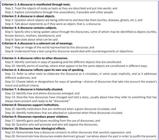
Even though there is no standardized model or manual for Foucauldian discourse analysis, Parker (2014) proposes ten basic criteria to be considered in the identification and analysis of discourses, which do not necessarily need to be followed in a specific order. The author presents these criteria based on a definition of discourse as a system of statements that constitutes an object. Additionally, as Epstein (2002) explains, even when the category “woman” is employed in research, it cannot be assumed that a lesbian woman will share the same experiences or even similar gender-related interests as a heterosexual woman. The same applies to race: White and Black women have distinct lived experiences, and these categories should not be generalized. Nogueira (2001) complements this perspective by stating that each discourse offers an object a different nature from that which another discourse would provide; that is, each discourse claims for itself the status of being considered “truth.”
The criteria and their guiding steps, according to Parker (2014, pp. 1-14, author’s translation), are presented in Chart 1 below.
RESULTS
In this section, I present two major categories that helped in understanding the purpose of this paper. The first considers intersectionality as fundamental for the comprehension of gender inequalities and invisibilities faced by Black Brazilian women entrepreneurs in male-dominated ventures. The second category relates to the use of the term queer as a verb, action, queering entrepreneurship. Assuming that discourse contains a series of elements that operate in the interior of the general power mechanism (Foucault, 1996) and that dicoursively subjects are viewed as in constant construcion, we showed how race and class intersect with gender e and how they influence the positions of women entrepreneurs in the discourses that circulate about entrepreneurship.
“The entrepreneurial women I am”: gender intersecting race, class and sexuality
The vast majority of women entrepreneurs interviewed work in different sectors. They don’t know each other, but they connect based on their experiences and their statements about how they are seen within entrepreneurship. The entrepreneurial man continues to be the successful professional, self-made man, and the entrepreneurial woman is the professional who undertakes to survive, even if her venture is successful. As Butler (2004) states, since to become subjects of gender, individuals need to fit into gender identity categories; In this case, what it means to be a man or a woman, the discourses about men and women entrepreneurs existing in the participants’ reports tend to reinforce the heteronormative logic of gender and the power relations existing in entrepreneurship (Foucault, 1996).
The results show that the enterprising man remains the successful professional, self-made man, and the enterprising woman is seen as the professional with few skills, who undertake to survive, even if her enterprise is successful. However, in the Brazilian context, intersectional aspects constitute fundamental social markers for understanding gender inequalities and invisibilities faced by Black women entrepreneurs. The man identified as a successful entrepreneur is white, while the white woman is still seen as the Other (Bruni et al., 2004). While the enterprising Black man is also positioned as the Other, enterprising Black women inhabit what Kilomba (2020) states as an empty space or third space. It is a space that overlaps the margins of race and gender, constituting separate narratives among black people and women. This separation, according to Kilomba (2020), contributes to the invisibility of black women, who are now considered not as the Other, but in an “Othering” process, since they are considered the antithesis of both whiteness and masculinity. As Ana Maria states:
I think the male entrepreneur is seen as someone with strength, power, he is going to make it. And women tend to be despised. I think the gender issue influences a lot, because men are still seen as successful entrepreneur. But the white men, because if he is black, there are other difficulties. The white male entrepreneur is seen as the “creator”. And there are a lot of people doing the same thing in the periphery for years and that is not seen the same way (Ana Maria, Discourse 22).
Akotirene (2018) considers that intersectionality allows feminists to understand the fluidity of identities seen as subaltern and consequently imposed on prejudice, gender, class and race subordination to oppression. This place of subalternity is also reflected in entrepreneurship, in which the social construction does not allow Black women to work in certain segments, such as, for example, in the market of wines and fine beverages, finance or in technology and innovation, still seen as male-dominated markets. Cidinha’s statement reinforces what Carneiro (2003) points out about how race constitutes the main articulating axis and its impacts on how gender relations determine their own hierarchy in society.
Whoever sells wine, whoever talks about wine, is white, male, bourgeois. We have this issue of Europe, so how can a person from the countryside, black, gay, come from the periphery and understand about wine? Where is the relation? Our social gaze is very much linked to this, to work in order to understand. I am a black woman, I came from the periphery, I am gay and I work selling wine. Many times within my business circle people already look at me and they understand everything, except that I work with wine. Because by physical conception, I don’t have the attributes that legitimize me as a person who sells wine (Cidinha, Discourse 33).
Cidinha’s example also shows the need for her to be constantly “read” in her relationship circles. Because she is a woman, society has difficulty seeing her as an entrepreneur in the wine and fine beverage sector. Social construction also has difficulty seeing her as an entrepreneur who does not undertake based on the logic of survival. Thus, in the entrepreneurial context, more than being the Other, black women suffer double exclusion (Kilomba, 2019). As Kilomba (2019) argues, gender exclusion occurs because while white women are positioned as the Other, black women are made invisible in academic and market discussions. And the exclusion of race occurs because the white man is the Other, the black woman is again made invisible, since the racial Other is the black man (Ozkazanc-Pan, 2014).
As Butler (1990) explains, the constant repetition of norms produces an effect of uniformity, defining what counts as masculinity and femininity. In order to become an intelligible subject within the entrepreneurial context, women entrepreneurs operating in male-dominated spaces tend to have their femininity and sexual orientation questioned. This process contributes to the construction of stereotypes and once again reinforces the association that women entrepreneurs must possess masculine or masculinity-associated traits in order to be considered legitimate in their ventures. Geni experiences this process of identity reproduction on a constant basis, as her sexuality is repeatedly challenged due to her work in the field of finance:
Money has, culturally, a more religious, Catholic doctrine associated with it, as something impure, as something dirty; having ambition is considered a sin. Dealing with money, talking about money, is not seen as something for women-women are not perceived as knowing how to manage it. These are limiting beliefs of a sexist society that have been passed down through generations. And when you see a woman talking not only about money, but about the economic situation of our country, about issues related to the economy-especially in peripheral areas-it is still frightening. You are still seen as greedy, as someone who likes money, who has too much ambition, as if you were a cold person, you know, very different from everyone else. Because, well, I am of the female gender, and my sexual orientation is that of a cisgender heterosexual woman, but there is also this assumption that when someone of the female gender talks about subjects that are considered masculine, she must be homosexual. And then there is this additional barrier of people always looking at you and questioning whether you are homosexual or not simply because you like these topics, you know (Geni, Discourse 64).
Although it is essential to understand the identity of the entrepreneurial woman based on the intersectionalities of race and class in the Brazilian context, the heteronormativity of gender and race are still reproduced in the discourses about entrepreneurship. However, it was possible to identify the efforts to break the heteronormative logic of gender and race, by the resignifications of the Black women entrepreneur in male-dominated ventures. These efforts are presented below, using the concept of queering entrepreneurship.
Queering entrepreneurship: the identity (re)construction of Black Brazilian women entrepreneurs considering their ventures
Considering the visibilities and alternative possibilities of the existence of Black Brazilian women entrepreneurs in male-dominated ventures, we leant on Rumens (2017) studies of queering economies and on McWhorter (2012) perspectives on queering business, in which the author states that more than making a normalizing identity queer, it is necessary to make neoliberal subjectivity queer, that is, the societies understanding of entrepreneurship. Those possibilities emerged in three different aspects: 1) the resignification of the language; 2) the desires and pleasures not based on the market and in market value and 3) the self-comprehension of the approach of their actions in the day-to-day of entrepreneurship and their relation with others.
Mel is an entrepreneur in the music business and has been a DJ for over ten years. She makes a point of reinforcing that she works in entrepreneurship, because according to herself, “people still have difficulty knowing what I do”. This constant strangeness occurs because Mel does not use traditional expressions to refer to herself as an entrepreneur, such as saying that she has her own business, talking about her investments or considering her type of activity as a product or service that needs to make a profit. Among the difficulties he faces is the strangeness on the part of business experts about the type of activity he carries out in entrepreneurship:
And then when you try to explain your business to an expert he will put you in a box. So I think the difference between my business to others in entrepreneurship is about communication. We can undertake, talk about business, do business, sell, but not necessarily use this technical term all the time. I don’t need to spend all this time verbalizing that I have a competitor, you know? Because we have competitors, but being an entrepreneur is to spend a large amount of time finding ways to sell, ways to be better, ways to make a profit, ways to keep our company and there you go, go, go and don’t breathe (Mel, Discourse 52).
When Mel says she doesn’t see the need to talk about business all the time, she stops describing herself as an investment and starts to see herself in an alternative way in the entrepreneurial context. This new identity construction, through the resignification of language, causes estrangement to those who understand entrepreneurship from the context of competitiveness, since it does not identify the use of “common” terms and expressions for entrepreneurship as an economic activity. However, even in Mel’s statements, it is possible to identify the heteronormative logic of gender (Butler, 2004), since the specialist, the professional reference in entrepreneurship, remains a man.
The desires and pleasures not based on the market and in the market value, a second approach towards queering entrepreneurship, is presented by Sonia when talking about her business as a barbershop owner:
I have a group of women entrepreneurs on WhatsApp and I see that the training, the exchanges that we have, all of this kind of bits of help and contributes to redefining entrepreneurship for the woman who is in this network. I see a lot of customers who complain that where they got their hair cut they were boring conversations, there are always, in men’s barbershops, there are always these little conversations. They didn’t feel comfortable. So I thought about bringing this comfortable environment to other women too, getting a haircut with another woman, who will understand and who will treat you with respect (Sonia, Discourse 39).
For McWhorter (2012), in order to resist disciplinary technologies, it is necessary to challenge the neoliberal reduction that positions individuals as “entrepreneurs of themselves”. The third aspect of the reconstruction of female identity in entrepreneurship towards queering business is the self-comprehension of the approach of their own actions in the day to day of entrepreneurship and their relation with others. Geni’s report contributes to explain with her daily activities, how she manages to give new meaning to entrepreneurial relationships in everyday life, through the way she sees herself in the entrepreneurial context.
People think that to talk about money you need to be born with a golden cradle. Quite the opposite. If we were born without any crib, sleeping in the bed with Dad and Mom, that’s where we need to talk, read, learn to deal with money. Because we will only transform our lives from the moment we understand that it is indeed a political act, it is also an act of development, it is a self-responsibility to deal with it and increasingly pursue your dreams through it (Geni, Discourse 72).
The discourses on entrepreneurship present in Geni’s interview present a possibility of rebuilding the entrepreneurial identity through the re-signification of race and class. As Miskolci (2009) emphasizes, since queer theory starts from a distrust of stable subjects and focuses on social strategies that normalize behavior, Geni states that being a black peripheric woman in the financial market is an advantage.
DISCUSSION
This study aims to understand how inequalities rendered invisible in entrepreneurship are constituted through an intersectional lens, by analyzing the possibilities of existence of Black Brazilian women in male-dominated ventures. Drawing on Foucauldian discourse analysis, our findings reveal that entrepreneurial identity is not a stable or linear achievement, but a continuous process of negotiation between normalization, resistance, and re-signification.The results reinforce that entrepreneurship remains governed by deeply normalized discourses that privilege the figure of the white, masculine, autonomous, and economically rational “self-made man” (Bruni et al., 2004; Vallas & Schor, 2020). In this sense, entrepreneurship operates as an inequality regime (Acker, 2006), reproducing gendered, racialized, and classed hierarchies that define who is recognized as a legitimate entrepreneurial subject.
For Black Brazilian women, entrepreneurship is discursively constructed less as a space of opportunity and more as a strategy of survival, reinforcing what Vale (2014) describes as necessity-driven entrepreneurship. This normalizing discourse obscures structural constraints and relocates responsibility onto individual bodies, masking racism and sexism under ideals of meritocracy (McWhorter, 2012; Pulido, 2017). The findings therefore advance a critical reading of entrepreneurial discourse by showing how “choice” and “autonomy” are unevenly distributed, particularly in the Global South context.
Building on identity-based approaches to entrepreneurship (Conde et al., 2023; Imas et al., 2012), this study shows that entrepreneurial identity among Black Brazilian women is not merely performed but continuously contested. Unlike dominant models that assume coherence and authenticity as attainable end states, the results align with Butler (1990, 2004) notion of identity as performative, unstable, and regulated through norms. Similar to Hennekam and Ladge (2023) dynamic interplay between authenticity and acceptance, our findings demonstrate that Black women entrepreneurs navigate a constant tension between visibility and intelligibility. However, this negotiation is intensified by race and class, producing what Kilomba (2020) conceptualizes as a third space of Othering-where Black women are rendered simultaneously hypervisible and invisible. This advances entrepreneurial identity theory by foregrounding intersectionality as constitutive, rather than additive, to identity work.
Drawing on queer theory (Butler, 1990; Cohen, 2020; Miskolci, 2009) and the notion of queering business proposed by McWhorter (2012), the findings reveal that Black Brazilian women resist normalization through three interconnected practices: resignifying entrepreneurial language, decentering market-based values, and reconfiguring relational practices. These practices do not simply queer gender or sexuality; they queer neoliberal entrepreneurial subjectivity itself. By refusing competitiveness, profit maximization, and individualism as the sole markers of success, participants destabilize dominant entrepreneurial logics (Rumens, 2017). In doing so, they expand the boundaries of what counts as entrepreneurship, echoing calls to rethink entrepreneurship beyond economistic and Global North-centric frameworks (Mole & Ram, 2017; Woods et al., 2022).
The findings support intersectionality as a necessary analytical framework for understanding gender inequalities in entrepreneurship (Akotirene, 2018; Crenshaw, 1989, 2002). Consistent with de Almeida et al. (2021) and Romero and Valdez (2016), the study shows that Black women entrepreneurs face compounded barriers that position them not merely as “others,” but as structurally unintelligible subjects within entrepreneurial discourse. This reinforces Carneiro (2003) argument that racism operates as a central organizing axis in Brazilian gender relations, redefining hierarchies within entrepreneurship itself. Finally, this study contributes to debates on identities from the Global South by challenging epistemic assumptions embedded in mainstream entrepreneurship research. By centering Black Brazilian women’s narratives, the findings expose how entrepreneurial knowledge remains colonized and rooted in Eurocentric norms (Cardoso, 2014; Ozkazanc-Pan, 2014). The study aligns with calls to pluralize organizational knowledge (Pullen & Lewis, 2019) and demonstrates that entrepreneurial identities in the Global South are shaped by historical inequalities, colonial legacies, and localized forms of resistance. These identities cannot be fully understood through frameworks developed in and for the Global North.
Theoretical Implications
This study makes three theoretical contributions to the literature on entrepreneurship, gender, and identities in organizations. First, it advances research on gender inequalities in entrepreneurship by deepening the understanding of inequality regimes through an explicitly intersectional perspective grounded in the Global South. By treating gender, race, and class as mutually constitutive rather than analytically separable categories, the study responds to longstanding calls for organizational research to move beyond reductionist and universalizing approaches to inequality (Acker, 2006; Amis et al., 2018; Suddaby et al., 2018). Centering the experiences of Black Brazilian women entrepreneurs displaces the dominant epistemic focus on the white, male, Global North entrepreneurial subject and reveals how entrepreneurial inequalities are discursively constructed and sustained within contexts marked by structural racism and sexism (Akotirene, 2018). In doing so, the study extends intersectional entrepreneurship research by offering a situated and empirically grounded account of inequalities that are routinely rendered invisible in mainstream scholarship (Romero & Valdez, 2016; Vale, 2014).
Second, the article contributes theoretically by incorporating queer theory into entrepreneurship studies not simply as an additional interpretive framework, but as a critical intervention that unsettles normative assumptions about entrepreneurial legitimacy. Through the concept of queering entrepreneurship, the study builds on and extends critiques of traditional feminist approaches that often struggle to account for non-normative identities and intersecting forms of marginalization (Butler, 2004; Parker, 2016; Rumens et al., 2018; Souza, 2017). By foregrounding entrepreneurship as a discursive arena structured by power relations, the findings highlight how identities are continuously regulated, ranked, and contested, thereby enriching theoretical understandings of gender, identity, and subjectivity within organizational and entrepreneurial contexts (Cohen, 2020).
Third, this research contributes to theory by conceptualizing the (re)construction of Black women entrepreneurs’ identities as a dynamic, relational, and non-linear process, shaped by everyday practices of resistance to hegemonic neoliberal entrepreneurial discourses (Vallas & Schor, 2020). The findings demonstrate how participants actively re-signify entrepreneurial language, economic rationalities, and social relations within their ventures, challenging dominant representations of the “entrepreneur of the self” and the primacy of market-based value (McWhorter, 2012; Rumens, 2017). By doing so, the study broadens prevailing notions of entrepreneurial existence, foregrounding alternative forms of agency, belonging, and meaning-making that remain largely marginalized in dominant entrepreneurship research (Conde et al., 2023).
Practical Implications
From a practical standpoint, the findings suggest that entrepreneurship policies and support programs must move beyond gender-neutral or single-axis approaches. Initiatives aimed at women entrepreneurs should explicitly address race and class inequalities and recognize alternative entrepreneurial logics that prioritize community, care, and relational value. Educational institutions and entrepreneurial ecosystems should also question the normative discourses they reproduce, incorporating critical pedagogies that value plural forms of entrepreneurship (Woods et al., 2022). Supporting Black women entrepreneurs requires not only access to resources but also the legitimation of diverse ways of being, working, and succeeding.
Limitations and Suggestions for Future Research
Despite the contributions, this study has limitations. Firstly, only 14 women were interviewed, and, despite considering that theoretical saturation was reached (Fontanella & Magdaleno, 2012), studies using grounded methodology with a larger number of participants are suggested as future studies. Secondly, the results allowed for a deeper dive into the intersectionalities of gender, race and class. It is suggested to analyze other intersections existing in identity and belonging discourses in the global south, such as trans women, older women, indigenous women, and women with disabilities. Also, the interviews were carried out in the context of the COVID-19 pandemic. New research can carry out more in-depth studies using ethnographic methods with women entrepreneurs and their ventures.
CONCLUSION
This study demonstrates that entrepreneurship is not a neutral or inclusive space, but a discursive field structured by gendered, racialized, and classed norms. By examining the experiences of Black Brazilian women entrepreneurs, the research reveals how inequalities are produced, sustained, and contested through discourse. By integrating intersectionality and queer theory, the study expands understandings of entrepreneurial identity and offers alternative possibilities of existence that challenge normalized assumptions. Ultimately, recognizing and valuing these alternative entrepreneurial subjectivities helps building more inclusive, plural, and socially just entrepreneurial futures.
ACKNOWLEDGEMENTS
As the author of the article, I would like to express my sincere appreciation to the reviewers for their thoughtful and constructive feedback, as well as the editors. Their insightful comments and suggestions were instrumental in refining this manuscript and significantly enhancing its clarity, rigor, and overall contribution. I am grateful for their careful reading and for helping me improve the quality and relevance of this work, making it more compelling and suitable for publication.
REFERÊNCIAS
-
Acker, J. (2006). Inequality regimes: Gender, class, and race in organizations. Gender & Society, 20(4), 441-464. https://doi.org/ 10.1177/0891243206289499
» https://doi.org/10.1177/0891243206289499 - Akotirene, C. (2018). Interseccionalidade Pólen Livros.
-
Alexander, B. (2003). Querying queer theory again (or queer theory as drag performance). Journal of Homosexuality, 45(2-4), 349-352. https://doi.org/10.1300/j082v45n02_19
» https://doi.org/10.1300/j082v45n02_19 -
Amis, J. M., Mair, J., & Munir, K. A. (2020). The organizational reproduction of inequality. Academy of Management Annals, 14(1), 195-230. https://doi.org/10.5465/annals.2017.0033
» https://doi.org/10.5465/annals.2017.0033 -
Amis, J. M., Munir, K. A., Lawrence, T. B., Hirsch, P., & McGahan, A. (2018). Inequality, institutions and organizations. Organization Studies, 39(9), 1131-1152. https://doi.org/10.1177/0170840618792596
» https://doi.org/10.1177/0170840618792596 -
Bapuji, H., Ertug, G., & Shaw, J. D. (2020). Organizations and societal economic inequality: A review and way forward. Academy of Management Annals, 14(1), 60-91. https://doi.org/10.5465/annals. 2018.0029
» https://doi.org/10.5465/annals. 2018.0029 -
Bell, E., & Willmott, H. (2020). Ethics, politics and embodied imagination in crafting scientific knowledge. Human Relations, 73(10), 1366-1387. https://doi.org/10.1177/0018726719876687
» https://doi.org/10.1177/0018726719876687 -
Bento, B. (2011). Na escola se aprende que a diferença faz a diferença. Revista Estudos Feministas, 19(2), 549-559. https://doi.org/10.1590/S0104-026X2011000200016
» https://doi.org/10.1590/S0104-026X2011000200016 -
Bertolami, M., Artes, R., Gonçalves, P. J., Hashimoto, M., & Lazzarini, S. G. (2018). Sobrevivência de Empresas Nascentes: Influência do Capital Humano, Social, Práticas Gerenciais e Gênero. Revista de Administração Contemporânea, 22(3), 311-335. https://doi.org/10.1590/1982-7849rac2018160121
» https://doi.org/10.1590/1982-7849rac2018160121 -
Björk, P., Saarela, M., Kotavaara, O., & Muhos, M. (2022). Global Entrepreneurship Monitor 2021-2022 Finnish report GEM. https://www.gemconsortium.org/report/global-entrepreneurship -monitor-20212022-finnish-report
» https://www.gemconsortium.org/report/global-entrepreneurship -monitor-20212022-finnish-report -
Brandão, A. M., Marques, A. P., & Lamela, R. (2019). Gênero, empreendedorismo e autonomização profissional. Gestão e Sociedade, 13(35), 2963-2991. https://ges.face.ufmg.br/index.php/gestaoesociedade/article/view/2529
» https://ges.face.ufmg.br/index.php/gestaoesociedade/article/view/2529 -
Brown, A. (2021). The mark of the researcher’s hand: the imperfections of craft in the process of becoming a qualitative researcher. Management Learning, 52(5), 541-558. https://doi.org/10.1177/1350507620972235
» https://doi.org/10.1177/1350507620972235 -
Bruni, A., Gherardi, S., & Poggio, B. (2004). Entrepreneur-mentality, gender and the study of women entrepreneurs. Journal of Organizational Change Management, 17(3), 256-268. https://doi.org/10.1108/09534810410538315
» https://doi.org/10.1108/09534810410538315 - Butler, J. (1990). Gender trouble, feminist theory, and psychoanalytic discourse. In L. Nicholson (Ed.), Feminism/postmodernism (pp. 324-340). Routledge.
- Butler, J. (2004). Undoing gender Psychology Press.
-
Calás, M. B., & Smircich, L. (2006). 1.8 From the ‘woman’s point of view’ ten years later: Towards a feminist organization studies. In S. R. Clegg, C. Hardy, T. B. Lawrence, W. R. Nord, M. B. Calas, & L. Smircich (Eds.), The Sage Handbook of Organization Studies (p. 284). Sage. https://doi.org/10.4135/9781848608030.n9
» https://doi.org/10.4135/9781848608030.n9 -
Cardoso, C. P. (2014). “Amefricanizing” the Feminism: the thought of Lélia Gonzalez. Revista Estudos Feministas, 22(3), 965-986. https://doi.org/10.1590/S0104-026X2014000300015
» https://doi.org/10.1590/S0104-026X2014000300015 - Carneiro, S. (2003). Enegrecer o feminismo: A situação da mulher negra na América Latina a partir de uma perspectiva de gênero. In Ashoka Empreendedores Sociais (Org.), Racismos contemporâneos (pp. 49-58). Takano.
-
Carneiro, G. M., & Gomes, I. M. (2018). A corporeidade “das pretas”: identidade e consumo nas estratégias políticas de empoderamento em um coletivo de mulheres negras na cidade de Vitória. Movimento, 24(4), 1063-1076. https://doi.org/10.22456/1982-8918.75059
» https://doi.org/10.22456/1982-8918.75059 - Cheek, J. (2008). The practice and politics of funded qualitative research. In. Denzin, N. K., Lincoln, Y. S. (Eds.). Strategies of Qualitative Inquiry (pp. 45-74). Sage Publications.
- Cohen, C. J. (2020). Punks, bulldaggers, and welfare queens: The radical potential of queer politics?. In C. McCann, E. Ergun, & S. Kim (Eds.). Feminist Theory Reader (pp. 311-323). Routledge.
-
Conde, E. P., Felix, B., & Moreira, N. C. (2023). Ties that knot: how app-workers co-construct their identities at precarious work contexts. Revista de Administração Contemporânea, 27, e220083. https://doi.org/10.1590/1982-7849rac2023220083.en
» https://doi.org/10.1590/1982-7849rac2023220083.en -
Crenshaw, K. (1989). Demarginalizing the intersection of race and sex: A black feminist critique of antidiscrimination doctrine, feminist theory and antiracist politics. University of Chicago Legal Forum, 1989(1), 139-167. https://chicagounbound.uchicago.edu/uclf/vol1989/iss1/8
» https://chicagounbound.uchicago.edu/uclf/vol1989/iss1/8 -
Crenshaw, K. (2002). Background paper for the expert meeting on the gender-related aspects of race discrimination. Revista Estudos Feministas, 10(1), 171-188. https://doi.org/10.1590/S0104-026X2002000100011
» https://doi.org/10.1590/S0104-026X2002000100011 - Davis, A. (2016). Women, race and class Boitempo Editorial.
-
de Almeida, E. L., Dias, P. K., & dos Santos, E. C. (2021). Desafios de empreendedoras na economia criativa periférica. Revista Pensamento Contemporâneo em Administração, 15(1), 122-146. https://doi.org/10.12712/rpca.v15i1.47233
» https://doi.org/10.12712/rpca.v15i1.47233 -
Epstein, S. (2002). A Queer Encounter: Sociology and the Study of Sexuality. Sociological Theory, 12(2), 188-202. https://doi.org/10. 2307/201864
» https://doi.org/10. 2307/201864 -
Fontanella, B. J. B., & Magdaleno, R., Jr. (2012). Saturação teórica em pesquisas qualitativas: contribuições psicanalíticas. Psicologia em estudo, 17, 63-71. https://www.scielo.br/j/pe/a/JXwNwW649DsNBpFb5kZqGyH/abstract/?lang=pt#
» https://www.scielo.br/j/pe/a/JXwNwW649DsNBpFb5kZqGyH/abstract/?lang=pt# - Foucault, M. (1996). A ordem do discurso: aula inaugural no Collège de France, pronunciada em 2 de dezembro de 1970 Loyola.
-
Global Entrepreneurship Monitor (GEM). (2024). Retrieved, 12. https://www.gemconsortium.org/report
» https://www.gemconsortium.org/report - Gonzalez, L. (1984). Racismo e sexismo na cultura brasileira. Revista Ciências Sociais Hoje-Anuário de Antropologia, Política e Sociologia, 2(1), 223-244. https://bibliotecadigital.mdh.gov.br/jspui/handle/192/10316
- Grossi, M. P. (2004). Masculinidades: Uma revisão teórica Antropologia em Primeira Mão (UFSC), (75), 1-37. http://repositorio.ufsc.br/xmlui/handle/123456789/1265
-
Hennekam, S., & Ladge, J. J. (2023). Free to be me? Evolving gender expression and the dynamic interplay between authenticity and the desire to be accepted at work. Academy of Management Journal, 66(5), 1529-1553. https://doi.org/10.5465/amj.2020.1308
» https://doi.org/10.5465/amj.2020.1308 -
Imas, J. M., Wilson, N., & Weston, A. (2012). Barefoot entrepreneurs. Organization, 19(5), 563-585. https://doi.org/10.1177/ 135050 8412459996
» https://doi.org/10.1177/ 135050 8412459996 - Kilomba, G. (2020). Memórias da plantação: episódios de racismo cotidiano Cobogó.
-
Knight, M. (2016). Race-ing, classing and gendering racialized women’s participation in entrepreneurship. Gender, Work & Organization, 23(3), 310-327. https://doi.org/10.1111/gwao.12060
» https://doi.org/10.1111/gwao.12060 - Lorde, A. (1984). Age, race, class, and sex: Women redefining difference Routledge.
-
Marlow, S., & Dy, A. M. (2018). Annual review article: Is it time to rethink the gender agenda in entrepreneurship research? International Small Business Journal,36(1), 3-22. https://doi.org/10.1177 /0266242 617738321
» https://doi.org/10.1177 /0266242 617738321 -
McWhorter, L. (2012). Queer economies. Foucault Studies, (14), 61-78. https://doi.org/10.22439/fs.v0i14.3891
» https://doi.org/10.22439/fs.v0i14.3891 - Mole, K., & Ram, M. (2017). Perspectives in entrepreneurship: A critical approach Bloomsbury Publishing.
- Miskolci, R. (2009). A Teoria Queer e a Sociologia: o desafio de uma analítica da normalização. Sociologias, (21), 150-182. https://seer.ufrgs.br/index.php/sociologias/article/view/8863
- Nogueira, C. (2001). A análise do discurso. Métodos e técnicas de avaliação: novos contributos para a prática e investigação, 15-48. https://hdl.handle.net/1822/4355
-
Oliveira, A. B. D., Jr., Gattaz, C. C., Bernardes, R. C., & Iizuka, E. S. (2018). Pesquisa em empreendedorismo (2000-2014) nas seis principais revistas brasileiras de administração: lacunas e direcionamentos.Cadernos EBAPE. BR,16(4), 610-630. http://dx.doi.org/10.1590/1679-395167644
» https://doi.org/10.1590/1679-395167644 -
Ozkazanc-Pan, B. (2014). Postcolonial feminist analysis of high-technology entrepreneuring. International Journal of Entrepreneurial Behavior & Research, 20(2), 155-172. https://doi.org/10.1108/IJEBR-12-2011-0195
» https://doi.org/10.1108/IJEBR-12-2011-0195 - Parker, I. (2014).Discourse dynamics (psychology revivals): Critical analysis for social and individual psychology Routledge.
- Parker, M. (2001). Fucking management: queer, theory and reflexivity. Ephemera, 1(1), 36-53. https://ephemerajournal.org/sites/default/files/1-1parker.pdf
-
Parker, M. (2016). Queering queer. Gender, Work & Organization, 23(1), 71-73. https://doi.org/10.1111/gwao.12106
» https://doi.org/10.1111/gwao.12106 -
Pulido, L. (2017). Geographies of race and ethnicity II: Environmental racism, racial capitalism and state-sanctioned violence. Progress in Human Geography, 41(4), 524-533. https://doi.org/10.1177/0309132516646495
» https://doi.org/10.1177/0309132516646495 -
Pullen, A., & Lewis, P. (2019). A critical moment: 25 years of Gender, Work and Organization. Gender, Work & Organization, 26(1), 1-8. https://doi.org/10.1111/gwao.12335
» https://doi.org/10.1111/gwao.12335 -
Romero, M., & Valdez, Z. (2016). Introduction to the special issue: Intersectionality and entrepreneurship. Ethnic and Racial Studies, 39(9), 1553-1565. https://doi.org/10.1080/01419870.2016.1171374
» https://doi.org/10.1080/01419870.2016.1171374 - Rumens, N. (2017). Queer business: Queering organization sexualities Routledge.
-
Rumens, N., Souza, E. M., & Brewis, J. (2018). Queering queer theory in management and organization studies: Notes toward queering heterosexuality. Organization Studies, 40(4), 593-612. https://doi.org/10.1177/0170840617748904
» https://doi.org/10.1177/0170840617748904 -
Santos, S. C., & Neumeyer, X. (2021). Gender, poverty and entrepreneurship: a systematic literature review and future research agenda. Journal of Developmental Entrepreneurship,26(03), 2150018. https://doi.org/10.1142/S1084946721500187
» https://doi.org/10.1142/S1084946721500187 -
Souza, E. M. D. (2017). A teoria queer e os estudos organizacionais: revisando conceitos sobre identidade. Revista de Administração Contemporânea, 21(3), 308-326. http://dx.doi.org/10.1590/ 1982-7849rac2017150185
» https://doi.org/10.1590/ 1982-7849rac2017150185 -
Suddaby, R., Bruton, G., & Walsh, J. (2018). What we talk about when we talk about inequality: An Introduction to the Journal of Management Studies Special Issue. Journal of Management Studies, 55(3), 381-393. https://doi.org/10.1111/joms.12333
» https://doi.org/10.1111/joms.12333 -
Vale, G. M. V. (2014). Entrepreneurship, marginality and social stratification. Revista de Administração de Empresas, 54(3), 310-321. https://periodicos.fgv.br/rae/article/view/23313
» https://periodicos.fgv.br/rae/article/view/23313 -
Vallas, S., & Schor, J. B. (2020). What do platforms do? Understanding the gig economy. Annual review of sociology, 46, 273-294. https://doi.org/10.1146/annurev-soc-121919-054857
» https://doi.org/10.1146/annurev-soc-121919-054857 - Vilela, N. G. S., Hanashiro, D. M. M., & Costa, L. D. S. (2020). (Des) igualdade de gênero no local de trabalho e práticas de recursos humanos. Revista Alcance, 27(3), 382-398. https://periodicos.univali.br/index.php/ra/article/view/14959
-
Wenham, C., Smith, J., & Morgan, R. (2020). COVID-19: the gendered impacts of the outbreak. The lancet, 395(10227), 846-848. https://doi.org/10.1016/S0140-6736(20)30526-2
» https://doi.org/10.1016/S0140-6736(20)30526-2 -
Woods, C., Dell, K., & Carroll, B. (2022). Decolonizing the business school: Reconstructing the entrepreneurship classroom through indigenizing pedagogy and learning. Academy of Management Learning & Education, 21(1), 82-100. https://doi.org/10.5465/amle.2020.0366
» https://doi.org/10.5465/amle.2020.0366 -
Zulfiqar, G., & Prasad, A. (2021). Challenging social inequality in the Global South: Class, privilege, and consciousness-raising through critical management education. Academy of Management Learning & Education, 20(2), 156-181. https://doi.org/10.5465/amle.2019.0294
» https://doi.org/10.5465/amle.2019.0294
-
RESEARCH DATA AVAILABILITY
The entire dataset supporting the results of this study is available upon request to the corresponding author, Amanda Zambelli Ferretti. The dataset is not publicly available due to information that may compromises the privacy of research participants.
-
ARTIFICIAL INTELLIGENCE USAGE
The artificial intelligence tool ChatGPT was used to assist in the comparative review and the insertion of references following the revision and adjustment stages requested by the reviewers.
-
EDITOR-IN-CHIEF
Hélio Arthur Reis Irigaray, Fundação Getulio Vargas, Rio de Janeiro, RJ, Brazil. ORCID: https://orcid.org/0000-0001-9580-7859
-
REVIEWERS
Aline Mendonça Fraga, Universidade Federal do Paraná, Curitiba, Curitiba, Brazil. ORCID: https://orcid.org/0000-0002-4240-464X
-
REVIEWERS
Elisângela de Jesus Furtado da Silva, Universidade Federal de Juiz de Fora, Juiz de Fora, Minas Gerais, Brazil. ORCID: https://orcid.org/0000-0002-0730-5160
-
PEER REVIEW REPOR
TThe peer review report is available at https://periodicos.fgv.br/rap/article/view/97420
Edited by
The entire dataset supporting the results of this study is available upon request to the corresponding author, Amanda Zambelli Ferretti. The dataset is not publicly available due to information that may compromises the privacy of research participants.

 Source: Elaborated by the author.After outlining the methodological procedures and the analytical dimension and categories identified, the following section presents the results and discussion derived from this process.