
 Development of parent-child bonds in the context of adoption: an integrative review of the Brazilian literature
Abstract
This integrative literature review of Brazilian studies aimed to identify the factors that influence the development of the parent-child bond in the context of adoption by analyzing research published between 2010 and 2019. A total of 16 articles were selected through searches in the SciELO, PePSIC, Lilacs, and DOAJ databases. The studies were analyzed using content analysis, supported by the MaxQDA software. The factors that may influence the bonding process of children and adolescents in adoptive families were organized into four categories: motivations for adoptive parenthood, sibling relationships, support networks, and contextual and personal characteristics of adoptive parents and children. The studies reviewed were predominantly qualitative, with a cross-sectional design, and relied on interviews with a small number of participants, most of whom were adoptive parents. Future research should focus on the daily interactions of individuals and on settings that can serve as sources of support for adoptive families, such as schools.
Keywords
Adoption; Family; Parenting
Resumo
Este estudo de revisão integrativa da literatura brasileira buscou identificar os fatores que influenciam a construção de vínculo parento-filial no contexto da adoção, por meio da análise de pesquisas publicadas entre 2010 e 2019. Foram selecionados 16 artigos a partir de consulta às bases SciELO, PePSIC, Lilacs e DOAJ. Os estudos foram analisados com base na análise de conteúdo, com auxílio do software MaxQDA. Os fatores que podem influenciar a construção de vínculos das crianças e dos adolescentes nas famílias adotivas foram organizados em quatro categorias: motivações para a parentalidade adotiva, relações fraternas, redes de apoio e características contextuais e pessoais dos pais e dos filhos adotivos. Os estudos revisados eram predominantemente qualitativos, com delineamento transversal, e utilizaram entrevistas com um número reduzido de participantes, a maioria adotantes. Sugere-se que novas pesquisas enfoquem as interações diárias dos indivíduos e espaços que podem servir de apoio às famílias adotivas, como a escola.
Palavras-chave
Adoção; Família; Parentalidade
Adoption, recognized as one of the strategies for protecting children’s right to family life, has been the focus of academic research in Brazil for decades (Bussinger et al., 2018; Otuka et al., 2009). These studies have contributed to a broader understanding of adoption in various areas, including motivations for adoption, characteristics of prospective adoptive parents, adoptive families configuration, the adoption of older children, and parent-child bond formation in adoption (Biasutti & Nascimento, 2021; Bicca & Grzybowski, 2014; Fernandes & Santos, 2019; Silva & Benetti, 2015; Otuka et al., 2012, 2013). Based on that, the present study aims to describe research addressing the parent-child bonding process in adoptive families. Such bonding is understood as a gradual process that implies a sense of belonging within a family and is essential for overcoming the changes and ruptures commonly associated with adoption (Fernandes & Santos, 2019; J. C. Silva et al., 2022).
Otuka et al. (2009) conducted an integrative literature review on the development of bonds in adoption, analyzing 13 scientific articles – including empirical studies and theoretical reviews – published between 1998 and 2008 in the Latin American context. Otuka et al. noted that much of the work reviewed focused on clinical investigation. In addition, the motivations for adoption emerged as a central theme, highlighting biological infertility as one of the main reasons for pursuing adoption. The authors also identified underexplored areas that are important for future research, such as sibling relationships in adoptive families, motivations for adoption beyond couples experiencing infertility including those who already had biological children, and strategies that contribute to successful adoptions.
It is also important to mention the literature review conducted by Silva et al. (2018), which aimed to investigate empirical studies published between 2005 and 2015, in both English and Portuguese, that addressed factors involved in the transition to adoptive parenthood. The authors analyzed a total of 19 studies and found that most used qualitative methods for data analysis and had a cross-sectional design. Moreover, they observed that more than half of the articles reviewed (n = 12) were produced by research groups in the United States, especially those led by Professors Karen Foli (Purdue University) and Abbie Goldberg (Clark University). Only two studies were authored by Brazilian researchers. Regarding the transition to adoptive parenthood, the authors argue that it may be influenced by five main factors, which are described below.
A large portion of the studies reviewed by Silva et al. (2018) highlighted issues specific to same-sex parenting – that is, the factor of gender and sexual orientation of adoptive parentes. Silva et al. (2018) also found that the characteristics of adopted children, such as temperament, influence the transition to adoptive parenthood. Another aspect concerns the personal characteristics of adoptive parents. Silva et al. (2018, p. 329) described a study that showed “that insecure attachment styles and maladaptive coping strategies are predictors of greater parental stress during the transition to adoptive parenthood”. Additionally, difficulties faced in dealing with adoption services were also frequently mentioned in the studies. The review conducted by the researchers highlighted a lack of information provided to adoptive parents, prejudice against adoption by same-sex couples, and differences between the public adoption system and private agencies (notably in U.S. studies). Finally, the authors identified the fator incidence of depressive symptoms in mothers, which was closely linked to unmet parental expectations that influence the mother–child bond during the initial adaptation period.
The review conducted by Silva et al. (2018) indicated a tendency in recent studies to focus on topics related to same-sex parenting, rather than addressing issues concerning other family arrangements or adoptive parents’ characteristics – such as singles parenthood or multi-parent families. The studies also showed a predominance of white participants from economically privileged backgrounds with high levels of education. According to the Silva et al. (2018, p. 332), these findings suggest that
the available data on this topic cannot be generalized, as they do not account for broader socio-economic and cultural diversity. Furthermore, the fact that a predominance of studies is from the United States – where the adoption system differs from that of other countries – may bias the data.
Given these considerations, an updated review may contribute to expanding knowledge on this topic within the Brazilian context, assessing progress on the themes suggested by previous reviews, and identifying directions for future research. Moreover, synthesizing this knowledge can serve as a guide for professional practices related to adoption. Thus, an integrative review of Brazilian literature was conducted to identify the factors that influence the development of parent-child bonds in the context of adoption.
Method
An integrative literature review “is a method that allows for the synthesis of knowledge through a systematic and rigorous process” (Mendes et al., 2019, p. 3). Mendes et al. (2008) propose six stages for conducting an integrative review: (a) identifying the topic and selecting the hypothesis or research question; (b) establishing criteria for inclusion and exclusion of studies/sample or literature search; (c) defining the information to be extracted from the studies (categorization of studies); (d) evaluating the works included in the integrative review; (e) interpreting the results; and (f) presenting the review, which consists of synthesizing the knowledge.
The guiding question for this review was: What factors influence (facilitate or hinder) the development of parent-child bonds in the context of adoption? The aim was to identify the feelings, expectations, challenges experienced, and strategies used by individuals involved in this process. The following inclusion criteria were used for the article search: studies conducted in Brazil that described the experiences and perspectives of those involved in the process of building bonds between family members (e.g., parents and children, siblings); publication date between 2010 and 2019; and articles that were indexed and available in full. The exclusion criteria included: theses, dissertations, books, book chapters, and reviews; literature reviews, theoretical or clinical essays, and experience reports; and studies that exclusively addressed other adoption-related topics (e.g., motivations for adoptive parenthood, children and adolescents awaiting adoption or couples in the process of adoption, social representations of adoption, psychosocial characteristics of adoptive parents, etc.). Materials that only tangentially addressed the topic of this review were also excluded.
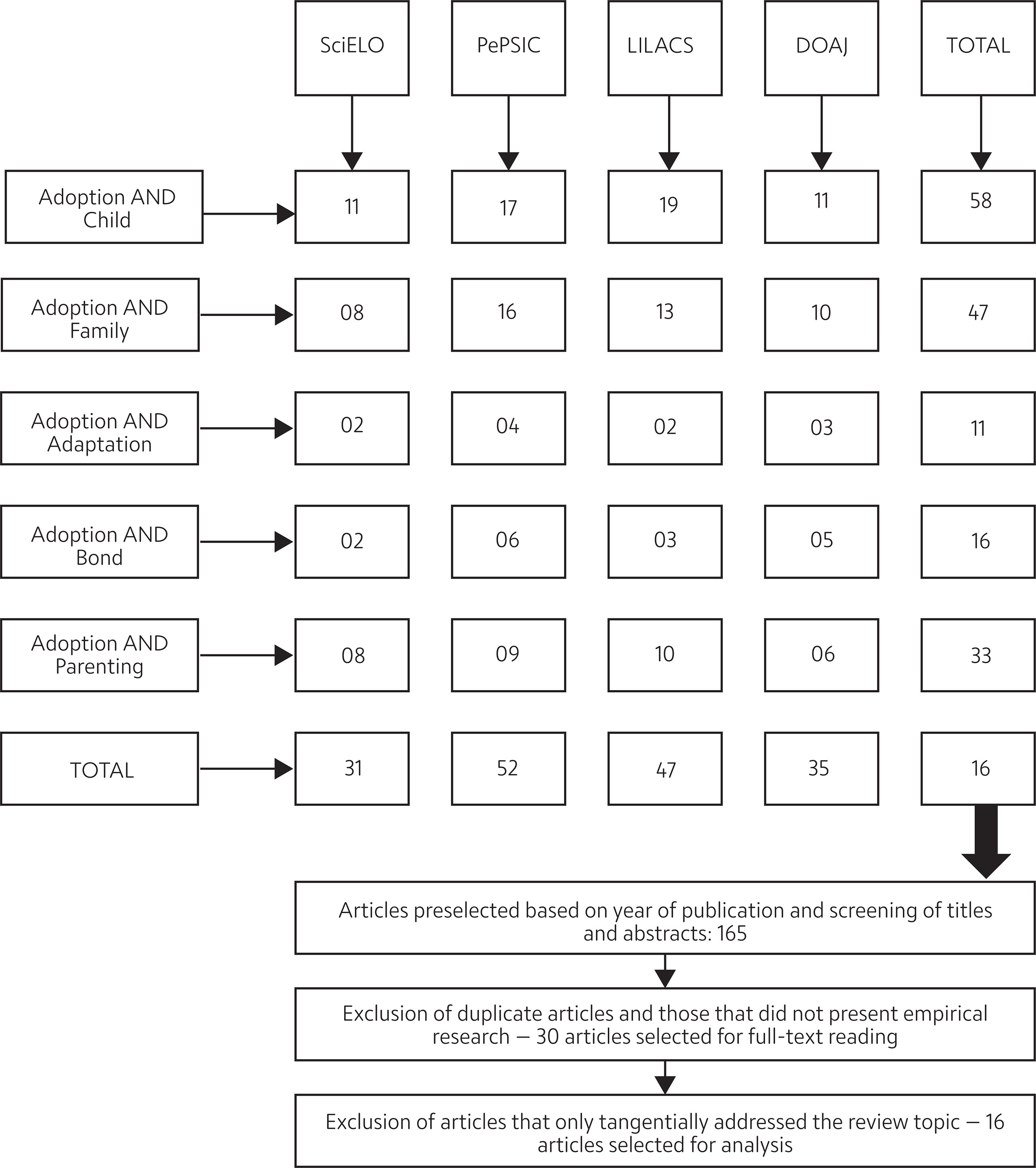
Article selection was carried out through searches in the Scientific Electronic Library Online (SciELO), Periódicos Eletrônicos em Psicologia (PePSIC), Literatura Latino-Americana e do Caribe em Ciências da Saúde (LILACS, Latin American and Caribbean Health Sciences Literature) and Directory of Open Access Journals (DOAJ) databases, conducted between May and June 2020, using the keywords “adoção AND criança”, “adoção AND família”, “adoção AND adaptação”, “adoção AND vínculo”, and “adoção AND parentalidade”, as well as their English equivalents. Articles available in more than one database were counted only once. Article pre-selection was done by reading the titles and abstracts of the works retrieved from the databases, resulting in 165 works. After applying the inclusion and exclusion criteria, 30 articles were selected for full-text reading. After this reading, 14 articles were excluded for addressing the topic only superficially. Thus, 16 articles comprised the final review. The procedure described was carried out based on consensus between two researchers. Figure 1 illustrates the article selection process, showing the number of articles found in each database and for each search term used.
Data analysis was carried out using content analysis (Bardin, 2016), supported by the MaxQDA software (Analytics Pro 2020 version), which facilitated the organization, evaluation, and interpretation of the data. The use of software in analyzing data from studies that employ content analysis enables the processing of a large volume of information, reduces the time required for coding, supports data triangulation, increases methodological rigor, and allows for the handling of complex data (Massa et al., 2021). The analysis followed these steps: reading the articles, exploring the material (identifying recording and context units), and developing thematic categories.
Results and Discussion
Through the analysis, general information about the articles’ objectives and methodologies were identified. Four categories were established to address this review’s goal of identifying factors that may positively or negatively influence the development of parent-child bonds – and consequently, the adaptation of children and adolescents to their adoptive families: motivations for adoptive parenthood, sibling relationships, support networks, and contextual and personal characteristics of adoptive parents and children.
General Information About the Articles
Table 1 summarizes the general information for each analyzed article in terms of objectives and methodology. All selected studies are qualitative, with most employing a case study design, involving a small number of participants and a cross-sectional approach. Only one study used a longitudinal design. Of the 16 studies analyzed, only one did not collect data through interviews, as it was a retrospective documentary study of cases reported in social reports prepared by social workers from a Child and Youth Court. Few studies used complementary strategies for data collection (in addition to interviews), such as techniques involving participant drawings, observations/analysis of field diaries, and analysis of participants’ personal diaries. Most interviews were conducted only with adoptive parents (especially mothers). Four studies involved interviews with adoptive parents and other actors, namely adoptive children, biological children, and professionals from the Forensic Social Service. In addition, one study involved interviews solely with individuals who had adoptive siblings. Regarding the data analysis techniques, 11 studies mentioned content analysis, one used thematic analysis, and another employed the analysis of discursive practices and the production of meaning. In three studies, this information could not be found. In most of the articles, the theoretical framework adopted was not clearly stated.
The cases analyzed in the articles involved different family configurations. Heteroparental families were the most represented, although in four studies this aspect could not be identified. It is worth noting that a single study could involve participants from different family configurations. The same applies to the types of adoption. The studies covered adoptions of older children (n = 15), newborns/infants (n = 5), sibling groups (n = 2), and children with specific health needs or disabilities (n = 2). Most studies addressing older children adoption used the term late adoption to refer to the adoption of children over the age of two (n = 8). Related to that, Bicca and Grzybowski (2014) and Fernandes and Santos (2019) acknowledge that some scholars question the use of the term late adoption. However, these authors maintain its use on the grounds that it is widely adopted in the literature. Peixoto et al. (2019), in turn, argue that this term should be reconsidered, as it may convey the idea of something occurring outside its proper time, thereby reinforcing beliefs and biases about the adoption of older children and adolescents. In line with Peixoto et al. (2019), the present study uses the term adoption of older children to refer to the adoption of children over the age of two or adolescents, even when the authors cited used different terminology.
Motivations for Adoptive Parenthood
The analyzed studies pointed to various motivations for adoption, such as the desire to help others/altruism, the wish to experience motherhood or fatherhood, infertility or difficulties conceiving, previous experience with the adopted child or adolescent, and the pursuit of overcoming grief or traumatic experiences.
Some articles did not address how these motivations influence the development of bonds in adoptive families. Among existing discussions, the motivation of helping others/altruism was particularly notable. For example, the study by Faleiros and Moraes (2014) sought to understand the relationships and conditions that strengthen or weaken the bonding process between adoptive parents and adoptees. These authors interviewed four adoptive families (parents and children): two that maintained the adoption and two that experienced adoption disruption. Regarding the disruption cases, the authors found that the adoption plan stemmed from the desire to help others. Thus, the authors considered this motivation as a strong indicator of adoption disruption (although not the only contributing factor). An important aspect concerns the fact that these disruption cases involved adoptive parents who had not completed the legal qualification process for adoption. Despite the extended periods that the adoptees remained with the adoptive family (5 and 15 years), the lack of adequate preparation for adoption, as required by Brazilian law (Presidência da República, 2009), may also have influenced the development of bonds. Regarding the participants who maintained the adoption, in addition to the desire to help others, the wish to experience parenthood was also identified as a motivation for adoption.
Along the same lines, Teixeira and Rampelotto (2017) emphasize that adoption should not be merely an altruistic act; it must also involve the genuine desire to build a family with the children. These authors sought to identify what led people to adopt children who were part of the population eligible for Special Education and to describe the family adaptation process. According to Teixeira and Rampelotto, the motivation for adoption was affection, love, and the perception of the children’s need to have a home and a family to care for them.
The studies analyzed indicate that for parent-child bonds to form, prospective adoptive parents must recognize that they want a child rather than merely wanting to help others (Otuka et al., 2012). Based on this understanding, Otuka et al. (2012) concluded, among other aspects, that both the way a child is integrated into the family and the underlying motivations for adoption can influence intrafamily relationships. Thus, according to these authors, the desire to help others alone is not a sufficient reason for adoption, as it not enough to ensure the development of a parent-child bond.
Similarly, seeking support to overcome suffering and process grief is not a sufficient reason for adoption. As demonstrated by Santos et al. (2011), in a study with single adoptive mothers and fathers, some individuals may experience adoption as a way to cope with the loss of a loved one; that is, as a means of overcoming suffering. Although this study identified one case where this type of motivation facilitated the acceptance and welcoming of the adopted daughter by the adopter’s relatives, the desire to build a family with the child must also be present. Thus, it is necessary to engage in dialogue with society to shift conceptions regarding adoption processes, which should be based on ethical and legal principles that aimed at the best interests of the child and adolescent (Palacios et al., 2019; Presidência da República, 2009; P. S. Silva et al., 2022).
Prior experience with the child or adolescent also appears to influence the establishment of parent-child bonds in adoption contexts. Mozzi and Nuernberg (2016) and Teixeira and Rampelotto (2017) observed this type of motivation among couples who adopted children with special needs. In the study by Mozzi and Nuernberg (2016), of the 11 families interviewed, four were motivated by “affective godparenting” (a pre-adoptive bonding program in Brazil) – that is, by prior contact and caregiving practices they engaged in with the child before the adoption. Otuka et al. (2013) found similar evidence in an interview with a divorced couple with biological children who adopted an older child. In this case, the adoption was motivated by the parents’ previous contact with the adolescent.
Thus, the findings of the present review are similar to those observed in the study by Giacomozzi et al. (2015). The authors found that individuals who had previous “affective godparenting” experience with the child demonstrated a broader understanding of the profiles of children they intended to adopt. In this regard, it is worth mentioning that adoption applicants in Brazil were classified into different profiles based on the characteristics of the children and adolescents they are willing to adopt (Bussinger et al., 2018). For example, Bussinger et al. (2018) analyzed 898 adoption applications (between 2005 and 2018) in the state of Espírito Santo and identified six profiles of prospective adoptive parents, noting that most seek young, healthy children without physical disabilities. Oliveira et al. (2020) also conducted this type of analysis and found that there is a discrepancy between the profiles of children and/or adolescents on the adoption waiting list and the characteristics desired by prospective adoptive parents. According to these authors, the profile of prospective adoptive parents registered with the Sistema Nacional de Adoção e Acolhimento (SNA, National Adoption and Foster System) “indicates a preference for children aged between 0 and 6 years, female, preferably white or mixed-race, and without siblings” (Oliveira et al., 2020, p. 153). However, a large proportion of the children and/or adolescents have siblings and are male.
This scenario poses a challenge for professionals working in the field and highlights the need for studies that investigate idealized notions of adoption. Services and public policies pertaining to adoption should foster a new culture of adoption through campaigns and dissemination of information, thereby increasing opportunities for children and adolescents who are often stigmatized, such as older children and those with disabilities (Bussinger et al., 2018). Finally, it should be emphasized that there are various reasons people seek to adopt and, according to Sousa and Braga (2021), these motivations can influence the development of parent–child bonds and impact how the relationship with the adopted child may unfold. Therefore, it is necessary to pay close attention to the motivations and specific needs to be addressed with each adoptive parent (Sousa & Braga, 2021).
Sibling Relationships
Another aspect that appears to influence the development of bonds and the adjustment of children in their adoptive families is the quality of the sibling relationship. Studies on the topic indicate that this type of relationship can either facilitate or hinder adjustment, since sibling dynamics involve many emoticons – positive, negative, and ambivalent. Among the challenges and difficulties are conflicts between biological and adoptive siblings. For example, Dias and Queiroz (2015) investigated biological children’s perceptions and experiences regarding the arrival of an adoptive sibling. They interviewed seven adults who each had at least one adoptive sibling. These authors identified feelings of resentment over the arrival of the adoptive sibling, as it led to the loss of their position as the eldest child. They also pointed to feelings of jealousy among biological children regarding the care and attention their parents directed toward their adoptive siblings. Considering these findings, the authors argue that the quality of the parent-child relationship is crucial for the acceptance of the new sibling, as it is the affective bonds between parents and children that shape and drive both rivalry and fraternity. Moreover, Dias and Queiroz (2015) highlight that, in cases where there was already an existing sibling group, greater acceptance and welcoming of the adoptive sibling were observed, since the experience of sharing was already in place. Thus, in most of the cases analyzed, they did not identify any difference in whether the sibling group was formed by consanguinity or adoption.
The study by Otuka et al. (2012) also addresses this topic. Specifically, the authors interviewed a couple who had three biological children and had adopted a baby, in order to discuss the family’s experiences. According to them, there was initial resistance from the eldest biological child to their parents’ decision to adopt. He feared he would have to help care for the child (due to his previous experience caring for his younger biological siblings). Over time, however, the child accepted and bonded with the adoptive siblings.
Peixoto et al. (2019) conducted a retrospective documentary study analyzing social reports from eight cases of adoption of older children and adolescents written after their cohabitation period. According to the authors, competition, rivalry, jealousy, and changes in behavior are examples of attitudes and feelings expressed by children in the context of sibling relationships. Based on this evidence, Peixoto et al. emphasize that the arrival of a new family member changes the daily routine and the way family members relate to each other, regardless of how they arrive – whether through birth or adoption. “The presence of a new child or adolescent brings about, in relation to the one who already existed in the family, a series of conflicting feelings that give rise to tensions not only with the newcomer but also with the parental figures” (Peixoto et al., 2019, p. 101). The authors also highlight that sibling relationships play an important role in individual development and in children’s adaptation. Therefore, parents should seek strategies to bring siblings closer together.
Rodrigues and Hueb (2019) also investigated the emotional impact of adoption on biological children through a collective case study. The results showed that all the participants communicated with their biological children about their intention to adopt before the child’s arrival (e.g., through conversations, play, and storytelling). Despite such preparation, the relationships between siblings presented conflicts, such as displays of jealousy and competition for parental attention. But positive feelings were also observed, such as expressions of solidarity and companionship. The authors concluded that the results of the study revealed an ambivalence of feelings and thoughts among firstborn children regarding the arrival of an adoptive sibling. They further considered that the emotional impact of becoming a sibling through adoption carried a unique meaning for each biological child, which could manifest with varying intensity but was significant for all of them.
As discussed by Otuka et al. (2012), the bonding process is gradual, and adoption is not a process limited to care provided by parental figures alone; it also involves other family members, particularly older siblings. In cases where biological children also “adopt” the adoptive child, the care they direct toward the new family member helps consolidate an environment that is sufficiently good and trustworthy for the child, strengthening their sense of inclusion and belonging within the family unit (Otuka et al., 2012). Therefore, preparing biological children for the arrival of adoptive siblings is essential. According to Rodrigues and Hueb (2019, p. 775), the preparation and support of the children, both before and after the adoption, should be provided “both by the parents and by professionals involved in the bonding process, recognizing that the bond is built through effort, care, and investment by all family members”.
Regarding sibling relationships, it is important to note that conflicts may also arise when a group of siblings is adopted. Silva and Benetti (2015) investigated how parent-child bonds developed in a longitudinal case study on adoptive filiation in the context of adopting two siblings. According to Silva and Benetti, until the adoption took place, the children were unable to express sibling rivalry – common in child development – because while living in an institution, they only had each other. Gradually, they began to express developmentally typical behaviors inherent to child development.
Support Networks
In the studies analyzed, participants also mentioned aspects related to support networks. This category includes content addressing the absence or presence of a support network, experiences of prejudice, as well as the importance of preparation and follow-up throughout the adoption process. The lack of support from family or friends was identified in studies such as those by Faleiros and Moraes (2014), Santos et al. (2011), Paulina et al. (2018), and Peixoto et al. (2019). In the study by Faleiros and Moraes (2014), the authors cited non-acceptance by the extended family and lack of family preparation as factors that contributed to adoption disruption. In the study by Santos et al. (2011) involving single adoptive parents, the researchers found that among the six cases analyzed, there were two cases of initial non-acceptance of the adoption by relatives. All participants emphasized the importance of family acceptance in the adoption process but stated that they would not have changed their decision even if their family had not supported them. Similarly, Peixoto et al. (2019) found that out of the eight social reports analyzed, three families experienced distancing from relatives and/or friends after the adoption. In the study by Paulina et al. (2018, p. 83), one participant’s account illustrates the feeling of helplessness and lack of support: “In the beginning, it was really hard. I was very depressed. Very alone. People don’t know how to help – family, friends, no one knows how to help (...). If I had given him back, I would’ve felt like garbage (...)”.
Prejudice is another aspect addressed in the studies, indicating the lack of support from both peers and healthcare professionals. For example, participants in the study by Otuka et al. (2013) described experiencing prejudice from colleagues (e.g., rumors that their eldest child had been adopted to work as a servant for the biological children). In another study, one participant reported discriminatory behavior from a healthcare professional who criticized her intention to adopt a child with special needs (Teixeira & Rampelotto, 2017). Regarding societal prejudice and discrimination related to adoption, Oliveira et al. (2013) argue that it is necessary to reflect on how prioritizing biological ties shapes our notions of family.
If, on one hand, the absence of a support network and the presence of prejudice hinder the development of parent-child bonds and the adaptation of children and adolescents to their adoptive families, on the other hand, the presence of support networks has been cited as an important factor in facilitating this adaptation (Bicca & Grzybowski, 2014; Bortolatto et al., 2016; Faleiros & Moraes, 2014; Peixoto et al., 2019; Santos et al., 2011). Such support comes from family members, friends, Grupos de Estudos e Apoio à Adoção (GAAs, Adoption Study and Support Groups), or court-appointed technical teams who provide guidance, preparation, and follow-up throughout the adoption process.
For example, Bortolatto et al. (2016) found that GAAs are an important source of emotional support for prospective adoptive parents, fostering the exchange of experiences and building knowledge about adoption. The work by Sampaio et al. (2018) also contributes to this discussion. The authors aimed to investigate the experience of the adaptation period in the adoption of older children. The results indicated that participation in GAAs and lectures with professionals helped to demystify beliefs and fantasies related to the adoption of older children.
It is important to emphasize that Brazilian legislation requires prospective adoptive parents to undergo a psychosocial and legal preparation period during the eligibility process (Presidência da República, 2009; P. S. Silva et al., 2022). However, support services for adoptive families are scarce once the adoption is finalized. In this context, GAAs have been an important form of support for families going through the adoption process in Brazil (P. S. Silva et al., 2022).
Contextual and Personal Characteristics of Adoptive Parents and Children
Finally, the factors related to contextual and personal characteristics of adoptive parents and children that influence bonds development are presented. Starting with aspects concerning the children and adolescents, the studies describe behaviors and feelings that either facilitate or hinder the adaptation and bonding process. Among the challenges or difficulties identified by participants (mostly adoptive parents) are the lack of boundaries and rule-breaking, expressions of anger/aggression, developmental delays or learning difficulties, habits carried over from previous experiences or history of neglect, health problems, challenging behaviors, and sexualized behavior.
Regarding characteristics that support the development of parent-child bond, the analyzed studies highlighted, in particular, the age at which the child is adopted. Older children may be more easily included in social activities, better able to understand adoption (since they are already aware of the break with their birth family), and more capable of actively participating in the adaptation process through dialogue and self-expression (Bicca & Grzybowski, 2014; Fernandes & Santos, 2019).
Most of the studies included in this review did not explore in depth the feelings experienced by children and adolescents during the adaptation and adoption process. The study by Peixoto et al. (2019) is one of the few that addressed this topic. According to the authors, some of the emotions experienced by the children included distress, insecurity, fear, longing, anxiety, sadness, joy, doubt, and revolt. These findings highlight the importance of a welcoming, understanding, and loving reception by adoptive parents. A reception that is unwelcoming or harsh toward the child’s needs can pose challenges for the family’s adaptation (Peixoto et al., 2019).
Regarding the contextual and personal characteristics of adoptive parents, the studies highlight challenges for affective bonding, such as changes in routine, overload or fatigue, difficulties in talking with the child about their past or the adoption itself, conflicts in the marital relationship, limited financial resources, or increased expenses. As for characteristics that facilitated the development of the parent-child bond and the child’s adaptation, the studies emphasized respect for the adoptive child’s life story and an attitude of understanding, acceptance, and availability toward the child or adolescent. Related to this, Bicca and Grzybowski (2014) mention the case of a participant who reduced her work hours for a year to spend more time with her child. Thus, it is essential for adoptive parents to understand that many children and adolescents who go through the adoption process have histories of abandonment and suffering, which means their needs may differ from those who have not experienced such circumstances. However, when they find a new family willing to welcome them and respond to these needs, they can develop and live a life with joys and challenges like any other person (Alves & Hueb, 2022).
In terms of emotions experienced, the studies reported both positive and negative feelings, including fear or insecurity, happiness/joy, love, frustration, loneliness, distress, satisfaction or fulfillment, among others. In this context, the studies also pointed out that adoptive parents may experience ambivalent feelings. According to Faleiros and Moraes (2014), such ambivalence is to be expected. However, it becomes problematic when its intensity turns it into a predominant pattern compromising the quality of the bond. In their study, these ambiguities appeared most strongly during the initial adaptation period, particularly within the first two years of cohabitation (except in cases of adoption disruption, where this phase persisted throughout the entire time they lived together). Faleiros and Moraes concluded that adoption disruptions occurred when the uncertainties of both the adoptive parents and the adopted children were not adequately addressed within the institutional context (family, child welfare services, and the judicial system).
Conclusion
The present study contributes to scientific knowledge in the field of adoption by updating, mapping, and systematizing data from the Brazilian literature addressing factors that influence (facilitate or hinder) the development of parent-child bonds in the context of adoption. The findings demonstrate progress in understanding how bonds are formed in adoptive families. These advances align with several of the recommendations proposed in previous literature reviews cited in this work. Recent studies have explored topics such as sibling relationships, adoptive parents with motivations beyond infertility, and diverse family structures, contributing to the field’s advancement. However, based on the current review, there remains room for both methodological and thematic progress.
Regarding the methodological limitations, the studies analyzed were predominantly qualitative, cross-sectional in design, and relied on interviews with a small number of participants – the majority being adoptive parents – which limits the generalizability of their findings. Future research should include larger samples, more balanced representation of fathers (given that most studies had a greater participation of mothers), a deeper investigation of the perspectives of adopted children, and the practices and perceptions of professionals involved in preparing and supporting families. Moreover, quantitative and/or mixed-method studies ma contribute to a broader understanding of the adoption phenomenon in Brazil. Longitudinal research is also needed to capture how parent-child bonds develop over time.
Regarding thematic advancements, future studies should emphasize daily interactions and other settings that may serve as sources of support for adoptive families, such as schools. The present review also showed that most research analyzed focused on the adoption of older children. Thus, further studies are needed to examine the development of parent-child bonds in the adoption of sibling groups, children and adolescents with specific health needs or with disabilities. There is also a need for more research addressing the feelings experienced by children and adolescents during the adoption and adjustment process within adoptive families.
The present review indicates that the development of bonds in adoption contexts is influenced by multiple factors, such as motivation for adoptive parenthood, the quality of sibling relationships, the presence or absence of support networks, and the contextual and personal characteristics of both adoptive parents and adopted children. This bonding is a gradual process, and how parents deal with challenges is crucial to the child’s or adolescent’s adaptation to the adoptive family. Therefore, parent-child bonding in the context of adoption depends on how spaces for the new family member are created within the family, and on respecting the child’s pace of adaptation, history, and feelings.
-
How to cite this article:
Couto, L. L. M., Melo, L. L. M., Rosa, E. M., & Merçon-Vargas, E. A. (2026). Development of parent-child bonds in the context of adoption: an integrative review of the Brazilian literature. Estudos de Psicologia (Campinas), 43, e220107. https://doi.org/10.1590/1982-0275202643e220107
-
Support
Coordenação de Aperfeiçoamento de Pessoal de Nível Superior (Funding Code 001).
Data availability
The research data are available in the body of the document.
References
-
Alves, J. R., & Hueb, M. F. D. (2022). Um estudo de caso sobre adoção de uma criança mais velha. SPAGESP, 23(1), 71-86. https://dx.doi.org/https://doi.org/10.32467/issn.2175-3628v23n1a7
» https://doi.org/10.32467/issn.2175-3628v23n1a7 - Bardin, L. (2016). Análise de conteúdo Edições 70.
-
Biasutti, C. M., & Nascimento, C. R. R. (2021). O processo de adoção na família monoparental. Journal of Human Growth and Development, 31(1), 47-57. https://dx.doi.org/10.36311/jhgd.v31.10364
» https://doi.org/10.36311/jhgd.v31.10364 -
Bicca, A., & Grzybowski, L. S. (2014). Adoção tardia: percepções dos adotantes em relação aos períodos iniciais de adaptação. Contextos Clínicos, 7(2), 155-167. http://dx.doi.org/10.4013/ctc.2014.72.04
» https://doi.org/10.4013/ctc.2014.72.04 -
Bortolatto, M. O., Loos, V. N., & Delvan, J. S. (2016). Grupos de estudo e apoio à adoção e o sucesso das adoções. Barbarói, 48, 205-233. https://doi.org/10.17058/barbaroi.v0i48.8319
» https://doi.org/10.17058/barbaroi.v0i48.8319 -
Bussinger, R. V., Merçon-Vargas, E. A., Nascimento, D. B., & Rosa, E. M. (2018). What characteristics are accepted in the child by Brazilian adoption applicants? A latent class analysis. Children and Youth Services Review, 95, 124-133. https://doi.org/10.1016/j.childyouth.2018.10.033
» https://doi.org/10.1016/j.childyouth.2018.10.033 -
Dias, C., & Queiroz, E. (2015). A chegada de um irmão adotivo: percepções e experiências. Revista Subjetividades, 15(2), 222-233. http://pepsic.bvsalud.org/pdf/rs/v15n2/06.pdf
» http://pepsic.bvsalud.org/pdf/rs/v15n2/06.pdf -
Faleiros, V. P., & Moraes, P. J. F. S. (2014). Desafios e possibilidades na adoção. Serviço So cial e Saúde, 13(1), 29-46. https://doi.org/10.20396/sss.v13i1.8634913
» https://doi.org/10.20396/sss.v13i1.8634913 -
Fernandes, M. B., & Santos, D. K. (2019). Sentidos atribuídos por pais adotivos acerca da adoção tardia e da construção de vínculos parento-filiais. Nova Perspectiva Sistêmica, 28(63), 67-88. http://dx.doi.org/10.21452/2594-43632019v28n63a04
» https://doi.org/10.21452/2594-43632019v28n63a04 -
Giacomozzi, A. I., Nicoletti, M., & Godinho, E. M. (2015). As representações sociais e as motivações para adoção de pretendentes brasileiros à adoção. Psychologica, 58(1), 41-64. https://doi.org/10.14195/1647-8606_58-1_3
» https://doi.org/10.14195/1647-8606_58-1_3 - Massa, N. P., Oliveira, G. S., & Borges, J. R. S. (2021). Análise de conteúdo: possibilidades de pesquisa e tratamento informático. Cadernos da Fucamp, 20(48), 45-64.
-
Mendes, K. D. S., Silveira, R. C. C. P., & Galvão, C. M. (2008). Revisão integrativa: método de pesquisa para a incorporação de evidências na saúde e na enfermagem. Texto & Contexto - Enferm agem, 17(4), 758-764. https://doi.org/10.1590/S0104-07072008000400018
» https://doi.org/10.1590/S0104-07072008000400018 -
Mendes, K. D. S., Silveira, R. C. C. P., & Galvão, C. M. (2019). Use of the bibliographic reference manager in the selection of primary studies in integrative reviews. Texto & Contexto - Enfermagem, 28, e20170204. https://doi.org/10.1590/1980-265X-TCE-2017-0204
» https://doi.org/10.1590/1980-265X-TCE-2017-0204 -
Mozzi, G., & Nuernberg, A. H. (2016). Adoption of children with disabilities: a study with adoptive parents. Paidéia, 26(63), 101-109. https://doi.org/10.1590/1982-43272663201612
» https://doi.org/10.1590/1982-43272663201612 - Oliveira, A. A. S., Falcão, C. A., & Miura, P. O. (2020). Sistema nacional de adoção e acolhimento: quais crianças as famílias desejam adotar? Revista da ESMAL, 5, 142-160.
- Oliveira, M. L. S., Magalhães, C. M. C., & Pedroso, J. S. (2013). Família adotante: estudo de caso de adoção tardia. Revista Brasileira de História & Ciências Sociais, 5(9), 22-36.
- Otuka, L. K., Scorsolini-Comin, F., & Santos, M. A. (2009). A configuração dos vínculos na adoção: uma atualização no contexto Latino-Americano. Journal of Human Growth and Development, 19(3), 475-486.
-
Otuka, L. K., Scorsolini-Comin, F., & Santos, M. A. (2012). Adoção suficientemente boa: experiência de um casal com filhos biológicos. Psicologia: Teoria e Pesquisa, 28(1), 55-63. https://doi.org/10.1590/S0102-37722012000100007
» https://doi.org/10.1590/S0102-37722012000100007 -
Otuka, L. K., Scorsolini-Comin, F., & Santos, M. A. (2013). Adoção tardia por casal divorciado e com filhos biológicos: novos contextos para a parentalidade. Estudos de Psicologia (Campinas), 30(1), 89-99. https://doi.org/10.1590/S0103-166X2013000100010
» https://doi.org/10.1590/S0103-166X2013000100010 -
Palacios, J., Adroher, S., Brodzinsky, D. M., Grotevant, H. D., Johnson, D. E., Juffer, F., Martínez-Mora, L., Muhamedrahimov, R. J., Selwyn, J., Simmonds, J., & Tarren-Sweeney, M. (2019). Adoption in the service of child protection: an international interdisciplinary perspective. Psychology, Public Policy, and Law, 25(2), 57-72. https://doi.org/10.1037/law0000192
» https://doi.org/10.1037/law0000192 - Paulina, E., Ferreira, L., Bobato, S. T., & Becker, A. P. S. (2018). Processo de vinculação afetiva de crianças adotadas na perspectiva dos pais adotantes. Boletim - Academia Paulista de Psicologia, 38(94), 77-86.
-
Peixoto, A. C., Giacomozzi, A. I., Bousfield, A. B. S., Berri, B., & Fiorott, J. G. (2019). Desafios e estratégias implementadas na adoção de crianças maiores e adolescentes. Nova Perspectiva Sistêmica, 28(63), 89-108. https://dx.doi.org/10.21452/2594-43632019v28n63a05
» https://doi.org/10.21452/2594-43632019v28n63a05 -
Presidência da República. (Brasil). Lei n. 12.010, de 03 de agosto de 2009. (2009) Dispõe sobre adoção; altera as Leis nos 8.069, de 13 de julho de 1990 - Estatuto da Criança e do Adolescente, e dá outras providências. Presidência da República. http://planalto.gov.br/ccivil_03/_ato2007-2010/2009/lei/l12010.htm
» http://planalto.gov.br/ccivil_03/_ato2007-2010/2009/lei/l12010.htm - Rodrigues, A. C. F., & Hueb, M. F. D. (2019). O impacto emocional de se tornar irmão pela adoção: um estudo de caso coletivo. Contextos Clínicos, 12(3), 751-778.
-
Sampaio, D. S.; Magalhães, A. S., & Féres-Carneiro, T. (2018). Pedras no caminho da adoção tardia: desafios para o vínculo parento-filial na percepção dos pais. Temas em Psicologia, 26(1), 311-324. https://doi.org/10.9788/TP2018.1-12Pt
» https://doi.org/10.9788/TP2018.1-12Pt - Santos, C. P., Fonsêca, M. C. S. M., Fonsêca, C. M. S. M. S., & Dias, C. M. S. B. (2011). Adoção por pais solteiros: desafios e peculiaridades dessa experiência. Psicologia: Teoria e Prática, 13(2), 89-102.
-
Silva, C. L., & Benetti, S. P. C. (2015). Older child adoption: a study of the affiliation process. Estudos de Psicologia (Campinas), 32(1), 121-127. https://doi.org/10.1590/0103-166X2015000100011
» https://doi.org/10.1590/0103-166X2015000100011 -
Silva, P. S., Comerlato, L. P., Wendling, M. I., & Frizzo, G. B. (2018). Fatores que influenciam a transição para a parentalidade adotiva: uma revisão sistemática. Contextos Clínicos, 11(3), 319-334. http://dx.doi.org/10.4013/ctc.2018.113.04
» https://doi.org/10.4013/ctc.2018.113.04 -
Silva, P. S., Machado, M. S., Silberfarb, M. S., Machemer, R. S., Santos, A. T. R., Chaves, V. P., & Frizzo, G. B. (2022). (Re)construindo vínculos: relato de experiência de um grupo de apoio à adoção. SPAGESP, 23(1), 175-190. https://doi.org/10.32467/issn.2175-3628v23n1a14
» https://doi.org/10.32467/issn.2175-3628v23n1a14 -
Silva, J. C., Merçon-Vargas, E. A., Bussinger, R. V., & Rosa, E. M. (2022). Constituição de vínculo familiar em adoções: um estudo de casos múltiplos sob enfoque bioecológico. Psicologia Argumento, 40(108). https://doi.org/10.7213/psicolargum40.108.AO06
» https://doi.org/10.7213/psicolargum40.108.AO06 -
Sousa, F. J. S., & Braga, R. S. (2021). Motivações em adoção: um estudo sobre as questões motivadoras em adotantes de São Luís – MA. Latin American Journal of Development, 3(1), 418-429. https://doi.org/10.46814/lajdv3n1-037
» https://doi.org/10.46814/lajdv3n1-037 -
Teixeira, C. T., & Rampelotto, E. M. (2017). Adoção de crianças público-alvo da Educação Especial: adaptação familiar e o contexto escolar. Revista Educação Especial, 30(57), 163-174. https://doi.org/http://dx.doi.org/10.5902/1984686X17191
» https://doi.org/10.5902/1984686X17191
Edited by
-
Editor
Raquel Souza Lobo Guzzo

 Note: SciELO: Scientific Electronic Library Online; PePSIC: Periódicos Eletrônico em Psicologia; LILACS: Literatura Latino-Americana e do Caribe em Ciências da Saúde (Latin American and Caribbean Health Sciences Literature); DOAJ: Directory of Open Access Journals.