 Linking Industry 4.0 technologies to Triple Bottom Line performance in agroindustries: a capability-based framework
Abstract
Paper aims This study synthesizes evidence on how Industry 4.0 digital technologies support Triple Bottom Line (TBL) outcomes in agroindustries and proposes a decision-support framework to guide technology selection and investment sequencing.
Originality The study integrates dispersed findings into a capability-bundle logic, explaining how technology sets generate economic, environmental, and social outcomes under agroindustrial constraints such as perishability, seasonality, traceability, and supply-chain complexity.
Research method A Systematic Literature Review was conducted following Tranfield, Denyer, and Smart (2003), structured into planning, conducting, and reporting phases, and reported according to PRISMA 2020. Searches in Scopus combined terms related to Industry 4.0, agroindustry/agribusiness, and TBL. After filtering journal articles in English, removing duplicates, screening titles, abstracts, and keywords, and assessing full texts, 24 studies were retained and coded through structured content analysis.
Main findings The most recurrent technologies were IoT and Big Data Analytics, followed by AI, blockchain, cloud computing, advanced sensors, IIoT, autonomous robots, cyber-physical systems, and machine-to-machine communication. These technologies operate as capability bundles that enhance visibility, forecasting, optimization, efficiency, transparency, and trust, improving Profit, Planet, and People outcomes.
Implications for theory and practice The framework supports technology prioritization, investment roadmaps, and future research on complementarities, trade-offs, and implementation conditions.
Keywords:
Operations management; Production systems; Process improvement; Technology roadmap; Performance measurement
1. Introduction
Global challenges such as climate change—driven by the accelerating accumulation of greenhouse gas emissions, resource scarcity under linear "extract–use–discard" production logics, and the urgency to preserve life on the Planet have intensified the pressure on societies and industries to adopt effective environmental and climate-mitigation measures (Abbass et al., 2022). As a result, sustainability has become a central axis in scientific, political, and production debates, and researchers have expanded efforts to propose practices and solutions that safeguard the well-being of future generations (Alam et al., 2023; Schöggl et al., 2023).
As sustainability moved from a societal aspiration to an operational requirement, international agreements and institutional initiatives heightened expectations that organizations should deliver economic value while addressing environmental and social externalities. From the 1990s onward, this agenda gained scale under the influence of the Brundtland Report (World Commission on Environment and Development, 1987). They were reinforced by initiatives such as Agenda 21 and the United Nations Global Compact, which collectively pushed governments and firms to mitigate—and, when possible, reverse—harmful impacts on nature and society, including precarious labor conditions (United Nations, 1992; United Nations Environment Programme, 2020). This evolution increased demand for performance models able to capture sustainability outcomes more comprehensively than traditional financial metrics.
In this context, the Triple Bottom Line (TBL) emerged as one of the most influential approaches to assess organizational performance by integrating economic, social, and environmental dimensions (Nica et al., 2025). Elkington (1997) argued that firms cannot claim high performance while generating Profit through negative social externalities and environmental degradation. More recently, studies have operationalized TBL through sets of indicators and subdimensions—such as energy consumption reduction and control—to assess sustainability performance more systemat-ically and guide improvement initiatives in manufacturing and operations (Yip et al. 2023). However, implementing TBL in real settings requires mechanisms that translate sustainability goals into measurable actions and consistent managerial decisions across processes.
Industry 4.0 digital technologies (I4.0-DTs) can enable such translation by expanding an organization's capacity to acquire, integrate, and analyze data, thereby supporting more timely, evidence-based decisions. The concept gained visibility after the Hannover Fair in 2011, which consolidated emerging solutions combining information technology and automation to integrate humans and machines and achieve higher operational performance—marking the rise of Industry 4.0 and smart manufacturing (Phuyal et al., 2020; Zhao et al., 2025). As organizations embed technologies such as the Internet of Things (IoT), Big Data analytics, artificial intelligence, cloud computing, cyber-physical systems, and blockchain into production systems, they increase automation, traceability, and real-time analytical capabilities (Rosa et al., 2020). Importantly, these capabilities allow firms not only to optimize efficiency but also to monitor, quantify, and manage sustainability trade-offs—thereby improving the feasibility of TBL-oriented decision-making (Khan et al., 2021).
This discussion becomes especially relevant in agribusiness because agroindustrial operations face higher uncertainty and stronger dependence on natural systems than many conventional manufacturing contexts. Unlike industrial environments, which primarily rely on stable infrastructure and supplier-delivered inputs, agribusiness performance depends directly on environmental and climatic conditions. It also relies on biological transformation processes (plants and animals), requires genetics- and care-related management, and exhibits seasonal cycles that increase operational risk and managerial complexity (Coletto et al., 2022; Lima et al., 2020). In response, the sector has increasingly adopted I4.0-DTs under the Agriculture 4.0 umbrella, using data-driven and integrated approaches to improve monitoring and decision-making—for example, drone-based remote sensing for more accurate mapping and crop management (Oliveira et al., 2022).
Within this broader agribusiness system, agroindustries transform, handle, or process raw materials from agriculture and livestock production, adding value at multiple levels. At the same time, their dependence on natural resources and ecosystem stability makes sustainability performance a strategic issue, positioning agroindustries as a compelling context to integrate I4.0-DTs with sustainable production practices (Baierle et al., 2022; Esposito et al., 2020).
Despite the growing body of research on Industry 4.0 and sustainability, studies rarely offer an integrated, decision-oriented mapping that links specific Industry 4.0 digital technologies to each TBL pillar (economic, environmental, and social) in agroindustrial contexts, including how such technologies operationalize measurable contributions by pillar. As a result, managers often lack a structured framework for prioritizing technologies and justifying adoption decisions under real-world constraints (Ahmed et al., 2025; Nascimento et al., 2024).
Therefore, this study investigates the relationship between Industry 4.0 and sustainability in agroindustries by examining how I4.0-DTs can support TBL-oriented performance. The study contributes theoretically by organizing and synthesizing the dispersed literature into a structured framework that connects I4.0-DTs to the TBL pillars in agroindustrial settings. It contributes to management by providing decision support to identify, compare, and prioritize technology options based on expected TBL impacts.
In this context, the central objective of this research is to propose a framework that connects Industry 4.0 digital technologies to the Triple Bottom Line (TBL) pillars in agroindustries, supporting more consistent, evidence-informed decisions on technology adoption for sustainability-oriented performance.
2. Theoretical background
Given that this study focuses on the Triple Bottom Line (TBL), Industry 4.0 digital technologies, and agroindustries, this section consolidates the core concepts and clarifies how the literature connects them. The section first explains TBL and its three performance pillars. It then introduces Industry 4.0 technologies as capability enablers for data-driven management and operational integration. Finally, it characterizes agroindustries as production contexts in which biological variability, seasonality, and resource dependence intensify sustainability trade-offs and increase the relevance of structured technology–sustainability decision support.
2.1. Triple Bottom Line (TBL)
Organizations increasingly face pressure to demonstrate sustainability performance beyond financial results, as societies recognize the environmental and social risks associated with conventional growth models. In this context, firms often struggle to operationalize sustainability because they still prioritize economic outcomes and lack consistent criteria for evaluating trade-offs across sustainability dimensions. The TBL framework addresses this challenge by encouraging firms to balance performance across three pillars—economic, environmental, and social—to strengthen stakeholder trust and sustain competitiveness over time (Elkington, 1998b).
Researchers and practitioners use TBL to evaluate corporate sustainability by embedding economic, social, and environmental considerations into organizational systems and decision-making routines. Instead of treating sustainability as a peripheral agenda, TBL frames it as an integrated performance logic that can influence governance and continuous improvement priorities (Oliveira et al., 2024). Elkington's discussion in Accounting for the Triple Bottom Line (Elkington, 1998a) reinforced this integrated view and highlighted the limited availability of robust criteria for measuring balance across the pillars. The following subsections outline the key elements typically associated with each pillar.
2.1.1. Economic pillar
The economic pillar captures organizational value creation and financial viability. Firms typically monitor this dimension through quantitative metrics associated with physical and financial capital, profitability, liquidity, and investment capacity. Because financial performance enables growth, capital allocation, and incentive systems, organizations often treat it as a central business priority. At the same time, firms must report financial outcomes transparently and remain accountable to shareholders, reinforcing the managerial salience of this pillar (Nogueira et al., 2024).
Even so, firms rarely apply a shared set of criteria to evaluate long-term economic sustainability. Organizations can strengthen this pillar by adopting indicators that capture financial resilience, such as working capital adequacy and scenario-based assessments for margins under different macroeconomic conditions. These mechanisms can support more robust decision-making in investment and cost reviews, thereby improving long-term viability (Demaria & Cavicchioli, 2025).
2.1.2. Environmental pillar
Organizations frequently treat the environmental pillar as the most visible face of sustainability because it reflects how operations affect natural systems. Rather than merely counting natural assets, firms increasingly adopt a broader "natural capital" logic and monitor ecological functions and impacts, such as water quality stewardship, biodiversity effects, greenhouse gas emissions (e.g., CO2 and methane), waste generation, and recycling rates (Mendra et al., 2024; Wenhua et al., 2025). Environmental performance also responds to regulatory pressure. As environmental governance strengthens, regulators demand compliance and can impose severe penalties when organizations fail to adopt mitigation and preservation practices (Cao et al., 2025). Because firms often translate environmental impacts into financial terms, they must consider legal risks and the costs of compliance investments. However, organizations still lack universally accepted criteria for sustaining this pillar across sectors. Firms usually define sector-specific criteria, such as life-cycle impact assessments, energy-source profiles, pollution risks, and pollutant handling practices (Restrepo-Morales et al., 2025). Stakeholder demands and sustainability-oriented investment flows reinforce this direction, while voluntary standards—such as ISO 14001:2015—support the implementation of environmental management systems and process standardization (Abid et al., 2021).
2.1.3. Social pillar
The social pillar emphasizes that organizations rely on people and operate within communities shaped by values and culture. Firms therefore create and consume "social capital" through collaboration capacity, work-force skills, education, and health, all of which influence operational performance (Grybauskas et al., 2022). Organizations use this pillar to balance wealth creation with social well-being, focusing on work conditions, remuneration, and equitable opportunities. While governments historically intervened to mitigate social harms, globalization has amplified societal scrutiny: communities and stakeholders increasingly pressure firms to go beyond minimum legal compliance and align practices with broader moral expectations (Chandrakant & Rajesh, 2023). Firms often operationalize social performance through measurable indicators, including workplace conditions (e.g., ergonomics), wages, community engagement, training and education programs, inclusion of minority groups, impacts on Indigenous peoples, responsible marketing, union relations, and protections of human and women's rights (Saboor & Ahmed, 2024).
2.2. Industry 4.0 digital technologies (TDI4.0)
Industrial development has progressed through successive technological waves that transformed production systems. Xu et al. (2018) describe four major industrial eras: Industry 1.0 introduced mechanization through steam power; Industry 2.0 expanded scale through electrification and mass production; Industry 3.0 enabled automation through electronics and advanced control; and Industry 4.0 consolidated digitalization and data-driven integration as a basis for more responsive and efficient operations.
Industry 4.0 relies on a portfolio of digital technologies that organizations combine to enhance connectivity, data capture, analytics, automation, and coordination across the value chain. Firms typically treat Internet of Things (IoT/IIoT) and CyberPhysical Systems (CPS) as foundational enablers because they connect assets, collect data, and support monitoring and control. Organizations then complement these foundations with technologies such as cloud computing, big data analytics, artificial intelligence, AR/VR, digital twins, machine-to-machine (M2M) communication, systems integration, autonomous robots, additive manufacturing, and advanced sensors (Bickley et al., 2025; Gholami et al., 2021; Jones et al., 2020; He et al., 2024; Rashid & Koç, 2023; Misaros et al., 2023).
IoT connects devices and machines via networks and uses sensors and software to capture and transmit operational data, improving monitoring, control, and production planning (Majid et al., 2022). When firms apply IoT to industrial environments (IIoT), they focus on integrating production systems and industrial departments to increase automation and efficiency (Qi et al., 2023). CPS extends this logic by integrating computation with physical processes via sensors and actuators; it can monitor and influence the physical environment and operate with or without internet-based connectivity, depending on the architecture and control requirements (Lesch et al., 2023).
Firms typically use cloud computing to store and access data and systems across platforms, scale computational resources, and support faster managerial decision-making (Avilés et al., 2025; Petcu et al., 2024). Advanced sensors support this ecosystem by capturing more precise operational variables—such as temperature, current, and voltage—and enabling fine-grained monitoring (He et al., 2024). Organizations then apply big data analytics to process high-volume data streams and extract patterns that support planning, control, and efficiency improvements (Zheng et al., 2025).
Firms increasingly employ artificial intelligence (AI) to automate complex tasks, detect patterns, and support decision-making. AI can contribute to sustainability-oriented goals when organizations train models to identify inefficiencies, reduce waste, or optimize resource use (Lu & Liao, 2025). Beyond analytics, firms adopt AR/VR to support visualization, training, and maintenance activities, especially when physical inspection or access proves difficult (Richard et al., 2021). Firms also develop digital twins to create high-fidelity representations of assets and operations, enabling simulation, performance analysis, and decision support; however, organizations often treat digital twins as advanced initiatives that depend on earlier levels of digital maturity (Ortiz et al., 2025).
Firms use blockchain to strengthen traceability and data integrity through tamper-resistant records, especially when multiple actors share information across supply networks (Kandasamy et al., 2025). They also use M2M communication and systems integration to reduce manual intervention and enable stable data exchanges among systems and devices (Coelho et al., 2025; Sanchez et al., 2020). Because these technologies expand connectivity and expose data, organizations must implement cybersecurity measures to protect operational reliability and prevent disruptions, as well as reputational and competitive losses (Corallo et al., 2023). When firms combine these technologies effectively, they increase operational visibility, improve decision speed, and reduce waste and environmental impacts through more efficient resource allocation (Skalli et al., 2024).
2.3. Agroindustries
An agroindustry is a physical environment equipped to systematically transform agricultural and livestock raw materials, including inputs from agriculture, livestock, aquaculture, and forestry. In practice, agroindustries operate as processing and value-adding nodes that convert primary production into food and other products. Producers often create or strengthen agroindustrial initiatives to add value, deliver higher-quality and healthier foods, and stimulate local economic development. Because agroindustries span diverse levels of transformation, scholars have debated the clear boundaries between "agroindustry" and "industry" more broadly. Austin (1992) proposed a classification based on the degree of raw material transformation, which helps clarify how simpler agroindustrial operations can supply inputs to more complex ones within value chains. This classification also highlights that agroindustrial systems frequently involve multiple stages, actors, and quality and safety constraints, thereby intensifying managerial complexity and underscoring the need for coordinated decision-making. Evidence shows that agroindustries have begun adopting Industry 4.0 technologies in different regions. For example, studies report the use of AI in Indonesian sugar mills to support productivity and sanitation-related operations (Mursiti et al., 2024). Other contexts emphasize automation and digitalization in food agroindustries to improve logistics and food safety (Heinzova, et al., 2024). At the same time, agroindustries face sustainability challenges that vary by sector and geography. Palm oil agroindustries in Colombia, for instance, have pursued energy transitions by using organic residues as biomass to reduce carbon emissions and diversify energy options (Hernández et al., 2024). Field operations also face climate-driven variability, which complicates work-force planning and resource allocation (Cricelli et al., 2024). In Indonesia's coffee sector, studies report sustainability barriers, including environmental degradation, restricted market access, and limited adoption of sustainability practices, that threaten the long-term viability (Sia et al., 2025).
Overall, agroindustries operate under strong sustainability pressures because they depend on natural resources and biological processes while simultaneously facing competitiveness and market demands. This context increases the relevance of frameworks that help organizations connect digital technology capabilities to structured sustainability decision-making, particularly when firms must manage economic, environmental, and social trade-offs simultaneously (Rodrigues et al., 2025).
3. Materials and methods
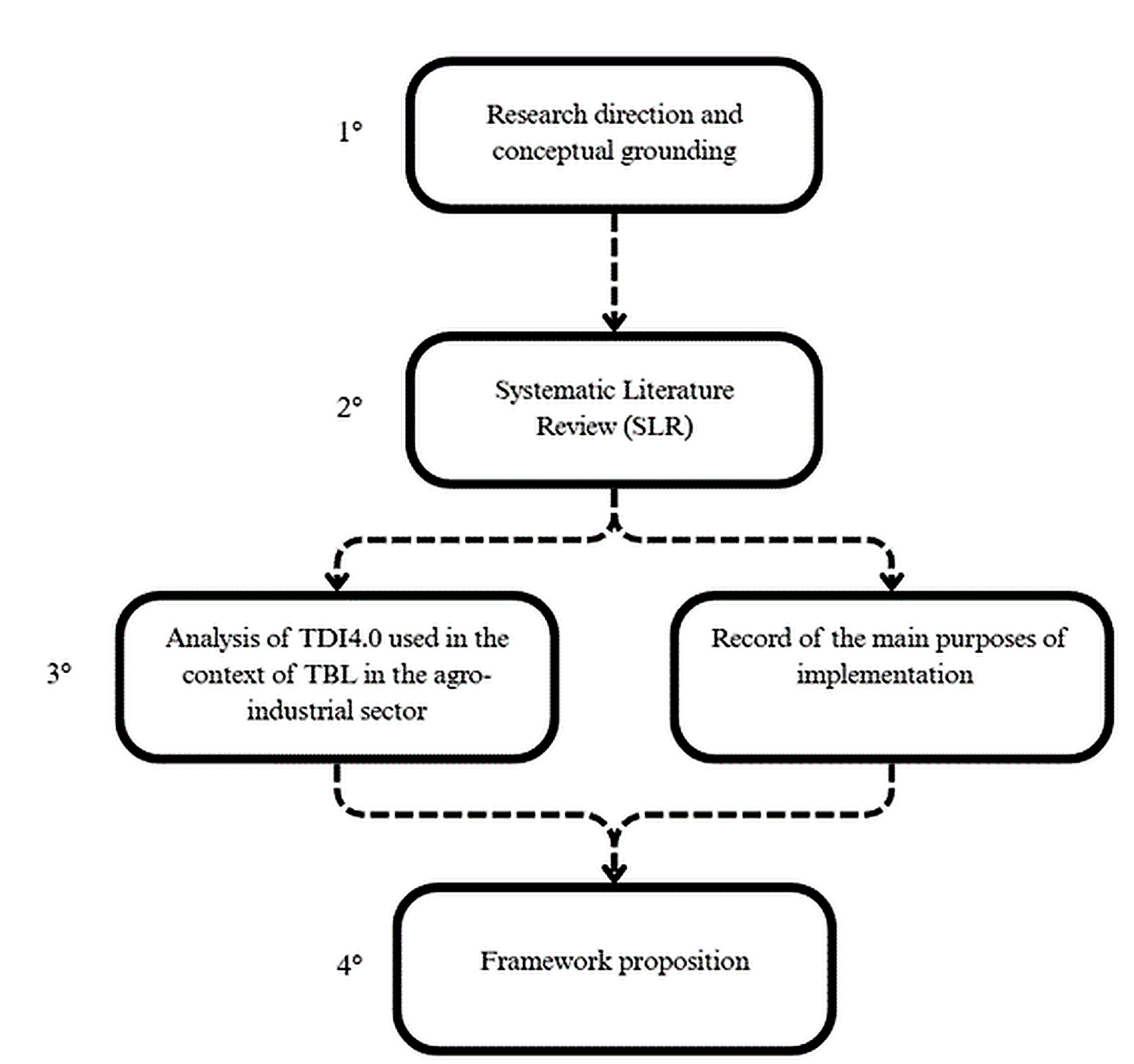
This study relied on a Systematic Literature Review (SLR). SLRs are particularly appropriate when the research objective is to synthesize dispersed evidence and build or refine theoretical frameworks, rather than to describe a field bibliometrically (as in bibliometric reviews) or to generate theory inductively from qualitative data (as in scoping or narrative reviews). Compared to rapid reviews or mapping studies, SLRs require explicit protocol specification, systematic search, and reproducible selection criteria, which increases rigor and transparency (Tranfield et al., 2003; Kunisch et al., 2022). This study adopted an SLR because the central objective—proposing an evidence-based framework that links I4.0 digital technologies to TBL outcomes in agroindustries—demands a systematic, replicable synthesis of the primary literature rather than a descriptive inventory. Systematic reviews provide robust argumentative structures and often support theoretical or highly complex research questions. As an investigative scientific method, an SLR systematically gathers and synthesizes the main scientific articles that address the issues raised in the investigation. Its purpose is to condense the available evidence on a topic and generate clearer knowledge as an outcome (Donato & Donato, 2019). Based on this research design, the study followed the development steps presented in Figure 1.

Step 1 – Research direction and conceptual grounding: In this step, we presented the research direction, as detailed in the Introduction section. In addition, we reviewed related studies to refine and align the core concepts of Triple Bottom Line (TBL), Industry 4.0 Digital Technologies (TDI4.0), and agroindustries.
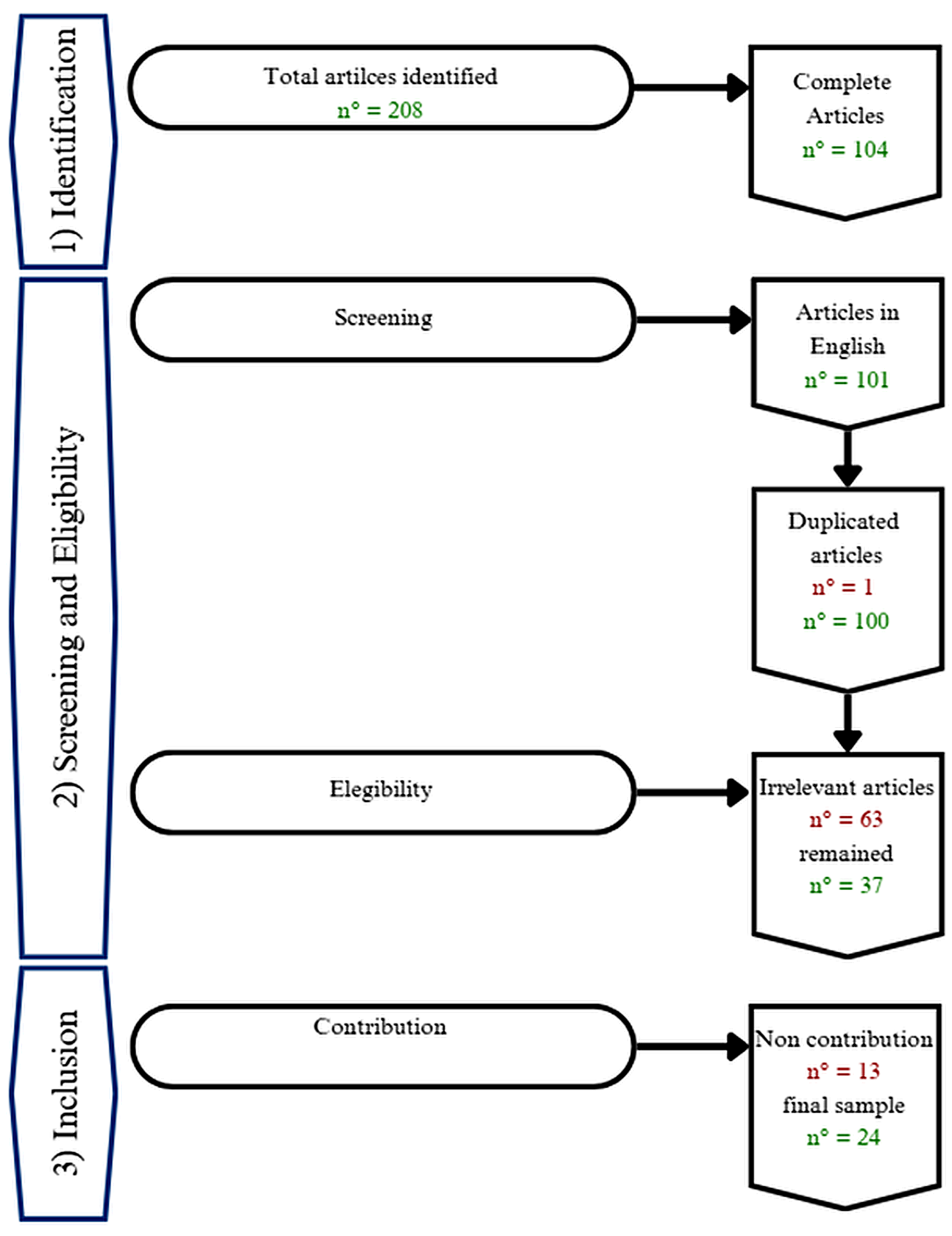
Step 2 – Systematic Literature Review (SLR): The SLR aimed to identify (i) which TDI4.0 have been applied in agroindustries and (ii) which criteria the literature uses to assess TBL performance across the economic, social, and environmental pillars. The SLR protocol followed the three-phase structure proposed by Tranfield et al. (2003): (i) planning the review, which involved defining the research question, inclusion/exclusion criteria, and search strategy; (ii) conducting the review, which involved executing searches, screening records, and extracting data; and (iii) reporting the findings. The PRISMA 2020 checklist (Page et al., 2021) was used as a transparency and reporting tool—not as a methodological protocol—to document and communicate the selection process systematically. We used Scopus as the search database and followed the PRISMA reporting phases of Identification, Screening, Eligibility, and Inclusion. Figure 2 presents the PRISMA flow used in this study.

In the Identification, we captured the largest possible set of publications related to the research topic, and we defined search terms using synonymous keywords (reported in Table 1). The selection of keywords followed the conceptual structure of the research question and was grounded in the relevant literature. The term “Industry 4.0” was chosen because it is the dominant concept in the literature on digital transformation of production systems (Xu et al., 2018). “Smart manufacturing” was included as a functionally equivalent term widely used in international literature (Phuyal et al., 2020), and “agriculture 4.0” was added to capture studies that apply Industry 4.0 logic specifically to agricultural and agroindustrial settings (Alam et al., 2023). The terms “agroindustry” and “agribusiness” were used to represent the production context because these terms are used interchangeably in the literature (Austin, 1992). Finally, “Triple Bottom Line” and its abbreviation “TBL” were used to capture the sustainability performance framework addressed in this study (Elkington, 1997). For Industry 4.0, we used the terms “Industry 4.0,” “smart manufacturing,” and “agriculture 4.0.” For agroindustry, we used “agroindustry” and “agribusiness” because agroindustries are also referred to in the literature as part of the agribusiness sector. Finally, we also used the abbreviated form of Triple Bottom Line (TBL) as a search term. The term “AND technologies” was removed from the search string because “Industry 4.0” is already a technological concept and its derivative terms do not necessarily include “technologies” as a standalone word; retaining this operator was narrowing the retrieval pool unnecessarily. The revised search string returned 284 documents, of which 136 were classified as journal articles. Table 1 reports the full set of search elements applied in Scopus.
In the screening phase, we applied inclusion criteria focused on English-language publications and duplicate removal. First, we excluded three documents that were not written in English. Next, we imported the remaining 101 articles into Mendeley Desktop (version 1.19.8) and checked for duplicates. We identified one duplicated study, even though we searched only one database: we found two records with very similar titles, identical development, figures, and conclusions, and authored by the same group (Soledispa Cañarte plus seven co-authors). The duplicated records were "The Role of Logistics 4.0 in Agribusiness Sustainability and Competitiveness, A Bibliometric and Systematic Literature Review" and "Advancing Agribusiness Sustainability and Competitiveness Through Logistics 4.0: A Bibliometric and Systematic Literature Review", published in Operations and Supply Chain Management and Log-Forum, respectively. After removing the duplicate, we screened the remaining 100 articles by reviewing titles, abstracts, and keywords to assess relevance to the research topic and potential contribution to the study objectives. This screening excluded 63 articles and retained 37 articles. Finally, in the inclusion phase, we retrieved full texts for all 37 remaining articles. Access was obtained through institutional subscriptions, DOI-linked publishers, and open repositories (e.g., ResearchGate, institutional repositories, and authors’ personal pages). Full-text availability was not used as an inclusion or exclusion criterion; rather, all effort was made to obtain access to every eligible article. This approach is consistent with the recommendation that open-access restrictions should not bias the sample in systematic reviews (Kunisch et al., 2022). After full-text reading and assessment for relevance and contribution, 13 additional articles were excluded, resulting in 24 articles that formed the final sample. These were read in full and analyzed to support the subsequent stages of the study. From the revised search (284 initial documents), the PRISMA-reported selection process resulted in 24 articles.
Step 3 – Analysis of TDI4.0 applications to support TBL in agroindustries: Each of the 24 selected articles was read in full and coded using a structured data extraction form. The form was designed following the approach described by Senna et al. (2023) for framework development based on SLR evidence. For each article, the following information was extracted: (i) full reference (authors, year, journal, title); (ii) agroindustry subsector and geographic context; (iii) Industry 4.0 digital technologies mentioned or analyzed; (iv) TBL pillar(s) addressed (economic, environmental, and/or social); (v) type of contribution (empirical study, conceptual framework, case study, survey); and (vi) main reported outcomes and benefits associated with technology adoption. The coding was performed independently and then reviewed by a second researcher to check consistency; disagreements were resolved through discussion and consensus. After individual coding, recurring patterns were identified across articles by grouping technologies and reported outcomes into thematic clusters. Technologies were grouped based on their functional role in operations (e.g., monitoring, analytics, automation, traceability), and outcomes were classified according to the TBL pillar they addressed. This thematic grouping formed the basis for the framework proposed in Step 4. The coding process followed a three-level hierarchical structure adapted from the inductive methodology proposed by Gioia et al. (2012) and operationalized by Senna et al. (2023) in their SLR-based framework development: (a) 1st Order Concepts, consisting of specific technologies and outcomes as reported verbatim or in close paraphrase in each article (e.g., “IoT-based soil moisture monitoring,” “yield loss reduction through AI forecasting,” “blockchain-enabled origin verification”); (b) 2nd Order Themes, constructed by grouping 1st Order Concepts with shared functional logic across multiple articles (e.g., “real-time monitoring and visibility,” “data-driven decision support,” “supply chain traceability”); and (c) Aggregate Dimensions, representing the three TBL pillars (Profit, Planet, People) that frame the highest level of the coding structure. This hierarchical logic ensures that the framework proposed in Step 4 is traceable to first-order evidence from the reviewed articles, rather than being imposed top-down by the researchers. Multiple coding iterations were performed to achieve consensual groupings. We used a structured spreadsheet to manage coding records, and we performed cross-case comparison to verify that the boundaries between technology groups were analytically justified. Technologies with overlapping roles (e.g., cloud computing, which appears both as infrastructure and as decision support) were assigned to the most frequently coded theme and cross-referenced in the narrative. Based on the TDI4.0 identified in the SLR, we analyzed how agroindustries have applied these technologies to improve TBL performance—that is, which actions organizations use to pursue balance across the economic, social, and environmental pillars. We also identified the most relevant reported benefits associated with these implementations, as described in the SLR evidence. Table 2 illustrates the hierarchical coding structure used in Step 3. The diagram maps 1st Order Concepts (specific technologies and outcomes extracted from individual articles) to 2nd Order Themes (functional groupings that capture the shared operational logic of related concepts) and, finally, to the three Aggregate Dimensions that correspond to the TBL pillars. The three 2nd Order Themes—Monitoring & Connectivity, Intelligence & Automation, and Supply Chain Transparency—each encompass multiple 1st Order Concepts drawn from several reviewed articles. All three themes connect to all three TBL pillars, reflecting the cross-pillar nature of I4.0 technology contributions documented in the literature.
Coding output for all 24 reviewed articles: 1st Order Concepts, 2nd Order Themes, and TBL Dimensions.
Table 2 reports the full coding output for all 24 reviewed articles, showing for each study: (i) the 1st Order Concepts extracted (specific technologies and outcomes as reported); (ii) the 2nd Order Theme to which each concept was assigned; and (iii) the TBL pillar(s) the study addresses. This table makes the coding process fully auditable, showing how the three framework capability groups and their TBL connections are grounded in and traceable to the primary evidence.
Step 4 – Framework proposition: In the final step, we consolidated the analyses from Step 3 into a framework. The framework links the TDI4.0 reported in the literature as relevant for improving TBL performance in agroindustries to the main benefits associated with the most frequently adopted technologies within each TBL pillar.
4. Results
In this section, we report the main findings from the systematic literature review, specifically from the 24 articles returned by the PRISMA selection process. We organize the results into four parts. First, we assess which Industry 4.0 digital technologies (I4.0 DTs) agroindustrial studies most frequently adopt to support Triple Bottom Line (TBL)-oriented sustainability practices. Second, we describe the sustainability purposes for which studies implement these technologies to improve TBL performance. Third, we synthesize how the literature links specific technologies to economic, environmental, and social outcomes in agroindustrial contexts. Finally, we propose a theoretical framework that maps the most prominent I4.0 technologies in the agroindustry to the main sustainability purposes reported in the literature, covering the economic, environmental, and social dimensions of TBL.
Table 3 presents the 24 articles included in the final sample, along with their main characteristics. For each study, we report the authors, year of publication, journal, main agroindustrial context, I4.0 technologies identified, and TBL dimensions addressed. This overview allows readers to assess the composition of the evidence base and verify the representativeness of the sample with respect to the topics discussed in subsequent sections.
4.1. I4.0 digital technologies adopted for TBL-oriented sustainable practices in agroindustry
We analyzed the 24 selected studies to identify which Industry 4.0 digital technologies the literature most frequently associates with TBL-oriented sustainable practices in agroindustries. The review identified 10 recurrent technologies, with the full frequency table reported in the Table 4.
Overall, the evidence suggests a layered adoption logic rather than isolated "single-technology" implementations. Monitoring and connectivity technologies—supported by advanced sensors and IoT/IIoT infrastructures—provide the data backbone that enables real-time visibility and operational control. On top of this data layer, Big Data Analytics and Artificial Intelligence appear as the main decision-support mechanisms, converting high-volume operational data into forecasting, optimization, and failure-prevention routines aligned with sustainability goals. In this sense, studies most often position IoT and Big Data Analytics as the dominant foundations, with AI as a frequent complement for prediction and optimization under operational constraints.
A second recurring pathway concerns governance, integration, and trust across value chains. Cloud computing typically appears as an enabling infrastructure for scalable data storage, integration, and remote access. At the same time, blockchain is mainly associated with traceability, accountability, and verification of sustainable sourcing and compliance in multi-actor agroindustrial supply chains. Finally, automation-oriented technologies (e.g., autonomous robots, CPS, and M2M communication) emerge as mechanisms to reduce variability, improve stability, and increase efficiency. Still, the literature also flags potential social trade-offs related to work-force displacement—reinforcing the need to manage adoption decisions under a TBL logic rather than purely efficiency-driven criteria.
4.2. Sustainability-oriented implementations of Industry 4.0 digital technologies to improve TBL performance
We synthesize how the reviewed studies operationalize I4.0 digital technologies to support Triple Bottom Line outcomes in agroindustries. Rather than treating technologies as isolated solutions, the evidence indicates recurrent capability pathways (monitoring/connectivity, analytics/intelligence, automation, and transparency/traceability) that translate into outcomes across Profit, Planet, and People (Table 4).
Profit (economic): Economic contributions concentrate on (i) real time visibility and reliability (IoT/IIoT, sensors, CPS/M2M), which reduce downtime, losses, and process variability, and (ii) data driven decision support (BDA/AI, often enabled by cloud), which improves planning, forecasting, logistics decisions, and cost performance optimization. Traceability solutions (e.g., blockchain) also generate economic benefits by strengthening trust, reducing coordination costs, and enabling product differentiation in higher-value-added chains.
Planet (environmental): Environmental outcomes are mainly achieved through measurement and optimization of resource use and process parameters. IoT/IIoT and sensors provide real-time data on energy, water, temperature, and process conditions; BDA and AI identify hotspots and optimize settings, schedules, and routes to reduce waste, spoilage, and emissions. CPS/M2M further supports closed-loop control and synchronized operations, while blockchain can strengthen compliance and sustainable sourcing verification through auditable traceability.
People (social): Social contributions relate to occupational health and safety, transparency with stakeholders, and work-force development. Monitoring technologies (IoT/IIoT/sensors) support early warnings and safer operations; analytics (BDA/AI) enable predictive risk prevention; and automation (robots/CPS/M2M) can reduce exposure to hazardous and repetitive tasks, while shifting job profiles toward supervision, programming, and maintenance. The evidence also highlights the need to govern work-force transition and reskilling to mitigate potential displacement risks.
4.3. Proposed framework
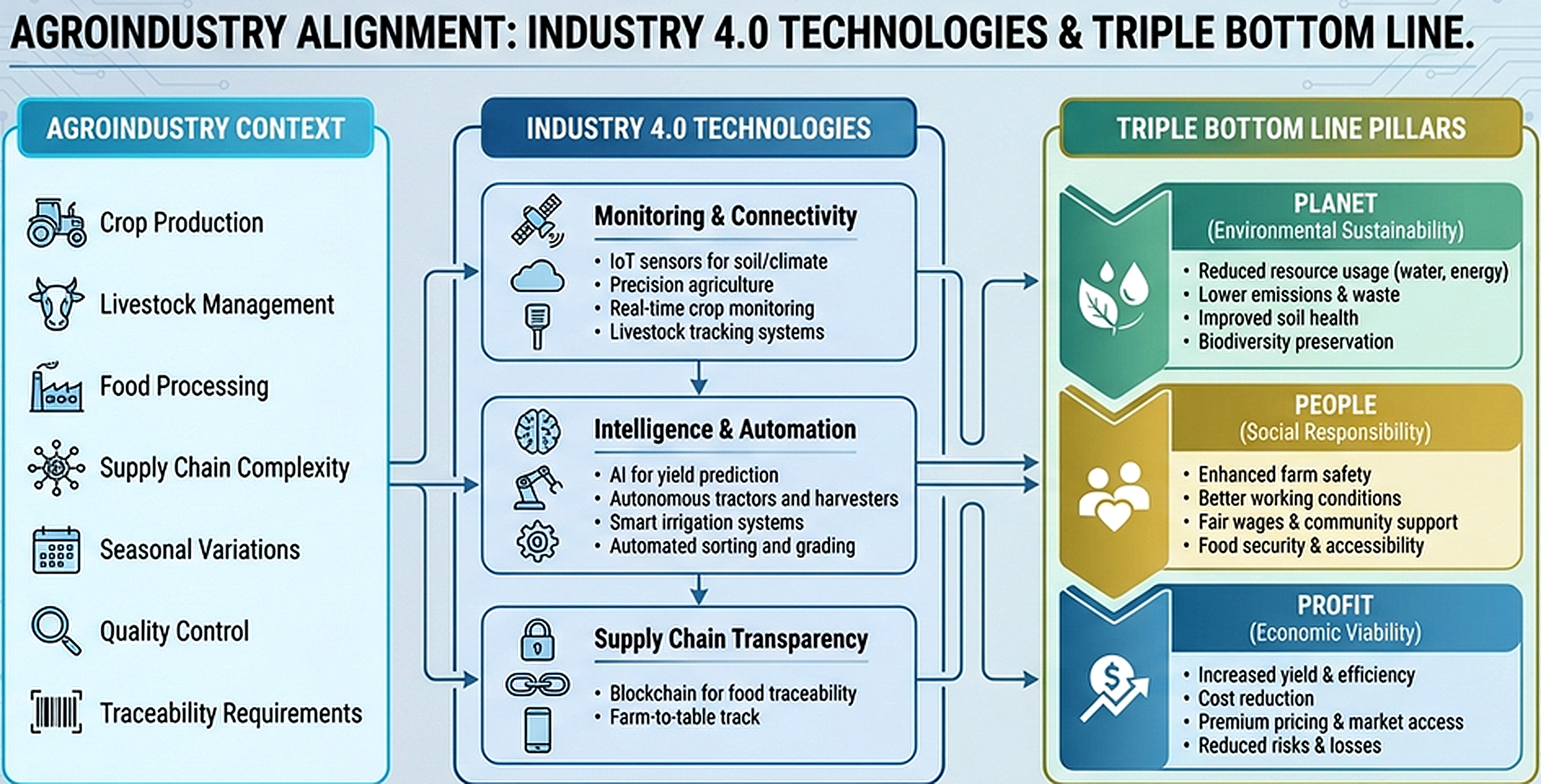
After identifying the most recurrent Industry 4.0 Digital Technologies in the literature and mapping their specific contributions to the economic, environmental, and social pillars, it was possible to propose a theoretical framework that highlights the gains provided by the most widely used Industry 4.0 digital technologies to improve Triple Bottom Line performance in the agro-industrial context. Figure 3 summarizes the integration between TDI4.0 and TBL by organizing the main TDI4.0 into functional sets, defined by the operational roles they play and the improvement objectives in each TBL pillar that agro-industries can pursue. The framework is grounded in and traceable to the 24 articles reviewed: each capability group and TBL connection in Figure 3 reflects patterns consistently reported across multiple studies rather than isolated findings. The following subsections explain each component of the framework in detail and make explicit its connections to the SLR evidence.
Framework for aligning Industry 4.0 Technologies with the pillars of TBL in agroindustry. Source: Authors (2026).
In the first part of the framework, the diagram positions the agroindustry context as the starting point that shapes digital adoption. It highlights typical sector characteristics—crop production, livestock management, food processing, supply chain complexity, seasonal variations, quality control, and traceability requirements—which increase operational uncertainty and intensify the need for data-driven, traceable, and efficient decision-making.
Next, the framework groups Industry 4.0 technologies into three complementary capability sets. Monitoring & connectivity includes IoT sensors for soil and climate, precision agriculture, real-time crop monitoring, and livestock tracking systems, enabling continuous sensing and visibility across operations. Intelligence & automation incorporates AI for yield prediction, autonomous tractors and harvesters, smart irrigation systems, and automated sorting and grading, strengthening decision quality and operational execution through analytics and automation. Finally, Supply Chain Transparency encompasses blockchain-based food traceability and farm-to-table tracking, supporting credibility, compliance, and information integrity along agrifood chains.
In the final part of the framework, these technology capabilities connect to the Triple Bottom Line pillars, showing how digital transformation can generate measurable outcomes for Planet (environmental sustainability), People (social responsibility), and Profit (economic viability). Overall, Figure 3 synthesizes the pathway from sector needs → digital capabilities → sustainability and performance outcomes, clarifying how agroindustries can align technology adoption with the three dimensions of the Triple Bottom Line.
4.3.1. Industry 4.0 digital technologies and their potentials
Figure 3 organizes Industry 4.0 technologies into capability groups that reflect what they enable in agroindustrial settings. The Monitoring & Connectivity group combines tools that expand visibility and control across dispersed and variable operations. By using IoT sensors for soil and climate, real-time crop monitoring, precision agriculture devices, and livestock tracking systems, agroindustries can collect real-time data on critical variables and detect deviations early. This group primarily enhances operational awareness, supports faster interventions, and reduces losses from variability, delays, or a lack of information. The SLR evidence strongly supports the centrality of this group: IoT and IIoT were the most frequently cited technologies across the 24 reviewed articles, appearing in connection with real-time monitoring of soil moisture, temperature, storage conditions, and livestock welfare. Studies in the sample consistently reported that agroindustries deploying IoT-based monitoring reduced spoilage, improved yield prediction accuracy, and gained traceability data as a by-product of routine sensing. Advanced sensors were often described as the physical interface of this connectivity layer—capturing variables such as pH, humidity, gas concentrations, and energy consumption that are critical for both process control and regulatory compliance. The literature specifically highlights that, in agroindustrial contexts marked by biological variability and seasonal cycles, connectivity infrastructure is not optional: without it, analytics and automation technologies have no reliable data to operate on, making Monitoring & Connectivity the foundational layer of the proposed framework (Cricelli et al., 2024; Lima et al., 2020).
The second group, Intelligence & Automation, captures technologies that transform monitoring data into decisions and automated actions. AI-based yield prediction, autonomous tractors and harvesters, smart irrigation systems, and automated sorting and grading systems allow agroindustries to anticipate production outcomes, standardize quality, and reduce inefficiencies. These technologies improve planning and execution by replacing reactive decision-making with predictive, automated routines, which is especially valuable during seasonal variations and supply chain constraints. The SLR evidence positions Big Data Analytics (BDA) and Artificial Intelligence (AI) as the second most frequently cited technology cluster, consistently co-occurring with IoT infrastructure. Reviewed studies illustrate that BDA applied to agroindustrial production data enabled identification of waste hotspots, route and schedule optimization in logistics, and improvements in procurement planning under demand uncertainty. AI applications in the sample ranged from machine-learning models for crop disease detection and yield forecasting to neural networks applied to quality sorting in food processing lines. Cyber-physical systems (CPS) and autonomous robots appeared in the context of closed-loop control and physical automation of harvesting, grading, and packaging. Importantly, the reviewed evidence treats these technologies as decision-support and operational-efficiency tools rather than autonomous managerial actors; their value depends on the quality of the monitoring layer and the governance choices made by managers regarding implementation scope, worker training, and performance targets (Mursiti et al., 2024; Oliveira et al., 2022).
The third group, Supply Chain Transparency, focuses on traceability and trust-building mechanisms. Blockchain-enabled food traceability and farm-to-table tracking provide immutable records of product origin, handling conditions, and chain-of-custody events. This capability strengthens compliance with traceability requirements, reduces information asymmetry among actors, and supports market claims regarding quality and sustainability. In agroindustrial chains where reputation, safety, and certification strongly influence value capture, transparency technologies directly support competitive positioning and accountability. The SLR evidence consistently supports the relevance of blockchain and integrated traceability systems in agroindustrial contexts, particularly in multi-tier supply chains where product safety, certified sourcing, and sustainability claims require verifiable documentation. Reviewed studies report that blockchain implementation in food agroindustries enabled: (i) reduction in fraudulent relabeling and mislabeling incidents; (ii) faster identification and containment of food safety incidents through auditable chain-of-custody records; (iii) support for premium market positioning by providing buyers with verified proof of origin, organic or fair-trade practices, and environmental compliance. Cloud computing appeared in the reviewed literature primarily as the infrastructure enabler that makes supply chain data sharing scalable and accessible to multiple actors simultaneously—supporting both transparency and analytics at the chain level. M2M communication completed this picture by enabling automated data transmission between devices and systems without manual intervention, reducing coordination delays and errors in multi-step processing and logistics operations (Kandasamy et al., 2025; Heinzova et al., 2024).
4.3.2. Objectives driving technology adoption under the TBL
Based on the described potentials, Figure 3 also clarifies the objectives that drive the application of Industry 4.0 technologies under each Triple Bottom Line dimension.
For-profit (economic viability), agroindustries primarily use digital technologies to increase yields and efficiency, reduce costs, and mitigate losses. Monitoring and connectivity tools reduce uncertainty by improving visibility across production and processing stages. Intelligence and automation strengthen productivity through smarter resource allocation and improved quality standardization. Supply chain transparency can also improve market access and enable premium pricing when traceability and verified origin become competitive requirements.
For Planet (environmental sustainability), the framework emphasizes improved resource efficiency and waste mitigation. Monitoring technologies help agroindustries reduce water and energy usage by enabling data-based control of irrigation, storage, and processing conditions. Automation and intelligence reduce waste by improving grading accuracy, preventing spoilage, and optimizing operational settings. Traceability technologies support environmental accountability by enabling documentation of sustainability practices and compliance requirements throughout the supply chain.
For People (social responsibility), the framework highlights better working conditions, safety, and fairness outcomes. Monitoring can improve safety by tracking risk conditions in the field and in industrial environments. Automation can reduce exposure to hazardous, repetitive, or physically demanding tasks while requiring work-force upskilling and supervision. Transparency technologies can reinforce fairness and responsibility by supporting traceable relationships with farmers, suppliers, and communities, strengthening trust and legitimacy in stakeholder interactions.
Together, these objectives show that Industry 4.0 technologies do not support sustainability only through efficiency gains, but also through traceability, accountability, quality assurance, and social alignment, making them especially relevant for agroindustries operating under strong environmental pressures, food safety requirements, and growing sustainability expectations.
5. Discussion
This study shows that Industry 4.0 technologies offer broad and tangible potential to strengthen agroindustry performance across the Triple Bottom Line (TBL). The systematic review (24 PRISMA-selected articles) indicates that digital adoption in agroindustries rarely occurs as isolated "technology projects". Instead, agroindustries tend to combine technologies to build capabilities—such as monitoring, analytics, automation, and traceability—that directly address sector-specific constraints, including seasonal variability, biological processes, food safety requirements, and high supply chain complexity.
The results position Monitoring & Connectivity as a foundational capability for sustainability-oriented performance. Technologies such as IoT/IIoT, advanced sensors, and machine-to-machine communication increase process visibility and control across production and processing environments. When agroindustries deploy these technologies, they reduce information gaps that typically drive waste, rework, downtime, and quality instability. This result aligns with the view that connectivity and real-time monitoring enable operational improvements that translate into TBL gains—especially through better control of critical parameters and faster responses to deviations. Importantly, the evidence does not support an interpretation of AI as an “autonomous managerial actor” that unilaterally governs production for profit maximization. Instead, the reviewed studies treat AI primarily as a decision-support and prediction tool that strengthens monitoring, failure prevention, process adjustment, and planning, consistent with the framework's logic that links analytics to capability building rather than replacing management.
The review also highlights Data Processing and Decision Support (Big Data Analytics and AI, often supported by cloud infrastructures) as a key mechanism for turning operational data into sustainability performance. Agroindustries operate in an uncertain environment (climate variability, market volatility, perishability, and quality risks). Under these conditions, analytics and AI improve planning accuracy, reduce inventory and logistics inefficiencies, support predictive maintenance, and improve quality consistency. These outcomes converge with the economic pillar (cost reduction and efficiency) while simultaneously enabling environmental outcomes (waste and resource reduction) through improved process optimization.
A critical contribution concerns Supply Chain Transparency, particularly blockchain-enabled traceability and farm-to-table tracking. Because agroindustries interact with multi-tier supply chains, traceability requirements, and diverse stakeholder expectations, transparency technologies create value beyond internal efficiency. Blockchain strengthens trust in product origin and production practices, supports compliance, and reduces information asymmetry across chain actors. This mechanism matters for agroindustries in premium markets (e.g., specialty coffee, organic products, certified supply chains), where verified sustainability attributes can translate into stronger market access and price premiums—linking transparency to both environmental and economic outcomes.
At the same time, the findings reinforce the need to treat Intelligence & Automation as a capability with potential social trade-offs. The review shows that technologies such as autonomous robots and cyberphysical systems can increase productivity and standardize operations. Still, they may also reduce operational labor demand if firms adopt them primarily to cut labor costs. This does not make automation inherently negative for the social pillar; rather, it signals that outcomes depend on implementation governance—especially work-force transition, reskilling, and safety design. The framework, therefore, serves not only as a "technology map" but also as a decision lens to anticipate where benefits are likely and where risks require mitigation, particularly under the People dimension.
Overall, the proposed framework adds value because it integrates (i) the agroindustry context that motivates technology adoption, (ii) capability groups that clarify complementarities among technologies, and (iii) TBL-oriented outcomes that guide evaluation and decision-making. In practical terms, the framework helps agroindustries move from a technology-driven approach (“adopt Industry 4.0”) to a results-driven approach (“build capabilities that deliver measurable Profit–Planet–People outcomes under agroindustrial constraints”). The practical value of the framework is most evident when compared to the decision challenges managers actually face. Agroindustrial managers typically encounter technology adoption decisions under three recurrent conditions: (i) resource constraints, where not all technologies can be adopted simultaneously and prioritization is required; (ii) outcome uncertainty, where the expected benefits of a given technology investment are not clearly defined or quantified; and (iii) sustainability pressure, where stakeholders, regulators, and markets increasingly demand evidence that operations are improving across all three TBL dimensions, not just cost efficiency. The proposed framework addresses all three conditions by providing a structured decision lens. For prioritization, the capability-group logic suggests a logical adoption sequence: monitoring and connectivity should be established first, because without reliable operational data, analytics and automation cannot function effectively. Intelligence and automation can then be layered on this data foundation to optimize decisions and operations. Supply chain transparency technologies (e.g., blockchain) are most valuable as a third layer, when the agroindustry needs to communicate verified sustainability performance to external stakeholders. For outcome uncertainty, the framework links each capability group to specific, literature-grounded outcomes across the three TBL pillars, so managers can set realistic expectations and design performance indicators in advance. For sustainability pressure, the framework makes trade-offs explicit—particularly the risk that automation, if not accompanied by workforce transition and reskilling programs, may generate negative social outcomes that undermine TBL balance despite economic and environmental gains (Grybauskas et al., 2022; Cricelli et al., 2024). The novelty of this study relative to previous work can be characterized along three dimensions. First, while the broader literature on Industry 4.0 and sustainability has grown substantially (Khan et al., 2021; Skalli et al., 2024), studies that specifically address agroindustries as the production context remain scattered and rarely deliver actionable, decision-oriented tools. Most existing reviews either focus on manufacturing broadly or on agricultural field operations (Agriculture 4.0), without addressing the agroindustrial processing and supply chain layer where technology adoption is most concentrated and where TBL trade-offs are most operationally relevant. Second, existing studies tend to analyze I4.0 technologies in isolation—reporting the benefits of IoT, AI, or blockchain separately without explaining how these technologies should be combined or sequenced to build sustainability-oriented capabilities. This study’s capability-bundle logic fills this gap by organizing technologies into functional groups and explaining their complementarities. Third, prior frameworks linking I4.0 to sustainability in agri-food or manufacturing contexts rarely address all three TBL pillars simultaneously with equal depth; the social pillar in particular is underrepresented. This study explicitly includes the People dimension and highlights the governance conditions—workforce transition, reskilling, safety design—that determine whether automation technologies generate or destroy social value. These three dimensions of novelty clarify why this review is necessary and what it contributes beyond existing work.
6. Conclusion
This study proposed and structured a framework that relates Industry 4.0 technologies to the Triple Bottom Line in agroindustries, based on a systematic literature review guided by PRISMA (24 selected articles).
Regarding the first specific objective—to identify Industry 4.0 technologies aligned with the TBL pillars in agroindustries—the review consolidated a set of technologies recurrently associated with agroindustrial sustainability initiatives, including IoT/IIoT, Big Data Analytics, Artificial Intelligence, blockchain-enabled traceability, cloud-based infrastructures, advanced sensing and connectivity solutions, and automation-oriented systems (e.g., cyber-physical and machine-to-machine integration). Although several studies focused on agribusiness, agriculture, food logistics, or sustainability-oriented Industry 4.0 rather than "agroindustry" as a narrow category, the evidence consistently supports the relevance of these technologies for agroindustrial settings and for TBL-related outcomes.
Regarding the second specific objective—to analyze how these technologies support the TBL—the review shows that digital contributions cluster around three outcome pathways. For the economic pillar (Profit), technologies most often support productivity gains, operational cost reductions, improved quality and reliability, and better logistics and planning. For the environmental pillar (Planet), the dominant pathway involves better measurement and control of resource consumption, reduced waste and emissions through process optimization, and stronger environmental accountability along the chain. For the social pillar (People), the literature emphasizes improved safety and working conditions through monitoring, increased transparency and stakeholder trust, and the need for work-force qualification as firms adopt data-driven, automated operations.
Regarding the third specific objective—to propose a framework linking Industry 4.0 technologies and the TBL in agroindustries—this study integrated the review findings into a capability-based model. The framework organizes technologies into three sets that reflect how agroindustries actually build value: Monitoring & Connectivity, Intelligence & Automation, and Supply Chain Transparency. The framework then links these capability sets to outcomes that strengthen Profit, Planet, and People. This structure improves conceptual clarity and provides a practical pathway for implementation planning by emphasizing complementarities among technologies and directing attention to measurable outcomes.
6.1. Practical contribution
The framework supports managerial decision-making in at least three ways. First, it helps managers select technologies based on the capabilities they need to build (e.g., real-time visibility, predictive decision support, automation, traceability), rather than adopting technologies in isolation. Second, it connects capability building to TBL-oriented performance targets, enabling more structured evaluation of expected impacts. Third, it makes trade-offs explicit—especially the need to govern automation adoption to avoid negative social outcomes when firms do not actively manage work-force transitions.
6.2. Academic contribution
Academically, the framework offers a structured foundation for future empirical research because it clarifies (i) the mechanisms that connect Industry 4.0 adoption to TBL outcomes in agroindustries, (ii) the complementarity logic among technologies, and (iii) context variables that should moderate effects (e.g., supply chain complexity, seasonality, traceability requirements, type of agroindustry processing). This capability-based framing supports hypothesis development, model operationalization, and comparative research designs across agroindustrial segments.
6.3. Suggestions for future research
Future studies should test, refine, and operationalize the proposed framework in real agroindustrial settings. Several directions emerge from the review and the framework logic.
First, researchers should conduct empirical validation (single-case, multiple-case, survey-based, or mixed-methods) to determine whether the capability groups proposed here—Monitoring & Connectivity, Intelligence & Automation, and Supply Chain Transparency—produce the expected TBL outcomes across different agroindustry contexts. This validation should explicitly include performance indicators for each TBL pillar, rather than treating sustainability as a single aggregated construct.
Second, scholars should investigate implementation conditions and barriers through interviews and field studies with managers, engineers, and sustainability leaders in agroindustries. These studies should examine how firm size, maturity level, product perishability, regulatory pressure, and supply chain structure influence adoption sequences, investment priorities, and realized outcomes. This stream can generate practical guidance on "what works, for whom, and under what conditions".
Third, future work should develop prioritization and decision-support models that rank technologies (or capability bundles) by expected contribution to each TBL pillar and by feasibility under resource constraints. Researchers can apply multi-criteria decision methods (e.g., AHP, TOPSIS, PROMETHEE) or optimization approaches to guide investment planning, explicitly combining "impact on Profit–Planet–People" with implementation cost, required skills, and infrastructure readiness. A dedicated ranking for People outcomes would be particularly valuable, because social benefits often depend on governance choices (reskilling, safety programs, job redesign) rather than technology alone.
Fourth, researchers should explore social trade-off mechanisms in greater depth, especially in the context of automation and AI. Studies should test how work-force transition strategies (training, redeployment, participatory redesign) moderate the relationship between automation and social outcomes. This is critical to ensure that agroindustries pursue Industry 4.0 not only for efficiency, but also for inclusive and responsible development.
Finally, future research can extend the framework by integrating policy and certification ecosystems (food safety standards, sustainability certification, environmental reporting), since these external requirements often determine whether traceability and transparency technologies translate into economic value and long-term legitimacy for agroindustries.
-
How to cite this article:
Baierle, I. C., Souza, M. H. G., & Peres, F. A. P. (2026). Linking Industry 4.0 technologies to Triple Bottom Line performance in agroindustries: a capability-based framework. Production, 36, e20260020. https://doi.org/10.14488/1980-5411.20260020.
-
Financial Support
This research was funded by the National Council for Scientific and Technological Development (CNPq), grant 306357/2024-0. The CNPq Foundation was not involved in the collection, analysis, or interpretation of the data, or the writing of the manuscript.
-
Ethical Statement
This study is a systematic literature review based exclusively on data and information extracted from previously published scientific studies available in public databases. No human participants were directly involved, and no personal, identifiable, or confidential data were collected or accessed. Therefore, informed consent and approval from a Research Ethics Committee were not required.
Data availability
No research data was used.
References
-
Abbass, K., Qasim, M. Z., Song, H., Murshed, M., Mahmood, H., & Younis, I. (2022). A review of the global climate change impacts, adaptation, and sustainable mitigation measures. Environmental Science and Pollution Research International, 29(28), 42539-42559. https://doi.org/10.1007/s11356-022-19718-6 PMid:35378646.
» https://doi.org/10.1007/s11356-022-19718-6 -
Abid, N., Ikram, M., Wu, J., & Ferasso, M. (2021). Towards environmental sustainability: exploring the nexus among ISO 14001, governance indicators, and green economy in Pakistan. Sustainable Production and Consumption, 27, 653-666. https://doi.org/10.1016/j.spc.2021.01.024
» https://doi.org/10.1016/j.spc.2021.01.024 -
Ahmed, Z., Bashir, Y., Ahmed, B., Rocha, A., & Yau, J. T.-H. (2025). Role of country governance between sustainable development and firm value in emerging markets. Discover Sustainability, 6(1), 261. https://doi.org/10.1007/s43621-025-01097-w
» https://doi.org/10.1007/s43621-025-01097-w -
Alam, M. F. B., Tushar, S. R., Zaman, S. M., Santibanez Gonzalez, E. D. R., Bari, A. B. M. M., & Karmaker, C. L. (2023). Analysis of the drivers of Agriculture 4.0 implementation in the emerging economies: implications towards sustainability and food security. Green Technologies and Sustainability, 1(2), 100021. https://doi.org/10.1016/j.grets.2023.100021
» https://doi.org/10.1016/j.grets.2023.100021 -
Austin, J. E. (1992). Agroindustrial project analysis: critical design factors. Baltimore: Johns Hopkins University Press. https://doi.org/10.1596/0-8018-4530-0
» https://doi.org/10.1596/0-8018-4530-0 -
Avilés, H. P. H., Miranda, J. C. H., Pérez, O. G. A., & Larico, J. C. P. (2025). Digital transformation in Industry 4.0: legal and technological challenges of cloud computing and artificial intelligence. Journal of Ecohumanism, 4(2), 216-223. https://doi.org/10.62754/joe.v4i2.5931
» https://doi.org/10.62754/joe.v4i2.5931 -
Baierle, I. C., Silva, F. T., Faria Correa, R. G., Schaefer, J. L., Costa, M. B., Benitez, G. B., & Benitez Nara, E. O. (2022). Competitiveness of the food industry in the era of digital transformation towards agriculture 4.0. Sustainability, 14(18), 11779. https://doi.org/10.3390/su141811779
» https://doi.org/10.3390/su141811779 -
Bickley, S. J., Macintyre, A., & Torgler, B. (2025). Artificial intelligence and big data in sustainable entrepreneurship. Journal of Economic Surveys, 38(1), 103-145. https://doi.org/10.1111/joes.12611
» https://doi.org/10.1111/joes.12611 -
Cao, Z., Lai, Z., Khaskheli, M. B., & Wang, L. (2025). The risk of global environmental change to economic sustainability and law: help from digital technology and governance regulation. Sustainability, 17(15), 7094. https://doi.org/10.3390/su17157094
» https://doi.org/10.3390/su17157094 -
Chandrakant, R., & Rajesh, R. (2023). Social sustainability, corporate governance, and sustainability performances: an empirical study of the effects. Journal of Ambient Intelligence and Humanized Computing, 14(7), 9131-9143. https://doi.org/10.1007/s12652-022-04417-4
» https://doi.org/10.1007/s12652-022-04417-4 -
Coelho, G. E., Cardoso, M. D., Messias, F. B., & Pinheiro, A. (2025). Machine-to-machine systems for data acquisition and measurement with self-validation for the digital metrology transition. Measurement: Journal of the International Measurement Confederation, 258, 119149. https://doi.org/10.1016/j.measurement.2025.119149
» https://doi.org/10.1016/j.measurement.2025.119149 -
Coletto, C., Caliari, L., Ferreira, A. P. A. L., & Menezes, D. C. (2022). O agronegócio e os fatores determinantes na tomada de decisão de produzir soja. Iheringia. Série Botânica, 77, e2022005. https://doi.org/10.21826/2446-82312022v77e2022005
» https://doi.org/10.21826/2446-82312022v77e2022005 -
Corallo, A., Lazoi, M., Lezzi, P., & Pontrandolfo, P. (2023). Cybersecurity challenges for manufacturing systems 4.0: assessment of the business impact level. IEEE Transactions on Engineering Management, 70(11), 3745-3765. https://doi.org/10.1109/TEM.2021.3084687
» https://doi.org/10.1109/TEM.2021.3084687 -
Cricelli, L., Grimaldi, M., Kaci, E., & Ivaldi, S. (2024). Assessing the impact of Industry 4.0 technologies on the social sustainability of agrifood companies. Business Strategy and the Environment, 33(7), 7182-7200. https://doi.org/10.1002/bse.3874
» https://doi.org/10.1002/bse.3874 -
Demaria, F., & Cavicchioli, M. (2025). Financial sustainability in the luxury industry across the Covid-19 pandemic: lessons from hierarchical methods. Quality & Quantity, 59(6), 5149-5177. https://doi.org/10.1007/s11135-025-02202-x
» https://doi.org/10.1007/s11135-025-02202-x -
Donato, H., & Donato, M. (2019). Stages for undertaking a systematic review. Acta Médica Portuguesa, 32(3), 227-235. https://doi.org/10.20344/amp.11923 PMid:30946795.
» https://doi.org/10.20344/amp.11923 - Elkington, J. (1997). Cannibals with forks: the triple bottom line of 21st century business Oxford: Capstone.
-
Elkington, J. (1998a). Accounting for the triple bottom line. Measuring Business Excellence, 2(3), 18-22. https://doi.org/10.1108/eb025539
» https://doi.org/10.1108/eb025539 -
Elkington, J. (1998b). Partnerships from cannibals with forks: the triple bottom line of 21st-century business. Environmental Quality Management, 8(1), 37-51. https://doi.org/10.1002/tqem.3310080106
» https://doi.org/10.1002/tqem.3310080106 -
Esposito, B., Sessa, M. R., Sica, D., & Malandrino, O. (2020). Towards circular economy in the agrifood sector: a systematic literature review. Sustainability, 12(18), 7401. https://doi.org/10.3390/su12187401
» https://doi.org/10.3390/su12187401 -
Gholami, H., Abu, F., Lee, J. K. Y., Karganroudi, S. S., & Sharif, S. (2021). Sustainable manufacturing 4.0: pathways and practices. Sustainability, 13(24), 13956. https://doi.org/10.3390/su132413956
» https://doi.org/10.3390/su132413956 -
Gioia, D. A., Corley, K. G., & Hamilton, A. L. (2012). Seeking qualitative rigor in inductive research: notes on the Gioia methodology. Organizational Research Methods, 16(1), 15-31. https://doi.org/10.1177/1094428112452151
» https://doi.org/10.1177/1094428112452151 -
Grybauskas, A., Stefanini, A., & Ghobakhloo, M. (2022). Social sustainability in the age of digitalization: a systematic literature review on the social implications of Industry 4.0. Technology in Society, 70, 101997. https://doi.org/10.1016/j.techsoc.2022.101997
» https://doi.org/10.1016/j.techsoc.2022.101997 -
He, J., Han, Z., & Hu, J. (2024). Advanced sensors towards ubiquitous power Internet of Things. CSEE Journal of Power and Energy Systems, 10(3). https://doi.org/10.17775/CSEEJPES.2023.05850
» https://doi.org/10.17775/CSEEJPES.2023.05850 -
Heinzova, R., Strohmandl, J., & Janova, N. (2024). Production and logistics 4.0 in the food industry in the Czech Republic. Acta logistica Acta logistica - International Scientific Journal about Logistics, 11(3), 421-427. https://doi.org/10.22306/al.v11i3.527
» https://doi.org/10.22306/al.v11i3.527 -
Hernández, J. C. B., Gálvez, D., Tobón, W., Marín, H., Abad, C. E., Correa, M., & Tirado, L. (2024). Biomass-based energy potential from the oil palm agroindustry in Colombia: a path to low carbon energy transition. Journal of Cleaner Production, 449, 141808. https://doi.org/10.1016/j.jclepro.2024.141808
» https://doi.org/10.1016/j.jclepro.2024.141808 -
Jones, D., Snider, C., Nassehi, A., Yon, J., & Hicks, B. (2020). Characterising the digital twin: a systematic literature review. CIRP Journal of Manufacturing Science and Technology, 29, 36-52. https://doi.org/10.1016/j.cirpj.2020.02.002
» https://doi.org/10.1016/j.cirpj.2020.02.002 -
Kandasamy, J., Ethirajan, M., Agrawal, T. K., & Jagtap, S. (2025). A new blockchain and IoT based architecture of food safety system for confectionery supply chain in Industry 4.0 era. Applied Food Research, 5(2), 101340. https://doi.org/10.1016/j.afres.2025.101340
» https://doi.org/10.1016/j.afres.2025.101340 -
Khan, I. S., Ahmad, M. O., & Majava, J. (2021). Industry 4.0 and sustainable development: a systematic mapping of triple bottom line, circular economy and sustainable business models perspectives. Journal of Cleaner Production, 297, 126655. https://doi.org/10.1016/j.jclepro.2021.126655
» https://doi.org/10.1016/j.jclepro.2021.126655 - Kunisch, S., Menz, M., & Bartunek, J. M. (2022). Effective and impactful literature reviews: what, why, and how? Organizational Research Methods, 25(4), 649-672.
-
Lesch, V., Züfle, M., Bauer, A., Iffländer, L., Krupitzer, C., & Kounev, S. (2023). A literature review of IoT and CPS—What they are, and what they are not. Journal of Systems and Software, 200, 111631. https://doi.org/10.1016/j.jss.2023.111631
» https://doi.org/10.1016/j.jss.2023.111631 -
Lima, G. C., Figueiredo, F. L., Barbieri, A. E., & Seki, J. (2020). Agro 4.0: enabling agriculture digital transformation through IoT. Revista Ciência Agronômica, 51(5), e20207771. https://doi.org/10.5935/1806-6690.20200100
» https://doi.org/10.5935/1806-6690.20200100 -
Lu, Y., & Liao, Z. (2025). The influence of AI application on carbon emission intensity of industrial enterprises in China. Scientific Reports, 15(1), 12585. https://doi.org/10.1038/s41598-025-97110-3 PMid:40221579.
» https://doi.org/10.1038/s41598-025-97110-3 -
Majid, M., Habib, S., Javed, A. R., Rizwan, M., Srivastava, G., Gadekallu, T. R., & Lin, J. C. W. (2022). Applications of wireless sensor networks and Internet of Things frameworks in the industry revolution 4.0: a systematic literature review. Sensors, 22(6), 2087. https://doi.org/10.3390/s22062087 PMid:35336261.
» https://doi.org/10.3390/s22062087 -
Mendra, N. P. Y., Ramanta, I. W., Widanaputra, A. A. G. P., & Suaryana, I. G. N. (2024). The impact of corporate governance based on natural environmental sustainability, intellectual capital, and risk management on profitability and financial sustainability. Journal of Sustainability Science and Management, 19(10), 8-24. https://doi.org/10.46754/jssm.2024.10.002
» https://doi.org/10.46754/jssm.2024.10.002 -
Misaros, M., Stan, O. P., Donca, I. C., & Miclea, L. C. (2023). Autonomous robots for services—State of the art, challenges, and research areas. Sensors, 23(10), 4962. https://doi.org/10.3390/s23104962 PMid:37430875.
» https://doi.org/10.3390/s23104962 -
Mursiti, Supriyanto, & Bahtiar, S. (2024). Policy strategies for developing superior human resources for the sugar cane agro-industry in the industrial era 4.0 in Indonesia. ASEAN Journal on Science and Technology for Development, 42(2), 1. https://doi.org/10.61931/2224-9028.1606
» https://doi.org/10.61931/2224-9028.1606 -
Nascimento, R. A., Rezende, V. T., Ortega, F. J. M., Carvalho, S. A., Buckeridge, M. S., Gameiro, A. H., & Rennó, F. P. (2024). Sustainability and Brazilian agricultural production: a bibliometric analysis. Sustainability, 16(5), 1833. https://doi.org/10.3390/su16051833
» https://doi.org/10.3390/su16051833 -
Nica, I., Chiriță, N., & Georgescu, I. (2025). Triple bottom line in sustainable development: a comprehensive bibliometric analysis. Sustainability, 17(5), 1932. https://doi.org/10.3390/su17051932
» https://doi.org/10.3390/su17051932 -
Nogueira, E., Gomes, S., & Lopes, J. M. (2024). Financial sustainability: exploring the influence of the triple bottom line economic dimension on firm performance. Sustainability, 16(15), 6458. https://doi.org/10.3390/su16156458
» https://doi.org/10.3390/su16156458 -
Oliveira, R. P., Barbosa Júnior, M. R., Pinto, A. A., Oliveira, J. L. P., Zerbato, C., & Furlani, C. E. A. (2022). Predicting sugarcane biometric parameters by UAV multispectral images and machine learning. Agronomy, 12(9), 1992. https://doi.org/10.3390/agronomy12091992
» https://doi.org/10.3390/agronomy12091992 -
Oliveira, U. R., Menezes, R. P., & Fernandes, V. A. (2024). A systematic literature review on corporate sustainability: contributions, barriers, innovations and future possibilities. Environment, Development and Sustainability https://doi.org/10.1007/s10668-023-02933-7 PMid:36687736.
» https://doi.org/10.1007/s10668-023-02933-7 -
Ortiz, J. S., Quishpe, E. K., Sailema, G. X., & Guamán, N. S. (2025). Digital twin-based active learning for industrial process control and supervision in Industry 4.0. Sensors, 25(7), 2076. https://doi.org/10.3390/s25072076 PMid:40218590.
» https://doi.org/10.3390/s25072076 -
Page, M. J., McKenzie, J. E., Bossuyt, P. M., Boutron, I., Hoffmann, T. C., Mulrow, C. D., Shamseer, L., Tetzlaff, J. M., Akl, E. A., Brennan, S. E., Chou, R., Glanville, J., Grimshaw, J. M., Hróbjartsson, A., Lalu, M. M., Li, T., Loder, E. W., Mayo-Wilson, E., McDonald, S., McGuinness, L. A., Stewart, L. A., Thomas, J., Tricco, A. C., Welch, V. A., Whiting, P., & Moher, D. (2021). The PRISMA 2020 statement: an updated guideline for reporting systematic reviews. BMJ, 372, n71. https://doi.org/10.1136/bmj.n71 PMid:33782057.
» https://doi.org/10.1136/bmj.n71 -
Petcu, M. A., Sobolevschi-David, M.-I., & Curea, S. C. (2024). Integrating digital technologies in sustainability accounting and reporting: perceptions of professional cloud computing users. Electronics, 13(14), 2684. https://doi.org/10.3390/electronics13142684
» https://doi.org/10.3390/electronics13142684 -
Phuyal, S., Bista, D., & Bista, R. (2020). Challenges, opportunities and future directions of smart manufacturing: a state of art review. Sustainable Futures: An Applied Journal of Technology, Environment and Society, 2, 100023. https://doi.org/10.1016/j.sftr.2020.100023
» https://doi.org/10.1016/j.sftr.2020.100023 -
Qi, Q., Xu, Z., & Rani, P. (2023). Big data analytics challenges to implementing the intelligent Industrial Internet of Things (IIoT) systems in sustainable manufacturing operations. Technological Forecasting and Social Change, 190, 122401. https://doi.org/10.1016/j.techfore.2023.122401
» https://doi.org/10.1016/j.techfore.2023.122401 -
Rashid, A. A., & Koç, M. (2023). Additive manufacturing for sustainability and circular economy: needs, challenges, and opportunities for 3D printing of recycled polymeric waste. Materials Today Sustainability, 24, 100529. https://doi.org/10.1016/j.mtsust.2023.100529
» https://doi.org/10.1016/j.mtsust.2023.100529 -
Restrepo-Morales, J. A., Ararat-Herrera, J. A., & Armas, A. F. (2025). Sustainability as a strategic advantage: evaluating the financial benefits of environmental criteria and sustainability perceptions in Colombian enterprises. Sustainability, 17(21), 9723. https://doi.org/10.3390/su17219723
» https://doi.org/10.3390/su17219723 -
Richard, K., Havard, V., His, J., & Baudry, D. (2021). INTERVALES: INTERactive Virtual and Augmented framework for industrial environment and scenarios. Advanced Engineering Informatics, 50, 101425. https://doi.org/10.1016/j.aei.2021.101425
» https://doi.org/10.1016/j.aei.2021.101425 -
Rodrigues, S. P., Gomes, L. D. C., Peres, F. A. P., Correa, R. G. D. F., & Baierle, I. C. (2025). A framework for leveraging digital technologies in reverse logistics actions: a systematic literature review. Logistics, 9(2), 54. https://doi.org/10.3390/logistics9020054
» https://doi.org/10.3390/logistics9020054 -
Rosa, P., Sassanelli, C., Urbinati, A., Chiaroni, D., & Terzi, S. (2020). Assessing relations between circular economy and Industry 4.0: a systematic literature review. International Journal of Production Research, 58(6), 1662-1687. https://doi.org/10.1080/00207543.2019.1680896
» https://doi.org/10.1080/00207543.2019.1680896 -
Saboor, S., & Ahmed, V. (2024). Investigating the underpinning criteria of employees’ social sustainability and their impact on job satisfaction in the U.A.E. construction sector. Sustainability, 16(24), 11307. https://doi.org/10.3390/su162411307
» https://doi.org/10.3390/su162411307 -
Sanchez, M., Exposito, E., & Aguilar, J. (2020). Industry 4.0: survey from a system integration perspective. International Journal of Computer Integrated Manufacturing, 33(10-11), 1017-1041. https://doi.org/10.1080/0951192X.2020.1775295
» https://doi.org/10.1080/0951192X.2020.1775295 -
Schöggl, J.-P., Rusch, M., Stumpf, L., & Baumgartner, R. J. (2023). Implementation of digital technologies for a circular economy and sustainability management in the manufacturing sector. Sustainable Production and Consumption, 35, 401-420. https://doi.org/10.1016/j.spc.2022.11.012
» https://doi.org/10.1016/j.spc.2022.11.012 -
Senna, P. P., Barros, A. C., Roca, J. B., & Azevedo, A. (2023). Development of a digital maturity model for Industry 4.0 based on the technology-organization-environment framework. Computers & Industrial Engineering, 185, 109645. https://doi.org/10.1016/j.cie.2023.109645
» https://doi.org/10.1016/j.cie.2023.109645 -
Sia, R., Darma, R., Salman, D., & Riwu, M. (2025). Sustainability assessment of the Arabica coffee agribusiness in North Toraja: insight from a multidimensional approach. Sustainability, 17(5), 2167. https://doi.org/10.3390/su17052167
» https://doi.org/10.3390/su17052167 -
Skalli, D., Charkaoui, A., Cherrafi, A., Garza-Reyes, J. A., Antony, J., & Shokri, A. (2024). Analyzing the integrated effect of circular economy, Lean Six Sigma, and Industry 4.0 on sustainable manufacturing performance from a practice-based view perspective. Business Strategy and the Environment, 33(2), 1208-1226. https://doi.org/10.1002/bse.3546
» https://doi.org/10.1002/bse.3546 -
Soledispa-Canarte, B., Pibaque-Pionce, M., Merchan-Ponce, N., Mex Alvarez, D., Tovar-Quintero, J., Escobar-Molina, D., Cedeno-Ramirez, J., & Rincon-Guio, C. (2023). The role of logistics 4.0 in agribusiness sustainability and competitiveness, a bibliometric and systematic literature review. Operations and Supply Chain Management: An International Journal, 16(1), 109-120. https://doi.org/10.31387/oscm0520376
» https://doi.org/10.31387/oscm0520376 -
Tranfield, D., Denyer, D., & Smart, P. (2003). Towards a methodology for developing evidence-informed management knowledge by means of systematic review. British Journal of Management, 14(3), 207-222. https://doi.org/10.1111/1467-8551.00375
» https://doi.org/10.1111/1467-8551.00375 -
United Nations Environment Programme – UNEP. (2020). Environmental moments: a UN75 timeline. Retrieved in 2026, January 23, from https://www.unep.org/news-and-stories/story/environmental-moments-un75-timeline
» https://www.unep.org/news-and-stories/story/environmental-moments-un75-timeline -
United Nations. (1992). United Nations Conference on Environment and Development (Rio de Janeiro, Brazil, 3-14 June 1992). Retrieved in 2026, January 23, from https://www.un.org/en/conferences/environment/rio1992
» https://www.un.org/en/conferences/environment/rio1992 -
Wenhua, Z., Yang, J., & Ren, J. (2025). Smart sustainability: Environmental accounting strategy for modern corporations using machine learning. Intelligent Decision Technologies, 19(5), 3003-3020. https://doi.org/10.1177/18724981251357820
» https://doi.org/10.1177/18724981251357820 - World Commission on Environment and Development – WCED. (1987). Our common future. Oxford: Oxford University Press.
-
Xu, L. D., Xu, E. L., & Li, L. (2018). Industry 4.0: State of the art and future trends. International Journal of Production Research, 56(8), 2941-2962. https://doi.org/10.1080/00207543.2018.1444806
» https://doi.org/10.1080/00207543.2018.1444806 -
Yip, W. S., Zhou, H., & To, S. (2023). A critical analysis on the triple bottom line of sustainable manufacturing: key findings and implications. Environmental Science and Pollution Research International, 30(14), 41388-41404. https://doi.org/10.1007/s11356-022-25122-x PMid:36631618.
» https://doi.org/10.1007/s11356-022-25122-x -
Zhao, G., Huang, L., Zhang, G., Guo, L., & Zheng, S. (2025). Deployment of Industry 4.0 technologies to achieve a circular economy in agrifood supplychains: a thorough analysis of enablers. Journal of Environmental Management, 373, 123856. https://doi.org/10.1016/j.jenvman.2024.123856 PMid:39740446.
» https://doi.org/10.1016/j.jenvman.2024.123856 -
Zheng, M., Li, T., & Ye, J. (2025). The confluence of AI and big data analytics in Industry 4.0: fostering sustainable strategic development. Journal of the Knowledge Economy, 16(1), 5479-5515. https://doi.org/10.1007/s13132-024-02120-7
» https://doi.org/10.1007/s13132-024-02120-7
Edited by
-
Editor(s)
Adriana Leiras