 Public service: organizational, social, and personal factors that affect employee motivation
Abstract
Purpose: This study analyzes the influence of prosocial behavior, organizational commitment, life satisfaction, and self-determination on public service motivation, and the moderating role of self-determination in these relationships.
Originality/value: This article contributes to the advancement of the literature by examining self-determination not only as a direct indicator of public service motivation but also as a moderator of the relationships among social, organizational, and individual motivational factors.
Design/methodology/approach: The study uses a quantitative, crosssectional approach, based on survey data collected from Brazilian civil servants. The hypotheses were tested using Partial Least Squares - Structural Equation Modeling.
Results: The results indicate that prosocial behavior, organizational commitment, and self-determination positively affect public service motivation. However, self-determination negatively moderates the relationship between prosocial behavior and public service motivation, whereas life satisfaction was not statistically significant.
Contribution/implications: The study contributes theoretically by increasing the understanding of the interaction between autonomy and public service motivation and provides practical implications for public managers seeking to balance autonomy, collective engagement, and organizational commitment.
Keywords:
public service motivation; prosocial behavior; organizational commitment; life satisfaction; self-determination
Resumo
Objetivo: Analisar a influência do comportamento pró-social, do comprometimento organizacional, da satisfação com a vida e da autodeterminação sobre a motivação para o serviço público, bem como o papel moderador da autodeterminação nessas relações.
Originalidade/valor: Este artigo contribui para o avanço da literatura ao examinar a autodeterminação não apenas como um indicador direto da motivação para o serviço público, mas também como moderadora das relações entre fatores motivacionais sociais, organizacionais e individuais.
Desenho/metodologia/abordagem: O estudo adota uma abordagem quantitativa e transversal, com base em dados de pesquisa coletados junto a servidores públicos brasileiros. As hipóteses foram testadas por meio da Modelagem de Equações Estruturais por Mínimos Quadrados Parciais.
Resultados: Os resultados indicam que o comportamento pró-social, o comprometimento organizacional e a autodeterminação afetam positivamente a motivação para o serviço público. No entanto, a autodeterminação modera negativamente a relação entre o comportamento pró-social e a motivação para o serviço público, enquanto a satisfação com a vida não apresentou significância estatística.
Contribuição/implicações: O estudo contribui teoricamente ao ampliar a compreensão da interação entre autonomia e motivação no serviço público e oferece implicações práticas para gestores públicos que buscam equilibrar autonomia, engajamento coletivo e comprometimento organizacional.
Palavras-chave:
motivação para o serviço público; comportamento pró-social; comprometimento organizacional; satisfação com a vida; autodeterminação
INTRODUCTION
The size and composition of the civil service vary considerably across countries, reflecting differences in public management models. According to the Organization for Economic Cooperation and Development (OECD, 2023), the public sector employs, on average, 18% of the economically active population in its member countries, which accounts for 12.9% of the Gross Domestic Product (GDP). In Brazil, there are roughly 11 million civil servants, representing 17.3% of jobs and 10.74% of GDP (Junqueira & Orair, 2022). Given their significant economic and social impact, it is essential to understand the elements that drive public service motivation (PSM), as they directly affect the efficiency of public administration and the quality of services provided to society.
The concept of PSM has been widely studied, showing the influence of social, organizational, and individual factors on motivation (Perry & Wise, 1990; Perry, 2014). Among these, prosocial behavior and organizational commitment were identified as key drivers because they strengthen employees’ sense of purpose and their alignment with public values (Wright et al., 2013; Khuram et al., 2020; Blom et al., 2020). In addition, life satisfaction is a potential factor in the development of work engagement and, therefore, public service motivation (Diener et al., 1985).
At the individual level, self-determination emerged as a central element in supporting long-term motivation. According to Self-Determination Theory (SDT) (Gagné & Deci, 2005; Deci et al., 2017), motivation is affected by the satisfaction of three basic psychological needs: autonomy, competence, and relationships. When these needs are met, individuals tend to develop greater intrinsic motivation, leading to higher levels of commitment and job satisfaction. Although the role of self-determination as a direct predictor of motivation has been well documented (Chen et al., 2018; Ripoll & Ballart, 2019; Guo et al., 2024), Andrews (2016) highlights the existence of gaps, especially regarding the impact of the organizational environment, the relevance of self-determination, and the need for an integrative model that links motivation, public values, and autonomy. Also, the potential moderating effect of self-determination in public service is still underexplored. Most studies have focused on direct relationships, neglecting how it interacts with other important motivational constructs, such as prosocial behavior and organizational commitment.
To address this gap, this study investigated not only how social, organizational, and individual factors affect PSM but also whether self-determination moderates these relationships. By testing this moderating effect, we provide new insights into the interaction between autonomy, prosocial behavior, and motivation in the public sector. From a practical standpoint, understanding these interactions can help public managers develop more effective strategies to increase civil servants’ motivation, balancing autonomy with mechanisms that reinforce prosocial behavior and organizational commitment.
THEORETICAL BACKGROUND
Public service motivation
Public service motivation (PSM) has been studied as a determinant of performance, job satisfaction, and commitment among public servants (Perry & Wise, 1990; Perry & Vandenabeele, 2015). Defined as an individual’s propensity to act in the public interest, driven by altruistic and prosocial values (Perry & Wise, 1990), PSM not only affects civil servants’ engagement but can also act as a moderator of the negative effects of work stress, reducing the likelihood of changing jobs (Giauque et al., 2019; Bao & Zhong, 2021).
In recent years, literature has shown that both organizational and psychological factors influence public service motivation, directly affecting the performance and retention of these professionals (Paarlberg & Lavigna, 2010; Wright et al., 2012). Hence, transformational leadership and servant leadership stand out as essential elements, as they strengthen intrinsic motivation and the alignment between individual and institutional values, fostering innovation and engagement (Jensen & Bro, 2020; Nguyen et al., 2022). Studies also show that autonomy and organizational support increase PSM and reduce employees’ intention to resign (Kim & Fernandez, 2020; Yu, 2021).
In addition to being affected by organizational and social factors, PSM is recognized as a dynamic construct that evolves over the course of one’s career (Kjeldsen, 2014; Vogel & Kroll, 2016). Self-Determination Theory (SDT) has been used to explain how employees’ motivation can be sustained and improved over time, and that satisfying their needs for autonomy, competence, and relationships is essential for strengthening both PSM and organizational commitment (Deci et al., 2017). Employees with greater self-determination tend to present higher levels of engagement and well-being. In comparison, those with lower self-determination may be more vulnerable to negative effects, such as demotivation and intention to leave (Esteve et al., 2015). Therefore, this study contributes to this topic by investigating the relationships among prosocial behavior, organizational commitment, life satisfaction, and self-determination, and their association with civil servants’ motivation, with PSM as a latent variable.
Prosocial behavior
This behavior refers to voluntary actions that intend to help other people or society (Dunfield, 2014; Baumsteiger & Siegel, 2018). It ranges from donations and voluntary support to engagement in community and civic activities (Dunfield, 2014; Baumsteiger & Siegel, 2018; Baumsteiger, 2019). Although often associated with PSM, the two concepts are interconnected but not synonymous, as they have distinct dynamics and effects. In prosocial behavior, the needs of specific groups are met, while PSM acts for the good of society (Schott et al., 2019; Weissmueller et al., 2022).
Those who present high scores on PSM are more likely to show prosocial behavior at work (especially in an environment that supports selfdetermination and freedom to decide how to do the job) (Esteve et al., 2015; Nguyen et al., 2022). In other words, when civil servants have greater autonomy at work and believe it leads to significant changes, their prosocial tendencies seem to increase. As a result, a virtuous cycle emerges: the more they engage in activities that benefit others, the greater their desire to serve the public (Ngqeza & Dhanpat, 2021; Nguyen et al., 2022).
Based on this evidence, we developed the first research hypothesis:
-
H1: Prosocial behavior has a positive impact on public service motivation.
Organizational commitment
Organizational commitment refers to the psychological link between individuals and the organizations where they work (Allen & Meyer, 1990). It is traditionally divided into three dimensions: affective (emotional attachment to the organization), normative (sense of obligation to stay), and continuance (evaluation of costs, risks, or loss of benefits in leaving the job) (Mowday et al., 1979; Randall & O’Driscoll, 1997). We chose this approach because it is widely accepted in the literature, especially for the public sector (Allen & Meyer, 1996; Gill et al., 2011; Fabián-Palomino, 2019; Rojikinnor, 2020; McCarthy et al., 2022).
Boyd and Nowell (2020) observed that organizational commitment influences public service motivation by reinforcing the alignment between individuals and institutional values. In addition, organizations that foster continuous learning and a clear institutional purpose strengthen civil servants’ affective commitment, thereby increasing their satisfaction and engagement (Beauregard et al., 2020; Sukhumvito et al., 2020).
Organizational commitment differs from public service motivation, as the former is associated with employees’ relationship with their organization (Meyer & Allen, 1991). In contrast, the latter stems from the willingness to act for the public good (Perry & Wise, 1990). Strong organizational commitment is positively associated with civil servants’ motivation (McCarthy et al., 2022). Therefore, we defined the second research hypothesis:
-
H2: Organizational commitment among public servants positively influences their public service motivation.
Life satisfaction
Life satisfaction can be understood as individuals’ subjective, stable assessment of their quality of life (Diener et al., 1985; Pavot & Diener, 1993; Prasoon & Chaturvedi, 2016).
Literature shows that life satisfaction can be affected by elements such as autonomy and organizational support (Cavallari et al., 2024), perceived quality of government and social justice (Liu et al., 2020; Zhi et al., 2022), social comparison (He et al., 2024), and shared public values in a society (Meynhardt et al., 2018). In the professional environment, psychological factors, such as a sense of purpose and alignment between personal and institutional values, also play a significant role in shaping individuals’ overall satisfaction (Greguras & Diefendorff, 2010).
Perry and Wise (1990) suggest that motivation to work in the public sector is directly connected to the satisfaction of psychological needs, whether rational, norm-based, or affective. According to this perspective, public servants would find in their professional work a way to meet these needs, thereby contributing to greater well-being. However, this relationship is not linear; some studies show that civil servants can dissociate personal satisfaction from professional motivation, prioritizing factors such as organizational identity and a sense of duty to the public interest (Wright et al., 2013). Hence, we developed the third research hypothesis:
-
H3: Life satisfaction affects public service motivation indirectly.
Self-determination
Self-Determination Theory (SDT) is widely recognized as a key framework for understanding the psychological mechanisms that drive motivation, particularly in work environments (Gagné & Deci, 2005; Deci et al., 2017). According to it, motivation is shaped by the fulfillment of three fundamental psychological needs: autonomy, competence, and relatedness. When these needs are met, individuals develop higher levels of intrinsic motivation, which fosters greater engagement and long-term commitment to work (Van den Broeck et al., 2016).
In the public sector, self-determination has been associated with higher motivation, increased job satisfaction, and stronger organizational commitment (Gagné & Deci, 2005; Chen et al., 2018; Ripoll & Ballart, 2019). Employees who notice greater autonomy in their roles tend to feel more engaged and aligned with organizations’ values (Van den Broeck et al., 2010). Moreover, studies indicate that self-determination contributes to greater psychological well-being and reduces turnover intention, strengthening its relevance for keeping motivation over time (Al-Khouja et al., 2020; Van den Broeck et al., 2021). Therefore, we defined the fourth research hypothesis:
-
H4: Self-determination has a positive impact on public service motivation.
However, while the direct effects of self-determination on motivation have been extensively studied (Guo et al., 2024), its potential moderating role remains underexplored. The literature suggests that individuals with high self-determination tend to perceive their work as meaningful and engage in prosocial behavior more often (Esteve et al., 2015). This raises the question of whether autonomy enhances or weakens the impact of prosocial behavior on public service motivation (PSM). In other words, does greater autonomy strengthen the connection between prosocial trends and motivation, or does it reduce employees’ dependence on external motivational factors?
To address this gap, we tested the following hypotheses:
-
H5a: Self-determination moderates the relationship between prosocial behavior and public service motivation, affecting the strength of that relationship.
Similarly, previous research suggests that organizations that support employee development foster a greater sense of autonomy and selfdetermination, leading to higher organizational commitment (Gagné & Deci, 2005; Deci et al., 2017). However, it remains unclear if self-determination increases or decreases the effect of organizational commitment on motivation.
-
H5b: Self-determination moderates the relationship between organizational commitment and public service motivation, affecting the strength of this relationship.
Finally, self-determination has also been associated with subjective welfare and work-life balance (Nishimura & Suzuki, 2016). Since life satisfaction is a significant predictor of PSM, we also examined whether selfdetermination moderated this relationship.
-
H5c: Self-determination moderates the relationship between life satisfaction and public service motivation, affecting the strength of this relationship.
By testing these moderating effects, this study expands the understanding of self-determination beyond its traditional role as a direct predictor of motivation, providing new insights into how autonomy interacts with other motivational drivers in the public sector.
Demographic variables
The literature on PSM suggests that demographic variables can significantly affect civil servants’ motivation. Previous studies indicate that factors such as educational level, income, length of service, and age affect individuals’ motivation to work in the public sector (Perry, 1997; Naff & Crum, 1999; Vogel & Kroll, 2016). We considered these variables as controls to check their impact on the main constructs.
Regarding education, prior studies show a positive correlation between education and public service motivation, particularly in dimensions such as commitment to the public interest and prosocial behavior (Perry, 1997; Moynihan & Pandey, 2007). Individuals with higher levels of education tend to have greater alignment with public values and higher self-determination, both of which boost motivation. Therefore, we formulated the following hypotheses:
-
H6a: The higher the level of education, the stronger the relationship between self-determination and public service motivation.
-
H6b: The higher the level of education, the stronger the relationship between prosocial behavior and public service motivation.
-
H6c: The higher the level of education, the stronger the relationship between organizational commitment and public service motivation.
As for income, there is evidence that higher salaries can reduce public service motivation, since individuals with higher financial earnings tend to prioritize extrinsic motivations at the expense of intrinsic values associated with the public sector (Perry, 1997). Hence, we tested the following hypothesis:
-
H7: The higher the income, the weaker the relationship between prosocial behavior and public service motivation.
Another influence comes from length of service, as studies suggest that public service motivation may decline over time due to factors such as employee turnover and the gap between initial expectations and professional reality (Moynihan & Pandey, 2007). To test this hypothesis, we analyzed differences in the impact of organizational commitment and prosocial behavior on the motivation of civil servants with distinct service times, according to the following hypotheses:
-
H8a: The longer the service time, the weaker the relationship between organizational commitment and public service motivation.
-
H8b: The longer the service time, the weaker the relationship between prosocial behavior and public service motivation.
Finally, age was considered from a generational perspective. Vogel and Kroll (2016) show that values and perceptions about public service vary between generations, reflecting social and cultural changes. Therefore, the following hypotheses were developed to test these differences:
-
H9a: The Baby Boomer generation shows stronger organizational commitment and prosocial behavior than Generation X, strengthening the relationship through public service motivation.
-
H9b: The Baby Boomer generation shows stronger organizational commitment and prosocial behavior than Generation Y, strengthening the relationship through public service motivation.
-
H9c: Generation X shows stronger organizational commitment and prosocial behavior than Generation Y, strengthening the relationship through public service motivation.
Suggested model
Considering the suggested hypotheses, we proposed the model shown in Figure 1 to test the relationships among constructs.
METHOD
We used a quantitative, cross-sectional, descriptive approach, with primary data. As public service motivation stems from the performance of activities inherent to public office holders (Perry & Wise, 1990), our field of study was the Brazilian public service, with active civil servants as the target population.
We collected data by using an online questionnaire distributed through social networks, union websites, institutional emails, and entities representing civil servants. This strategy was adopted to maximize the diversity of respondents and cover different levels (federal, state, and municipal) and regions in Brazil.
The questionnaire was available electronically on a secure platform and open for responses for 60 days. We conducted a pre-test with a pilot group of 20 civil servants to assess the clarity and understanding of the questions.
To ensure that respondents were part of the study’s target audience, we inserted a control question: “Are you a civil servant?” Even if the response was negative, he/she should continue to fill out the questionnaire, but, in the end, those answers were excluded from the study.
The sample consisted of civil servants from different regions of Brazil, ensuring a diverse range of responses. To minimize potential sampling bias, we collected demographic information, including age, gender, length of service, hierarchical level, and administrative area. Data analysis enabled assessment of the sample’s representation relative to the target population.
To determine the minimum sample size, we followed the criteria established by Hair et al. (2020) for structural equation modeling (PLS-SEM), ensuring sufficient statistical power to test the hypotheses. The choice of PLS-SEM is justified by its accuracy in handling complex models with latent variables, particularly in social sciences research, where theoretical constructs are interrelated.
The five attributes included in the survey (Public Service Motivation, Self-determination, Prosocial Behavior, Organizational Commitment, and Satisfaction with Life) were measured on a 5-point Likert scale, ranging from 1 (“Strongly disagree”) to 5 (“Strongly agree”). Research questions were adapted from the authors mentioned in the construct column (Table 1). Adaptations were restricted to translating the questions into Portuguese.
The survey reached 493 respondents. Of that total, 20 were not civil servants; their answers were excluded, leaving 473 in the final sample. There was a prevalence of male respondents (58%), most respondents aged 35 to 54 (69%), and the education level ranged from Postgraduate (Lato Sensu) (52%) to Master’s (24%), indicating a high level of education. In terms of salary, the main options were more than 15 minimum wages (33%) and between 5 and 9 minimum wages (28%). Most respondents had between 11 and 20 years of public service (44%), and administrative practice (26%) was the most representative area. Around 51% were state employees, and there was a prevalence of respondents from the executive branch (83%).
To evaluate the measurement model, we carried out a Confirmatory Component Analysis (CCA) (Hair et al., 2020), given the presence of secondorder constructs, which needed to be assessed separately (Sarstedt et al., 2019; Bido & Silva, 2019). Data were analyzed using PLS-SEM through SmartPLS® software.
To ensure the model’s validity and reliability, we carried out an Exploratory Factor Analysis (EFA) to assess the structure of the constructs and identify potential adjustments; a Reliability Analysis (Cronbach’s Alpha and CR - Composite Reliability), to ensure internal consistency of the items; checking Convergent and Discriminant Validity, according to Fornell and Larcker’s criteria (1981), and Response Bias Test to check possible effects of sampling bias (Hair et al., 2020). The measurement invariance of the categorical variables was evaluated using the Measurement Invariance of Composite Models (MICOM) analysis (Henseler et al., 2016; Ringle et al., 2018).
DATA ANALYSIS
Validation of the measurement model
After collecting the survey data, the model was tested using SmartPLS® software to assess the factor loadings of the indicators. During this analysis, some items were excluded because their factor loadings were below 0.40, indicating low explanatory power for the constructs to which they belonged (Hair et al., 2020). The items excluded were: Identified Regulation: “I chose public career because this is the type of work that allows me to keep a certain lifestyle”; Affective Commitment: “I would accept almost any type of task to continue working in my current public agency” and “I really care about the future of my public organization”; Calculative Commitment: “I could be working for a different organization, as long as the type of work was similar” and “Under the current circumstances, it would not take much to make me leave my public organization”; and Public service motivation: “Making a difference in society means more to me than personal achievements”.
We removed these items to increase model validity and eliminate potential measurement biases. This was in line with McCarthy et al. (2022), who noted the need to refine the construct scale to capture better organizational commitment in specific contexts, such as the public sector.
We then assessed the constructs’ reliability (Table 2). All HTMT values (heterotrait-monotrait ratio) were below 0.85, indicating satisfactory discriminant validity (Hair et al., 2020). Similarly, AVE (Average Variance Extracted) values exceeded 0.50, and CR (Composite Reliability) values exceeded 0.70, confirming the convergent validity and reliability of the constructs.
To avoid collinearity and ensure that the constructs represented distinct dimensions, we conducted an additional discriminant validity analysis using the Fornell and Larcker (1981) criterion, which confirmed that each construct measured a different concept.
Structural model validation
Figure 2 presents the results of the structural model validation.

Table 3 presents the results of the collinearity statistics VIF, f2, structural coefficients, and p-value for the model hypotheses.
The analysis of VIF collinearity values (below 3.0) and factor loadings (between -1 and +1) was satisfactory (Hair et al., 2020). R2 and Q2 values (Figure 2) indicated high predictive power for the sample (Bido & Silva, 2019). The f2 values, which estimate the independent contribution of each construct to prediction, were insufficient for hypotheses H3, H5b, and H5c, indicating that these constructs are not good predictors of public service motivation.
Control variables and additional analysis
To evaluate control variables, we used the MICOM method, following the three steps described by Henseler et al. (2016). Table 4 shows the differences between the structural coefficients of the groups and the model results for the variables education, income, length of service, and age. It also shows the R2 for each group relative to the model. Table 5 summarizes the results of the hypothesis tests for the control variables.
RESULTS AND DISCUSSION
The findings of this study confirm the significant influence of prosocial behavior (H1), organizational commitment (H2), and self-determination (H4) on public service motivation (PSM). However, contrary to initial expectations, self-determination negatively moderates the relationship between prosocial behavior and motivation (H5a), suggesting that individuals with greater autonomy may be less dependent on prosocial trends to keep their motivation for public service. This challenges traditional interpretations of Self-Determination Theory (SDT), which generally associates autonomy with increased intrinsic motivation (Deci et al., 2017; Guo et al., 2024). This result suggests that highly self-determined employees may already possess strong intrinsic motivation and are less influenced by external prosocial incentives. For public managers, this indicates that policies to increase autonomy should be carefully designed to avoid unintentionally weakening the impact of other motivational drivers, such as collaboration and collective engagement. This confirms previous findings that autonomy can, in some cases, lead to less dependence on external motivational stimuli, particularly when individuals are heavily committed to their work (Gagné & Deci, 2005; Olafsen & Deci, 2020).
Regarding organizational commitment, the study confirms its strong predictive role for PSM. However, self-determination did not significantly moderate this relationship (H5b), indicating that while commitment generally enhances motivation, its effect may be independent of employees’ autonomy levels. One possible explanation is that civil servants with high organizational commitment already internalize institutional values, making autonomy less relevant to their motivation (Chen et al., 2018). In addition, results show that life satisfaction was not a significant predictor of PSM (H3 and H5c). One potential explanation is that the stability and security associated with public-sector jobs reduce the impact of personal satisfaction on work motivation, shifting the focus toward organizational and value-driven factors. This emphasizes the need for further investigation on the role of well-being in public service motivation, especially in different institutional and cultural contexts.
The control variables analyzed-education, income, length of service, and age-yielded complementary findings to the main model. Education showed a positive relationship with self-determination (H6a), but a negative effect on prosocial behavior (H6b), which can be explained by the increasing specialization of roles that demand higher education. As employees move into technical or managerial positions, their focus may shift from direct social engagement to administrative or policy-related responsibilities, reducing their involvement in prosocial actions. Income (H7), on the other hand, had no significant impact on motivation for public service, contradicting previous hypotheses that suggested a negative relationship. Length of service was shown to increase both prosocial behavior (H8a) and organizational commitment (H8b), highlighting the importance of socialization and experience in civil servants’ career paths. These results contradicted the study’s hypotheses, underscoring the need for further research on the subject (Moynihan & Pandey, 2007). Finally, age had no significant effect on motivation for public service, suggesting that generational factors may not be direct determinants of employee engagement.
These findings highlight the complexity of PSM as a construct and suggest that future studies should explore additional moderators, such as leadership styles and institutional culture, to understand better how selfdetermination interacts with prosocial behavior across different publicsector contexts. Studies using qualitative approaches could provide deeper insights into how employees perceive autonomy and its impact on their motivation.
CONCLUSIONS
This study contributes to the understanding of public service motivation (PSM) by analyzing the interactions among prosocial behavior, organizational commitment, life satisfaction, and self-determination. The results confirm that prosocial behavior, organizational commitment, and selfdetermination play a significant role in fostering motivation in the public sector, thereby strengthening their relevance to theories of public administration and work engagement.
However, contrary to theoretical expectations, self-determination negatively moderates the relationship between prosocial behavior and motivation. This suggests that greater autonomy may reduce the influence of prosocial trends on motivation, challenging some assumptions of Self- Determination Theory (SDT). While previous research has emphasized autonomy as a motivating factor, these findings indicate that highly selfdetermined employees already possess intrinsic motivation, making them less dependent on external motivational drivers.
By testing the moderating role of self-determination, an attribute still underexplored in the literature, this study advances the theoretical understanding of how autonomy interacts with prosocial behavior in public service motivation. It also raises important questions about the limits of SDT in the public sector, suggesting that the relationship between autonomy and motivation is more nuanced than previously assumed.
From a practical perspective, these results provide valuable insights for public managers to design effective motivation strategies. For public sector leaders, this means adopting a layered approach to motivation policies, ensuring that measures for enhancing autonomy are complemented by initiatives that foster teamwork, acknowledgment, and alignment of values within organizations. Policymakers should consider that autonomy is beneficial, but an excessive focus on individual autonomy may reduce employees’ engagement in prosocial behaviors that reinforce collective motivation.
Future research should examine how institutional contexts influence these relationships, using qualitative methods to capture civil servants’ perceptions of autonomy and motivation. Furthermore, comparative studies between different levels of government (municipal, state, and federal) could provide further insights into how organizational structures shape these dynamics. Longitudinal studies would also be beneficial for assessing how motivation changes over time, especially in response to shifts in labor policies and leadership styles.
-
Titles and respective URLs, access numbers, or file DOIs of the contents underlying the article text follow below (use one line for each data): https://github.com/marcelotmalta/Dados-Artigo-Motiva-o-Para-o-Servi-o-P-blico.
-
RAM does not have permission from the authors or evaluators to publish this article’s review.
Open Data:
the contents will be made available at the time of the article’s publication.
REFERENCES
-
Al-Khouja, M., Weinstein, N., Ryan, R. M., & Legate, N. (2020). How autonomy support and ethical value alignment influence attitudes towards diversity in English policing. Journal of Moral Education, 49(3), 365-380. https://doi.org/10.1080/03057240.2019.1697867
» https://doi.org/10.1080/03057240.2019.1697867 -
Allen, N. J., & Meyer, J. P. (1990). The measurement and antecedents of affective, continuance, and normative commitment to the organization. Journal of Occupational Psychology, 63(1). https://doi.org/10.1111/j.2044-8325.1990.tb00506.x
» https://doi.org/10.1111/j.2044-8325.1990.tb00506.x -
Allen, N. J., & Meyer, J. P. (1996). Affective, continuance, and normative commitment to the organization: An examination of construct validity. Journal of Vocational Behavior, 49(3), 252-276. https://doi.org/10.1006/jvbe.1996.0043
» https://doi.org/10.1006/jvbe.1996.0043 -
Alonso, P., & Lewis, G. B. (2001). Public Service Motivation and Job Performance: Evidence from the Federal Sector. The American Review of Public Administration, 31(4), 363-380. https://doi.org/10.1177/02750740122064992
» https://doi.org/10.1177/02750740122064992 -
Andrews, C. (2016). Integrating Public Service Motivation and Self-determination theory: A framework. International Journal of Public Sector Management, 29(3), 238-254. https://doi.org/10.1108/IJPSM-10-2015-0176
» https://doi.org/10.1108/IJPSM-10-2015-0176 -
Bao, Y., & Zhong, W. (2021). Public service motivation matters: Examining the differential effects of challenge and hindrance stressors on organizational identification and turnover intention. Public Management Review, 23(4), 545-566. https://doi.org/10.1080/14719037.2019.1699944
» https://doi.org/10.1080/14719037.2019.1699944 -
Baumsteiger, R. (2019). What the world needs now: An intervention for promoting prosocial behavior. Basic and Applied Social Psychology, 41(4), 215-229. https://doi.org/10.1080/01973533.2019.1639507
» https://doi.org/10.1080/01973533.2019.1639507 -
Baumsteiger, R., & Siegel, J. T. (2018). Measuring prosociality: The development of a prosocial behavioral intentions scale. Journal of Personality Assessment, 101(3), 305-314. https://doi.org/10.1080/00223891.2017.1411918
» https://doi.org/10.1080/00223891.2017.1411918 -
Beauregard, N., Lemyre, L., & Barrette, J. (2020). The Healthy Learning Organizations Model: Lessons from Self-Determination Theory and Public Service Motivation. Public Personnel Management, 49(2), 218-239. https://doi.org/10.1177/0091026019855751
» https://doi.org/10.1177/0091026019855751 -
Bido, D., & Silva, D. (2019). SmartPLS 3: specification, estimation, evaluation, and reporting. Administration: Teaching and Research, 20(2), 1-31. https://doi.org/10.13058/raep.2019.v20n2.1545
» https://doi.org/10.13058/raep.2019.v20n2.1545 -
Blom, R., Kruyen, P. M., van Thiel, S., & van der Heijden, B. I. (2020). Through the looking-glass: addressing methodological issues in analyzing within-and between-sector differences in employee attitudes and behaviors. International Public Management Journal, 1-18. https://doi.org/10.1080/10967494.2020.1811816
» https://doi.org/10.1080/10967494.2020.1811816 -
Boyd, N. M., & Nowell, B. (2020). Sense of community, sense of community responsibility, and public service motivation as predictors of employee well-being and engagement in public sector organizations. Public Management Review, 22(7), 1024-1050. https://doi.org/10.1177/0275074017692875
» https://doi.org/10.1177/0275074017692875 -
Cavallari, J. M., Trudel, S. M., Miskovsky, M. N., & Lopez, M. C. (2024). Life satisfaction and job and personal resources: A study on workplace well-being. BMC Public Health, 24(1), 1133. https://doi.org/10.1186/s12889-024-18575-x
» https://doi.org/10.1186/s12889-024-18575-x -
Chen, C. A., Chen, D. Y., & Xu, C. (2018). Applying self-determination theory to understand public employee’s motivation for a public service career: An East Asian case (Taiwan). Public Performance and Management Review, 41(2), 365-389. https://doi.org/10.1080/15309576.2018.1431135
» https://doi.org/10.1080/15309576.2018.1431135 -
Deci, E. L., Olafsen, A. H., & Ryan, R. M. (2017). Self-determination theory in work organizations: The state of a science. Annual Review of Organizational Psychology and Organizational Behavior, 4, 19-43. https://doi.org/10.1146/annurev-orgpsych-032516-113108
» https://doi.org/10.1146/annurev-orgpsych-032516-113108 -
Diener, E., Emmons, R. A., Larsen, R. J., & Griffin, S. (1985). The satisfaction with life scale. Journal of Personality Assessment, 49(1), 71-75. https://doi.org/10.1207/s15327752jpa4901_13
» https://doi.org/10.1207/s15327752jpa4901_13 -
Dunfield, K. A. (2014). Construct divided: Prosocial behavior as helping, sharing, and comforting subtypes. Frontiers in Psychology, 5, 1-13. https://doi.org/10.3389/fpsyg.2014.00958
» https://doi.org/10.3389/fpsyg.2014.00958 -
Esteve, M., Urbig, D., van Witteloostujin, A., & Boyne, G. (2015). Prosocial behavior and public service motivation. Public Administration Review, 76(1), 177-187. https://doi.org/10.1111/puar.12480
» https://doi.org/10.1111/puar.12480 -
Fabián-Palomino, S. M. (2019). Organizational commitment and types of labor contracts: A comparative study. Revista Gerencia y Politicas de Salud, 18(37). https://doi.org/10.11144/Javeriana.rgps18-37.cocl
» https://doi.org/10.11144/Javeriana.rgps18-37.cocl -
Fornell, C., & Larcker, D. F. (1981). Evaluating structural equation models with unobservable variables and measurement error. Journal of Marketing Research, 18(1), 39-50. https://doi.org/10.1177/00222437810180010
» https://doi.org/10.1177/00222437810180010 -
Gagné, M., & Deci, E. L. (2005). Self-determination theory and work motivation. Journal of Organizational Behavior, 26(4), 331-362. https://doi.org/10.1002/job.322
» https://doi.org/10.1002/job.322 -
Giauque, D., Anderfuhren-Biget, S., & Varone, F. (2019). Stress and turnover intents in international organizations: Social support and work-life balance as resources. The International Journal of Human Resource Management, 30(5), 879-901. https://doi.org/10.1080/09585192.2016.1254105
» https://doi.org/10.1080/09585192.2016.1254105 -
Gill, H., Meyer, J. P., Lee, K., Shin, K.-H., & Yoon, C. W. (2011). Affective and continuance commitment and their relations with deviant workplace behaviors in Korea. Asia Pacific Journal of Management, 28(3), 595-607. https://doi.org/10.1007/s10490-009-9165-0
» https://doi.org/10.1007/s10490-009-9165-0 -
Greguras, G. J., & Diefendorff, J. M. (2010). Why does proactive personality predict employee life satisfaction and work behaviors? A field investigation of the mediating role of the self-concordance model. Personnel Psychology, 63, 539-560. https://doi.org/10.1111/j.1744-6570.2010.01180.x
» https://doi.org/10.1111/j.1744-6570.2010.01180.x -
Guo, S., Wen, B., & Zhu, X. (2024). Understanding civil servants’ public service motivation, withdrawal behavior, and taking-charge behavior through the lens of self-determination theory. Chinese Public Administration Review, 15(2), 90-104. https://doi.org/10.1177/15396754241230627
» https://doi.org/10.1177/15396754241230627 -
Hair Jr, J. F., Howard, M. C., & Nitzl, C. (2020). Assessing measurement model quality in PLS-SEM using confirmatory composite analysis. Journal of Business Research, 109, 101-110. https://doi.org/10.1016/j.jbusres.2019.11.069
» https://doi.org/10.1016/j.jbusres.2019.11.069 -
He, L., Wang, J., Feng, Z., Chen, H., & Lu, J. (2024). Psychological needs and social comparison: A dual-pathway model of life satisfaction in workplace settings. BMC Public Health, 24(1), 3008. https://doi.org/10.1186/s12889-024-20492-y
» https://doi.org/10.1186/s12889-024-20492-y -
Henseler, J., Ringle, C. M., & Sarstedt, M. (2016). Testing measurement invariance of composites using partial least squares. International Marketing Review, 33(3), 405-431. https://doi.org/10.1108/IMR-09-2014-0304
» https://doi.org/10.1108/IMR-09-2014-0304 -
Jensen, U. T., & Bro, L. L. (2020). How transformational leadership supports intrinsic motivation and public service motivation: The mediating role of basic need satisfaction. American Review of Public Administration, 50(6/7), 624-635. https://doi.org/10.1177/0275074017699470
» https://doi.org/10.1177/0275074017699470 -
Junqueira, G., & Orair, R. (2022). Expenditure on active personnel in the Brazilian federation (2002-2020) (Technical Note No. 58). Institute for Applied Economic Research https://dx.doi.org/10.38116/ntdiest58
» https://dx.doi.org/10.38116/ntdiest58 -
Khuram, M. A., Takahashi, Y., Ishida, Y., & Khan, G. D. (2020). Relationship of public service motivation with organizational commitment and job satisfaction: a Mediating role of Person-Organization fit in Afghanistan’s public sector. Kardan J. Econ. Manag. Sci, 3(4), 1-17. https://doi.org/10.31841/KJEMS.2021.14
» https://doi.org/10.31841/KJEMS.2021.14 -
Kim, S., & Fernandez, S. (2020). Employee empowerment and turnover intention in the public sector: Examining the role of PSM and job satisfaction. International Public Management Journal, 23(1), 55-76. https://doi.org/10.1177/0275074015583712
» https://doi.org/10.1177/0275074015583712 -
Kjeldsen, A. M. (2014). Dynamics of public service motivation: Attraction-selection and socialization in the production and regulation of social services. Public Administration Review, 74(1), 101-112. https://doi.org/10.1111/puar.12154
» https://doi.org/10.1111/puar.12154 -
Liu, H., Gao, H., & Huang, Q. (2020). Better government, happier residents? Quality of government and life satisfaction in China. Social Indicators Research, 147(3), 971-993. https://doi.org/10.1007/s11205-019-02172-2
» https://doi.org/10.1007/s11205-019-02172-2 -
McCarthy, D., Alexander, P., & Jung, Y. (2022). Enhancing the organizational commitment of public sector accounting staff through the pursuit of CSR objectives. Journal of Accounting & Organizational Change, 18(2), 304-324. https://doi.org/10.1108/JAOC-09-2020-0139
» https://doi.org/10.1108/JAOC-09-2020-0139 -
Meyer, J. P., & Allen, N. J. (1991). A three-component conceptualization of organizational commitment. Human Resource Management Review, 1(1), 61-89. https://doi.org/10.1016/1053-4822(91)90011-Z
» https://doi.org/10.1016/1053-4822(91)90011-Z -
Meynhardt, T., Brieger, S. A., & Hermann, C. (2018). Organizational public value and employee life satisfaction: The mediating roles of work engagement and organizational citizenship behavior. The International Journal of Human Resource Management, 31(12), 1560-1593. https://doi.org/10.1080/09585192.2017.1416653
» https://doi.org/10.1080/09585192.2017.1416653 -
Mowday, R. T., Steers, R. M., & Porter, L. W. (1979). The measurement of organizational commitment. Journal of Vocational Behavior, 14(2), 224-247. https://doi.org/10.1016/0001-8791(79)90072-1
» https://doi.org/10.1016/0001-8791(79)90072-1 -
Moynihan, D. P., & Pandey, S. K. (2007). The role of organizations in fostering public service motivation. Public Administration Review, 67(1), 40-53. https://doi.org/10.1111/j.1540-6210.2006.00695.x
» https://doi.org/10.1111/j.1540-6210.2006.00695.x -
Naff, K. C., & Crum, J. (1999). Working for America: Does public service motivation make a difference? Review of Public Personnel Administration, 19(4), 5-16. https://doi.org/10.1177/0734371X9901900402
» https://doi.org/10.1177/0734371X9901900402 -
Ngqeza, K., & Dhanpat, N. (2021). Investigating the effects of employee empowerment on turnover intention in a mining organization. SA Journal of Human Resource Management, 19, 12. https://doi.org/10.4102/sajhrm.v19i0.1564
» https://doi.org/10.4102/sajhrm.v19i0.1564 -
Nguyen, N. T. H., Nguyen, D., Vo, N., & Tuan, L. T. (2022). Fostering public sector employees’ innovative behavior: The roles of servant leadership, public service motivation, and learning goal orientation. Administration & Society, 55(1), 30-63. https://doi.org/10.1177/00953997221100623
» https://doi.org/10.1177/00953997221100623 -
Nishimura, T., & Suzuki, T. (2016). Aspirations and life satisfaction in Japan: The big five personality makes clear. Personality and Individual Differences, 97, 300-305. https://doi.org/10.1016/j.paid.2016.02.070
» https://doi.org/10.1016/j.paid.2016.02.070 -
Olafsen, A. H., & Deci, E. L. (2020). Self-determination theory and its relation to organizations. In Frank C Worrell (ed.), Oxford Research Encyclopedia of Psychology. Oxford University Press. https://doi.org/10.1093/acrefore/9780190236557.013.112
» https://doi.org/10.1093/acrefore/9780190236557.013.112 -
Organization for Economic Co-operation and Development (OECD). (2023). Government at a glance 2023 https://www.oecd.org/en/data/dashboards/government-at-a-glance-2023.html
» https://www.oecd.org/en/data/dashboards/government-at-a-glance-2023.html -
Paarlberg, L. E., & Lavigna, B. (2010). Transformational leadership and public service motivation: Driving individual and organizational performance. Public Administration Review, 70(5), 710-718. https://doi.org/10.1111/j.1540-6210.2010.02199.x
» https://doi.org/10.1111/j.1540-6210.2010.02199.x -
Pavot, W., & Diener, E. (1993). Review of the satisfaction with the life scale. Psychological Assessment, 52, 164-172. https://doi.org/10.1037/1040-3590.5.2.164
» https://doi.org/10.1037/1040-3590.5.2.164 -
Perry, J. L. (1997). Antecedents of public service motivation. Journal of Public Administration Research and Theory, 7(2), 181-197.https://doi.org/10.1093/oxfordjournals.jpart.a024345
» https://doi.org/10.1093/oxfordjournals.jpart.a024345 -
Perry, J. L. (2014). The motivational bases of public service: Foundations for a third wave of research. Asia Pacific Journal of Public Administration, 36(1), 34-47. https://doi.org/10.1080/23276665.2014.892272
» https://doi.org/10.1080/23276665.2014.892272 -
Perry, J. L., & Vandenabeele, W. (2015). Public Service Motivation Research: Achievements, challenges, and future directions. Public Administration Review, 75(5), 692-699. https://doi.org/10.1111/puar.12430
» https://doi.org/10.1111/puar.12430 -
Perry, J. L., & Wise, L. R. (1990). The motivational bases of public service. Public Administration Review, 50(3), 367-373. https://doi.org/10.2307/976618
» https://doi.org/10.2307/976618 - Prasoon, R., & Chaturvedi, K. R. (2016). Life satisfaction: A literature review. The Researcher-International Journal of Management Humanities and Social Sciences, 1(2), 25-32.
-
Randall, D. M., & O’Driscoll, M. P. (1997). Affective versus calculative commitment: Human resource implications. The Journal of Social Psychology, 137(5), 606-617. https://doi.org/10.1080/00224549709595482
» https://doi.org/10.1080/00224549709595482 -
Ringle, C. M., Sarstedt, M., Mitchell, R., & Gudergan, S. P. (2018). Partial least squares structural equation modeling in HRM research. The International Journal of Human Resource Management, 31(12), 1617-1643. https://doi.org/10.1080/09585192.2017.1416655
» https://doi.org/10.1080/09585192.2017.1416655 -
Ripoll, G., & Ballart, X. (2019). Judging unethical behavior: The different effects of external and public service motivation. International Public Management Journal, 23(5), 631-649. https://doi.org/10.1080/10967494.2019.1588811
» https://doi.org/10.1080/10967494.2019.1588811 -
Rojikinnor, R. (2020). Organizational commitment and professionalism to determine public satisfaction through good governance, public service quality, and public empowerment. Journal of Social and Economic Development, 22(2), 401-418. https://doi.org/10.1007/s40847-020-00105-1
» https://doi.org/10.1007/s40847-020-00105-1 -
Sarstedt, M., Hair Jr, J. F., Cheah, J. H., Becker, J. M., & Ringle, C. M. (2019). How to specify, estimate, and validate higher-order constructs in PLS-SEM. Australasian Marketing Journal, 27(3), 197-211. https://doi.org/10.1016/j.ausmj.2019.05.003
» https://doi.org/10.1016/j.ausmj.2019.05.003 -
Schott, C., Neumann, O., Muriel, B., & Ritz, A. (2019). Public service motivation, prosocial motivation and altruism: Towards disentanglement and conceptual clarity. International Journal of Public Administration, 42(14), 1200-1211. https://doi.org/10.1080/01900692.2019.1588302
» https://doi.org/10.1080/01900692.2019.1588302 - Sukhumvito, J. P., Yuniawan, A., Kusumawardhani, A., & Hendrawan, D. (2020). Public service motivation, work attitudes, and job performance: Examining the mediating role of organizational commitment. Quality -Access to Success, 21(175), 113-120.
-
Tremblay, M.A., Blanchard, C.M., Taylor, S., Pelletier, L.G., & Villenueve, M. (2009). Work extrinsic and intrinsic motivation scale: Its value for organizational psychology research. Canadian Journal of Behavioral Science, 41(4), 213-226. https://doi.org/10.1037/a0015167
» https://doi.org/10.1037/a0015167 -
Van den Broeck, A., Vansteenkiste, M., De Witte, H., Soenens, B., & Lens, W. (2010). Capturing autonomy, competence, and relatedness at work: Construction and initial validation of the Work-related Basic Need Satisfaction scale. Journal of Occupational and Organizational Psychology, 83(4), 981-1002. https://doi.org/10.1348/096317909X481382
» https://doi.org/10.1348/096317909X481382 -
Van den Broeck, A., Ferris, D.L., Chang, C., & Rosen, C.C. (2016). A review of self-determination theory’s basic psychological needs at work. Journal of Management, 42(5), 1195-1229. https://doi.org/10.1177/0149206316632058
» https://doi.org/10.1177/0149206316632058 -
Van den Broeck, A., Howard, J. L., Van Vaerenbergh, Y., Leroy, H., & Gagné, M. (2021). Beyond intrinsic and extrinsic motivation: A meta-analysis on self-determination theory’s multidimensional conceptualization of work motivation. Organizational Psychology Review, 11(3), 240-273. https://doi.org/10.1177/20413866211006173
» https://doi.org/10.1177/20413866211006173 -
Vogel, D., & Kroll, A. (2016). The stability and change of PSM-related values across time: Testing theoretical expectations against panel data. International Public Management Journal, 19(1), 53-77. https://doi.org/10.1080/10967494.2015.1047544
» https://doi.org/10.1080/10967494.2015.1047544 -
Weissmueller, K. S., De Waele, L., & van Witteloostuijn, A. (2022). Public service motivation and prosocial rule-breaking: An international vignettes study in Belgium, Germany, and the Netherlands. Review of Public Personnel Administration, 42(2), 258-286. https://doi.org/10.1177/0734371X20973441
» https://doi.org/10.1177/0734371X20973441 -
Wright, B. E., Christensen, R. K., & Pandey, S. K. (2013). Measuring public service motivation: Exploring the equivalence of existing global measures. International Public Management Journal, 16(2), 197-223. https://doi.org/10.1080/10967494.2013.817242
» https://doi.org/10.1080/10967494.2013.817242 -
Wright, B. E., Moynihan, D. P., & Pandey, S. K. (2012). Pulling the levers: Transformational leadership, public service motivation, and mission valence. Public Administration Review, 72(2), 206-215. https://doi.org/10.1111/j.1540-6210.2011.02496.x
» https://doi.org/10.1111/j.1540-6210.2011.02496.x -
Yu, J. (2021). Agency autonomy, public service motivation, and organizational performance. Public Management Review, 25(3), 522-548. https://doi.org/10.1080/14719037.2021.1980290
» https://doi.org/10.1080/14719037.2021.1980290 -
Zhi, K., Tan, Q., Chen, S., Chen, Y., Wu, X., & Xue, C. (2022). How does social security fairness predict trust in government and life satisfaction? International Journal of Environmental Research and Public Health, 19(11), 6867. https://doi.org/10.3390/ijerph19116867
» https://doi.org/10.3390/ijerph19116867
Edited by
-
EDITORIAL BOARD
Editor-in-chiefAlmir Martins VieiraAssociated editorAlmir Martins VieiraTechnical supportVitória Batista Santos Silva
-
EDITORIAL PRODUCTION
Publishing coordinationAndréia Ferreira CominettiEditorial InternSofia LelisLanguage editorBardo EditorialLayout designerLibroGraphic designerLibro

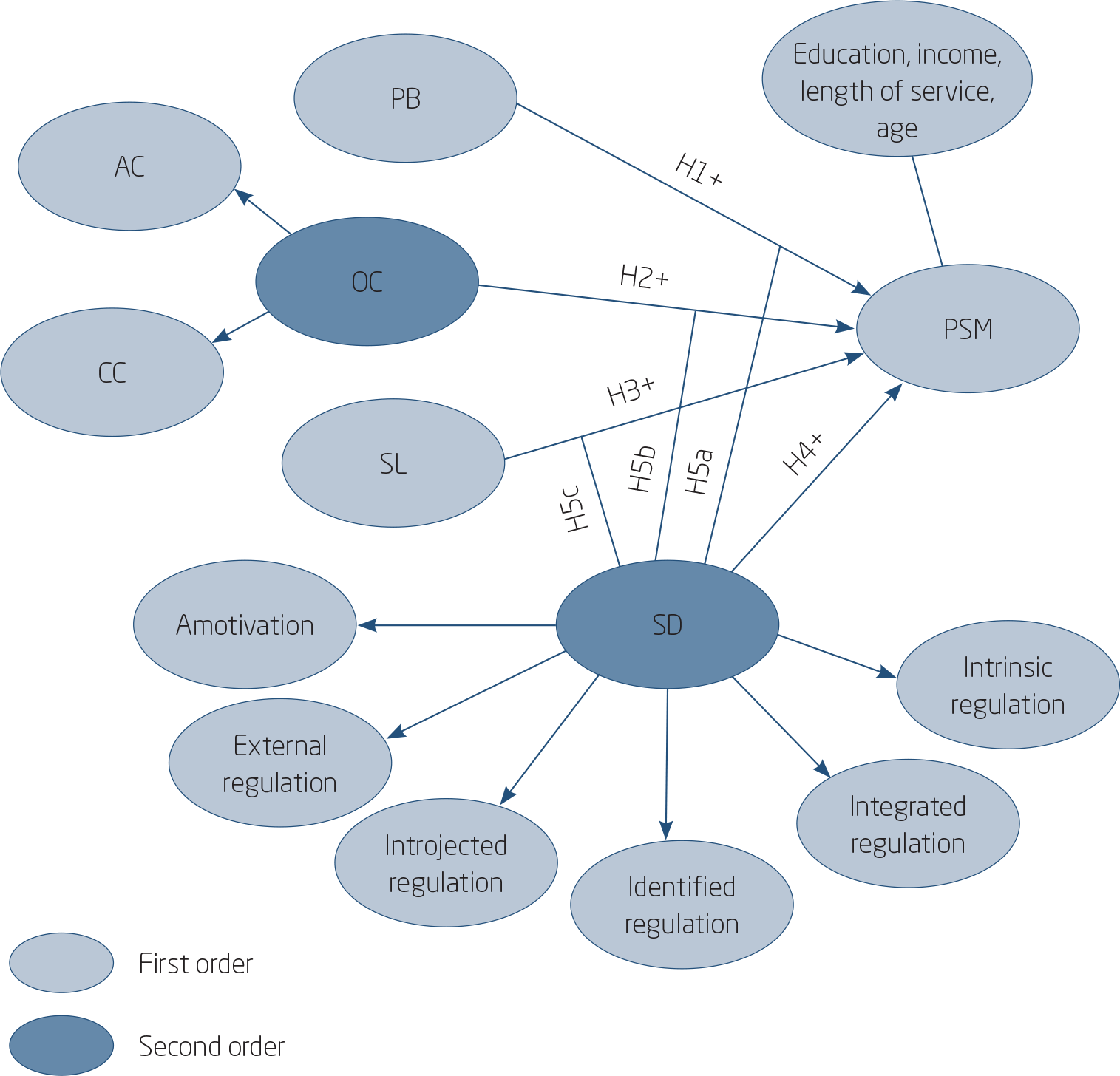 Note. PSM - Public Service Motivation, PB - Prosocial Behavior, OC - Organizational Commitment, AC - Affective Commitment, CC - Calculative Commitment, SL - Satisfaction with Life, SD - Self-determination
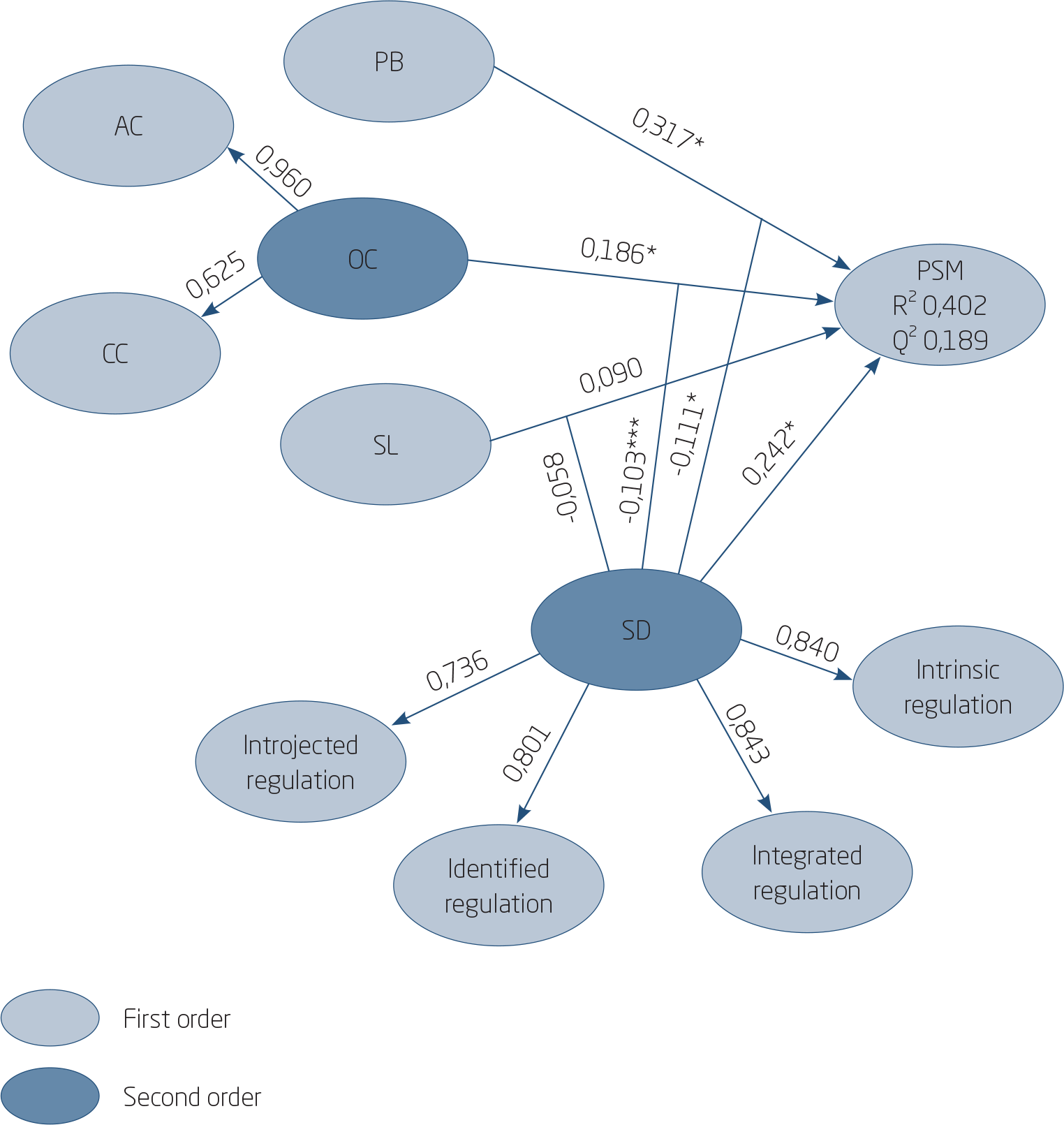 Note. PSM - Public Service Motivation, PB - Prosocial Behavior, OC -Organizational Commitment, AC - Affective Commitment, CC - Calculative Commitment, SL - Satisfaction with Life, SD - Self-determination. Significance Level: * ≤ 0.001%, ** ≤ 0.01%, *** ≤0.05%.