
 Decolonizing the westernized university: a theoretical synthesis based on South Africa and Brazil
ABSTRACT
The present text aims to develop a theoretical synthesis of the decolonization of Westernized universities based on the South African and Brazilian realities. The similarities between these two realities point to the existence of common abysmal lines and the maintenance of university colonialism. They also inspire learning related to the decolonization of the university which, together with theoretical contributions from authors linked mainly to the approach of Southern Epistemologies, but also to the Latin American Decolonial approach, allowed the elaboration of a theoretical synthesis that involves the global and local dimensions in articulation, considering different contexts in dialogue, such as the State, pluriversity and international organizations, for example. In this way, a counterposition to colonialism and university capitalism is proposed from a transmodern perspective, capable of promoting changes at a glocal level.
Keywords:
University Colonialism; South Africa; Brazil; Decolonial; Pluriversity
RESUMO
O presente texto tem como objetivo elaborar uma síntese teórica sobre a descolonização das universidades ocidentalizadas com base nas realidades sul-africana e brasileira. As aproximações entre essas duas realidades apontam para a existência de linhas abissais comuns e para a manutenção do colonialismo universitário. Também inspiram aprendizados relativos à descolonização da universidade que, unidos a contribuições teóricas de autores/as ligados/as sobretudo à abordagem das Epistemologias do Sul, mas também à Decolonial Latino-Americana, permitiram a elaboração de síntese teórica que envolve as dimensões global e local articuladas, considerando diferentes contextos em diálogo, como o Estado, a pluriversidade e as organizações internacionais, por exemplo. Desse modo, propõe-se uma contraposição ao colonialismo e capitalismo universitário numa perspectiva transmoderna, capaz de promover mudanças em nível glocal.
Palavras-chave:
Colonialismo Universitário; África do Sul; Brasil; Descolonial; Pluriversidade
RESUMEN
El presente texto tiene como objetivo desarrollar una síntesis teórica sobre la descolonización de las universidades occidentalizadas a partir de las realidades sudafricana y brasileña. Las similitudes entre estas dos realidades apuntan a la existencia de líneas abismales comunes y al mantenimiento del colonialismo universitario. También inspiran aprendizajes relacionados con la descolonización de la universidad que, junto con aportes teóricos de autores vinculados principalmente al enfoque de las epistemologías sureñas, pero también al decolonial latinoamericano, permitieron la elaboración de una síntesis teórica que involucra dimensiones globales y locales articuladas. considerando diferentes contextos en el diálogo, como el Estado, la pluriversidad y los organismos internacionales, por ejemplo. De esta manera, se propone una contraposición al colonialismo y al capitalismo universitario desde una perspectiva transmoderna, capaz de promover cambios a nivel glocal.
Palabras clave:
Colonialismo Universitario; Sudáfrica; Brasil; Decolonial; Pluriversidad
INTRODUCTION
The Western university is an institution whose significance is constantly disputed. However, it can be said that, throughout modern Western history, the Western university institution has played an important role in the production and maintenance of elites, since it has actively participated in the exclusion of social groups and theorized their ontological and epistemological inferiority (Almeida Filho, 2008; Santos, 2008).
In this article, the term “Western university” refers to the institution that emerged in the European Middle Ages, replacing monasteries, and whose main mission was to provide advanced teleological education to the upper classes of society (Almeida Filho, 2008). This institution expanded in Europe at a time when commercial economic activity was growing due to the exploitation of the colonies, developing the so-called commercial bourgeoisie. In this context, Western universities began receiving political and financial support from the emerging liberal bourgeoisie. Centuries later, the Industrial Revolution expanded the capitalist mode of production, directly impacting university education, which began to train the bourgeois elite and operators of the capitalist system, advancing in terms of modern science and technology, but also establishing itself as a space for criticism and debate (Faria and Walger, 2020; Faria, 2022).
This institution has spread across the world through colonial projects, creating Westernized universities, i.e., universities whose fundamental principles are Western, but which are located in the Global South. Among these principles is modern science, knowledge that originates to validate a line of thinking whose premise is the existence of an abysmal divide, in which the Global North is understood as the subject of knowledge and the Global South is the object of knowledge (Santos, 2017). Therefore, modern Western science, produced and disseminated by Western and Westernized universities, produces “the fracture that divides the world into subjects and objects, and the remaining dualisms that will characterize the reading of the world based on the Cartesian proposal” (Meneses, 2016, p. 31).
It can therefore be said that the persistence of abyssal thinking is due to the existence of colonialism and university capitalism, which are intertwined and manifest themselves institutionally and on a daily basis. University colonialism refers to “criteria that define the curriculum, the teaching staff, and the student body” based on the belief that there is a superior and uniquely true culture - modern Western culture (Santos, 2020, p. 503). University capitalism, in turn, refers to the phenomenon of transforming the university into a capitalist enterprise, evaluated by its ability to create market value, either through diplomas or access to jobs (Ibarra-Colado, 2007; Santos, 2020).
In recent times, Western universities, particularly Westernized universities in the Global South, have been experiencing crises, particularly at the institutional level (Santos, 1999; 2017). Among the impacts of this crisis are the prioritization of certain areas of research, mainly those linked to technological development, the devaluation of national critical thinking as something inferior, and the marketization of universities. Also worthy of note is the maintenance of unequal gender and race structures in these institutions, which are increasingly contested across the world (Täuber, 2020; Täuber and Mahmoudi, 2022; Araújo and Silva, 2022), as well as a questioning of the social return of universities, particularly of those that serve a socially referenced, public university project carried out by international financial organizations (Santos, 2008; Ndlovu-Gatsheni, 2017; Faria and Walger, 2020).
Given this scenario, there is a clear need to reflect on the decolonization of universities, disconnecting these institutions from modern Western colonial thinking, which is intertwined with racism, neoliberal capitalism, and heteropatriarchy (Santos, 2022; Santos and Cunha, 2022). Decolonization is understood as the process of historical and epistemological reparation, which goes beyond political independence (Meneses, 2018; 2020), and “is based on the recognition of silenced knowledge and the reconstruction of humanity [...] [highlighting] the large number of alternatives to modern hegemonic thinking» (Meneses, 2020, p. 16). In this sense, decolonialism refers, above all, to the insurgency of ways of knowing, being, and existing in the world, which have long been subordinated by colonial, heteropatriarchal, and capitalist logic.
The reflections drawn in this study on the decolonization of universities are based on two distinct but similar realities: South Africa and Brazil. Both were chosen because they represent the tensions faced by Westernized universities located in the Global South in the face of global and local pressures, because they have a colonial past marked by genocide and epistemicide in the name of European exploitation, and because they have undergone recent democratization processes, with constitutions established in 1996 and 1988, respectively. It is also noteworthy that these two countries aspire to a certain level of leadership in the regional context and have unequal higher education systems and efforts to improve access to it (Majee and Ress, 2020). Thus, it is believed that understanding the existing processes in these countries and identifying commonalities can contribute to the construction of a common decolonization agenda (Silva, 2019).
Drawing on these two realities and contributions from various authors discussing the decolonial project, this text aims to develop a theoretical synthesis of the decolonization of Westernized universities grounded in the realities of South Africa and Brazil. Different decolonial approaches have developed important reflections, and despite emphasizing understandings developed within the scope of the Epistemologies of the South (Meneses, 2014; 2016; 2018; 2020; Santos, 2014; 2017; 2018; 2022; Santos and Meneses, 2020; Santos and Cunha, 2022), the Decolonial approach developed in the Latin American context since the 1990s (Dussel, 2005; 2006; Maldonado-Torres, 2007; 2012; 2021; Grosfoguel, 2016; 2020) is also used at times. This is because, despite recognizing the main differences between these approaches, it is understood that both have made important contributions to thinking about the decolonization of the university, so they can complement each other.
Thus, through this text, we hope to highlight the possibilities outlined in the literature for the decolonization of Westernized universities in South Africa and Brazil, in light of the recent crises these institutions are facing. More broadly, it aims to contribute to the debate on the necessary transformation of universities, especially those in the Global South, which have been continually questioned and attacked by colonial and neoliberal logic.
THE UNIVERSITY CONTEXT IN SOUTH AFRICA
South African universities emerged as part of the imperial and colonial tradition, forming a highly racialized higher education context, further entrenched by the experience of apartheid (Ruggunan, 2016; Ndlovu-Gatsheni, 2017). Due to the fact that South Africa was considered a ‘little Europe’ on the African continent, with a strong white presence since 1652, South Africa’s first Westernized university, known as South African College (later the University of Cape Town), was founded in 1829, slightly earlier than in other colonized African territories. However, this was an English university that served and prepared White students for the University of London’s undergraduate exams (Ndlovu-Gatsheni, 2017).
The universities created thereafter did not admit Black students. It was not until 1916 that the first university for Africans was established, known as the South African Native College of Fort Hare (Ndlovu-Gatsheni, 2017). However, the limited higher education provided to Black people at the time had serious limitations, such as the use of 19th-century books and methods, the failure to incorporate the latest scientific advances of the time, and a disconnect from African reality, since the curriculum focused on the European one (Rodney, 1982).
After 1945, apartheid became institutionalized in South Africa, resulting in the invention of ‘Bantustans’, i.e., false independent ethnic republics that were politically unsustainable (Ndlovu-Gatsheni, 2017). In this context, ‘Bantu education’ was also instituted in 1953 by Christian missionaries to train cheap labor for the White economy, which sought to promote differences among the Zulu, Xhosa, Venda, and others, thereby expressing European racism (Rodney, 1982).
Segregation in higher education under apartheid was explicit: of the 21 universities in South Africa at the time, nine were for Africans (segregated according to ethnic groups), two were for Blacks and Indians, and 15 were for White South Africans (divided between English-speaking and Afrikaans-speaking universities). In addition, those allocated to Black South Africans often did not offer the higher-level qualifications that would enable professional qualifications (Ruggunan, 2016).
In 1960, political independence movements emerged across the African continent, accompanied by struggles to decolonize/Africanize universities. Student protests took place in 1971 due to the economic crisis that affected these institutions, as well as the rise of authoritarian regimes and the Cold War. At that time, however, universities in South Africa were still facing institutionalized apartheid, which hindered the processes of decolonial struggles (Ndlovu-Gatsheni, 2017).
The military coup and the advent of the Cold War, both in the 1970s, were important milestones in the weakening of South African educational institutions, followed by questions about the return of the country’s universities and the consequent decrease in investments by the World Bank and the International Monetary Fund in the 1980s and 1990s, leading to a worsening of issues such as lack of equipment, infrastructure collapse, and poor remuneration of teaching staff (Santos, 2008; Ndlovu-Gatsheni, 2017). In the 1990s, the country underwent democratization, yet epistemicide, inequality, elitism, misalignment with local problems, the predominance of Western aesthetics, and racism in South African universities (Shaik and Khan, 2021; Silva, 2019) remain, as does the difficulty of access for the poorest (Majee and Ress, 2020).
Given this context, important critical interventions have been carried out in South African universities, such as student political movements, exemplified by the #RhodesMustFall, #FeesMustFall, and Open Stellenbosch protests, which, among other things, demanded the decolonization of curricula, the expansion of access to higher education, and the banning of fees, and questioned low student performance and retention rates, the irrelevance of what was taught in universities, and their misalignment with local labor demands (Ruggunan, 2016; Ndlovu-Gatsheni, 2017; Jaarsveldt et al., 2019; Harris, 2021; Shaik and Khan, 2021; Nyamnjoh, 2023). In addition to these student movements, there was also engagement among academicians, such as the UCT Black Caucus Academic (BAC) at the University of Cape Town (Silva, 2019).
Some universities have taken steps to respond to these protests, such as Stellenbosch University, which created a working group to decolonize the curriculum, whose recommendations were summarized in a widely circulated report (Stellenbosch University, 2017). Despite the importance of this report, institutions have not always decolonized their curricula, pedagogical structures, and epistemologies systematically (Nyamnjoh, 2019), sometimes engaging in what Le Grange et al. (2020) called decolonial-washing. Other universities responded with violence (Silva, 2019) or introduced other terms into the debate, using, for example, the word “transformation” instead of decolonization (Majee and Ress, 2020).
The notion of intellectual and cultural solipsism, characterized as a condition in which there is a limitation in the imaginative capacity of agents that prevents them from understanding real-world situations and, consequently, from formulating coherent and productive actions in the face of decolonial demands, has been mobilized as a possible explanation for the gap in dialogue between students, the community, and the university (Shaik and Khan, 2021). The existence of a caged colonial mentality among African intellectuals and political elites has also been noted (Nyoni, 2019), as has competitive victimization, born of limited nationalism (Nyamnjoh, 2023). In economic terms, the underfunding of universities, which are forced to enter into contracts with corporations to secure investment, also appears to be a factor hindering the decolonization of higher education institutions in the South African context (Nyamnjoh, 2019).
THE UNIVERSITY CONTEXT IN BRAZIL
In the early centuries of colonization in Brazil, higher education was prohibited, and the elites obtained their degrees mainly in Coimbra, Portugal (Almeida Filho, 2008; Faria and Walger, 2020). From 1808 onwards, when the Portuguese royal family took up residence in the country and ports were opened for trade, the first vocational schools began to be established, and it was only in the 20th century that the first institutions known as universities appeared (Diniz and Diniz, 2023).
The first Brazilian universities were focused on educating the elite. At that time, the elite was made up mainly of White people, since whiteness was an indicator of moral and cultural attributes, beyond skin color, and there was a process of proletarianization and demonization of Black people. In this context, the figure of the mulatto was invented and incorporated into the new society that was forming, since European values ensured a certain social recognition based on their performance and cordiality, which “compensated” for their skin color. What was observed, therefore, was a process of whitening carried out during the modernization effort in Brazil (Souza, 2000).
Thus, through the figure of the mulatto and the idea of miscegenation, the myth of racial democracy prevails in Brazil, that is, the notion that there is racial harmony, supported by the argument of meritocracy and propagated by the educational system itself, which aims to defend a supposed integration of Blacks into class society, which in fact took place in a precarious manner, with the denial of opportunities and exclusion of former slaves from the most dynamic regions and sectors of the economy (Gonzalez, 1984; Conceição, 2009; Gouvêa, 2017; Novo, 2023). It can therefore be observed that the “dilution” of Brazilian blackness into different gradations or shades of brown is part of the whitening project associated with the myth of racial democracy, giving an idea of sociability when, in fact, it disarms Black Brazilians from fighting against the poverty imposed on them, concealing the conditions of violence to which they are subjected (Ribeiro, 1995).
From the outset, Brazilian universities adopted the Portuguese model of scholastic universities and the French model of lyceums, both European (Almeida Filho, 2008). But mulattoes did not always have access to these institutions. Often, these people were restricted to commercial education and, from 1931 onwards, to higher education courses in Administration and Finance, which did not have university status and were the only courses that commercial education graduates could access, allowing these people from low or middle social strata to hold middle-level positions in the civil service or as accountants (Barros, 2017), thus maintaining the colonial state.
It is true that Brazilian universities have also undergone numerous transformations, but most of them were frustrated or incomplete attempts at reform that ended up creating an institutional and academic training model that mixes elements of the 19th-century scholastic model and the North American Flexner model, meeting market premises and with a linear and fragmented conception of knowledge (Almeida Filho, 2008). The American influence is particularly strong in the Brazilian university context. Starting in the 1960s, for example, agreements between the Brazilian Ministry of Education (MEC) and the United States Agency for International Development (USAID) were established to reform Brazilian education according to standards imposed by the United States, mainly instituting and formatting graduate studies, giving them the format they have today (Faria and Walger, 2020). Higher education courses in administration in the country, in particular, bear witness to US interference, especially after World War II and in the context of the Cold War, in order to contain the “communist threat” in Latin America, especially after the Cuban revolution (Alcadipani and Bertero, 2012; Wanderley and Barros, 2020).
Almeida Filho (2008) observed that the Brazilian university education model has problematic consequences, such as confusing curricula, with numerous degrees; premature career choices; traumatic entrance exams for undergraduate programs; limited, biased, and rigid undergraduate curricula; a wide gap between undergraduate and graduate programs; submission to the market, with a loss of autonomy; incompatibility with university models in other countries; limited technological and professional training; and a gap between university education and the contemporary context - theory and practice. In addition to these problems, institutionalized racism persists (Araújo and Silva, 2022, p. 8), as well as difficult access for the poorest segments of society (Majee and Ress, 2020).
Faced with these problems, social movements linked to youth, activism, and Black feminism sparked important struggles for public policies on university access, which until then had been reserved for White- and mixed-race members of the Brazilian elite and middle classes, identified with the Europeans (Silva, 2019). As a result of these struggles, and with the establishment of a left-wing government in the country in 2003, important programs were launched at the federal level, such as the Program to Support the Expansion and Restructuring of Brazilian Federal Universities (Reuni), created in 2007, the National Student Assistance Program (Pnaes), from the same year, and the Quota Law (Law No. 12.711/2012) (Diniz and Diniz, 2023). This has led to greater inclusion of underrepresented groups in academia, considering the history of inequality in access to public higher education in the country (Vicente et al., 2018), despite the decline in investment in education - more evident after Constitutional Amendment No. 95/2016 - which established a cap on education expenditure for twenty years, with the greatest impact on scholarships and student assistance (Diniz and Diniz, 2023). Even in the face of such state actions, some inequalities still prevail in university education in the country, especially with regard to the silencing of Black and Indigenous authors and the difficulty in incorporating the knowledge they produce into academic curricula (Silva, 2017; 2019).
ABYSSAL LINES COMMON TO SOUTH AFRICAN AND BRAZILIAN UNIVERSITY CONTEXTS
From the discussion in the previous sections, it is clear that racism is a common feature in the constitution of Brazilian and South African universities, reflecting the strong colonialism in higher education in these two countries. It is racism that imposes the understanding that there is a superior culture, the basis of abyssal and Cartesian thinking, represented by René Descartes’ phrase “I think, therefore I am” or Ego cogito. This thinking is connected to “I conquer, therefore I am” or Ego conquiro, through the epistemic racism/sexism produced by “I exterminate, therefore I am” or Ego extermino, as discussed by Maldonado-Torres (2007) and Grosfoguel (2016), inspired by Enrique Dussel.
In other words, the “I” in “I think, therefore I am” could not be an Indigenous person, an African, a woman, a Muslim, or a Jew, due to the genocides/epistemicides of the 16th century against these populations, deepened by the racist Kantian view, inaugurated in the 18th century, which founded the canon of Western universities by stating that rationality is “embodied in white men north of the Pyrenees,” leading “people ‘without rationality’” to be “epistemologically excluded from the knowledge structures of universities” (Grosfoguel, 2016, p. 43).
This racism, which structures and is structured by abysmal Cartesian knowledge, is still expressed today in the university context in Brazil and South Africa. The way in which the community deals with these events is also worrying: with indifference and skepticism in the face of a continuing institutional culture of microaggressions and burden due to excessive competition for resources, leading researchers to disconnect from themselves and others as a form of self-protection (Silva, 2017; Carolissen, 2022).
This racism is linked to heteronormative masculinities, highlighting gender inequalities rooted in the knowledge structures of Western and Westernized universities (Carolissen, 2022). In Africa, even in recent times, it is possible to observe students and academicians who identify as women silenced by the patriarchal order of male-dominated universities (Nyamnjoh, 2019). In Brazil, this situation is no different, with recurring situations of abuse experienced by women (Teixeira and Rampazo, 2017).
Thus, it can be said that university colonialism is primarily informed by institutionalized racism and gender inequality in Brazil and South Africa. Based on this, it is possible to observe what Castro-Gómez (2007) called zero-point arrogance, that is, it is evident in the history of Brazilian and South African universities that there is a tendency to disconnect from empirical places in order to observe the world, as well as to divide it according to a mathematical logic characteristic of economic science (Lander, 2000). Thus, the viewpoint of White European Christian men is privileged, as Grosfoguel (2016) points out, that is, the Western worldview (Lander, 2000).
A fundamental element of this Western worldview is language. In both Brazil and South Africa, the colonizer’s language was imposed, and local languages were devalued. In Brazil, Indigenous languages were almost completely erased, with Portuguese predominating, and English, especially in the university context, also becoming prevalent due to North American influence. In South Africa, with British colonization, English became the main language, although a large part of the population still speaks one of the more than ten South African languages. In an analysis of the university context in that country, Mampane et al. (2018, p. 4) warned that “once language and culture are devalued, identity, social connection, and cohesion are at risk. Students feel lost in what they learn, and this results in a loss of self-esteem.”
Furthermore, the impacts of university colonialism in Brazil and South Africa can be observed, more generally, in the tension between adapting to the demands of a global economy and the need for reparations and racial equity (Majee and Ress, 2020). Regarding attempts to incorporate into the global economy, one issue raised in the literature is the lack of university autonomy due to the search for funding from the market (Ibarra-Colado, 2007; Almeida Filho, 2008; Nyamnjoh, 2019). Another issue concerns the universal evaluation standards to which universities are subject, set by a limited group of Western academics and based on the priorities of developed countries, where certain competencies are deemed urgent but not others (Jaarsveldt et al., 2019).
These instruments do not always have clear metrics and focus on production and reputation indicators (Vamorbida et al., 2015). They are problematic indicators because they reduce the purpose of higher education, devaluing teaching and the social impact of universities, in addition to generating a vicious cycle in which the highest-ranked universities maintain the best reputation indices (Silva and Rudá, 2019). It is worth noting, therefore, that these indicators, considered by international rankings, emphasize English-language journals, which gives an advantage to universities located in English-speaking countries; give greater weight to the natural sciences at the expense of the social sciences and humanities; and convey the false idea that different universities in different parts of the world can be measured by the same rules; they promote a game of winners and losers, leading universities to act in their own interests or those of an elite; they are often developed by private enterprises that sell recipes, data, consulting services, and access to events and workshops on university rankings, creating dependence on universities (Nassiri-Ansari and McCoy, 2023).
In addition to global rankings, there are local evaluation mechanisms, such as the Brazilian systems for evaluating higher education institutions, created in a state context, which are strongly influenced by global rankings, as they are “formal and productivity-oriented, excluding community participation and neglecting the multiplicity of teaching, research, and extension projects” (Faria and Walger, 2020, p. 17). These evaluation criteria, particularly in Brazil, prioritize graduate studies, which originated in the United States; make university teaching a burden on teaching activities; marginalize extension programs; encourage socially irrelevant research; and are distant from the “socially referenced public university project” (Faria and Walger, 2020, p. 30; Faria, 2022).
Another issue addressed in the literature has been internationalization. In Brazil, in particular, a university was created with federal funds to encourage student mobility from countries of the Community of Portuguese Language Countries (CPLP, as per its Portuguese acronym). This university has been noted for innovations in management, grounded in a decolonial perspective and informed by elements such as equity, sustainability, interculturality, citizenship, and South-South cooperation, among others (Bizarria et al., 2020). However, in an analysis of teaching at this same institution, Carvalho Filho et al. (2017) observed ambiguities, highlighting the contradictions of decolonial projects in countries of the Global South, especially the lack of attention given to the knowledge and realities of international students, most of whom are African.
In light of these contradictions, internationalization has been problematized as a possible source and perpetuator of inequalities, since depoliticized understandings of internationalization prioritize global competition and deprive disadvantaged students who, due to exclusionary policies of apartheid and colonization in Brazil and South Africa, have a weak pre-university education and face financial constraints (Majee and Ress, 2020; Heleta and Chasi, 2023).
THEORETICAL SYNTHESIS FOR DECOLONIZING UNIVERSITIES
Based on the reflections on Western-style universities in South Africa and Brazil presented in the previous section, it is clear that decolonizing this institution is a complex task, but not an impossible one. Contributions from the literature on the subject have identified different dimensions, contexts, and levels that can be deconstructed.
On a global scale, the starting point is the understanding that decolonizing the university implies countering neoliberal globalization (Santos, 2008). This means questioning market-based institutions with neoliberal premises, including the international higher education evaluation systems they finance. In this sense, and based on reflections situated in Brazil, it is understood that international institutions should encourage the creation of more objective and scientific indicators (Vamorbida et al., 2015; Faria, 2022), and systems that evaluate both the global performance of higher education institutions and local university teaching and action, based on dialogue with the contexts that form the local dimension and with other non-market-based international institutions.
The global dimension is directly connected to the local one, which shapes the phenomenon of neoliberal globalization in terms of race (Maldonado-Torres, 2012), class, and gender, among others, given that decolonization is never articulated in a vacuum, as analyses of the South African context have shown (Nyamnjoh, 2023). Furthermore, it is important to note that the transformative movement proposed in this theoretical synthesis is bottom-up; that is, it is unlikely that there will be a global decolonization that allows for the decolonization of the university, but the reverse is also possible.
It should also be noted that the university’s decolonization does not depend solely on the university itself. As Mignolo (2008) stated when presenting the communal organization Amawtay Wasi, the management of the political and economic spheres goes hand in hand with the management of education. This implies that decolonizing the university, or any educational context, depends on transforming other contexts, institutional or otherwise, with which the university is related. In this sense, at the local level, there are diverse contexts, including business, social movements, the state, pluriversity, and other higher education institutions. From a decolonial perspective, these contexts are interconnected, and the pluriversity context in particular is connected to the others through extension and research based on non-extractivist principles. Extension and research are also interconnected and linked to teaching.
In the case of the relationship between pluriverse contexts and other higher education institutions, dialogue can be marked by the creation of mutually reinforcing networks (Santos, 2008), especially between institutions in the Global South, as has been attempted in Brazil (Bizarria et al., 2020) - encouraging internationalization that fosters dialogue between international and local needs (Majee and Ress, 2020).
The relationship between the pluriversity and state contexts also deserves mention. The state context comprises various bodies, such as ministries, secretariats, councils, and coordinating bodies, each of which impacts universities in different ways, often through operating and evaluation standards. From a decolonial perspective, the main purpose of the state and the bodies that constitute it should be to objectify the will and power of the people (or their potentia), without fetishizing it or directing it toward the interests of a specific group or elite (Dussel, 2006). This implies distributing resources equitably to the people. In educational terms, this understanding of the state has an obvious repercussion: the university is considered a public good rather than a commodity (Santos, 2008).
As public goods, universities must be prioritized in investment so they are not at the mercy of corporate interests in research, as discussed by Nyamnjoh (2019) in the South African context. Thus, there is a need to ensure the university’s non-subordinate autonomy, understood as the ability of an academic community to define its main project and implement it independently (Ibarra-Colado, 2007, p. 134).
In the pluriversity context (non-profit by nature), the main premise is opposition to colonialism and university capitalism through the adoption of a transmodern perspective. The idea of pluriversity (Santos, 2018) is an alternative to the university, the latter characterized by a logic in which “one defines for others” (Grosfoguel, 2016, p. 46). Thus, pluriversity is conceived on the basis of Enrique Dussel’s notion of transmodernity (Grosfoguel, 2016; Santos, 2018). Transmodernity is understood as a project of political, economic, ecological, erotic, pedagogical, and religious liberation, which presupposes the “incorporation of the rational European emancipatory character transcended as a project of liberation from its denied otherness” (Dussel, 2005, p. 51). In this pluriverse context, the institutional, knowledge co-production, and pedagogical levels stand out, although it is understood that other levels are also possible.
At the institutional level, the first step is to strengthen the social role of universities (Almeida Filho, 2008), as opposed to the entrepreneurial university model promoted in recent times, which serves the market and the neoliberal economy (Ibarra-Colado, 2007). In this sense, value is placed on a socially referenced pluriversity project
with democratic and socially just access policies, financed with public resources, which, through its inseparable activities of teaching, research, and extension, educate critical citizens, produce knowledge focused on social demands, and expose the contradictions of the dominant mode of production (Faria and Walger, 2020, p. 31).
Other guidelines at the institutional level include: the development of transparent and participatory governance mechanisms and structures, which are only possible through the establishment of reciprocal relationships with society, beyond the market (Ibarra-Colado, 2007); inclusive access to careers and education (Santos, 2018; 2020); the creation of decolonial missions and purposes, focusing on themes such as internationalization, internalization, and sustainability, all understood from a critical and political perspective, that is, considering the historical complexes of colonialism and apartheid (Bizarria et al., 2020; Majee and Ress, 2020; Heleta and Chasi, 2023); policies attentive to internal processes, in order to prevent and punish racist, sexist, ableist, homophobic, and other colonial practices in everyday interactions at the university; allocation of support and resources to staff involved in decolonization (Stellenbosch University, 2017); dialogue with student and teaching and non-teaching staff movements inside and outside the university, as has been shown to be necessary based on experiences in Africa (Nyamnjoh, 2019; Odoman, 2021; Shaik and Khan, 2021).
On this last point, the strength and centrality of decolonial student movements in South Africa are a true source of inspiration for Black students and professors in Brazil, who have already achieved a significant expansion of university access (Silva, 2019). Regarding inclusive access to careers, but above all to university education, the Brazilian government’s policies, particularly since 2003, as indicated in the previous section, are noteworthy. Similarly, federal universities are public in this country, despite the inequalities that sometimes prevent the poorest from accessing them.
At the level of knowledge co-production, it is important to build “pluriversal knowledge” (Santos, 2008) based on the premise of knowledge ecologies. The ecology of knowledge, proposed by Boaventura de Sousa Santos, aims to break with the monoculture of scientific knowledge and to achieve what Nyamnjoh (2019) and Meneses (2020) call epistemological decolonization through the notions of incompleteness and humility. This implies considering knowledge developed by diverse people, especially those who have been subalternized by colonialism, capitalism, and heteropatriarchy. The various spaces where knowledge can be constructed, questioned, and articulated, beyond research centers, must also be considered (Meneses, 2016; Santos, 2017). Furthermore, it is important to problematize concepts hegemonically defined by modern reason, such as space, time, history, culture, and knowledge, challenging the epistemic privilege of the Global North, renegotiating meanings, and exploring possibilities (Meneses, 2014; 2016).
The Epistemologies of the South have provided clues for constructing pluriversal and emancipatory knowledge that is attentive to and transcends the limits of representation and, consequently, avoids the same errors as modern Western scientific knowledge. These clues are: transscale (translating different scales from different knowledge systems); the curious perspective (seeking different angles that invent society rather than imitate it); resorting to alternative knowledge to destabilize the levels of theoretical resolution to which we are already accustomed; assuming timelessness to capture the irregularity of co-presence; recognizing the friend-enemy dichotomy through the question “which side are we on?”; recognizing action-with-clinamen, which allows the identification of complex and creative counter-hegemonic deviations, as well as the conditions that enhance the opportunity for this to occur; and self-reflexivity, as an epistemological surveillance required for the development of new theoretical frameworks that are supportive and sensitive to other forms of knowledge (Santos, 2014; 2017; 2018).
Particularly with regard to research methodologies, it is important to strengthen non-extractivist approaches (Santos, 2018; Grosfoguel, 2020). This implies processes of knowing-with rather than knowing-about, which requires humility on the part of the researcher; creative and non-mechanical use of methodological tools, as in craftsmanship, which requires a certain level of unlearning; considering the different contexts of craftsmanship in the practices in which the research takes place, in order to select the best methodological tools or create new ones; knowing which side one is on in the development of a research project, that is, whether the struggle against domination is shared; understanding that post-abyssal participant observation is reciprocal; reevaluating the idea of returning the research, which makes more sense when knowing-about; recognizing the importance of evaluating-with, based on criteria related to the achievement of the objectives of the struggle, which implies trust built between the parties (Santos, 2018).
The need to de-monumentalize written scientific knowledge is also worth noting, and it occurs through oralization, the involvement of scientists in the struggle, and other forms of rhetorical argumentation that consider vernacular language, dialogical narrative, translation, and the contribution of research to society (Santos, 2018). The issue of valuing languages (Nyamnjoh, 2023) and endogenous cultures is fundamental here, and it is necessary to leverage them in curricula while incorporating relevant and profitable technologies into the educational system, as Mampane et al. (2018) observed in the South African university context. It is also important to question the excessive departmentalization or fragmentation of knowledge, a hallmark of modern and commercial logic, and the need to encourage transdisciplinarity (Lander, 2000; Castro-Gómez, 2007).
At the pedagogical level, Walsh’s (2013) contribution is particularly important. The author proposed an intertwining of the pedagogical and the decolonial, understanding that pedagogies are methodologies and practices that make it possible to recognize ontological, existential, epistemic, and spiritual domination and oppression, and to transgress them through transgressive action. The author draws mainly on Paulo Freire and Frantz Fanon, and states that decolonial pedagogies “chart paths for critically reading the world and intervening in the reinvention of society, as Freire pointed out, [and] at the same time revive the absolute disorder of decolonization by pointing to a new humanity, as Frantz Fanon pointed out” (Walsh, 2013, p. 31).
In dialogue with Catherine Walsh’s decolonial pedagogies (2013) are the post-abyssal pedagogies proposed by Santos (2018), namely the pedagogy of absences and the pedagogy of emergencies (Santos, 2020). Regarding the former, the author proposes that learning should enable the identification of absent forms of knowledge deemed irrelevant by colonial, modern, and abyssal thinking. The pedagogy of emergencies, on the other hand, has as its main role “to amplify the meaning of latent and potentially liberating sociabilities [...] that exist on the ‘other side’ of the abyssal line” (Santos, 2020, p. 535). Aligned, these pedagogies enable diverse agents, sometimes external to the university, to participate in the process of decolonizing this institution, thereby refreshing minds and reconfiguring practices for contextually relevant development, as noted by Nyamnjoh (2019) in the South African context.
These pedagogical concerns materialize in curricula that are attentive to the plurality of cultural and linguistic experiences, rather than blindly following the universalism and centrality of Western thought, generating inclusion as a sense of belonging (Mampane et al., 2018; Nyoni, 2019). Thus, it would be possible to transform the onto-epistemological positioning in university curricula, “renewing the interconnectivity of humans with the earth, the cosmos, plants, animals, and spirits,” but without losing sight of Western knowledge (Mudaly and Sanjigadu, 2022, p. 24).
Given this complex movement between the global and local dimensions, attention is drawn to the need for glocal pluriversal initiatives, inspired by the discussion undertaken by Mampane et al. (2018), whether at the institutional level, in terms of co-production of knowledge, and/or at the pedagogical level. Thus, it is believed that alternatives to neoliberal globalization can be tested by recognizing diversity across different dimensions and levels of existence. Figure 1 summarizes the theoretical discussion so far.
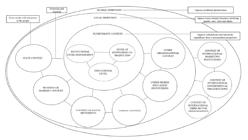
Figure 1 summarizes the discussion on the topic presented so far, without claiming to be a single, definitive model. The idea is to use a specific mode of representation to indicate the complexity of the topic in question, considering issues present in the South African and Brazilian contexts, and contributions from the Epistemologies of the South and Latin American decolonial approaches. Thus, it is possible to visualize, in a more systematic way, what has been debated with regard to the decolonization of universities, and to better understand where and how deconstructions and reconstructions need to be developed and articulated.
It is also important to emphasize that the boundaries between the different dimensions, contexts, and levels are represented in the figure by dotted lines, indicating that both are related and cannot be completely separated. As previously stated, the strong interconnection between the global and local dimensions clearly represents this idea, informing the necessary global-local perspective to be adopted by pluriversity at its different levels and in its relationship with other contexts.
FINAL CONSIDERATIONS
As explored in this text, the South African and Brazilian university contexts highlight the persistence of colonialism and academic capitalism through the maintenance of common abyssal lines, such as the predominance of racism and gender inequality, which are often intertwined, difficult access for the poorest, epistemicide surrounding language and local knowledge, teaching overload due to scarce resources, lack of autonomy, internationalization projects that exacerbate inequalities among students, and subordination to performance indicators centered on the European and North American reality.
The two realities discussed also inspire the struggle for the decolonization of the university. In the case of South Africa, there is a clear recognition of racial differences and the inequalities that arise from them, something that is not widely acknowledged in Brazil due to the myth of racial democracy. South African student movements, based on a strong awareness of colonialism, are also important examples.
Brazil, in turn, can serve as an inspiration for institutional policies launched by the federal government to expand access to higher education, improve performance indicators, ensure the access and retention of vulnerable students, and encourage internationalization among countries in the Global South. It is clear that these policies are fraught with contradictions, as are the struggles in South Africa and across the world, but these initiatives should be highlighted as important steps toward the decolonization of Western-style universities.
Based on the two realities in question and the contributions of authors linked mainly to the Epistemologies of the South, but also to Latin American Decolonial Approaches, a theoretical synthesis was outlined that points to two dimensions for the decolonization of the Westernized university, namely the global and the local, made up of heterogeneous and relational contexts and levels, each with its own particular challenges and orientations. Through this theoretical synthesis, we hope to contribute to the debate on the necessary reconfiguration of universities, especially Westernized ones located in the Global South. It is believed that this should be a collective and democratic project, involving different segments, because only through mutual engagement will it be possible to transform the university into a pluriversity, making it a key element for the transmodernization of society.
This research makes a contribution not only by proposing a synthesis regarding the decolonization of the university, but also by revealing some of the contradictions observed in this process, whether at the global or local level, or in the relationship between the university/pluriversity and other local contexts, mainly the State. In this sense, it is important to emphasize that the project of decolonizing the university cannot be conceived as conflict-free, as it is an emerging, unfinished, and contradictory process.
In view of the above, further research is encouraged to explore the dynamics, contradictions, and challenges that exist in the university context, considering, for example, the different realities of graduate and undergraduate programs; as well as the particularities existing in the relationships between universities and schools, the market, social movements, other higher education institutions (for-profit or non-profit), and other organizational contexts, in order to decolonize this institution in different realities, whether in the Global North or South.
ACKNOWLEDGEMENTS
Acknowledgement of the support provided by the Academic Centre of Agreste of the Universidade Federal de Pernambuco (CAA-UFPE); and the Centre for Social Studies of the Universidade de Coimbra (CES-UC), especially Professor Maria Paula Meneses (in memoriam), research supervisor, for the conversations and contributions.
References
-
ALCADIPANI, Rafael; BERTERO, Carlos O. Guerra fria e ensino do management no Brasil: o caso da FGV-EASP. Revista de Administração de Empresas, São Paulo, v. 52, n. 3, p. 284-299, jun. 2012. https://doi.org/10.1590/S0034-75902012000300002
» https://doi.org/https://doi.org/10.1590/S0034-75902012000300002 - ALMEIDA FILHO, Naomar de. Universidade Nova no Brasil. In: SANTOS, Boaventura de S.; ALMEIDA FILHO, Naomar (org.). A universidade no século XXI: para uma universidade nova. Coimbra: Edições Almedina, 2008. p. 79-184.
-
ARAÚJO, Danielle P.; SILVA, Marcos A. Universidade e antirracismo: resistência na produção de conhecimento e políticas públicas num espaço branco. Cadernos do Instituto de Sociologia da Universidade do Porto, Porto, n. 2, p. 8-11, dez. 2022. https://doi.org/10.21747/2975-8033/cad2a1
» https://doi.org/https://doi.org/10.21747/2975-8033/cad2a1 -
BARROS, Amon N. Antecedentes dos cursos superiores em Administração brasileiros: as escolas de Comércio e o curso superior em Administração e Finanças. Cadernos Ebape.br, Rio de Janeiro, v. 15, n. 1, p. 88-100, mar. 2017. https://doi.org/10.1590/1679-395146748
» https://doi.org/https://doi.org/10.1590/1679-395146748 -
BIZARRIA, Fabiana P. A.; TASSIGNY, Mônica M.; BARBOSA, Flávia L. S.; FREIRE, Jacqueline C. S. Inovação e gestão universitária no campo decolonial: estudo do suporte normativo de uma universidade de integração internacional. Revista Organizações & Sociedade, Salvador, v. 27, n. 95, p. 855-879, out.-dez. 2020. https://doi.org/10.1590/1984-9270959
» https://doi.org/https://doi.org/10.1590/1984-9270959 -
CAROLISSEN, Ronesse. Reflections on the race inquiry at Stellenbosch University. University World News, 2022. Disponível em: https://www.universityworldnews.com/post.php?story=20221026144729579 Acesso em: 21 nov. 2023.
» https://www.universityworldnews.com/post.php?story=20221026144729579 -
CARVALHO FILHO, Valério; IPIRANGA, Ana S. R.; FARIA, Alexandre de A. (De)colonialidade na educação em administração: Explorando limites e possibilidades. Arquivos Analíticos de Políticas Educativas, Tempe, v. 25, n. 47, maio 2017. http://doi.org/10.14507/epaa.25.2676
» https://doi.org/http://doi.org/10.14507/epaa.25.2676 - CASTRO-GÓMEZ, Santiago. Decolonizar la universidad: la hybris del punto cero. In: CASTRO-GÓMEZ, Santiago; GROSFOGUEL, Ramón (org.). El giro decolonial: reflexiones para uma diversidade epistémica más allá del capitalismo global. Bogotá: Siglo del Hombre Editores, Universidad Central, Instituto de Estudios Sociales Contemporáneos y Pontificia Universidad Javeriana, Instituto Pensar, 2007. p. 79-91.
- CONCEIÇÃO, Eliane B. A negação da raça nos estudos organizacionais. In: ENCONTRO DA ASSOCIAÇÃO NACIONAL DE PÓS-GRADUAÇÃO E PESQUISA EM ADMINISTRAÇÃO, 33., 2009, São Paulo. Anais [...]. São Paulo: ANPAD, 2009.
-
DINIZ, Márcia J. T.; DINIZ, Marcelo B. Trajetória recente do sistema de educação superior no Brasil: Alguns resultados de um ciclo virtuoso entre 1990 e 2015. Novos Estudos Cebrape, São Paulo, v. 42, n. 1, p. 183-211, jan.-abr. 2023. https://doi.org/10.25091/S01013300202300010010
» https://doi.org/https://doi.org/10.25091/S01013300202300010010 - DUSSEL, Enrique. Europa, modernidad y eurocentrismo. In: LANDER, Edgardo (org.). La colonialidad del saber: eurocentrismo y ciências sociales. Perspectivas latino-americanas. Buenos Aires: CLACSO, 2005. p. 41-53.
- DUSSEL, Enrique D. 20 tesis de política. México: Siglo XXI, 2006.
-
FARIA, José H. Universidade pública: um projeto em disputa na contemporaneidade. Farol - Revista de Estudos Organizacionais e Sociedade, Belo Horizonte, v. 9, n. 25, p. 396-410, dez. 2022. https://doi.org/10.25113/farol.v9i25.7900
» https://doi.org/https://doi.org/10.25113/farol.v9i25.7900 -
FARIA, José H.; WALGER, Carolina de S. O lugar da universidade pública: referência social ou fator de desenvolvimento das forças produtivas? Revista Nupem, Campo Mourão, v. 12, n. 27, p. 12-33, set.-dez. 2020. https://doi.org/10.33871/nupem.2020.12.27.12-33
» https://doi.org/https://doi.org/10.33871/nupem.2020.12.27.12-33 -
GONZALEZ, Lélia. Racismo e sexismo na cultura brasileira. Revista Ciências Sociais Hoje, p. 223-224, 1984. Disponível em: https://patriciamagno.com.br/wp-content/uploads/2021/04/GONZAL1.pdf Acesso em: 21 nov. 2023.
» https://patriciamagno.com.br/wp-content/uploads/2021/04/GONZAL1.pdf -
GOUVÊA, Josiane B. O que há por trás do discurso da harmonia racial no país da miscigenação? Farol - Revista de Estudos Organizacionais e Sociedade, Belo Horizonte, v. 4, n. 10, p. 915-955, out. 2017. Disponível em: https://revistas.face.ufmg.br/index.php/farol/article/view/3230 Acesso em: 21 nov. 2023.
» https://revistas.face.ufmg.br/index.php/farol/article/view/3230 -
GROSFOGUEL, Ramón. A estrutura do conhecimento nas universidades ocidentalizadas: racismo/sexismo epistêmico e os quatro genocídios/epistemicídios do longo século XVI. Revista Sociedade e Estado, Brasília, v. 31, n. 1, p. 25-49, jan.-abr. 2016. https://doi.org/10.1590/S0102-69922016000100003
» https://doi.org/https://doi.org/10.1590/S0102-69922016000100003 - GROSFOGUEL, Ramón. El extractivismo epistémico: um diálogo com Alberto Acosta, Leanne Betasamosake Simpsom y Silvia Rivera Cusicanqui. In: SANTOS, Boaventura de S.; MENESES, Maria P. (org.). Conocimientos nacidos en las luchas: construyendo las epistemologias del sur. México: Akal, 2020. p. 437-456.
- HARRIS, Chad. “Science Must Fall” and the call for decolonization in South Africa. In: LUDWING, David; KOSKINEN, Inkeri; MNCUBE, Zinhle; POLISELI, Luis; REYES-GALINDO, Luis (org.). Global epistemologies and philosophies of science. Londres: Routledge, 2021. p. 106-114.
-
HELETA, Savo; CHASI, Samia. Rethinking and redefining internationalisation of higher education in South Africa using a decolonial lens, Journal of Higher Education Policy and Management, v. 45, n. 3, p. 261-275, nov. 2023. https://doi.org/10.1080/1360080X.2022.2146566
» https://doi.org/https://doi.org/10.1080/1360080X.2022.2146566 -
IBARRA-COLADO, Eduardo. Future university in presente times: autonomy, governance and the entrepreneurial university. Management Revue, v. 18, n. 2, p. 117-137, 2007. https://doi.org/10.5771/0935-9915-2007-2-117
» https://doi.org/https://doi.org/10.5771/0935-9915-2007-2-117 -
JAARSVELDT, Lisa C. van; DE VRIES, Michiel S.; KROUKAMP, Hendri J. South African students call to decolonize science: Implications for international standards, curriculum development and Public Administration education. Teaching Public Administration, v. 37, n. 1, p. 12-30, ago. 2019. https://doi.org/10.1177/0144739418790779
» https://doi.org/https://doi.org/10.1177/0144739418790779 -
LANDER, Edgard. ¿Conocimiento para qué? ¿Conocimiento para quién? Reflexiones sobre la universidad y la geopolítica de los saberes hegemônicos. Estudios Latinoamericanos, Cidade do México, v. 7, n. 12-13, p. 25-46, 2000. https://doi.org/10.22201/cela.24484946e.1999.12-13.52369
» https://doi.org/https://doi.org/10.22201/cela.24484946e.1999.12-13.52369 -
LE GRANGE, Lesley; DU PREEZ, Petro, RAMRATHAN, Labby; BLIGNAUT, Sylvan. Decolonising the university curriculum or decolonial-washing? A multiple case study. Journal of Education, KwaZulu-Natal, n. 80, p. 25-48, out. 2020. https://doi.org/10.17159/2520-9868/i80a02
» https://doi.org/https://doi.org/10.17159/2520-9868/i80a02 -
MAJEE, Upenyu S.; RESS, Susanne B. Colonial legacies in internationalisation of higher education: racial justice and geopolitical redress in South Africa and Brazil. Compare: A Journal of Comparative and International Education, v. 50, n. 4, p. 463-481, out. 2020. https://doi.org/10.1080/03057925.2018.1521264
» https://doi.org/https://doi.org/10.1080/03057925.2018.1521264 -
MALDONADO-TORRES, Nelson. On the coloniality of being. Cultural Studies, v. 21, n. 2-3, p. 240-270, abr. 2007. https://doi.org/10.1080/09502380601162548
» https://doi.org/https://doi.org/10.1080/09502380601162548 - MALDONADO-TORRES, Nelson. The crisis of the university in the context of neoapartheid: a view from ethnic studies. Human Architecture: Journal of the Sociology of Self-Knowledge, Nova Jérsei, v. 10, n. 1, p. 90-100, jan. 2012.
-
MAMPANE, Ruth M.; OMIDIRE, Margaret F.; ALUKO, Folake R. Decolonising higher education in Africa: arriving at a glocal solution. South African Journal of Education, África do Sul, v. 38, n. 4, p. 1-9, nov. 2018. https://doi.org/10.15700/saje.v38n4a1636
» https://doi.org/https://doi.org/10.15700/saje.v38n4a1636 -
MENESES, Maria P. Diálogos de saberes, debates de poderes: possibilidades metodológicas para ampliar diálogos no Sul global. Em Aberto, Brasília, v. 27, n. 91, p. 90-110, jan. 2014. https://doi.org/10.24109/2176-6673.emaberto.27i91.2490
» https://doi.org/https://doi.org/10.24109/2176-6673.emaberto.27i91.2490 -
MENESES, Maria P. Os sentidos da descolonização: uma análise a partir de Moçambique. OPSIS, Catalão, v. 16, n. 1, p. 26-44, jan. 2016. https://doi.org/10.5216/o.v16i1.36904
» https://doi.org/https://doi.org/10.5216/o.v16i1.36904 -
MENESES, Maria P. Colonialismo como violência: a “missão civilizadora” de Portugal em Moçambique. Revista Crítica de Ciências Sociais, Coimbra, n. esp., p. 115-140, nov. 2018. https://doi.org/10.4000/rccs.7741
» https://doi.org/https://doi.org/10.4000/rccs.7741 - MENESES, Maria P. Sabores, aromas y conocimientos: desafios a uma epistemologia dominante. In: SANTOS, Boaventura de S.; MENESES, Maria P. (org.). Conocimientos nacidos en las luchas: Construyendo las epistemologias del sur. México: Akal, 2020. p. 385-408.
-
MIGNOLO, Walter. Desobediência epistêmica: a opção descolonial e o significado de identidade em política. Cadernos de Letras da UFF, Niterói, n. 34, p. 287-324, 2008. Disponível em: https://periodicos.uff.br/gragoata/article/view/33191 Acesso em: 21 nov. 2023.
» https://periodicos.uff.br/gragoata/article/view/33191 -
MUDALY, Ronicka; SANJIGADU, Sebastião. Epistemic journeying across abyssal lines of thinking: towards reclaiming Southern voices. Education as Change, África do Sul, v. 26, p. 1-29, out. 2022. https://doi.org/10.25159/1947-9417/11442
» https://doi.org/https://doi.org/10.25159/1947-9417/11442 -
NASSIRI-ANSARI, Tiffany; MCCOY, David. World-class universities? Interrogating the biases and coloniality of global university rankings. Kuala Lumpur: United Nations University International Institute for Global Health, 2023. https://doi.org/10.37941/PB/2023/1
» https://doi.org/https://doi.org/10.37941/PB/2023/1 -
NDLOVU-GATSHENI, Sabelo J. The emergence and trajectories of struggles for na “African University”: The case of unfinished business of African epistemic decolonisation. Kronos, Cape Town, v. 43, n. 1, p. 51-77, 2017. https://doi.org/10.17159/2309-9585/2017/v43a4
» https://doi.org/https://doi.org/10.17159/2309-9585/2017/v43a4 -
NOVO, Maria F. Lélia Gonzalez: intérprete da formação social do Brasil. Discurso, São Paulo, v. 53, n. 1, p. 74-97, jun. 2023. https://doi.org/10.11606/issn.2318-8863.discurso.2023.213914
» https://doi.org/https://doi.org/10.11606/issn.2318-8863.discurso.2023.213914 -
NYAMNJOH, Anye-Nkwenti. Is decolonisation Africanisation? The politics of belonging in the truly African university. Social Dynamics, Cape Town, v. 49, n. 2, p. 349-368, ago. 2023. https://doi.org/10.1080/02533952.2023.2226500
» https://doi.org/https://doi.org/10.1080/02533952.2023.2226500 -
NYAMNJOH, Francis B. Decolonizing the university in Africa. In: OXFORD RESEARCH ENCYCLOPEDIA OF POLITICS, 2019. Disponível em: https://oxfordre.com/politics/view/10.1093/acrefore/9780190228637.001.0001/acrefore-9780190228637-e-717 Acesso em: 18 out. 2023.
» https://oxfordre.com/politics/view/10.1093/acrefore/9780190228637.001.0001/acrefore-9780190228637-e-717 -
NYONI, Jabulani. Decolonising the higher education curriculum: An analysis of African intellectual readiness to break the chains of a colonial caged mentality. Transformation in Higher Education, Cape Town, v. 4, a69, jun. 2019. https://doi.org/10.4102/the.v4i0.69
» https://doi.org/https://doi.org/10.4102/the.v4i0.69 -
ODOMAN, Bunmi I. A Decolonial strategy to reconstruct student-management relationships in a university system. Academic Journal of Interdisciplinary Studies, Roma, v. 10, n. 2, p. 10-23, mar. 2021. https://doi.org/10.36941/ajis-2021-0034
» https://doi.org/https://doi.org/10.36941/ajis-2021-0034 - RIBEIRO, Darcy. O povo brasileiro: a formação e o sentido do Brasil. 2. ed. São Paulo: Companhia das Letras, 1995.
- RODNEY, Walter. How Europe underdeveloped Africa. Washington: Howard University Press, 1982.
-
RUGGUNAN, Shaun D. Decolonising management studies: A love story. Acta Commercii, Johannesburgo, v. 16, n. 2, a412, 2016. https://doi.org/10.4102/ac.v16i2.412
» https://doi.org/https://doi.org/10.4102/ac.v16i2.412 - SANTOS, Boaventura de S. Pela mão de Alice: o social e o político na pós-modernidade. 8. ed. Porto: Afrontamento, 1999.
- SANTOS, Boaventura de S. A universidade no século XXI: Para uma reforma democrática e emancipatória da universidade. In: SANTOS, Boaventura de S.; ALMEIDA FILHO, Naomar (org.). A universidade no século XXI: para uma universidade nova. Coimbra: Almedina, 2008. p. 11-78.
- SANTOS, Boaventura de S. Para além do pensamento abissal: das linhas globais a uma ecologia de saberes. In: SANTOS, Boaventura de S.; MENESES, Maria Paula (org.). Epistemologias do Sul. São Paulo: Cortez, 2014. p. 23-71.
- SANTOS, Boaventura de S. Justicia entre saberes: Epistemologías del Sur contra el epistemicidio. Madri: Morata, 2017.
- SANTOS, Boaventura de S. O fim do império cognitivo: a afirmação das epistemologias do Sul. Coimbra: Edições Almedina, 2018.
- SANTOS, Boaventura de S. Descolonizar la universidad. In: SANTOS, Boaventura de S.; MENESES, Maria P. (org.). Conocimientos nacidos em las luchas: Construyendo las epistemologias del sur. México: Akal, 2020. p. 501-539.
- SANTOS, Boaventura de S. Descolonizar: Abrindo a história do presente. São Paulo: Boitempo, 2022.
- SANTOS, Boaventura de S.; CUNHA, Teresa. Introdução. In: SANTOS, Boaventura de S.; CUNHA, Teresa (org.). Economias de bem viver: contra o desperdício das experiências. Coimbra: Edições 70, 2022.
- SANTOS, Boaventura de S.; MENESES, Maria P. Introducción, las Epistemologías del Sur: Dar voz a la diversidade del Sur. In: SANTOS, Boaventura de S.; MENESES, Maria P. (org.). Conocimientos nacidos em las luchas: Construyendo las epistemologias del sur. México: Akal, 2020. p. 9-47.
-
SHAIK, Anwar; KAHN, Peter. Understanding the challenges entailed in decolonising a Higher Education institution: an organisational case study of a research intensive South African university. Teaching in Higher Education, v. 26, n. 7-8, p. 969-985, maio 2021. https://doi.org/10.1080/13562517.2021.1928064
» https://doi.org/https://doi.org/10.1080/13562517.2021.1928064 -
SILVA, Gabriela; RUDÁ, Caio. Análise das métricas de qualidade do ensino nos rankings de Educação Superior. Bahia: Repositório Institucional da Universidade Federal da Bahia, 2019. Disponível em: http://repositorio.ufba.br/ri/handle/ri/31127 Acesso em: 21 nov. 2023.
» http://repositorio.ufba.br/ri/handle/ri/31127 -
SILVA, Nádia M. C. Universidade no Brasil: colonialismo, colonialidade e descolonização numa perspectiva negra. Revista Interinstitucional Artes de Educar, Rio de Janeiro, v. 3, n. 3, p. 233-257, jan. 2017. https://doi.org/10.12957/riae.2017.29814
» https://doi.org/https://doi.org/10.12957/riae.2017.29814 - SILVA, Nádia M. C. A luta pela descolonização do conhecimento acadêmico-universitário no mundo - desafios para o Brasil. In: ENCONTRO DE ESTUDOS MULTIDISCIPLINARES EM CULTURA, 15., Salvador. Anais [...]. Salvador: UFBA, 2019.
- SOUZA, Jessé. A modernização seletiva: uma reinterpretação do dilema brasileiro. Brasília: Editora Universidade de Brasília, 2000.
-
STELLENBOSCH UNIVERSITY. Recommendations of the task team for the decolonisation of the Stellenbosch University curriculum. Stellenbosch University, jul. 2017. Disponível em: https://www.sun.ac.za/english/transformation/Documents/SU%20Decolonisation%20Task%20Team%20Final%20Report%20with%20Annexures.pdf Acesso em: 22 nov. 2023.
» https://www.sun.ac.za/english/transformation/Documents/SU%20Decolonisation%20Task%20Team%20Final%20Report%20with%20Annexures.pdf -
TÄUBER, Susanne. Undoing gender in academia: personal reflections on equal opportunity schemes. Journal of Management Studies, v. 57, n. 8, p. 1718-1724, maio 2020. https://doi.org/10.1111/joms.12516
» https://doi.org/https://doi.org/10.1111/joms.12516 -
TÄUBER, Susanne; MAHMOUDI, Morteza. How bullying becomes a career tool. Nature Human Behaviour, v. 6, p. 475, fev. 2022. https://doi.org/10.1038/s41562-022-01311-z
» https://doi.org/https://doi.org/10.1038/s41562-022-01311-z -
TEIXEIRA, Juliana C.; RAMPAZO, Adriana S. V. Assédio sexual no contexto acadêmico da administração: o que os lábios não dizem, o coração não sente? Farol - Revista de Estudos Organizacionais e Sociedade, Belo Horizonte, v. 4, n. 11, p. 1151-1235, dez. 2017. Disponível em: https://revistas.face.ufmg.br/index.php/farol/article/view/4586 Acesso em: 22 nov. 2023.
» https://revistas.face.ufmg.br/index.php/farol/article/view/4586 -
VAMORBIDA, Sara M. I.; CARDOSO, Thuine L.; ENSSLIN, Sandra R. Rankings universitários: análise dos indicadores utilizados. Sociedade, Contabilidade e Gestão, Rio de Janeiro, v. 10, n. 2, p. 88-102, nov. 2015. https://doi.org/10.21446/scg_ufrj.v10i2.13352
» https://doi.org/https://doi.org/10.21446/scg_ufrj.v10i2.13352 -
VICENTE, Milene S.; DIAS, Sabrina O. M.; SANO, Barbara H. Análise da ampliação do ensino superior no Brasil a partir do Programa de Reestruturação e Expansão Universitária: as novas universidades federais. Movimento-Revista de Educação, Rio de Janeiro, v. 5, n. 9, p. 7-40, nov. 2018. https://doi.org/10.22409/mov.v0i9.480
» https://doi.org/https://doi.org/10.22409/mov.v0i9.480 - WALSH, Catherine. Pedagogías decoloniales: Práticas insurgentes de resistir, (re)existir y (re)vivir. Quito: Abya-Yala, 2013. tomo I.
-
WANDERLEY, Sergio; BARROS, Amon. The alliance for progress, modernization theory, and the history of management education: The case of CEPAL in Brazil. Management Learning, v. 51, n. 1, p. 55-72, set. 2020. https://doi.org/10.1177/1350507619869013
» https://doi.org/https://doi.org/10.1177/1350507619869013
-
How to cite this article:
SANTOS, Elisabeth Cavalcante dos. Decolonizing the westernized university: a theoretical synthesis based on South Africa and Brazil. Revista Brasileira de Educação, v. 31, e310036, 2026. https://doi.org/10.1590/S1413-24782026310037
-
Funding:
Coordenação de Aperfeiçoamento de Pessoal de Nível Superior - Brasil (CAPES).
-
Data availability statement:
Data use not informed, no research data used.
Data use not informed, no research data used.

 Source: Prepared by the author (2023).