 Traditional versu probiotic products: the influence of socio-economic factors on probiotic product consumption in Turkey
ABSTRACT:
This study investigated the impact of socio-economic factors on the consumption of probiotic products in the Eastern Mediterranean region of Turkey, specifically focusing on three categories: probiotic yogurt and milk, traditional fermented dairy products, and probiotic supplements. Based on surveys conducted with 600 participants from the cities of Kahramanmaraş, Hatay, and Osmaniye, logistic regression analysis was employed to explore relationships between socio-economic characteristics and probiotic consumption patterns. Findings revealed that education level and gender significantly influenced the likelihood of consuming probiotic products. Traditional products such as fermented yogurt, ayran, and cheese exhibit the highest consumption rates, driven by cost-effectiveness and cultural preferences. Probiotic supplements; however, are less commonly used, primarily among individuals with higher educational attainment. This research underscores the importance of consumer awareness about the health benefits of probiotics and highlighted the dominance of traditional products in the region’s dietary habits. These findings provided valuable insights for market strategies targeting probiotic product consumption in Turkey.
Key words:
functional foods; consumer behavior; purchase intention; traditional fermented dairy products; Eastern Mediterranean region
RESUMO:
Este estudo investiga o impacto dos fatores socioeconômico no consumo de produtos probióticos na região do Mediterrâneo Oriental, da Turquia. O estudo temfoco específico em três categorias: iogurte e leite probióticos, produtos lácteos fermentados tradicionais e suplementos probióticos. Deste modo, com base em pesquisas realizadas com 600 participantes das cidades de Kahramanmaraş, Hatay e Osmaniye, foi utilizada uma análise de regressão logística para explorar as relações entre as características socioeconômico e os padrões de consumo de probióticos. Os resultados revelam que o nível de educação e o gênero sexual influenciam significativamente a probabilidade de consumo de produtos probióticos. Além disso, produtos tradicionais como iogurte fermentado, ayran e queijo apresentam as taxas de consumo mais elevadas, impulsionadas pela relação custo-benefício e pelas preferências culturais. Os suplementos probióticos, no entanto, são menos utilizados, principalmente entre indivíduos com maior nível de escolaridade. O estudo busca ressalta a importância da conscientização do consumidor sobre os benefícios dos probióticos para a saúde e destaca o domínio dos produtos tradicionais nos hábitos alimentares da região. Essas descobertas fornecem informações valiosas para estratégias de mercado voltadas para o consumo de produtos probióticos na Turquia.
Palavras-chave:
alimentos funcionais; comportamento do consumidor; intenção de compra; produtos lácteos fermentados tradicionais; região do Mediterrâneo Oriental
INTRODUCTION
Functional foods are a type of food presented with the promise of improving the body’s physiological functions (URALA & LAHTEENMAKI, 2007). The International Life Sciences Institute (ILSI) defines functional foods as “foods containing various components aiming to improve health status or reduce the risk of certain diseases” (BOLUDA & CAPILLA, 2017). This concept originated in Japan in the 1980s and began to gain acceptance in the Western world by the late 1990s (DI PASQUALE et al., 2011). In 1991, Japan’s Ministry of Health, Labor, and Welfare (MHLW) introduced a functional food regulation called “Foods for Specified Health Uses” (FOSHU). Under this regulation, numerous new products clinically proven to have health benefits were developed and introduced to the market (IWATANI & YAMAMOTO, 2019).
Dairy products hold a significant place among functional food types. The most important functional products include full-fat/low-fat dairy products, probiotic dairy products, vitamin/mineral or omega-3 fatty acid-enriched products, and low-lactose/lactose-free dairy products. Notably, probiotic products are considered the most important functional products by many researchers (BAZHAN et al., 2018).
Probiotics are commonly defined as “foods containing beneficial live microorganisms that help maintain the microbial equilibrium of the intestines” (AKSU et al., 2010). A widely recognized international definition further described probiotics as “live microorganisms which, when consumed in adequate quantities, provide a health advantage to the host” (SANDERS, 2008). These live microorganisms can be ingested through fermented foods or dietary supplements. Although, many well-known probiotic products are dairy-based such as yogurt, cheese, ayran, and kefir; various other fermented foods naturally contain beneficial probiotic bacteria, including sauerkraut, sour pickles, apple cider vinegar, kombucha, şalgam (fermented turnip juice), and boza.
A substantial body of research indicated that maintaining a healthy balance of bacteria in the digestive system is closely linked to overall well-being. Probiotics support this microbial balance in the gut and have been associated with numerous scientifically documented health benefits (GILLETTE, 2025).
In the last two decades, consumers have shown increased interest in health and well-being, reflecting a shift in consumption behavior and greater attention toward “healthier” foods. The global probiotic market value exceeded 48 billion USD in 2021, with 14% of this market attributed to probiotic supplements (PARASKEVAKOS, 2020). Between 2016 and 2021, the highest growth in probiotic supplement market value was observed in developing countries, namely China (14.9%), India (14.7%), and Brazil (13.5%) (ANONYMOUS, 2023). Although, probiotic products are prominent as part of the healthy living trend, their consumption varies across countries. In some countries probiotics are considered part of food and dietary supplements, while in others, they are classified as pharmaceuticals. Accordingly, consumer preferences for probiotic products differ by region. In the United States consumers predominantly prefer probiotics as supplements, whereas in Asia-Pacific and European Union countries probiotic yogurt and fermented milk products are more popular (ÇELIK, 2023). As of 2022 the European Union probiotic market was valued at €9.5 billion; of which 53% (€5.04 billion) was accounted for by probiotic yogurt, 30% (€2.86 billion) by traditional sour milk products, and 17% (€1.6 billion) by probiotic supplements. While the European Union ranks second globally in the probiotic yogurt market, it constitutes 47% of the global total market value for sour milk products, and 25% for probiotic supplements (IPA, 2024).
The commercial probiotic market is categorized into three main segments: probiotic yogurt (FF-functional/fortified), sour milk products, and probiotic supplements. Probiotic yogurts, available in plain, flavored, and drinkable formats, are dairy-based products enriched with added probiotic strains. North America, the Asia Pacific, and European Union, are the dominant markets for these yogurts. Sour milk products represent a subgroup of dairy items created by fermenting pasteurized milk with lactic acid bacteria. Examples of such products included traditional yogurt, ayran (a yogurt-based beverage), buttermilk, and kefir. The primary markets for sour milk products are the European Union, the Middle East and Africa, and the Asia Pacific. Probiotic supplements, are offered in pharmaceutical forms containing strains like “Saccharomyces boulardii”. The United States leads the global market for probiotic supplements, with the Asia Pacific and European Union following closely behind (ÇELIK, 2023).
It is crucial for consumers to understand the health benefits of probiotic products to develop or strengthen positive attitudes toward them. However, consumer knowledge about the benefits of probiotic foods remains limited (CARVALHO et al., 2014). Therefore, observing how much of their constrained budgets consumers allocate to and spend on products they have limited knowledge about is highly important.
The existing literature on consumer behavior toward probiotic products remains limited and is generally addressed within the broader framework of functional foods. In these studies, perceptions and attitudes toward probiotic products are examined predominantly through descriptive analyses, while the ways in which socioeconomic, demographic, and cultural differences shape consumption decision-making processes have not been sufficiently explored. In Turkey, the dominance of traditional food products and the relatively low level of probiotic awareness further constrain research on probiotic product consumption. Notably, regions such as the Eastern Mediterranean characterized by high cultural diversity and an intensive tradition of producing and consuming conventional foods are almost entirely absent from the literature. Moreover, the question of which socioeconomic variables determine probiotic product consumption, and to what extent; remains largely unanswered in the context of Turkey.
The aim of this study, conducted in the Eastern Mediterranean region, was to determine the impact of socio-economic differences on probiotic consumption. In this context, probiotic products are examined in three main groups: “probiotic yogurt, traditional fermented dairy products (sour milk products), and probiotic supplements” (IPA, 2024). The study sought to answer the question of how socio-economic characteristics such as; age, education, occupation, food expenditure, and income, influence probiotic consumption and consumption frequency.
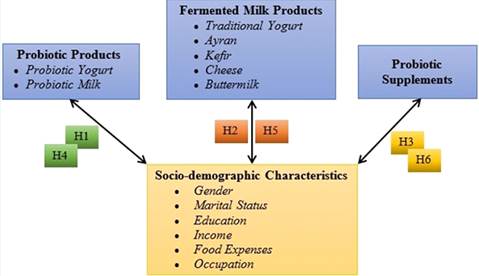
The hypotheses developed within the framework of the research are as follows:
H1: Socio-economic characteristics have no effect on the consumption of probiotic products.
H2: Socio-economic characteristics have no effect on the consumption of traditional fermented products.
H3: Socio-economic characteristics have no effect on the use of probiotic supplements.
H4: Socio-economic characteristics have no effect on the frequency of probiotic product consumption.
H5: Socio-economic characteristics have no effect on the frequency of consuming traditional fermented products.
H6: Socio-economic characteristics have no effect on the frequency of probiotic supplement use (Figure 1).
Structural model of socio-economic and behavioral factors influencing probiotic consumption.
MATERIALS AND METHODS
Materials
The primary data for this study were obtained through a survey conducted with randomly selected consumers living in the TR63 Region of Turkey. During the data collection process, the three provinces within the region (Kahramanmaraş, Hatay, and Osmaniye) were stratified according to their population sizes, and the number of surveys to be conducted in each province was proportionally allocated based on these strata. Accordingly, the study employed a stratified random sampling approach. The distribution of survey numbers was proportional to the population of these central districts based on 2020 data from the Turkish Statistical Institute (TSI) (TSI, 2020). Specifically, 300 surveys were conducted in Kahramanmaraş’s central districts (population: 664,958), 176 surveys in Antakya, Hatay’s central district (population: 389,377), and 124 surveys in Osmaniye’s city center (population: 274,420), amounting to a total of 600 surveys. Data collection took place in April and May of 2021.
The questionnaire used in the study was developed based on a review of the relevant literature to measure probiotic and traditional product consumption and purchasing behaviors. The survey was constructed by drawing on scales related to functional food consumption, probiotic awareness, health motivations, and consumer behavior. The survey form consists of four sections: (i) participants’ awareness and consumption levels of probiotic products, (ii) their consumption levels and preferences regarding traditional products, (iii) their awareness and consumption levels of probiotic supplement products, and (iv) the socioeconomic and demographic variables.
Determining Sample Size
In order to determine the sample size for this research, the simple random sampling method was employed. The formula used for calculating the sample size is provided below (CHURCHILL, 1995). For this study, the maximum possible sample size was targeted, assuming P and Q values of 0.50. Consequently, the sample size was determined to be 600 with a 95% confidence level and a 4% margin of error. The formula is as follows:
P: Probability of a positive outcome (%50)
Q: 1-P Probability of a negative outcome (%50)
Zx/2: Confidence interval (95%, table value = 1.96)
d: Margin of error (4%)
The survey questions addressed participants’ socio-economic characteristics including: age, gender, education, occupation, income, marital status, and food expenditures. Products were categorized into three groups: (a) probiotic products (functional/fortified-FF), (b) traditional fermented dairy products, and (c) supplements. Probiotic consumption (non-consumption = 0, consumption = 1) and consumption frequency were measured using a Likert scale (1 = Never, 2 = Once a month, 3 = Once a week, 4 = 2-3 times a week, 5 = Daily), and hypotheses were developed accordingly.
The products analyzed within these categories included: probiotic milk and yogurt under the probiotic product group; traditional fermented yogurt, milk, ayran, kefir, cheese, and butter under the traditional fermented dairy product group; and probiotic supplements under the supplement group.
Data analysis
The data collected were analyzed using SPSS 21 software. Descriptive statistics were employed to summarize participants’ socio-economic characteristics. The logistic regression analysis was utilized to examine binary and categorical outcome variables calculated using continuous or categorical predictors (BACKHAUS et al., 2016). This method was used to identify the relationship between socio-economic characteristics and the likelihood of consuming each product category.
Socio-economic characteristics were used as independent variables for each product group. For instance, HANOUF et al. (2021) employed an ordinal logistic regression model to analyze the relationship between probiotic consumption levels and socio-economic factors such as: gender, age, marital status, household size, presence of children, household income, place of residence, and education level. Similarly, in this study the dependent variable, consumption status, was measured nominally as “yes” or “no”. This approach aligns with the method used by YEUNG &YEE (2012).
Goodness-of-fit statistics for the logistic regression model including; -2 log-likelihood, the Hosmer-Lemeshow test (HOSMER & LEMESHOW, 2000), Cox and Snell R-Square, and Nagelkerke R-Square, were evaluated. Additionally, variance analysis (ANOVA) and T-tests were applied to assess whether socio-economic factors played a significant role in consumption frequency. Tukey’s test was performed for factors with a normal distribution, while the Games-Howell test was applied to factors without a normal distribution.
RESULTS AND DISCUSSION
The socio-economic characteristics of the study participants are presented in table 1. Among the respondents, 51.5% were women. In terms of age distribution, most participants fell within the 28-37 age group (31.8%), followed closely by those aged 38-47 (30.3%). Approximately 65% of the participants were married. Regarding educational background, the highest representation came from high school graduates (36%) and bachelor’s degree holders (34.7%).
When examining occupational distribution, 28.1% of the participants were teachers or academics, 25.9% were employed in the public sector, 25.1% were unemployed, students, or retirees, and 20.9% were self-employed. As for income levels, the most frequently observed category was the 5001-7000 TL range, encompassing 38% of the participants.
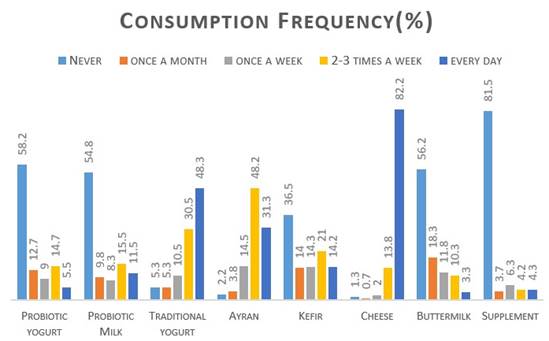
A logistic regression analysis was conducted to determine the impact of socio-economic characteristics on the consumption of probiotic products. Table 2 presents the results of the regression model for probiotic products. The consumption rates of probiotic-containing products among the surveyed consumers were as follows: cheese 98.7%, ayran 97.8%, traditional fermented yogurt 94.7%, kefir 63.5%, probiotic milk 45.2%, buttermilk 43.8%, probiotic yogurt 41.8%, and probiotic supplements 18.5%. The estimated logistic regression coefficients (β), significance levels, and the odds ratios (Exp(β)) for product consumption are reported together. In the applied models, the Hosmer and Lemeshow test results (P > 0.05) indicate an adequate model fit. The reference group in the analysis was defined as “non-consumers”.
According to the analysis results, socio-economic characteristics explain 21.7% of the variance in the probiotic yogurt consumption model. An increase in the level of education raises the likelihood of an individual consuming probiotic yogurt by 1.93 times. Moreover, the probability of probiotic yogurt consumption is 53.7% higher among women compared to men. No significant relationships were observed between probiotic yogurt consumption and the other variables included in the model.
Regarding probiotic milk consumption, socio-economic characteristics account for 15.8% of the model. Higher education levels increase the likelihood consuming probiotic milk by 1.73 times. Furthermore, individuals employed in the public sector exhibit a 20% higher tendency to consume probiotic milk. The positive relationship between education and probiotic milk consumption may be attributed to higher health consciousness, greater purchasing power, and a stronger tendency to adopt healthy eating habits among more educated individuals. In a study conducted by NIVA (2006), it was found that individuals in regular employment consumed more functional food products compared to those who were unemployed.
The traditional fermented yogurt consumption model is explained to the extent of 16.8% by socio-economic characteristics. According to this model, higher education levels decrease the likelihood of consuming traditional yogurt by 63.7%, while being married raises the likelihood by 30.6%. With respect to kefir consumption, the results indicated that women are 45.6% more likely to consume kefir than men. However, YELCE & GÜL (2020) reported that increased education and income are associated with a decrease in kefir consumption, a finding that contrasts with the present study.
According to the buttermilk consumption model, a one-unit increase in income enhances the likelihood of consuming buttermilk by 57.8%. Additionally, employed individuals are 83.3% more likely to consume buttermilk. An increase in food expenditures raises the likelihood of not consuming buttermilk by 1.34 times, and women are 1.99 times more likely than men to refrain from consuming buttermilk. In the supplement consumption model, a rise in the level of education increases the likelihood of supplement consumption by 1.46 times. A study conducted in the United States found that functional food consumers tend to have a higher level of education (VERBEKE, 2005). Similarly, the intake of multivitamins and minerals is higher among educated individuals (JONG et al., 2003). Moreover, research in Finland has shown that educated consumers have a more positive attitude toward functional foods (URALA & LAHTEENMAKI, 2007). These findings are consistent with the results of the present study.
In summary, the findings indicated that higher education levels are associated with increased consumption of probiotic yogurt and milk, while the consumption of traditional products decreases. This pattern is consistent with the findings reported by URALA & LAHTEENMAKI (2007) and VERBEKE (2005), who found that individuals with higher educational attainment tend to have a more positive attitude toward functional foods. No significant effects were observed regarding the factors influencing cheese consumption.
According to the results of the logistic regression analysis, the consumption of probiotic products is influenced by factors such as occupation, education, and gender. In the case of traditional products, only the consumption of fermented yogurt, kefir, and buttermilk is affected by socio-economic characteristics. Additionally, probiotic supplement consumption is significantly influenced by education level. These findings indicated that at least one socio-economic factor affects the consumption of probiotic-enhanced, traditional, and supplement products. Therefore, the following hypotheses were rejected:
H1: “Socio-economic characteristics have no effect on the consumption of probiotic-enhanced products.”
H2: “Socio-economic characteristics have no effect on the consumption of traditional products.”
H3: “Socio-economic characteristics have no effect on the consumption of supplement products.”
These results align with the findings of KARAKAYA & ÖZKAN (2020), who reported that as consumers’ education levels increase, the likelihood of purchasing branded milk and dairy products sold in retail markets decreases. Moreover, their study found that female consumers are more likely than male consumers to purchase retail milk and dairy products. Similarly, ONURLUBAŞ & TAŞDAN (2017) found that women consume more traditional foods. However, while their study identified a positive relationship between income level and traditional food consumption, it also found that higher education levels lead to a decline in traditional food consumption, consistent with the findings of this study.
ANOVA test results
The frequency of probiotic product consumption is presented in figure 2. Accordingly, the products with the highest rates of non-consumption are; probiotic yogurt, probiotic milk, kefir, buttermilk, and probiotic supplements. In contrast, the most frequently consumed products daily are cheese and fermented yogurt. A study conducted in Brazil found that probiotic yogurt was the most frequently consumed product among participants, with 3.7% consuming it daily and 27.8% consuming it at least once a week. The second most frequently consumed product was probiotic-enriched fermented milk, with 3.1% consuming it daily and 18.8% at least once a week. Additionally, the research found that 94.9% of participants did not consume probiotic capsules (CARVALHO et al., 2014). Another analysis conducted in Turkey determined that 87.9% of consumers consume traditional foods, and the probability of traditional food consumption in the country was estimated at approximately 98.0% (ONURLUBAŞ & TAŞDAN, 2017).
The frequency of probiotic product consumption was analyzed by considering consumers’ demographic characteristics. In this context, individual differences were examined. To evaluate these differences, the results of the t-test are presented in table 3, while the results of the variance (ANOVA) analysis are shown in table 3.
The findings in table 3 indicate that the consumption frequency of probiotic yogurt (P = 0.000) and probiotic milk (P = 0.000) significantly differs between men and women, with women consuming these products more frequently. However, no statistically significant difference was found in the consumption frequency of traditional yogurt. Regarding other traditional products, men consume ayran (P = 0.017) and buttermilk (P = 0.001) more frequently than women, whereas women have a higher consumption frequency of kefir (P = 0.000) and cheese (P = 0.027). Additionally, the consumption frequency of probiotic supplements (P = 0.017) is significantly higher among women. In summary, females have been found to consume probiotic products more frequently than males.
These results align with the findings of SCHULTZ et al. (2011), which demonstrated that women exhibit greater interest in probiotic products than men. Relevant studies have indicated that female consumers tend to exhibit greater nutritional awareness than male consumers, largely due to their predominant role in household food-related decision-making and purchasing activities (MCKENZIE et al., 2022). Similarly, PAYAHOO et al. (2012) observed a significant gender-related difference in product awareness.
The consumption frequency of probiotic yogurt (P = 0.014) and probiotic milk (P = 0.032) significantly varies based on marital status, with single individuals consuming these products more frequently than married individuals. In contrast, within the traditional product group, the consumption frequency of yogurt (P = 0.000) and ayran (P = 0.000) is significantly higher among married individuals. These results are consistent with the findings of ONURLUBAŞ & TAŞDAN (2017), who reported that traditional products are more commonly consumed by married individuals. The association between household size, economic factors, and the preference for traditional products further supports these findings.
The differences in the frequency of probiotic product consumption based on socio-demographic characteristics are presented in table 4. The frequency of probiotic yogurt and milk consumption was found to be statistically significant (P < 0.05) in relation to socio-economic characteristics (gender, marital status, age, education, occupation, income, and food expenditure). Based on this result, the null hypothesis (H4) stating that “socio-economic characteristics have no effect on the frequency of probiotic product consumption,” is rejected, and the alternative hypothesis, “at least one socio-economic characteristic affects the frequency of probiotic product consumption”, is accepted.
The frequency of traditional yogurt consumption shows significant differences based on marital status, age, education, and occupation. The frequency of cheese consumption is significantly affected by differences in gender, age, education, food expenditure, and income. The factors influencing the frequency of buttermilk consumption are gender, marital status, education, occupation, and income. Meanwhile, the frequency of kefir consumption is influenced by gender and changes in food expenditure. The only statistically significant factor affecting the consumption of churned buttermilk is gender. Based on these findings, at a significant level of P < 0.05, at least one socio-economic characteristic has a statistically significant effect on the consumption of traditional products. Consequently, the null hypothesis (H5) stating that “socio-economic characteristics have no effect on the frequency of traditional product consumption”, is rejected, and the alternative hypothesis is accepted.
The factors affecting the frequency of probiotic supplement consumption are identified as gender, education level, occupation, and food expenditure. Therefore, the null hypothesis (H6) stating that “socio-economic characteristics have no effect on the frequency of probiotic supplement consumption”, is rejected, and the alternative hypothesis is accepted.
AGUIRRE (2014) found that income level, education level, and family size are significant determinants of the frequency of probiotic product consumption. These results align with the present study. The analysis results indicated that individuals with higher income levels consume probiotic milk and yogurt more frequently. This finding is consistent with an examination by JONG et al. (2003), which reported that the consumption of functional foods is more prevalent among high-income individuals. Conversely, the greater consumption of traditional products such as buttermilk and cheese among lower-income individuals can be explained by the perception of traditional products as staple foods. This observation aligns with previous literature findings that highlight the impact of income level on traditional product consumption (AGUIRRE, 2014).
An additional study concluded that probiotic consumption is more prevalent among individuals over the age of 35 and those with higher education levels (AVILA et al., 2020). The findings of the present research indicated that probiotic consumption is more common among women, individuals with higher education, and those with higher income levels. Another analysis revealed that the use of probiotic supplements is more prevalent among women, older age groups, highly educated individuals, and high-income participants; supporting the findings of the present study (MAHDAVI-ROSHAN et al., 2021). A similar investigation demonstrated that education level, income level, and gender (female) increase awareness and the likelihood of purchasing probiotic dairy products (YILMAZ ERSAN et al., 2020).
An examination among Jordanian students identified a relationship between probiotic knowledge and gender, indicating that women are more knowledgeable about probiotics than men (AL-NABULSI et al., 2014). A possible explanation for the higher probiotic product consumption among women is that women tend to be more knowledgeable and conscious about nutrition and food compared to men. Additionally, women are generally more concerned with their health and physical appearance than men (TURREL, 1997).
According to the results of the variance analysis test, it was concluded that socio-economic characteristics influenced the frequency of product consumption. To determine between which subgroups this effect occurs, Post Hoc test results were required. The relationships between age and the frequency of consumption of probiotic yogurt, probiotic milk, traditional yogurt, and cheese, are presented in table 5.
There is a significant difference in the consumption of probiotic yogurt (P < 0.05; P = 0.008) and probiotic milk (P < 0.05; P = 0.017) between individuals aged 18-27 and those over 48 years old. Individuals aged 18-27 consume probiotic yogurt and milk more frequently. In probiotic milk consumption (P < 0.05; P = 0.045), individuals aged 38-47 consume probiotic products more frequently than those aged 28-37.
Among traditional products, there is a significant difference in the consumption of fermented yogurt between individuals aged 18-27 and those over 48 years old (P < 0.05; P = 0.011). Accordingly, traditional yogurt consumption is higher among individuals over 48 years old.
Regarding cheese consumption, there is a statistically significant difference between individuals aged 18-27 and those aged 28-37 (P < 0.05; P = 0.022). Accordingly, individuals aged 28-37 consume more cheese compared to those aged 18-27.
The relationships between the frequency of consumption of probiotic yogurt, milk, traditional fermented yogurt, buttermilk, cheese, and supplements; and the level of education are presented in table 6.
Regarding probiotic yogurt consumption, there is a significant difference among individuals with high school, undergraduate, and postgraduate education levels. As the level of education increases, the frequency of probiotic yogurt and milk consumption also increases.
In contrast, individuals with a high school education tend to consume traditional products more frequently than those with undergraduate and postgraduate degrees. In other words, the frequency of traditional yogurt, cheese, and buttermilk consumption is inversely proportional to the level of education. Individuals with lower education levels are more likely to consume traditional products.
Regarding probiotic supplement use, there is a significant difference between individuals with undergraduate/associate degrees and those with only a high school education. Individuals with higher education levels tend to consume more probiotic supplements.
Table 7 presents the relationships between product consumption frequency and occupational groups. Regarding probiotic yogurt consumption, there is a statistically significant difference between unemployed individuals and self-employed individuals (P < 0.05; P = 0.007), teachers/academics and self-employed individuals (P < 0.05; P = 0.000), and teachers/academics and public sector employees (P < 0.05; P = 0.004).
For probiotic milk consumption, statistically significant differences were found between unemployed individuals and self-employed individuals (P < 0.05; P = 0.023), teachers/academics and self-employed individuals (P < 0.05; P = 0.000), and teachers/academics and public sector employees (P < 0.05; P = 0.001). The results indicated that probiotic yogurt and milk consumption are higher among teachers/academics.
Among traditional products, significant differences were found in the consumption of traditional fermented yogurt (P < 0.05; P = 0.013) and buttermilk (P < 0.05; P = 0.018) between unemployed individuals and teachers/academics. Based on these results, unemployed individuals consume more fermented yogurt and buttermilk compared to teachers/academics.
Regarding probiotic supplement use; there is a statistically significant difference between unemployed individuals and self-employed individuals (P < 0.05; P = 0.037), and between teachers/academics and self-employed individuals (P < 0.05; P = 0.000). These findings suggested that probiotic supplements are less preferred by self-employed individuals.
Table 8 presents the relationship between product consumption frequency and monthly food expenditures. A statistically significant difference was found between food expenditures and the consumption of probiotic yogurt and milk. Individuals with food expenditures of 500-1000 TL consume these products less frequently compared to those with higher expenditures.
Among traditional products, a statistically significant difference was observed between kefir consumption and food expenditures. Individuals spending 1001-1500 TL on food consume more kefir compared to those spending more than 1501 TL (P < 0.05; P = 0.013).
Regarding cheese consumption, individuals with food expenditures of 500-1000 TL consume more cheese than those spending 1501 TL or more (P < 0.05; P = 0.008). Since traditional products are considered essential goods, their importance increases as income and purchasing power decrease. Therefore, individuals with lower food expenditures prioritize essential consumption products.
For probiotic supplement use, individuals with food expenditures of 1001-1500 TL consume more supplements compared to those with lower expenditures (P < 0.05; P = 0.011).
Table 9 presents the relationship between product consumption frequency and income levels. A statistically significant difference was found in the consumption of probiotic yogurt (P < 0.05; P = 0.033) and probiotic milk (P < 0.05; P = 0.011), between individuals with an income below 5000 TL and those with an income above 7001 TL. This indicated that individuals with higher incomes tend to consume more probiotic products.
Among traditional products, a statistically significant difference was observed in buttermilk consumption (P < 0.05; P = 0.007) between individuals with an income below 5000 TL and those earning between 5001-7000 TL. The results suggested that individuals with lower incomes consume more buttermilk.
Regarding cheese consumption (P < 0.05; P = 0.016), a statistically significant difference was found between individuals earning 5001-7000 TL and those earning above 7001 TL. The findings indicated that individuals with lower incomes tend to consume more cheese.
CONCLUSION
This study fills an important gap in the literature by analyzing the preference differences between probiotic and traditional dairy products, as well as their socioeconomic determinants, using multivariate statistical methods among consumers in the Eastern Mediterranean Region of Turkey. As such, it represents one of the few empirical investigations addressing regional patterns of probiotic consumption in the country. The findings indicated that probiotic product use is strongly influenced by demographic and behavioral factors, including education, income, gender, health consciousness, and product knowledge. Higher education and income levels are associated with greater awareness and purchasing propensity, and women appear more inclined to consume probiotic products. The results also showed that traditional fermented foods continue to hold a dominant place in local consumption habits, and that information provision plays a critical role in shaping the competitive position of probiotic alternatives. Overall, the study provided a foundational framework for understanding consumer tendencies and consumption behaviors related to probiotic products in Turkey’s Eastern Mediterranean Region.
This study indicated that consumers residing in the region do not exhibit widespread consumption habits regarding probiotic-enriched foods and supplements. Accordingly, producers and retailers should prioritize promotional and advertising strategies to enhance the purchase of probiotic products. Increasing public awareness of probiotic products, particularly among individuals with lower education and income levels, appears essential for improving consumption. Informative campaigns, supported by product tastings and temporary price incentives, may enhance consumer acceptance. In regions where traditional food consumption is dominant, highlighting the health benefits and probiotic content of products, as well as emphasizing similarities with familiar foods, could facilitate adoption. Strengthening labeling standards and supporting producers in developing culturally compatible probiotic alternatives may further promote informed choices and contribute to healthier dietary practices.
This research was subject to several limitations. First, as the study covers only the Eastern Mediterranean Region of Turkey, the findings cannot be generalized to the entire country; although, they do provide indicative insights into national consumption patterns. Second, the data were collected in 2021, in the post-pandemic period, and consumer behaviors may reflect context-specific influences of that time. Finally, as the data are based on self-reported responses, respondent bias may be present. Future studies conducted in different regions could reveal regional variations, benefit from the inclusion of qualitative data, and enable temporal comparisons if the same survey is reapplied; thereby contributing more robustly to the literature.
ACKNOWLEDGMENTS
This study was supported by the Hatay Mustafa Kemal University-Coordinatorship of Scientific Research Projects (Project number: 21.GAP.002). I would like to thank the Hatay Mustafa Kemal University for their contribution.
REFERENCES
-
AGUIRRE, J. Education, income, exercise and probiotics consumption: a Latin American case, Costa Rica, 2013. Journal of Probiotics & Health, v.2, n.1, p.1-7, 2014. Available from: <Available from: http://dx.doi.org/10.4172/2329-8901.1000116 >. Accessed: Jul. 10, 2024. doi: 10.4172/2329-8901.1000116.
» https://doi.org/10.4172/2329-8901.1000116.» http://dx.doi.org/10.4172/2329-8901.1000116 -
AKSU, F. Y. et al. Probiotic foods and their effects on human health. ABMYO Journal, 19: 90-94, 2010. Available from: <Available from: https://dergipark.org.tr/en/download/article-file/746802 > Accessed: Dec. 01, 2025.
» https://dergipark.org.tr/en/download/article-file/746802 -
AL-NABULSI, A. A. et al. Knowledge of probiotics and factors affecting their consumption by jordanian college students. International Journal of Probiotics & Prebiotics, v.9, n.3, p.77-85, 2014. Available from: <Available from: https://www.cabidigitallibrary.org/doi/full/10.5555/20153294361 > Accessed: Feb. 10, 2024.
» https://www.cabidigitallibrary.org/doi/full/10.5555/20153294361 -
ANONYMOUS. Markets and markets; probiotics market report, 2023. Available from: <Available from: https://www.marketsandmarkets.com/Market-Reports/probiotics-market-69.html >. Accessed: May, 28, 2024.
» https://www.marketsandmarkets.com/Market-Reports/probiotics-market-69.html -
AVILA, B. P. et al. Analysis of the perception and behaviour of consumers regarding probiotic dairy products. International Dairy Journal, v.106, n.104703, p.1-7, 2020. Available from: <Available from: https://doi.org/10.1016/j.idairyj.2020.104703 >. Accessed: May, 15, 2025. doi: 10.1016/j.idairyj.2020.104703.
» https://doi.org/10.1016/j.idairyj.2020.104703.» https://doi.org/10.1016/j.idairyj.2020.104703 - BACKHAUS, K. et al. Multivariate analyse methoden, Springer, Berlin Heidelberg, 2016.
-
BAZHAN, M. et al. Applying social marketing mix to identify consumers’ preferences towards functional dairy products in Iran. Nutrition and Food Science, v.48, n.1, p.45-60, 2018. Available from: <Available from: https://doi.org/10.1108/NFS-04-2017-0067 >. Accessed: Jan. 10, 2024. doi: 10.1108/NFS-04-2017-0067.
» https://doi.org/10.1108/NFS-04-2017-0067.» https://doi.org/10.1108/NFS-04-2017-0067 -
BOLUDA, K. et al. Consumer attitudes in the election of functional foods. Spanish Journal of Marketing - ESIC, v.21, n.1, p.65-79, 2017. Available from: <Available from: https://doi.org/10.1016/j.sjme.2017.05.002 >. Accessed: Mar. 20, 2025. doi: 10.1016/j.sjme.2017.05.002.
» https://doi.org/10.1016/j.sjme.2017.05.002.» https://doi.org/10.1016/j.sjme.2017.05.002 -
CARVALHO, N. B. et al. Consumer attitude regarding products containing probiotics. Ciência Rural, v.44, n.7, p.1319-1326, 2014. Available from: <Available from: https://doi.org/10.1590/0103-8478cr20131178 >. Accessed: Mar. 30, 2025. doi: 10.1590/0103-8478cr20131178.
» https://doi.org/10.1590/0103-8478cr20131178.» https://doi.org/10.1590/0103-8478cr20131178 - CHURCHILL, G. A. Marketing research: methodologial foundations. Fort Worth, TX: The Dryden Press, Harcourt Brace College Publishers, 6th ed., 1995.
-
ÇELIK, A. D. Consumers’ perceptions about probiotic food products and their effects on purchase intention: a case study of eastern mediterranean region of Turkey. New Medit, v.4, n.23, p.139-154, 2023. Available from: <Available from: https://doi.org/10.30682/nm2304i >. Accessed: Mar. 01, 2024. doi: 10.30682/nm2304i.
» https://doi.org/10.30682/nm2304i.» https://doi.org/10.30682/nm2304i -
DI PASQUALE, J. et al. Analysis of consumer attitudes and consumers’ willingness to pay for functional foods. International Journal on Food System Dynamics, v.2, n.2, p.181-193, 2011. Available from: <Available from: https://brill.com/view/journals/fsd/2/2/article-p181_7.xml >. Accessed: Sept. 19, 2024.
» https://brill.com/view/journals/fsd/2/2/article-p181_7.xml - HANOUF, M. H. M. et al. Analysis of consumption patterns of probiotic incorporated fermented dairy products in Sri Lanka, 2021.
- HOSMER, D. W.; LEMESHOW, S. Applied logistic regression (2nd ed.). John Wiley & Sons Inc., New York, ISBN-10: 0471356328, p.373, 2000.
-
GILLETTE, H. 5 Health Benefits of Probiotics. 2025. Available from: <Available from: https:www.healthline.com/nutrition/8-health-benefits-of-probiotics#TOC_TITLE_HDR_1 >. Accessed: Dec. 01, 2025.
» https:www.healthline.com/nutrition/8-health-benefits-of-probiotics#TOC_TITLE_HDR_1 -
IPA - International Probiotics Association. European probiotic market insights update - 2022. 2024. Available from: <Available from: https://www.ipaeurope.org/wp-content/uploads/2023/10/202305-EU-MARKET-INSIGHTS-UPDATE-2022.pdf >. Accessed: May, 01, 2025.
» https://www.ipaeurope.org/wp-content/uploads/2023/10/202305-EU-MARKET-INSIGHTS-UPDATE-2022.pdf -
IWATANI, S.; YAMAMOTO, N. Functional food products in Japan: a review. Food Science and Human Wellness, v.8, n.2, p.96-101, 2019. Available from: <Available from: https://doi.org/10.1016/j.fshw.2019.03.011 >. Accessed: Jul. 20, 2025. doi: 110.1016/j.fshw.2019.03.011.
» https://doi.org/110.1016/j.fshw.2019.03.011.» https://doi.org/10.1016/j.fshw.2019.03.011 -
JONG, N. et al. Demographic and lifestyle characteristics of functional food consumers and dietary supplement users. British Journal of Nutrition, v.89, n.2, p.273-281, 2003. Available from: <Available from: https://www.cambridge.org/core/journals/british-journal-of-nutrition/article/demographic-and-lifestyle-characteristics-of-functional-food-consumers-and-dietary-supplement-users/BC538546CFD4B0C3CCB0B91426318A0A >. Accessed: May, 20, 2025. doi: 10.1079/BJN2002772.
» https://doi.org/10.1079/BJN2002772.» https://www.cambridge.org/core/journals/british-journal-of-nutrition/article/demographic-and-lifestyle-characteristics-of-functional-food-consumers-and-dietary-supplement-users/BC538546CFD4B0C3CCB0B91426318A0A -
KARAKAYA, Y.; ÖZKAN, B. Analysis of factors affecting the preferences of consumers for retailers branded milk and milk products in the Antalya province. Mediterranean Agricultural Sciences, v.33, n.1, p.79-83, 2020. Available from: <Available from: https://doi.org/10.29136/mediterranean.635925 >. Accessed: Aug. 10, 2024. doi: 10.29136/mediterranean.635925.
» https://doi.org/10.29136/mediterranean.635925.» https://doi.org/10.29136/mediterranean.635925 -
MAHDAVI-ROSHAN, M. et al. Dietary Supplements consumption and its association with socioeconomic factors, obesity, and main non-communicable chronic diseases in the north of Iran: The Persian Guilan Cohort Study (PGCS). BMC Nutrition, v.7, n.1, p.1-8, 2021. Available from: <Available from: https://doi.org/10.1186/s40795-021-00488-2 >. Accessed: Aug. 30, 2024. doi: 10.1186/s40795-021-00488-2.
» https://doi.org/10.1186/s40795-021-00488-2.» https://doi.org/10.1186/s40795-021-00488-2 -
MCKENZIE, B. L. et al. Gender roles, generational changes and environmental challenges: An intersectional interpretation of perceptions on healthy diets among Taukei women and men in Fiji. Public Health Nutrition, v.25, n.11, p.3146-3157, 2022. Available from: <Available from: https://pubmed.ncbi.nlm.nih.gov/35941081/ >. Accessed: Nov. 28, 2025. doi: 10.1017/S1368980022001677.
» https://doi.org/10.1017/S1368980022001677.» https://pubmed.ncbi.nlm.nih.gov/35941081/ -
NIVA, M. Can we predict who adopts health-promoting foods? users of functional foods in Finland. Scandinavian Journal of Food and Nutrition, v.50, n.1, p.13-24, 2006. Available from: <Available from: https://doi.org/10.1080/11026480600655378 >. Accessed: Feb. 10, 2025. doi: 10.1080/11026480600655378.
» https://doi.org/10.1080/11026480600655378.» https://doi.org/10.1080/11026480600655378 -
ONURLUBAŞ, E.; TAŞDAN, K. A study on factors affecting traditional product consumption. Journal of the Institute of Social Sciences, Bolu Abant İzzet Baysal University, v.17, n.1, p.115-132, 2017. Available from: <Available from: https://dergipark.org.tr/tr/pub/basbed/issue/38796/456239 >. Accessed: Oct. 20, 2024.
» https://dergipark.org.tr/tr/pub/basbed/issue/38796/456239 -
PARASKEVAKOS, G. Global overview for probiotics: trends, markets, and harmonization. Regulatory Focus, 2020. Available from: <Available from: https://www.raps.org/news-and-articles/news-articles/2022/9/global-overview-for-probiotics-trends-markets-and?GA_network >. Accessed: May, 10, 2025.
» https://www.raps.org/news-and-articles/news-articles/2022/9/global-overview-for-probiotics-trends-markets-and?GA_network -
PAYAHOO, L. et al. Perceptions of medical sciences students towards probiotics. Health Promotion Perspectives, v.2, n.1, p.96-102, 2012. Available from: <Available from: https://pmc.ncbi.nlm.nih.gov/articles/PMC3963655/ >. Accessed: Mar. 09, 202025. doi: 10.5681/hpp.2012.012.
» https://doi.org/10.5681/hpp.2012.012.» https://pmc.ncbi.nlm.nih.gov/articles/PMC3963655/ -
SANDERS, M. E. Probiotics: Definition, sources, selection, and uses. Clinical Infectious Diseases, v.46, n.2, p.58-61, 2008. Available from: <Available from: https://pubmed.ncbi.nlm.nih.gov/18181724/ > Accessed: Dec. 01, 2025. doi: 10.1086/523341.
» https://doi.org/10.1086/523341.» https://pubmed.ncbi.nlm.nih.gov/18181724/ -
SCHULTZ, M. et al. Consumer demographics and expectations of probiotic therapy in new zealand: results of a large telephone survey. The New Zealand Medical Journal, v.124, n.1329, p.36-43, 2011. Available from: <Available from: http://www.nzma.org.nz/journal/124-1329/4534 >. Accessed: May, 30, 2025.
» http://www.nzma.org.nz/journal/124-1329/4534 -
TSI - Turkish Statistical Institute. Data portal for statistics, 2020. Available from: <Available from: https://data.tuik.gov.tr/Kategori/GetKategori?p=nufus-ve-demografi-109&dil=1 >. Accessed: Jun. 20, 2025.
» https://data.tuik.gov.tr/Kategori/GetKategori?p=nufus-ve-demografi-109&dil=1 -
URALA, N.; LÄHTEENMÄKI, L. Consumers’ changing attitudes towards functional foods. Food Quality and Preference, v.18, n.1, p.1-12, 2007. Available from: <Available from: https://doi.org/10.1016/j.foodqual.2005.06.007 >. Accessed: Jun. 20, 2025. doi: 10.1016/j.foodqual.2005.06.007.
» https://doi.org/10.1016/j.foodqual.2005.06.007.» https://doi.org/10.1016/j.foodqual.2005.06.007 -
VERBEKE, W. Consumer acceptance of functional foods: socio-demographic, cognitive, and attitudinal determinants. Food Quality and Preference, v.16, n.1, p.45-57, 2005. Available from: <Available from: https://doi.org/10.1016/j.foodqual.2004.01.001 >. Accessed: Jul. 21, 2025. doi: 10.1016/j.foodqual.2004.01.001.
» https://doi.org/10.1016/j.foodqual.2004.01.001.» https://doi.org/10.1016/j.foodqual.2004.01.001 -
YELCE, S.; GÜL, M. Consumer consumption and behavior regarding kefir in Antalya province. Mustafa Kemal University Journal of Agricultural Sciences, v.25, n.3, p.316-325, 2020. Available from: <Available from: https://doi.org/10.37908/mkutbd.656795 >. Accessed: Jul. 25, 2025. doi: 10.37908/mkutbd.656795.
» https://doi.org/10.37908/mkutbd.656795.» https://doi.org/10.37908/mkutbd.656795 -
YILMAZ-ERSAN, L. et al. Assessment of socio-demographic factors, health status, and the knowledge on probiotic dairy products. Food Science and Human Wellness, v.9, n.3, p.272-279, 2020. Available from: <Available from: https://doi.org/10.1016/j.fshw.2020.05.004 >. Accessed: Jun. 25, 2025. doi: 10.1016/j.fshw.2020.05.004.
» https://doi.org/10.1016/j.fshw.2020.05.004.» https://doi.org/10.1016/j.fshw.2020.05.004 -
YEUNG, R.; YEE, W. M. S. Food safety concern: incorporating marketing strategies into consumer risk coping framework. British Food Journal, v.114, n.1, p.40-53, 2012. Available from: <Available from: https://doi.org/10.1108/00070701211197356 >. Accessed: Jul. 25, 2025. doi: 10.1108/00070701211197356.
» https://doi.org/10.1108/00070701211197356.» https://doi.org/10.1108/00070701211197356
Edited by
-
ASSOCIATE EDITOR:
Rudi Weiblen (0000-0002-1737-9817)
-
SCIENTIFIC EDITOR:
Cristiano Ragagnin de Menezes (0000-0003-4523-8875)
Raw data of the study can be requested from the corresponding author.